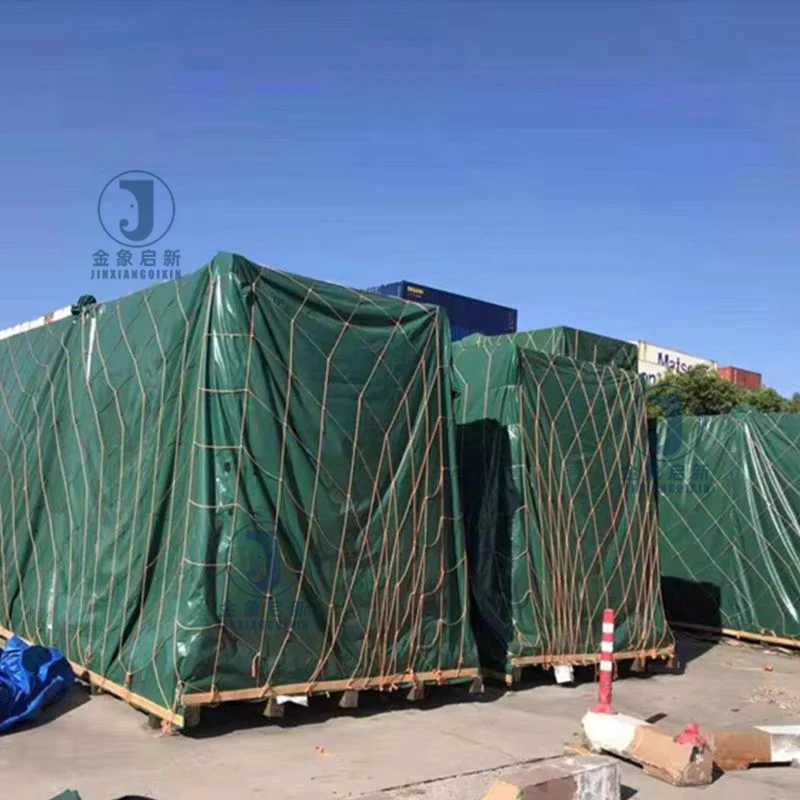
Description
Roll Consistency Guaranteed — Every PVC coated tarpaulin roll leaves our facility with verified weight, colour, and coating adhesion, checked roll-by-roll before container loading.
Technical Specifications
| Parameter | Value |
|---|---|
| Product Type | PVC Coated Tarpaulin |
| Base Fabric Denier | 500D × 500D Polyester |
| Coating Material | Double-sided PVC |
| Weight Range | 450–900 g/m² (specific grade confirmed at inquiry) |
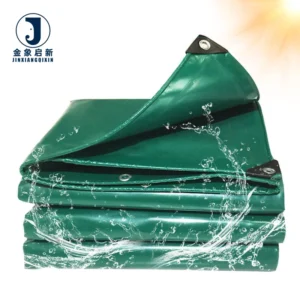
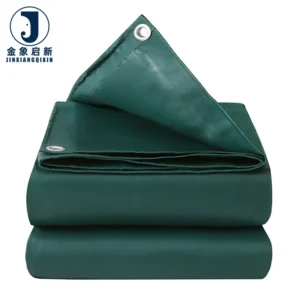
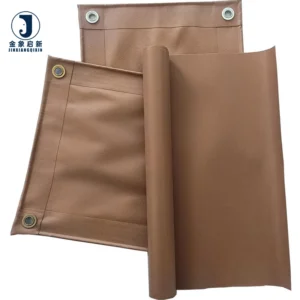
| Surface Finish | Smooth, leather-like texture |
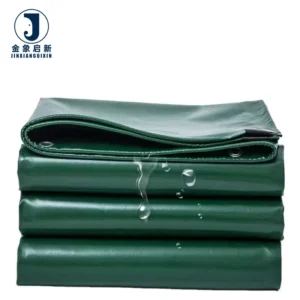
| Waterproof Performance | Fully coated, sealed construction |
| Flame Retardancy | Flame-retardant grades available — confirm the grade required for your market |
| UV Resistance | Anti-UV treatment available — specify test basis for your region |
| Abrasion Resistance | High resistance to surface wear and mechanical contact |
| Repairability | Hot air weldable for field and workshop repairs |
| Service Life Expectancy | Suited to extended outdoor exposure under typical transport and industrial conditions |
| Packaging Options | Roll packing, bale packing, carton |
Application Suitability
| Application | Exposure & Requirement |
|---|---|
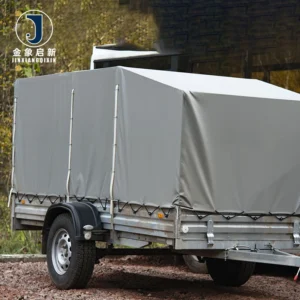
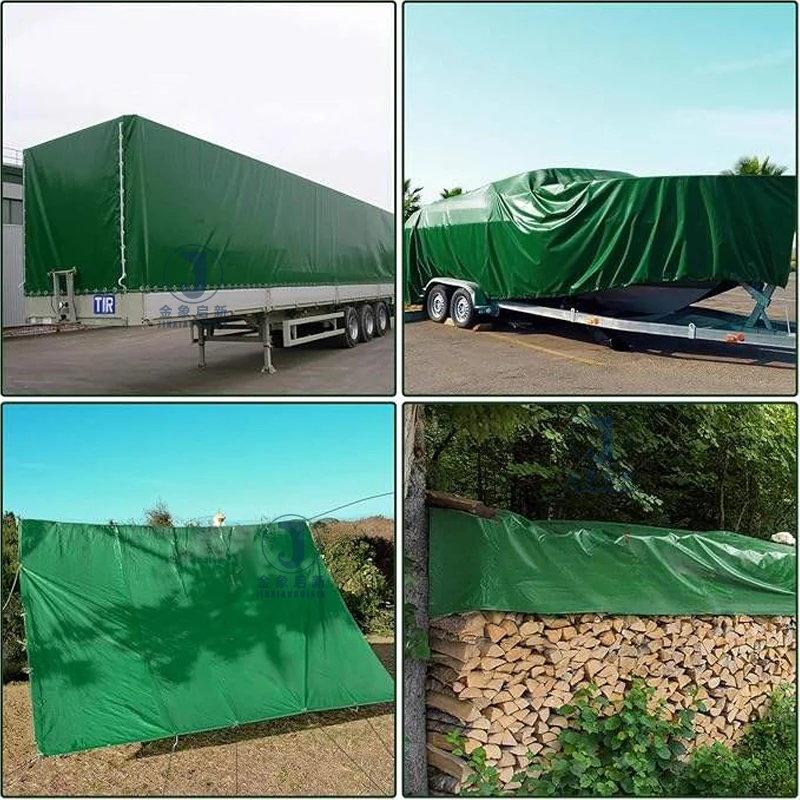
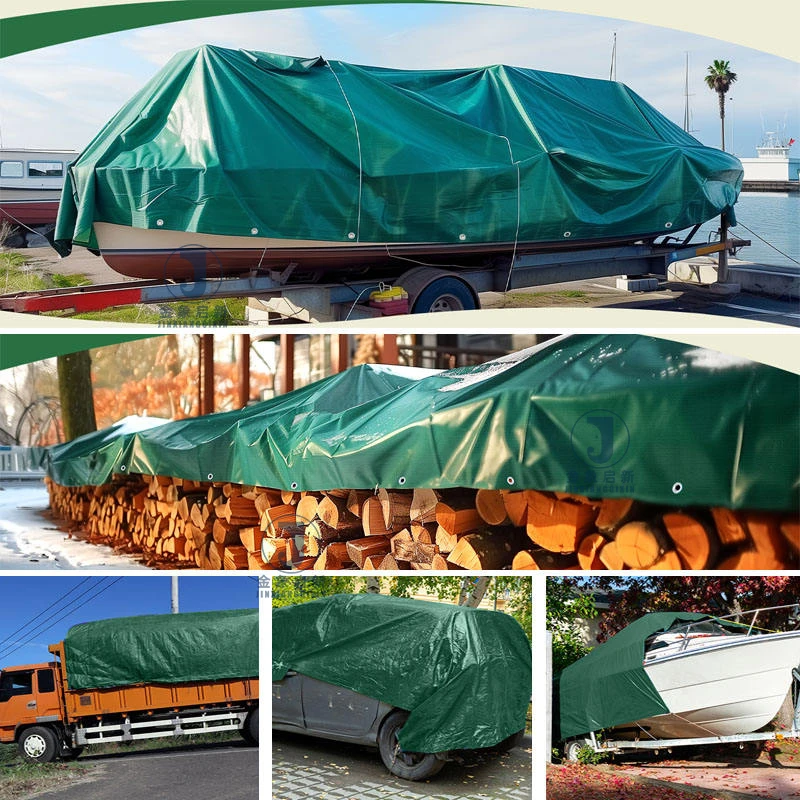
| Truck and trailer side curtains | Constant flexing at load shift points, road debris abrasion, prolonged UV and rain exposure |
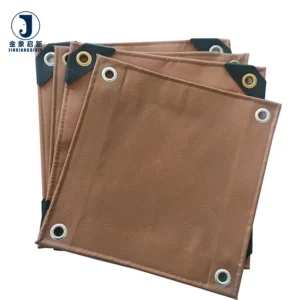
| Construction equipment covers | Outdoor storage, wind-driven rain, dust ingress, contact with sharp metal edges |
| Tent and awning fabrication | Tension under frame load, repeated fold and unfold cycles, sun and weather resistance |
| Inflatable and membrane structures | Internal air pressure stress, welded seam integrity, sustained weather exposure |
| Agricultural pond and reservoir liners | Permanent water contact, soil chemistry, puncture risk from substrate |
| Wood and machinery protection | Long-term outdoor stacking, moisture ingress prevention, forklift handling abrasion |
Why Colour Shift Between Rolls Destroys a Container-Load Installation
Batch colour uniformity is a process control outcome, not a sorting exercise after production.
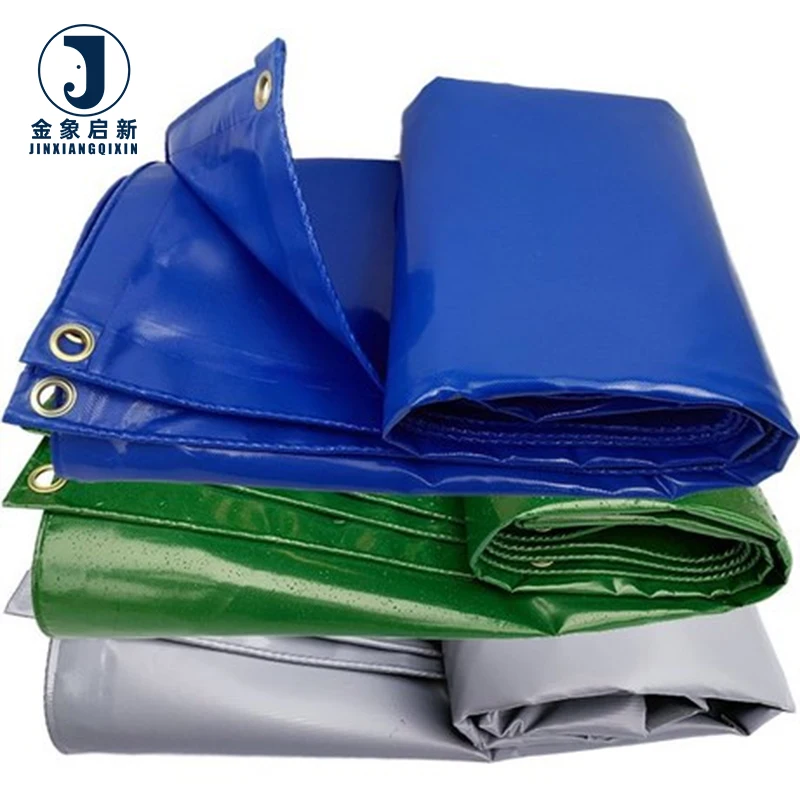
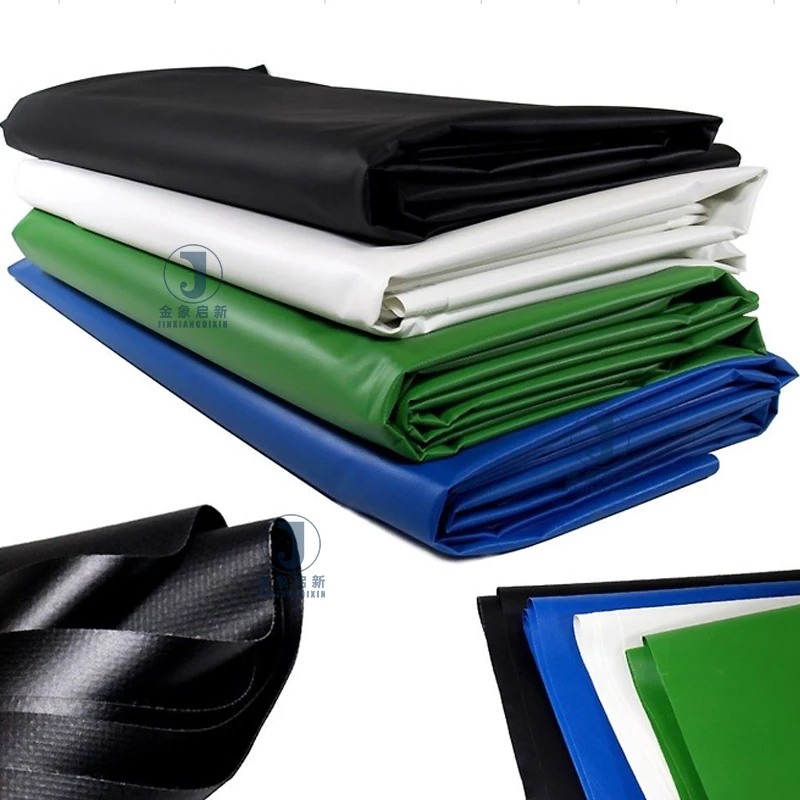
When you open a container and unroll two adjacent lengths of PVC coated tarpaulin across a truck trailer roof or a tensioned awning frame, even a slight hue deviation between rolls becomes immediately visible. This is not an aesthetic complaint from an end user — it is a rejection at the installation site that forces you to sort, re-cut, or scrap material you already paid to ship across an ocean. Distributors and fabricators who stock multiple grades for regional resale face the same problem when rolls from the same purchase order cannot be sold as matching inventory. [NEED_CITE: colour consistency measurement methods for coated textiles per ISO 105 series]
Roll-to-Roll Weight Verification Before Dispatch
The GSM stated on your quotation must match what arrives on the dock. Our production process monitors coating weight at the coating head, and our pre-shipment inspection checks actual roll weight against the specified grade before any PVC coated tarpaulin leaves the warehouse. This eliminates the scenario where material arrives lighter than agreed, forcing you to explain to your customer why the fabric does not perform as expected under load or weather stress.
Container Loading Planned by Roll Count and Dimension
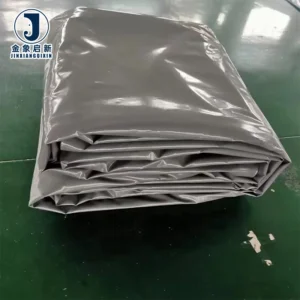
When you are filling a 40-foot container, every centimetre of roll width and every kilogram of gross weight matters for freight cost efficiency. We provide a detailed roll packing list showing net and gross weight per roll, roll dimensions, and total roll count so you can plan your PVC coated tarpaulin wholesale order around container capacity rather than guessing at loading density. Roll packing, bale packing, and carton options are available depending on your downstream handling equipment and customer preference.
Understanding How Base Fabric and Coating Weight Interact
The 500D × 500D polyester base fabric provides the tensile foundation, but the coating weight applied to each side determines waterproof sealing, surface abrasion resistance, and weld behaviour. A lighter coating on the same base fabric may pass a tensile test yet fail at the welded seam under flex load because there is insufficient PVC mass to form a full-thickness bond. Heavier coating grades in the 450–900 g/m² range increase seam peel strength and surface durability but add roll weight that affects container loading calculations. The double-sided PVC coating ensures that neither face becomes a water ingress path, which matters when rolls are cut and fabricated into covers where both surfaces see weather exposure. The smooth, leather-like surface finish also supports clean hot air welding without surface contamination interfering with bond formation. [NEED_CITE: peel strength test methods for coated fabric seams per ISO 2411]
What Happens When Roll Specifications Are Assumed Rather Than Confirmed
A distributor ordering multiple rolls for regional resale may find that generic-width stock generates excessive off-cut waste for customers who fabricate truck covers to specific trailer dimensions. A tent manufacturer may discover that a flame-retardant grade was claimed on the quotation but arrived without the test documentation the local fire inspector requires before signing off on an event structure. A transport fleet doing in-house cover repair may order roll stock only to find the colour does not match the existing covers on their vehicles, making partial repairs visibly unacceptable. These are not supplier disputes that get resolved with a credit note — they are operational failures that cost you installation time, customer trust, and re-procurement cycles. [NEED_CITE: common causes of coated fabric specification mismatch in bulk procurement]
How Production Control Supports Your Bulk Order
Coating weight is monitored at the application stage across all three production lines, so the GSM you specify is the GSM that runs through to the finished roll. The 10-person R&D team handles custom width, colour matching, and sample development before you commit to a production run, reducing the risk of bulk orders that miss the mark on specification. Every roll undergoes inspection before shipment, with records that you receive alongside your cargo. Custom samples are developed within days, allowing you to verify hand feel, colour, and weld behaviour before container quantities are produced. The facility holds ISO and CE certification, and export documentation is prepared in-house so your import clearance is not delayed by missing paperwork.
Documentation & Verification
- Material specification sheet stating exact GSM, 500D base denier, and coating weight per roll grade
- Pre-shipment inspection record confirming roll-by-roll weight and visual check before dispatch
- Roll packing list with net and gross weight, dimensions, and total count for container planning
- Flame-retardant and anti-UV test reports matched to batch where applicable grades are specified
- Certificate of origin and customs documentation prepared for destination country requirements
Fabrication, Handling & Storage
- Hot air weld settings should be adjusted to the specific GSM grade within the 450–900 g/m² range for full seam penetration
- Store rolls upright or on flat racking to prevent permanent creasing in the PVC coating surface
- Allow cold-weather rolls to reach workshop temperature before unrolling to avoid coating micro-cracking
- Clean the smooth leather-like surface with mild detergent only; solvent-based cleaners may degrade the PVC finish
- Plan cut layouts around the ordered roll width to minimise off-cut waste on shaped truck and trailer covers
- Field repairs use hot air welding compatible with the double-sided PVC coating construction
What to Include in Your Inquiry
Specify the end-use application and the environmental conditions the fabric will face — outdoor transport, permanent water contact, or enclosed ventilation — so the correct grade is recommended. State your required roll width, target GSM, and whether flame-retardant or anti-UV treatment is needed along with the certification your market demands. Confirm whether you need rolls only or finished cut sizes, and whether a sample roll should be produced for your approval before bulk quantity runs.
Frequently Asked Questions
Q: How is GSM verified on each roll before shipment?
A: Every roll is weighed and measured during our pre-shipment inspection process. The actual GSM is recorded and compared against the grade stated on your order. The inspection record accompanies your shipment so you can verify on arrival that the PVC coated tarpaulin you received matches the specification you purchased.
Q: How do you control colour consistency across rolls in a single bulk order?
A: Colour is set at the compounding stage and monitored through the coating process. All rolls in one order are produced from the same batch compound to prevent hue variation. If your application requires side-by-side installation where visual match is critical, we recommend requesting a sample for your approval before full production.
Q: What roll widths and minimum order quantities apply to custom colours?
A: Custom widths and colours are produced to your specification, with samples developed for approval beforehand. Minimum quantities depend on the specific width and colour requested. Contact us with your required dimensions and annual volume so we can confirm the production minimum for your PVC coated tarpaulin order.
Q: How are rolls packed to prevent damage during container transit?
A: Rolls are packed in roll packing, bale packing, or carton format depending on your handling needs and container loading plan. Each packing method is chosen to protect the PVC coating surface from compression marks and edge damage during ocean freight.
Q: Do flame-retardant and anti-UV grades come with a test report?
A: Where flame-retardant or anti-UV treatment is specified for your order, test reports are provided and matched to the production batch. Confirm the specific grade and test standard your market requires at the inquiry stage so the correct documentation is prepared with your PVC coated tarpaulin shipment.