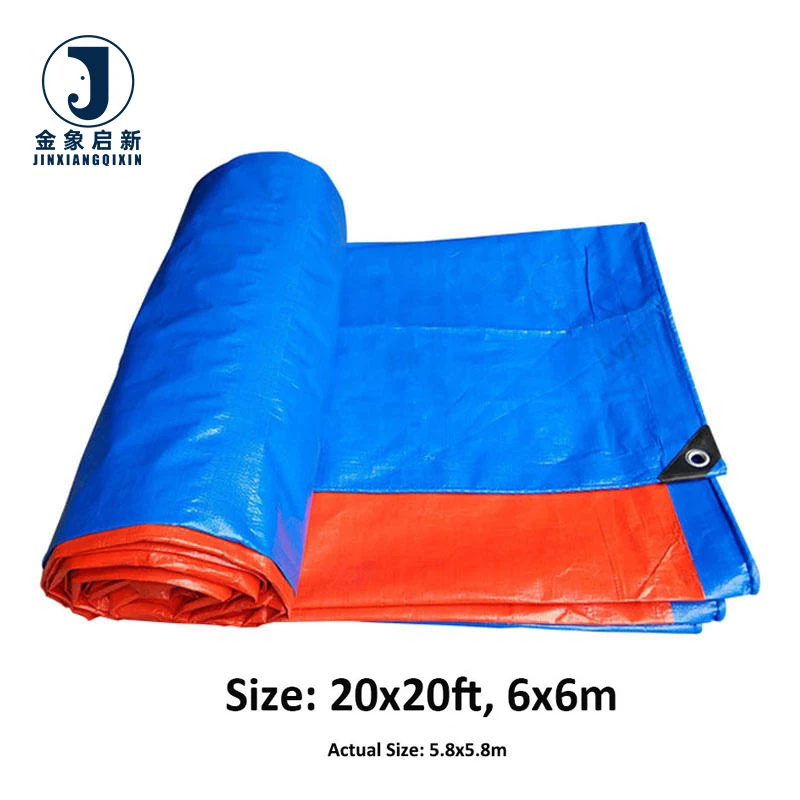
Description
Consistent Roll Output — Every PE tarpaulin roll is checked against its stated GSM and colour reference before dispatch, eliminating the batch-to-batch variation that causes rework on site.
Technical Specifications
| Parameter | Value |
|---|---|
| Product Type | PE Tarpaulin Roll |
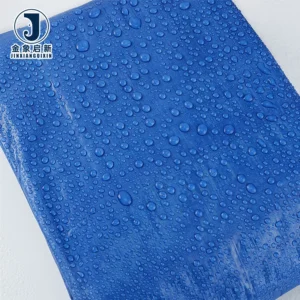
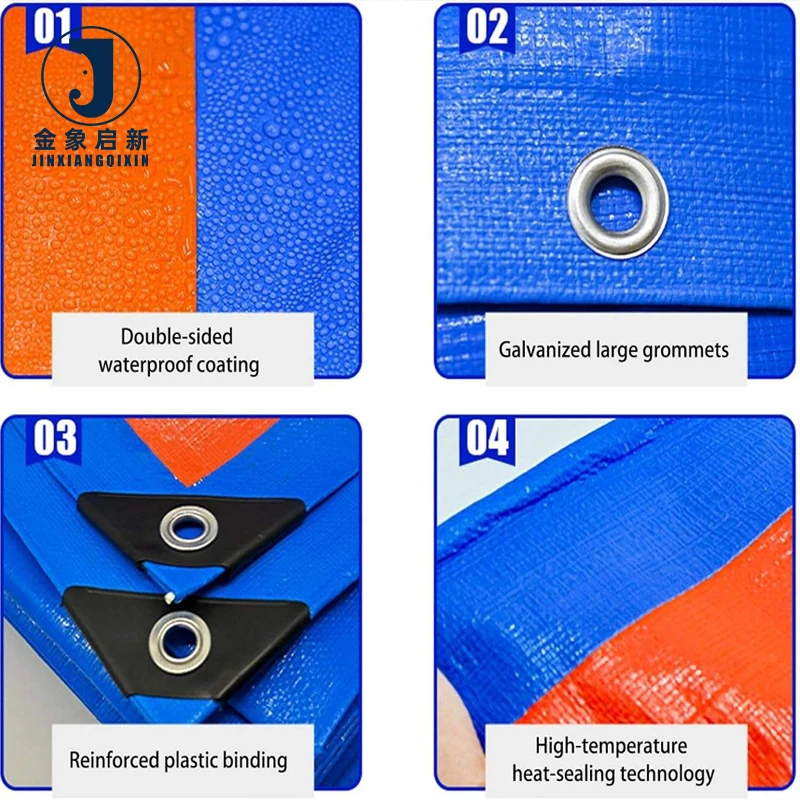
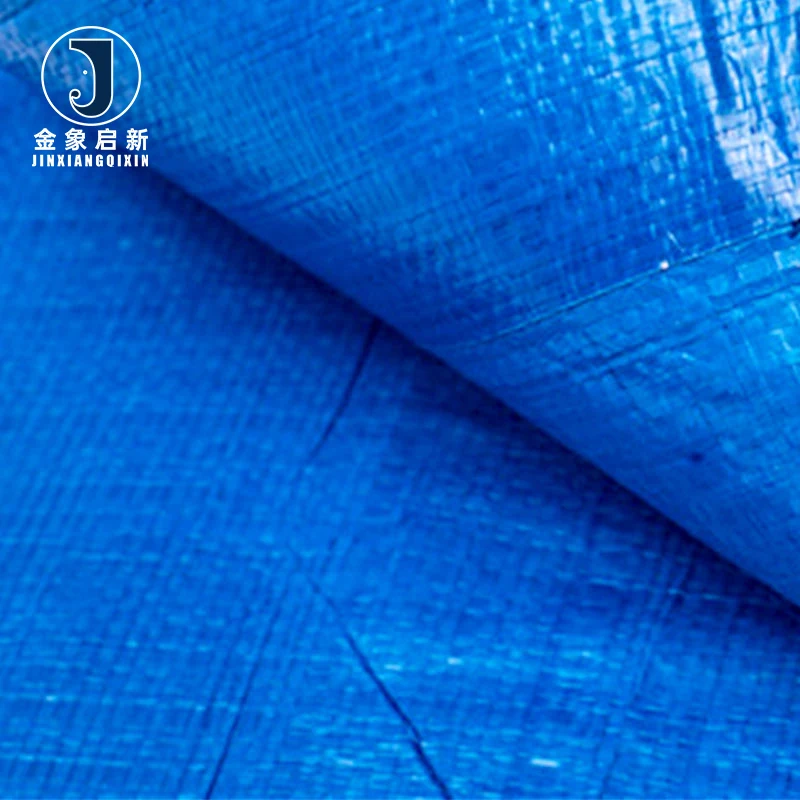
| Material | HDPE woven fabric with LDPE coating on both sides |
| Mesh Density | 6×6 to 16×16 |
| Weight | 50 g/m² to 300 g/m² |
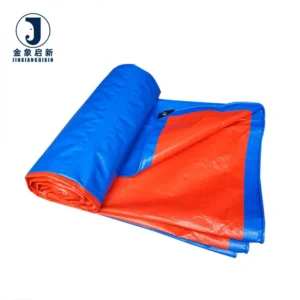
| Standard Roll Length | 100 m per roll or custom length |
| Sheet Sizes | 2×3, 3×4, 3×5, 4×5, 5×6, 6×8, 10×10, 10×12, 12×14 or custom dimensions |
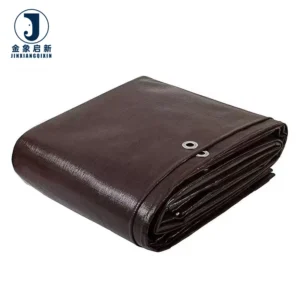
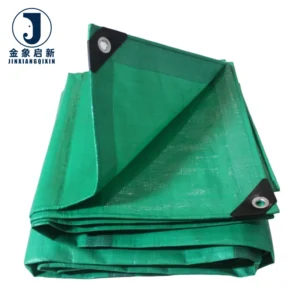
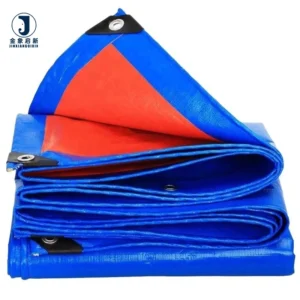
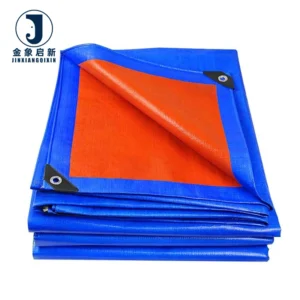
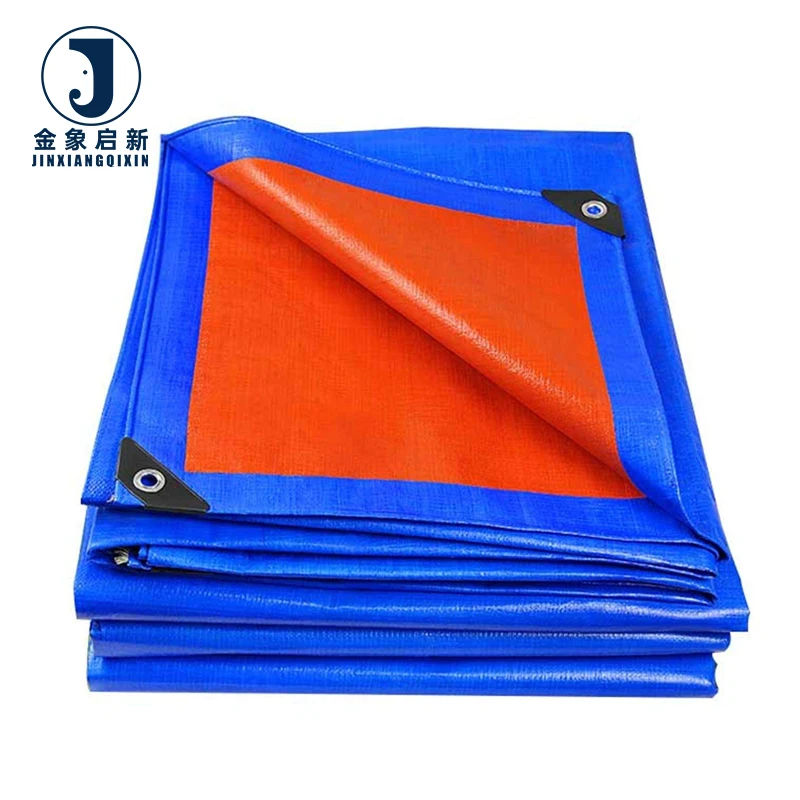
| Colours | Blue, Orange, White, Black, Grey, Yellow, Green, Red, or custom |
| Printing | Custom logos and company information available |
| Edge Finishing | Hemmed with PP ropes |
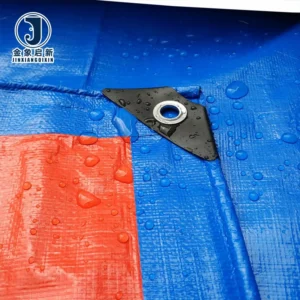
| Corner Reinforcement | Black plastic triangle reinforcements |
| Eyelets | Rustproof aluminum eyelets every 1 m or 1.5 m |
| Special Treatment | Fire resistant and UV protection available — confirm the grade required for your market |
| Container Loading | Rolls: 20GP 17 tons, 40HQ 28+ tons; Bales: 20GP 11 tons, 40HQ 28+ tons |
Application Suitability
| Application | Exposure & Requirement |
|---|---|
| Tarpaulin distribution and wholesale | High-volume container loading, consistent roll-to-roll colour and weight across multiple SKUs |
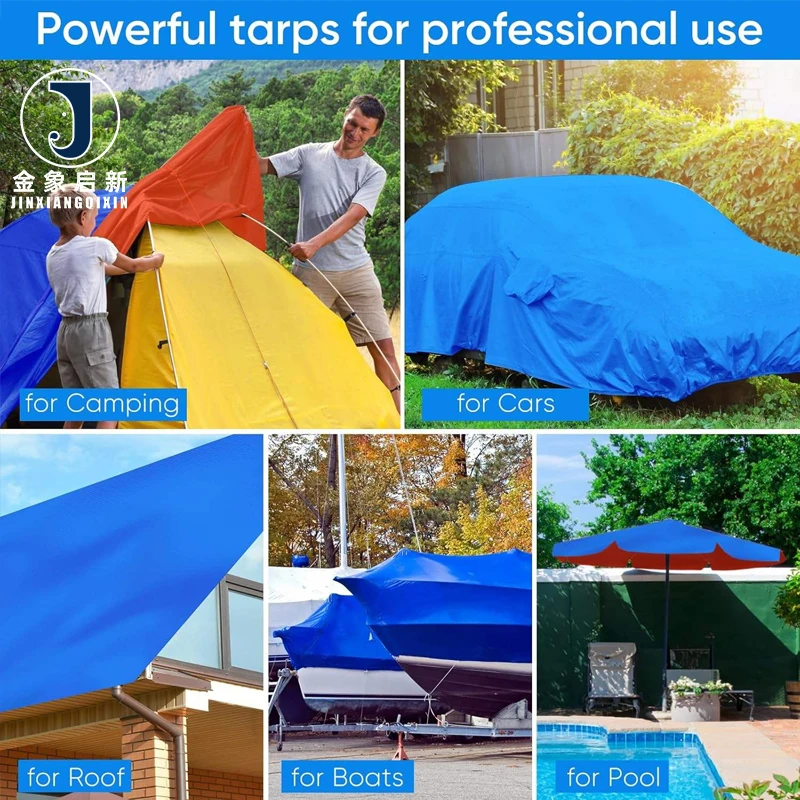
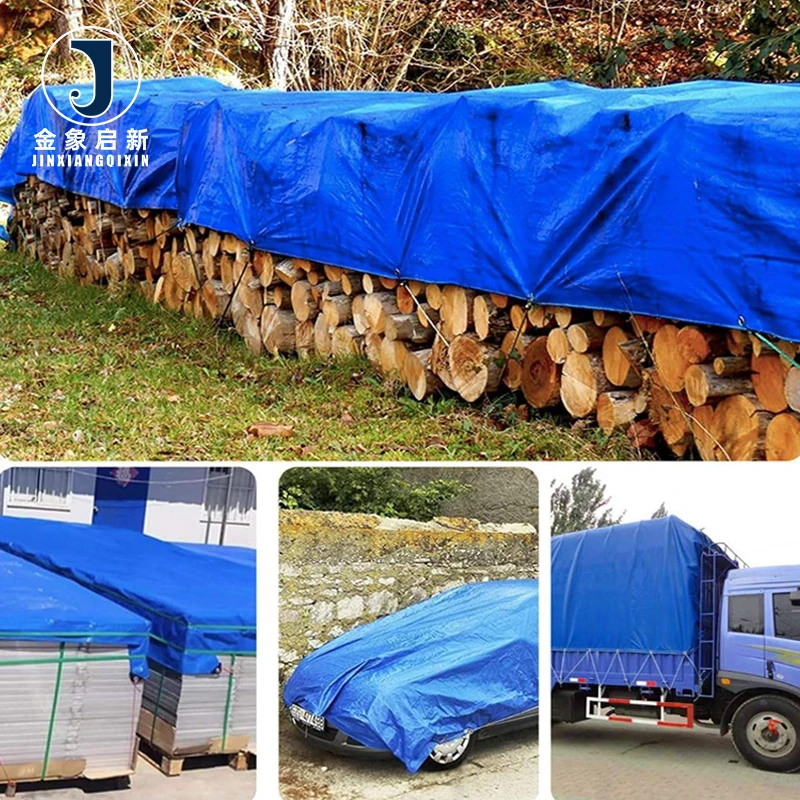
| Construction site covering | Weather exposure, wind uplift, abrasion from scaffolding and material stockpiles |
| Agricultural stockpile and pond lining | Continuous moisture contact, soil chemistry, UV exposure from open-field installation |
| Transport and fleet load protection | Road spray, wind flapping, tie-down strap abrasion at eyelet and hem points |
Why Roll Consistency Matters More Than Quoted GSM
A PE tarpaulin roll that tests lighter than its quoted GSM at the container door is already a loss — not just in material, but in the trust of your downstream buyer.
Distributors and importers building container orders across multiple weight grades face a recurring problem: the specification sheet states one value, but arrival sampling shows another. When rolls in the same container vary in mesh density or colour shade, the entire batch may be rejected by end users who install sheets side by side on a single site. This is not a cosmetic issue — a lighter roll often means a thinner LDPE coat, which affects waterproof integrity and tear behaviour under load. Sourcing PE tarpaulin roll stock at wholesale volumes demands documented verification, not just a quotation line. [NEED_CITE: tensile and tear test methods for coated fabrics per ISO 1421]
Volume Supply with Batch-to-Batch Colour Match
Colour drift between production runs is a common failure point when a distributor replenishes stock from a second order and the new rolls are visibly different from the first. Our coating process controls pigment dispersion and LDPE film thickness simultaneously, so PE tarpaulin roll stock maintains colour alignment across separate production batches. Buyers ordering mixed containers of blue, orange, green, and white rolls receive documented colour references tied to each batch for traceability.
Container Loading Efficiency for Wholesale Orders
Maximising payload per container directly affects landed cost. Roll packing, bale packing, and carton packing each yield different tonnage per 20GP and 40HQ container, and the choice depends on how the receiving warehouse handles and distributes the material. Roll packing suits automated slitting lines, while bale packing suits manual cutting operations. Container loading plans are prepared with roll count and weight breakdowns before dispatch so the buyer can plan unloading and storage. [NEED_CITE: container loading practices for flexible coated fabrics in international trade]
How Mesh Density and Weight Interact
The relationship between mesh count and GSM determines how the fabric behaves under tension and puncture loads. A 6×6 mesh at 50 g/m² produces a light, flexible sheet suited to temporary stockpile covers, while a 14×14 or 16×16 mesh at 250–300 g/m² provides a tighter weave with higher tear resistance for equipment wrapping and heavy-duty truck covering. GSM alone does not define strength — a higher weight on an open mesh may still tear more easily than a lighter weight on a dense weave. The dual-side LDPE coating fills the interstices of the HDPE woven base, adding dimensional stability and waterproof continuity across the fabric face. Selecting the right mesh-to-weight combination reduces the need for double-layering on site, cutting both material cost and installation time.
The Cost of Skipping Pre-Shipment Verification
Accepting a container of PE tarpaulin rolls without documented inspection often surfaces problems only after the material reaches the end user. Rolls that arrive below the quoted GSM fail earlier at eyelet pull-out points because the thinner coating cannot distribute the load across the woven base. Colour mismatches discovered on a construction site force the contractor to reorder, creating project delays and doubling freight costs. Fire resistant or UV protection treatments claimed without a supporting test report leave the buyer exposed when a site inspector requests compliance documentation. These consequences are avoidable with a structured pre-shipment inspection that checks weight, density, and colour against the approved specification. [NEED_CITE: pre-shipment inspection protocols for textile roll goods]
What This Supply Channel Delivers
Three full production lines and 36 sets of professional equipment support bulk roll output with on-time dispatch for container orders. A 10-person R&D team handles custom width, colour matching, and logo printing development with samples produced within days. Every roll undergoes QA inspection at each production stage — weaving, coating, slitting, and packing — with 100% pre-shipment checking before loading. ISO and CE certified processes underpin the quality system, and the facility has nearly 30 years of focused coated fabric production experience. Export documentation including certificates of origin and customs support is prepared for over 20 destination markets.
Documentation & Verification
- Material specification sheet stating GSM, mesh density, HDPE base fabric, LDPE coating type, and colour reference for each roll batch
- Pre-shipment inspection record confirming 100% roll check against quoted weight and colour before container loading
- Roll packing list detailing roll count, individual roll dimensions, and total weight per container
- Test report for UV or fire resistant treatment supplied when specified, with grade and test basis confirmed on paper
- Certificate of origin and customs documentation prepared per destination market requirements
Fabrication, Handling & Storage
- Heat-seal temperature and dwell time should be matched to the LDPE coating thickness on the specific GSM grade ordered
- Aluminum eyelets at 1 m or 1.5 m spacing distribute tie-down load across the PP rope hem to prevent pull-through
- Store rolls upright on pallets in covered areas to prevent LDPE coating compression marks from stacked weight
- Unroll and allow sheets to relax before cutting in cold conditions to avoid dimensional distortion of the HDPE weave
- Custom logo printing should be verified against the approved colour proof before the full roll print run begins
- Cut sheets can be field-repaired with LDPE-compatible adhesive patches matched to the roll coating type
Planning Your Roll Order
To prepare an accurate quotation and production schedule, share the mesh density and GSM range you need, the roll width and length your warehouse or converting line requires, and the colour references or logo artwork for any printed runs. Confirm whether fire resistant or UV protection treatment is required and specify the compliance standard your market demands. Providing your target container type and tonnage allows us to calculate the optimal packing method — rolls, bales, or cartons — for your order.
Frequently Asked Questions
Q: How is the actual GSM verified before shipment?
A: Each PE tarpaulin roll is sampled and weighed against the quoted specification during pre-shipment inspection. The inspection record documents the measured weight per square metre for every batch, and this report accompanies the shipping documentation so you can verify the figures upon arrival at your warehouse.
Q: Can different colours and weights share one container?
A: Mixed containers are supported across all available colours and GSM grades. Each roll batch is packed and labelled separately with its specification reference, and the container loading plan details the roll count and weight breakdown by product variant for your receiving team.
Q: What minimum applies to custom width or colour orders?
A: Custom width and colour runs carry minimums based on the production line setup for the specific mesh density and coating weight requested. Standard 100 m roll lengths in stock colours typically have lower minimums. Share your target width and colour reference for a confirmed minimum and lead time.
Q: How is colour consistency maintained across repeat orders?
A: Colour references are approved before each production run and retained on file for future batches. The dual-side LDPE coating process controls pigment dispersion to align colour output across separate runs, and batch samples can be provided for side-by-side comparison before full production begins.
Q: What documentation ships with each roll order?
A: Every shipment includes a material specification sheet, pre-shipment inspection record, roll packing list, and certificate of origin. Test reports for UV or fire resistant treatment are included when those treatments are specified and confirmed in the order documentation.