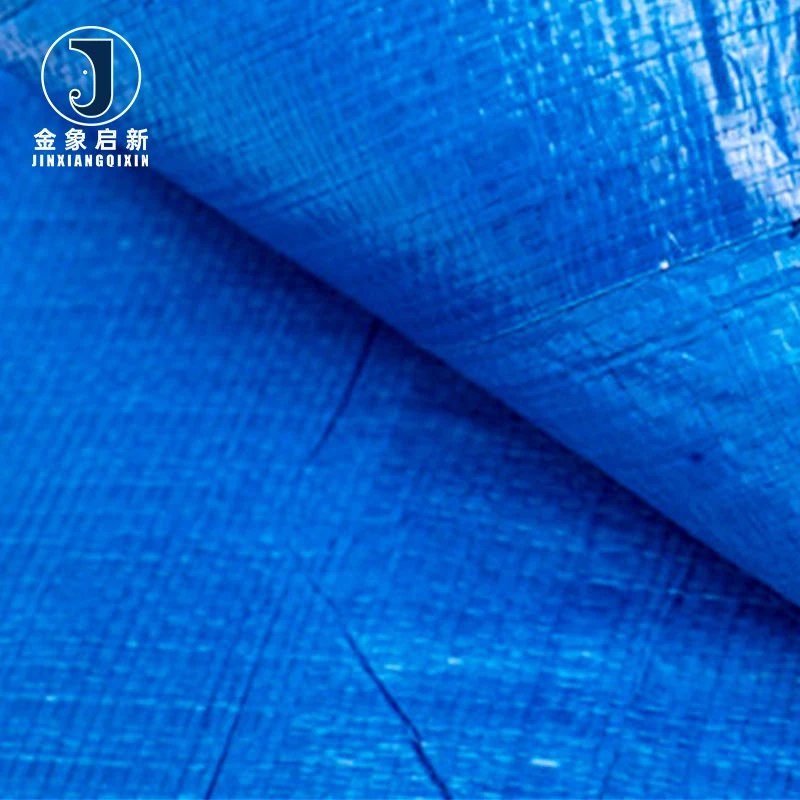
Description
Proven Process Control — HDPE weaving and LDPE lamination parameters are held to tight tolerances across every production run, ensuring each roll meets its stated specification.
Technical Specifications
| Parameter | Value |
|---|---|
| Product Type | PE Tarpaulin Roll / Finished PE Tarpaulin |
| Base Fabric | HDPE weaving |
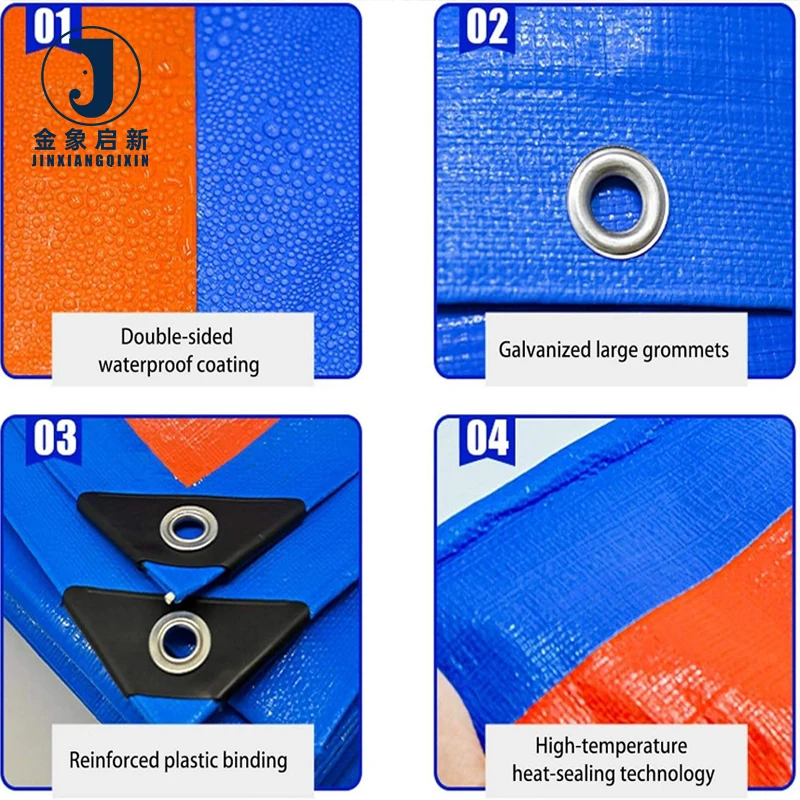
| Coating Material | LDPE lamination on both sides |
| Weight (GSM) | 50gr/m² to 220gr/m² available (confirm grade required) |
| Lightweight Grade | 80–110 g/m² (8×8 mesh count) |
| Medium Grade | 120–150 g/m² (10×10 mesh count) |
| Heavy-duty Grade | 160–240 g/m² (12×12 mesh count) |
| Total Thickness | 0.2–0.4 mm (8 mil–16 mil) |
| Tensile Strength (Lightweight) | Meridian 300–500 / Latitude 250–450 N/5cm (test standard not stated) |
| Tensile Strength (Medium) | Meridian 500–800 / Latitude 400–700 N/5cm (test standard not stated) |
| Tensile Strength (Heavy-duty) | Meridian 900–1200 / Latitude 700–1000 N/5cm (test standard not stated) |
| Roll Width Options | 6ft, 8ft, 10ft, 12ft / 2m, 4m, 6m |
| Roll Length Options | 100 yards, 100 meters, or custom |
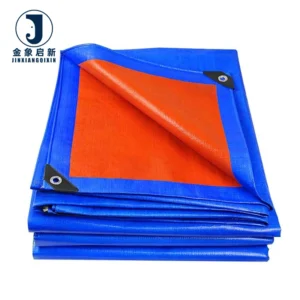
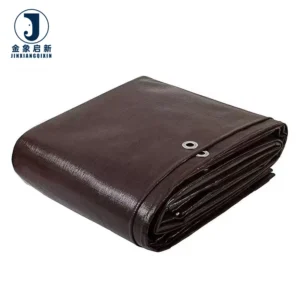
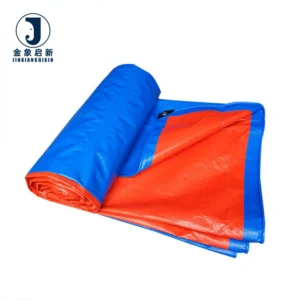
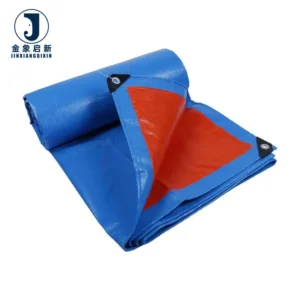
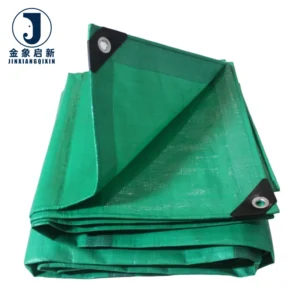
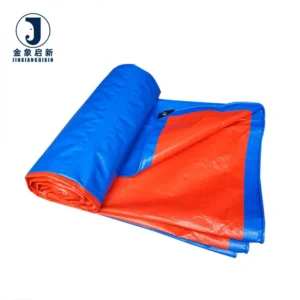
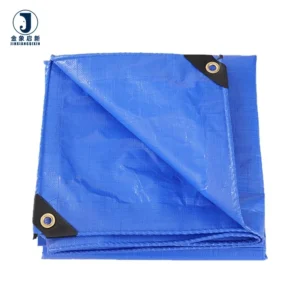
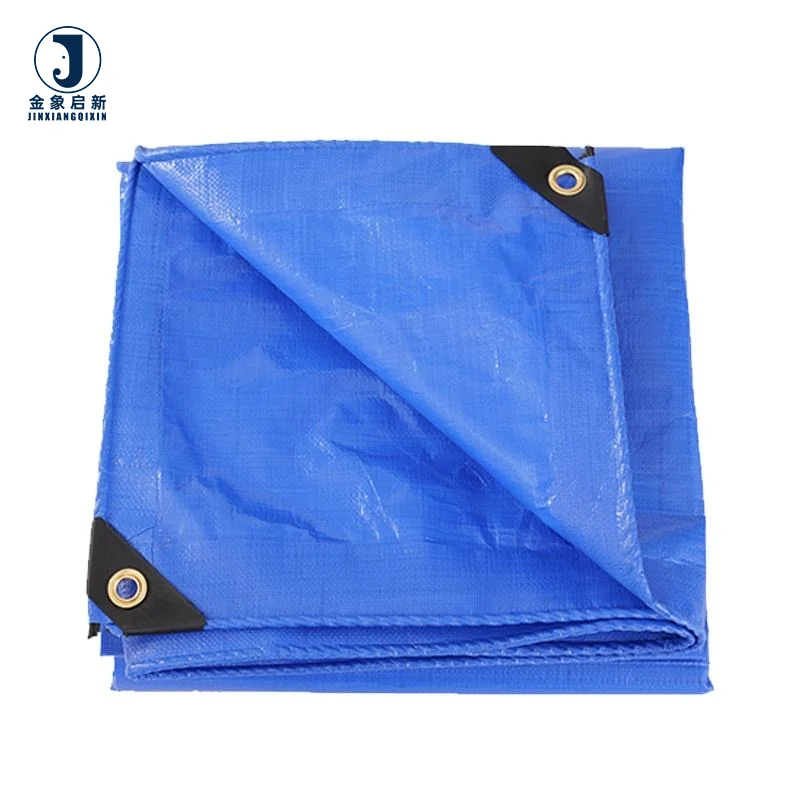
| Colour Options | Blue, Blue/Orange, Green, Grey, Black, Clear, Grey/Green, Orange, or custom |
| UV Treatment | Available (confirm grade required for your market) |
| Key Features | Waterproof, mildew proof, anti-aging, washable, tear resistant |
Application Suitability
| Application | Exposure & Requirement |
|---|---|
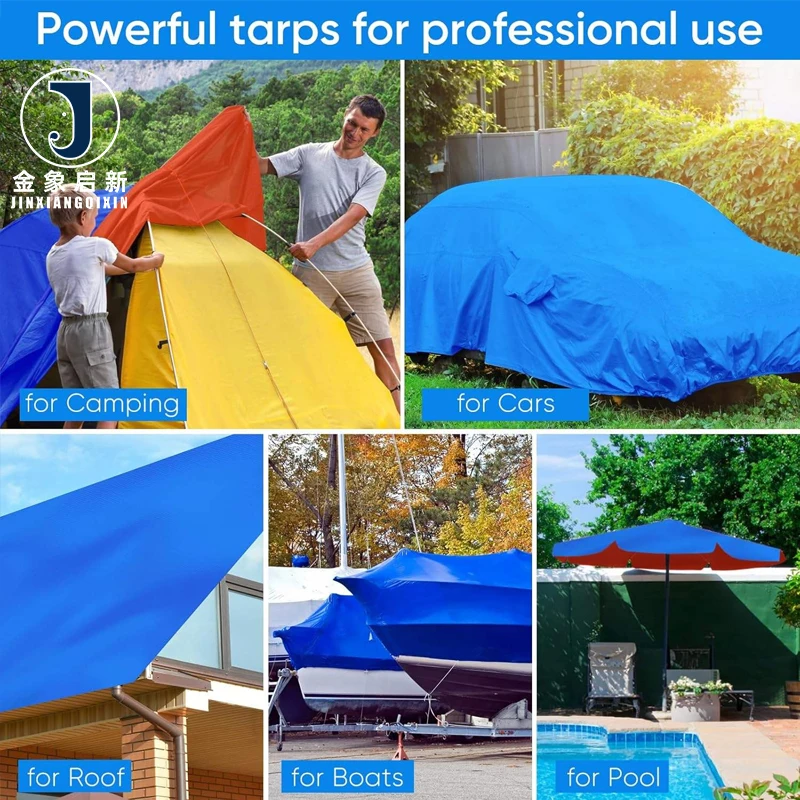
| Warehouse and stockpile coverage | Prolonged outdoor weathering, wind flap, abrasion from stacked goods — requires medium to heavy-duty grade |
| Agricultural crop and pond protection | Permanent moisture contact, soil chemistry exposure, lightweight handling — suited to lightweight and medium grades |
| Construction site and equipment covers | UV exposure, puncture risk from sharp materials, frequent repositioning — requires heavy-duty grade with reinforced hems |
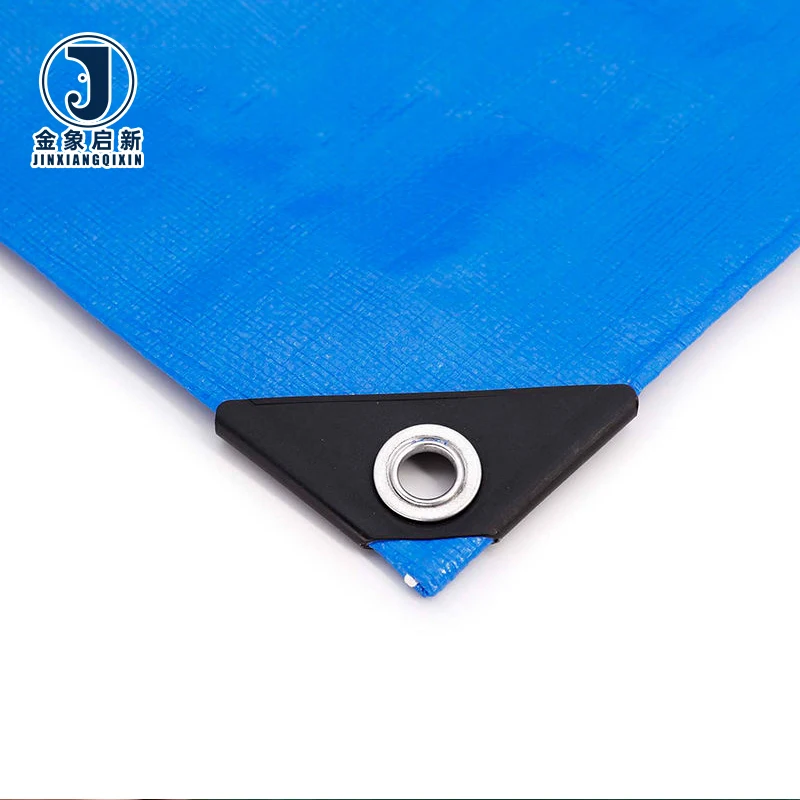
| Truck and transport load covering | Road debris impact, wind-driven rain, tie-down tension at eyelets — requires heavy-duty grade with galvanized eyelet reinforcement |
| Tarpaulin redistribution by importers | Container-volume ordering, roll-to-roll colour and weight consistency across the shipment — requires documented batch QA |
When PE Tarpaulin Roll Colour Shifts Between Cartons
Batch coating under controlled conditions keeps adjacent panels uniform once installed side by side.
Buyers who source PE Tarpaulin in bulk often discover shade differences only after rolls are unrolled and laid next to each other on site. The visual mismatch forces rework or panel rearrangement, delaying project handover. Colour drift between rolls within a single order is a recurring complaint across the category [NEED_CITE: colour consistency standards for coated fabric batches]. Controlling pigment dosing and lamination temperature at every stage of the run is the production discipline that prevents this outcome, rather than relying on post-production sorting.
Roll-to-Roll Consistency Across Container Loads
Distributors and importers placing full-container orders need every roll to match the confirmed sample. PE Tarpaulin wholesale procurement at this scale demands that GSM, colour, and thickness remain within tolerance from the first roll to the last. In-process QA checkpoints at the weaving, coating, and winding stages catch deviations before a roll is packed. This eliminates the scenario where a buyer receives mixed-grade material in one shipment and must sort it on arrival.
Width and Length Configurations for Efficient Loading
Roll widths from 2 m to 6 m and lengths of 100 yards or 100 metres allow buyers to plan container loading by roll count and total weight. Custom lengths are available for buyers whose cutting lines are set to specific panel dimensions, reducing trim waste at the fabrication stage. Wider rolls reduce the number of welded seams needed when covering large areas, which directly affects both installation time and long-term seam reliability [NEED_CITE: seam failure rates versus panel count in field-installed covers].
Reading GSM, Mesh Count, and Tensile Strength Together
A 150 g/m² PE tarpaulin with a 10×10 mesh count and a 120 g/m² fabric with a 12×12 mesh count can show similar weight figures yet behave very differently under load. The base fabric denier and weave density govern how tensile force distributes across the warp and weft yarns, while the LDPE lamination weight adds to the total GSM without necessarily increasing tear resistance. This is why reviewing the meridian and latitude tensile values alongside the mesh count gives a clearer picture of how the material will perform under tie-down tension or wind uplift. Choosing on GSM alone can lead to selecting a fabric that meets the weight spec but falls short on the mechanical demand of the actual installation.
The Hidden Cost of Specifying on Weight Alone
When procurement decisions rest only on quoted GSM, the delivered material may arrive lighter than agreed, with the deficit hidden inside the lamination layer rather than the base fabric. This shifts the tensile and tear balance below what the installation requires. The cover fails first at stress points — around eyelets, along welded seams, or where the fabric flexes over sharp edges [NEED_CITE: tensile and tear test methods for coated fabrics per ISO 1421]. Documenting the base fabric mesh count and verified coating weight on the specification sheet before production starts prevents this mismatch from reaching the container.
What Bulk Buyers Verify Before Release
Three full production lines and 36 sets of professional equipment support volume output without sacrificing lot traceability. Every roll passes through dedicated QA/QC at the weaving, lamination, and final winding stages, with 100% inspection before shipment. The 10-person R&D team handles custom colour matching, width development, and sample fabrication within days of receiving the inquiry. Pre-shipment inspection records are generated per order, giving buyers documentary evidence that the material loaded into the container matches the confirmed specification — not a lighter substitute pulled from general stock.
Documentation & Verification
- Material specification sheet stating confirmed GSM, HDPE base fabric mesh count, and LDPE coating weight per roll grade
- Pre-shipment inspection record with weight verification against the quoted grade before container loading
- Roll packing list detailing roll count, individual roll weight, and total shipment weight for customs and logistics planning
- Certificate of origin and full customs documentation package accompanying every dispatch
- Test report for UV treatment grades where applicable, matched to the specific production batch
Fabrication, Handling & Storage
- Heat-seal the LDPE lamination side using temperature settings matched to the selected GSM grade to avoid coating burn-through on lightweight 80–110 g/m² rolls
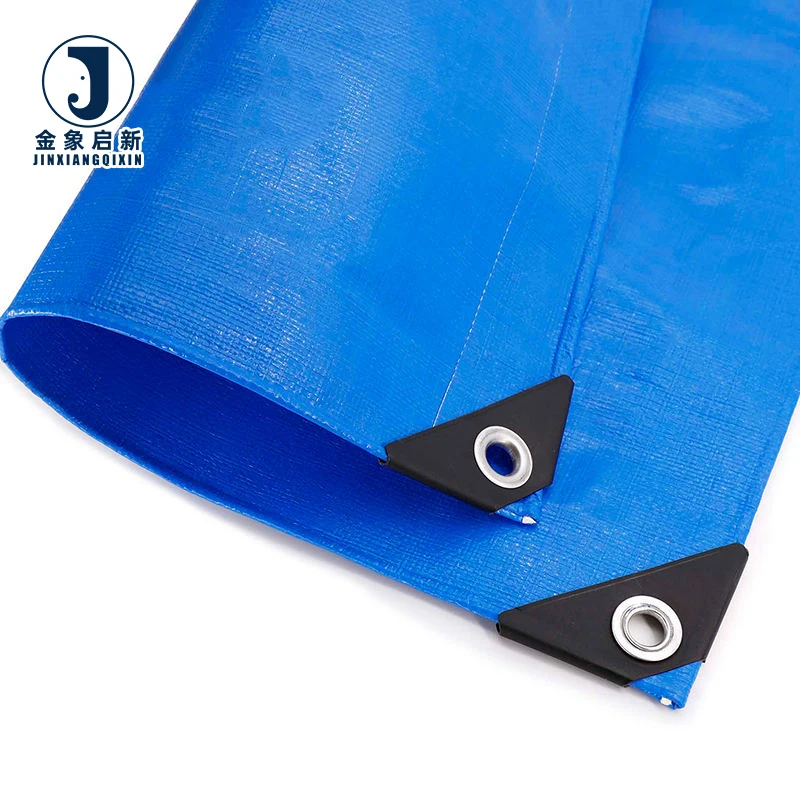
- Position galvanized eyelets at 3 ft or 1 m intervals through the PP rope-reinforced hem to distribute tie-down load across the HDPE weave
- Store rolls upright on a flat pallet in a covered area to prevent edge crushing that can deform the 0.2–0.4 mm coating layer
- Unroll in ambient conditions above freezing to prevent LDPE lamination cracking on heavy-duty 160–240 g/m² grades during cold-weather installation
- Clean with mild detergent and soft brush to preserve the LDPE surface without degrading UV treatment where applied
- Repair minor punctures by applying LDPE-compatible adhesive patches cut from offcuts of the same GSM grade
Before You Send the Inquiry
Specify the end-use environment and the mechanical stresses the cover will face — wind load, tie-down tension, or abrasion against rough surfaces. Confirm your target market’s compliance requirements, including any UV stability or fire classification standards the material must meet. Indicate the roll widths and annual volume you need so the quotation reflects realistic container loading and production scheduling.
Frequently Asked Questions
Q: How do I choose between lightweight, medium, and heavy-duty PE tarpaulin grades?
A: Lightweight grades at 80–110 g/m² suit temporary agricultural covers and pond liners where handling ease matters. Medium grades at 120–150 g/m² balance strength and weight for warehouse and stockpile covers. Heavy-duty grades at 160–240 g/m² are specified for truck covers and construction site applications where tie-down tension and puncture resistance are critical. Match the grade to the mechanical demand, not just the exposure duration.
Q: How is GSM verified on arrival and what documentation accompanies each shipment?
A: Every roll is inspected at the winding stage and weighed against the quoted specification before packing. A pre-shipment inspection record accompanies the shipment, along with a material specification sheet stating confirmed GSM, base fabric mesh count, and coating weight. The roll packing list details individual roll weights, giving you full traceability from production batch to container.
Q: What roll widths and lengths are available for container loading optimisation?
A: Standard roll widths include 2 m, 4 m, and 6 m, with lengths of 100 yards or 100 metres. Custom lengths are produced to match your cutting line requirements and reduce trim waste. Container loading plans are calculated by roll count and total weight so you can forecast freight cost per square metre of usable material accurately.
Q: How do you control colour consistency across multiple rolls in the same order?
A: Pigment dosing and lamination temperature are controlled at every production stage under in-process QA. All rolls in a single order are produced in the same batch run so that adjacent panels show no visible shade variation once installed side by side. Any deviation caught during inspection is corrected before the roll is packed and released for shipment.
Q: What is the MOQ for custom colour or custom width PE tarpaulin rolls?
A: MOQ varies by the specific colour, width, and grade combination requested. Custom samples are developed within days of the inquiry so you can approve the shade, weight, and hand feel before bulk production is scheduled. Contact the sales team with your required specification and annual volume to receive a quotation with confirmed lead time and minimum order.