Description
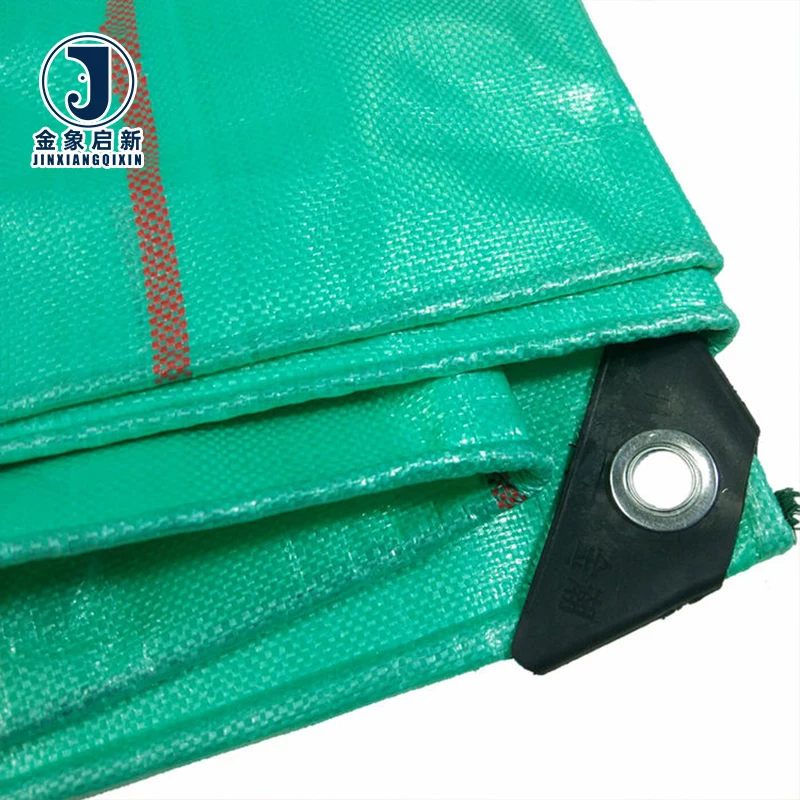
Process-Controlled Roll Stock — PE tarpaulin rolls weighed and inspected against spec at every production stage, giving wholesale buyers predictable GSM and colour uniformity across container loads.
Technical Specifications
| Parameter | Value |
|---|---|
| Product Type | PE Tarpaulin Roll / Finished PE Tarpaulin |
| Material | HDPE weaving with LDPE lamination on both sides |
| Weight Range | 50 g/m² to 220 g/m² — confirm the grade for your order |
| Total Thickness | 0.2–0.4 mm (8–16 mil) or custom |
| Mesh Count Options | 6×6, 6×7, 7×7, 7×8, 8×8, 9×9, 8×10, 10×10, 12×12, 14×14, 14×16 weave |
| Roll Width Options | 2 m, 4 m, 6 m / 6 ft, 8 ft, 10 ft, 12 ft |
| Roll Length Options | 100 yards, 100 meters, or custom |
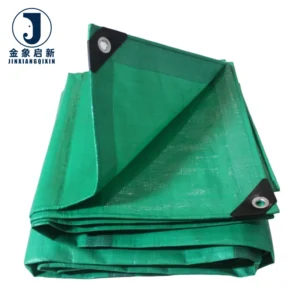
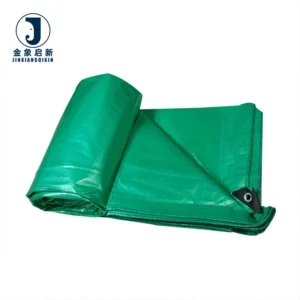
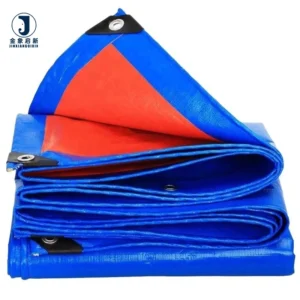
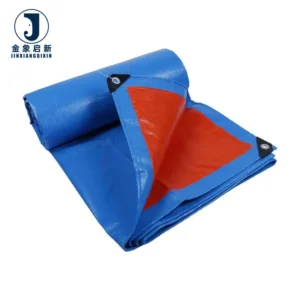
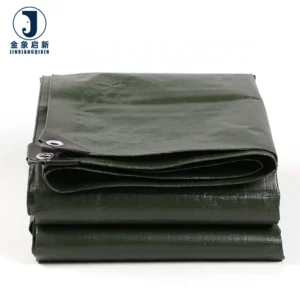
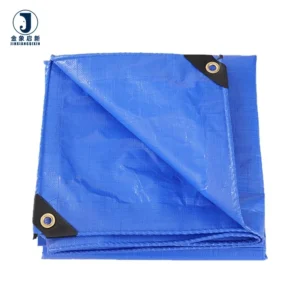
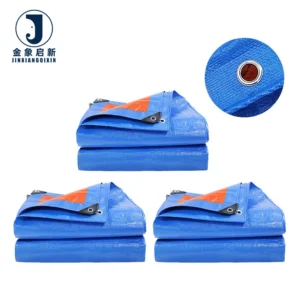
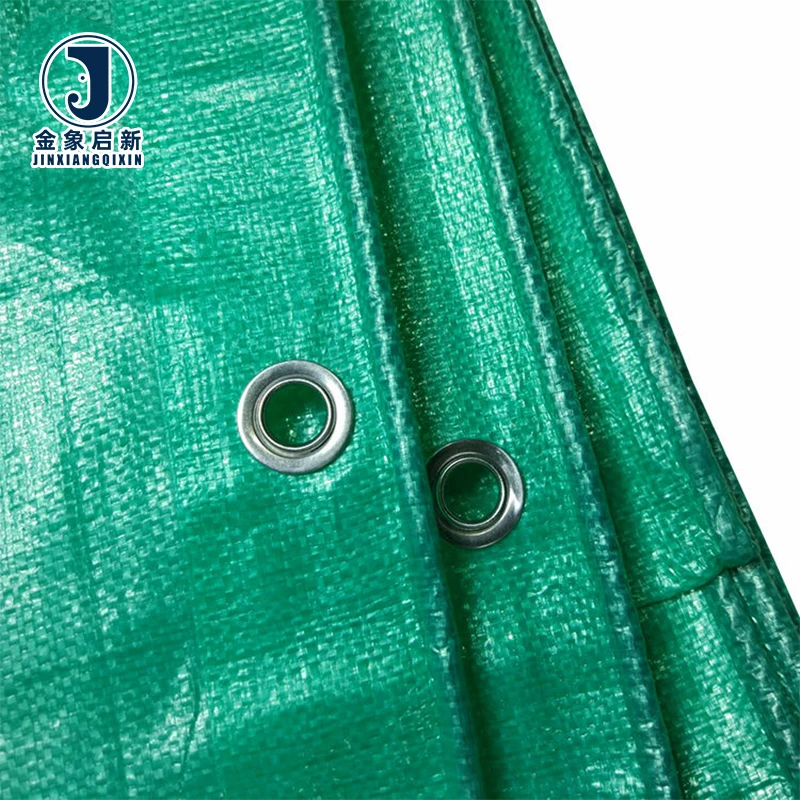
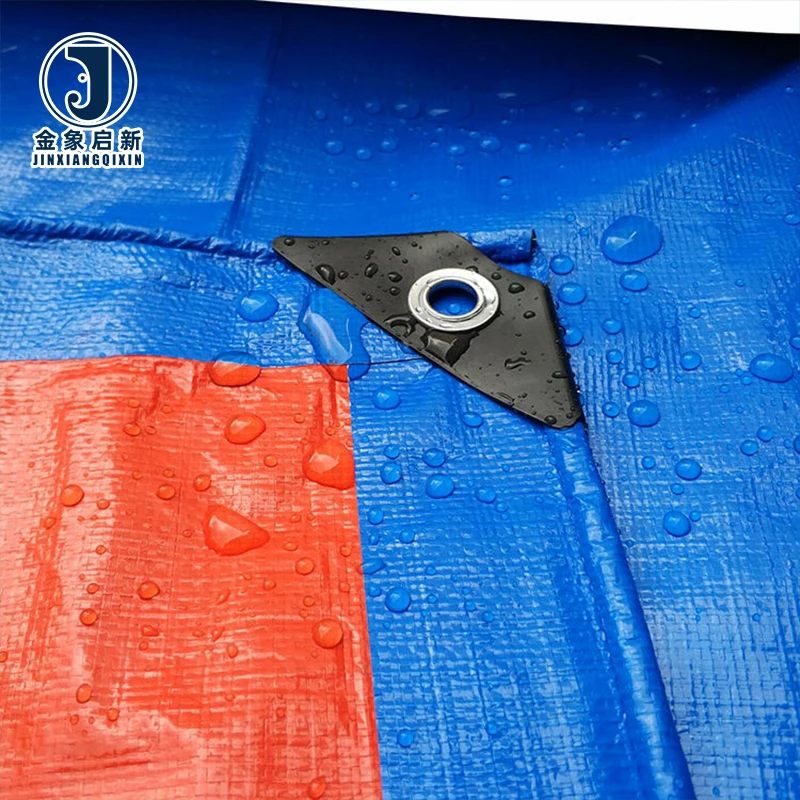
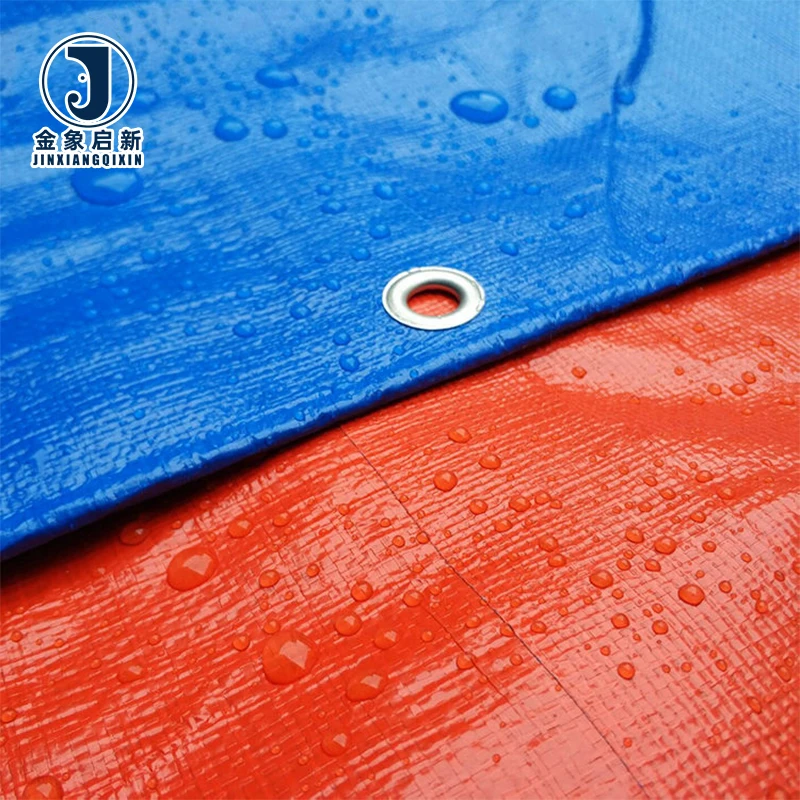
| Colour Options | Blue, Blue/Orange, Green, Grey, Black, Clear, Grey/Green, Orange, or custom |
| UV Treatment | Available — confirm the treatment level required for your market |
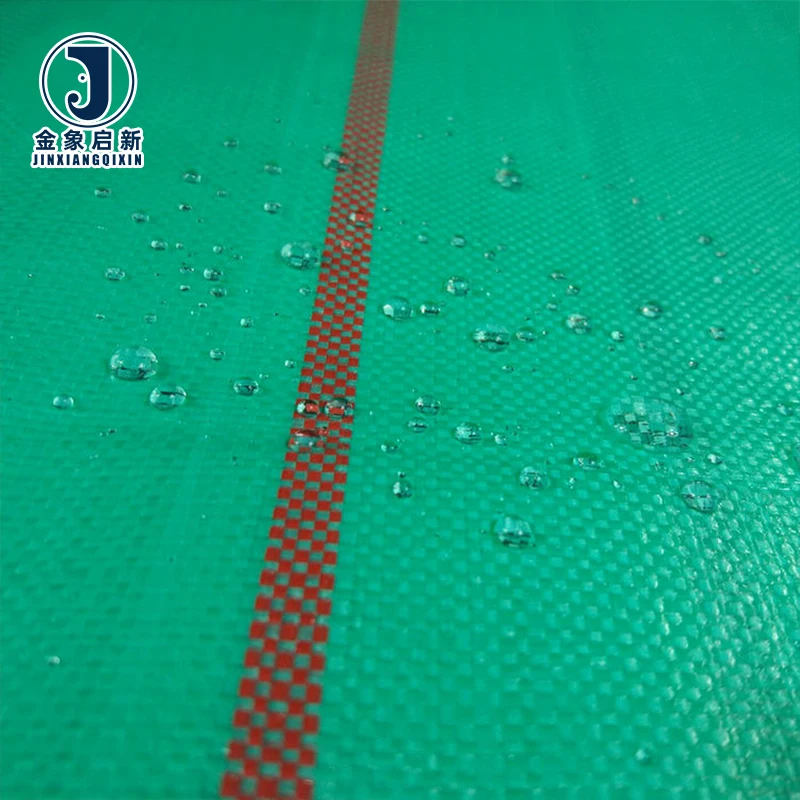
| Waterproof | Yes — washable, prevents moisture ingress |
| Anti-Mildew | Yes — mildew resistant and anti-aging |
| Key Features | Waterproof, tear resistant, washable, mildew proof, anti-aging |
Application Suitability
| Application | Exposure & Requirement |
|---|---|
| Tarpaulin distributor warehouse stock | Consistent GSM and colour roll-to-roll for regional resale without customer complaints on weight variance |
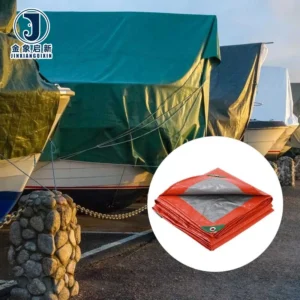
| Agricultural hay and crop covers | Prolonged sun and rain exposure, need for waterproof barrier and mildew resistance during multi-week storage |
| Construction site material protection | Abrasion from stacked building materials, wind uplift on scaffolding wraps, dust containment on road repair sites |
| Pond and reservoir lining (light-duty grades) | Continuous water contact, soil chemistry exposure, puncture risk from substrate irregularities |
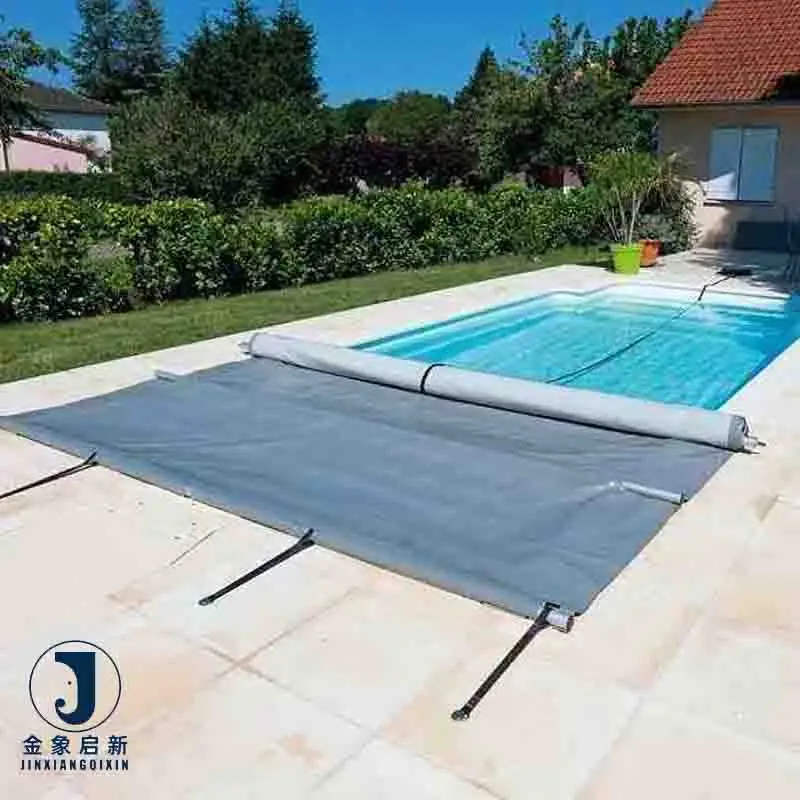
| Furniture and garden equipment covers | Frequent handling and folding, UV exposure in backyard and patio settings |
Why Batch Colour Drift Costs Wholesale Buyers More Than They Expect
Colour variation between rolls in the same container load is the single most common reason distributors face end-customer rejection.
When a wholesale buyer receives a full container of PE tarpaulin rolls, the expectation is that every roll cut from the same production run matches the approved sample. In practice, colour drift happens when coating pigment batches change mid-run or when lamination temperature fluctuates across the line. The result is visible once two rolls are installed or displayed side by side — a situation that forces the distributor to sort, re-grade, or discount stock [NEED_CITE: colour consistency standards for coated PE fabrics in wholesale distribution]. This problem is not about aesthetics alone; it signals inconsistent process control that may extend to GSM and lamination adhesion as well.
Roll-to-Roll Consistency Starts at the Lamination Stage
Achieving uniform colour across an entire container order of PE tarpaulin rolls depends on more than pigment selection. The LDPE lamination temperature, line speed, and cooling rate all influence how the colour sets into the surface. When these parameters drift between production runs, the same pigment formula can yield noticeably different shades. Buyers ordering wholesale PE tarpaulin by the container load should verify that the mill runs dedicated QA checks at the coating stage, not only at final packing.
How GSM Verification Protects the Wholesale Margin
The quotation states a specific GSM, but the rolls that arrive can weigh less if the base fabric weave is loosened or the lamination coat weight is reduced to cut cost. For a distributor buying PE tarpaulin roll stock by the tonne, even a small shortfall per roll compounds across a full container [NEED_CITE: GSM verification methods for HDPE woven tarpaulin fabrics]. Pre-shipment weighing of each roll against the material specification sheet is the practical safeguard, documented in the packing list so the buyer can reconcile on arrival.
Reading Mesh Count Against Intended Use
The mesh count — from 6×6 up to 14×16 weave — defines the HDPE base fabric density before lamination. A tighter weave such as 14×16 delivers higher tensile and tear resistance at the same GSM compared to a looser 6×6 construction, because more yarns share the load. Buyers selecting PE tarpaulin wholesale grades should match mesh count to the mechanical stress of the end use: lighter weaves for temporary covers, denser weaves for applications involving wind load, tie-down tension, or repeated handling.
The Hidden Cost of Ordering the Wrong Grade
Selecting a lighter GSM to save on material cost often leads to early failure at the point of highest stress — typically where the tarpaulin is tied down or folded over a sharp edge. When the lamination cracks before the base fabric yields, moisture penetrates the weave and accelerates degradation. For wholesale buyers, this translates into warranty claims and damaged reputation with regional customers who expect the stated grade to perform as specified [NEED_CITE: field failure analysis of PE tarpaulin at tie-down and fold stress points]. Specifying the correct mesh count and lamination weight for the target application avoids these downstream costs.
Why Process Control Matters More Than Machine Count
Three full production lines with dedicated lamination stations allow this facility to run parallel grades simultaneously, so a 90 g/m² blue order and a 180 g/m² green order do not compete for line time. The ten-person R&D team handles colour matching and sample development in-house, producing trial rolls within days for buyer approval before the full production run. Dedicated QA at every stage — from HDPE yarn selection through lamination, winding, and packing — means each roll carries a traceable production record rather than relying on end-of-line sampling alone.
Documentation & Verification
- Material specification sheet stating GSM, HDPE weave density, and LDPE coating type for every roll grade
- Pre-shipment inspection record confirming actual weight per roll against the quoted specification
- Roll packing list with individual roll weights and batch numbers for arrival reconciliation
- Container loading plan detailing roll count, bale count, or carton count with tonnage before booking
- Certificate of origin and customs documentation for international shipment clearance
Fabrication, Handling & Storage
- Heat-seal LDPE laminated surfaces at moderate temperature to avoid blistering through the coating layer
- Store rolls upright on pallets to prevent flat-spot creasing across the 2 m to 6 m widths
- Allow cold-stored rolls to reach ambient temperature before unrolling to prevent lamination cracking
- Use sharp blades when cutting to size — dull tools drag the HDPE weave and fray cut edges
- Clean with mild detergent and water; avoid solvent-based cleaners that soften the LDPE surface
What to Include in Your Inquiry
Provide the target GSM or mesh count, the roll width and length your cutting operation requires, and the annual volume so that production scheduling can accommodate repeat orders with batch consistency. If your end market demands UV treatment or specific colour references, include those details along with whether you need rolls only or finished cut sizes with hemmed edges and eyelets.
Frequently Asked Questions
Q: How is GSM verified on each roll before shipment?
A: Every roll is weighed individually on calibrated scales during the pre-shipment inspection. The actual weight is recorded on the roll packing list and compared against the GSM stated in the material specification sheet. Any roll falling outside the agreed tolerance is flagged and replaced before the container is sealed, ensuring wholesale buyers receive the grade they ordered.
Q: How do you control colour consistency across rolls in the same order?
A: Colour consistency is managed at the LDPE lamination stage by locking pigment formula, melt temperature, and line speed for the entire production run. QA checks compare each roll against the approved sample under standard lighting. Rolls from the same container order are produced in a single continuous run wherever possible to eliminate batch-to-batch variation.
Q: What roll widths and lengths are stocked versus made to order?
A: Standard widths of 2 m, 4 m, and 6 m in common mesh counts and colours are available for faster dispatch. Non-standard widths and custom lengths beyond 100 meters are produced to order with a defined lead time and minimum quantity. Buyers should confirm the required dimensions and annual volume to determine whether stock or made-to-order scheduling applies.
Q: How is the tarpaulin packed for container transport to prevent damage?
A: Rolls are packed by roll, bale, or carton depending on the buyer’s preference and the container type. Roll packing maximizes tonnage in a 20-foot container, while bale packing suits larger volume orders in 40-foot high-cube containers. Each packing method secures the rolls against shifting during transit to prevent edge crushing and surface creasing.
Q: What documentation is included with each bulk shipment?
A: Each shipment includes a material specification sheet, pre-shipment inspection record, detailed roll packing list with weights, certificate of origin, and customs support documents. UV or other treatment test reports are provided where applicable. All documentation references the specific batch and roll numbers for full traceability back to the production run.