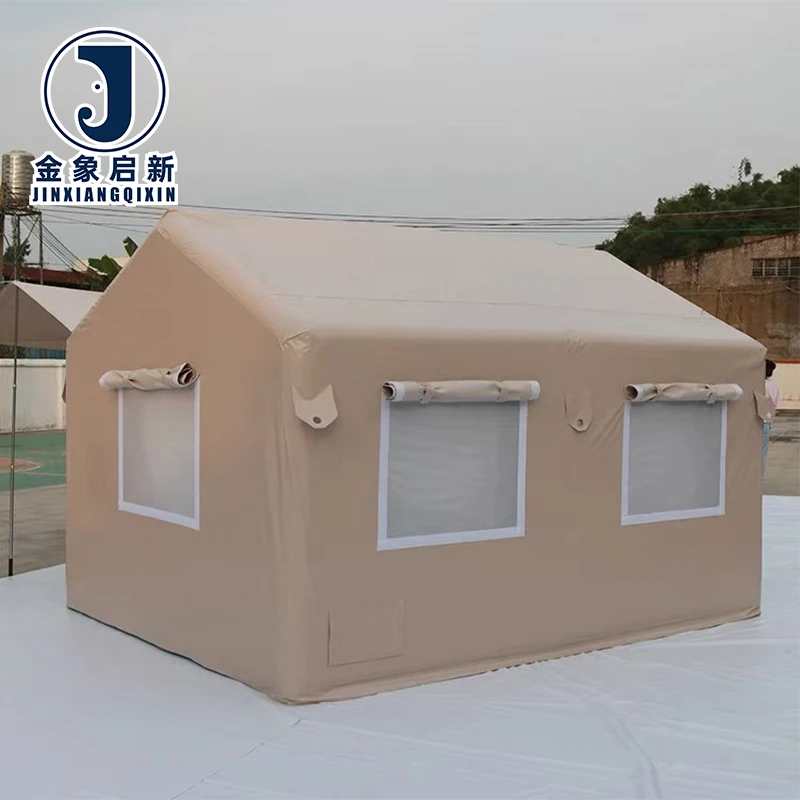
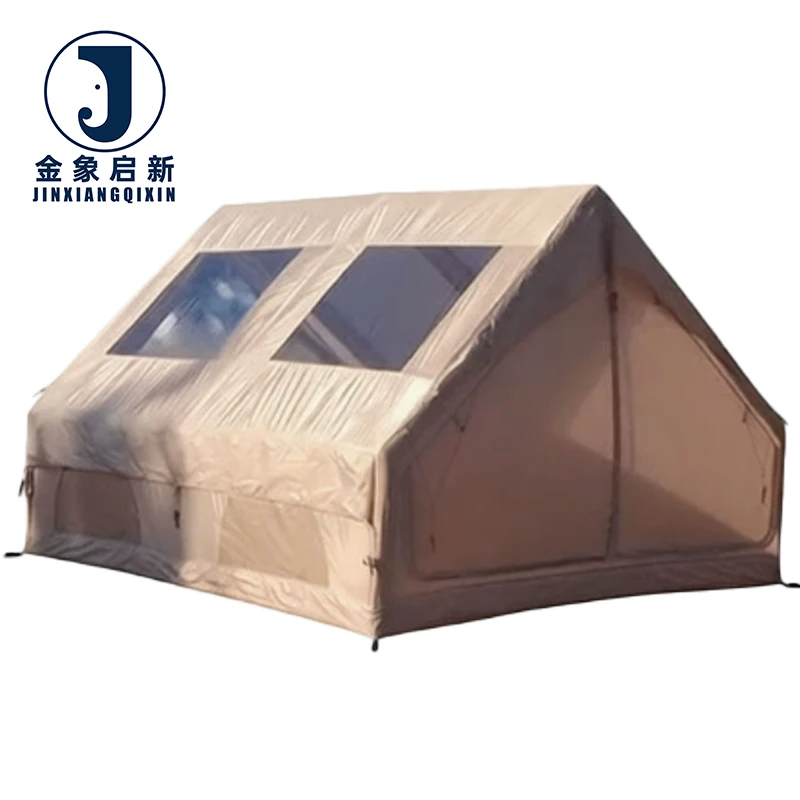
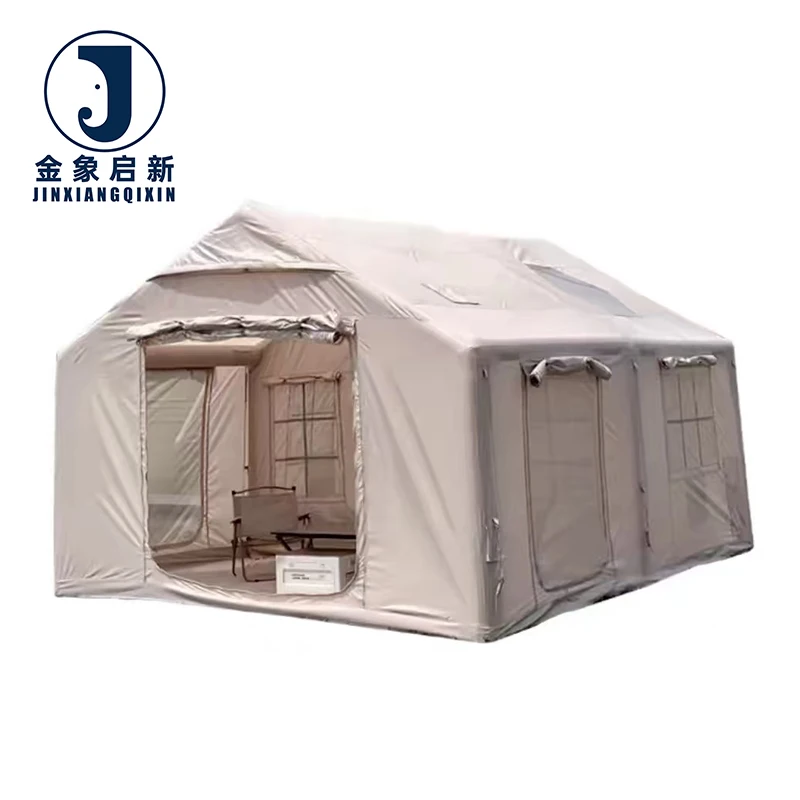
Description
Bulk-Ready Coated Fabric — roll-to-roll consistency verified at every production stage, eliminating colour drift and GSM deviation across large inflatable tent fabric orders.
Technical Specifications
| Parameter | Value |
|---|---|
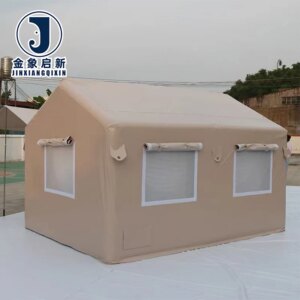
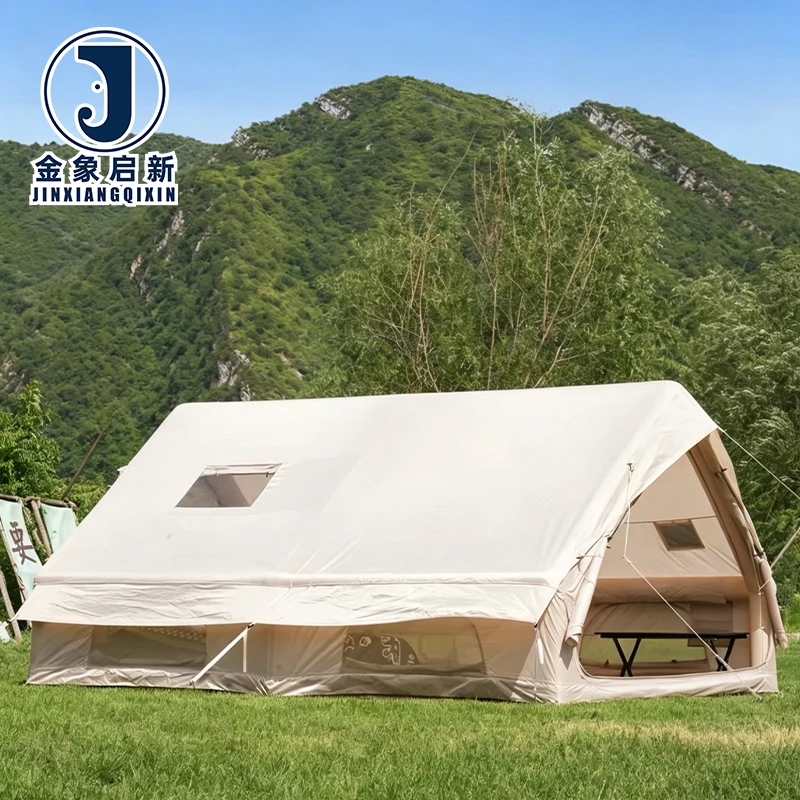
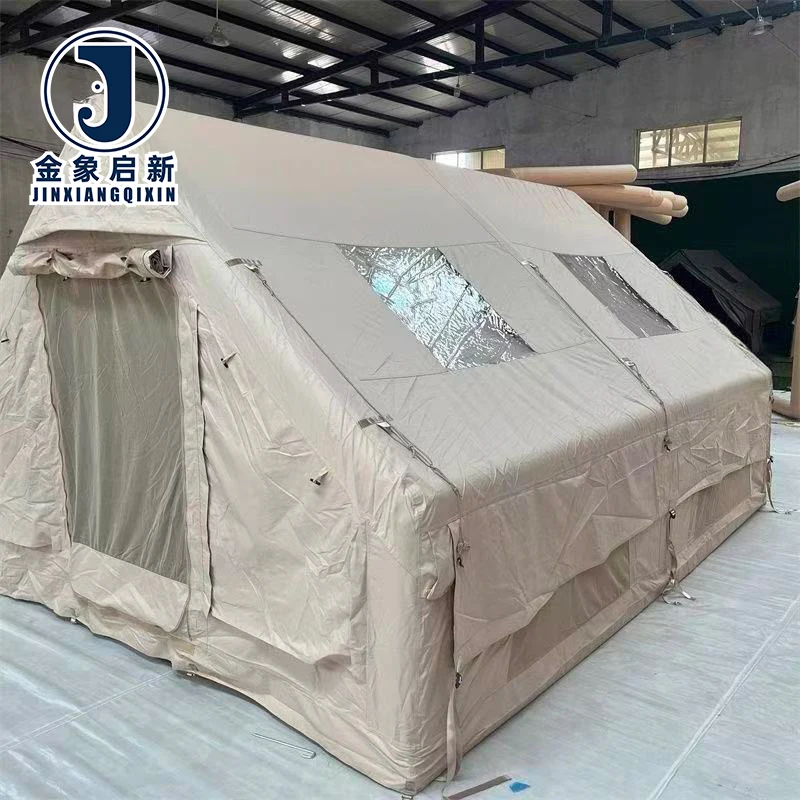
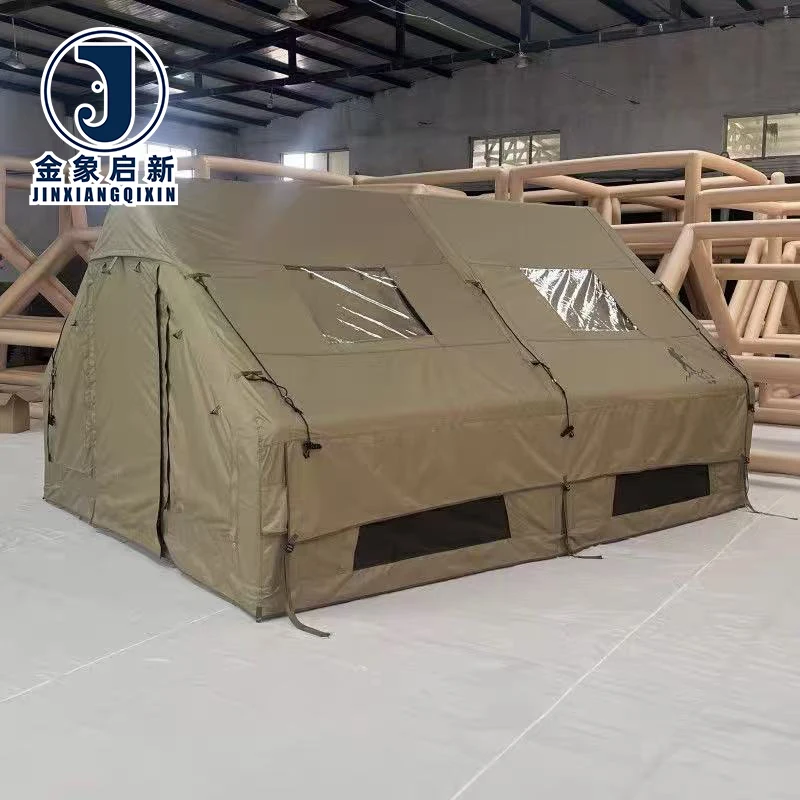
| Product Type | PVC Tent |
| Core Material | PVC tarpaulin |
| Key Performance | Waterproof, UV-resistant (test basis not stated in source), tear-resistant, fire-retardant (grade not stated in source), anti-static (standard not stated in source) |
| Capacity | 8-10 Person |
| Season Rating | Four-Season |
| Opening Mechanism | Quick Automatic Opening |
| Customization Service | OEM & ODM (sample customization, pattern printing) |
| Production Facility | 9,180 m² with 3 full production lines |
| Processing Equipment | 36 sets of professional equipment |
| R&D Team | 10 technicians |
| Standards | ISO 9001, ISO 14001, ISO 45001, CE |
Application Suitability
| Application | Exposure & Requirement |
|---|---|
| Industrial site temporary accommodations | Continuous outdoor exposure, wind loading, repeated inflation cycles, worker safety compliance |
| Commercial event pavilions | High foot traffic, frequent assembly and teardown, visible branding consistency across panels |
| Outdoor exhibition spaces | Prolonged UV exposure, weather variability, aesthetic surface finish requirements |
| Emergency response shelters for non-life-safety scenarios | Rapid deployment demand, transport abrasion, multi-site reuse across varying ground conditions |
Why Batch Consistency Matters More Than Stated GSM for Inflatable Tent Fabric
Roll-to-roll colour and weight uniformity determines whether your finished inflatable tents look identical on-site — or expose visible panel mismatches the moment they are inflated side by side.
When sourcing inflatable tent fabric wholesale, buyers often focus on the GSM figure printed on the quotation. Yet the real risk lies in variance between rolls within the same shipment. A stated GSM means little if one roll runs lighter than the next, creating weak zones at seam junctions where air pressure concentrates during inflation. Colour drift between batches forces fabricators to reject panels after cutting, wasting material and delaying container loading. [NEED_CITE: batch colour variation tolerance standards for coated PVC fabrics]
How Roll Stock Grading Supports High-Volume Tent Manufacturing
Tent and inflatable structure manufacturers buying PVC fabric by the roll need predictable material behaviour across every roll in a container load. Our inflatable tent roll stock undergoes dedicated QA/QC inspection at every production stage, with coating weight and colour reference checked against the material specification sheet before packing. This means fabricators can run consecutive rolls through automated cutting and welding equipment without pausing to adjust heat settings or recalibrate colour matching. The 10-person R&D team develops samples within days when a new colourway or custom width is required, allowing approval before bulk production begins.
Maintaining Coating Adhesion Through Repeated Inflation Cycles
Inflatable tent fabric faces a unique stress pattern: each deployment stretches the PVC coating and base fabric together, then releases. Over multiple cycles, poor coating adhesion leads to delamination at the seam lines — the exact points where internal air pressure exerts the greatest force. Our three full production lines maintain controlled coating application, ensuring the bond between base fabric and PVC layer remains intact through repeated pressurisation and deflation. This matters especially for four-season tents deployed across temperature swings, where the coating must flex without cracking in cold conditions or softening excessively in summer heat. [NEED_CITE: coating adhesion test methods for inflatable structure fabrics]
Understanding What the Specification Sheet Actually Tells You
The PVC tarpaulin core provides the structural membrane for inflatable tent applications, where waterproof performance and tear resistance govern how many deployment cycles the fabric survives. Fire-retardant and anti-static treatments are available — confirm the specific grade required for your target market and application environment before placing a bulk order. The quick automatic opening mechanism places additional stress on the fabric at valve attachment points and internal baffle seams, making tear resistance a practical concern beyond laboratory figures. Base fabric denier and weave density together determine how a small puncture behaves: a tight weave contains damage locally, while a loose construction allows a tear to propagate rapidly under air pressure. Surface finish — whether glossy or matte — affects both cleaning ease on-site and the adhesion quality of printed branding applied after fabrication.
The Hidden Cost of Specifying Fabric Without Verifying Treatment Claims
Ordering inflatable tent fabric with a "flame retardant" notation on the invoice but no supporting test report creates a compliance gap that surfaces only when the finished tent arrives at a commercial event site or industrial facility. Inspectors request documentation; the fabricator cannot produce it. The entire deployment is rejected, and the tent manufacturer faces rework costs plus reputational damage. Similarly, anti-static claims without a stated standard leave mining or aviation contractors unable to prove site safety compliance. This is why every shipment from our facility includes test documentation matching the treatment claims made at the quotation stage, so the fabricator passes the verification check the first time. [NEED_CITE: fire safety compliance requirements for temporary commercial structures]
Why Fabricators Source Inflatable Tent Fabric Here
Three full production lines and 36 sets of professional processing equipment deliver the volume stability that tent manufacturers depend on for container-load orders, with consistent lead times across peak and off-peak periods. A dedicated 10-person R&D team handles material selection, pattern printing specifications, and custom sizing — developing approval samples within days rather than weeks. Every roll undergoes 100% pre-shipment inspection against the stated GSM, colour reference, and coating adhesion standard before it enters the packing list. Full OEM and ODM support means fabricators can specify exact width, length, and surface finish without being forced into stock grades. ISO 9001, ISO 14001, ISO 45001, and CE certification underpin the quality management system behind every batch.
Documentation & Verification
- Material specification sheet stating base fabric denier, coating weight, and colour reference per roll
- Fire-retardant and anti-static test reports matching the treatment grade specified at order
- Pre-shipment inspection record verifying GSM and colour consistency across every roll in the order
- Roll packing list with container loading details by roll count and weight for logistics planning
- Certificate of origin and full customs documentation for international inflatable tent fabric wholesale shipments
Fabrication, Handling & Storage
- Adjust heat welder temperature to match the specific PVC coating weight for clean seam formation
- Reinforce valve and baffle attachment points where inflation pressure concentrates stress on the fabric
- Store rolls upright on pallets to prevent flat-spot deformation of the PVC coating surface
- Allow cold-stored rolls to reach ambient temperature before unrolling to avoid coating crack risk
- Use mild detergent for cleaning; avoid solvents that degrade the PVC surface finish
- Plan cutting layouts to maximise yield from each roll width and minimise off-cut waste
What to Include in Your Inflatable Tent Fabric Enquiry
Provide the intended application environment — whether industrial site accommodation, commercial event pavilion, or exhibition structure — along with the specific fire-retardant or anti-static grade your market requires. Specify the roll width and annual volume you need, and whether you require finished cut panels or raw roll stock. If custom colour or pattern printing is part of the project, share your Pantone or RAL references so the R&D team can prepare samples for your approval before production.
Frequently Asked Questions
Q: How is roll-to-roll colour consistency controlled across a bulk inflatable tent fabric order?
A: Each production batch is monitored by dedicated QA/QC staff who check colour reference against the approved sample at multiple stages. Before dispatch, a 100% pre-shipment inspection compares every roll in the order to ensure no visible drift exists between consecutive rolls, preventing panel mismatch once the fabric is cut and assembled into finished tents.
Q: What GSM verification and pre-shipment inspection do you provide for wholesale tent fabric rolls?
A: Every roll is weighed and measured against the stated GSM on the material specification sheet before packing. The pre-shipment inspection record documents coating weight, base fabric integrity, and colour consistency roll by roll, giving buyers full traceability and confidence that the inflatable tent roll stock matches the agreed specification.
Q: What customization options are available, and what are the minimums?
A: Custom width, length, colour, and pattern printing are all supported through our OEM and ODM capability. The 10-person R&D team develops approval samples within days for new specifications. Minimum order quantities depend on the specific customisation requested — share your requirements during the enquiry stage for an accurate quotation.
Q: How do you handle container loading and transport protection for PVC tent fabric rolls?
A: Each roll is individually wrapped and listed on a detailed roll packing list showing roll count, weight, and dimensions for container planning. Loading plans account for weight distribution to prevent roll displacement during transit, and the documentation package includes everything needed for smooth customs clearance at destination.
Q: What fire-retardant or anti-static certification documentation ships with the inflatable tent fabric?
A: Test reports matching the fire-retardant grade or anti-static standard specified at order stage are included in the shipment documentation. We confirm which certifications your target market requires during the specification recommendation phase, ensuring the correct test basis is applied and documented before production begins.