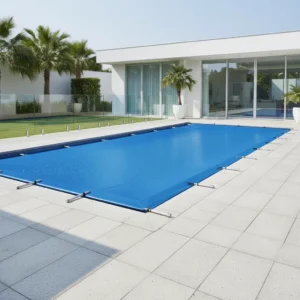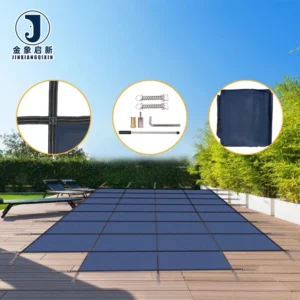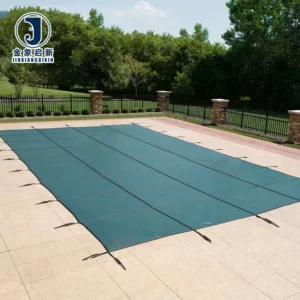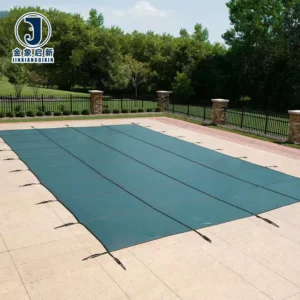
Description
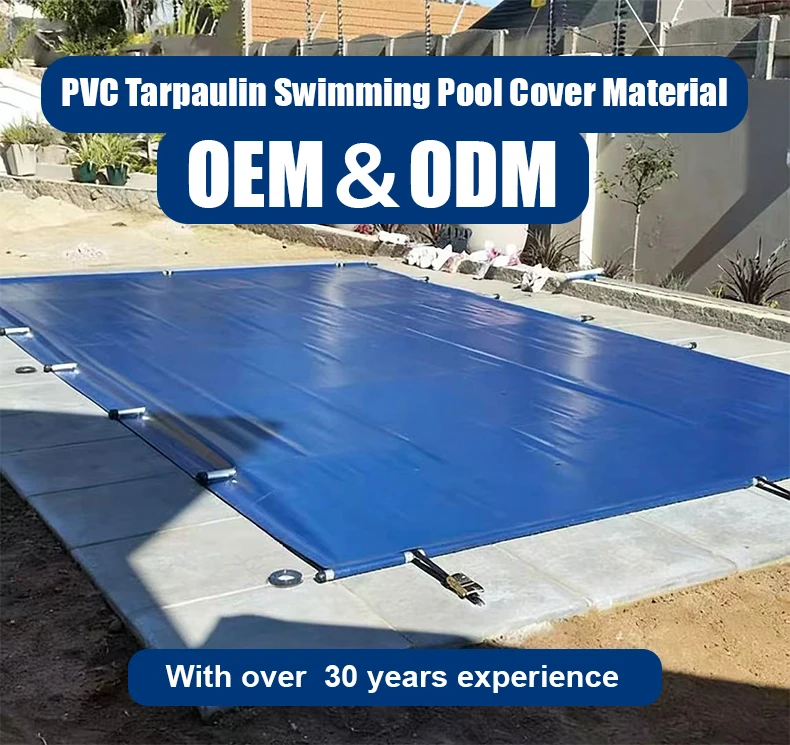
Roll-Stock Reliability — Knife-coated PVC pool cover tarpaulin supplied with verified GSM per roll, dedicated QA/QC at every stage, and full pre-shipment inspection records before container loading.
Technical Specifications
| Parameter | Value |
|---|---|
| Product Type | PVC Coated Tarpaulin |
| Coating Material | PVC |
| Coating Method | Knife Coated |
| Waterproof Rating | 100% Waterproof |
| UV Treatment | Anti-UV (test basis not stated — confirm report availability) |
| Anti-Mildew | Yes |
| Surface Finish | Easy-clean surface |
| Color | Custom options available |
| Size | Custom width and roll length |
Application Suitability
| Application | Exposure & Requirement |
|---|---|
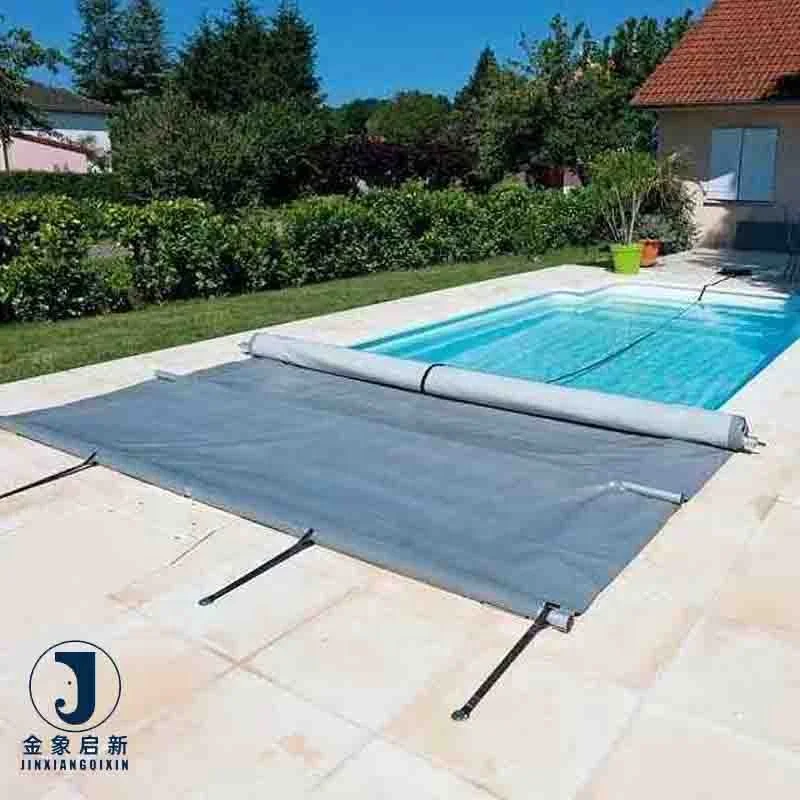
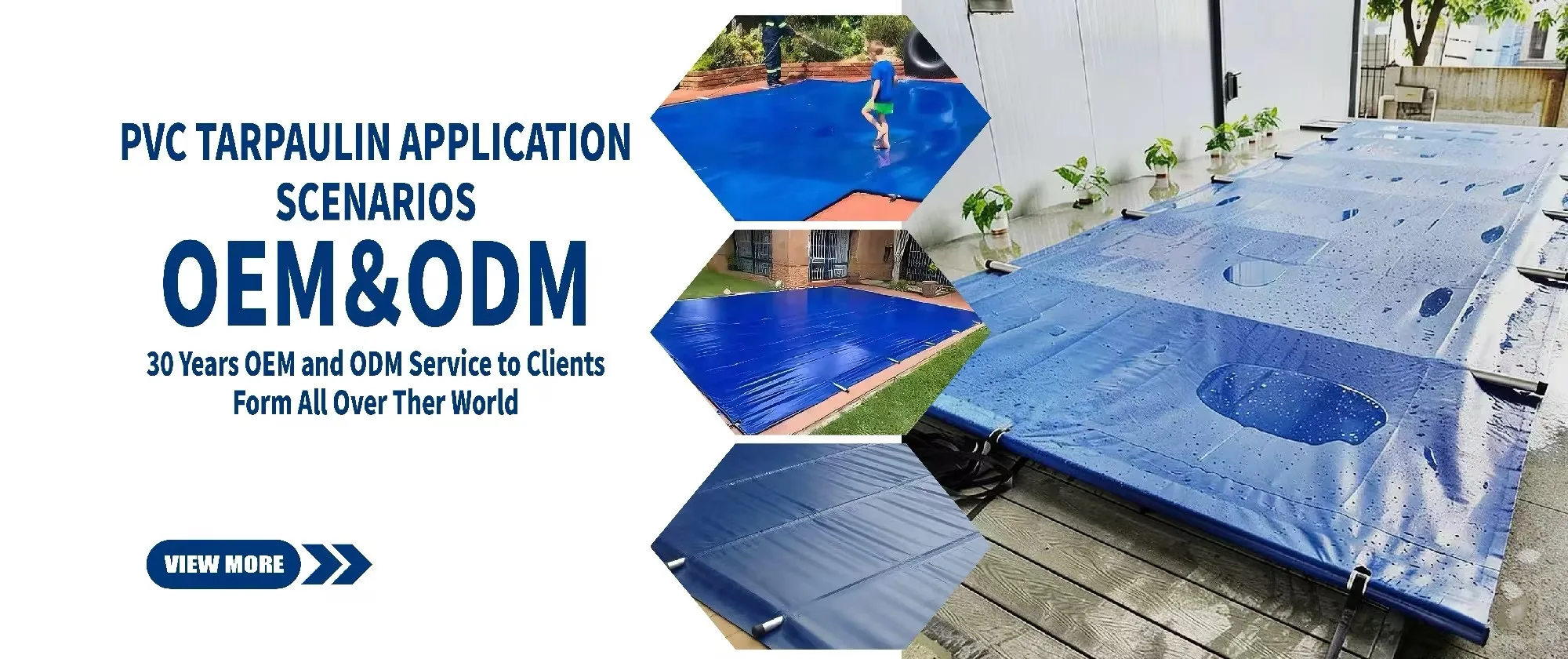
| Residential swimming pool covers | Prolonged sun exposure, rain, leaf debris, seasonal temperature swings |
| Hotel and commercial pool covers | High-frequency deployment, chemical splash from pool treatment, UV load |
| Outdoor seasonal pool protection | Wind uplift, snow load, dust and debris accumulation |
| Pond and reservoir lining (cross-use) | Permanent water contact, soil chemistry, puncture risk from substrate |
Why Batch Consistency Matters More Than Stated GSM for Pool Cover Rolls
Verified coating weight per roll eliminates the gap between quotation and delivery.
When sourcing PVC pool cover tarpaulin wholesale, buyers frequently encounter material that arrives lighter than the GSM stated on the original quote. The coating weight determines not only the hand feel but the long-term tear propagation resistance and heat-weld seam integrity [NEED_CITE: tensile and tear test methods for coated fabrics per ISO 1421]. A roll that measures below specification will fail earlier at the seams, particularly where the cover flexes over pool edges or anchor points. Dedicated QA at every production stage catches these deviations before they reach the container.
Knife-Coated Construction and Coating Adhesion Control
The PVC pool cover tarpaulin fabric is produced using a knife-coated process, which applies a controlled layer of PVC compound directly onto the base fabric. This method delivers uniform coating weight across the full width of each roll. Consistent coating thickness is critical when the fabric will be heat-welded into finished pool covers, as uneven coating leads to weak weld lines that separate under tension.
Roll-to-Roll Colour and Weight Uniformity Across Bulk Orders
For tarpaulin distributors stocking pool cover material, colour variation between rolls in the same shipment creates visible mismatches when two covers are installed side by side at a customer site. Roll-to-roll consistency in both GSM and colour is maintained through in-process quality checks at each production stage [NEED_CITE: coating weight verification methods for PVC tarpaulin production]. This ensures that every roll within a container-load order meets the same specification baseline.
How Coating Weight and Base Fabric Interact to Determine Real Strength
The tear and tensile performance of any PVC tarpaulin depends on the relationship between base fabric denier, weave density, and coating weight — not GSM alone. A heavy coating applied over a loosely woven base fabric may show a high GSM reading but will still propagate tears quickly once a puncture occurs. Knife coating bonds the PVC compound into the weave structure, improving peel strength and ensuring the coating and base fabric work together under load. The easy-clean surface finish also resists mildew buildup, which is important for covers that remain deployed through humid seasons or are stored damp after removal.
The Hidden Cost of Specifying Pool Cover Fabric on GSM Alone
Choosing PVC pool cover tarpaulin based only on a target GSM figure ignores the variables that actually determine field performance. A roll with adequate weight but poor coating adhesion will delaminate at heat-weld seams, causing the cover to split before the fabric itself shows wear. Colour inconsistency across a bulk order forces distributors to absorb returns or discount mismatched stock [NEED_CITE: PVC tarpaulin coating adhesion failure at welded seams]. Anti-UV treatment that is claimed but not backed by a test report may result in premature cracking and fading, generating warranty claims from end users.
Why Volume Buyers Source This Fabric Here
Three full production lines and 36 sets of professional equipment support bulk roll output with reliable dispatch scheduling. A 10-person R&D team handles custom width, colour matching, and sample development — samples are ready within days for buyer approval before bulk production runs begin. Every roll undergoes 100% inspection before shipment, with a pre-shipment inspection record documenting the findings. Nearly 30 years of focused coated-fabric production provides process control over coating weight and adhesion that directly translates to consistent roll stock. Material specification sheets and full export documentation accompany every container.
Documentation & Verification
- Material specification sheet stating GSM, base fabric denier, and coating weight per roll
- Pre-shipment inspection record confirming 100% roll inspection results before dispatch
- UV and anti-mildew treatment test reports available upon request for compliance verification
- Roll packing list with roll count, individual weight, and container loading plan
- Certificate of origin and customs documentation included for international shipments
Fabrication, Handling & Storage
- Heat-weld parameters should be adjusted to match the specific coating weight of each roll batch
- Store rolls upright on pallets to prevent flat-spot deformation of the PVC coating surface
- Use compatible PVC-based cleaners on the easy-clean surface to avoid damaging the coating layer
- Allow cold-stored rolls to reach ambient temperature before unrolling to prevent coating cracking
- Plan cut layouts to minimise offcuts and maximise yield from each custom-width roll
- Reinforce anchor points and tie-down zones with additional fabric patches during fabrication
What to Include in Your Enquiry
Specify the target width, roll length, and GSM range required for your pool cover application. Confirm whether anti-UV treatment test reports are needed for your market’s compliance requirements. Indicate annual volume expectations and whether colour matching to a specific reference is necessary. State if you require sample rolls for approval before bulk production commences.
Frequently Asked Questions
Q: How is GSM verified per roll and what documentation accompanies shipment?
A: Every roll is weighed and measured during the 100% pre-shipment inspection process. A material specification sheet stating the GSM, base fabric details, and coating weight is provided with each order. The pre-shipment inspection record documents the verification results for every roll in the shipment, and a detailed roll packing list is included for logistics planning.
Q: What UV treatment test basis is available and how to request the report?
A: Anti-UV treatment is applied during the coating process. Test reports for UV resistance are available upon request — specify your market’s required test standard when placing the enquiry so the appropriate documentation can be prepared and included with your shipment.
Q: How is roll-to-roll colour consistency controlled across a bulk order?
A: Colour consistency is maintained through dedicated QA checks at each production stage. In-process inspections compare each roll against the approved colour reference before it is cleared for packing. This prevents visible variation when multiple rolls from the same order are fabricated into covers installed at the same site.
Q: What custom widths and roll lengths are available, and what are the minimums?
A: Custom width and roll length options are available to match your fabrication requirements. The 10-person R&D team develops samples within days for buyer approval. Minimum order quantities depend on the specific width and colour requested — confirm your requirements during the enquiry stage for an accurate quotation.
Q: How is the material packed for container shipping to prevent roll damage?
A: Rolls are packed upright on pallets with protective wrapping to prevent coating damage and deformation during transit. A container loading plan is provided in the roll packing list so buyers can verify efficient space utilisation and plan unloading logistics at the destination port.