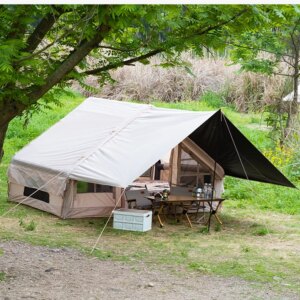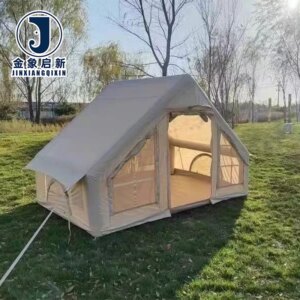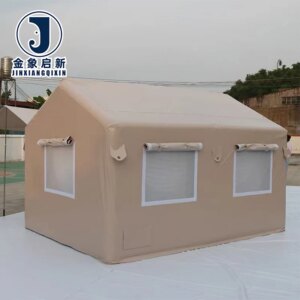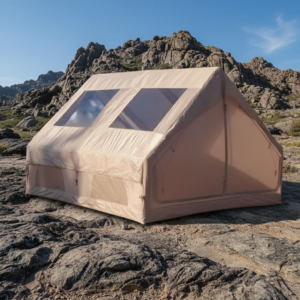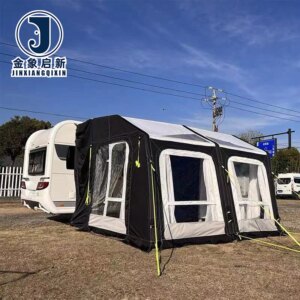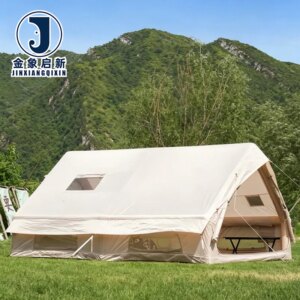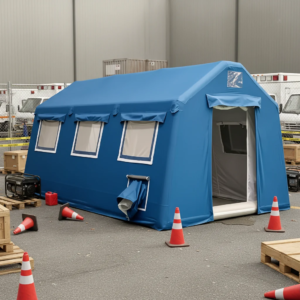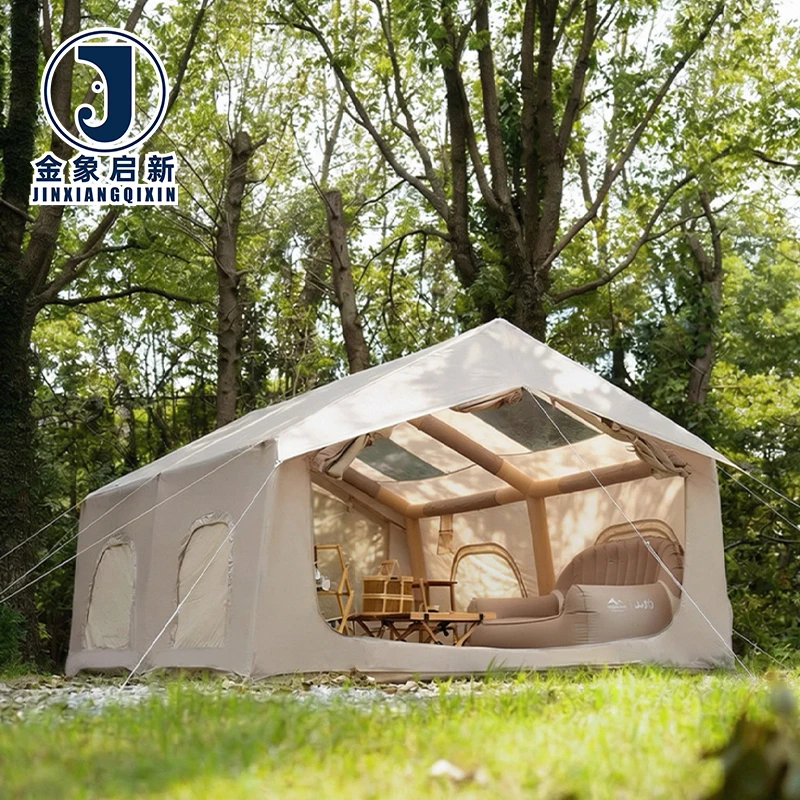
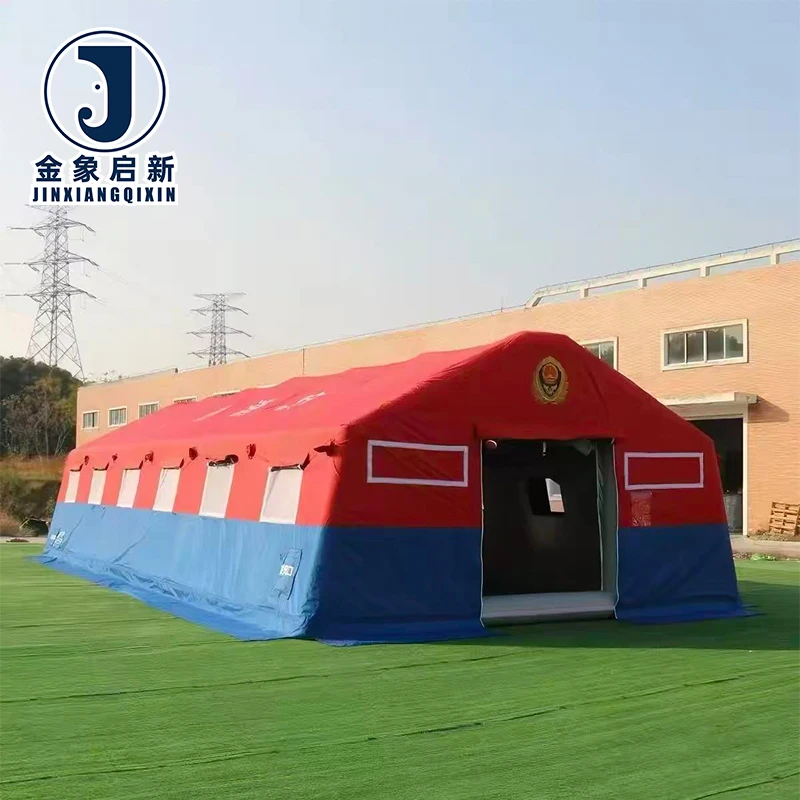
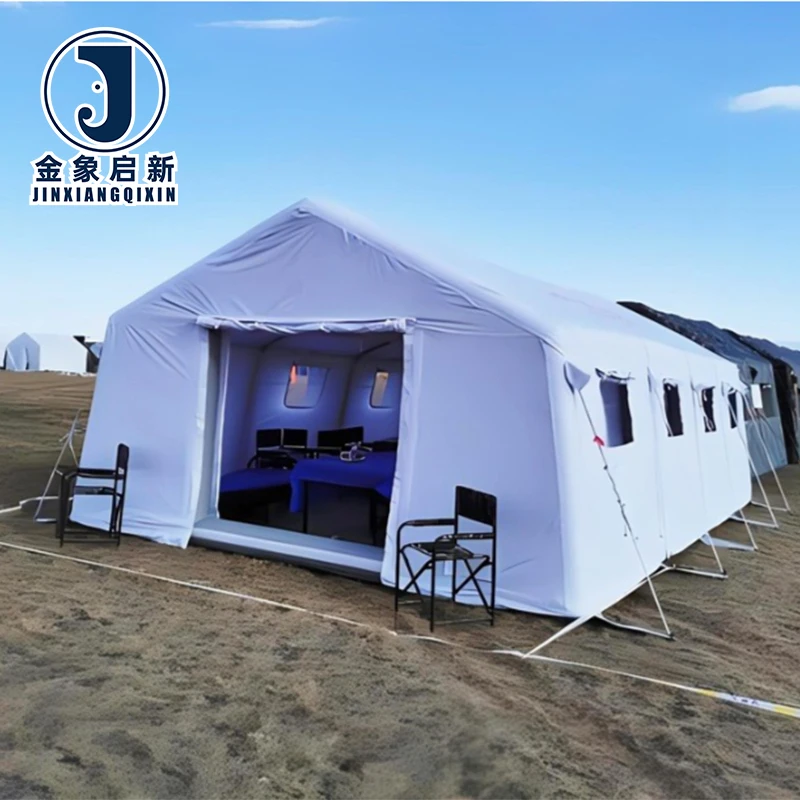
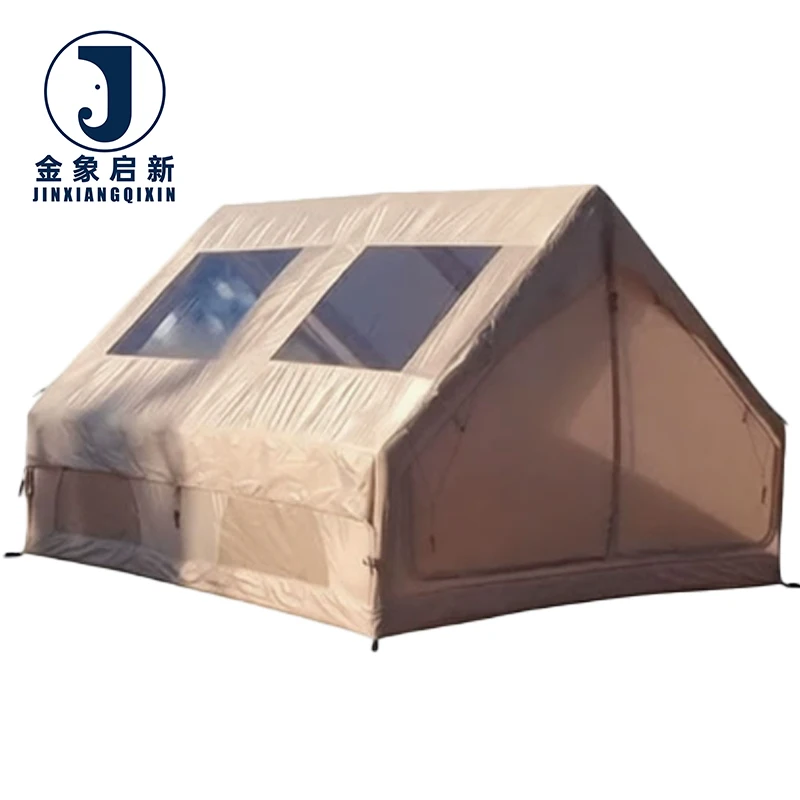


Description
Batch-Consistent Roll Output — 3 full production lines and 36 sets of processing equipment maintain uniform GSM, color, and coating adhesion across every roll in your inflatable tent fabric order.
Technical Specifications
| Parameter | Value |
|---|---|
| Product Type | Inflatable Tent |
| Core Material | PVC tarpaulin |
| Capacity | 2-3 Person |
| Product Form | Inflatable structure with quick automatic opening mechanism |
| Construction | Single layer |
| Waterproof | Yes (grade not stated) |
| UV Treatment | UV-resistant (test basis not stated) |
| Tear Resistance | Tear-resistant (test basis not stated) |
| Flame Retardant | Fire-retardant (grade not stated) |
| Anti-Static | Anti-static (standard not stated) |
| Customization | OEM & ODM — sample customization, pattern printing, material thickness adjustment, size modifications |
| Standards | ISO9001, ISO14001, ISO45001, CE |
Application Suitability
| Application | Exposure & Requirement |
|---|---|
| Construction site temporary shelters | Wind loading, dust ingress, repeated inflation cycles, UV exposure on open sites |
| Emergency disaster relief | Rapid deployment under time pressure, harsh weather, transport abrasion |
| Outdoor event logistics storage | Rain, sun exposure, frequent relocation between venues |
| Industrial fieldwork base camps | Extended outdoor exposure, temperature variation, ground moisture |
| Commercial outdoor operations | Daily setup and takedown, mechanical stress at inflation points |
Why Batch Consistency Matters More Than Quoted GSM for Inflatable Tent Fabric
Roll-to-roll color and weight uniformity determines whether your finished inflatable tent structures look and perform identically across an entire production run.
When sourcing inflatable tent fabric roll stock in volume, buyers often focus on the quoted GSM figure and assume consistency follows automatically. In practice, coating weight can drift between production batches, and pigment ratios shift enough to produce visible color variation once two rolls are cut and welded side by side on the factory floor [NEED_CITE: coating weight variance across production batches in PVC tarpaulin manufacturing]. For inflatable tent manufacturers, this means one shelter panel may appear noticeably different from the next — a defect your end customer will see immediately. Wholesale buyers committing to container-load quantities need verification at the roll level, not just on the specification sheet, to avoid costly re-sorting or partial rejection after the shipment arrives.
Coating Adhesion and Inflatable Structure Integrity
Inflatable tent structures place continuous stress on every welded seam and coated surface each time the unit is pressurized. The PVC tarpaulin used here is processed through controlled coating and lamination stages to maintain adhesion between the base fabric and the outer polymer layers. When adhesion is inconsistent, the coating can delaminate at stress concentration points — particularly around valve openings and structural seams — long before the base fabric itself shows wear.
For manufacturers building inflatable camping tents and emergency shelters, the relationship between coating method and peel strength directly influences warranty claims and field failure rates. Our production process holds coating parameters within controlled tolerances across all inflatable tent fabric roll output, reducing the variation that leads to premature delamination in finished structures.
Color Matching Across Multi-Roll Orders
A container load of inflatable tent fabric wholesale stock may contain rolls from different coating runs, and even small pigment deviations become obvious when panels from adjacent rolls are assembled into a single shelter. Our QA protocol checks color reference values at multiple points during production, flagging any roll that drifts outside the accepted range before it reaches the packing stage.
This matters most for buyers producing branded inflatable tents for commercial clients or disaster relief agencies, where visual uniformity across a fleet of shelters signals quality control to the end user. Each batch is tracked by order number, so reorders can be matched to the original production parameters [NEED_CITE: color measurement standards for coated fabric batch consistency].
Reading the Specification Sheet Beyond the Headline Numbers
The interaction between base fabric denier, weave density, and coating weight determines how inflatable tent fabric behaves under inflation pressure and external wind loads. A heavier GSM reading does not automatically mean higher tear strength if the base fabric uses a looser weave — the coating adds weight without contributing proportionally to structural performance. Single-layer construction in this PVC inflatable camping tent balances portability against durability, reducing packed volume for emergency response transport while maintaining sufficient coated thickness to resist puncture during deployment on uneven ground. Fire-retardant and anti-static treatments are available in multiple grades; confirm the specific standard required for your destination market before placing a bulk order, as compliance thresholds vary between regions and application categories.
The Hidden Cost of Underspecified Inflatable Tent Fabric
Ordering inflatable tent fabric rolls based on price per kilogram alone frequently leads to downstream failures that cost far more than the initial savings. Coating that is lighter than quoted GSM reduces waterproof performance and accelerates UV degradation, leaving the base fabric exposed after a single season of outdoor deployment [NEED_CITE: field failure correlation with coating weight deviation in PVC tarpaulin]. Flame-retardant treatment applied without a verified test report may pass the purchase order review but fail on-site inspection when the shelter is deployed for a construction project or public event with fire safety requirements. Welded seams on underspecified material tend to fail at the flex points where inflation pressure concentrates stress, and the repair cost in the field exceeds the price difference of sourcing correctly specified fabric in the first place.
Why Manufacturers Source Inflatable Tent Fabric Here
Three full production lines running in parallel mean your inflatable tent fabric roll order enters the queue without waiting for a single line to free up, compressing lead times for time-sensitive relief procurement and seasonal production schedules.
Thirty-six sets of professional processing equipment handle coating, cutting, and finishing stages in-house, eliminating subcontractor handoffs where specification drift typically occurs.
A 10-technician R&D team develops custom samples — including material thickness adjustments, pattern printing, and size modifications — within days rather than weeks, allowing you to validate fabric behavior on your own welding equipment before committing to bulk volume.
Dedicated QA and QC staff inspect every roll at each production stage, catching GSM deviation and color drift before the roll reaches the packing line rather than after it reaches your warehouse.
ISO9001, ISO14001, ISO45001, and CE certification provide the compliance documentation that procurement departments and relief agencies require for vendor qualification.
Documentation & Verification
- Material specification sheet stating PVC tarpaulin GSM, base fabric denier, and coating weight per roll batch
- Test reports for UV resistance and flame-retardant grades traceable by order number where applicable
- Pre-shipment inspection record confirming roll count, color reference, and weight verification
- Roll packing list with batch identification for traceability through your production line
- Certificate of origin and customs documentation prepared for cross-border roll shipment
Fabrication, Handling & Storage
- Hot-air welding temperature and speed should be calibrated to the specific PVC tarpaulin coating thickness before full production runs begin
- Store rolls upright on pallets in a shaded, ventilated area to prevent flat-spot deformation of the single-layer inflatable tent fabric
- Avoid dragging rolls across concrete floors during warehouse handling to protect the coated surface from abrasion damage
- Allow cold-stored rolls to acclimate to workshop temperature before unrolling to prevent coating cracking at low temperatures
- Use compatible PVC adhesive for field repairs on inflatable tent structures to maintain coating bond integrity at patch edges
- Plan cutting layouts to minimize offcuts from each roll width, reducing material waste on custom-sized inflatable shelter panels
What to Include in Your Inflatable Tent Fabric Inquiry
Provide your target inflatable tent dimensions, annual roll consumption estimate, and the specific fire-retardant or anti-static standards required by your destination market. Include color references or printed branding specifications if visual consistency across rolls is critical to your end-customer contracts. Specify whether you need raw roll stock for your own cutting and welding line, or whether you require OEM sample validation before bulk production begins.
Frequently Asked Questions
Q: How is roll-to-roll color consistency controlled across a bulk inflatable tent fabric order?
A: Color reference values are checked at multiple points during coating production. Each roll is compared against the approved batch standard before packing, and any roll that drifts outside the accepted range is flagged. Batch tracking by order number allows reorders to be matched to the original pigment formulation, maintaining visual uniformity across container-load volumes.
Q: What fire-retardant grades and test standards are available for inflatable tent fabric?
A: Fire-retardant treatment is applied during the coating stage and is available in multiple grades. The specific standard — such as DIN 4102, NFPA 701, or regional building material classifications — should be confirmed based on your destination market and end-use application. Test reports are provided with the shipment, traceable by order number, to support compliance documentation.
Q: What is the MOQ for custom width, color, or printed inflatable tent fabric rolls?
A: Minimum order quantities vary depending on the specific customization requested — whether it is a non-standard roll width, a matched color formulation, or pattern printing across the coated surface. OEM and ODM samples are developed first so you can validate the fabric on your own welding equipment before bulk production is scheduled. Contact us with your specifications for a confirmed MOQ and lead time.
Q: How is GSM verified on arrival, and what documentation supports weight claims?
A: Each roll batch is accompanied by a material specification sheet stating the PVC tarpaulin GSM, base fabric details, and coating weight. A pre-shipment inspection record documents the weight verification performed before dispatch. Buyers are encouraged to conduct their own sample weighing on arrival and compare against the stated specification to confirm consistency across the shipment.
Q: What OEM and ODM customization options are available, and how does the sampling process work?
A: Customization includes material thickness adjustment, pattern printing, and size modifications for inflatable tent structures. The 10-technician R&D team develops samples within days based on your specifications. You receive the sample for evaluation on your own fabrication equipment — testing weld parameters, inflation behavior, and surface finish — before approving the configuration for bulk roll production.