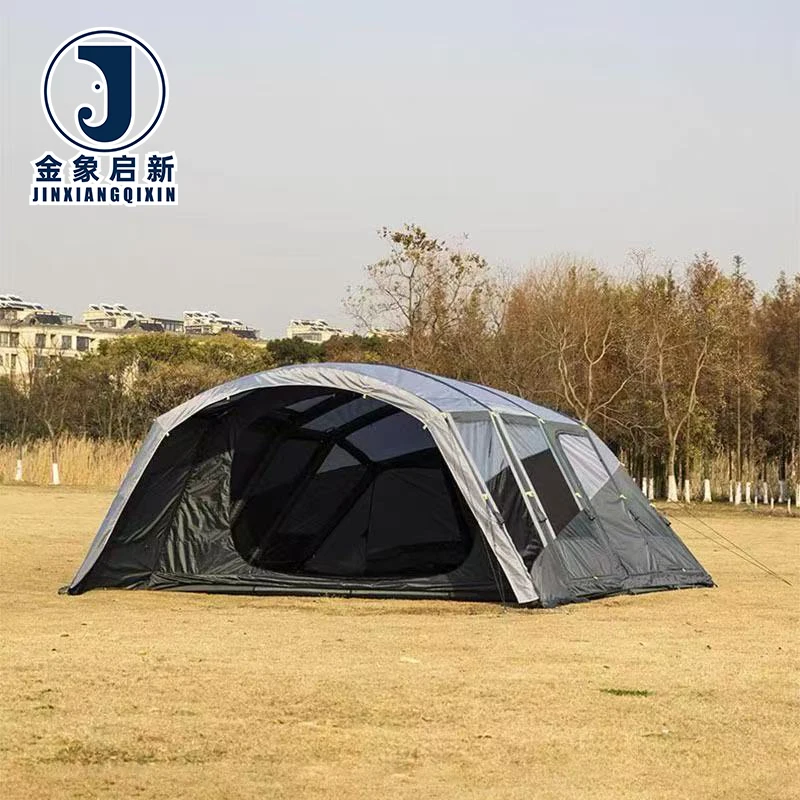
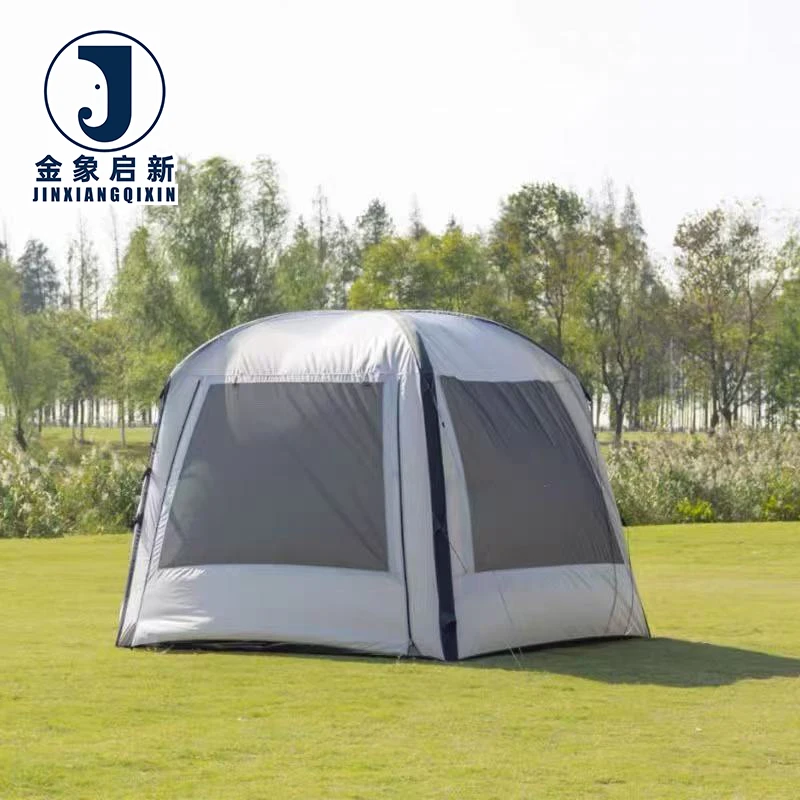
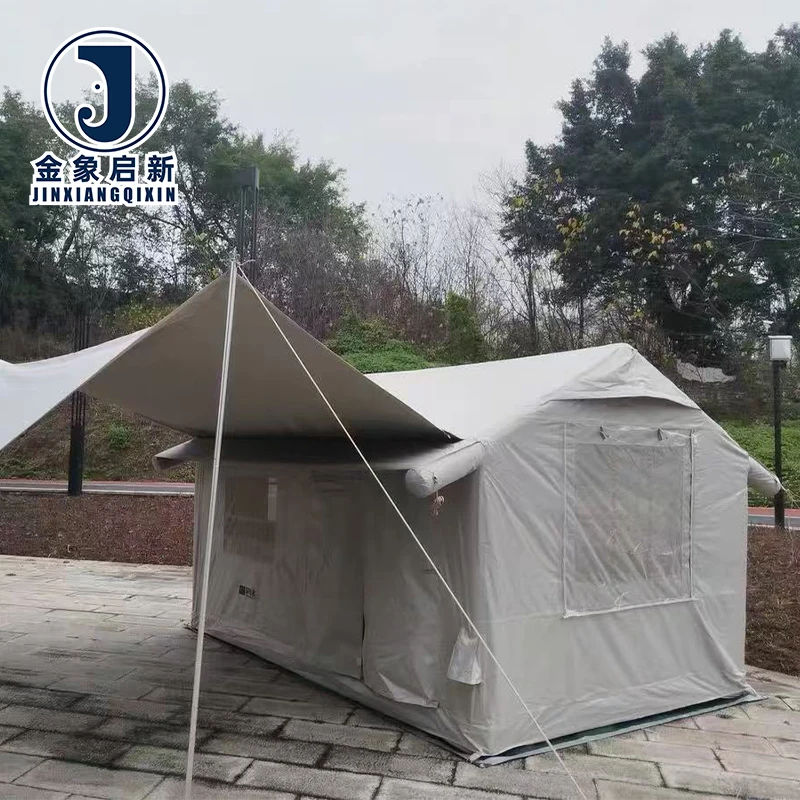
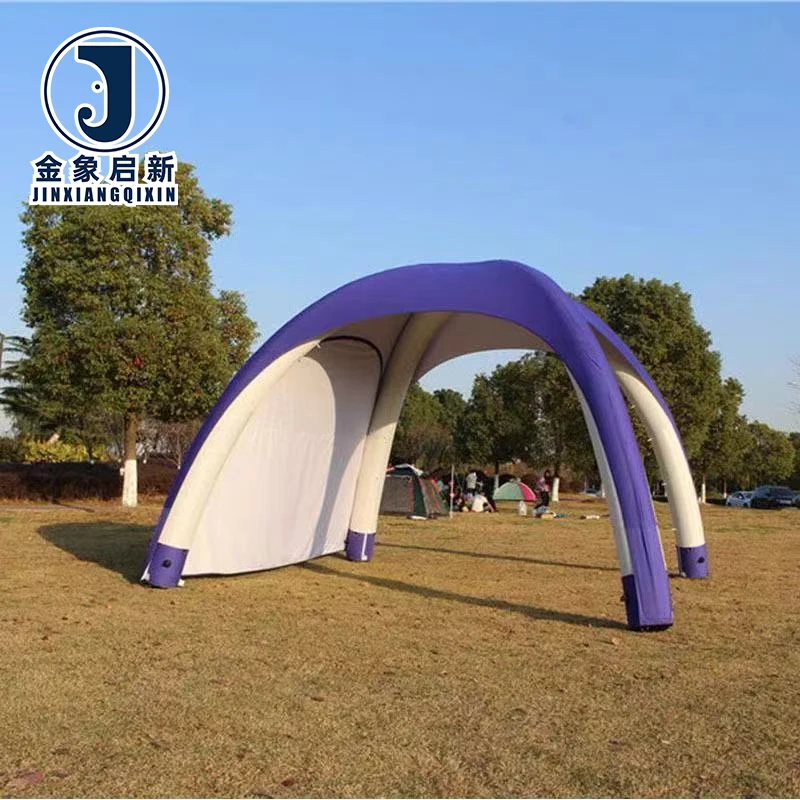
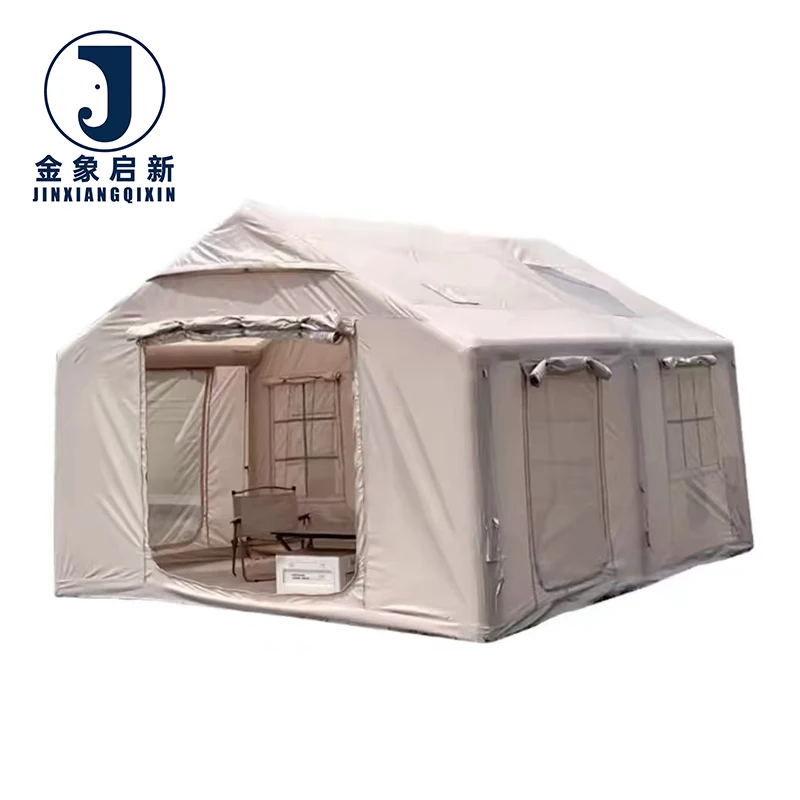
Description
Roll-to-Roll Consistency — every batch of PVC tarpaulin we ship undergoes strict in-process weight and colour control so inflatable tent fabric arrives uniform across your entire order.
Technical Specifications
| Parameter | Value |
|---|---|
| Product Type | Inflatable tent |
| Core Material | PVC tarpaulin |
| Key Performance | Waterproof, tear-resistant |
| UV Resistance | Available — confirm the grade required for your market |
| Fire Retardancy | Available in flame retardant grades — confirm the grade required for your market |
| Anti-Static | Available — confirm surface resistance standard required for your application |
| Customization | OEM & ODM, sample customization, pattern printing |
| Production Facility | 9,180 m² with 3 full production lines |
| Processing Equipment | 36 sets of professional equipment |
| R&D Capability | 10 technicians |
| Quality System | Full-process QA & QC with dedicated staff |
| Standards | ISO 9001, ISO 14001, ISO 45001, CE |
Application Suitability
| Application | Exposure & Requirement |
|---|---|
| Commercial glamping inflatable tents | Continuous outdoor weathering, UV load, wind-driven rain, occupant safety compliance |
| Tourism resort temporary structures | Seasonal deployment and teardown, repeated inflation cycles, guest-facing aesthetics |
| Event organizer rapid-deploy shelters | Fast setup, crowd safety fire compliance, branding and colour consistency across units |
| Outdoor hospitality staff quarters | Extended occupancy, ventilation integration, thermal and moisture management |
| On-site controlled-environment facilities | Fire and anti-static compliance, durable membrane for repeated use |
Why Batch Colour Variation Ruins an Inflatable Tent Order
Uniform colour across every roll is a production control outcome, not a promise.
When you order multiple rolls of inflatable tent fabric roll for a glamping project, the last thing you need is visible shade difference once two panels sit side by side on the same structure. I have seen orders where the buyer specified one Pantone reference and received rolls that shifted enough to be noticeable in daylight. The problem is rarely the dye — it is the lack of in-line colour monitoring between coating runs. Wholesale inflatable tent material sourced without batch-level colour verification forces the fabricator to either reject rolls mid-production or install mismatched panels that damage the resort’s visual standard. [NEED_CITE: colour measurement standards for coated textiles per ISO 105 series]
How Roll Stock Feeds Inflatable Tent Production
Inflatable tent manufacturers cut and weld panels from continuous rolls, so the wholesale inflatable tent material must arrive with predictable behaviour at the heat-seam station. If coating weight drifts from roll to roll, the welder’s temperature and dwell settings that worked on roll one will under-bond or scorch on roll three. Our three production lines maintain coating weight within the tolerance window established during sample approval, so your fabrication parameters remain stable across the full order.
What Consistency Means for Glamping Operators at Scale
A glamping resort expanding from ten to thirty units needs inflatable tent fabric roll that matches the existing inventory, because replacement panels and new structures share the same guest-facing environment. Batch control starts at the PVC compound mixing stage and carries through to the final winding inspection. Each roll is checked for GSM, surface quality, and colour before packing, so the material you receive aligns with the sample you approved — not a production average. [NEED_CITE: tensile and tear test methods for coated fabrics per ISO 1421]
Reading PVC Tarpaulin Specs for Inflatable Structures
The core material is PVC tarpaulin, and its performance in an inflatable tent depends on the relationship between base fabric construction and coating weight. Base fabric denier and weave density determine how well the material resists tear propagation when an inflated panel flexes under wind load. Coating weight contributes to waterproofing and surface durability but does not compensate for a loosely woven base when it comes to structural tear resistance. Surface finish — whether glossy or matte — affects both cleanability in hospitality settings and print adhesion if pattern branding is applied. Fire-retardant and anti-static treatments are available in various grades; the correct one depends on the compliance framework your destination market enforces, so always confirm the required standard before production begins. UV resistance treatment should be specified with a test basis relevant to the installation climate. The interplay of these factors determines whether the inflatable tent fabric roll performs as a reliable structural membrane or becomes a liability after one season.
The Cost of Ordering Inflatable Tent Fabric Without Verified Documentation
Specifying inflatable tent material without requiring a material specification sheet and test reports per roll creates exposure that surfaces only after the tent is inflated on site. A stated fire-retardant claim without a test report can mean the structure fails the local fire authority inspection, delaying a resort opening or event permit. GSM that reads lighter than quoted reduces the structural margin of the inflated panels, making them more vulnerable to puncture and seam stress. Welded seams are often the first failure point when the coating adhesion is inconsistent, and by the time that shows up, the tent is already deployed and the guest is already checked in. [NEED_CITE: common failure modes in inflatable membrane structures]
Why Source Your Inflatable Tent Fabric Here
Nearly 30 years of coated fabric production gives us process depth that directly supports roll-to-roll consistency for inflatable tent applications. Three full production lines and 36 sets of professional equipment handle volume orders without compressing lead times into a single bottleneck. The 10-person R&D team develops custom width, colour, and pattern printing samples within days, so you can verify appearance and weld behaviour before committing to bulk. Dedicated QA and QC staff inspect every roll before shipment, checking GSM, colour, and surface integrity against the approved sample. ISO 9001, ISO 14001, ISO 45001, and CE certifications underpin the management systems behind that consistency.
Documentation & Verification
- Material specification sheet confirming GSM, base fabric denier, and coating weight per roll
- Test reports for UV-resistant and fire-retardant grades where applicable to your market
- Pre-shipment inspection record with roll-to-roll colour and weight consistency check
- Roll packing list with net weight and dimensions for container loading planning
- Certificate of origin and customs documentation for import compliance
Fabrication, Handling & Storage
- Set heat-seam temperature and dwell time based on the specific PVC coating weight confirmed on your sample roll
- Store rolls upright on pallets to prevent flat-spot deformation of the PVC tarpaulin surface
- Allow cold-transported rolls to acclimatise before unrolling to avoid coating crack at low temperature
- Use compatible PVC adhesive for field repairs on inflatable tent panels to maintain coating bond integrity
- Plan cutting layout to minimise transverse welds across high-stress inflation chambers
- Clean surfaces with pH-neutral agents to preserve any applied UV or fire-retardant treatment layer
What to Include in Your Inquiry
Specify the inflatable tent dimensions, inflation pressure range, and the climate zone where the structures will operate. Confirm the fire-retardant and anti-static standards your local authority requires, so we match the correct treatment grade. Provide your target roll width, annual volume, and any pattern printing or colour references for sampling. Indicate whether you need raw roll stock or pre-cut panels with welded seams.
Frequently Asked Questions
Q: How do you ensure GSM matches the quotation when the inflatable tent fabric roll arrives?
A: Every roll is weighed and measured during pre-shipment inspection, and the results are recorded against the material specification sheet you approved at sample stage. We provide a weight verification record per roll with the shipping documentation so you can cross-check on receipt.
Q: How is colour consistency maintained across multiple rolls in a single order?
A: Colour is monitored at the coating stage and verified again during final inspection before winding. Rolls in the same production batch are matched against the approved sample reference, and any roll falling outside the agreed tolerance is held back from shipment.
Q: What are the minimums and lead times for custom width or printed inflatable tent fabric roll?
A: Custom widths and pattern printing are supported by our R&D team with samples developed within days. Minimum order quantities and lead times depend on the specific width and print complexity, so share your requirements for a confirmed production schedule.
Q: What fire-retardant and anti-static documentation ships with each order?
A: Where applicable, test reports confirming the treatment grade are included with the shipment documentation. We recommend stating the specific standard your market requires at inquiry stage so the correct grade is applied and documented from the start.
Q: How does the sampling process work for custom colour or pattern printing on roll stock?
A: Our 10-person R&D team prepares samples based on your colour reference or artwork file. Once you approve the sample for colour accuracy and print quality, bulk production follows using the same material and process parameters established during sampling.