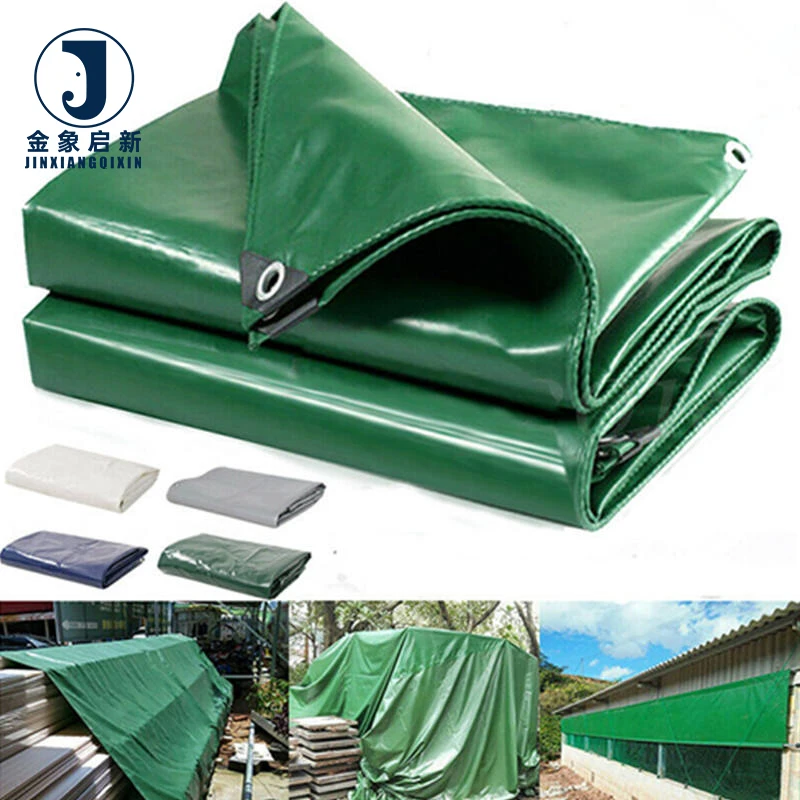
Description
Roll-to-roll batch consistency — every PVC coated tarpaulin roll verified against stated GSM before dispatch, so your container arrives with uniform weight and colour.
Technical Specifications
| Parameter | Value |
|---|---|
| Product Type | PVC Coated Tarpaulin |
| Weight (GSM) | 350gsm, 400gsm, 420gsm, 500gsm, 600gsm, 650gsm, 750gsm, 900gsm |
| Base Fabric Denier | 500D×840D / 500D×1000D / 1000D×1000D / 1000D×1300D / 1300D×1300D / 1000D×2000D |
| Mesh Count | 30×19 / 20×20 / 30×15 |
| Total Thickness | 0.29mm / 0.32mm / 0.38mm / 0.44mm / 0.46mm / 0.55mm / 0.65mm |
| Coating Material | PVC |
| Coating Method | High frequency hot melt / Hot air / Sewing |
| Key Features | Waterproof, fire retardant (grade not stated), anti UV (test basis not stated), heavy metal free, anti mildew, flexible, heavy duty, tensile, self clean |
| Printing Option | Printable, customized |
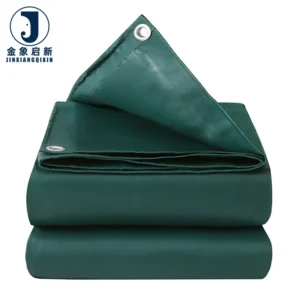
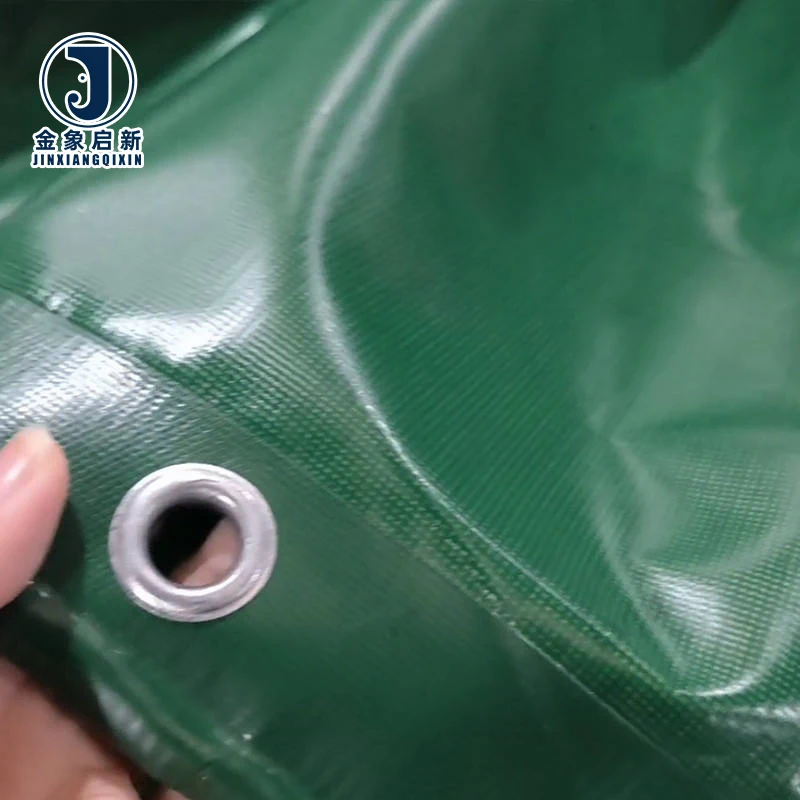
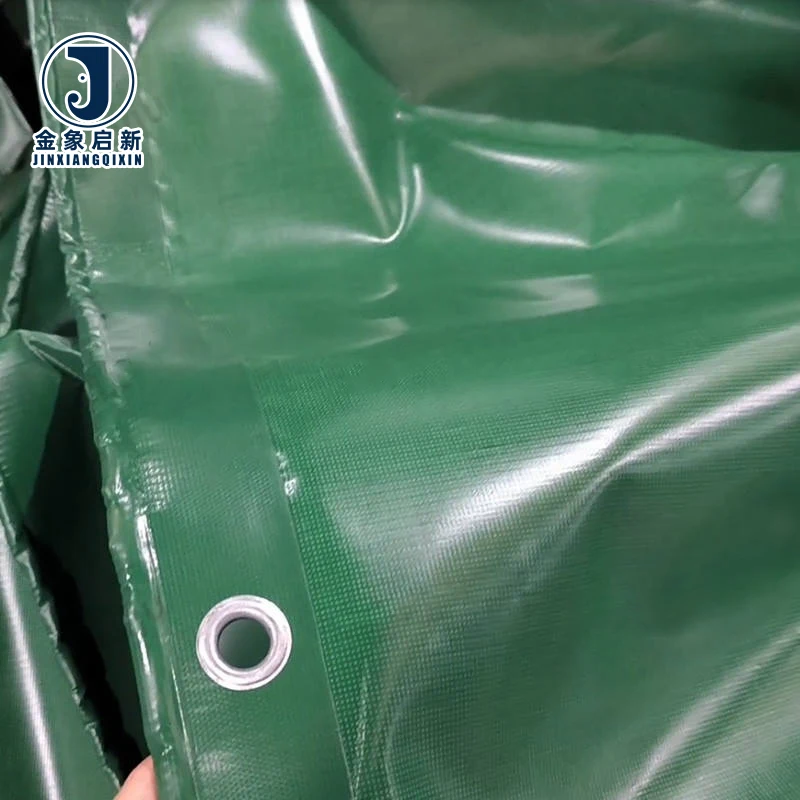
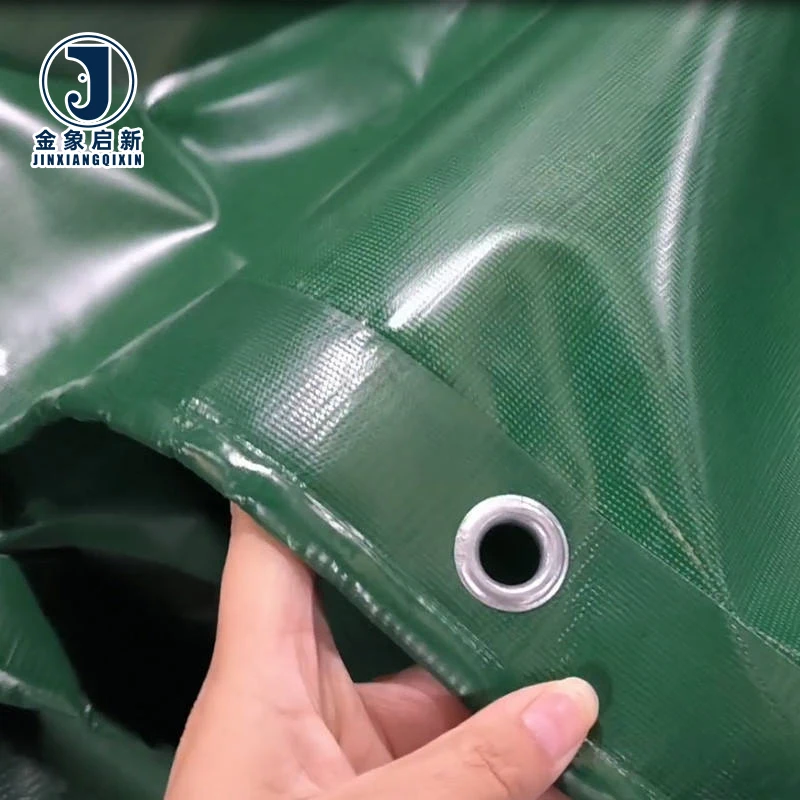
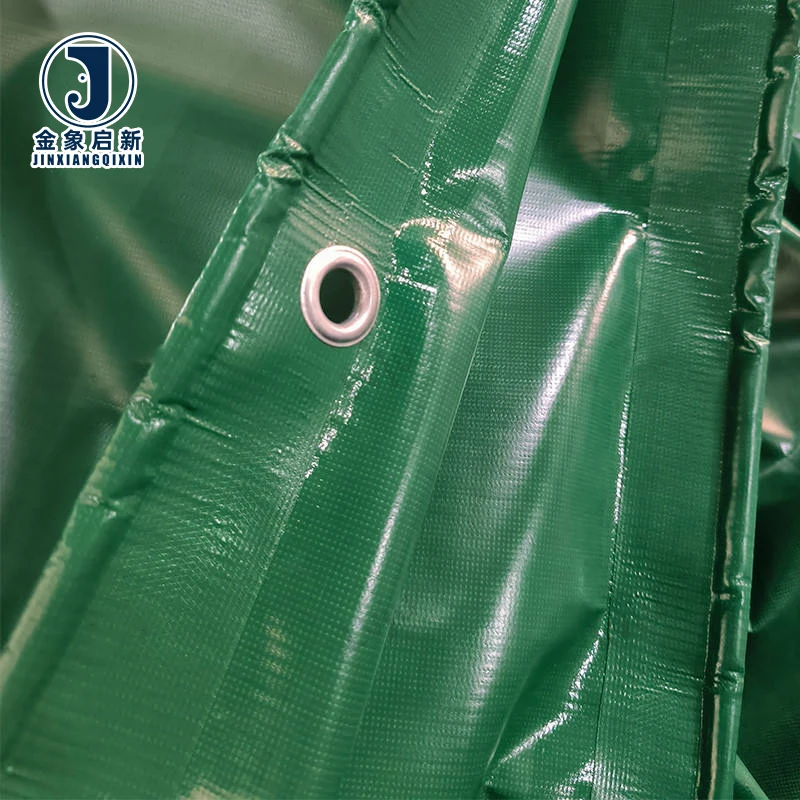
| Edge Treatment | High temperature heat sealed seamless edge wrapping, 5mm thick rope without splicing |
| Eyelet Options | 3cm enlarged aluminum alloy buttonhole |
| Reinforcement | Reinforced corners on all sides |
| Packing | Polyester Bag |
| Standards | ISO, CE |
Application Suitability
| Application | Exposure & Requirement |
|---|---|
| Tarpaulin distributor stock | Multiple grades and widths warehoused for resale — requires batch-to-batch colour and weight consistency across rolls |
| Truck side curtain and top cover fabric | Continuous flexing at fold points, road debris abrasion, prolonged UV and rain exposure |
| Outdoor event tent and block-out awning | Tension loading on frames, sun and weather exposure, repeated erection and strike cycles |
| Inflatable structure and membrane fabric | Internal air pressure stress, seam integrity under load, surface cleanability |
| Container roof and pallet cover | Abrasion from cargo movement, stacking compression, moisture ingress prevention |
Why Stated GSM Does Not Guarantee Roll-to-Roll Consistency
Weight on the quotation sheet and weight on the warehouse floor are two different measurements.
When sourcing PVC coated tarpaulin roll stock for wholesale, buyers frequently find that the GSM printed on the spec sheet does not survive the journey from factory to receiving dock. A roll that measures lighter than agreed delivers less material per square metre than paid for, which compounds across a full container load. The discrepancy is rarely dramatic enough to trigger an immediate rejection — it is subtle, measured in tens of grams, and only surfaces when a buyer actually cuts samples and puts them on a scale [NEED_CITE: typical receiving inspection practices for coated fabric imports].
Roll-to-roll weight variation also introduces downstream problems. A fabricator cutting truck side curtains from rolls of inconsistent weight will produce panels with different stiffness and drape behaviour, even if the colour matches. This is why batch consistency matters as much as the headline GSM figure.
How Weight Grades Map to End-Use Across the Roll Stock Range
The available weight range spans 350gsm through 900gsm, covering eight distinct grades. Lighter grades suit indoor covers, short-term pallet wrapping, and balcony window protection where flexibility and low roll weight matter more than tensile load. Mid-range grades at 500gsm and 600gsm serve truck covers, awning fabric, and general outdoor shelter. The heavy grades at 750gsm and 900gsm handle container roofs, construction structure membranes, and inflatable fabric where tear propagation resistance is critical. Selecting the right PVC coated tarpaulin roll stock for your inventory means matching grade to the applications your own customers specify most often.
Controlling Colour Drift Across a Multi-Roll Shipment
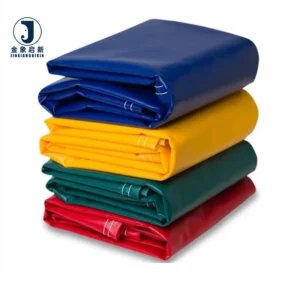
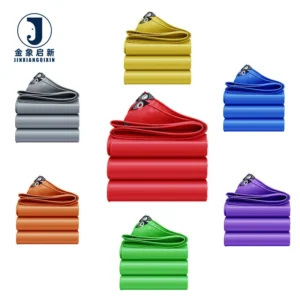
Colour variation between rolls in the same order is one of the most visible defects once the fabric is installed side by side. This problem is acute for tent manufacturers and awning fabricators who cut panels from different rolls and assemble them into a single structure. Maintaining colour consistency requires process control at the coating stage — consistent pigment dispersion, controlled oven temperature, and matched production runs. Rolls destined for the same installation should come from the same dye lot and coating batch [NEED_CITE: pigment batch matching in PVC coating operations].
Reading Denier, Mesh Count and Thickness Together
GSM alone tells you how much material is present, but not how that material is distributed. A 650gsm roll woven from 1000D×1300D yarn at 20×20 mesh has a fundamentally different tensile profile than a 650gsm roll built on a tighter weave with finer yarn. Higher denier in the warp direction improves resistance to tear propagation along the length of the roll. The mesh count determines how tightly the yarns are packed, which influences both the coating adhesion surface and the puncture resistance. Thickness, ranging from 0.29mm to 0.65mm across the grade range, correlates with total PVC coating weight and therefore with abrasion resistance and low-temperature flexibility.
The Hidden Cost of Specifying by Price Per Roll Instead of Verifiable Weight
When buyers select roll stock primarily on unit cost, the savings often disappear at the fabrication stage. A roll that arrives underweight means less usable area per kilogram paid for. A roll with inconsistent coating adhesion fails at the weld line before the fabric body degrades — the seam parts under the first real flex load, and the entire panel must be replaced. Fire retardant or anti UV treatments claimed without supporting test reports leave the end user exposed to compliance rejection at the installation site [NEED_CITE: weld seam failure analysis in PVC coated fabric applications]. These failures are discovered by your customer, not by you, which means reputational cost compounds the material loss.
Why Buyers Source Roll Stock Here
Three full production lines and 36 sets of professional equipment run simultaneously, so volume orders in standard widths ship without bottlenecking on a single machine.
A 10-person R&D team develops colour-matched samples within days, letting you confirm hue and hand-feel before committing a full container.
Dedicated QA/QC inspectors check every roll at each production stage, with 100% inspection before dispatch — not a statistical sample.
GSM, base fabric denier, and coating weight are recorded per roll on the pre-shipment inspection record, so your receiving team can verify on arrival.
Custom width and colour orders run through the same quality gates as standard stock, eliminating the quality gap that often separates catalogue grades from special-production batches.
Documentation & Verification
- Material specification sheet stating GSM, base fabric denier, coating type, and colour reference per roll
- Pre-shipment inspection record with measured weight and visual assessment for every roll
- Roll packing list with individual roll weight and dimensions for container loading plans
- ISO and CE certificates covering the production facility and coated fabric range
- Certificate of origin and customs documentation for international wholesale shipments
- Test reports for fire retardant and anti UV grades where applicable — confirm the grade required for your market
Fabrication, Handling & Storage
- High frequency hot melt welding suits all grades from 350gsm to 900gsm; adjust dwell time and pressure by thickness
- Sewing with UV-stable thread is viable on lighter grades; heavier deniers may require needle and feed dog upgrades
- Store rolls upright on pallets to prevent flat-spot deformation on the coating surface
- Allow cold-stored rolls to reach ambient temperature before unrolling to avoid cracking at low-temperature brittle point
- 5mm rope edge reinforcement distributes tie-down load across the hem, reducing eyelet pull-through on truck cover panels
- Acrylic-based surface cleaners maintain the self-clean finish without degrading the PVC coating layer
Requesting a Quotation for Roll Stock
To receive an accurate quotation, specify the target GSM grade, base fabric denier, roll width, and total roll count or container volume. If your end-use application requires fire retardant or anti UV treatment, state the compliance standard your market demands so the correct formulation can be confirmed. Colour references (Pantone or RAL) and printing requirements should be included at inquiry stage to allow sample development before production commitment.
Frequently Asked Questions
Q: How do I verify GSM on arrival matches the quotation?
A: Cut a measured sample from each roll using a standard template, weigh it on a calibrated scale, and compare against the stated GSM on the material specification sheet. Our pre-shipment inspection record includes per-roll measured weight, so any discrepancy can be identified at the container before signing for delivery.
Q: Can rolls in the same order have visible colour differences?
A: Colour drift between rolls is controlled by running the same pigment batch and maintaining consistent coating oven parameters. Rolls for a single order are grouped by dye lot. Request a batch-matched production run at order stage if your end application places panels from multiple rolls side by side.
Q: What widths are available in stock versus custom?
A: Standard stock widths are available across the full grade range for immediate dispatch. Custom widths require confirmation of minimum roll quantity. Contact us with your target width and annual volume so we can confirm availability and container loading efficiency for your specific requirement.
Q: How should rolls be loaded into a container?
A: Rolls are packed in polyester bags and loaded upright or horizontal depending on container type and roll diameter. The roll packing list provides individual roll weight and dimensions so you can plan loading sequence and weight distribution. Heavier grades at 750gsm and 900gsm add significant weight per roll, which affects container payload limits.
Q: Which coating method suits my fabrication process?
A: High frequency hot melt welding works across all available grades and is the standard for truck cover and tent panel joining. Hot air welding suits on-site repairs and field seams. Sewing is viable on lighter grades where flexibility is prioritized over weld strength. Specify your fabrication method at inquiry so the correct coating formulation is supplied.