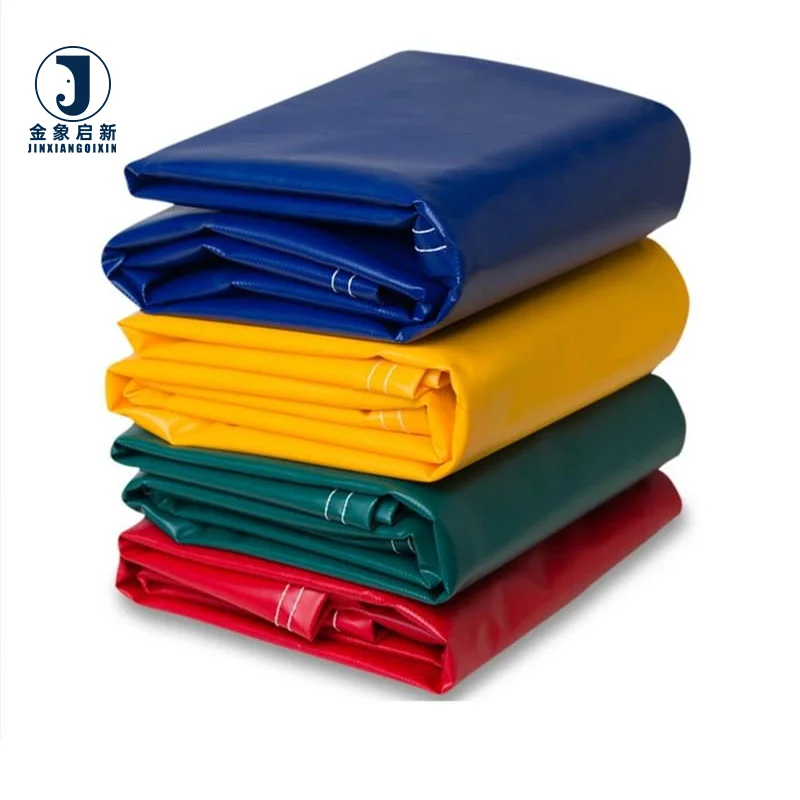
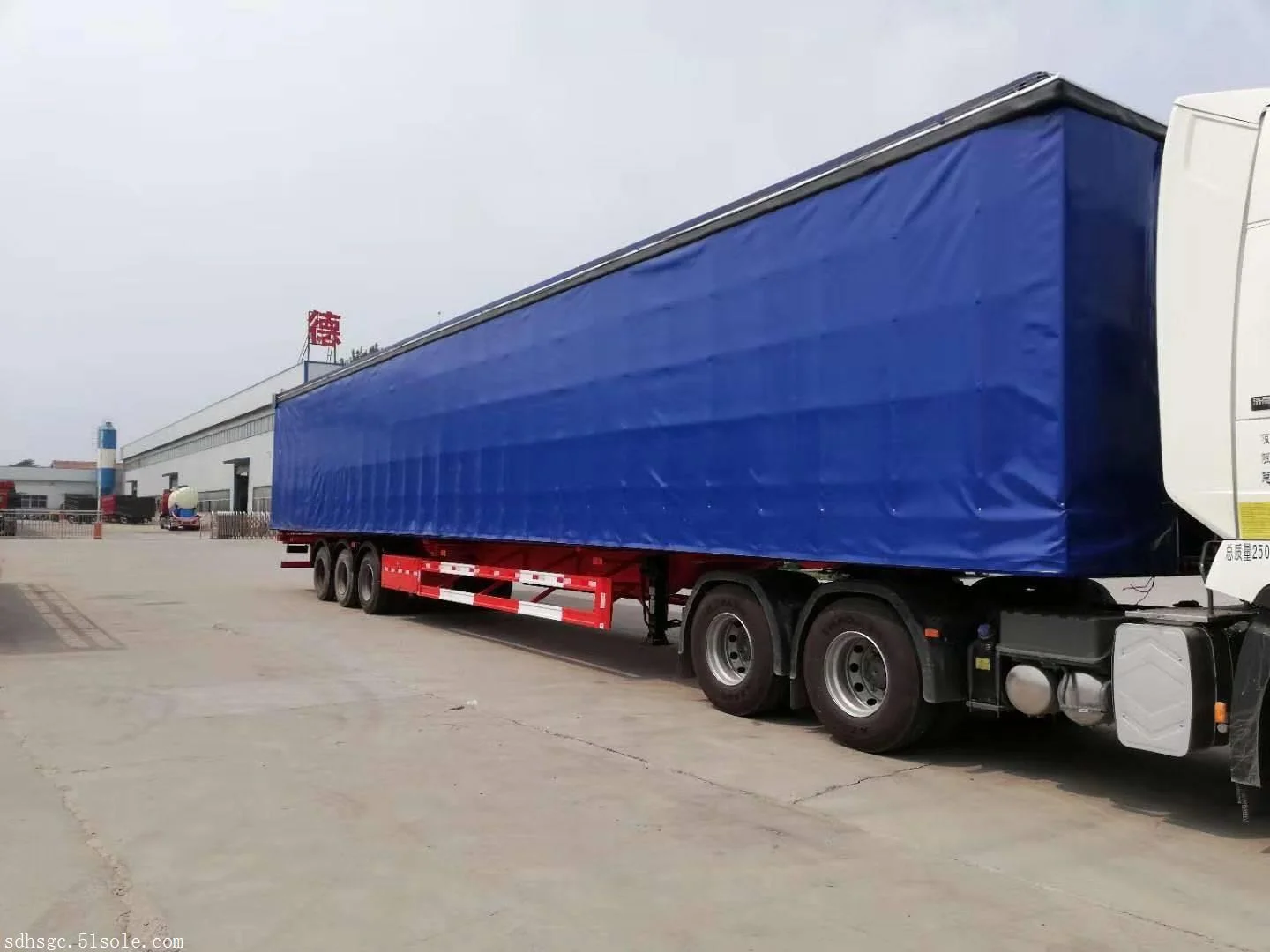
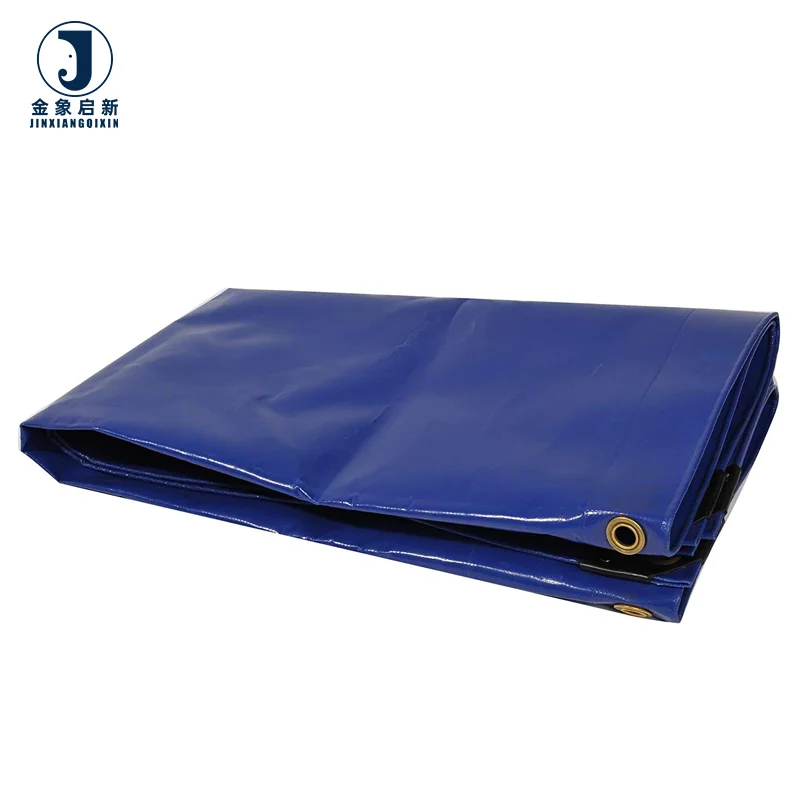
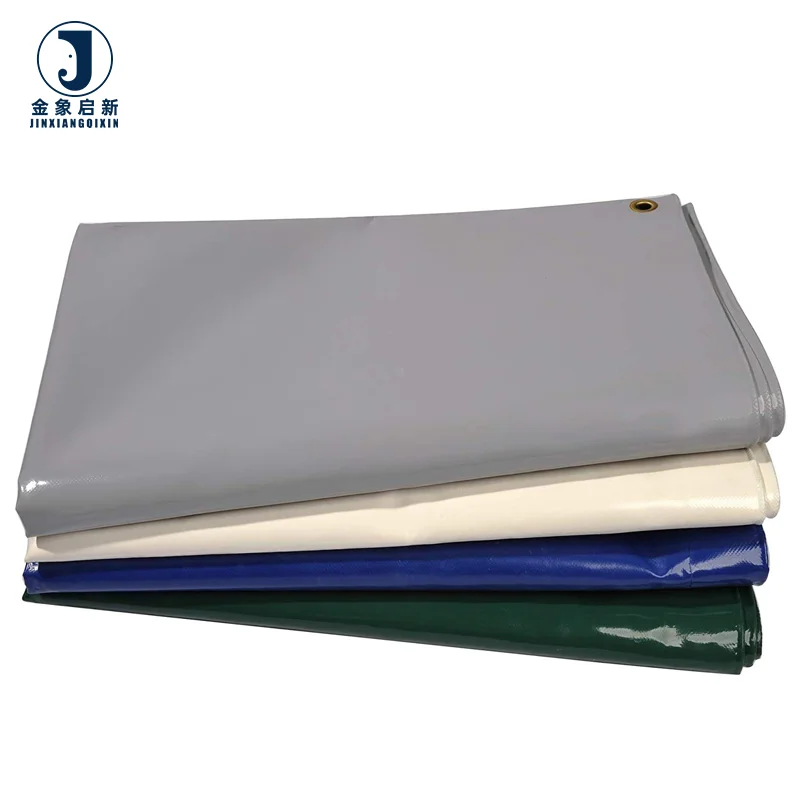
Description
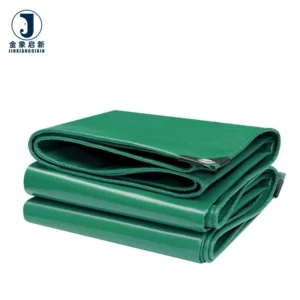
Deep Coating Process Control — Every 1000D PVC tarp roll undergoes 100% pre-shipment GSM verification, ensuring the weight you specify is the weight that arrives at your warehouse for consistent downstream fabrication.
Technical Specifications
| Parameter | Value |
|---|---|
| Product Type | PVC Coated Tarpaulin |
| Base Fabric Denier Options | 500D840D, 500D1000D, 1000D1000D, 1000D1300D, 1300D1300D, 1000D2000D |
| Mesh Count Options | 3019, 2020, 30*15 |
| Weight Range Available | 350gsm, 400gsm, 420gsm, 500gsm, 600gsm, 650gsm, 750gsm, 900gsm |
| Total Thickness Range | 0.29mm, 0.32mm, 0.38mm, 0.44mm, 0.46mm, 0.55mm, 0.65mm |
| Coating Material | PVC |
| Coating Method | High frequency hot melt, Hot air, Sewing (verify against order specification) |
| Tensile Strength (Warp) | 1650 – 3900 N (grade dependent) |
| Tensile Strength (Weft) | 1600 – 3500 N (grade dependent) |
| Finish | Printable, Customized |
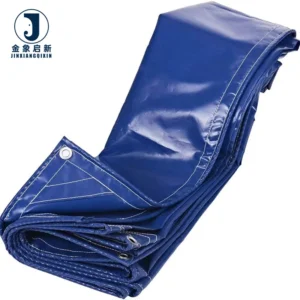
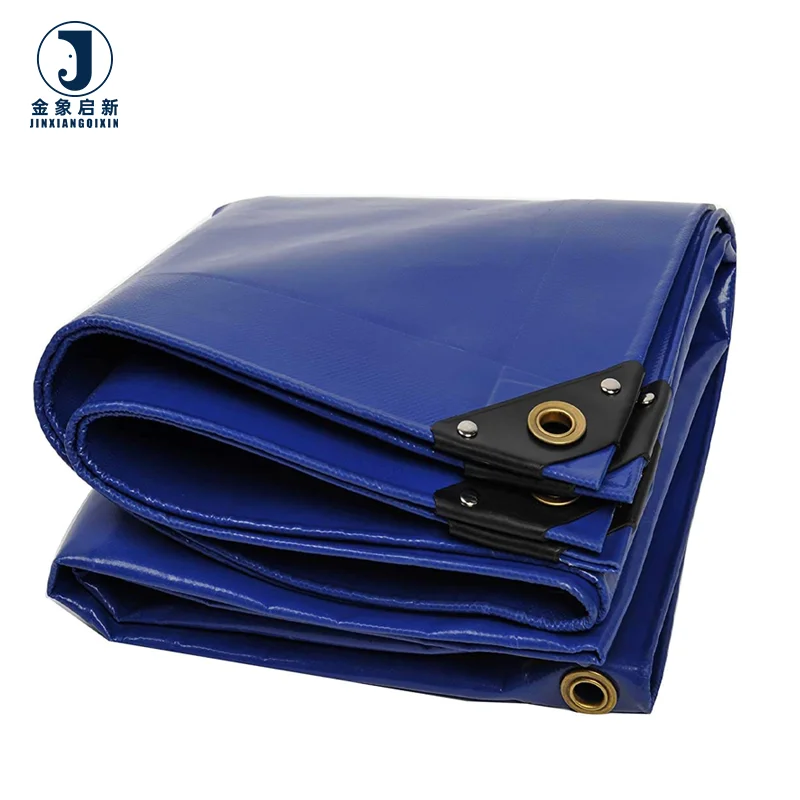
| Edge Construction | 5mm thick rope without splicing, high temperature heat sealed seamless edge wrapping |
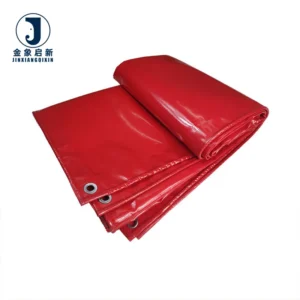
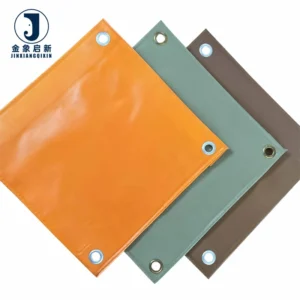
| Eyelet Options | 3cm enlarged aluminum alloy buttonhole, reinforced corners on all sides |
| Key Features | Waterproof, Flexible, Heavy Duty, Self Clean, Anti Mildew, Heavy Metal Free |
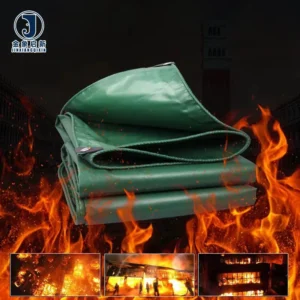
| Fire Retardant | Available in flame retardant grades — confirm the grade required for your market |
| UV Treatment | Available in anti-UV grades — confirm the test basis required for your market |
| Brittle Temperature | ≤ -50 to -60 °C |
| Softening Temperature | ≥ 80 °C |
| Density | 1.15–2.00 g/cm³ |
| Printing Option | Printable, Customized |
Application Suitability
| Application | Exposure & Requirement |
|---|---|
| Truck and trailer side curtain | Constant flexing at load points, road spray abrasion, highway wind loading |
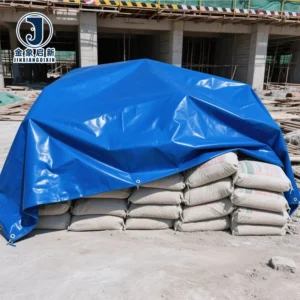
| Flatbed top cover | Direct UV exposure, rain pooling, tie-down strap friction at grommets |
| Pallet and equipment cover | Warehouse stacking compression, outdoor storage, repeated handling |
| Outdoor event tent and awning | Prolonged sun exposure, wind uplift tension, crowd safety fire codes |
| Inflatable structure fabric | Internal air pressure, cyclic inflation and deflation, seam integrity |
Why Roll-to-Roll GSM Variation Undermines Your Entire Inventory
A PVC coated tarpaulin roll that arrives lighter than quoted does not just cost you material — it costs you credibility with every downstream customer who cuts and sells it.
When a distributor buys wholesale PVC coated tarpaulin roll stock, the entire resale model depends on consistent weight grading. A 650 GSM roll that measures 610 GSM on arrival means the fabricator who bought it for truck curtain work is now installing material below the tensile threshold their end customer expects. This mismatch rarely surfaces until the curtain flexes at the weld line under highway load, and by then the distributor carries the liability. [NEED_CITE: tensile and tear test methods for coated fabrics per ISO 1421]
Stock Grade Coverage Without the Guesswork
The range spans eight discrete GSM grades from 350gsm to 900gsm, each paired with a specific base fabric denier and mesh count configuration. This means a distributor stocking PVC coated tarpaulin roll for regional resale can order the exact weight tier their market demands rather than accepting a generic midpoint that satisfies no one. Each grade maps to a defined thickness and tensile profile, so cross-referencing from a customer inquiry to the correct roll is straightforward.
Container Loading Planned Around Your Roll Dimensions
Wholesale buyers need predictable container loading to manage freight cost per roll. Roll count, net weight, and dimension planning are provided at the quotation stage so you know exactly how many rolls of each PVC coated tarpaulin roll grade fit into a standard container before you commit. [NEED_CITE: standard container loading practices for coated fabric rolls by weight and diameter]
How Denier and Mesh Count Determine Real-World Tear Behaviour
The base fabric denier and mesh count work together to define how the material resists tear propagation once a puncture occurs. A 1000D1000D yarn at 3019 mesh creates a dense weave that distributes load across more intersection points, slowing tear spread under tension. A 500D*840D at lighter mesh is appropriate for applications where weight savings matter more than puncture resistance, such as temporary event shelters. The coating weight and total GSM must be read alongside denier, because a heavy coating on a light base fabric inflates GSM without adding proportional tear strength. Thickness readings from 0.29mm to 0.65mm correlate with coating thickness and overall durability, giving buyers a caliper check alongside weight verification.
The Hidden Cost of Skipping Batch Consistency Checks
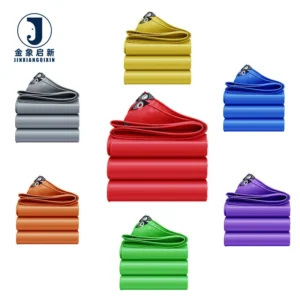
Colour variation between rolls in the same container becomes visible the moment a fabricator installs two panels side by side on a trailer. When rolls come from different production batches with slightly different pigment lots, the finished truck cover shows banding that the fleet operator rejects on sight. This rework cost falls entirely on the distributor who supplied the material. Similarly, GSM that drifts within a single order means some rolls pass tensile requirements while adjacent rolls from the same shipment do not, creating inconsistent product on the warehouse shelf. [NEED_CITE: colour consistency standards for coated fabric batches in textile industry]
What This Production Setup Delivers for Roll Buyers
Three full production lines and 36 sets of professional equipment provide the capacity for bulk PVC coated tarpaulin roll orders without extended lead time compression. A 10-person R&D team handles custom width, colour matching, and sample development within days, letting you confirm roll characteristics before committing to a container. Dedicated QA/QC at every production stage with 100% inspection before shipment means each roll is checked against the specification, not just sampled from the batch. The facility holds ISO and CE certification, and the process control extends from coating weight to edge wrapping consistency. Nearly 30 years of focus on coated fabric has refined how coating adhesion and base fabric tension are managed across long production runs, reducing the variation that causes downstream fabricators to reject material.
Documentation & Verification
- Pre-shipment inspection record with measured GSM per roll included with every dispatch
- Material specification sheet stating denier, coating weight, and colour reference for traceability
- Roll packing list with roll count, net weight, and container loading plan for logistics
- UV and flame retardant test reports supplied for grades where treatment is specified
- Certificate of origin and customs documentation for cross-border shipment clearance
Fabrication, Handling & Storage
- Heat seal parameters should match the coating method selected — high frequency or hot air — to avoid delamination at weld lines
- 3cm aluminum alloy eyelets with reinforced corners distribute tie-down load across the heavy duty base fabric
- Store rolls upright on pallets to prevent flat spots that create visible creases on printable surfaces
- Allow rolls to acclimate to ambient temperature before unrolling to avoid cracking at brittle temperature threshold
- Custom widths reduce offcut waste during fabrication — specify width against your cutting pattern before ordering
Before You Request a Quote
Provide the end-use application and the exposure conditions the fabric will face so the correct GSM and denier grade can be recommended. Confirm whether your market requires a specific fire retardant grade or anti-UV test basis, and state the roll width and colour you need for your fabrication setup. Indicate whether you require raw roll stock or finished edge-wrapped rolls with eyelets, and whether samples should be produced for approval before the bulk order runs.
Frequently Asked Questions
Q: How is GSM verified on each roll and what documentation ships with the order?
A: Every roll is measured during the pre-shipment inspection process, and the recorded GSM is documented on an inspection record that ships with the dispatch. This allows you to verify the weight against your purchase specification without needing to sample-test on arrival. The material specification sheet and roll packing list accompany each shipment for full batch traceability.
Q: How do you ensure colour consistency across rolls within the same container?
A: Rolls for a single order are produced within the same production run using matched pigment lots. The colour reference is recorded on the material specification sheet so that future reorders can be matched to the same standard. Any custom colour is confirmed through a sample approval step before bulk production begins.
Q: What standard and custom roll widths and lengths are available, and how do they affect container loading?
A: Standard and custom widths are available to match your fabrication cutting pattern, reducing offcut waste. Roll length and diameter determine how many rolls fit per container, and a loading plan is provided at quotation stage so you can calculate freight cost per roll accurately before placing the order.
Q: How are rolls packed and loaded to prevent damage during ocean freight?
A: Each roll is packed in a polyester bag and loaded according to a container plan that prevents shifting during transit. Rolls are positioned to avoid compression damage and edge crushing, preserving the printable surface and heat-sealed edge wrapping until they reach your facility.
Q: What is the MOQ for custom GSM, width, or colour, and how fast can samples be produced?
A: Minimum order quantities vary by specification and are confirmed at the quotation stage. Samples for custom width, colour, or print requirements are typically developed within days, allowing you to evaluate the material and approve it before committing to a full container order.