Description
Deep Coating Process Control — Nearly 30 years of PVC coating expertise ensures roll-to-roll consistency across bulk inflatable tent fabric orders, with dedicated QA at every production stage.
Technical Specifications
| Parameter | Value |
|---|---|
| Product Type | Inflatable Tent |
| Core Material | PVC tarpaulin |
| Key Performance | Waterproof, UV-resistant (test basis not stated in source), tear-resistant |
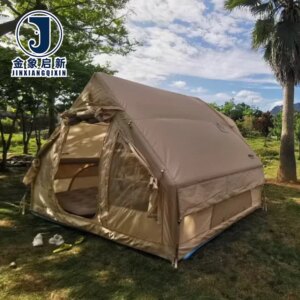
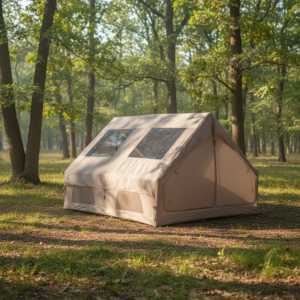
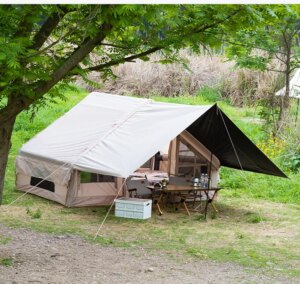
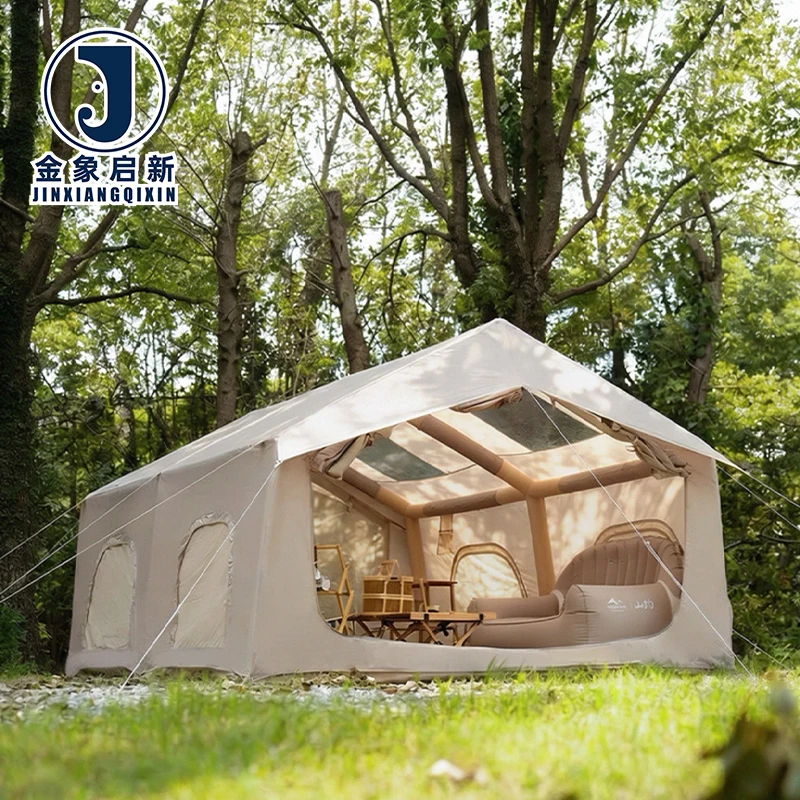
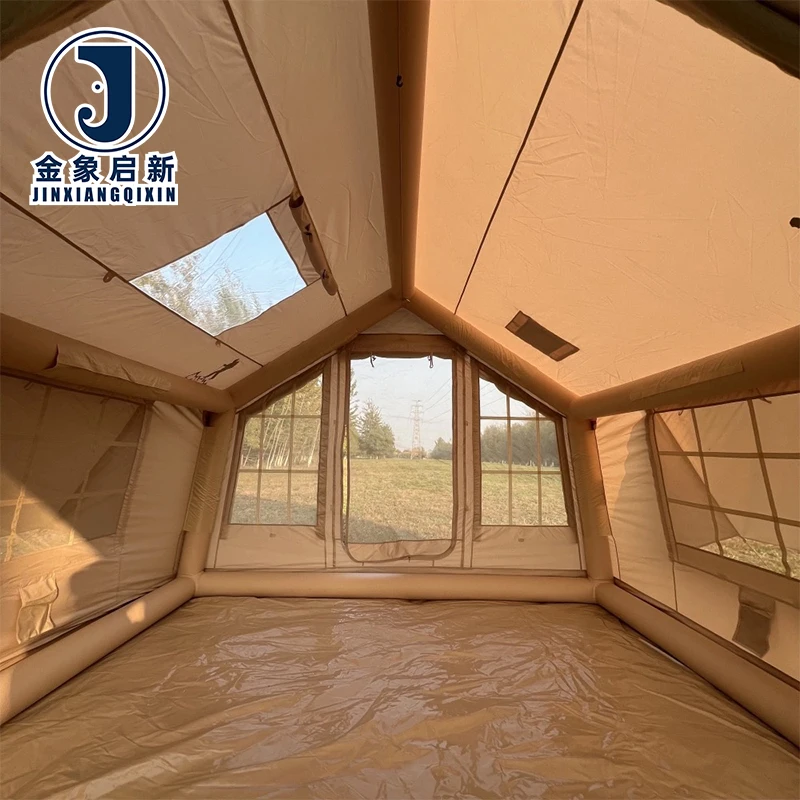
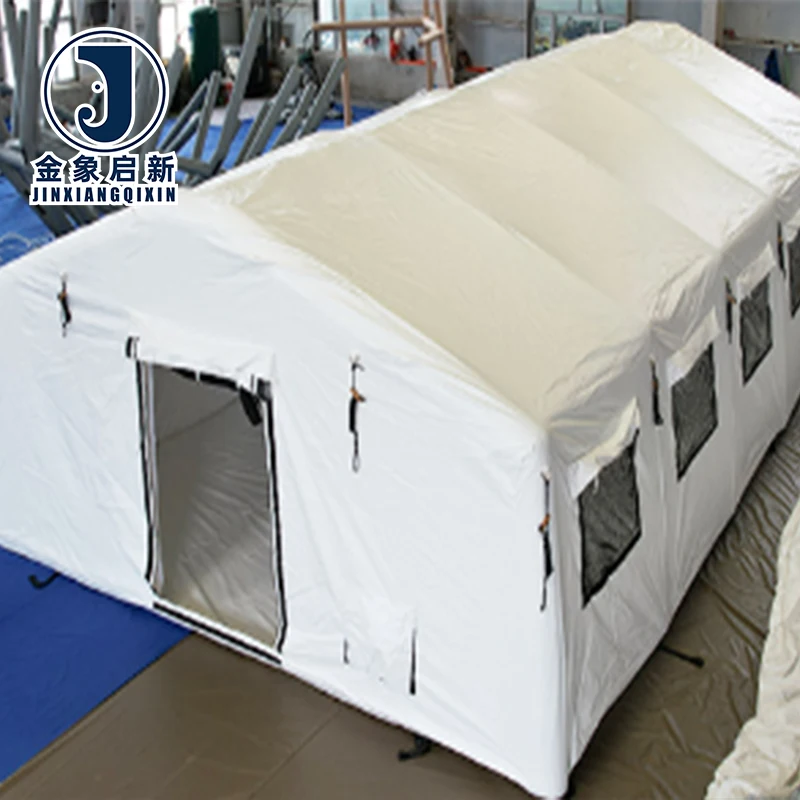
| Product Forms | Inflatable structure with quick automatic opening |
| Season Rating | Four-season |
| Flame Retardant | Grade not stated — confirm the grade required for your market |
| Customization Service | OEM & ODM (sample customization, pattern printing) |
| Standards | ISO9001, ISO14001, ISO45001, CE |
Application Suitability
| Application | Exposure & Requirement |
|---|---|
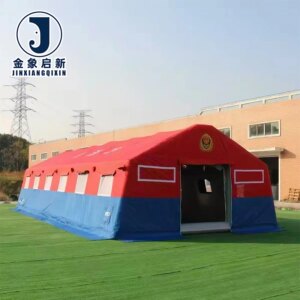
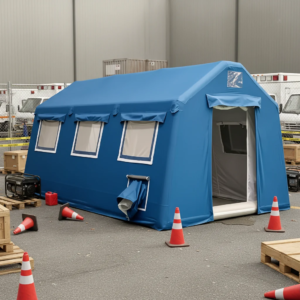
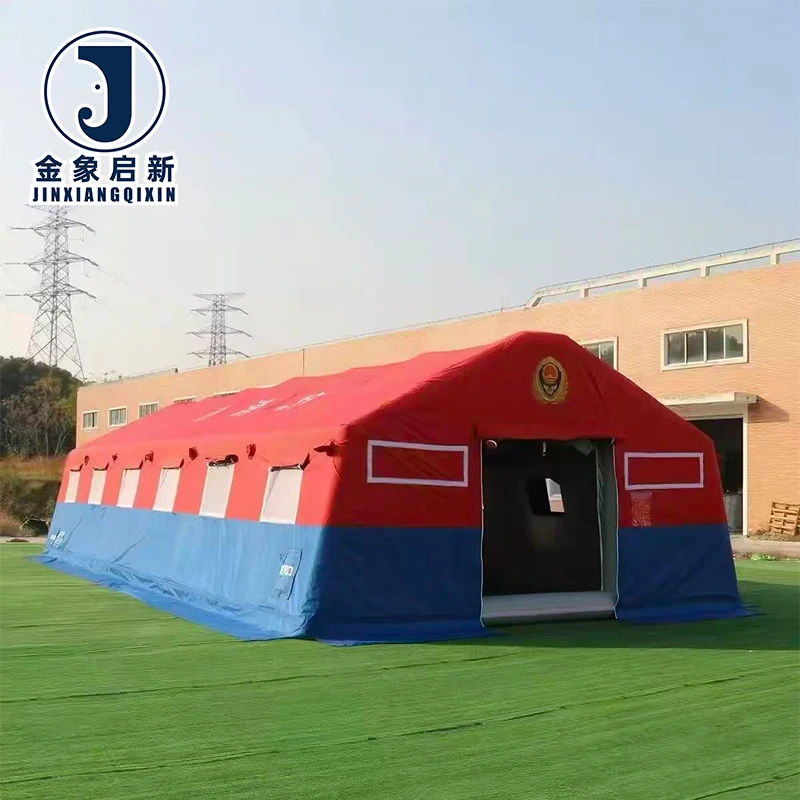
| Emergency disaster relief command centers | Rapid deployment under unpredictable weather, frequent inflation cycles, transport abrasion |
| Construction site temporary shelters | Prolonged sun exposure, wind loading, dust and debris impact, repeated relocation |
| Outdoor event infrastructure | High-visibility branding, crowd safety compliance, multi-day weather resistance |
| Industrial equipment storage | Moisture ingress prevention, UV degradation resistance, puncture from sharp edges |
Why Batch Colour Consistency Matters More Than You Think for Inflatable Shelters
Colour drift between rolls becomes immediately visible when multiple inflatable structures stand side by side at a disaster relief site or event venue.
When emergency response teams deploy a row of inflatable tents, even slight hue variation between units signals poor procurement control and undermines professional credibility on camera. Buyers often discover this only after unrolling adjacent panels in full daylight — by which time the entire shipment is on-site and re-ordering means weeks of delay. An inflatable tent fabric manufacturer that controls coating pigment dosing at every batch can eliminate this failure mode before it reaches your loading dock. [NEED_CITE: colour tolerance standards for coated fabrics per ISO 105-J03]
Roll-to-Roll Uniformity Across Bulk Orders
Producing PVC inflatable tent fabric across multiple production runs demands tight control over plasticiser ratios and pigment dispersion. A variance in coating weight from one roll to the next not only shifts the colour but alters the inflation behaviour — stiffer panels inflate slower, while softer panels sag under wind load. Our three full production lines run calibrated dosing systems that maintain coating thickness within the tolerance window specified at order confirmation, so a 20-roll order arrives with consistent hand feel and visual match.
Waterproof Construction for Continuous Field Deployment
The PVC tarpaulin base delivers fully waterproof coated construction that prevents moisture penetration during extended rainfall events common in disaster zones. Unlike stitched-and-seamed panel tents, inflatable structures rely on continuous welded seams that must hold internal pressure while resisting water ingress at every joint. The tear-resistant property of the base fabric ensures that a field puncture from sharp debris does not propagate into a full panel failure, keeping the shelter operational until a repair patch can be applied. [NEED_CITE: welded seam strength testing methods for coated fabrics per ISO 1421]
Material Behaviour Under Prolonged UV Exposure
Outdoor inflatable shelters sit under direct sunlight for days or weeks without shade. The UV-resistant treatment in the PVC coating slows the yellowing and embrittlement that plain tarpaulin shows after a single season. Because the test basis for UV performance is not stated in our current data sheet, we recommend requesting the specific UV test report and confirming whether third-party testing is needed for your market’s compliance framework before committing to a bulk order.
Understanding Coating Weight and Base Fabric Interaction
The overall performance of inflatable tent fabric depends on how the PVC coating interacts with the woven base fabric. Coating weight alone does not determine strength — a heavier coat on a loosely woven base will crack at the fold line before a lighter coat on a high-density weave yields. The base fabric denier and thread count govern tear propagation resistance, while the coating thickness controls waterproofing and surface abrasion tolerance. For inflatable applications where the fabric flexes during inflation and deflation cycles, peel strength between the coating and the yarn becomes critical; a delaminated panel loses air pressure rapidly. Buyers specifying material for OEM inflatable product lines should request the full construction data — base fabric weight, coating weight, and total GSM — rather than evaluating a single number.
The Hidden Cost of Specifying on Price Per Kilogram Alone
Choosing inflatable tent fabric on the lowest cost per kilogram often means accepting a lighter base fabric hidden under a thick coating to hit the quoted GSM. The result is a material that passes the weight check on arrival but tears along the warp line the first time the structure flexes in a gust. Welded seams on such fabric fail at the bond interface because the coating peels away from an under-tensioned yarn grid, leaving the shelter deflated and the project facing emergency re-procurement. [NEED_CITE: tensile and tear test methods for coated fabrics per ISO 1421]
Why Procurement Teams Choose This Source
Our 10-person R&D team handles material selection, pattern printing, and custom sizing for inflatable tent OEM projects, producing validated samples within days rather than weeks. Three full production lines and 36 sets of processing equipment give us the capacity to fill container-load orders without subcontracting coating to third parties — keeping colour and thickness under one roof. Dedicated QA/QC at every production stage includes 100 percent inspection before shipment, catching coating defects and colour drift before rolls are packed. ISO9001, ISO14001, ISO45001, and CE certifications are maintained and documented for every shipment, supporting customs clearance across regulated markets.
Documentation & Verification
- Material specification sheet stating coating weight, base fabric construction, and colour reference for every roll
- UV test report supplied where applicable — confirm required test basis for your destination market
- Pre-shipment inspection record with batch-specific quality parameters documented per roll
- ISO and CE certificates included with each consignment for customs and regulatory compliance
- Roll packing list detailing net weight, gross weight, and dimensions per package
Fabrication, Handling & Storage
- Heat-weld PVC inflatable tent fabric at temperatures matched to coating thickness to avoid seam delamination
- Store rolls upright on pallets in a shaded, ventilated area to prevent permanent creasing of the PVC coating
- Clean the waterproof PVC surface with mild detergent only — solvent-based cleaners degrade the plasticiser layer
- Inflate finished structures for a full cycle test before dispatch to verify seam and valve integrity
- Cut panels using a template that accounts for seam allowance and inflation stretch to maximise roll yield
- Repair field punctures with PVC-compatible adhesive patches applied to a clean, dry surface
Requesting a Quotation for Inflatable Tent Fabric
To move quickly from inquiry to sample, share your target dimensions, inflation pressure range, and the climatic conditions the finished shelter will face. If your market mandates a specific flame retardant grade, state the standard upfront so we can confirm available grades before sampling. Indicate whether you need raw roll stock for your own fabrication line or finished cut-and-welded panels, along with any pattern printing or branding requirements.
Frequently Asked Questions
Q: How is batch-to-batch colour consistency controlled across multiple rolls of inflatable tent fabric?
A: Pigment dosing is calibrated at the start of each production run and checked against a reference swatch under controlled lighting. Every roll is compared to the approved master sample before packing, and any roll falling outside the agreed tolerance is held back rather than shipped, ensuring visual uniformity across your entire order.
Q: What UV treatment test basis supports the outdoor exposure claim, and can third-party testing be arranged?
A: The current data sheet does not state a specific UV test standard. We can supply the in-house UV exposure record and, upon request, arrange independent third-party testing to the standard required by your destination market before bulk production begins.
Q: What customization options are available for size, thickness, and pattern printing on inflatable tent fabric?
A: Our R&D team adjusts panel dimensions, PVC coating weight, and base fabric selection to match your inflatable design. Pattern printing and OEM branding are applied during coating or post-coating depending on durability requirements, with samples produced for approval before full-scale runs.
Q: What documentation is provided for customs clearance and international compliance on each shipment?
A: Every consignment ships with a material specification sheet, pre-shipment inspection record, ISO and CE certificates, a detailed roll packing list, and a certificate of origin. Additional compliance documents can be prepared based on the import regulations of your destination country.