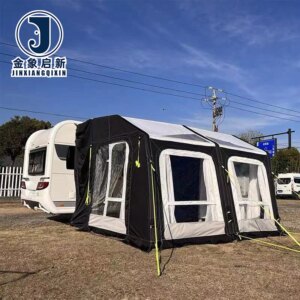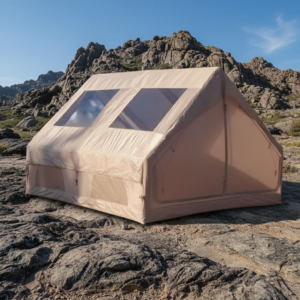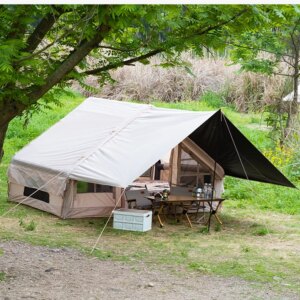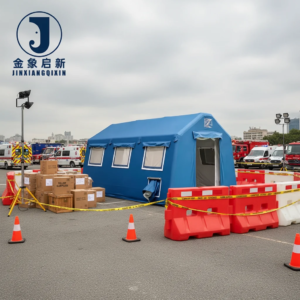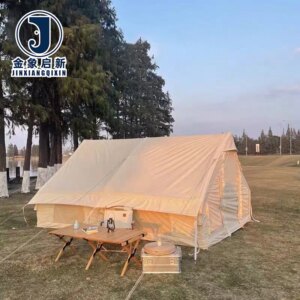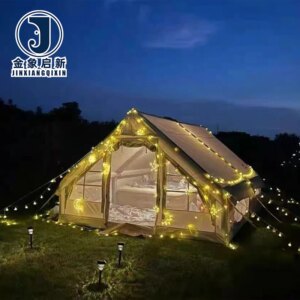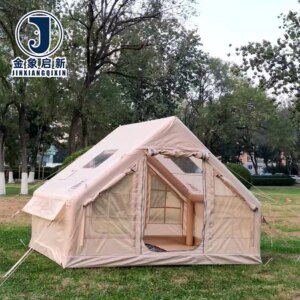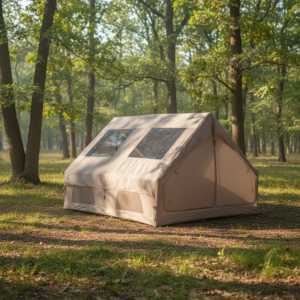
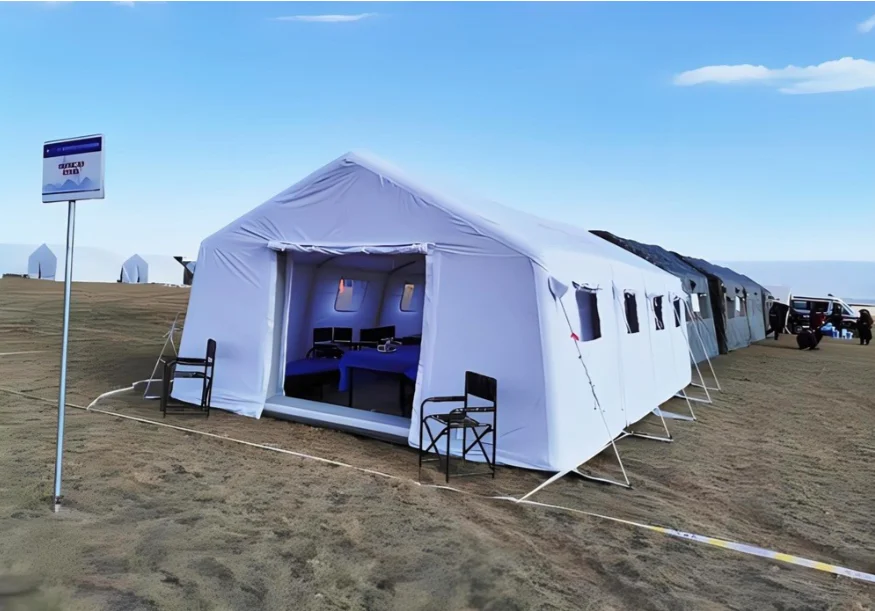
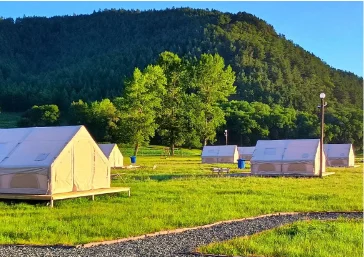
Description
Batch Consistency Guaranteed — Every roll of PVC inflatable tent fabric in your order undergoes weight and adhesion verification before dispatch, ensuring uniform inflation performance across rapid-deployment shelters.
Technical Specifications
| Parameter | Value |
|---|---|
| Product Type | Inflatable Tent |
| Core Material | PVC Tarpaulin (PVC knife-coated fabric) |
| Product Form | Inflatable structure with single layer construction |
| Waterproof | Yes |
| UV-resistant | Available in UV-resistant grades — confirm the grade required for your market |
| Tear-resistant | Yes (grade not stated in source) |
| Fire-retardant | Available in flame retardant grades — confirm the grade required for your market |
| Anti-static | Available in anti-static grades — confirm the surface resistance or standard required |
| Customization | OEM & ODM (size adjustments, color options, pattern printing) |
| Production Facility Area | 9,180 m² |
| Production Lines | 3 full production lines |
| Processing Equipment | 36 sets |
| R&D Team | 10 technicians |
| Quality Control | Full-process inspection with dedicated QA & QC staff |
| Standards | ISO 9001, ISO 14001, ISO 45001, CE |
Application Suitability
| Application | Exposure & Requirement |
|---|---|
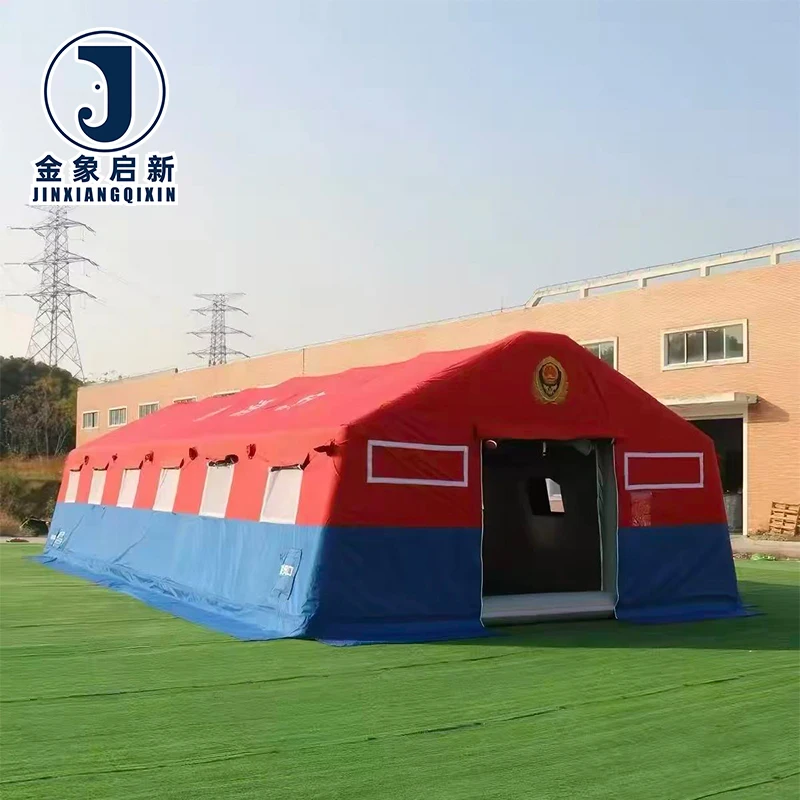
| Disaster relief rapid deployment shelters | Immediate weather protection, repeated inflation cycles, high visibility for rescue operations |
| Construction site temporary equipment storage | Dust ingress, mechanical abrasion from stored machinery, extended outdoor UV exposure |
| Emergency command centers during infrastructure projects | Rapid setup by minimal personnel, stable internal environment, professional appearance |
| Weather-protected work areas for outdoor industrial operations | Wind load on inflated structure, rain runoff, thermal expansion of PVC membrane |
| Material processing areas | Chemical splash resistance, easy surface cleaning, forklift traffic abrasion near base |
When "Same Specification" Does Not Mean Same Performance
Consistent GSM and coating adhesion across every roll in a bulk PVC inflatable tent wholesale order separates a reliable shelter deployment from a batch rejection on site.
Procurement teams sourcing PVC Inflatable Tent aftermarket supplier materials often discover that rolls quoted at a target weight arrive lighter, or that flame-retardant treatment lacks the test documentation the local fire authority demands. When twenty inflatable units are deployed side by side at a disaster zone, a visible colour shift between batches undermines the professional standard expected by coordinating agencies. [NEED_CITE: ISO 1421 tensile and tear test methods for coated fabrics]
Roll-to-Roll Colour and Coating Uniformity
For buyers evaluating PVC Inflatable Tent wholesale options, maintaining identical hue and surface gloss across dozens of rolls is a coating line discipline issue, not a pigment issue. Our 10-person R&D team calibrates the knife-coating gap and oven temperature profile at the start of each production run, locking in both the coating weight and the final colour reference. This control means that when your inflatable tents are erected adjacent to each other at an infrastructure project site, the membrane panels present a uniform appearance to stakeholders and media.
Single-Layer Construction for Deployment Speed
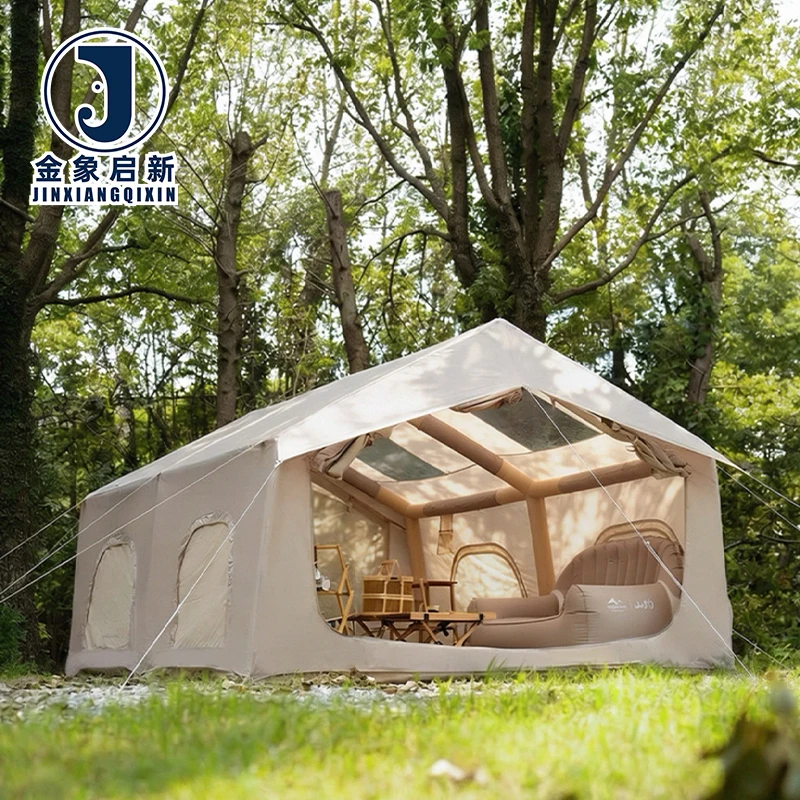
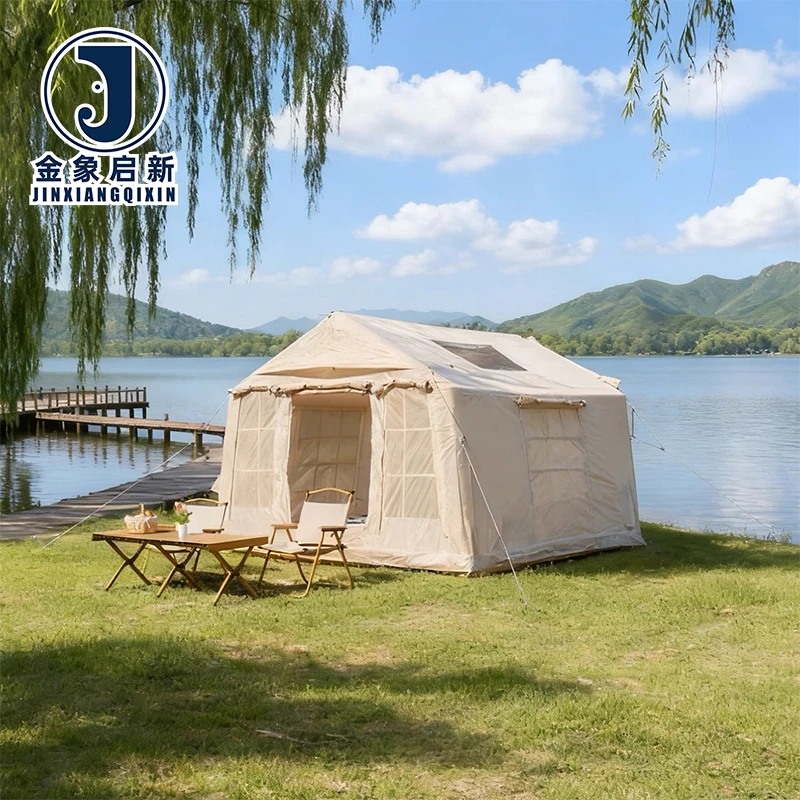
The single-layer inflatable structure balances transport efficiency with structural integrity. When a disaster relief agency needs to deploy PVC Inflatable Tent wholesale inventory within hours of arrival, a single-layer membrane inflates faster and requires less compressor capacity than multi-chamber alternatives. The knife-coated PVC fabric maintains its dimensional stability under continuous inflation pressure, resisting the creep that causes sagging in less stable materials.
Specifying PVC for Inflatable Shelters
The knife-coating process forces PVC paste into the interstices of the base fabric under blade pressure, creating a mechanical lock between coating and yarn. [NEED_CITE: knife-coated PVC adhesion and peel strength behaviour per ISO 2411] This bond is what allows the inflatable tube to withstand repeated pressurization cycles without delamination at the seams. The base fabric denier and weave density determine how the material resists tear propagation if punctured by debris during emergency deployment. A higher thread count in the warp direction limits the length of a tear once initiated, which is critical when field repair resources are limited. Selecting between glossy and matte finish affects both the ease of decontamination after use and the surface temperature under direct solar exposure.
The Cost of Overlooking Seam Integrity
Inflatable tents concentrate stress at the welded tube junctions, where the fabric flexes with every pressure fluctuation. If the coating adhesion is marginal or the heat-seal temperature is not matched to the specific PVC formulation, the welded seam will fail before the body fabric shows any sign of fatigue. Buyers who have seen inflatable structures collapse under moderate wind often trace the failure to a seam that was never tested under cyclic pressure. [NEED_CITE: cyclic pressure testing protocols for inflatable membrane structures] A batch that passes a static pressure test but fails under repeated inflation cycles will cost far more in returned goods and replacement logistics than a thorough in-process QA check would have prevented.
Why Procurement Teams Source Inflatable Tent Fabric Here
Our three full production lines handle PVC Inflatable Tent wholesale volume while maintaining the batch tracking that large disaster relief contracts require. The 36 sets of processing equipment include dedicated welding and cutting stations configured for inflatable tube geometry. Every roll undergoes 100 percent pre-shipment inspection against the stated specification, with weight, colour, and coating adhesion verified before packing. Samples are developed within days for custom size and colour requirements, allowing your procurement team to confirm material suitability before committing to container quantities. The documentation package — from material specification sheets to pre-shipment inspection records — supports compliance audits in your destination market.
Documentation & Verification
- Material specification sheet stating GSM, base fabric construction, and coating type for each roll
- UV and flame-retardant test reports provided when the specified grade applies
- Pre-shipment inspection record confirming coating weight and colour reference match
- ISO 9001, ISO 14001, ISO 45001, and CE certificates included with dispatch documentation
- Roll packing list detailing net weight, dimensions, and roll count per pallet
Fabrication, Handling & Storage
- Set heat-seal temperature to match the specific PVC knife-coated formulation before welding inflatable tube seams
- Store rolls horizontally on padded racks to prevent permanent creasing in the coated membrane
- Allow cold-stored PVC inflatable tent fabric to reach ambient temperature before unrolling to avoid coating micro-cracks
- Clean the glossy PVC surface with neutral pH detergent to preserve coating integrity between deployments
- Repair minor field punctures with compatible PVC adhesive patches matched to the coating chemistry
Request a Fabric Specification for Your Deployment Scenario
To move forward, share the deployment environment, expected inflation duration, and any fire safety classification required by your local authority. Specify whether you need roll stock for your own fabrication line or finished inflatable units cut to your pattern. Provide target colour references and any pattern printing requirements so our R&D team can prepare matched samples. Confirm the annual volume estimate and preferred container loading configuration.
Frequently Asked Questions
Q: How is GSM verified on arrival for PVC inflatable tent fabric?
A: We include a weight verification record per roll in the dispatch documentation. On receipt, cut a measured sample from each roll and weigh it on a calibrated scale. If the measured GSM deviates from the material specification sheet, notify us immediately with photographs and sample weights so we can investigate the production batch record.
Q: How do you control colour variation across multiple rolls in one order?
A: Our R&D team locks the colour reference at the start of each production run and monitors the knife-coating line continuously. Rolls from the same order are produced in a single batch to eliminate inter-batch variation. If your project demands absolute consistency, request a colour approval sample before full production begins.
Q: Does the inflatable tent fabric meet international fire safety standards?
A: Flame-retardant grades are available to match specific market requirements. State the standard or classification your destination authority requires during inquiry. We will confirm the applicable grade, provide the corresponding test report, and include it in your shipment documentation for compliance verification.
Q: What is the minimum order for custom size, colour, or printed branding?
A: Minimum quantities depend on the customization scope. Custom colours typically require a full production run to ensure batch consistency, while size adjustments and pattern printing can be accommodated at lower thresholds. Submit your specifications and our sales team will confirm the applicable minimum and sample lead time.
Q: How is roll stock packed to prevent damage during ocean freight?
A: Each roll is wound on a reinforced core, wrapped in protective film, and loaded horizontally with blocking to prevent movement inside the container. The packing list details roll count, net weight, and dimensions so your warehouse team can plan handling equipment before the container arrives at port.