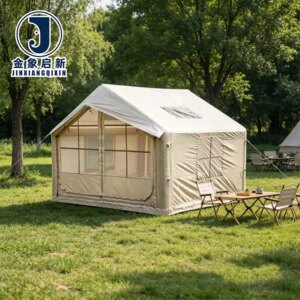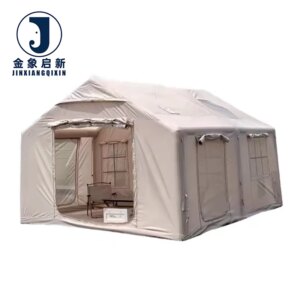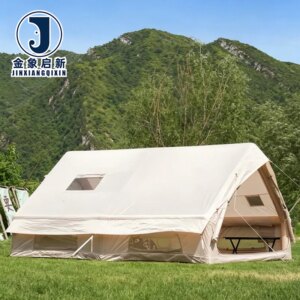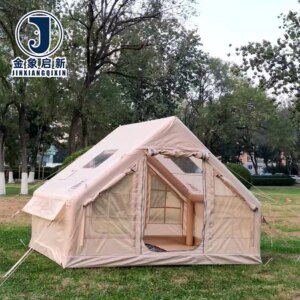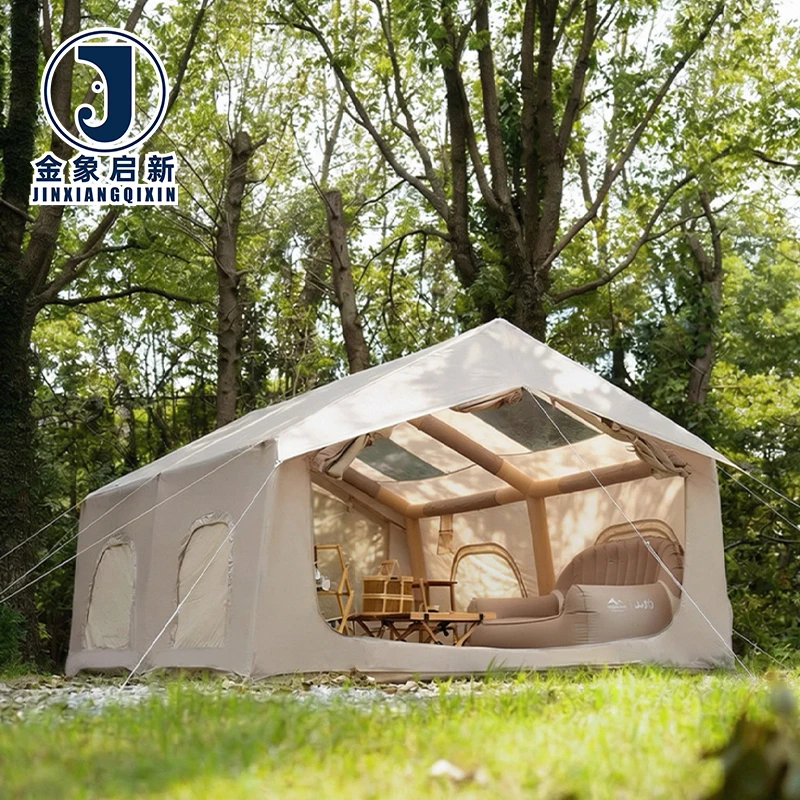
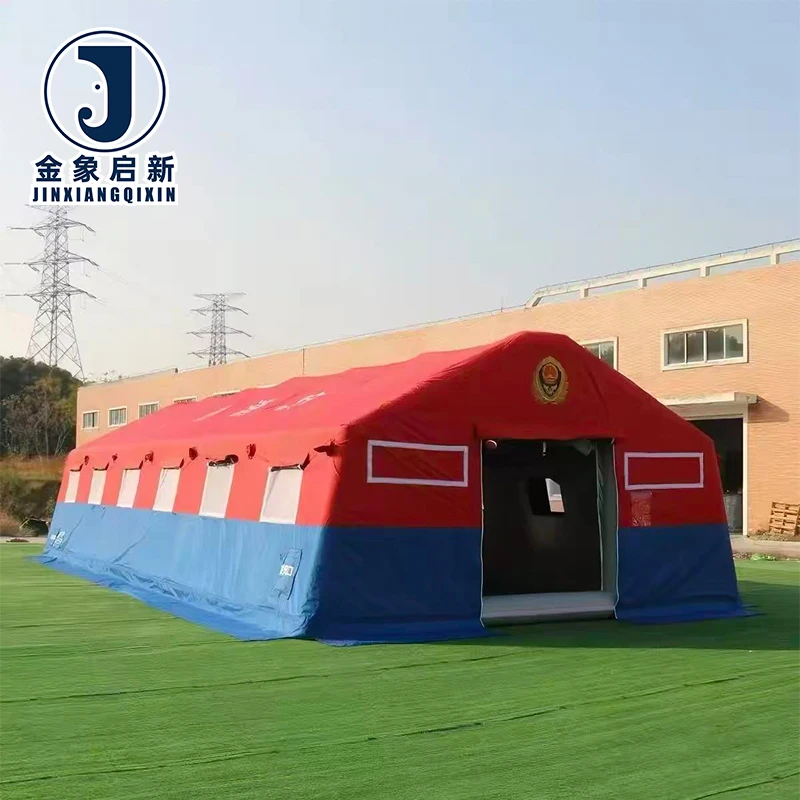
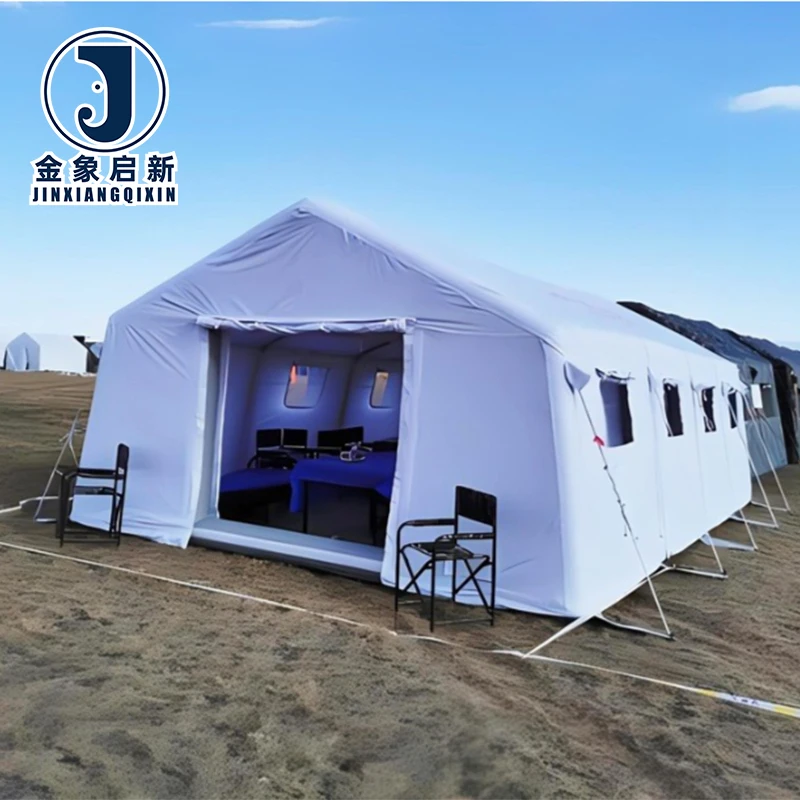
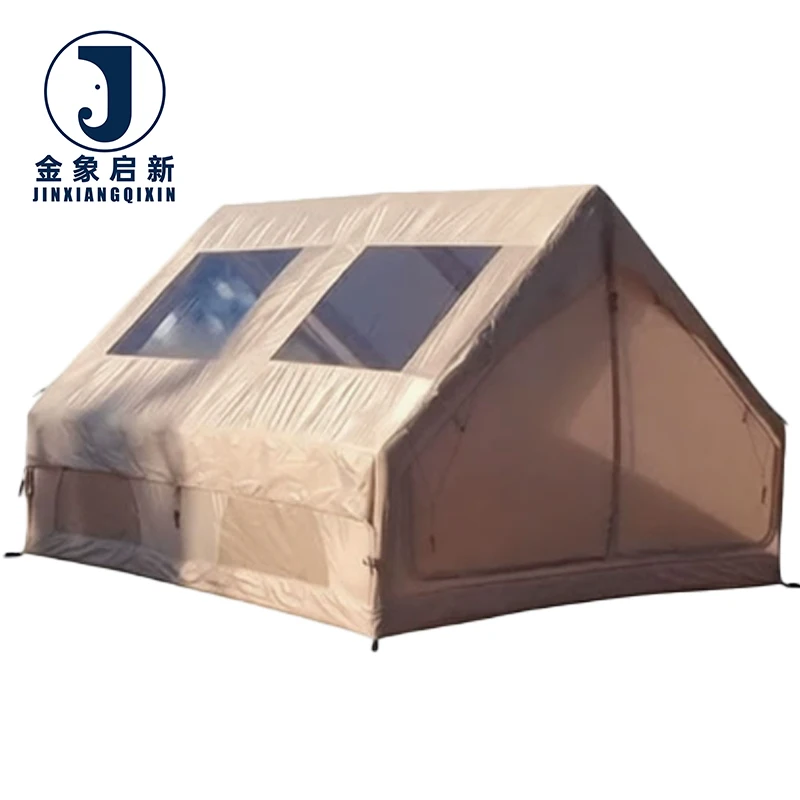
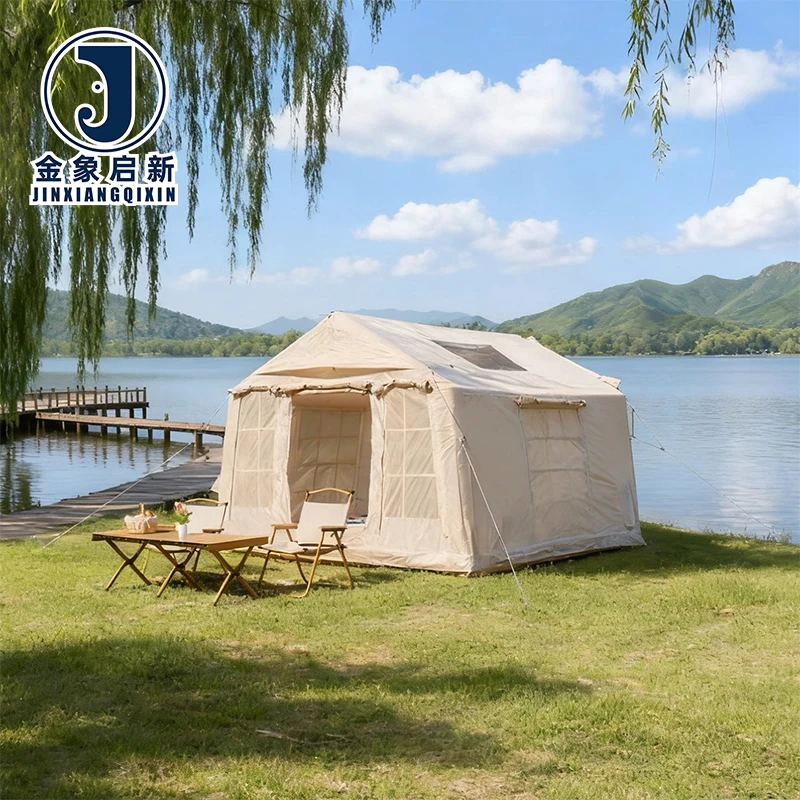

Description
Deep Coating Expertise — nearly three decades of process control over PVC coating weight and adhesion ensure every roll of inflatable tent fabric meets its stated specification before it leaves the line.
Technical Specifications
| Parameter | Value |
|---|---|
| Product Type | Inflatable Tent |
| Core Material | PVC tarpaulin |
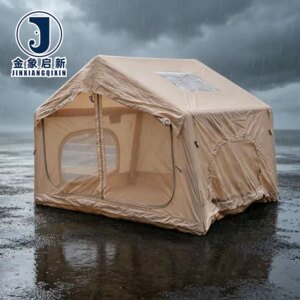
| Key Performance | Waterproof, UV-resistant, tear-resistant, fire-retardant, anti-static |
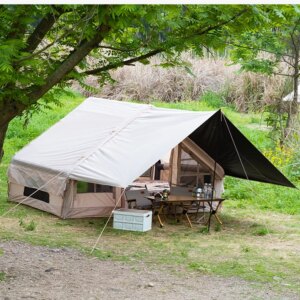
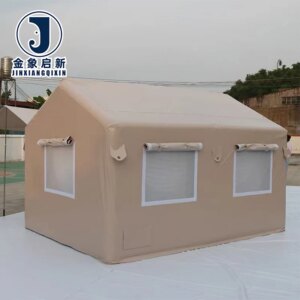
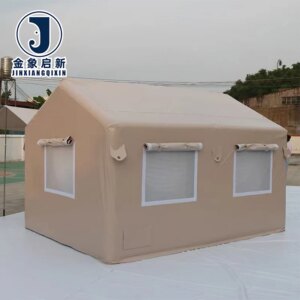
| Product Form | Inflatable structure with quick automatic opening mechanism |
| Construction | Single layer |
| Capacity | 2-3 Person |
| Customization | OEM & ODM (sample customization, pattern printing) |
| Standards | ISO9001, ISO14001, ISO45001, CE |
Note: UV-resistant, fire-retardant, and anti-static grades are available — confirm the specific test standard required for your market before placing an order.
Application Suitability
| Application | Exposure & Requirement |
|---|---|
| Construction site temporary shelters | Wind load, rain, dust ingress, daily assembly and teardown cycles |
| Outdoor event logistics storage | Prolonged sun exposure, ground moisture, frequent relocation between venues |
| Industrial fieldwork base camps | Four-season temperature swings, abrasive terrain, extended occupancy |
| Disaster relief operations | Rapid deployment urgency, uncertain ground conditions, immediate weather protection |
| Commercial outdoor operations | Repeated inflation cycles, transport abrasion, public safety compliance |
Why Stated Performance Means Nothing Without Verified Documentation
A fabric described as fire-retardant or UV-resistant is only as reliable as the test report behind it.
Buyers sourcing PVC inflatable tent fabric for commercial or emergency deployment often discover after delivery that the flame retardant treatment claimed on the quotation was never validated by an independent lab. Site inspectors reject the batch, the project stalls, and replacement lead times stretch into weeks. The same pattern repeats with UV stabiliser claims — fabric degrades visibly within the first season because the additive package was specified generically rather than matched to the climate zone. A PVC Inflatable Tent Fabric manufacturer that supplies test documentation with every batch removes this risk before the container ships. [NEED_CITE: fire classification standards for temporary structures and tents]
What the PVC Coating Actually Controls in an Inflatable Structure
The PVC tarpaulin core used in this inflatable tent fabric determines how the structure behaves under internal air pressure and external wind load. Waterproof construction keeps the interior dry during sustained rain, while tear-resistant performance prevents small punctures from propagating across a panel when the membrane flexes. For buyers procuring fabric by the roll, understanding the relationship between coating formulation and structural integrity is the starting point for reliable product design.
How Single Layer Construction Affects Deployment and Transport
A single layer build keeps packed weight and volume low, which matters when inflatable shelters are transported to remote job sites or disaster zones where cargo space is limited. The trade-off is reduced thermal insulation, making this configuration suited to temporary occupancy and warm-to-moderate climates. Fabricators producing rapid-deployment shelters for emergency procurement programmes will find this balance between portability and durability aligns with logistical constraints that heavier multi-layer designs cannot meet. [NEED_CITE: packed volume and deployment speed requirements for humanitarian shelter standards]
Reading the Specification Sheet Beyond the Headline Numbers
Waterproof and tear-resistant claims describe outcomes, but the base fabric denier, weave density, and coating weight are the inputs that produce them. A heavier base fabric with a tight weave resists tear propagation better than a lighter one, even at similar total gsm, because the yarn structure absorbs stress across more intersection points. Coating weight influences peel strength and weldability — too thin and the seam fails before the fabric; too thick and the material stiffens, reducing packability. Understanding these relationships helps buyers evaluate quotations on engineering merit rather than headline descriptions alone.
The Cost of Skipping Batch Verification Before Committing to Production
Colour variation between rolls in the same order becomes visible once inflatable panels are heat-welded side by side, forcing a fabricator to reject an entire production run. Inconsistent coating weight across a batch leads to uneven weld penetration, where some seams hold and others delaminate under air pressure testing. These failures are rarely caught until the finished structure is inflated, making pre-shipment inspection and roll-level consistency checks essential cost controls rather than optional assurances. [NEED_CITE: weld integrity testing methods for PVC coated fabrics]
What This Supply Chain Delivers for Inflatable Fabric Buyers
A 10-person R&D team handles material selection, pattern printing, and custom sizing, developing samples within days so buyers can validate specifications before committing to volume orders. Three full production lines and 36 sets of professional equipment support batch output without sacrificing the coating consistency that inflatable structures depend on. Dedicated QA and QC staff conduct full-process inspection including air pressure testing and seam integrity verification, so each roll ships with a documented inspection record rather than an unverified claim. ISO9001, ISO14001, ISO45001, and CE certifications confirm manufacturing compliance across quality, environmental, and occupational safety systems.
Documentation & Verification
- Material specification sheet stating base fabric, coating type, and treatment details per roll
- Test reports for UV and flame-retardant grades supplied against the applicable standard for your market
- Pre-shipment inspection record confirming coating weight and seam integrity across the batch
- Roll packing list with batch traceability codes for receiving inspection and inventory control
- Certificate of origin and customs documentation included with every export shipment
Fabrication, Handling & Storage
- Heat-weld temperature and dwell time must match PVC coating thickness to achieve full peel strength at seams
- Store rolls upright in a dry, shaded area to prevent compression marks that show through finished inflatable panels
- Use compatible PVC adhesive for field repairs, ensuring the coating surface is clean and solvent-free before application
- Avoid dragging rolls on abrasive surfaces during warehouse handling to protect the outer coating layer
- Allow cold-stored fabric to reach ambient temperature before unrolling to prevent cracking at the fold lines
What to Include in Your Enquiry
Provide the intended application and deployment environment so we can recommend the appropriate coating formulation and treatment package. Specify the target market and any fire safety or compliance standards your end users require. Indicate the roll widths, annual volume, and whether you need finished cut sizes or fabric by the roll. If pattern printing or custom colour matching is required, share reference files or Pantone codes for sample development.
Frequently Asked Questions
Q: What customization options are available for inflatable tent fabric?
A: OEM and ODM services cover material thickness adjustments, custom roll widths, pattern printing, and size modifications. Our R&D team develops samples within days so you can validate coating weight, colour, and weldability before approving bulk production. Each custom specification is documented on a material sheet before manufacturing begins.
Q: How are flame retardant and UV-resistant treatments verified?
A: Test reports for the specific grade applicable to your market are provided with the shipment. We recommend confirming the required standard — such as regional fire safety codes for temporary structures — at the enquiry stage so the correct additive package is selected and documented before production starts.
Q: What is the sample development process?
A: Share your specification including target coating weight, colour, and treatment requirements. Our team produces a sample roll or cut piece for your evaluation, typically within days. Once approved, the sample becomes the production reference, and every subsequent batch is inspected against it for consistency.
Q: How is batch-to-batch colour and weight consistency controlled?
A: Dedicated QA and QC staff monitor coating weight and colour at every production stage. Each roll is checked against the approved sample before packing, and a pre-shipment inspection record is generated to document compliance. This process prevents the variation that causes visible panel mismatches after fabrication.
Q: What documentation ships with each order?
A: Every dispatch includes a material specification sheet, roll packing list with batch codes, pre-shipment inspection record, and relevant certificates. Test reports for UV and flame-retardant grades are supplied when specified. Certificate of origin and customs support documents are included for export shipments.