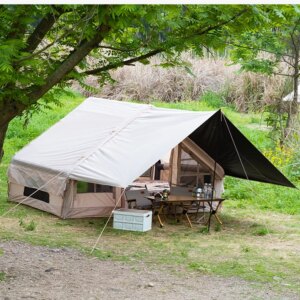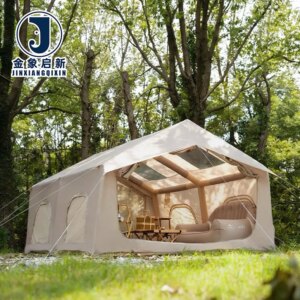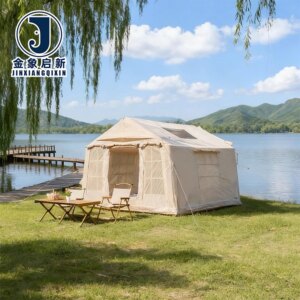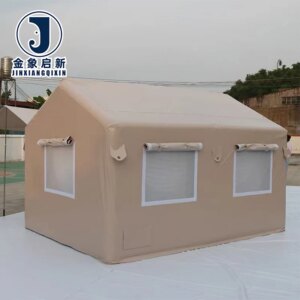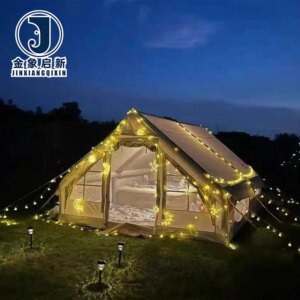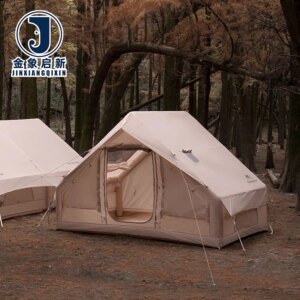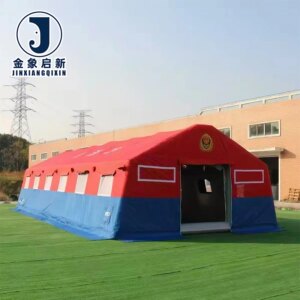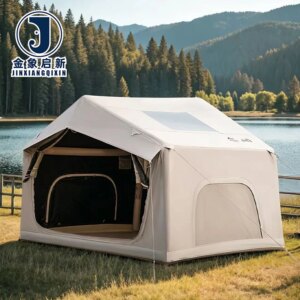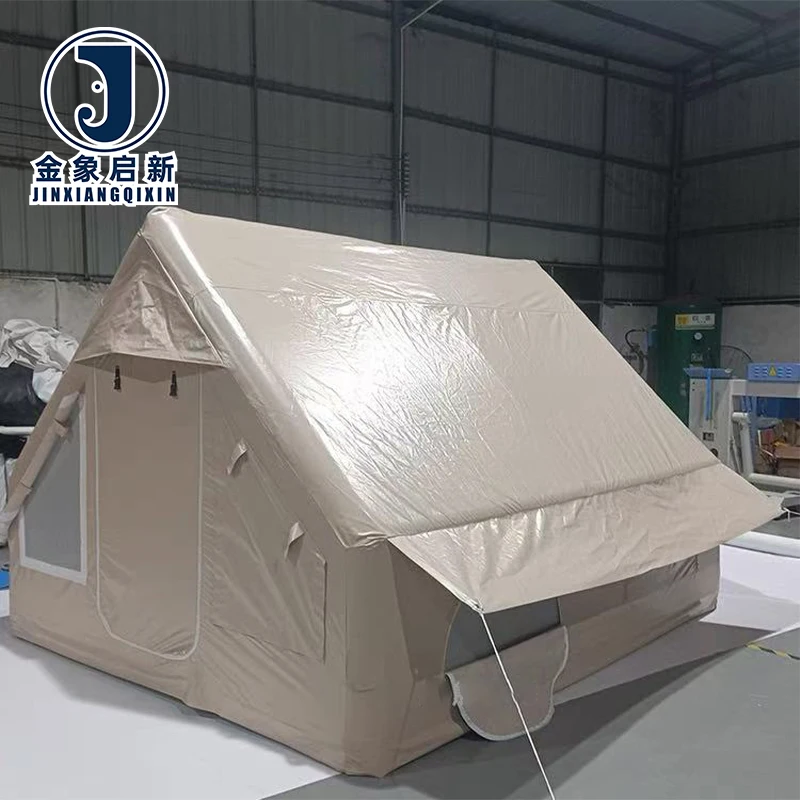
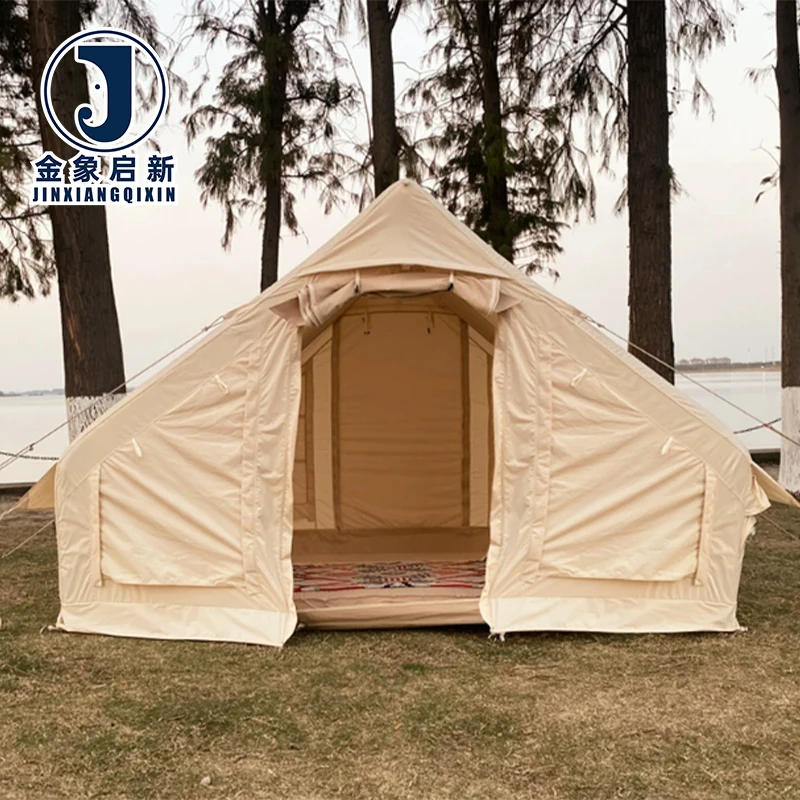
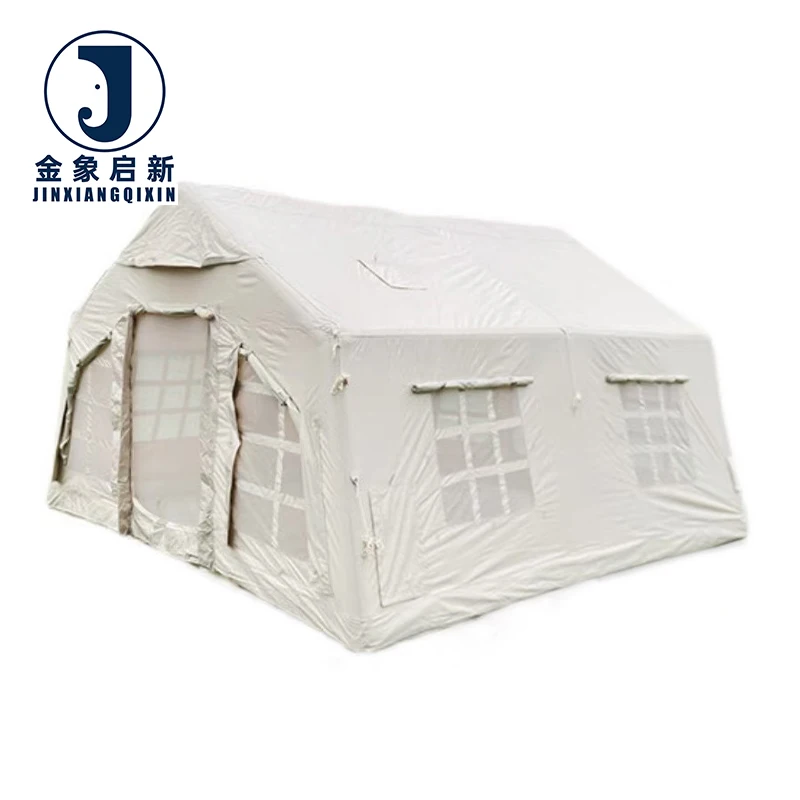
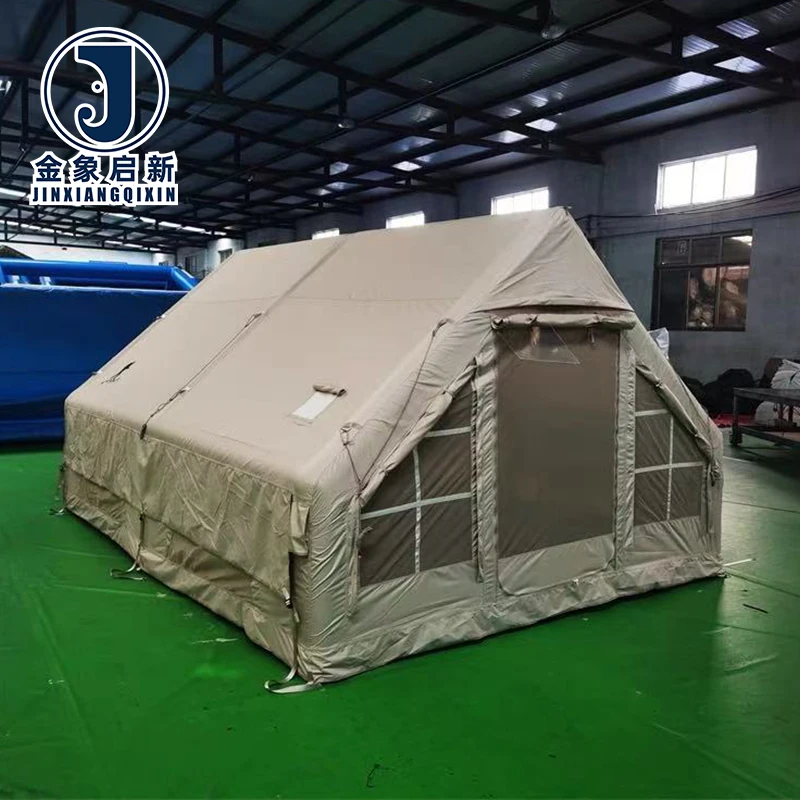
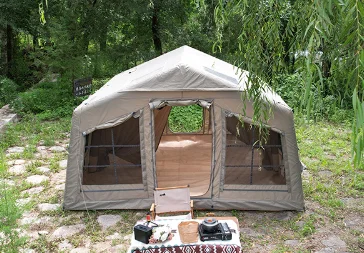
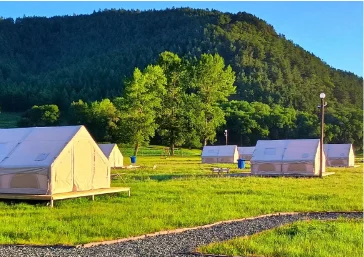
Description
Production Capacity at Scale — Three full production lines and 36 sets of professional equipment ensure that large-volume inflatable tent orders ship with reliable container-load planning and batch-to-batch colour consistency.
Technical Specifications
| Parameter | Value |
|---|---|
| Product Type | Inflatable Tent |
| Core Material | PVC tarpaulin |
| Capacity | 5–8 Person |
| Opening Mechanism | Quick Automatic Opening |
| Season Rating | All-Season |
| Water Resistance | Fully waterproof coated construction |
| UV Resistance | UV-resistant treatment (confirm grade required for your market) |
| Fire Retardancy | Fire-retardant grades available — confirm the grade required for your market |
| Anti-Static | Anti-static treatment available — confirm certification standard required for your site |
| Tear Resistance | Tear-resistant construction |
| Customization | OEM & ODM, sample customization, pattern printing |
| Standards | ISO 9001, ISO 14001, ISO 45001, CE |
Application Suitability
| Application | Exposure & Requirement |
|---|---|
| Outdoor adventure gear manufacturing | Repeated inflation cycles, outdoor UV and moisture exposure, consumer-grade finish consistency |
| Event logistics and temporary shelters | High-frequency deployment and teardown, weather variability, rapid setup for time-critical venues |
| Commercial product line integration | Brand-matched colour and pattern printing across large SKU volumes, retail display consistency |
| Tarpaulin distributors and importers | Catalogue breadth, container-load efficiency, documentation for cross-border compliance |
| Temporary site shelters | Abrasion from ground contact, wind loading on inflatable beams, all-season thermal exposure |
Why Inflatable Tent Colour Varies Across Rolls — and What Buyers Should Check Before Approving a Bulk Order
Colour drift between rolls in the same Inflatable Tent wholesale shipment is a coating-batch problem, not a fabric problem.
When tents are deployed side by side at a festival site or displayed adjacent on a retail floor, even minor shade differences become immediately visible. This happens when the coating compound is mixed in separate batches without spectrophotometer verification, or when pigment lots change mid-production. For buyers placing large-volume Inflatable Camping Tent bulk orders, the consequence is not just aesthetic — mismatched panels force partial returns, delay event timelines, and erode buyer confidence downstream [NEED_CITE: colour consistency control methods for PVC coated fabrics].
Batch Consistency Across High-Volume Inflatable Tent Wholesale Orders
Roll-to-roll consistency is the foundation of a dependable Inflatable Tent wholesale supply chain. When outdoor equipment brands order fabric for hundreds of units, every roll must match the approved sample in colour, coating weight, and surface finish. Our production process controls pigment dosing and coating application at each stage, with dedicated QA staff verifying shade against reference standards before rolls leave the line.
OEM and ODM Customization for Branded Inflatable Camping Tent Product Lines
Pattern printing and custom sizing are integral to commercial Inflatable Camping Tent bulk sourcing. Our 10-technician R&D team develops samples within days, allowing buyers to approve colour, print registration, and panel dimensions before committing to full production runs. This sample-first workflow reduces the risk of specification mismatches once container quantities are on the line [NEED_CITE: sample approval process for custom coated fabric orders].
Reading the Specification Sheet Beyond the Headline Numbers
The PVC tarpaulin core of this inflatable tent fabric delivers waterproof performance through a continuous coated construction that eliminates the pinholes common in laminated alternatives. Tear resistance depends on the base fabric weave and denier — a tighter weave distributes stress across more yarns, slowing tear propagation when an inflatable beam flexes under wind load. Coating adhesion directly affects heat-seam integrity; poor adhesion causes welded seams to delaminate before the fabric itself fails, particularly at the junctions where inflatable beams meet the tent floor. UV-resistant and fire-retardant treatments are applied during coating, and their effectiveness depends on uniform distribution across the full roll width — a factor verified through in-process inspection rather than end-of-line spot checks.
The Real Cost of Overlooking Coating Adhesion in Inflatable Structures
Inflatable tents place sustained internal pressure on every welded seam. When coating adhesion is insufficient, the seam peels apart under cyclic inflation — not gradually, but suddenly during setup at the event site. This failure mode is difficult to detect by visual inspection alone and often surfaces only after the tent has been inflated and deflated multiple times. Buyers who specify only GSM without requesting a peel-strength test record expose their inventory to field failures that no amount of patching can permanently resolve [NEED_CITE: peel strength testing for welded PVC tarpaulin seams].
Why Sourcing Inflatable Tent Fabric Here Reduces Procurement Risk
Our three full production lines handle Inflatable Tent wholesale volumes without splitting orders across subcontracted facilities, keeping the entire run under one quality system. Every roll undergoes 100% pre-shipment inspection, so specification deviations are caught before dispatch rather than at the buyer’s warehouse. The 10-person R&D team manages sample development, pattern printing proofs, and custom sizing in-house, eliminating the communication lag that occurs when design and production are separated. Production is supported by 36 sets of professional processing equipment, enabling concurrent handling of multiple custom orders without sacrificing lead-time reliability. ISO 9001, ISO 14001, ISO 45001, and CE certifications underpin a management system that covers quality, environmental responsibility, and occupational safety across every production stage.
Documentation & Verification
- Material specification sheet stating core material, performance treatments, and colour reference per roll
- Pre-shipment inspection record confirming batch consistency and specification compliance across the full order
- Roll packing list with unit count and weight for container loading verification
- Certificate of origin and customs support documentation for international inflatable tent shipments
- Test report for UV-resistant and fire-retardant grades where applicable to your market requirements
Fabrication, Handling & Storage
- Heat-seal parameters must match PVC tarpaulin coating weight — request our recommended temperature and dwell time settings before welding inflatable beam seams
- Store rolls upright on pallets to prevent flat-spot deformation that affects panel cutting accuracy
- Use compatible PVC-based cleaners only; solvent-based agents can degrade the surface coating and compromise waterproof integrity
- Allow cold-stored rolls to reach ambient temperature before unrolling to avoid coating micro-cracking at low temperatures
- Plan panel nesting layouts to minimize offcut waste, accounting for the roll width and pattern repeat of printed designs
Requesting a Quotation That Matches Your Actual Requirements
Provide the intended deployment environment and any fire-retardant or anti-static certifications your market demands. Specify whether you need finished tents or roll-stock fabric, along with target quantities and any pattern printing or branding requirements. If colour matching to an existing product line is critical, send a physical reference sample so we can develop a coating batch match before quoting container volumes.
Frequently Asked Questions
Q: How is batch colour consistency maintained across large-volume inflatable tent orders?
A: Pigment batches are mixed under controlled dosing and verified against approved colour references using spectrophotometer readings. Each roll is inspected before packing to confirm shade uniformity. For Inflatable Tent wholesale orders spanning multiple production runs, we retain master colour standards to ensure continuity between shipments and prevent visible variation when tents are deployed side by side.
Q: What is the sample approval process for custom sizing and pattern printing?
A: Our R&D team produces a physical sample reflecting your specified dimensions, print design, and material grade. You review and approve the sample before bulk production begins. This step confirms panel proportions, print registration accuracy, and colour match, reducing the risk of specification errors once full container quantities enter production.
Q: How is container loading planned for bulk inflatable tent shipments?
A: Each order includes a detailed roll packing list stating unit count, individual weight, and total gross weight. This allows buyers to verify container utilization against their shipping plan. Packing dimensions and loading sequence are coordinated with the buyer’s logistics team to maximize container efficiency and facilitate organized unloading at destination.
Q: How are waterproof, UV-resistant, and fire-retardant claims documented?
A: Performance treatments are listed on the material specification sheet shipped with each order. Where fire-retardant or UV-resistant grades are specified, test reports are provided to confirm compliance. Buyers should communicate the exact certification standard required by their destination market so the appropriate grade is applied during coating production.
Q: What are the typical lead times and bulk pricing tiers for repeat orders?
A: Lead times depend on order volume, customization complexity, and current production scheduling. Repeat wholesale orders with established specifications generally move through production faster than first-time custom runs. Pricing tiers are structured around container-load quantities, with volume brackets communicated during the quotation stage based on your confirmed specifications.