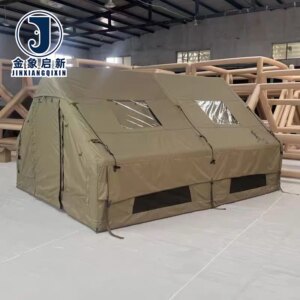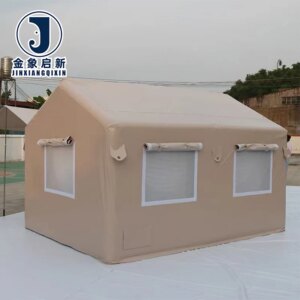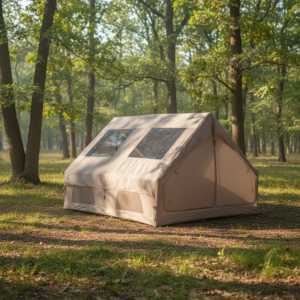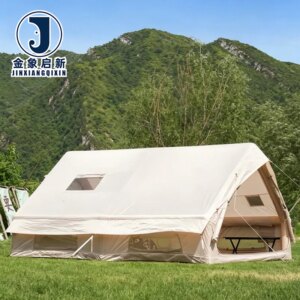

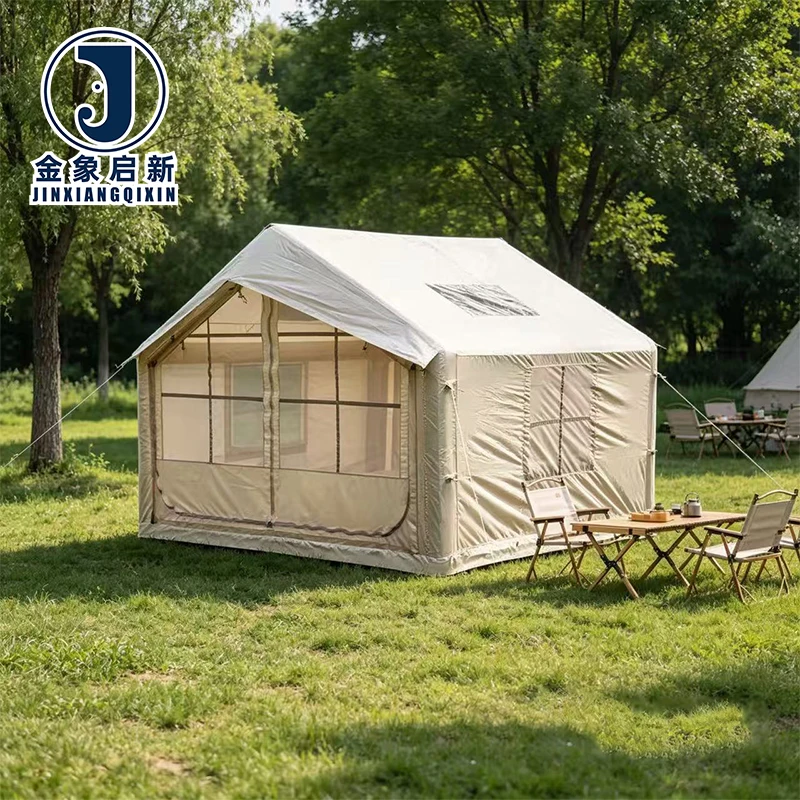
Description
Bulk Consistency Guaranteed — dedicated QA/QC at every production stage ensures roll-to-roll weight and colour uniformity across your inflatable tent fabric order.
Technical Specifications
| Parameter | Value |
|---|---|
| Product Type | Inflatable Tent Fabric |
| Coating Material | PVC tarpaulin |
| Material Thickness Options | 0.4mm–0.8mm |
| Waterproof Rating | 2000mm |
| Tear Strength | 180N minimum (test standard not stated in source) |
| Flame Retardant Grade | UL94 V-2 |
| UV Treatment | Anti-UV (test basis not stated in source) |
| Customization | OEM & ODM, sample customization, pattern printing |
| Capacity | 5–8 person |
| Standards | ISO 9001, ISO 14001, ISO 45001, CE, UL94 V-2 |
Application Suitability
| Application | Exposure & Requirement |
|---|---|
| Commercial camping site outfitting | Continuous UV exposure, repeated inflation cycles, ground moisture contact |
| Outdoor event management structures | Rapid deploy and teardown, wind load stress at seams, public safety compliance |
| Expedition support services | Extreme temperature swings, abrasive terrain contact, transport abrasion |
| Temporary field operations | Chemical and dust exposure, frequent relocation, certified fire safety |
What "Flame Retardant" Means Without a Verified Grade for Inflatable Tent Fabric
UL94 V-2 certification accompanies every roll, giving your compliance team a documented basis for site inspection.
Generic claims of fire resistance carry no weight when a site inspector asks for paperwork. Inflatable tent fabric wholesale buyers regularly discover that quoted flame retardancy lacks a test report, leaving commercial camping operators and event managers exposed to regulatory shutdowns [NEED_CITE: UL94 V-2 vertical burn classification for plastic materials]. When inflatable structures fail fire inspection, the cost is not just the rejected batch — it is the cancelled event, the displaced guests, and the reputational damage that follows. Our approach is straightforward: the grade is stated, tested, and documented before the rolls leave the facility.
Roll Width and Panel Yield for Tent Manufacturers
Inflatable tent fabric wholesale procurement starts with panel layout efficiency. When the roll width aligns with your cutting pattern, you reduce the number of welded seams in the finished structure. Fewer seams mean fewer stress concentration points, which matters when the inflatable air beams cycle through pressurisation and deflation repeatedly. Our PVC tarpaulin rolls are supplied in widths that accommodate standard tent panel dimensions, reducing offcut waste during fabrication.
Colour Matching Across Your Entire Production Run
Colour variation between rolls is one of the most visible defects once tent panels are installed side by side. For commercial camping operators outfitting multiple units, even a slight shade shift across shelters is unacceptable. Our batch consistency protocol controls pigment dosing and coating temperature so that every roll within a single order matches [NEED_CITE: colour measurement tolerances for coated fabrics per ISO 105 series]. This applies whether you order a single container or a full season’s production.
Reading the Spec Sheet Beyond the Waterproof Number
A 2000mm waterproof rating tells you the fabric resists hydrostatic head pressure, but the coating adhesion to the base fabric determines long-term durability. If the PVC coating delaminates under repeated flexing, the waterproof barrier fails regardless of the initial rating. The 0.4mm to 0.8mm thickness range allows tent fabricators to select a grade that balances structural rigidity for air beam walls against weight savings for roof panels. Tear strength at 180N minimum provides a baseline for puncture resistance in field conditions, though the actual performance depends on how the fabric is tensioned during inflation.
The Hidden Cost of Underspecifying Inflatable Shelter Fabric
Specifying a lighter grade to save on material cost often leads to premature failure at welded seams, where the fabric flexes most during inflation cycles. When a camping operator deploys dozens of shelters across a season, early failures compound into warranty claims and replacement logistics that far exceed the initial savings [NEED_CITE: common failure modes in inflatable temporary structures]. A UL94 V-2 rating without supporting documentation is equally costly — site inspectors reject structures that cannot present valid test certificates. Investing in the correct thickness and verified certification upfront protects your production schedule and your client relationships.
Why Source Inflatable Tent Fabric Through This Supply Chain
Three full production lines with 36 sets of professional equipment handle high-volume roll orders without sacrificing delivery timelines. A 10-person R&D team supports pattern printing, custom colour matching, and sample development within days rather than weeks. Every roll undergoes 100% pre-shipment inspection with dedicated QA/QC at coating, curing, and winding stages. OEM and ODM customisation — including size adjustments, logo application, and colour specification — is supported by a structured sample approval process before mass production begins.
Documentation & Verification
- Material specification sheet stating GSM, base fabric, and coating weight per roll
- UL94 V-2 test report issued per production batch
- Pre-shipment inspection record with photographic evidence
- Roll packing list with individual roll identifiers for traceability
- Certificate of origin for customs clearance and import compliance
Fabrication, Handling & Storage
- Heat weld temperature and dwell time must be calibrated to the selected PVC thickness grade
- Store rolls vertically on pallets to prevent flat-spot deformation of the coating surface
- Avoid dragging rolls across workshop floors to protect the PVC coating from abrasion
- Use compatible PVC adhesive for field repairs on seams and puncture damage
- Cut panels with allowance for seam overlap based on the weld method selected
How to Structure Your Inflatable Tent Fabric Inquiry
Provide your target panel dimensions, required roll width, and the annual volume you anticipate. Specify the fire safety classification your end market requires — UL94 V-2 is standard, but regional regulations may differ. Confirm whether you need finished cut sizes or roll stock for in-house fabrication, and whether pattern printing or custom colour matching is part of your project scope.
Frequently Asked Questions
Q: How do I verify the fabric weight when the rolls arrive at my facility?
A: Request the material specification sheet that accompanies your order, which states the GSM for every roll. On receipt, cut a measured sample from each roll and weigh it on a calibrated scale. Any deviation from the stated weight should be flagged against the pre-shipment inspection record provided with your shipment.
Q: Does UL94 V-2 satisfy fire safety requirements for commercial inflatable tents?
A: UL94 V-2 certifies that the material self-extinguishes within a defined timeframe after flame removal. Whether this satisfies your local authority depends on the jurisdiction and the structure’s classification. Provide your specific regulatory framework so we can confirm if UL94 V-2 is sufficient or if a higher grade is required.
Q: What is the basis for the anti-UV treatment on this PVC tarpaulin?
A: The fabric carries anti-UV treatment, though the specific test standard and exposure duration rating should be confirmed for your market and expected deployment conditions. Request the applicable UV test documentation when placing your inquiry so we can align the treatment with your outdoor exposure requirements.
Q: How is colour consistency maintained across a bulk order of inflatable tent fabric?
A: Pigment dosing, coating temperature, and curing conditions are controlled within tight tolerances for each production batch. The pre-shipment inspection includes visual colour comparison between rolls within the same order. If your project demands a specific Pantone or RAL reference, confirm this during sample approval.
Q: What roll width should I choose for efficient tent panel cutting?
A: The optimal roll width depends on your panel dimensions and seam layout. Wider rolls reduce the number of longitudinal welds but may increase offcut waste if your panels are narrow. Share your cutting pattern during inquiry so we can recommend the roll width that maximises material yield for your specific tent design.