
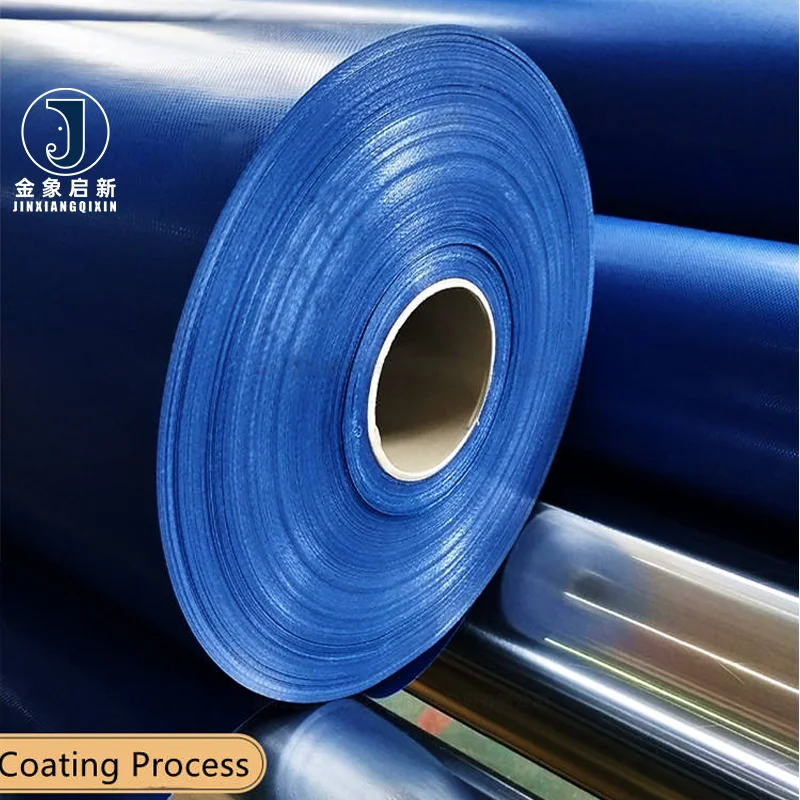
Description
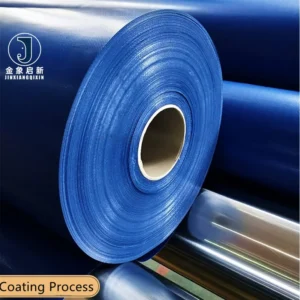
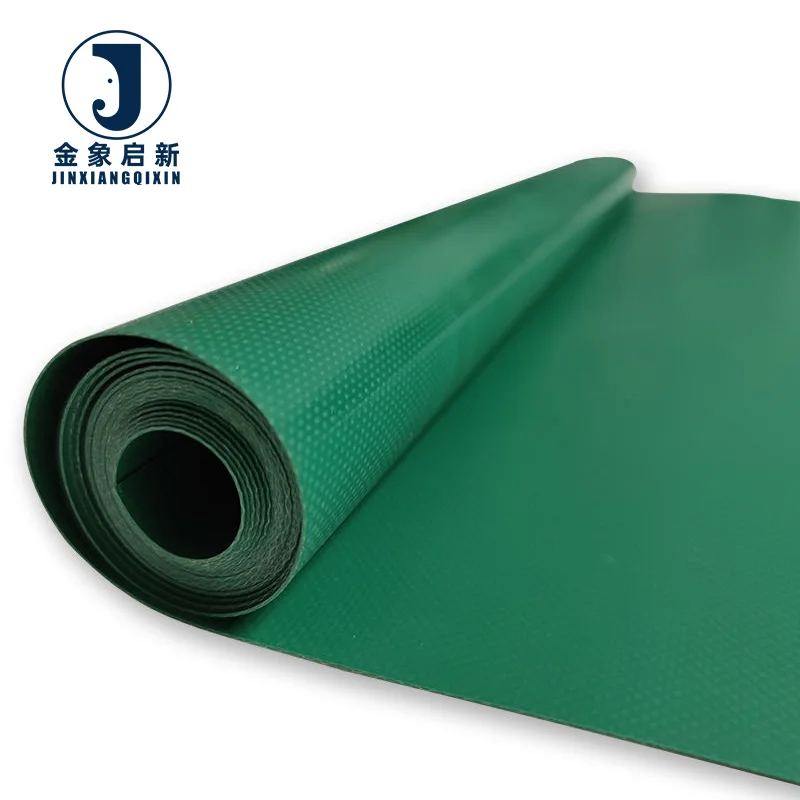
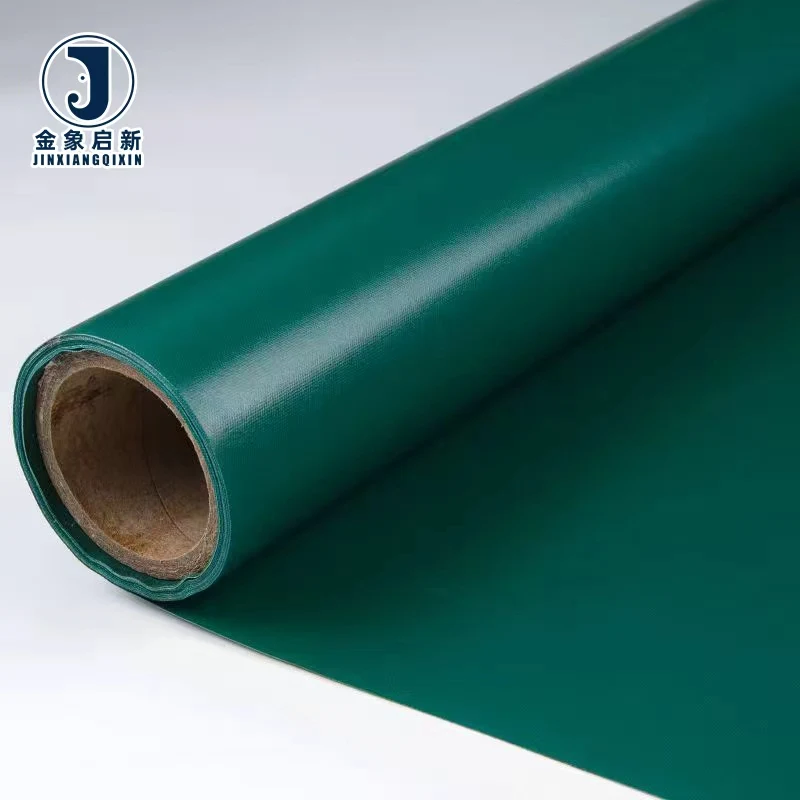
Batch-Verified Coating Weight — Every roll of PVC Coated Tarpaulin Roll undergoes 100% pre-shipment inspection against the quoted GSM, eliminating the discrepancy between specification sheet and container arrival.
Technical Specifications
| Parameter | Value |
|---|---|
| Product Type | PVC Coated Tarpaulin |
| Material Composition | PVC coating on polyester base fabric |
| Yarn Count Options | 500D840D / 500D1000D / 1000D1000D / 1000D1300D / 1300D1300D / 1000D2000D |
| Weight Range (GSM) | 350, 400, 420, 500, 600, 650, 750, 900 g/m² |
| Thickness Range | 0.29 mm to 0.65 mm |
| Density Parameter | 1.15 – 2.00 g/cm³ |
| Warp Tensile Strength Range | 1650 N to 3900 N |
| Weft Tensile Strength Range | 1600 N to 3500 N |
| Softening Temperature | ≥ 80°C |
| Melting Point | 212°C |
| Brittle Temperature | ≤ -50°C to -60°C |
| Flame Retardant | Available in flame retardant grades — confirm the grade required for your market |
| Anti-UV | Available in anti-UV grades — test basis to be confirmed per order |
| Waterproof | Fully waterproof coated construction |
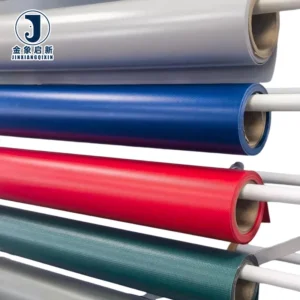
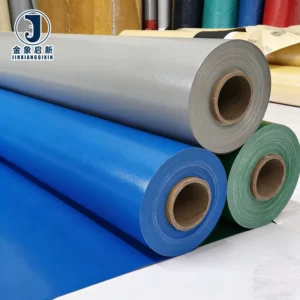
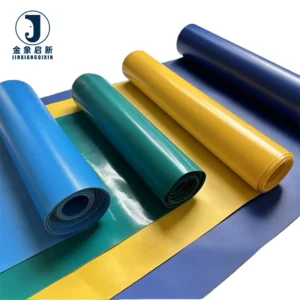
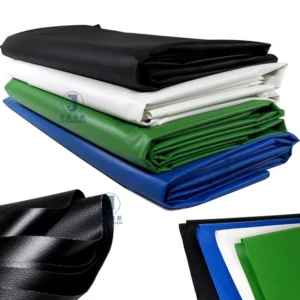
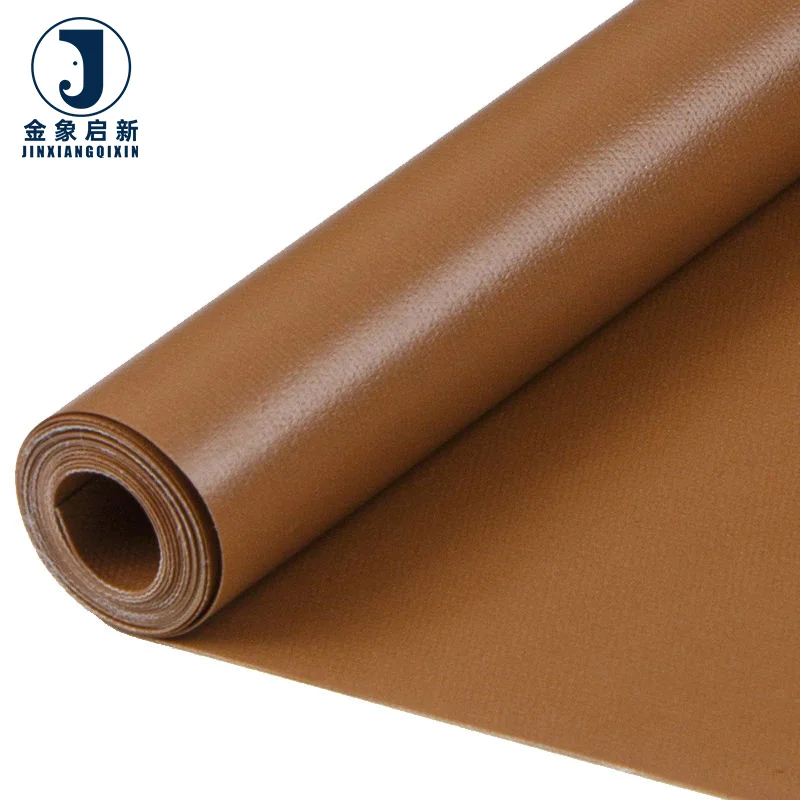
| Color | Customizable per order |
| Certifications | ISO, CE |
Application Suitability
| Application | Exposure & Requirement |
|---|---|
| Tarpaulin distribution and resale | Multi-grade inventory stocking, consistent color lot matching across rolls, container-load volume planning |
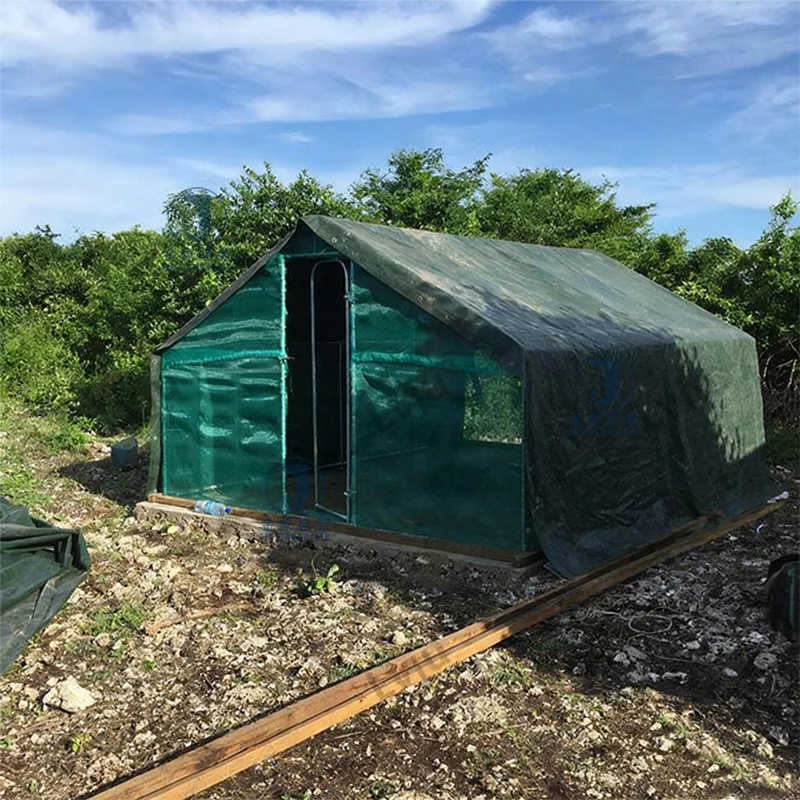
| Tent and awning manufacturing | Hot air welding compatibility, color uniformity across production runs, dimensional stability during fabrication |
| Truck and trailer cover fabrication | Flex fatigue at tie-down points, road spray and weather exposure, abrasion resistance at load contact areas |
| Inflatable structure production | Air retention under pressure, seam integrity after heat welding, UV stability for temporary installations |
| Industrial equipment covers | Puncture resistance from sharp edges, chemical splash exposure, repeated deployment and folding cycles |
Why Roll-to-Roll Consistency Matters More Than Quoted GSM
The quoted weight per square meter means nothing if the roll you cut from is lighter than the one beside it.
Tarpaulin distributors and importers buying by the container frequently encounter a gap between the specification sheet and the material on the pallet. A PVC Coated Tarpaulin Roll that arrives below its stated GSM compromises tensile performance and shortens service life under load. This discrepancy often surfaces only after fabrication, when the finished cover fails at stress points that a correctly weighted fabric would withstand. [NEED_CITE: tensile and tear test methods for coated fabrics per ISO 1421]
Maintaining Color Uniformity Across Bulk Shipments
When a single order spans multiple rolls destined for the same end-use installation, visible shade variation between adjacent panels is unacceptable. Batch color consistency is controlled at the coating stage, where pigment dispersion and coating weight are calibrated together. For wholesale buyers stocking inventory across several GSM grades, confirming the color reference before production ensures that rolls shipped in different containers still match when deployed side by side.
Container Loading and Roll Count Planning
Volume buyers need to know exactly how many rolls fit a 20ft or 40ft container and what the total shipment weight will be for freight costing. Roll dimensions vary by GSM grade — lighter grades produce smaller roll diameters while heavier grades require more space. A detailed packing list with roll count, individual roll weight, and total gross weight allows logistics planners to optimize container utilization and avoid dead freight. [NEED_CITE: container loading optimization for heavy textile rolls]
How Yarn Count and Mesh Density Determine Real-World Strength
The specification of a PVC Coated Tarpaulin Roll extends far beyond GSM alone. Base fabric denier — ranging from 500D840D in lighter grades to 1000D2000D in the 900 GSM tier — defines the yarn thickness that carries the tensile load. Mesh count, such as 2020 or 3019 threads per inch, determines how those yarns are distributed across the weave. A high mesh count with lower denier yarns produces a tightly woven but thinner fabric, while a lower mesh count with heavier yarns yields a bulkier material with higher tear propagation resistance. Understanding this relationship prevents the mistake of selecting a roll grade based on weight alone when the actual requirement is tear strength at the weld seam.
Coating Weight Versus Total Weight: What the Specification Really Means
Total GSM includes both the polyester base fabric and the PVC coating applied to each side. Two rolls can share the same total weight but differ significantly in coating thickness if one uses a heavier base fabric and the other uses a lighter base with more coating. Coating weight directly affects flexibility, low-temperature performance, and weldability — a higher coating ratio generally improves heat-seal strength but may reduce drape at cold temperatures. Buyers specifying material for fabricated covers should request the breakdown between base fabric weight and coating weight rather than relying on total GSM. [NEED_CITE: relationship between coating weight and heat seal strength in PVC fabrics]
The Hidden Cost of Underspecified Roll Stock
Selecting a lighter GSM grade to reduce material cost often transfers expense downstream. Rolls that are marginal for the intended application produce finished covers that fail at flex points, requiring warranty replacements that far exceed the initial saving. Similarly, accepting rolls without confirmed flame retardant grades for markets that mandate building material fire classification results in rejected shipments and lost contract credibility. Color drift between production batches forces fabricators to segregate inventory by dye lot, adding warehouse complexity and increasing the risk of mismatched panels reaching the installation site. [NEED_CITE: DIN 4102 fire classification for building materials]
Production Capability Aligned with Wholesale Requirements
Three dedicated production lines running coated fabric enable concurrent manufacturing of different GSM grades without cross-contamination of coating formulations. The 10-person R&D team develops color samples within days, allowing buyers to confirm shade references before committing to container quantities. In-process QA at every coating stage — from base fabric inspection through to final winding — catches weight deviation before the roll reaches the warehouse. Pre-shipment inspection covers 100% of rolls rather than relying on batch sampling, providing wholesale buyers with documented weight verification for every roll in the shipment.
Documentation & Verification
- Material specification sheet listing exact GSM, base fabric denier, and mesh count per roll grade
- Pre-shipment inspection record confirming measured coating weight against quoted specification
- Roll packing list with individual roll dimensions and gross weight for container planning
- Test reports for flame retardant and anti-UV grades where specified in the purchase order
- Certificate of origin and customs documentation for international shipment clearance
Fabrication, Handling & Storage
- Hot air welding parameters must be calibrated to the specific GSM and coating thickness of each roll grade
- Reinforced hem construction should account for the tensile strength differential between warp and weft directions
- Store rolls upright on pallets to prevent permanent creasing in heavier 900 GSM grades
- Allow cold-stored rolls to acclimate above the brittle temperature threshold before unrolling for cutting
- Match welding temperature to the 212°C melting point characteristic of the PVC coating composition
What to Include in Your Next Inquiry
Specify the end-use application and the environmental conditions the fabricated covers will face — outdoor UV exposure, chemical contact, or flex cycling frequency. State the target GSM range and whether you require rolls in a single grade or multiple grades combined in one container. Confirm the roll width needed and whether custom widths are subject to volume thresholds for your annual requirement. Indicate whether you need sample rolls for fabrication trials before the bulk order ships.
Frequently Asked Questions
Q: How is the GSM of each roll verified before shipment?
A: Every roll undergoes individual weight measurement during the pre-shipment inspection process. The measured coating weight is recorded against the specification stated on the material sheet and included in the inspection report that accompanies the shipment, giving you documented proof of compliance before the container is sealed.
Q: Can I combine multiple GSM grades in a single container order?
A: Yes, mixed-grade container loads are supported for wholesale buyers building diversified inventory. Each roll grade is packed and labeled separately with its own specification identifier, and the packing list details the roll count and weight breakdown by grade for customs and warehouse receiving.
Q: How is batch color consistency maintained across multiple rolls?
A: Color is controlled at the coating stage using confirmed color references from the approved sample. All rolls within a single production run use the same pigment batch, and pre-shipment inspection includes visual comparison against the reference standard to flag any shade deviation before packing.
Q: What is the minimum order for custom roll widths?
A: Custom widths are subject to minimum quantities that vary by GSM grade and production line configuration. Submit your required width and annual volume during inquiry so the production team can confirm the threshold and provide a container loading plan based on the custom roll dimensions.
Q: What documentation ships with the container?
A: Each shipment includes a material specification sheet per roll grade, pre-shipment inspection record, detailed roll packing list with weights and dimensions, certificate of origin, and any test reports for flame retardant or anti-UV grades specified in your purchase order.