Description
Volume Capacity Backed by Process Control — Three full coating lines and dedicated QA at every stage mean every roll leaving the facility carries verified GSM, consistent colour, and the exact surface finish specified on the order.
Technical Specifications
| Parameter | Value |
|---|---|
| Product Type | PVC Coated Tarpaulin Roll |
| Coating Material | PVC |
| Base Fabric | High-strength polyester mesh fabric |
| Coating Method | Laminated technology & Hot-melt coating technology |
| Weight (GSM) | 350gsm / 420gsm / 500gsm / 550gsm / 600gsm / 750gsm |
| Total Thickness | 0.32mm / 0.35mm / 0.4mm / 0.45mm / 0.5mm / 0.65mm |
| Roll Width | 2m / 2.1m |
| Roll Length | 75m (for 2m width) / 50m (for 2.1m width) |
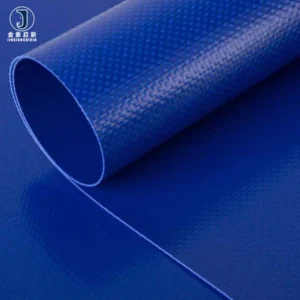
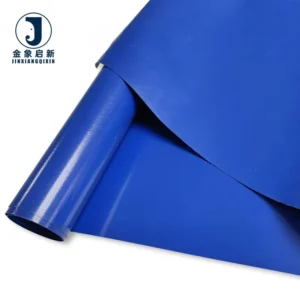
| Surface Finish | Glossy surface or matt surface |
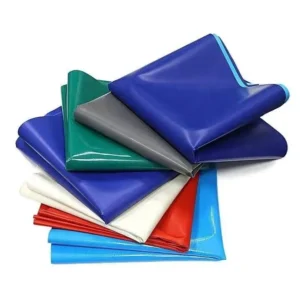
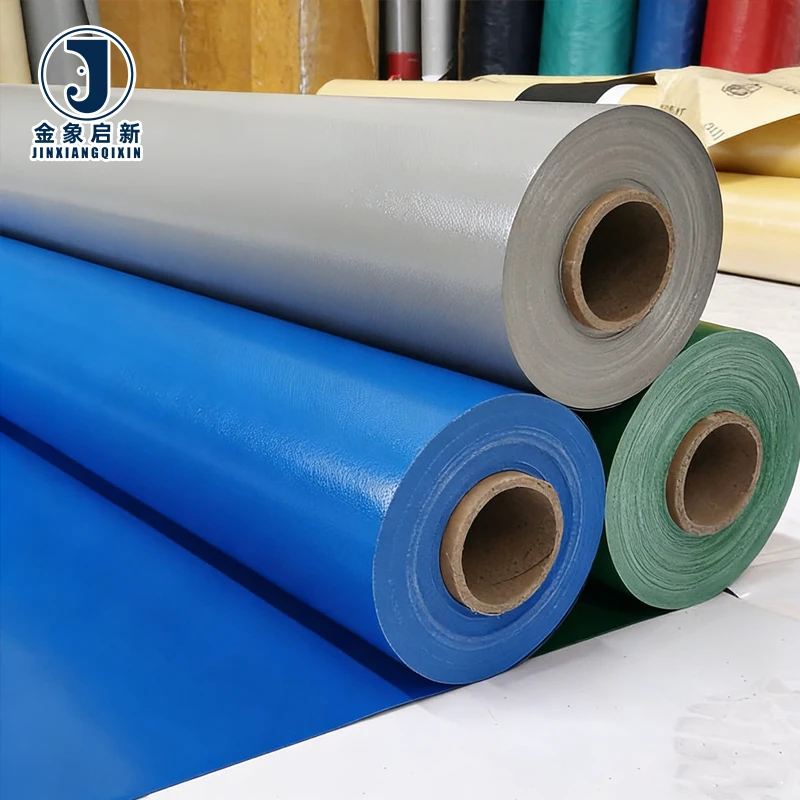
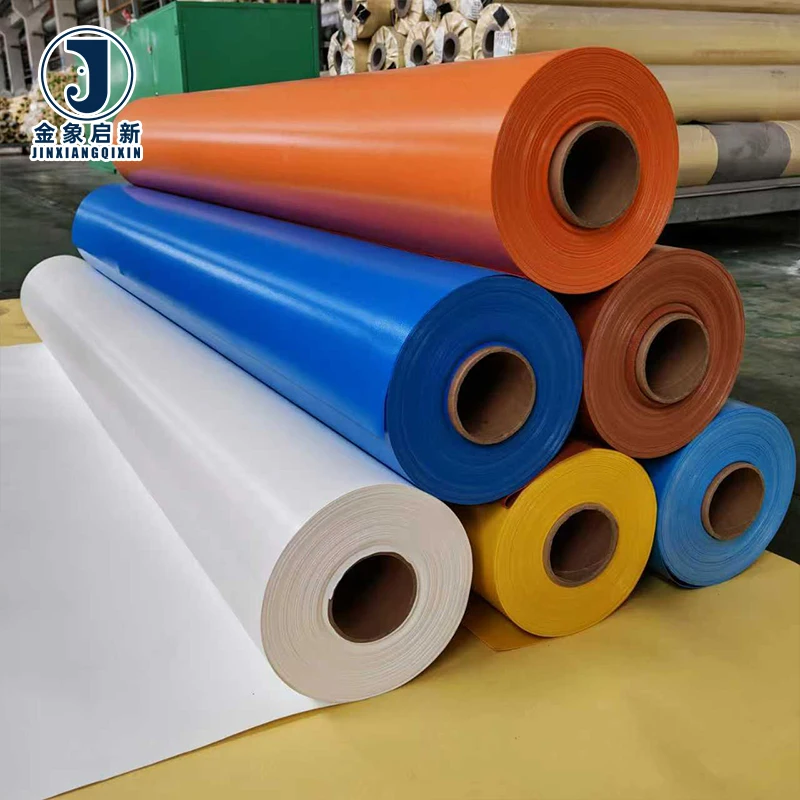
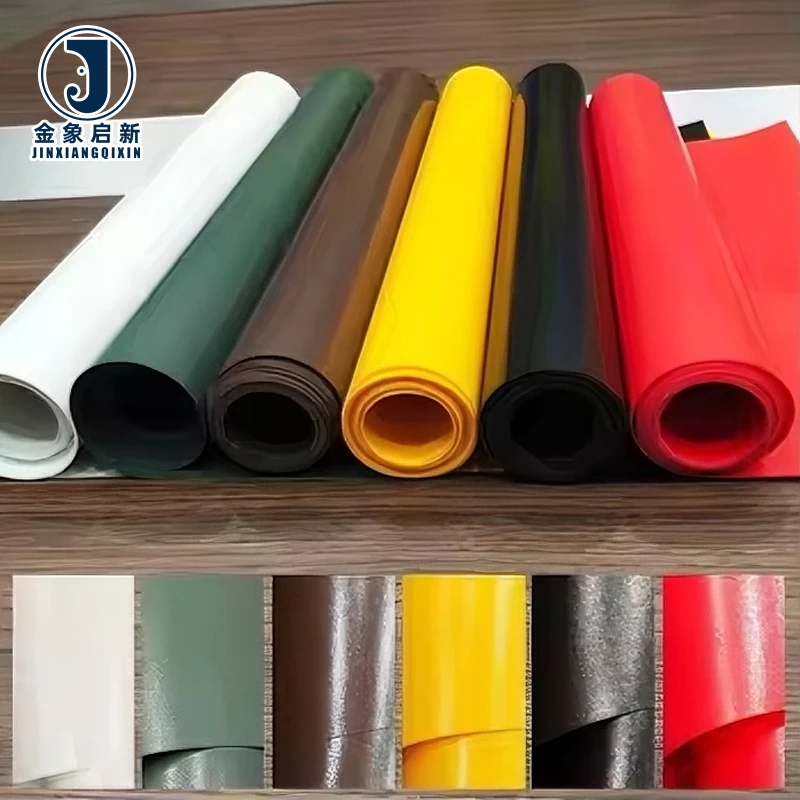
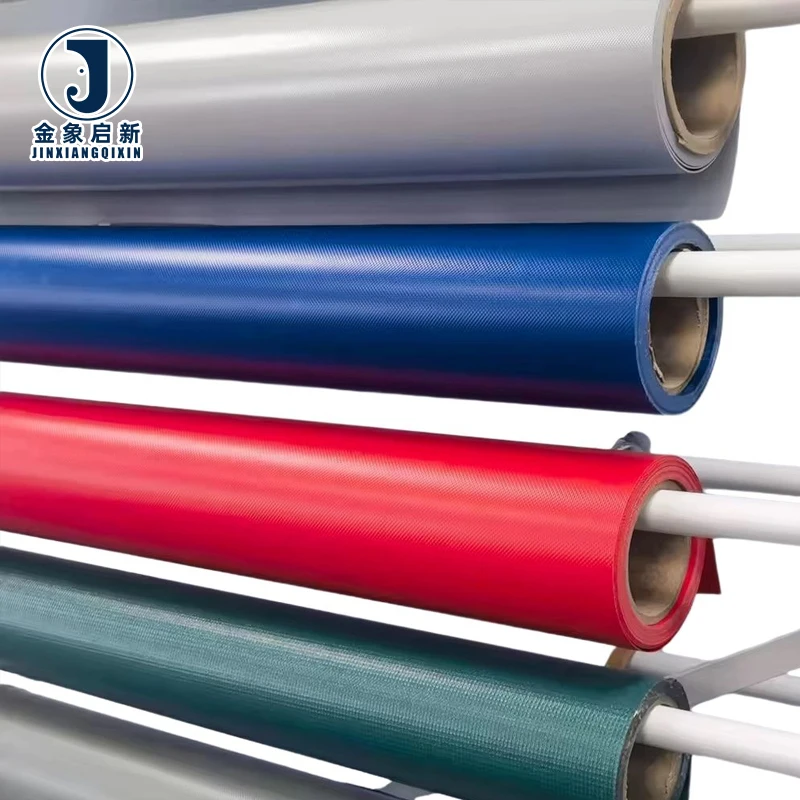
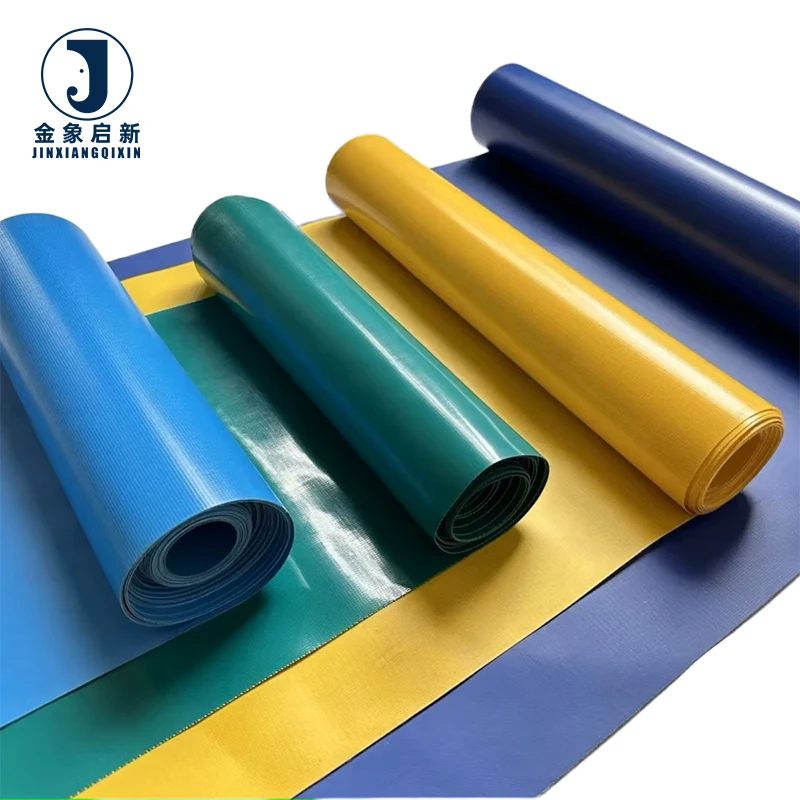
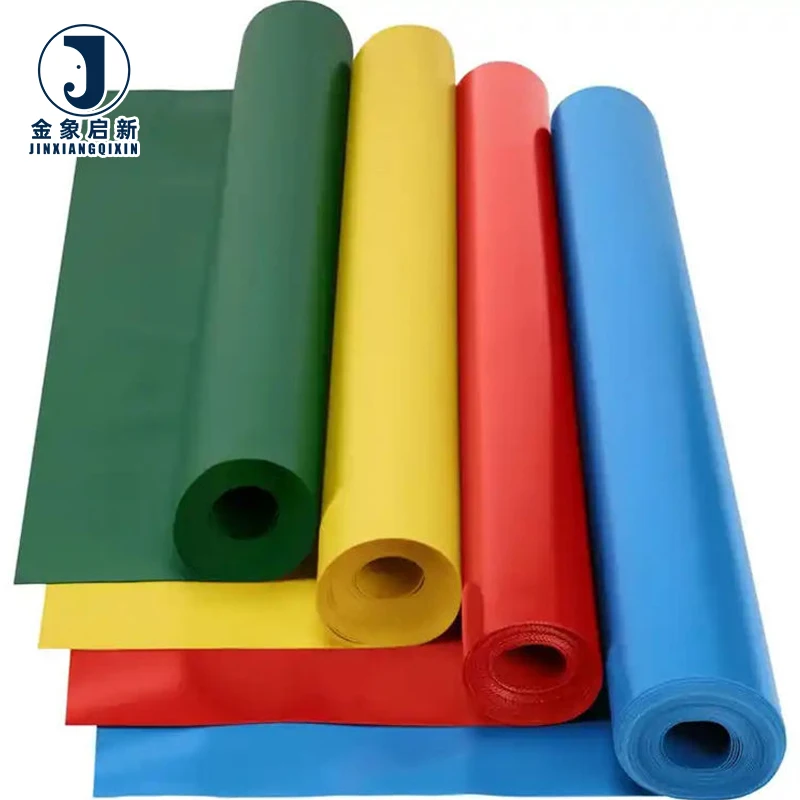
| Colour Range | Blue / Red / Yellow / Light blue / Grey (custom colours available) |
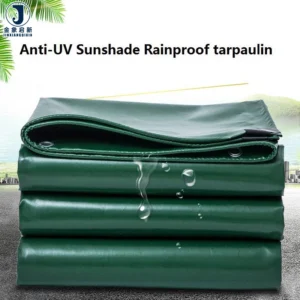
| Key Features | Cold crack resistance, anti-mildew, waterproof, sunproof; flame retardant and anti-static grades available — confirm the grade required for your market |
Application Suitability
| Application | Exposure & Requirement |
|---|---|
| Tarpaulin distribution and import | Shelf-ready rolls in standard widths and GSM grades, batch-to-batch colour consistency for retail and trade counter resale |
| Tent and awning manufacturing | Fabric by the roll for cutting and welding into frame tents, marquees and retractable awnings, requiring reliable seam adhesion |
| Truck and trailer side curtains | Continuous flexing at load points, road spray and UV exposure, with high-frequency welding along hem and track interfaces |
| Inflatable and membrane structures | Air-holding panels and architectural membranes demanding uniform coating weight and consistent elongation behaviour across the full roll width |
| Fish tank and pool liner fabrication | Permanent water contact requiring waterproof integrity and anti-mildew treatment throughout the coated surface |
Why Roll-to-Roll Consistency Matters More Than Quoted GSM
A quoted GSM that cannot be verified on arrival is the single largest source of dispute in bulk PVC coated tarpaulin roll wholesale bulk purchasing.
Buyers who order container loads of roll stock often discover that the material arriving at the warehouse sits noticeably below the weight stated on the invoice. Some rolls within the same shipment show visible colour shifts when unrolled side by side, making them unsellable for adjacent panel installations. [NEED_CITE: common buyer disputes over delivered versus quoted GSM in coated fabric imports] These inconsistencies force distributors to sort, re-grade or return entire batches — eroding margins and delaying downstream production schedules.
How Coating Lines Deliver Uniform Weight Across the Roll
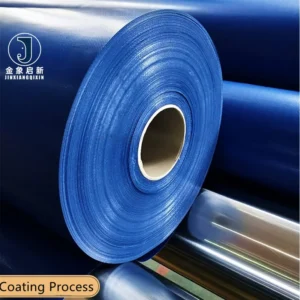
Laminated and hot-melt coating technology applies PVC to both faces of the polyester mesh in a controlled pass, building adhesion through heat and pressure rather than solvent evaporation. This method produces a consistent coating thickness from edge to centre of the web, which directly controls the final GSM of every linear metre. For a PVC coated tarpaulin roll wholesale bulk order, that uniformity means the 500gsm roll pulled from the top of the container matches the one at the bottom, both in hand-feel and on the scale.
Colour Matching Across Rolls in a Single Shipment
Batch colour consistency depends on pigment dispersion at the compounding stage and temperature stability across the coating head. When the same colour formula is run on a single line without intermediate changeovers, the Delta-E shift between the first roll and the last roll stays within limits that are invisible once the fabric is fabricated and installed. Distributors stocking multiple PVC coated tarpaulin roll aftermarket supplier colours can fulfil mixed-colour orders from the same production run with confidence that panels hung next to each other will not show banding. [NEED_CITE: Delta-E tolerance standards for batch colour matching in coated textiles]
Reading GSM and Thickness Together
GSM alone does not predict how the fabric will behave under tension or at a welded seam. A 600gsm roll built on a loosely woven base fabric with heavy filler coating will tear more easily at the hem than a 550gsm roll on a tighter, higher-denier mesh. The thickness figures listed — from 0.32mm to 0.65mm — should be read alongside GSM to understand whether weight comes from the structural polyester or from added PVC. Thicker coating improves abrasion resistance at contact points but adds stiffness that can complicate folding and track insertion for side curtain applications. Hot-melt coating also produces higher peel strength between layers, which matters when the fabric is heat-welded into finished panels.
The Hidden Cost of Overlooking Batch Verification
When roll stock arrives with unverified weight, fabricators cut and weld panels that later fail warranty inspection because the material does not meet the end-customer’s specification sheet. A distributor who loads a container with mixed-GSM rolls without pre-shipment verification risks sending lighter-grade inventory to a customer expecting heavy-duty cover material. [NEED_CITE: pre-shipment inspection protocols for coated fabric roll exports] Flame retardant grades shipped without accompanying test documentation cause project delays when site inspectors reject the material at the installation gate. Colour variation between rolls discovered only after fabrication forces entire panel runs to be scrapped and re-cut from replacement stock.
Why Buyers Source This Roll Stock Here
Dedicated QA and QC checkpoints at every production stage, with 100% inspection before any roll is cleared for packing, ensure that GSM and colour meet the purchase order before the container is sealed. A 10-person R&D team handles custom colour matching, non-standard widths and sample development, with samples produced within days rather than weeks. Three full production lines and 36 sets of professional equipment provide the capacity to fill multi-container PVC coated tarpaulin roll wholesale bulk orders while maintaining roll-to-roll consistency. ISO and CE certified processes underpin the documentation package that accompanies every shipment. Custom printing of brand logos is available for distributors who need private-label roll stock without sourcing from a separate printer.
Documentation & Verification
- Material specification sheet stating exact GSM, base fabric denier and coating weight for each roll grade
- Pre-shipment inspection record confirming 100% check of weight, colour and surface quality before dispatch
- Roll packing list detailing roll count, net weight and container loading configuration
- Colour reference card and batch number linking every roll in the shipment to its production run
- Test reports for UV and flame retardant grades where applicable — confirm required standard at inquiry
Fabrication, Handling & Storage
- Heat-weld temperature and dwell time should be adjusted to match the specific GSM and coating thickness of the roll grade being fabricated
- Store rolls upright on end-caps in a dry warehouse; laying rolls flat on concrete can cause permanent creasing across the 2m or 2.1m width
- Glossy surface rolls show scuff marks more readily during handling — use clean cotton gloves when unrolling for inspection
- Cold crack resistance allows deployment in low temperatures, but rolls should be acclimatised to ambient conditions before unrolling to avoid coating stress
- Anti-mildew treatment protects stored fabric, but rolls wrapped in non-breathable film should be ventilated if warehouse humidity is high
- Custom cut sizes and finished panels can be ordered alongside roll stock to reduce in-house fabrication waste
What to Include in Your Inquiry
Provide the target GSM, roll width preference and the total linear metres or container count you plan to order each quarter. Specify whether glossy or matt surface is required, and whether flame retardant or anti-static certification is needed for your destination market. If custom colour matching to a Pantone or RAL reference is required, send the reference code with your initial inquiry so that sample development can begin immediately.
Frequently Asked Questions
Q: How is GSM verified on arrival and what documentation supports the quoted weight?
A: Every roll is weighed during the 100% pre-shipment inspection, and the actual measured GSM is recorded on the inspection report that accompanies the shipment. The material specification sheet lists the target GSM alongside the measured value for each production batch, so you can cross-check the roll label against the paperwork upon arrival.
Q: How do you control batch colour consistency across multiple rolls in one shipment?
A: All rolls in a single order are produced from the same compounded PVC batch on the same coating line without intermediate colour changeovers. A batch number is assigned and printed on each roll label, linking it to the colour reference card included in the documentation package for verification at your warehouse.
Q: What are the available roll widths and lengths, and how do they affect container loading?
A: Standard roll widths are 2m at 75m length and 2.1m at 50m length. These dimensions are optimised for standard container floor space and weight limits. The roll packing list provided before dispatch details exact roll count, total net weight and loading configuration for your container.
Q: What is the minimum order quantity for custom colours or non-standard roll lengths?
A: Custom colours require a minimum run to allow the coating line to be purged and the new compound to reach stable colour output. Non-standard roll lengths can be accommodated subject to line setup constraints. Send your target colour reference and required quantities with your inquiry for a specific minimum and lead time.
Q: What roll packing and transport protection options are available for long-distance shipping?
A: Rolls are wrapped in protective film and packed with end-caps to prevent edge damage during transit. Hard kraft paper or woven outer wrapping is applied depending on the shipping route and handling conditions. Packing details including roll orientation and bracing method are confirmed on the packing list before the container is sealed.