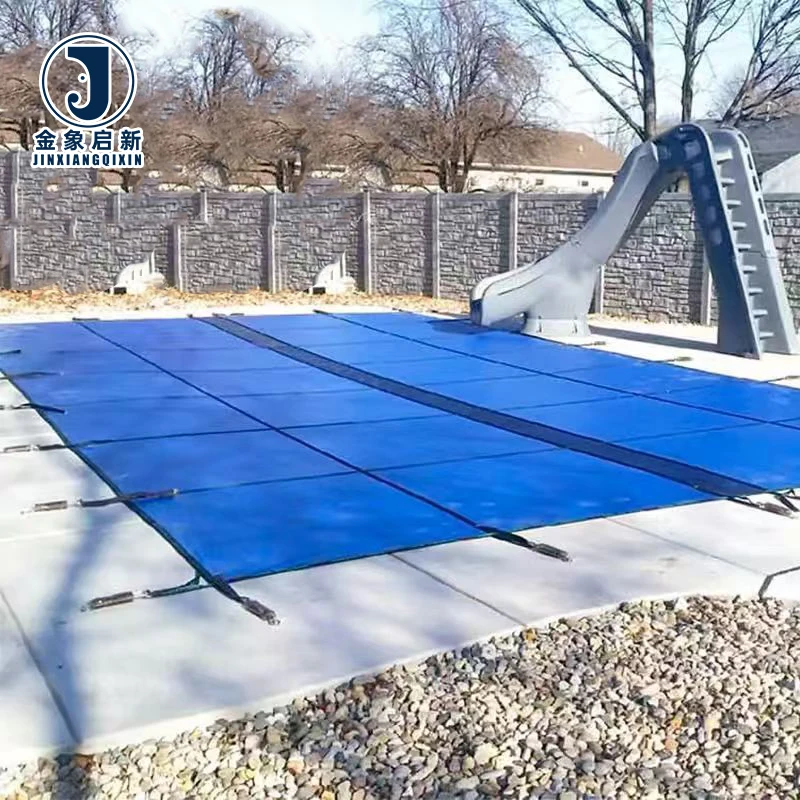
Description
Batch Consistency Control — Every roll of PVC pool cover tarpaulin is verified for GSM, colour and coating adhesion against the purchase order specification before leaving the production line.
Technical Specifications
| Parameter | Value |
|---|---|
| Product Type | PVC Coated Tarpaulin (Pool Cover Application) |
| Base Fabric | 500D × 500D Polyester |
| Coating Material | PVC |
| Construction | Integrated pressing (non-stitched) |
| Waterproof Performance | Water resistant / waterproof |
| Flame Retardant | Available in flame retardant grades — confirm the grade required for your market |
| UV Treatment | Anti-UV treated — request test report for specific UV exposure rating |
| Colour | Customizable across RAL or Pantone references |
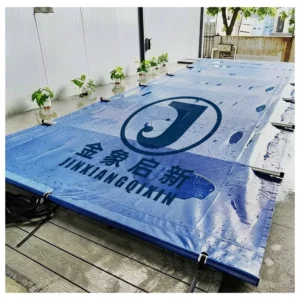
| Printing | Custom printing available |
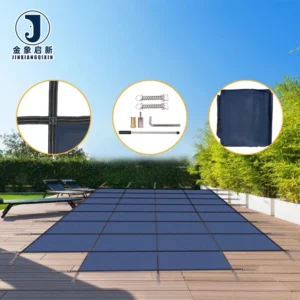
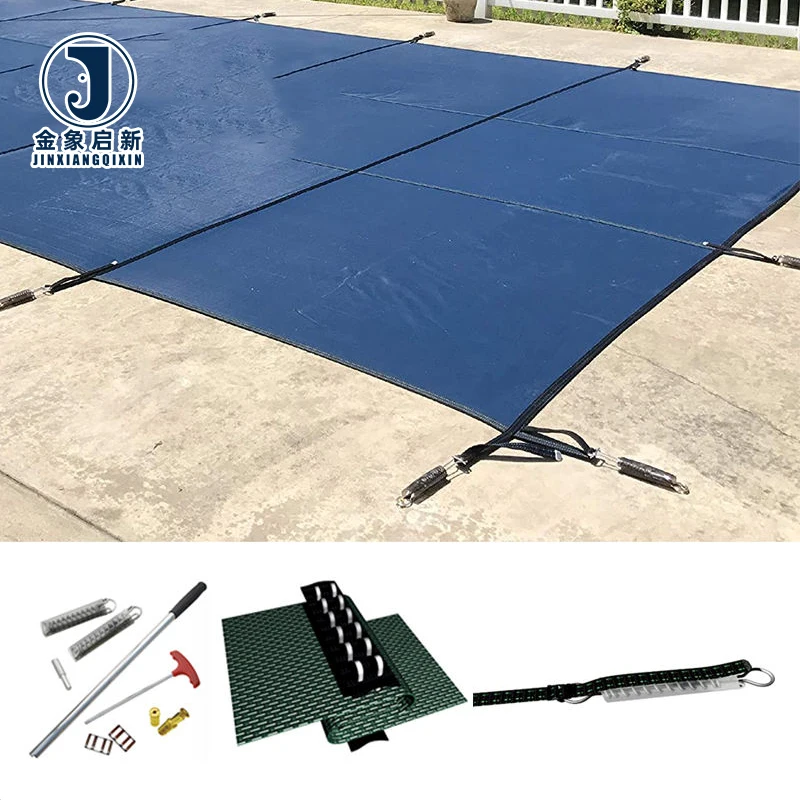
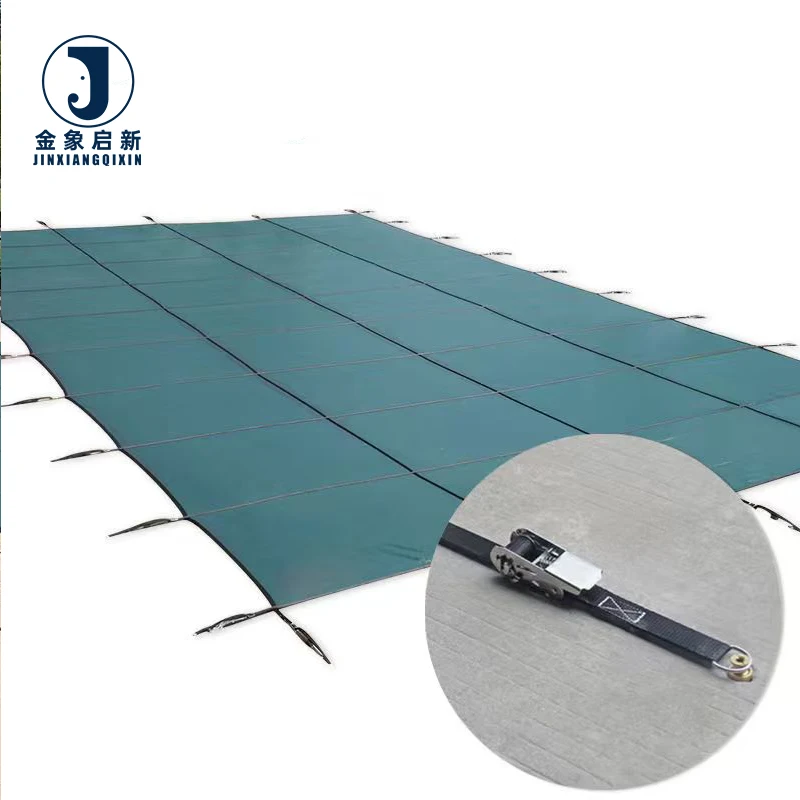
| Installation Compatibility | Brass anchoring system, aluminium batten with ratchet, water tube loops |
Application Suitability
| Application | Exposure & Requirement |
|---|---|
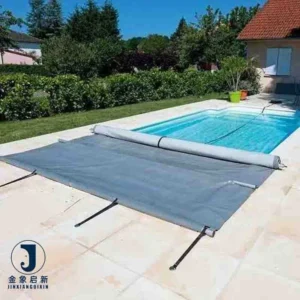
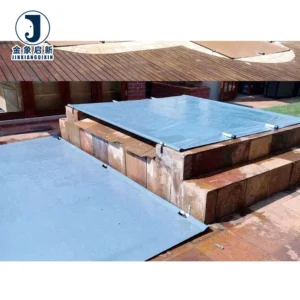
| In-ground winter pool covers | Prolonged water contact, debris loading, freeze-thaw cycling, UV exposure during off-season storage |
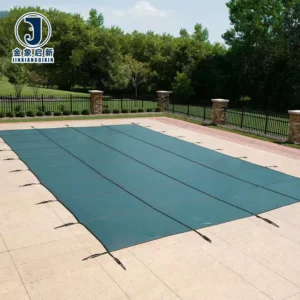
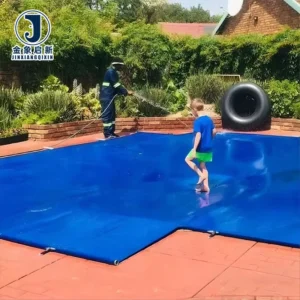
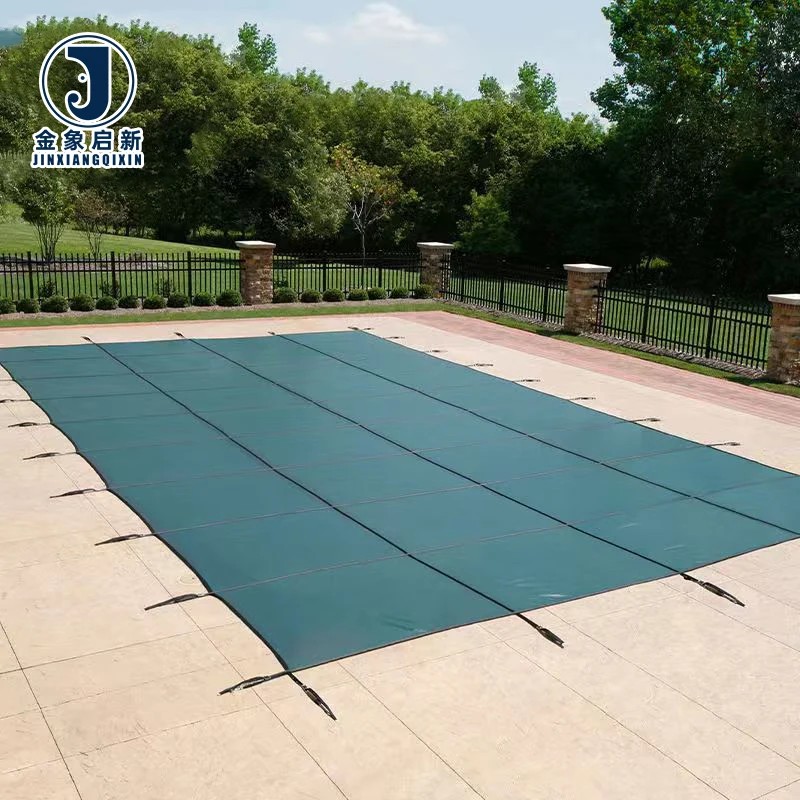
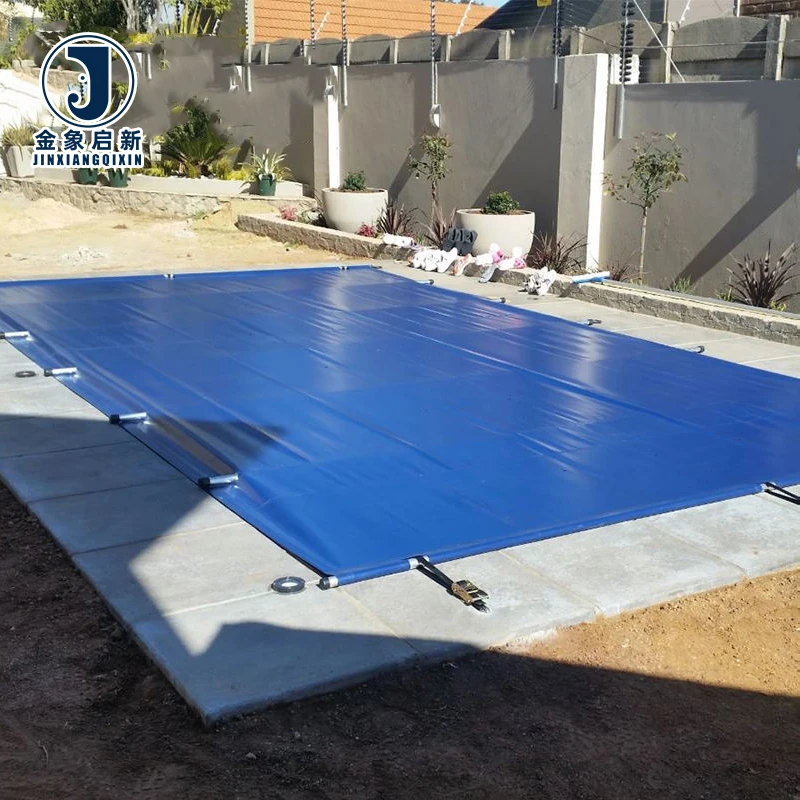
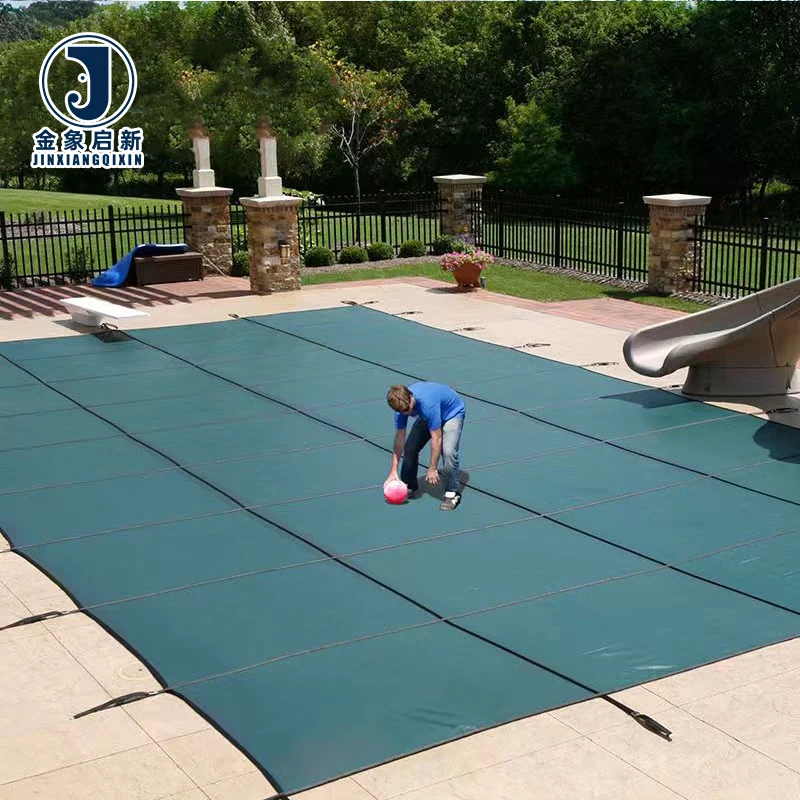
| Safety pool covers for child and pet protection | Tensile integrity under point load, reliable anchoring interface, sustained tension across span |
| Pool cover fabricator roll stock | Roll-to-roll GSM and colour consistency, hot air weldability, cutting pattern efficiency |
| Above-ground pool seasonal covers | Wind uplift resistance, edge reinforcement compatibility, repeated fold-unfold cycles |
Why Roll-to-Roll Consistency Matters More Than Quoted GSM for PVC Pool Cover Stock
Colour shift between rolls in a single order is the leading complaint when pool covers are installed side by side.
When a fabricator cuts safety covers from three different rolls and the blue tone shifts visibly under sunlight, the end customer blames the fabricator, not the mill. Inconsistent coating weight across a batch also means hot air welding parameters that work on roll one may starve or scorch on roll four [NEED_CITE: tensile and tear test methods for coated fabrics per ISO 1421]. For a wholesale buyer consolidating container loads of PVC pool cover roll stock, this variability destroys cutting yield and generates claims you cannot pass upstream. We track coating weight and colour reference per roll, not just per batch, so the material behaves predictably on your weld tables and cutting gantries.
Colour Matching Across Multi-Roll PVC Pool Cover Orders
Pool cover fabricators cutting made-to-measure safety covers from a single production run expect every panel to match once installed on adjacent in-ground pools. Our in-process QA records the colour reference against the approved swatch at three points during each coating run — start, mid and end. When your purchase order calls for a specific RAL code, the batch documentation travels with the rolls, giving your incoming inspection a measurable checkpoint rather than a visual guess.
Weldable Non-Stitched Construction for Fabricator Efficiency
This PVC pool cover tarpaulin is produced by integrated pressing, meaning no stitch lines interrupt the coating surface. For fabricators welding custom safety covers, this translates to uninterrupted hot air weld paths and fewer seam failures at the anchor points where the brass spring or ratchet system concentrates load [NEED_CITE: hot air welding parameters for PVC coated polyester fabrics]. Stitched panels create capillary channels where pool chemistry — chlorine, bromine, salt — penetrates and degrades the base yarn, a failure mode eliminated by the non-stitched construction.
Reading the Specification Sheet Beyond the GSM Number
GSM alone tells you how heavy the roll is, but not how it will perform when a child steps onto a safety pool cover in winter. The 500D × 500D polyester base fabric provides the tensile skeleton; the PVC coating adds waterproofing, UV screening and weldability. A heavier coating on a lighter base yarn gives high GSM with low tear resistance, while a lighter coating on a dense 500D weave delivers superior puncture and tear performance at the same weight. When evaluating PVC pool cover wholesale options, request both the base fabric denier and the coating-to-substrate ratio to understand where the weight actually sits.
What Happens When Fabricators Specify on GSM Alone
A common procurement error is ordering pool cover material by gsm without confirming the base yarn denier. Rolls arrive at the stated weight but tear at the brass anchor eyelets under spring tension because the polyester scrim lacks density. Another pattern: anti-UV treatment is claimed on the quotation, but the test report references a general film standard rather than a coated fabric exposure protocol, leaving the cover vulnerable to chalking and embrittlement after one pool season [NEED_CITE: UV degradation testing standards for PVC coated textiles]. These mismatches surface only after the fabricator has welded, edged and shipped the finished cover to the pool owner — the most expensive point to discover a material fault.
Why Fabricators Consolidate PVC Pool Cover Roll Stock Here
Our 36 sets of professional coating and finishing equipment support the roll widths and lengths that pool cover cutting patterns demand, reducing offcuts and weld seams per cover. The 10-person R&D team develops colour samples against your approved RAL or Pantone reference within days, not weeks, so you can confirm the shade before committing a container. Every roll undergoes 100% pre-shipment inspection with documented GSM, colour delta and coating adhesion checks — records that travel with your shipment for incoming verification. We supply the material specification sheet, roll packing list and test documentation as standard, eliminating back-and-forth when your QC team needs data for their incoming log.
Documentation & Verification
- Material specification sheet stating GSM, 500D polyester base and PVC coating weight per roll
- Colour reference delta report matching the approved swatch for multi-roll orders
- Pre-shipment inspection record covering every roll in the consignment
- Roll packing list with net weight, roll count and container loading plan
- Certificate of origin and customs support documentation for destination clearance
Fabrication, Handling & Storage
- Set hot air weld temperature to the coating’s melt range; integrated pressing surface delivers consistent weld adhesion
- Store rolls horizontally on racking to prevent flat spots that distort the 500D polyester weave during cutting
- Allow cold-transport rolls to acclimatise before unrolling to avoid crease memory in the PVC coating
- Use CNC or template-guided cutting to maximise yield from the custom roll width and reduce edge waste
- Clean the glossy or matte PVC surface with neutral pH agents; avoid solvents that soften the coating layer
What to Include in Your PVC Pool Cover Roll Inquiry
Specify the finished cover dimensions you produce most often so we can recommend roll width and length that minimise offcuts. Confirm your target market’s fire classification requirement — some residential pool codes demand a stated flame retardant grade, others do not. Let us know your annual roll volume and colour palette so we can plan batch scheduling for consistent colour matching across your seasonal orders.
Frequently Asked Questions
Q: How do I verify the GSM matches the quotation when the PVC pool cover rolls arrive?
A: Each shipment includes a material specification sheet and pre-shipment inspection record stating the measured GSM per roll. On receipt, cut a 100 mm × 100 mm sample from the roll end, weigh it and multiply to confirm grams per square metre against the documented value before releasing stock to production.
Q: Can you guarantee colour consistency across all rolls in one container?
A: We record colour delta against your approved reference at three points during each coating run and include the report with your shipment. Rolls for a single purchase order are produced in a continuous coating sequence to minimise shade variation between adjacent cuts on the pool deck.
Q: What roll widths are available for pool cover cutting patterns?
A: Custom widths are available to match your most common cover dimensions, reducing offcuts and the number of weld seams per finished safety cover. Share your top five cover sizes and we will recommend a roll width that optimises your cutting yield and container loading density.
Q: Are test reports supplied for anti-UV and flame retardant claims?
A: We supply test reports for anti-UV and flame retardant treatments when a specific grade is requested and confirmed at the inquiry stage. State the standard your destination market requires — such as a UV exposure duration or fire classification — so the correct treatment and corresponding test documentation are applied.
Q: How are rolls packed to survive container transit without surface damage?
A: Rolls are wound on cores, wrapped in protective film and packed according to the roll packing list included in your shipment. The packing method prevents edge crushing and coating abrasion during handling, and the container loading plan is shared before dispatch so you can verify roll count and weight.