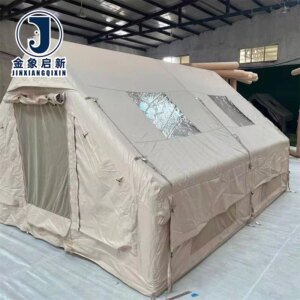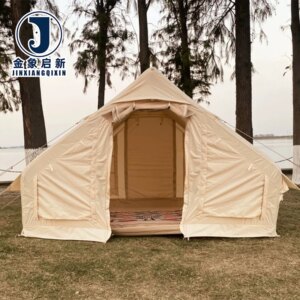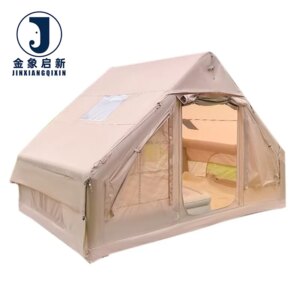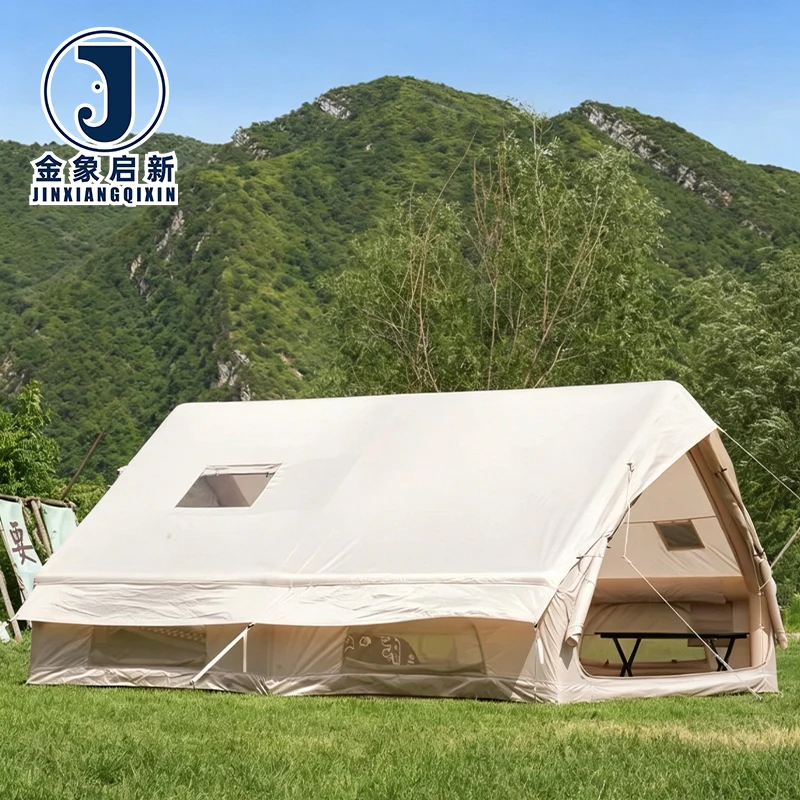
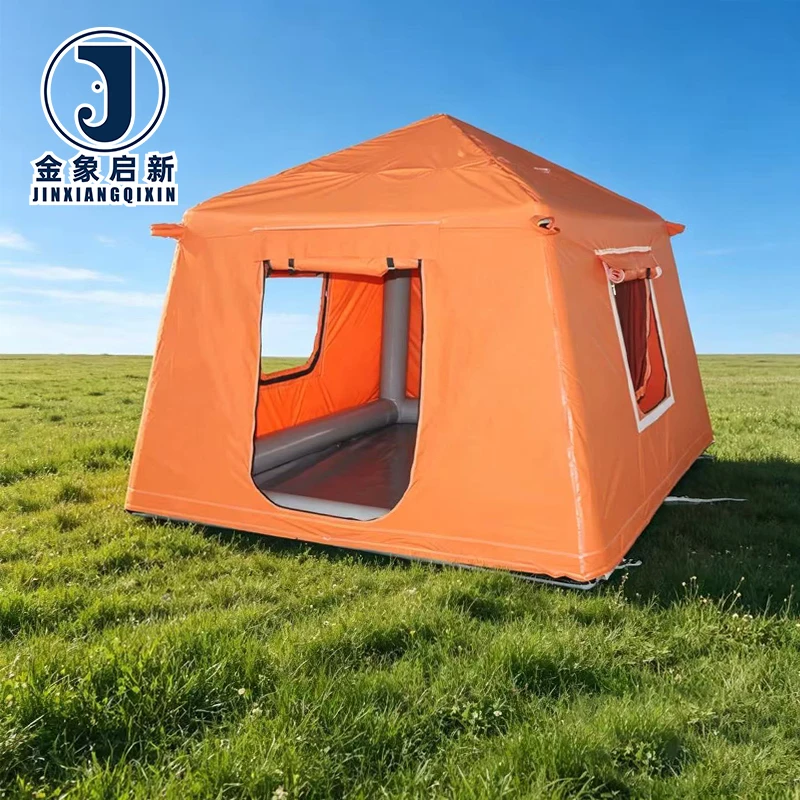
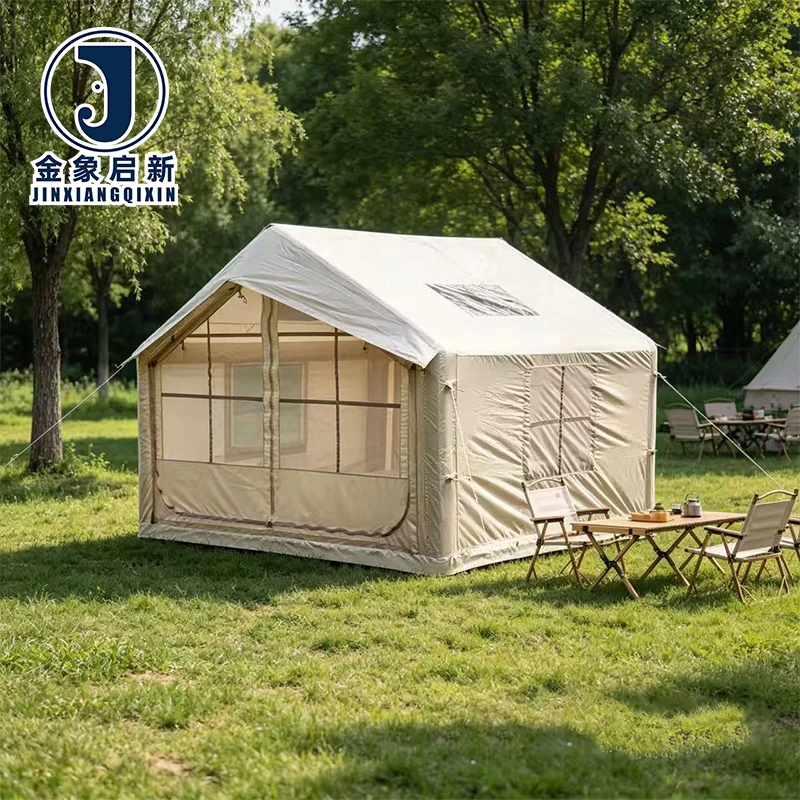
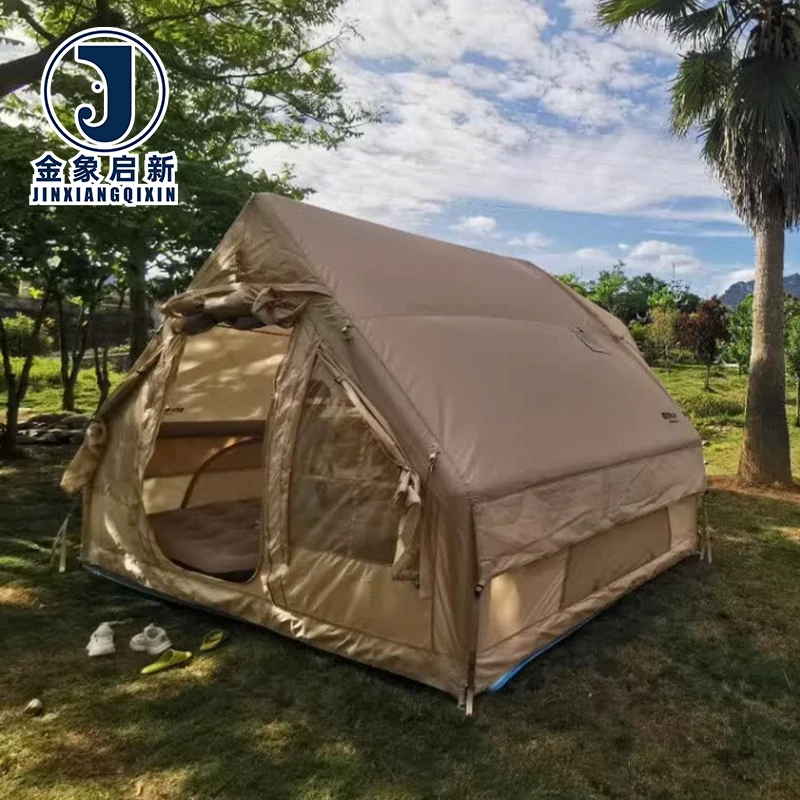
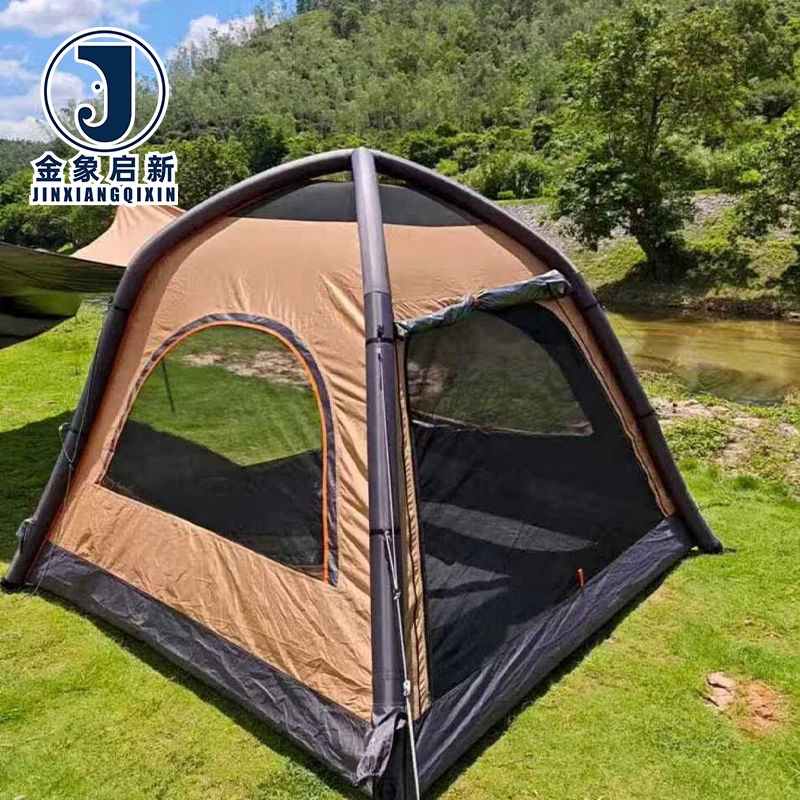
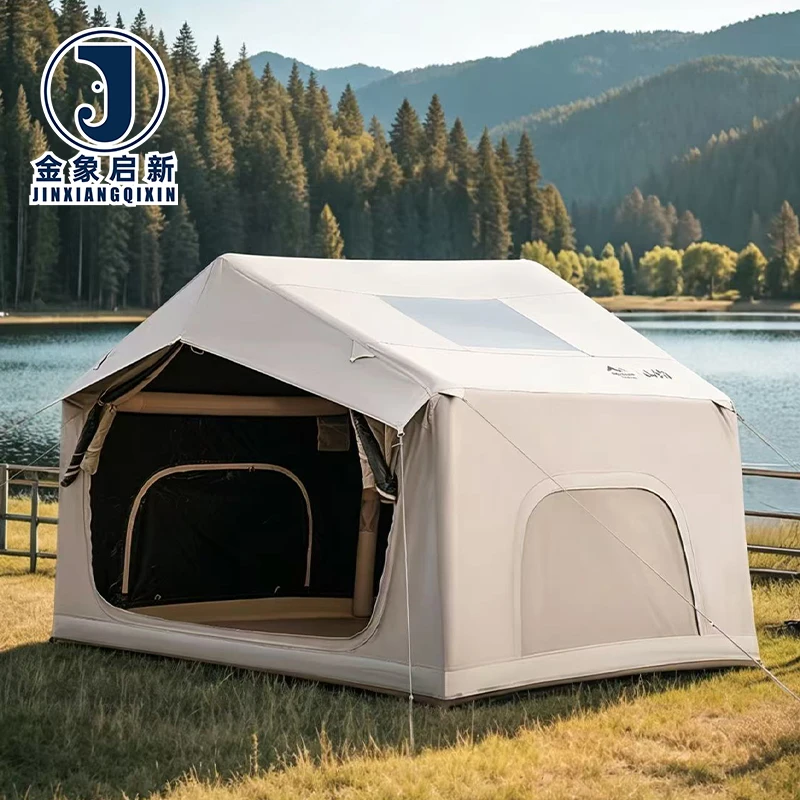
Description
Batch-Controlled Output — Roll-to-roll colour and GSM consistency maintained through dedicated QA/QC at every coating stage, verified before each dispatch for inflatable tent fabric orders.
Technical Specifications
| Parameter | Value |
|---|---|
| Product Type | Inflatable Tent |
| Core Material | PVC Tarpaulin |
| Key Performance | Waterproof, Tear-resistant, Quick Automatic Opening |
| UV Resistance | UV-resistant (test basis not stated in source) |
| Flame Retardant Grade | Grade not stated — confirm the grade required for your market |
| Anti-Static | Standard not stated — verify compliance for your application |
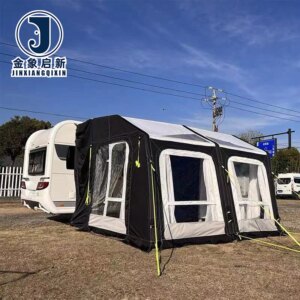
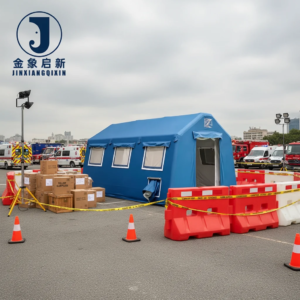
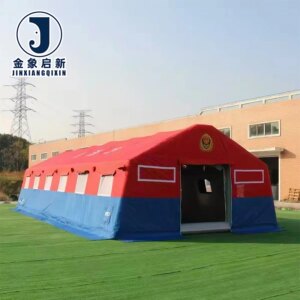
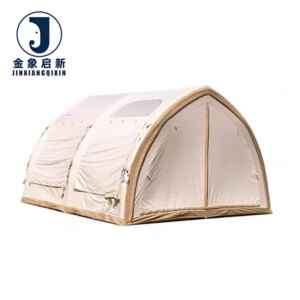
| Product Forms | 2-3 Person, Four-Season, Single Layer Construction |
| Customization Service | OEM & ODM, sample customization, pattern printing |
| Standards | ISO 9001, ISO 14001, ISO 45001, CE |
Application Suitability
| Application | Exposure & Requirement |
|---|---|
| Inflatable tent and awning manufacturers | Production-line cutting and welding demand uniform GSM and consistent coating adhesion roll after roll |
| Outdoor event equipment distributors | Seasonal inventory requires multiple roll grades stocked with reliable colour matching across replenishment batches |
| Inflatable structure builders | Large membrane panels need uniform tensile behaviour so inflation pressure distributes evenly without localized stress |
| Tarpaulin importers consolidating loads | Container space optimization depends on predictable roll diameter, weight and length for mixed cargo planning |
Why Colour Drift Between Rolls Destroys Inflatable Tent Production Runs
A shade difference invisible on a sample swatch becomes a visible panel mismatch once the tent is inflated and standing in daylight.
When a distributor receives an order of inflatable tent fabric and the rolls show even slight colour variation side by side, the entire production batch faces rejection from the end buyer. This is not a cosmetics issue — it signals inconsistent coating formulation or uneven curing across the production run, which can also mean variable weld strength and coating adhesion from one roll to the next. [NEED_CITE: colour consistency measurement methods for coated textiles per ISO standards]
Tent manufacturers cutting dozens of panels from multiple rolls cannot afford to sort and match shades on the factory floor. Every minute spent segregating rolls by visual inspection is lost output, and the rejected panels represent material that was paid for but cannot be used in a matched set.
Roll-Stock Supply That Matches Production-Line Demands
Tent factories running CNC cutters or manual die presses need PVC inflatable tent fabric rolls that feed continuously without surprises in thickness or surface texture. Coating weight variation affects how the material behaves under the cutting blade and how heat-welded seams cure during assembly. Our three full production lines run dedicated coating cycles with controlled formulation inputs, keeping each batch within the specified tolerance window that your cutting and welding parameters depend on.
Wholesale Volumes With Container-Ready Documentation
Ordering inflatable tent fabric by the roll means you are loading container space with heavy, cylindrical cargo that must be documented precisely for customs and freight handling. Each shipment leaves with a roll packing list detailing individual roll count, net weight per roll and total container loading configuration. [NEED_CITE: standard export packing practices for coated fabric rolls in containerized freight] This eliminates guesswork at the port of entry and speeds clearance when your broker matches the packing list against the commercial invoice and certificate of origin.
Understanding How GSM and Base Fabric Interact in Inflatable Applications
GSM alone tells you how much the roll weighs per square metre, but it does not tell you how that weight is distributed between the polyester base fabric and the PVC coating layers. A heavier coating contributes waterproofness and surface durability, while a denser base weave provides the tensile and tear resistance that keeps the inflated structure holding pressure without stretching at stress points. For inflatable tent panels that undergo repeated inflation and deflation cycles, the balance between base fabric denier count and coating thickness determines whether seams hold or whether the material fatigues along fold lines over successive setups. The single-layer construction format means there is no backup liner — the PVC tarpaulin must perform all weatherproofing and structural functions in one homogeneous sheet.
What Happens When Roll Consistency Is Not Verified Before Dispatch
Receiving a container of inflatable tent fabric with inconsistent coating weight across rolls forces the manufacturer to re-calibrate welding temperatures mid-production, because thicker coating sections require different heat input than thinner ones. [NEED_CITE: thermal welding parameter adjustment for variable coating thickness in PVC fabrics] Panels welded at incorrect temperatures develop weak seams that fail when the tent is pressurized, leading to warranty claims and returns that cost far more than the material itself. Batch-to-batch GSM verification before dispatch prevents this downstream failure from ever reaching the factory floor.
Why Manufacturers Source Inflatable Tent Fabric Here
Our 10-person R&D team develops custom samples within days, allowing tent manufacturers to validate material behaviour on their own welding and cutting equipment before committing to a full container order. Three full production lines and 36 sets of processing equipment provide the capacity to fulfil large-volume roll-stock orders without splitting production across separate runs that could introduce batch variation. Dedicated QA/QC at every production stage means coating weight, colour reference and surface finish are checked continuously — not just sampled at the end. Pre-shipment inspection covers 100% of rolls before packing, catching any deviation before it enters the container. ISO and CE certification provides the compliance framework that distributors and importers need to present to their own customers and regulatory bodies.
Documentation & Verification
- Material specification sheet stating GSM, base fabric denier and coating type for each roll batch
- UV resistance test report provided where applicable to confirm treatment performance
- Roll packing list with individual roll weight, count and container loading configuration
- Pre-shipment inspection record covering colour consistency and coating weight across the full order
- Certificate of origin and customs documentation included with every dispatch
Fabrication, Handling & Storage
- Set heat-weld temperature based on the specific PVC coating weight of the roll batch received
- Store rolls upright on end-caps to prevent flat-spot deformation of the PVC tarpaulin surface
- Allow cold-stored rolls to reach ambient temperature before unrolling to avoid coating cracking
- Cut panels with the coating face orientation consistent to maintain uniform weld adhesion
- Use mild detergent for cleaning — avoid solvent-based agents that attack PVC coating layers
How to Specify Your Inflatable Tent Fabric Order
Tell us the target GSM range and base fabric preference for your tent design, along with the roll width that fits your cutting table layout. Provide your Pantone or RAL colour reference if batch colour matching is required across repeat orders, and indicate whether you need pattern printing for branded tent panels. Confirm the fire-retardant or anti-static grade your destination market mandates so we can align the material formulation accordingly.
Frequently Asked Questions
Q: How is GSM verified per roll and rechecked on arrival?
A: Each roll is weighed and measured during pre-shipment inspection, with results recorded against the specification sheet. On arrival, buyers can verify by cutting a known-area sample and weighing it on a calibrated scale. Our inspection documentation provides the baseline data for comparison, and any discrepancy outside tolerance is addressed through our after-sales support channel.
Q: How is colour consistency maintained roll-to-roll in the same order?
A: Coating formulation inputs are controlled per batch, and colour reference is checked at multiple production stages using standardized lighting conditions. Rolls from the same order are grouped and compared before packing. If your application demands panel-level matching across an entire tent, we recommend ordering the full panel set from a single production run.
Q: What custom widths and roll lengths are available for inflatable tent production?
A: Widths are set to match your cutting table and panel layout requirements, reducing offcut waste. Roll lengths can be specified to align with your production run size, minimizing mid-run roll changes. Minimum order quantities for custom widths are kept accessible for trial orders before scaling to full container volumes.
Q: How are pattern printing and colour matching handled for branded inflatable tents?
A: Pattern printing is handled through our OEM and ODM capability, with samples produced for approval before bulk roll production. Colour matching follows your supplied reference, verified under controlled lighting at the production stage. Re-orders reference the archived print specification to maintain consistency across production runs.