Description
Consistent Roll Output — every PVC coated tarpaulin roll is weighed against the spec sheet and logged before leaving the factory, protecting bulk buyers from GSM shortfalls at the container door.
Technical Specifications
| Parameter | Value |
|---|---|
| Product Type | PVC Coated Tarpaulin Roll |
| Base Fabric Denier | 200DX300D / 500DX500D / 840DX840D / 1000DX1000D |
| Weight Range | 250gsm–1500gsm (confirm the grade required for your market) |
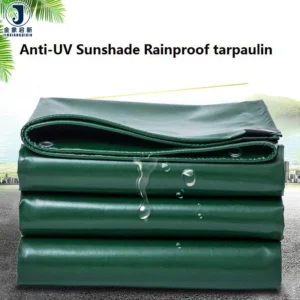
| Coating Material | PVC |
| Surface Finish | Glossy or matte |
| Temperature Range | -15°C to 70°C |
| Waterproof | Yes |
| UV Treatment | Available in UV treated grades — confirm the treatment level required |
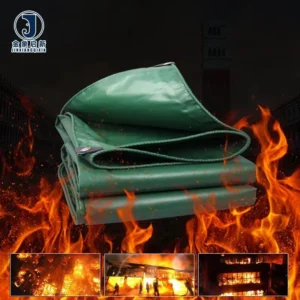
| Flame Retardant | Available in flame retardant grades — confirm the grade required for your market |
| Anti-Mildew | Anti-fungal treated |
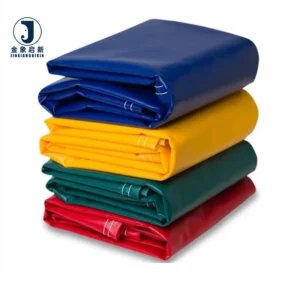
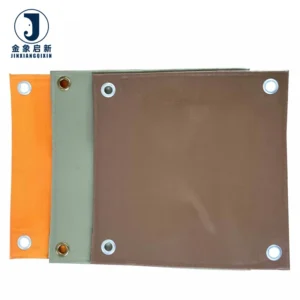
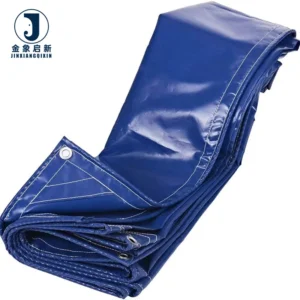
| Colour Options | Blue, yellow, black, green, white, and custom colours |
| Roll Dimensions | Custom width and length available |
| Printing | OEM/ODM custom printing available |
Application Suitability
| Application | Exposure & Requirement |
|---|---|
| Tarpaulin distribution and regional resale | Multiple grades stocked by the roll, requiring batch-consistent GSM and colour for predictable end-user results |
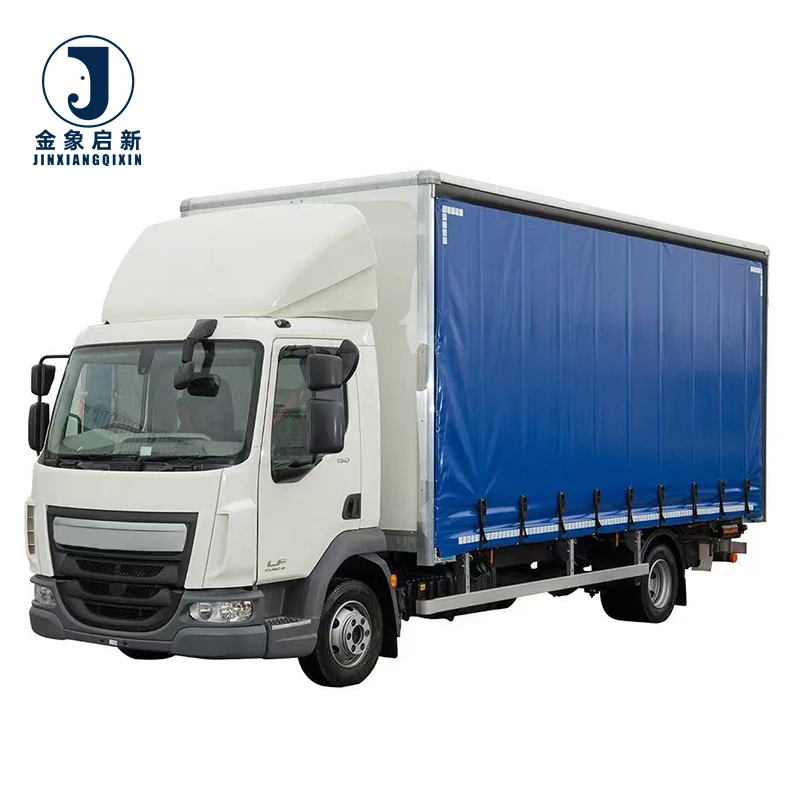
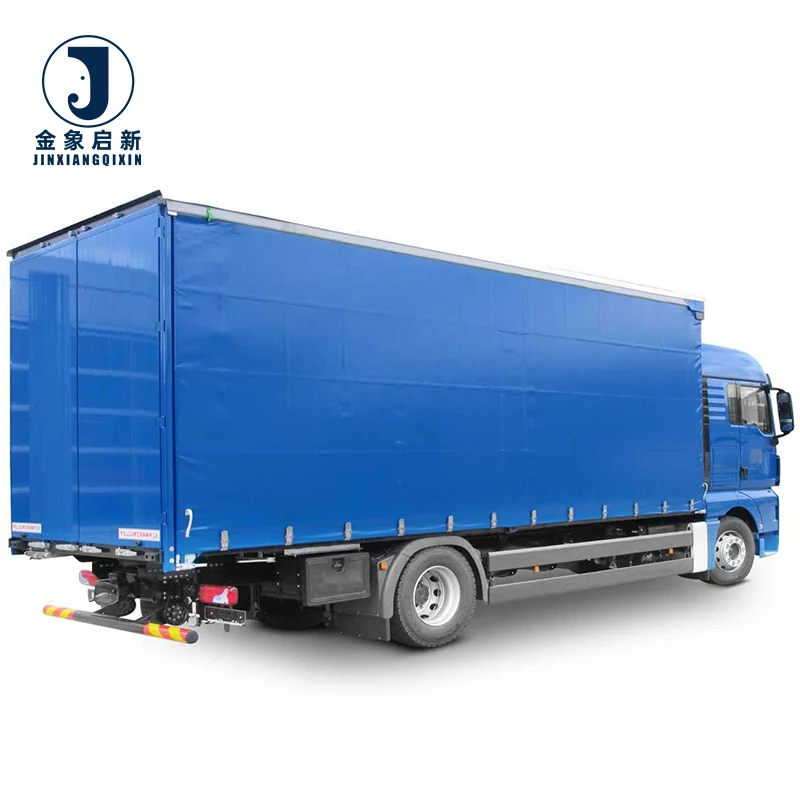
| Truck cover and side curtain fabrication | Repeated flexing at load points, road debris abrasion, sustained UV exposure, weld seam integrity under tension |
| Tent, awning and inflatable manufacturing | Weld compatibility, colour match across panels, surface finish suited to digital or screen printing |
| Pond and reservoir liner installation | Continuous water immersion, soil chemistry contact, puncture resistance during placement |
Why Quoted GSM Does Not Guarantee Arrival Weight
GSM stated on a quotation but lighter than agreed on arrival is one of the most costly failures in bulk coated fabric procurement. Weight verification must happen per roll before dispatch, not as a batch average on paper. When a wholesale PVC coated tarpaulin roll shipment lands short of the contracted GSM, the downstream consequences are immediate: fabricators find the material tears more easily during welding, truck covers flex beyond their tensile limit within months, and distributors face return claims they cannot trace to a single production batch. The root cause is often a supplier who treats GSM as a target rather than a controlled output — coating weight drifts across the production run, and only a sampling inspection at the end catches the deviation, if it catches it at all. For roll-stock buyers, the only meaningful check is a roll-by-roll weight record generated during production, not a certificate printed after the fact [NEED_CITE: ISO 1421 tensile and tear test methods for coated fabrics].
Roll-to-Roll Consistency Across Bulk Shipments
When a distributor orders multiple containers of PVC coated tarpaulin roll stock, the expectation is that every roll in the shipment behaves identically during fabrication. Colour must not shift from one roll to the next — a variation visible once panels are installed side by side on a large tent or truck curtain. GSM must remain within tolerance so that welding parameters set on the first roll hold true through the last. This level of batch consistency requires in-process QA checkpoints at the coating head, not just a final visual inspection. Buyers who specify wholesale PVC coated tarpaulin roll supply should require a pre-shipment inspection record that documents weight and colour for every roll in the order, not a summary statement for the batch.
Surface Finish and Its Downstream Impact
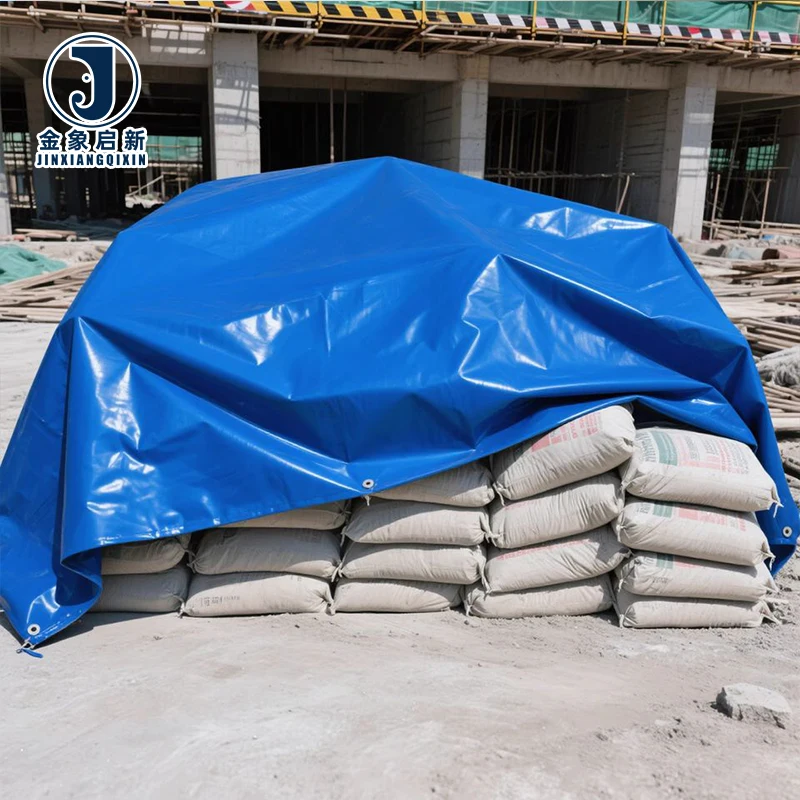
The choice between glossy and matte surface finish is not purely aesthetic — it determines how well the fabric accepts printed graphics, how easily dirt releases during service, and how reliably heat-welded seams bond during fabrication. A glossy PVC surface tends to offer sharper print definition for branded truck curtains and promotional tents, while a matte finish reduces glare and hides surface scuffing on construction site covers and agricultural stockpile wraps. For fabricators welding multiple panels together, the surface finish also influences the temperature window for a clean seam; matte coatings may require adjusted heat settings compared to glossy equivalents. Confirming the correct finish at the sample stage prevents rework once full roll stock arrives at the workshop.
Denier, Weave Density and Real-World Strength
The base fabric denier — whether 200DX300D for lighter covers or 1000DX1000D for heavy-duty applications — works together with coating weight to determine how the roll performs under load. A higher denier yarn in both warp and weft directions resists tear propagation: when a puncture occurs, the rip stops spreading more effectively through a denser weave. Coating weight, measured in GSM, adds stiffness and abrasion resistance but does not on its own guarantee tensile strength — a heavily coated fabric built on a light base cloth will still tear under point stress [NEED_CITE: relationship between base fabric denier and coated fabric tear resistance]. Buyers selecting PVC coated tarpaulin roll stock should request the denier specification alongside the GSM figure to understand the full strength profile. Temperature range also plays a role: PVC becomes stiffer below -15°C and softens as it approaches 70°C, so a roll specified for cold-climate transport must perform at the lower boundary without cracking at fold lines.
The Hidden Cost of Specifying on GSM Alone
A wholesale buyer who selects roll stock based on a single GSM figure, without verifying denier or coating formulation, often discovers the problem during fabrication rather than at the warehouse door. Weld seams may fail before the fabric body does, particularly at the flex points where a truck cover bends over a load — the coating peels from the base cloth because adhesion was never matched to the denier specified. Colour inconsistency across rolls forces a fabricator to cut around off-shade sections, reducing yield and raising cost per finished cover. Flame retardant grades claimed on the quotation but unsupported by a test report leave the end user exposed during site inspection, where a missing certificate can halt a construction or mining project entirely [NEED_CITE: fire classification requirements for coated fabrics in construction and mining ventilation]. These are not quality complaints that a credit note resolves — they represent lost production days, failed project handovers, and distributor reputation damage that takes years to rebuild.
Why Buyers Source PVC Coated Tarpaulin Roll Stock Here
Three full production lines and 36 sets of professional equipment support bulk roll output with the capacity to fill container orders on schedule, even when multiple grades and widths are combined in one shipment. A 10-person R&D team handles custom width, colour matching and OEM printing development, turning sample requests around within days rather than weeks. In-process QA checkpoints at coating, lamination and winding stages catch GSM drift and colour variation before rolls reach the packing area, reducing the risk of batch-level rejects. Every roll undergoes 100% inspection before dispatch — weight is recorded against the specification sheet, and a pre-shipment inspection report accompanies the shipping documentation. Nearly 30 years of focus on coated fabric production means process parameters for each denier and coating weight combination are established from long production history, not trial runs on new orders.
Documentation & Verification
- Material specification sheet listing exact GSM, base fabric denier and PVC coating weight per roll grade
- Pre-shipment inspection record with individual roll weight readings against the contracted specification
- Roll packing list detailing roll count, net weight per roll and container loading plan
- ISO and CE certificates included with batch documentation for customs and compliance
- UV and flame retardant test reports supplied where treatment grades are specified in the order
Fabrication, Handling & Storage
- Heat-weld temperature should be adjusted for glossy versus matte surface finish to ensure full coating adhesion at the seam
- Store rolls upright on pallets in a shaded, ventilated area to prevent flat-spotting and surface pressure marks on the PVC coating
- Unroll and allow fabric to relax at ambient temperature before cutting, especially when material has been transported in cold conditions below -15°C
- Cut patterns from higher denier grades (840DX840D, 1000DX1000D) with allowance for weld seam overlap to maintain tear resistance at panel joins
- Clean glossy-finish rolls with mild detergent only; abrasive cleaners will dull the surface and reduce print receptivity over time
What to Include in Your Roll Stock Enquiry
To receive an accurate specification and lead time for PVC coated tarpaulin roll stock, provide your target GSM and denier preference, the surface finish required for your fabrication process, and the roll width and length that optimises your cutting layout. If your market mandates flame retardant or UV treatment, state the specific grade or test standard your end users require so that the correct formulation is matched at the quotation stage. Confirm whether you need plain rolls or OEM printing, and indicate your annual volume to support consistent batch planning across repeat orders.
Frequently Asked Questions
Q: How is GSM verified before each roll ships?
A: Every roll is weighed individually during the pre-shipment inspection stage and logged against the GSM stated on your material specification sheet. A weight verification record accompanies the shipping documentation, so you can cross-check arrival weight against the production record roll by roll rather than relying on a batch average.
Q: Can colour stay consistent across all rolls in a bulk order?
A: Colour is matched against a confirmed reference sample before production begins, and in-process QA checks at the coating stage monitor shade across the run. The pre-shipment inspection includes a visual comparison of rolls side by side, and any roll that falls outside the agreed tolerance is replaced before packing.
Q: What minimum order applies to custom width or colour?
A: Minimum quantities for custom width, length or colour depend on the specific denier and GSM grade selected, since smaller coating runs require dedicated line setup. Provide your target roll dimensions and annual volume in your enquiry so that the minimum can be calculated against your preferred production schedule.
Q: How do you plan container loading to maximise roll count?
A: A roll packing list is prepared before dispatch detailing the number of rolls, net weight per roll and the loading arrangement inside the container. Rolls are packed in bales or cartons depending on the grade, and the loading plan is shared with the buyer to confirm that the container capacity is used efficiently for your freight cost.
Q: Do UV and flame retardant grades include a test report?
A: Where UV or flame retardant treatment is specified in your order, the corresponding test report is included with the shipment documentation. The report references the grade and test standard applied, so you can present it directly to your end user or site inspector without requesting additional paperwork after delivery.