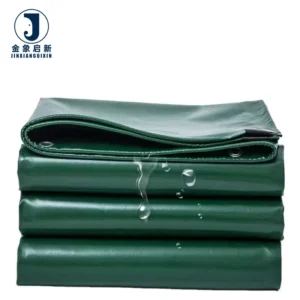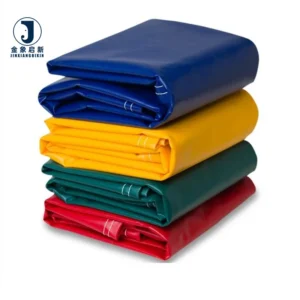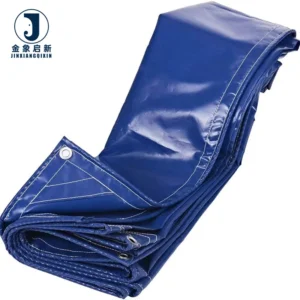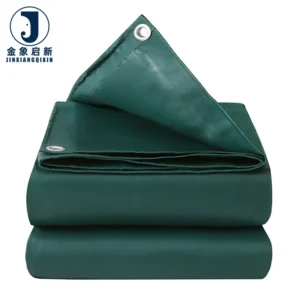
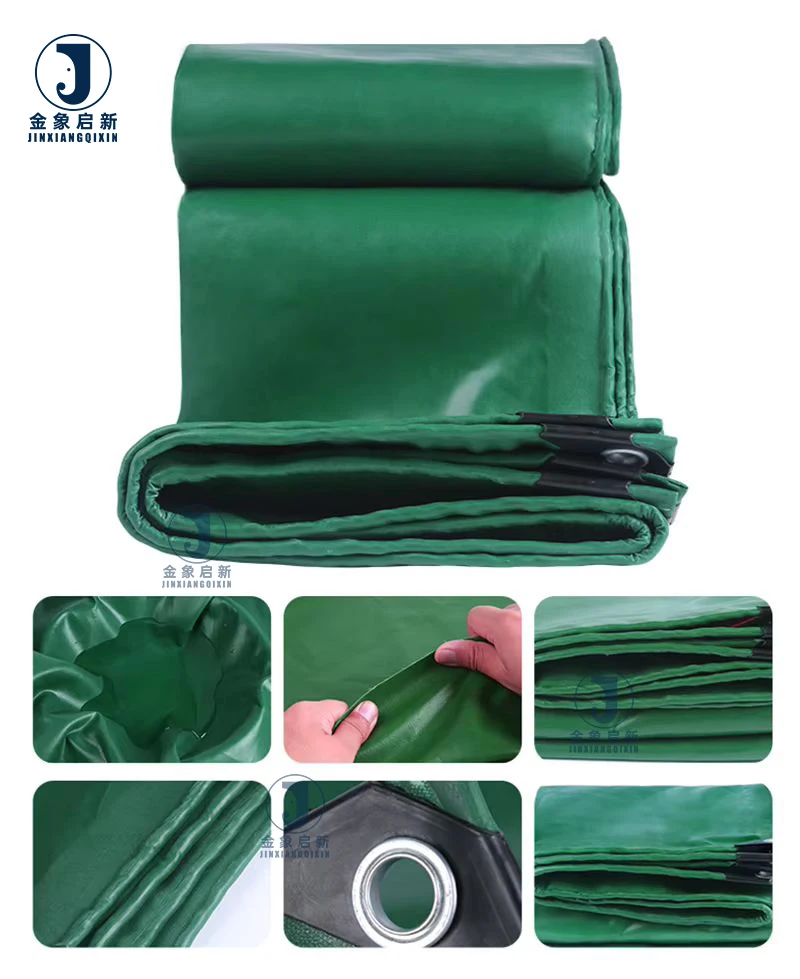
Description
Roll-to-roll weight traceability — every roll of PVC coated tarpaulin fabric is weighed individually and logged against the quoted GSM before dispatch, with a pre-shipment inspection record you can audit on arrival.
Technical Specifications
| Parameter | Value |
|---|---|
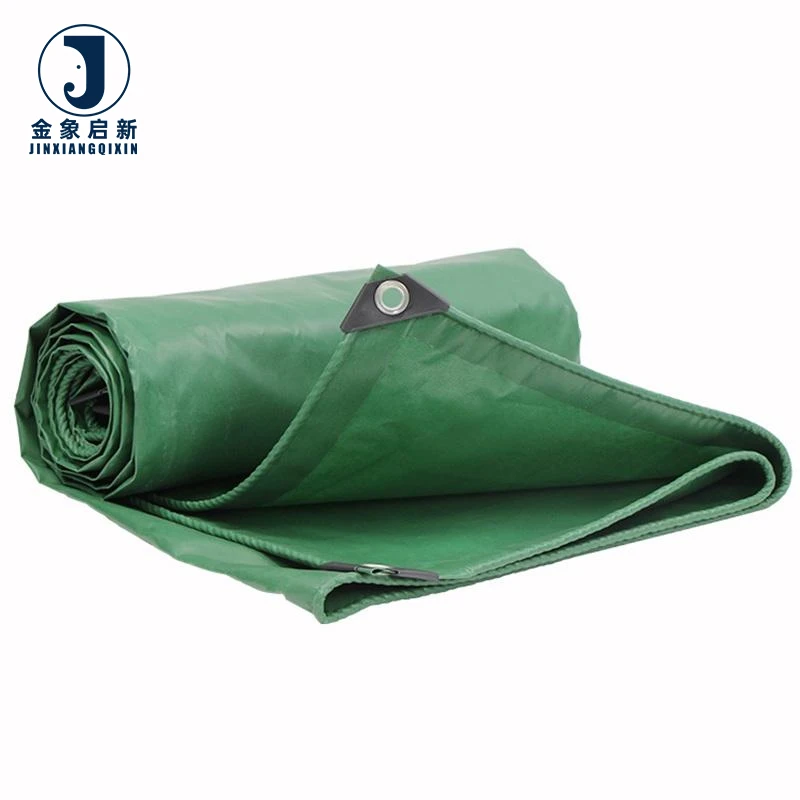
| Product Type | PVC Coated Tarpaulin Fabric |
| Base Fabric | 500D×500D polyester woven substrate |
| Coating Material | PVC coated on both sides of polyester scrim |
| Weight Range | 450–900 g/m² |
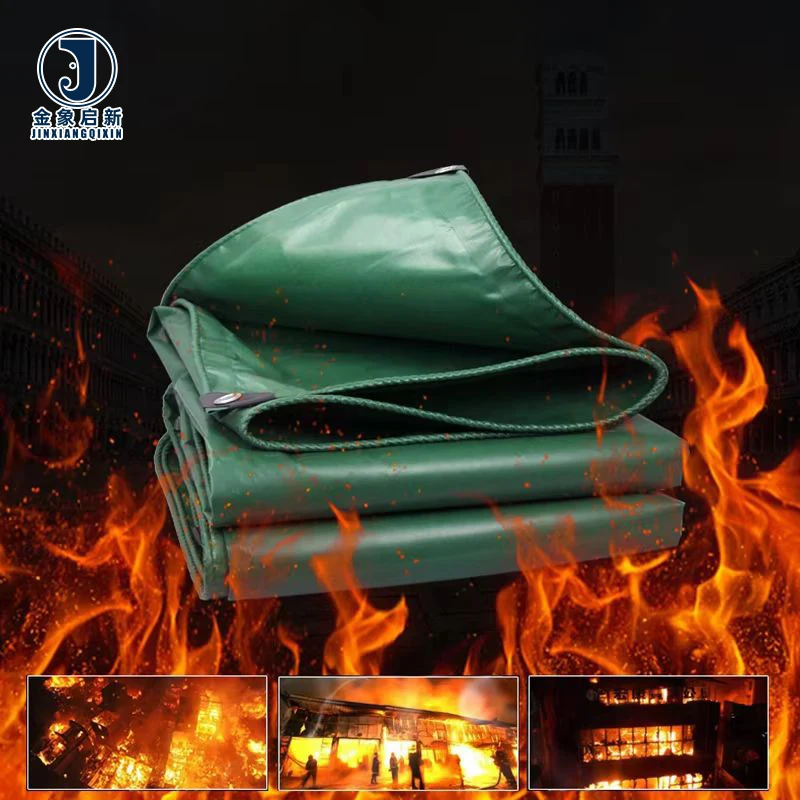
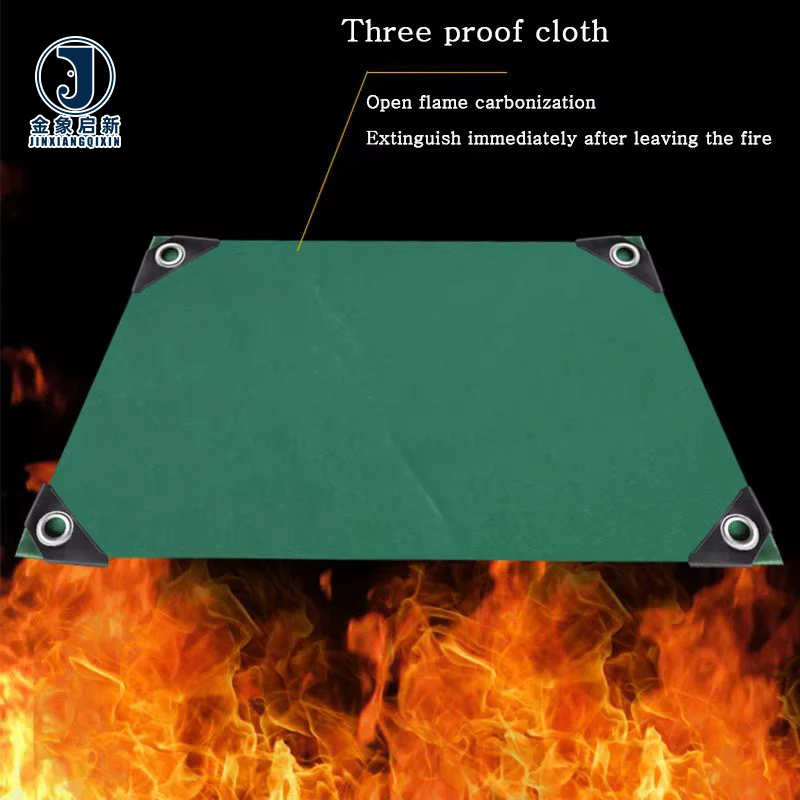
| Flame Retardancy | Flame retardant (grade not stated in source — confirm the grade required for your market) |
| UV Resistance | Anti-UV treatment (test basis not stated in source — specify your regional standard at inquiry) |
| Waterproof Performance | Fully waterproof coated construction |
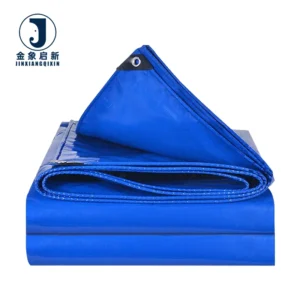
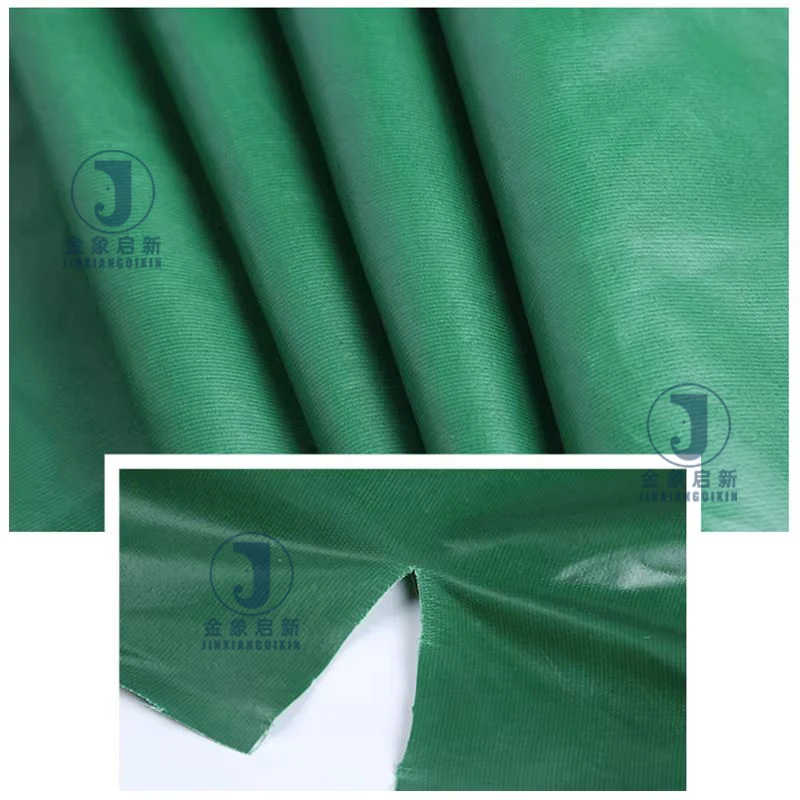
| Surface Finish | Smooth, leather-like texture |
| Abrasion Resistance | High abrasion resistance for heavy-duty exposure |
| Repairability | Hot air weldable for on-site or workshop repair |
| Standards Referenced | ISO, CE |
Application Suitability
| Application | Exposure & Requirement |
|---|---|
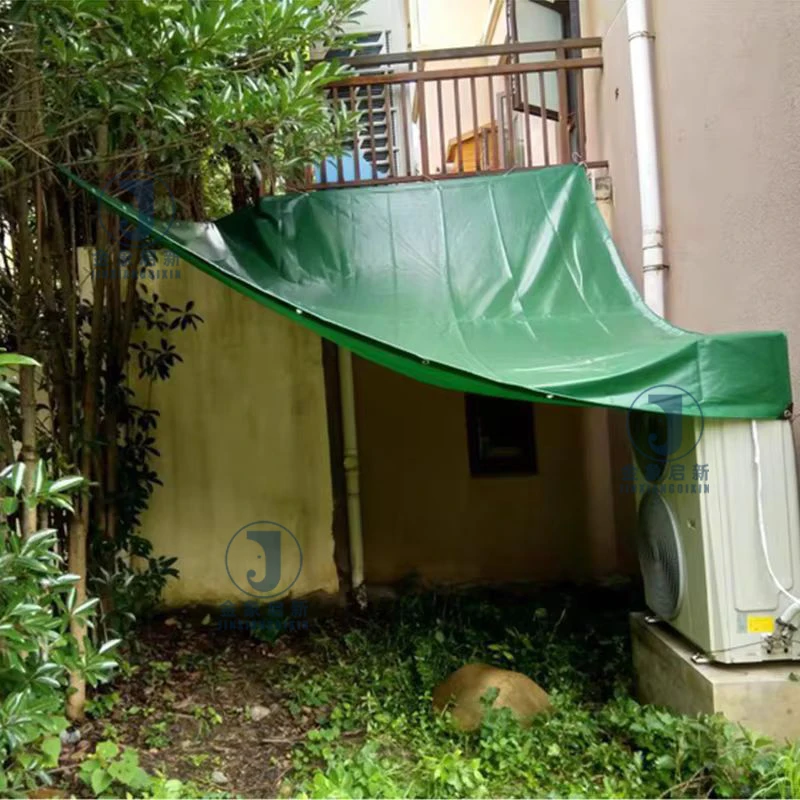
| Truck and trailer covers | Constant flexing at load points, road debris abrasion, UV exposure during long-haul transit |
| Vehicle and machinery covers | Outdoor storage, weather cycling, contact with oils and greases on equipment surfaces |
| Construction site and equipment covers | Prolonged UV exposure, wind-driven rain, physical abrasion from scaffolding and materials |
| Wood pile covers | Moisture ingress prevention, fungal growth avoidance, seasonal temperature swings |
| Awning and tent fabrication | Repeated folding and unfolding, UV degradation over seasons, tension stress at grommet lines |
Why GSM Alone Fails Wholesale Buyers on Coated Fabric Rolls
GSM tells you how heavy the roll is, not whether the fabric will hold under load.
I have seen wholesale buyers receive PVC coated tarpaulin fabric rolls where the stated weight matched the quotation on paper, yet the material felt noticeably thinner once unrolled on the warehouse floor. The coating weight and base fabric denier together determine how the roll performs when it is cut, welded, and put under tension. A roll that is light on polyester yarn but heavy on filler compound will show the right GSM on the scale and still tear at the seam under a loaded trailer [NEED_CITE: tensile and tear test methods for coated fabrics per ISO 1421]. For distributors and importers moving container loads across borders, a GSM discrepancy discovered at destination means an entire shipment is in dispute — not just a single defective roll.
How Roll Consistency Protects Your Inventory Margin
When a distributor stocks multiple grades of PVC coated tarpaulin fabric, the cost of a single off-spec roll multiplies across the container. If one roll arrives with a different surface texture or a shade variation from its neighbours, your downstream fabricators notice the mismatch the moment two panels are installed side by side. We control coating weight at every stage of the production line, which means the rolls you receive in a single shipment carry the same hand-feel, gloss level, and measured GSM across the full batch. This consistency is what lets you sell confidently to fabricators without absorbing return claims on material that simply does not match the rest of the order.
Colour Matching Across Container-Load Quantities
Colour variation between rolls in the same order is one of the most frequent complaints from wholesale tarpaulin buyers [NEED_CITE: batch colour consistency standards in coated textile manufacturing]. When you order a full container of PVC coated tarpaulin fabric in a single colour reference, every roll is produced in one continuous coating run wherever possible. Where multiple production runs are necessary to fill the order, we flag the batch boundaries on the packing list so your warehouse team can allocate rolls from the same run to each downstream customer. This prevents the scenario where a fabricator installs two awning panels from different runs and sees a visible colour shift in direct sunlight.
Reading the Spec Sheet Beyond the Weight Column
The 500D×500D polyester base fabric in this PVC coated tarpaulin fabric provides dimensional stability that matters more than GSM alone when the material is tensioned across a frame or a load. Denier describes the thickness of the individual yarns in the warp and weft — higher denier yarns resist tear propagation because a single nick must break through thicker filaments before the tear spreads. The PVC coating bonded to both sides of this scrim adds waterproof sealing and determines how the fabric behaves during hot air welding. A coating that is too thin will not flow properly at the weld seam, while a coating that is too thick can make the roll stiff and difficult to handle on a cutting table. The 450–900 g/m² weight range covers light-duty covers through heavy-duty truck side curtains, and the right grade within that range depends on the mechanical stress the finished product will face [NEED_CITE: relationship between base fabric denier and tear strength in PVC coated textiles]. The smooth, leather-like surface finish also influences how dirt and road film adhere to the fabric — a smoother surface releases contaminants more easily during routine washing, which matters for fleet operators who maintain a clean vehicle appearance.
The Hidden Cost of Choosing the Wrong Roll Grade
A distributor who stocks a single lightweight grade for all applications will eventually field complaints from fabricators whose welded seams fail under load. The weld line is only as strong as the coating that flows across it, and a lightweight coating on a high-stress truck cover will crack at the flex point long before the base fabric itself shows wear [NEED_CITE: seam failure modes in PVC coated fabric under cyclic flexing]. Conversely, overspecifying the weight for an awning application means your customers pay for material mass they do not need and struggle with a stiff fabric that does not fold cleanly. Matching the roll grade to the end-use application — and verifying that the flame retardant or anti-UV treatment carries a test report your market recognises — avoids both the early-failure claims and the overstock of unsaleable heavy rolls.
What Consistent Supply Means for Wholesale Operations
Our three full production lines and 36 sets of professional equipment support bulk capacity without shifting your order to the back of the queue when demand spikes. The 10-person R&D team handles custom width requests and sample development within days, so you can confirm colour and hand-feel before committing to a full container. Dedicated QA/QC runs at every production stage with full inspection before shipment, which is why the pre-shipment weight log exists for every roll you receive. Nearly 30 years of focused coated fabric production means the process controls that govern coating adhesion and weight accuracy are embedded in the line, not added as an afterthought. Samples are developed rapidly for custom requirements, letting you validate new stock-keeping units with your downstream fabricators before placing volume orders.
Documentation & Verification
- Material specification sheet listing exact GSM, 500D×500D base fabric denier and PVC coating weight per roll
- Pre-shipment inspection record with roll-by-roll weight measurement and colour reference check
- Test reports for UV and flame-retardant grades matched to the standards specified on your purchase order
- Roll packing list detailing net weight, gross weight and CBM for container loading verification
- ISO and CE certificates covering the production facility and quality management system
Fabrication, Handling & Storage
- Hot air welding temperature should match the PVC coating thickness within the 450–900 g/m² range to achieve full seam adhesion
- Store rolls upright on end-caps to prevent flat-spot creasing on the smooth leather-like surface
- Allow cold-transported rolls to reach workshop temperature before unrolling to avoid coating stiffness and cracking
- Use mild detergent for cleaning — avoid solvents that degrade the PVC coating bond on the polyester scrim
- Plan cutting layouts to minimise off-cuts from the available roll width and reduce waste per container load
What to Include in Your Inquiry
Tell us the end-use application and the mechanical stress the finished product will face so we can recommend the appropriate grade within the 450–900 g/m² range. Specify your target market’s fire safety or UV testing requirements so we can match the correct treatment and supply a recognised test report. Indicate the roll widths you need, the colour reference or custom colour you are targeting, and whether you require full container loads of a single grade or mixed-grade consolidation for your warehouse.
Frequently Asked Questions
Q: How is GSM verified on each roll before shipment?
A: Every roll is individually weighed on calibrated scales and the result is recorded against the quoted GSM on the pre-shipment inspection report. This document accompanies the shipping paperwork, so you can audit the measured weight for each roll when the container arrives at your warehouse without needing your own sampling protocol.
Q: What is the colour consistency tolerance across rolls in one container?
A: We aim to produce your full container order in a single coating run wherever capacity allows. When multiple runs are unavoidable, batch boundaries are clearly marked on the packing list so your team can allocate same-batch rolls to each customer, preventing visible shade differences when two panels are installed adjacent to each other.
Q: Which roll widths and lengths are stocked versus made to order?
A: Standard widths and common GSM grades are held in stock for faster dispatch. Custom widths, non-standard colours, and specific flame retardant or anti-UV treatment grades are produced to order. Request a quotation with your required width, length, colour reference, and any treatment specifications so we can confirm lead time and minimum order quantities.
Q: Can I get a test report for UV or flame-retardant treatment?
A: Yes — when your purchase order specifies a flame retardant grade or a UV test standard, we supply the corresponding test report from a recognised laboratory. Provide your target market’s regulatory requirement at the inquiry stage so we can confirm that the available treatment grade satisfies your local compliance standard before production begins.