Description
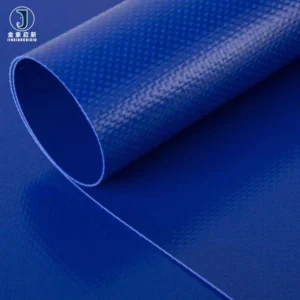
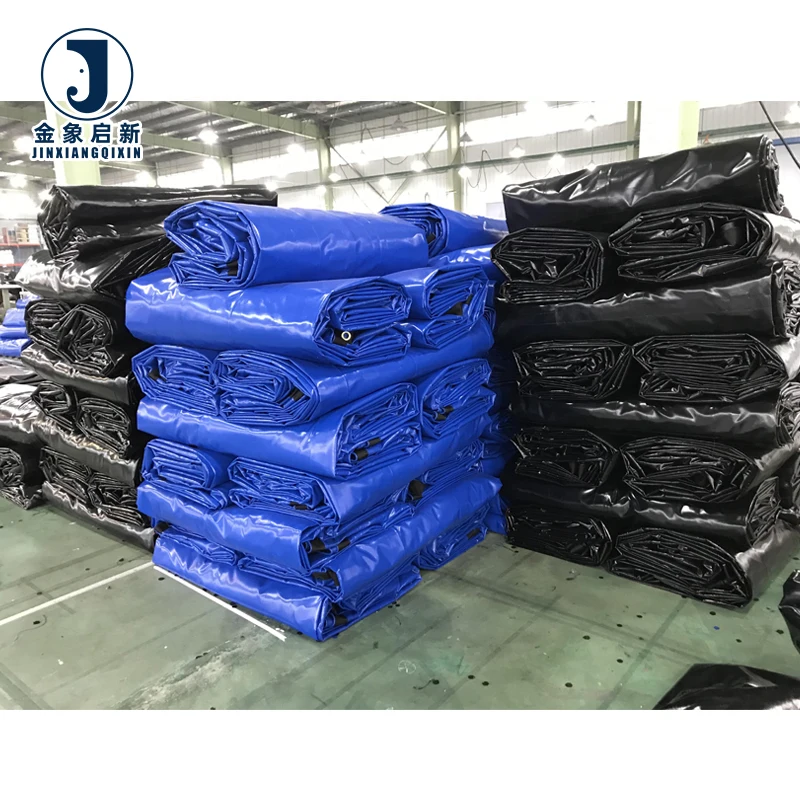
Bulk Roll Consistency — batch-to-batch GSM and colour verified across every roll before it leaves the production line, ensuring uniform performance when multiple PVC Truck Cover rolls are fabricated side by side.
Technical Specifications
| Parameter | Value |
|---|---|
| Product Type | PVC Truck Cover |
| Base Fabric Construction | 1000 × 1000 Denier |
| Mesh Count | 20 × 20 |
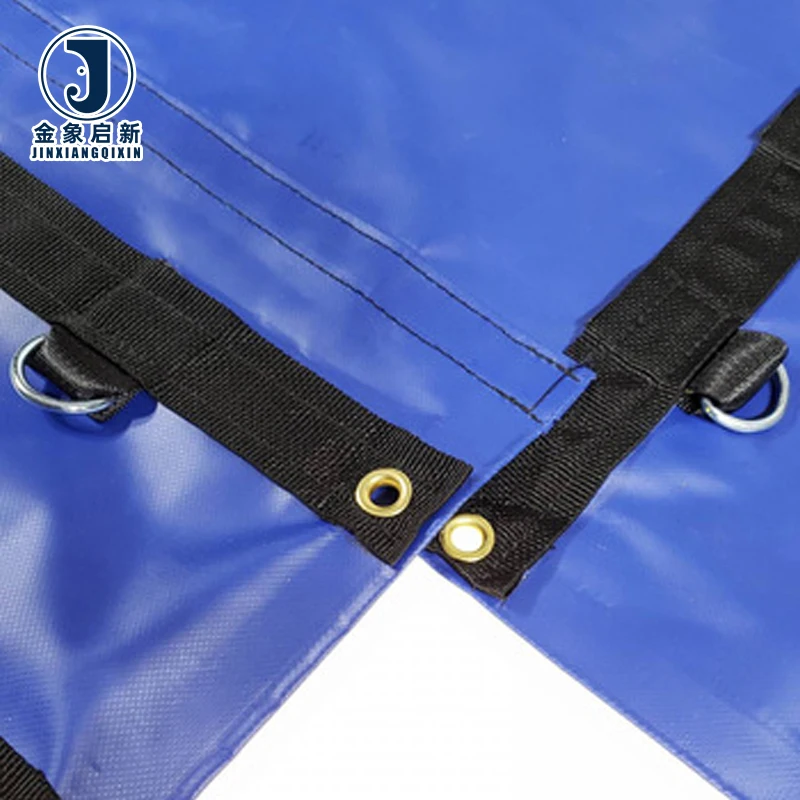
| Coating Material | PVC (Vinyl) |
| Nominal Weight | 610 GSM (18 oz) |
| Thickness | 0.70 – 1.0 mm |
| Tensile Strength (Warp) | 2000 – 2500 N/5cm |
| Tensile Strength (Weft) | 1800 – 2200 N/5cm |
| Operating Temperature | -35 °C to 70 °C |
| Flame Retardant Grade | Available — confirm the grade required for your market (grade not stated) |
| UV Treatment | Available — test basis to be confirmed per specification (test basis not stated) |
| Anti-Static | Available — confirm certification required for your site (not stated) |
| Certification | ISO, CE |
Application Suitability
| Application | Exposure & Requirement |
|---|---|
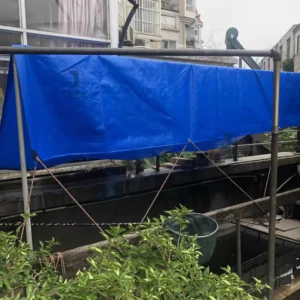
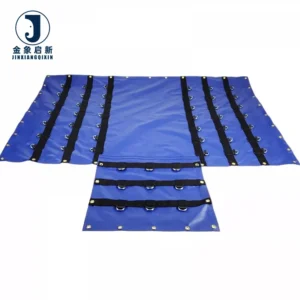
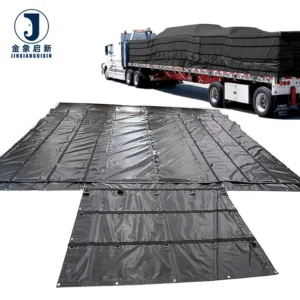
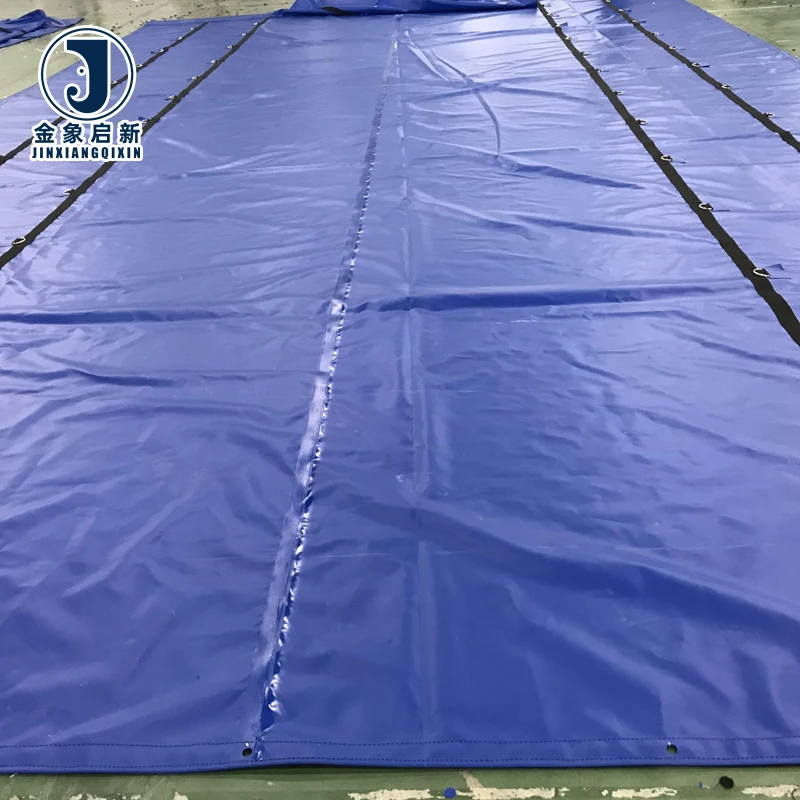
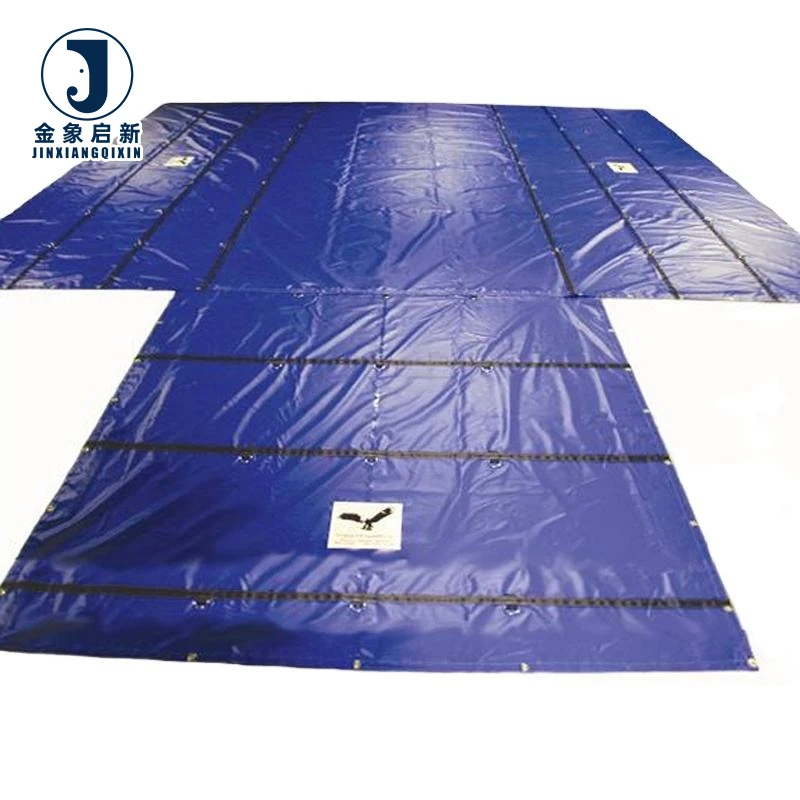
| Flatbed lumber transport | Stacked timber loads, rainwater ingress, UV radiation, road debris impact, repeated tarp folding and unfolding at job sites |
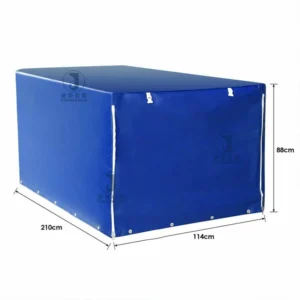
| Steel cargo hauling | Heavy coils, rods and sheet stacks requiring low-profile four-sided coverage and abrasion resistance at load contact points |
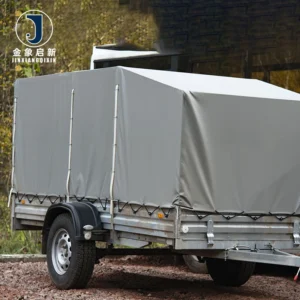
| Building material distribution | Wall panels and prefabricated components needing full weather shielding during multi-stop regional deliveries |
| Fleet operator roll stock | Tarpaulin distributors cutting and fabricating finished truck covers from bulk rolls, requiring consistent GSM and colour across the order |
Why Quoted GSM Does Not Always Match the Roll You Receive
The weight printed on the quotation is meaningless unless it is independently verified on the roll that arrives at your warehouse.
Buyers who source PVC Truck Cover fabric by the roll frequently report that the material weighs less than the agreed specification once it is unwrapped and sampled. A shortfall of even a small percentage across a container load translates into thinner coating, reduced tensile reserve and a shorter service life on the road. The problem is rarely caught until the tarp is already in use and failing prematurely at flex points [NEED_CITE: tensile and tear test methods for coated fabrics per ISO 1421]. Verification must happen before dispatch, not after the fabric has been cut and welded into finished covers.
Consistent Roll Weight Across an Entire Container Order
Maintaining 610 GSM across every roll in a multi-roll PVC Truck Cover shipment demands tight control over the coating process. The PVC compound viscosity, doctor blade gap and line speed must remain stable throughout the production run. When these variables drift, some rolls come off the line heavier and others lighter, even though the average may still match the target. Buyers stocking flatbed sizes for fleet operators need assurance that each individual roll meets the quoted weight, not just the batch average.
Colour Match That Holds From First Roll to Last
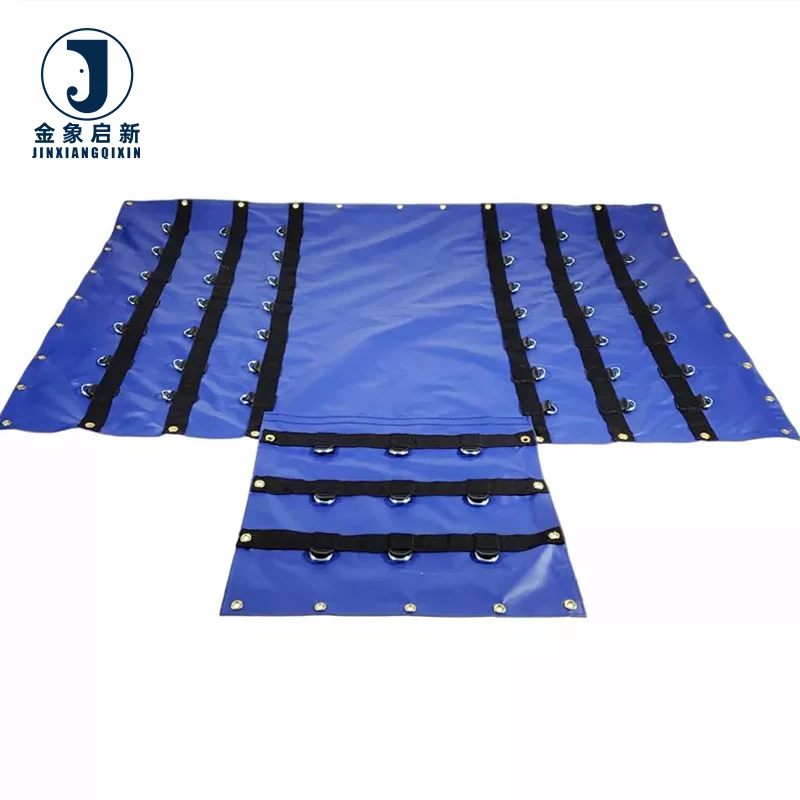
A second problem emerges when rolls from the same order show visible shade variation once they are fabricated into covers and installed side by side on adjacent trailers. Pigment dispersion consistency and oven temperature uniformity across the coating line are the controlling factors. Our production protocol assigns a single colour reference to each order and tracks it through every roll, so the black or blue PVC Truck Cover fabric you receive presents a uniform appearance across the entire shipment [NEED_CITE: colour fastness and batch consistency standards for coated technical textiles].
How Base Fabric Density and Coating Weight Interact
The 1000 × 1000 denier base fabric with a 20 × 20 mesh count provides the structural skeleton of this PVC Truck Cover material. The denier determines individual yarn strength, while the mesh count sets the number of yarns per unit area in both warp and weft directions. Coating weight fills the interstices and builds the surface layer. Together they produce the stated tensile strength of 2000–2500 N/5cm in the warp and 1800–2200 N/5cm in the weft. A high GSM on a low-denier base fabric may feel heavy but can still tear easily because the yarns themselves lack the strength to resist crack propagation once the coating is breached.
The Hidden Cost of Specifying on Price Per Kilogram Alone
When purchasing decisions are driven solely by the lowest cost per kilogram of PVC Truck Cover fabric, the supplier has an incentive to reduce coating weight or substitute a lighter base fabric while keeping the quoted GSM nominally intact through filler loading. The result is a roll that passes a quick hand-feel check but underperforms in tensile and tear tests. Over a fleet of flatbed trailers, the cumulative cost of premature tarp replacement and cargo damage claims far exceeds the initial saving on the fabric [NEED_CITE: total cost of ownership analysis for transport tarpaulin materials]. Specifying by verified GSM, documented base fabric denier and tested tensile values removes this risk.
Why Fabricators Choose This Supply Channel
Three full production lines and 36 sets of professional equipment give us the capacity to fulfil container-load PVC Truck Cover orders within typical multi-week lead times, even when custom widths or colours are involved. A dedicated ten-person R&D team develops samples within days for buyers who need to confirm hand feel, colour and weldability before committing to volume. Quality assurance is applied at every production stage, with 100 percent inspection before any roll is packed for dispatch. The coating process control we maintain over adhesion and weight is the same whether the order is one roll or a full container, ensuring the fabric you evaluate in sampling is identical to the fabric you receive in production.
Documentation & Verification
- Material specification sheet stating 610 GSM, 1000 × 1000D base fabric and coating weight per roll
- GSM test report from in-line measurement matched against the quoted weight before dispatch
- Colour reference card and batch consistency record for the entire PVC Truck Cover order
- ISO and CE certificates covering the production facility and quality management system
- Pre-shipment inspection record with documented 100 percent QA check on every roll
- Certificate of origin and customs documentation for international container shipments
Fabrication, Handling & Storage
- Heat-weld parameters should be calibrated to the 0.70–1.0 mm thickness range to avoid under- or over-fusing the PVC coating
- Store rolls upright on pallets to prevent flat-spot creases that become permanent in the 610 GSM heavy-grade fabric
- Allow cold-stored rolls to acclimatise before unrolling to avoid cracking the PVC coating below its -35 °C lower limit
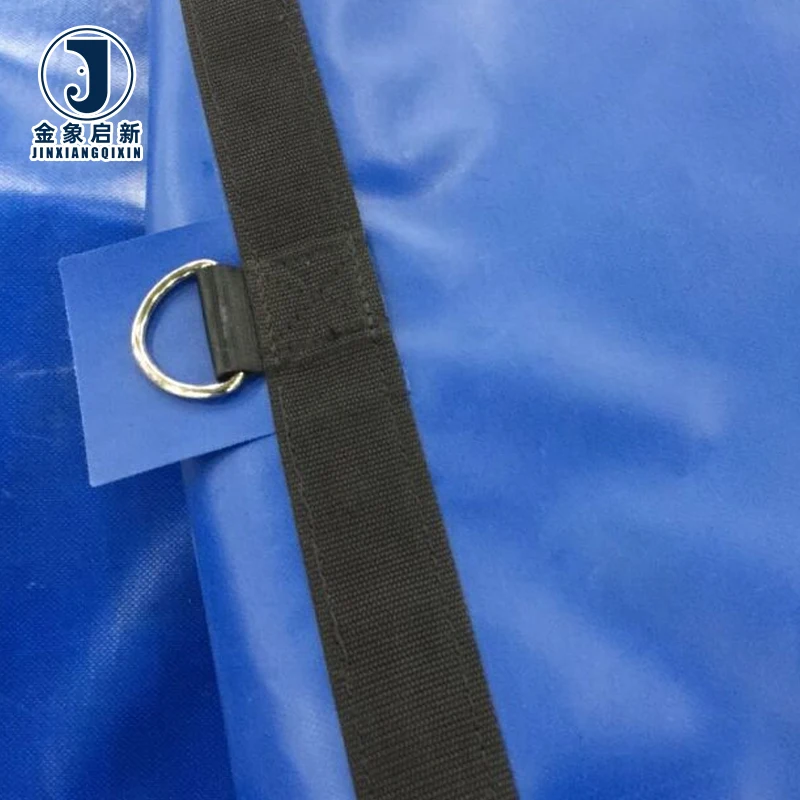
- Use compatible PVC-based adhesive for field repairs to ensure chemical bonding with the vinyl coating surface
- Plan cutting layouts around the roll width to minimise offcuts and welded seams on finished truck covers
- Clean with mild detergent only; solvent-based cleaners can degrade the PVC surface and affect colour consistency
Preparing Your PVC Truck Cover Inquiry
To help us recommend the right roll specification, provide the flatbed trailer dimensions you need to cover, the typical cargo types and the environmental exposure your fleet encounters. If your market requires a specific flame retardant or anti-static certification, include the standard reference so we can confirm the correct grade. Let us know the annual roll volume and whether you need custom width, colour or printed branding. We can develop a sample for your evaluation before you commit to a production order.
Frequently Asked Questions
Q: How do you verify the GSM on arrival matches the quote?
A: Every roll of PVC Truck Cover fabric is weighed and measured during our pre-shipment inspection. The recorded GSM is compared against the quoted 610 GSM specification, and any roll that falls outside tolerance is rejected before packing. The inspection record is included with your shipping documentation so you can cross-check on arrival.
Q: What is the MOQ for custom colour or width?
A: Minimum order quantities depend on the specific colour and width requested. Standard black and blue in the 20 × 20 mesh construction carry the lowest thresholds. Custom Pantone colours or non-standard roll widths require a dedicated production run, and we confirm the MOQ along with lead time when you submit your specification.
Q: Can you match colour across multiple rolls in one order?
A: Yes. We assign a single colour reference to each PVC Truck Cover order and monitor pigment dispersion throughout the coating run. Every roll is checked against the reference during pre-shipment inspection. This protocol ensures that covers fabricated from different rolls in the same shipment present a uniform appearance when installed side by side.
Q: What certifications back the UV and flame-retardant claims?
A: Flame retardant and UV treatments are available in multiple grades. Because regulatory requirements differ by market, we ask you to specify the standard your end application requires. We then supply the corresponding test report with your PVC Truck Cover shipment to confirm the fabric meets that specific grade.