Description
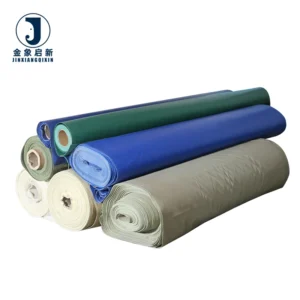
Production Line Control — three dedicated coating lines maintain roll-to-roll GSM and colour consistency for wholesale buyers sourcing volume stock.
Technical Specifications
| Parameter | Value |
|---|---|
| Product Type | PVC Tarpaulin Roll |
| Base Fabric | High-strength polyester mesh fabric |
| Coating Material | PVC |
| Coating Technology | Laminated & Hot-melt Coating |
| Weight (GSM) Options | 350 gsm, 420 gsm, 500 gsm, 550 gsm, 600 gsm, 750 gsm |
| Total Thickness Options | 0.32 mm, 0.35 mm, 0.40 mm, 0.45 mm, 0.50 mm, 0.65 mm |
| Roll Width Options | 2.0 m, 2.1 m |
| Roll Length Options | 75 m (for 2.0 m width), 50 m (for 2.1 m width) |
| Surface Finish | Glossy or Matte |
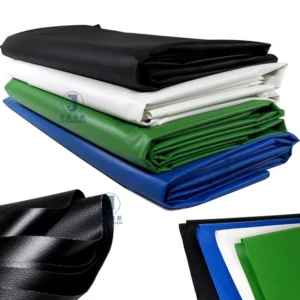
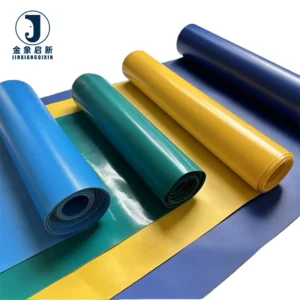
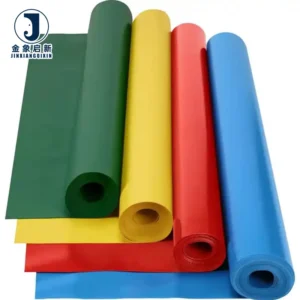
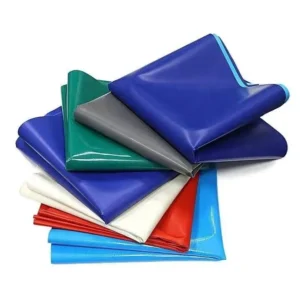
| Color Options | Blue, Red, Yellow, Light Blue, Grey (Customizable) |
| Waterproof Construction | Double-sided fully waterproof |
| UV Treatment | Sunproof (test basis not stated) |
| Anti-Mildew | Treated (grade not stated) |
| Anti-Static | Treated (standard not stated) |
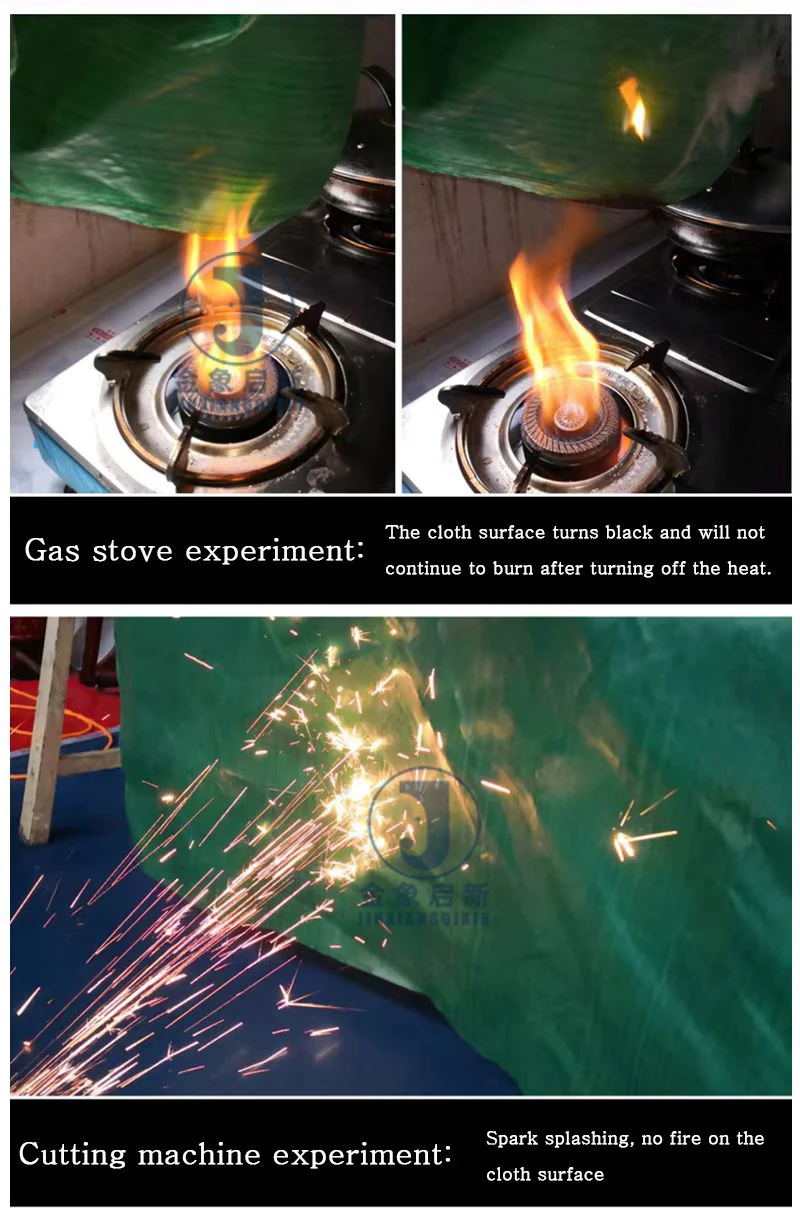
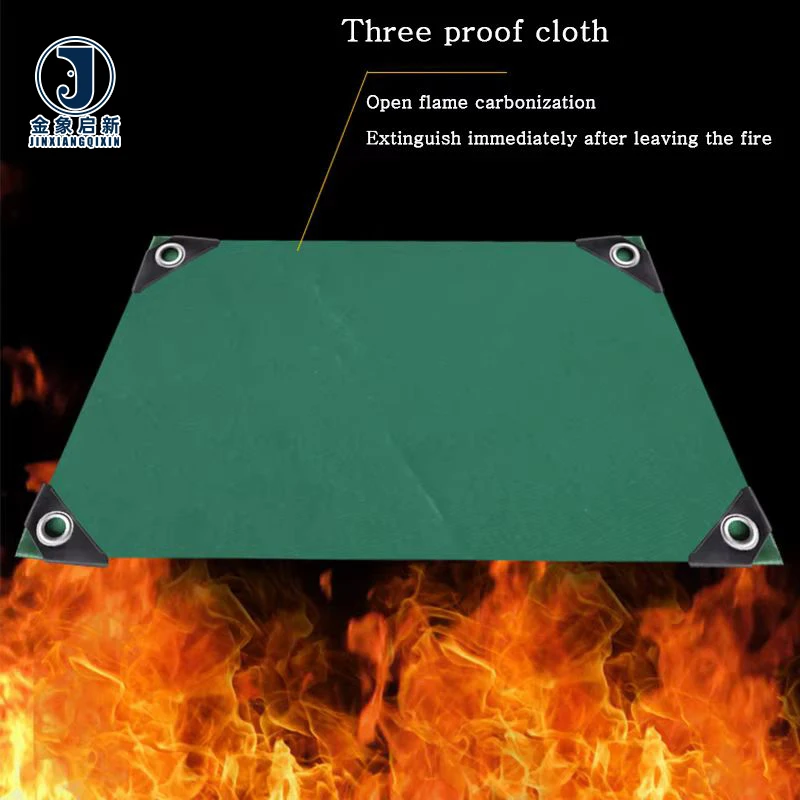
| Flame Retardant | Available in flame retardant grades — confirm the grade required for your market |
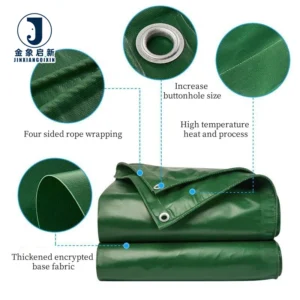
| Key Features | Cold crack resistant, high tenacity polyester yarns, good flexibility, outstanding tearing strength for welding, color fastness |
Application Suitability
| Application | Exposure & Requirement |
|---|---|
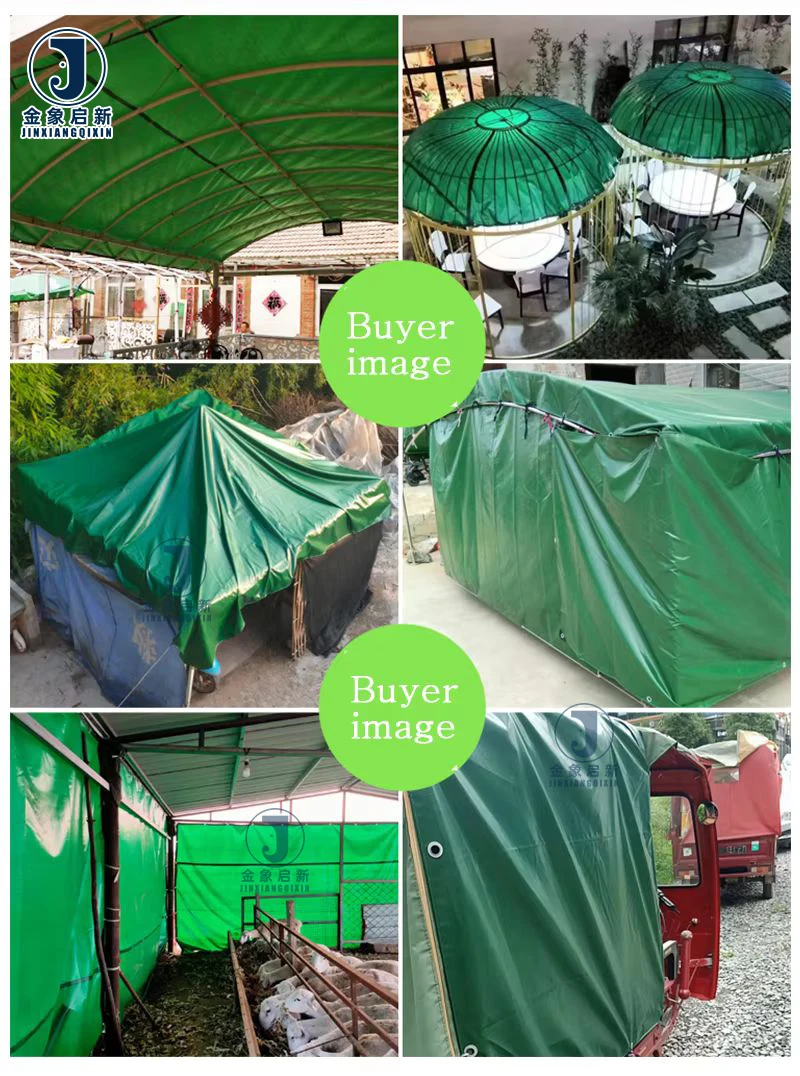
| Tarpaulin distribution and import | Container-load volume purchasing with batch-to-batch GSM and colour match across multiple grades for regional resale |
| Tent and awning fabrication | Roll-stock purchasing in standard widths, requiring clean hot-melt coated surfaces for welding and seam integrity |
| Inflatable and membrane structure manufacturing | Dimensional stability under tension, consistent coating adhesion across roll length, reliable air-holding performance |
| Truck and trailer side curtain building | Standard 2.0 m or 2.1 m roll width for panel cutting, flex fatigue resistance at hinge and buckle points |
| Agricultural pond and reservoir lining | Continuous water contact, soil chemistry exposure, puncture resistance from substrate irregularities |
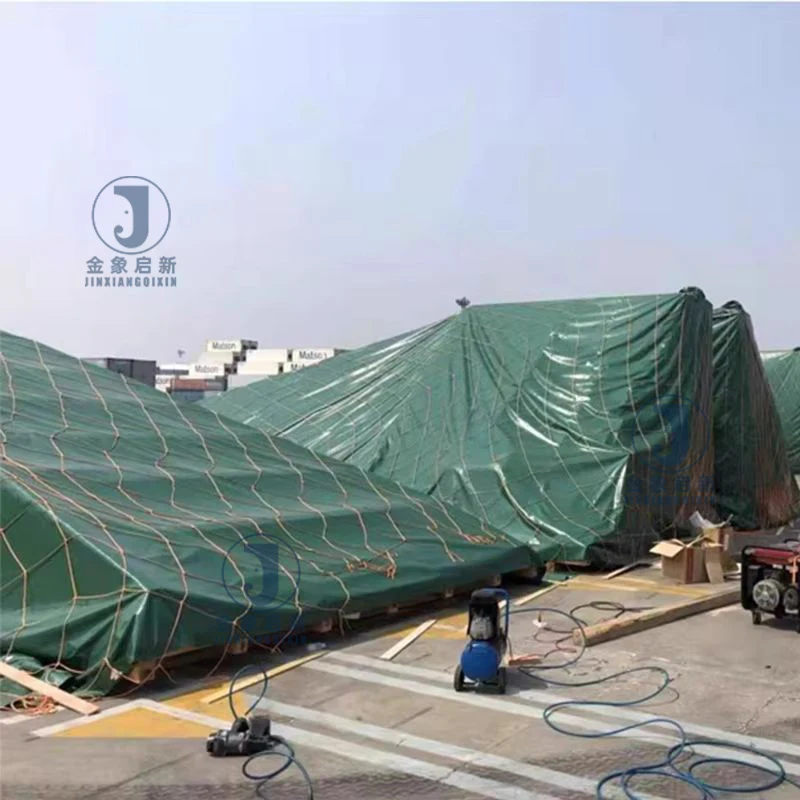
| Outdoor equipment and cargo covering | Weather exposure, handling abrasion, UV degradation over extended service periods |
Why the GSM on Your Invoice Rarely Matches the Roll You Receive
A quoted weight means nothing unless every roll is verified against it before loading.
When buying PVC coated tarpaulin roll wholesale, the most frequent complaint across the distribution chain is receiving material that measures lighter than the agreed specification. A buyer specifies 550 gsm, receives rolls averaging closer to 500 gsm, and the margin disappears into customer returns and replacement claims. This variance happens when coating weight is controlled at the batch level but never checked roll-by-roll after slitting [NEED_CITE: coating weight variance in laminated PVC tarpaulin production]. The discrepancy compounds across a full container — a few grams per square metre shortfall on a 2.0 m × 75 m roll represents kilograms of missing material per roll.
Roll Width and Container Loading Efficiency
For wholesale importers, the decision between 2.0 m and 2.1 m roll widths affects more than cutting yield. A 2.0 m × 75 m roll and a 2.1 m × 50 m roll present different net weights and volumetric profiles, which directly influence how many rolls fit a 40-foot container and what the per-roll freight cost becomes. Hot-melt coating technology produces a uniform PVC layer across both widths, so the choice between them comes down to downstream fabrication requirements and logistics economics rather than material quality differences. PVC tarpaulin roll stock in these standard widths allows distributors to hold inventory for multiple customer segments — from tent fabricators needing narrower panels to truck curtain builders requiring full-width drops.
Coating Consistency Across a Multi-Roll Order
The challenge with PVC coated tarpaulin roll wholesale purchasing at container scale is maintaining identical coating weight, colour shade, and surface finish from the first roll to the last [NEED_CITE: batch-to-batch colour tolerance in coated fabric manufacturing]. Laminated and hot-melt coating processes each produce different surface characteristics — hot-melt tends toward a smoother, more uniform gloss, while laminated construction can offer thicker total build. When a distributor orders fifty rolls of 600 gsm in grey with a matte finish, any drift in pigment dosing or coating temperature between production runs shows up as visible shade variation once the rolls are unrolled side by side at the warehouse. Dedicated in-process quality checks at the coating head and again after slitting keep this drift within acceptable commercial tolerances.
Reading the Weight-to-Thickness Relationship
The specification range pairs each GSM grade with a corresponding thickness — 350 gsm at 0.32 mm through to 750 gsm at 0.65 mm — but these two numbers tell different parts of the story. GSM reflects total material mass per square metre, combining base fabric weight and coating weight together. Thickness measures the calliper of the finished composite. A higher GSM achieved through heavier coating rather than denser base fabric will show greater thickness but not necessarily higher tensile strength. The high-strength polyester mesh fabric provides the structural backbone; the PVC coating provides waterproofing, surface protection, and weldability. For wholesale buyers advising downstream customers, understanding which portion of the weight comes from the base fabric versus the coating helps match the correct grade to applications that demand either flexibility or rigidity.
The Hidden Cost of Specifying by GSM Alone
When a distributor stocks multiple grades for resale, the temptation is to buy the lowest-priced roll at each GSM level and assume the end-use performance will follow. But two rolls both labelled 550 gsm can perform very differently if one achieves its weight through a lighter base fabric with thicker coating, while the other uses a denser mesh with a thinner coat. The first will feel stiffer, may crack at fold lines in cold conditions, and will show lower tear propagation resistance. The second will flex better and weld more predictably. Without a material specification sheet breaking out base fabric denier and coating weight separately, buyers are purchasing blind [NEED_CITE: relationship between base fabric denier and tear strength in PVC tarpaulin]. The cold crack resistance stated across the range matters for markets with winter logistics or outdoor storage, but its practical limit depends on the base fabric construction, not just the total GSM.
What Consistent Supply Actually Requires
Maintaining PVC coated tarpaulin roll availability across six weight grades, two widths, and multiple colours demands more than warehouse space. Three full production lines allow parallel runs — one line producing 500 gsm in standard blue while another switches to a custom colour at 600 gsm — reducing the lead time penalty for mixed-grade orders. The ten-person R&D team develops colour samples before bulk commitment, so a distributor can approve a shade against a Pantone reference before a full container is produced. A 100% pre-shipment inspection protocol checks roll weight, width, length, surface quality, and colour against the order specification, generating an inspection record that ships with the documentation package.
Documentation & Verification
- Material specification sheet stating GSM, base fabric type, and coating method for each roll grade ordered
- Pre-shipment inspection record confirming weight and colour match against purchase order line items
- Roll packing list detailing roll count, net weight, and container loading plan for freight forwarding
- Certificate of origin and customs documentation prepared for destination-country import requirements
- UV and flame retardant test reports provided where applicable to the specific grade ordered
Fabrication, Handling & Storage
- Hot-melt coated surfaces weld cleanly at standard RF or hot-air temperatures — test seam settings on each GSM grade before production runs
- Matte finish rolls accept solvent-based and UV-curable inks for printed branding; verify ink adhesion on sample before full print run
- Store rolls upright on end-caps to prevent flat-spotting on the PVC coating; avoid stacking rolls horizontally in hot warehouse conditions
- Unroll and allow 2.1 m × 50 m rolls to relax at ambient temperature before cutting, especially after cold-weather transit
- Cut 2.0 m × 75 m rolls on supported flat tables to prevent stretching the polyester mesh during panel layout
What to Include in Your Inquiry
Provide the GSM grades and roll widths your market requires, along with estimated annual volume by grade. Specify whether glossy or matte finish is preferred, and supply a colour reference if standard options do not match your brand requirements. State any fire classification or anti-static standard your end-use market mandates, so the correct additive package can be confirmed before sampling.
Frequently Asked Questions
Q: How is GSM verified per roll before shipment?
A: Every roll is weighed and measured after slitting. The actual grams per square metre is recorded against the ordered specification, and any roll falling outside tolerance is flagged before packing. A pre-shipment inspection record listing per-roll results ships with the container documentation.
Q: How do you ensure colour consistency across rolls in the same order?
A: Pigment batches are mixed for the full order quantity before coating begins. In-process colour checks at the coating head compare against the approved sample swatch. Rolls from different production runs within one order are cross-checked side by side before packing to confirm shade match.
Q: What are the standard roll dimensions, and can custom widths be ordered?
A: Standard stock widths are 2.0 m at 75 m roll length and 2.1 m at 50 m roll length. Custom widths are available with sample development before bulk production. Lead times and minimum order quantities for non-standard widths depend on the specific GSM grade and colour required.
Q: How are rolls packed for container loading to prevent transit damage?
A: Each roll is wound on a cardboard core, wrapped in protective film, and labelled with grade, colour, and dimensions. A detailed packing list shows roll count, weight per roll, and total container payload. Rolls are loaded upright or horizontal depending on container type and destination handling equipment.
Q: Do you provide UV and flame retardant test reports for specific roll batches?
A: Where UV treatment or flame retardant grades are specified, test reports are generated against the applicable standard and included with the shipment documentation. Confirm the fire classification or UV test method required by your destination market at the inquiry stage so the correct grade is produced.