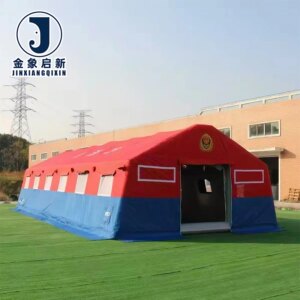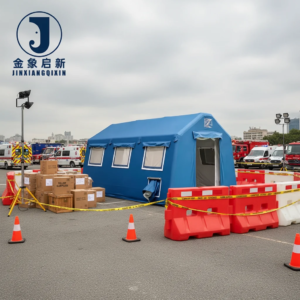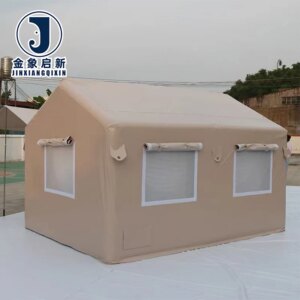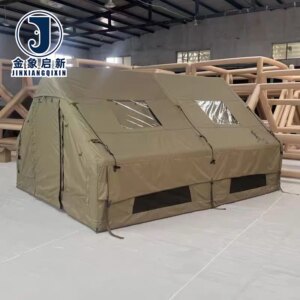


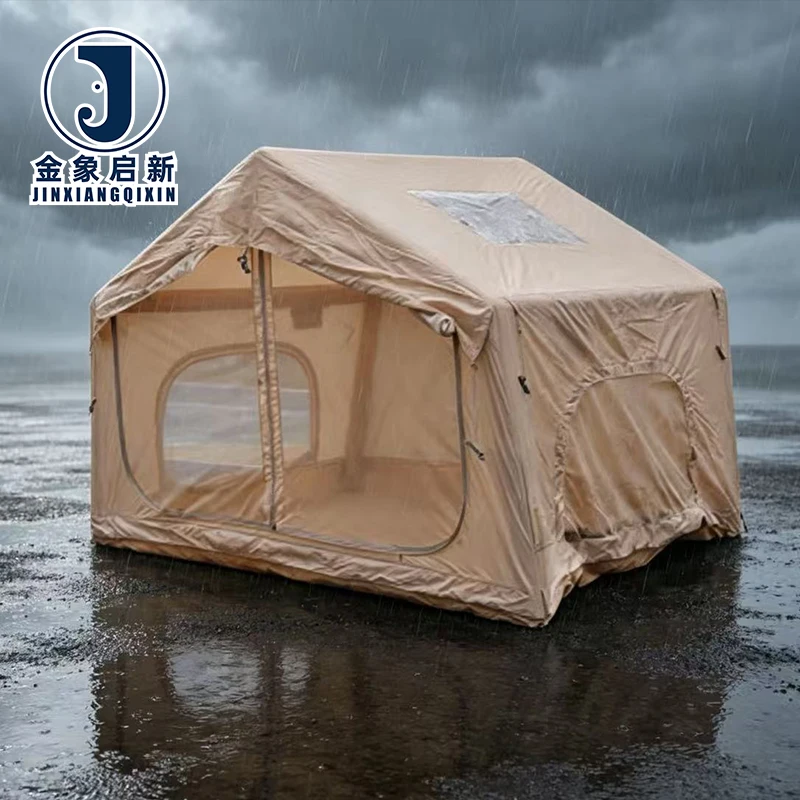

Description
Precision roll-to-roll consistency — every batch of inflatable tent fabric is verified for GSM and colour shade before dispatch, ensuring uninterrupted production runs for glamping tent manufacturers.
Technical Specifications
| Parameter | Value |
|---|---|
| Product Type | Inflatable Tent Fabric |
| Core Material | PVC Tarpaulin |
| Fabric Thickness Range | 0.3mm–0.8mm (OEM/ODM custom options) |
| Waterproof Rating | ≥10,000mm hydrostatic head (source value — verify against manufacturer catalog) |
| UV Treatment | 5+ years outdoor service life (test basis not stated in source) |
| Flame Retardant Grade | EN 13501-1 Class B |
| Anti-Static | Stated (surface resistance / standard not stated in source) |
| Production Facility | 9,180 m² with 3 full production lines |
| Processing Equipment | 36 sets |
| R&D Team | 10 technicians |
| Standards & Certification | ISO 9001, ISO 14001, ISO 45001, CE |
Application Suitability
| Application | Exposure & Requirement |
|---|---|
| Commercial glamping tent manufacturing | Continuous UV exposure, seasonal weather cycling, repeated inflation/deflation stress |
| Inflatable accommodation structures | Waterproof integrity under wind-driven rain, fire safety compliance for guest occupancy |
| Outdoor gear product line integration | Batch colour consistency for branded catalogues, fabric weldability for automated production |
| Modular temporary hospitality venues | Rapid deployment durability, surface cleanability between guest turnovers |
Why Colour Drift Across Rolls Destroys Branded Tent Production
Batch-to-batch shade variation is the most frequent reason branded inflatable tent runs get rejected at the cutting table.
When a glamping operator orders twenty inflatable tents in a signature colour, even a slight tone shift between rolls becomes visible once units are installed side by side across a site. Fabricators absorb the cost of rejected panels, delayed production schedules, and client disputes. The root cause is often inconsistent pigment dosing during the coating stage or switching base resin suppliers between batches without recalibrating colour profiles [NEED_CITE: colour fastness and batch consistency testing for PVC coated fabrics]. For Inflatable Tent Fabric supplied to commercial tent makers, shade uniformity across every roll in an order is a non-negotiable production requirement.
Roll Width Strategy for Tent Panel Cutting Efficiency
Inflatable tent panels follow curved patterns that generate offcut waste when cut from narrow stock. Selecting the right Inflatable Tent Fabric roll width against your nesting layout directly controls material yield and the number of welded seams per structure. Fewer seams mean fewer potential leak paths on pressurised air beams and reduced fabrication labour per unit. Our width options accommodate both standard panel profiles and oversized dome geometries.
Coating Weight Consistency and Weld Parameter Stability
When GSM varies from roll to roll within the same order, fabricators must constantly adjust heat-weld temperature and dwell time to maintain seam integrity. This slows production throughput and introduces the risk of under-welded joints on thinner sections or scorched coating on heavier patches [NEED_CITE: effect of GSM variation on hot-air weld parameters for PVC tarpaulin]. Stable coating weight across an entire container load allows your production team to lock in weld settings and run continuously without interruption.
Thickness, Tensile Behaviour, and Air Beam Performance
The 0.3mm–0.8mm thickness range covers structures from lightweight single-chamber tents to multi-beam commercial glamping units requiring higher inflation pressures. Thicker grades carry greater tensile load before elongation compromises beam shape under wind loading. The base fabric weave density works alongside the PVC coating weight to determine how the material resists tear propagation at stress concentration points — valve cutouts, beam junctions, and anchor attachments. Specifying solely on thickness without considering the underlying fabric construction gives an incomplete picture of structural performance [NEED_CITE: relationship between base fabric denier, weave density, and tear strength in PVC coated textiles].
The Hidden Cost of Accepting Unverified Fabric Shipments
Receiving a container of inflatable tent fabric that measures lighter than the quoted specification forces a choice between absorbing the material shortfall or filing a claim that delays production by weeks. Fabric that arrives without the fire-retardant test documentation required for the destination market can halt an entire glamping project at the compliance review stage. Welded seams that fail prematurely under inflation pressure trace back to coating adhesion inconsistencies that were never caught at incoming inspection [NEED_CITE: common failure modes in PVC inflatable structures related to material defects]. These downstream costs always exceed the savings from choosing a lower-priced roll.
Why Fabricators Source Inflatable Tent Material Here
Three dedicated production lines handle roll stock output at volumes that support full-container orders without extended lead times. A 10-technician R&D team develops custom colour matches and thickness specifications with prototype samples, allowing fabricators to validate weld behaviour and drape before committing to bulk. Every roll undergoes incoming thickness and tensile verification against the purchase specification, with results documented per batch. Custom widths are produced to match your panel nesting patterns, reducing offcut waste. Pre-shipment inspection covers 100% of the order, not a statistical sample.
Documentation & Verification
- Batch-specific quality report covering GSM, thickness, and coating weight verification per roll
- Fire-retardant test certificate to EN 13501-1 Class B included with every shipment
- Colour reference sheet confirming shade match against approved standard for each production run
- Material specification sheet detailing PVC tarpaulin composition and base fabric construction
- Certificate of origin and roll packing list for customs clearance
- Pre-shipment inspection record documenting 100% examination results
Fabrication, Handling & Storage
- Hot-air weld temperature should be calibrated against the specific 0.3mm–0.8mm thickness grade before production runs
- Store rolls upright on pallets to prevent flat-spot deformation of the PVC coating surface
- Allow cold-transported rolls to reach workshop temperature before unrolling to avoid coating crack damage
- Use PVC-compatible solvent cleaners only — aggressive alkaline agents degrade the plasticiser in the coating
- Reinforce valve cutout zones with additional PVC patches to distribute inflation stress concentrations
- Plan panel nesting layouts around the ordered roll width to minimise transverse weld seams on air beams
Specify the Right Fabric for Your Tent Programme
Provide your target inflation pressure, panel dimensions, and annual volume so we can recommend the appropriate thickness grade and roll width. Share the fire safety or building code requirements for your destination markets to confirm the correct certification documentation. If you require colour matching to an existing brand palette, submit your reference standard for sample development.
Frequently Asked Questions
Q: What PVC fabric grades and thickness options are available for inflatable tent production?
A: The range covers 0.3mm to 0.8mm thickness grades, each built on PVC tarpaulin with varying base fabric densities to match different inflation pressures and structural loads. Thinner grades suit lightweight recreational tents while heavier options serve commercial glamping units requiring sustained pressure retention. Custom thickness specifications outside the standard range can be developed through our R&D team.
Q: How is roll-to-roll colour consistency maintained across bulk orders?
A: Pigment formulation is locked to a master colour standard after initial sample approval, and every production batch is measured against this reference before release. Rolls within a single order are drawn from the same coating run where possible to eliminate shade variation. Batch-specific colour verification data ships with each consignment for your incoming quality records.
Q: What are the standard roll widths and can custom widths be ordered?
A: Standard widths are available to suit common tent panel cutting patterns. Custom widths can be produced to match your specific nesting layout, reducing material waste and the number of welded seams per structure. Custom width orders are subject to production minimums — contact us with your required dimensions and volume for confirmation.
Q: What documentation and test reports ship with each roll order?
A: Every shipment includes a material specification sheet, EN 13501-1 Class B fire-retardant test certificate, batch-specific quality inspection report with GSM and thickness data, roll packing list, certificate of origin, and pre-shipment inspection record. Additional compliance documentation for specific market requirements can be arranged during the order confirmation stage.
Q: What is the sample development process for new colour or thickness specifications?
A: Submit your colour reference, target thickness, and end-use description. Our R&D team develops prototype samples for your evaluation of weld behaviour, drape, and colour accuracy under your production conditions. Sample turnaround follows a defined development cycle — request current lead times when submitting your specification.