Description
Deep process control over coating weight and adhesion — verified across every production stage to ensure each PVC truck cover roll matches the quoted specification before it leaves the factory.
Technical Specifications
| Parameter | Value |
|---|---|
| Product Type | PVC Coated Tarpaulin Truck Cover |
| Material | PVC Coated |
| Weight Range | 250gsm-1500gsm (confirm exact grade per order) |
| Base Fabric Denier | 200DX300D / 500DX500D / 840DX840D / 1000DX1000D |
| Color Options | Blue / Yellow / Black / Green / White / Custom |
| Standard Sizes | 3x4m / 6x8m / 8x10m / 10x12m / Custom Made |
| Surface Finish | Glossy or Matte |
| UV Treatment | Customized (test basis not stated — confirm requirement) |
| Flame Retardant | FR treated (grade not stated — confirm grade for your market) |
| Anti-Fungal | Yes |
| Waterproof | Yes |
| Operating Temperature | -15°C to 70°C |
| OEM/ODM Printing | Accepted |
| Certification | ISO / CE |
Application Suitability
| Application | Exposure & Requirement |
|---|---|
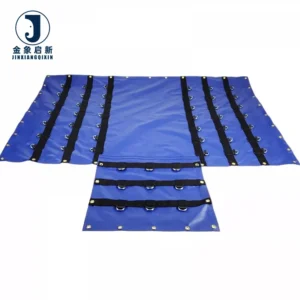
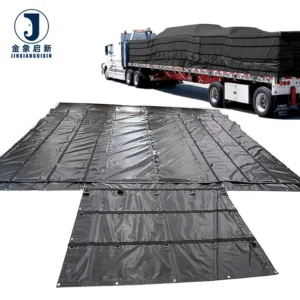
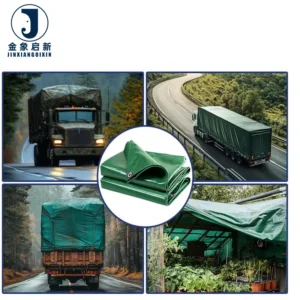
| Truck and trailer flatbed load covering | Continuous UV exposure, wind-driven rain, road debris abrasion, frequent tie-down strap tension |
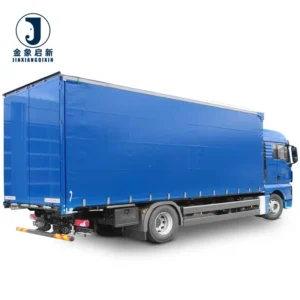
| Side curtain fabric for curtain-sider trailers | Repeated flexing and folding, contact with cargo edges, thermal cycling across seasons |
| Bulk roll stock for tarpaulin distributors | Warehouse storage before resale, batch consistency for downstream cutting and fabrication |
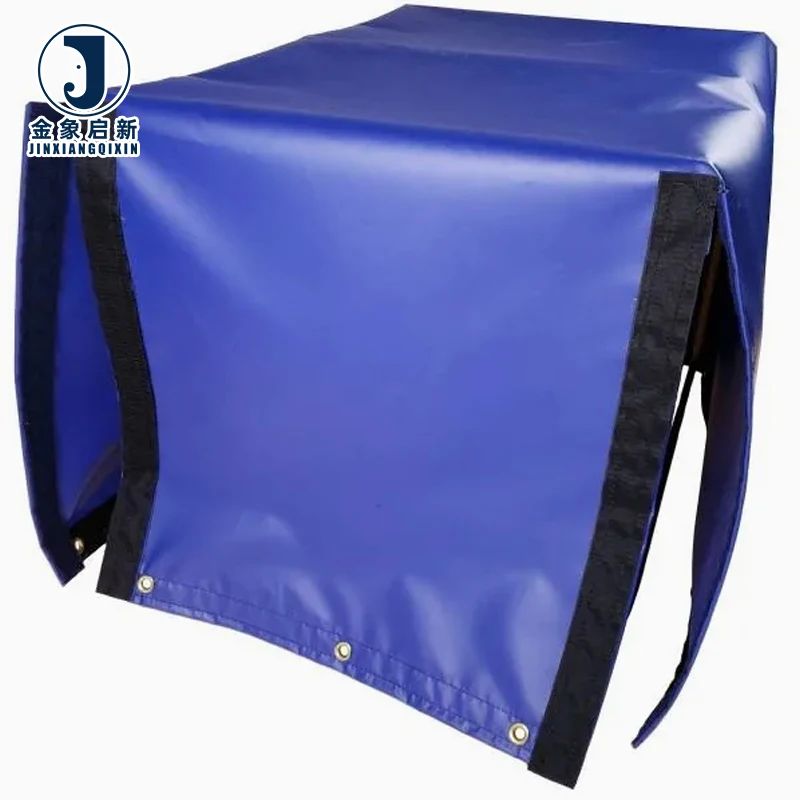
| Transport equipment builder covers | Precise dimensional fit to specific trailer models, abrasion at reinforcement and hem points |
Why Roll-to-Roll Consistency Matters More Than Quoted GSM for PVC Truck Cover Buyers
A roll that tests within tolerance but drifts in colour or coating weight from the next roll in the same container creates visible defects once installed side by side on a fleet.
Fleet operators and tarpaulin distributors regularly face situations where the PVC truck cover material arriving at the dock looks correct on paper but shows shade variation across rolls, or where one roll feels noticeably lighter in hand than the next. These inconsistencies rarely surface during a quick pre-shipment sample check — they appear only after fabrication or installation, when rework costs have already multiplied [NEED_CITE: batch consistency testing methods for coated fabrics in production runs]. Sourcing wholesale truck tarpaulins requires a supply chain that treats every roll in a container load as a single quality unit, not individual pieces passed in isolation.
How Batch Consistency Is Maintained Across Container-Load Orders
When purchasing PVC truck cover stock by the roll, the critical control points sit upstream of final inspection. Coating weight is monitored at the coating head, and base fabric tension is held constant across the production run so that denier density does not drift from the first metre to the last. Colour matching is referenced against a confirmed standard, and each roll produced in the same batch is cross-checked before packing. This approach means that whether an order ships as fifty rolls or five hundred, the shade and hand feel remain uniform from the first pallet to the last.
Custom Width, Length, and Cut-Size Flexibility for Wholesale Buyers
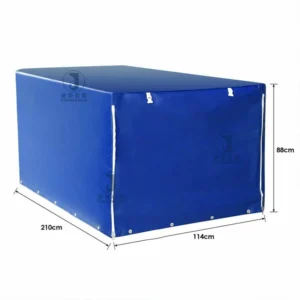
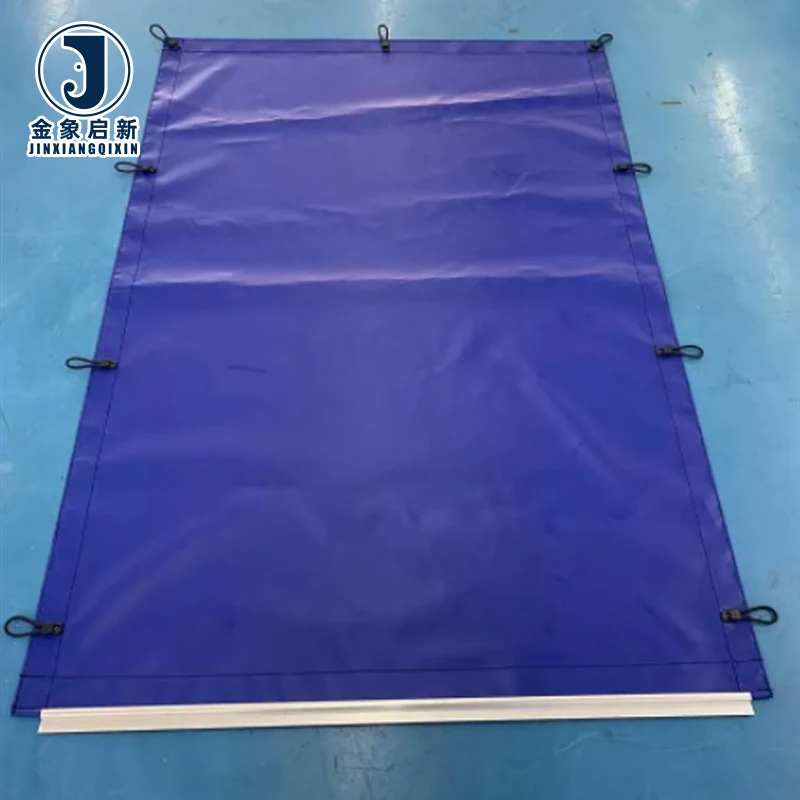
Distributors and fabricators buying PVC truck cover material in bulk need flexibility beyond standard roll widths. This range supports custom width and length orders, as well as pre-cut sizes such as 3x4m, 6x8m, 8x10m, and 10x12m for buyers who prefer finished dimensions rather than cutting in-house. For fleet operators requiring covers that match specific trailer models, cut-to-size production eliminates the gap between generic stock dimensions and the actual cargo bed footprint [NEED_CITE: dimensional tolerance standards for custom-cut tarpaulins in transport applications]. OEM printing and custom colour options extend the offering to buyers who brand their covers or require specific colourways for fleet identity.
Understanding the Specification Stack: Denier, GSM, and Finish
Base fabric denier — available in 200DX300D, 500DX500D, 840DX840D, and 1000DX1000D — defines the yarn thickness in the woven scrim. A higher denier generally provides greater tear propagation resistance because thicker yarns require more energy to break individually. However, denier alone does not determine overall strength; the weave density (ends and picks per centimetre) works together with yarn thickness to create the structural grid that the PVC coating then locks in place.
GSM reflects the combined weight of base fabric and coating. A 1000DX1000D fabric at a given GSM will behave differently from a 500DX500D at the same GSM, because the coating-to-fabric ratio shifts. Heavier coating fills the weave interstices more completely, improving waterproofing and abrasion resistance at the surface, while a higher base fabric proportion contributes more to tensile and tear performance.
Glossy and matte finish options affect more than appearance. A glossy surface sheds dirt and water more readily, making it practical for covers exposed to road grime. A matte finish reduces glare and can improve ink adhesion for printed branding and logos. The operating temperature range of -15°C to 70°C defines the boundaries within which the PVC coating retains flexibility without becoming brittle in cold conditions or softening under sustained heat load.
The Hidden Cost of Ordering on GSM Quotation Alone
Specifying a PVC truck cover by GSM without verifying base fabric denier, coating adhesion, and batch-level consistency is a common route to underperformance. A roll that meets the quoted weight but uses a lighter base fabric compensated by heavier coating may pass a scale check yet fail prematurely at flex points where the coating cracks away from the scrim. [NEED_CITE: coating adhesion failure modes in PVC tarpaulins under cyclic loading]. Similarly, flame retardant treatment claimed without a supporting grade or test report leaves buyers exposed when site inspectors or regulatory bodies request documentation at the point of installation. Colour variation across rolls in the same shipment forces fabricators to either accept mismatched panels or reject material that has already crossed an ocean. These are not theoretical risks — they recur across the industry wherever procurement relies on a single specification line without backing documentation.
Why Volume Buyers Source This PVC Truck Cover Range
Three full production lines and 36 sets of professional equipment provide the capacity to fulfil container-load orders without splitting production across disparate batches. A 10-person R&D team handles custom width, colour matching, and sample development within days rather than weeks, reducing the lead time between enquiry and confirmed specification. Dedicated quality inspection at every production stage — from incoming base fabric through coating, winding, and packing — means that the 100% pre-shipment inspection record reflects actual process data rather than a final visual check. ISO and CE certification underpins the documentation package, and export logistics support covers packing plans optimised by roll count and weight for container loading efficiency.
Documentation & Verification
- Material specification sheet stating GSM, base fabric denier, and colour reference per roll batch
- Pre-shipment inspection record confirming every roll checked before container loading
- Roll packing list with container loading plan by roll count and gross weight
- Test reports for UV and flame retardant treatment where applicable to the order
- Certificate of origin and customs documentation support for export clearance
- Colour standard reference card retained for repeat order matching
Fabrication, Handling & Storage
- Heat-weld parameters should be adjusted to the specific GSM and coating thickness of each roll batch
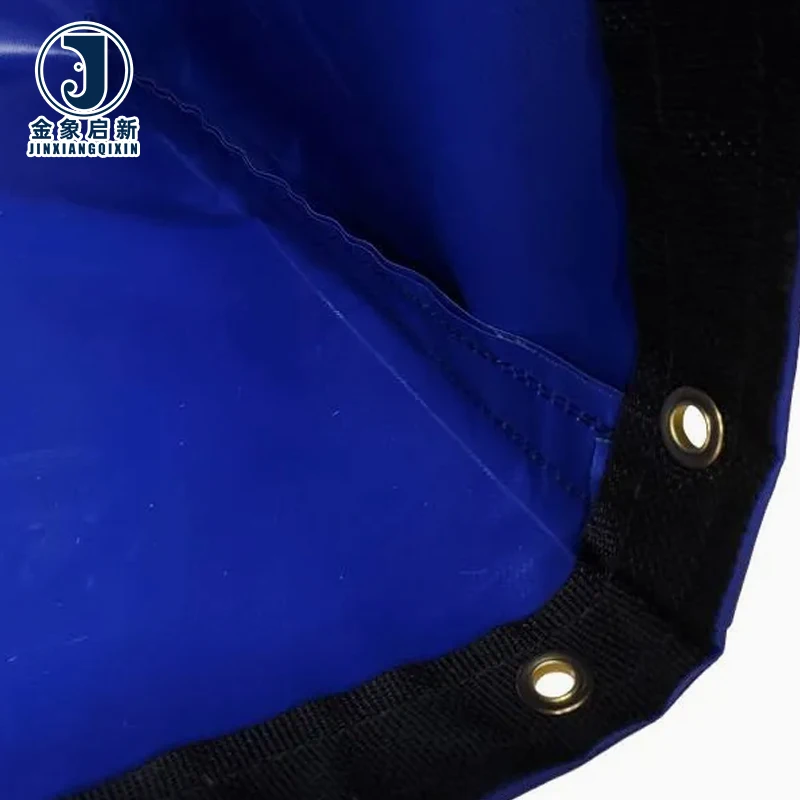
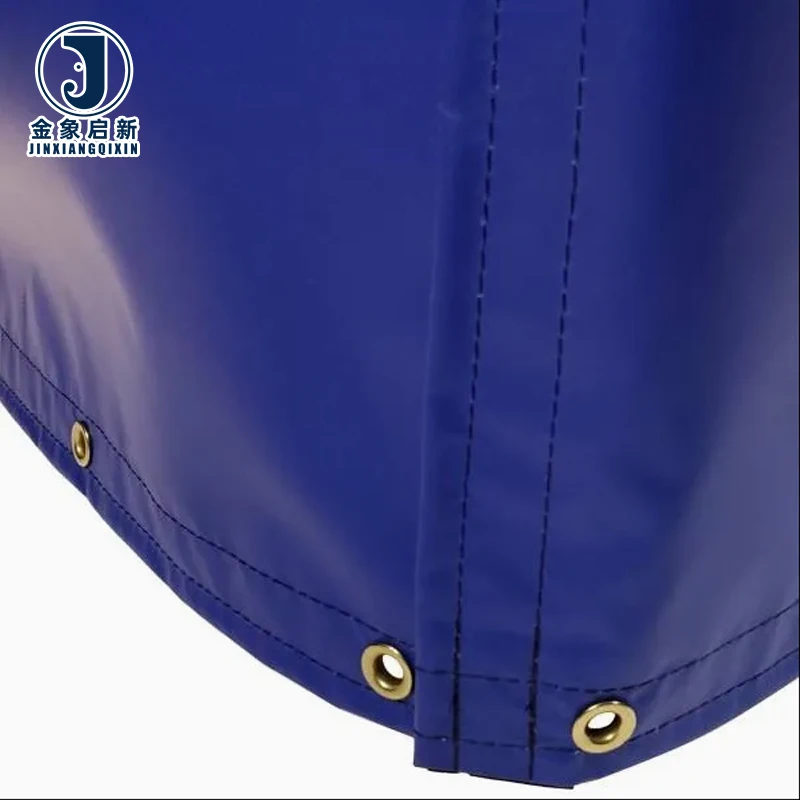
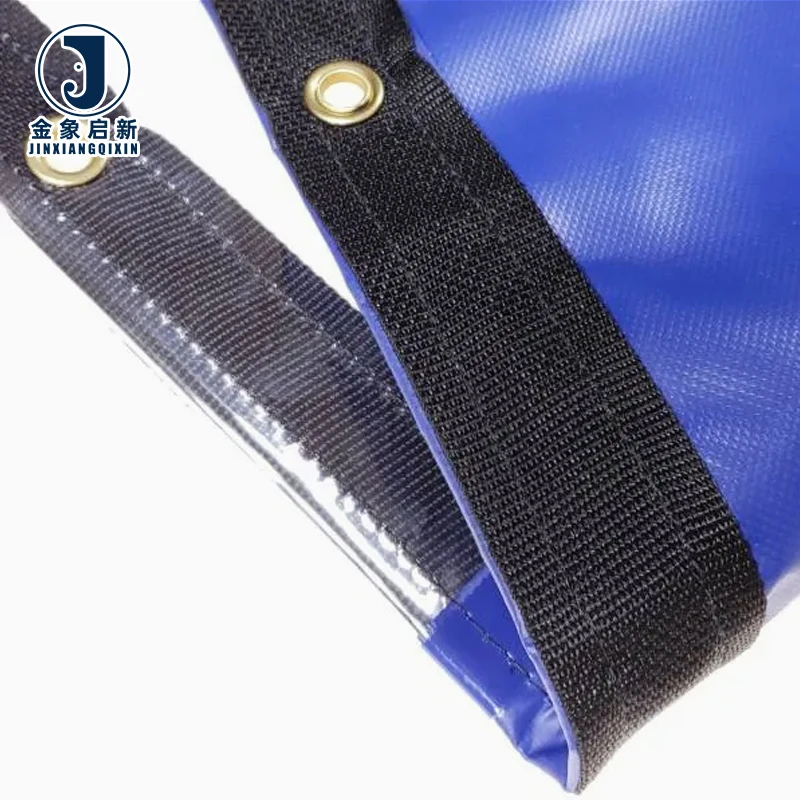
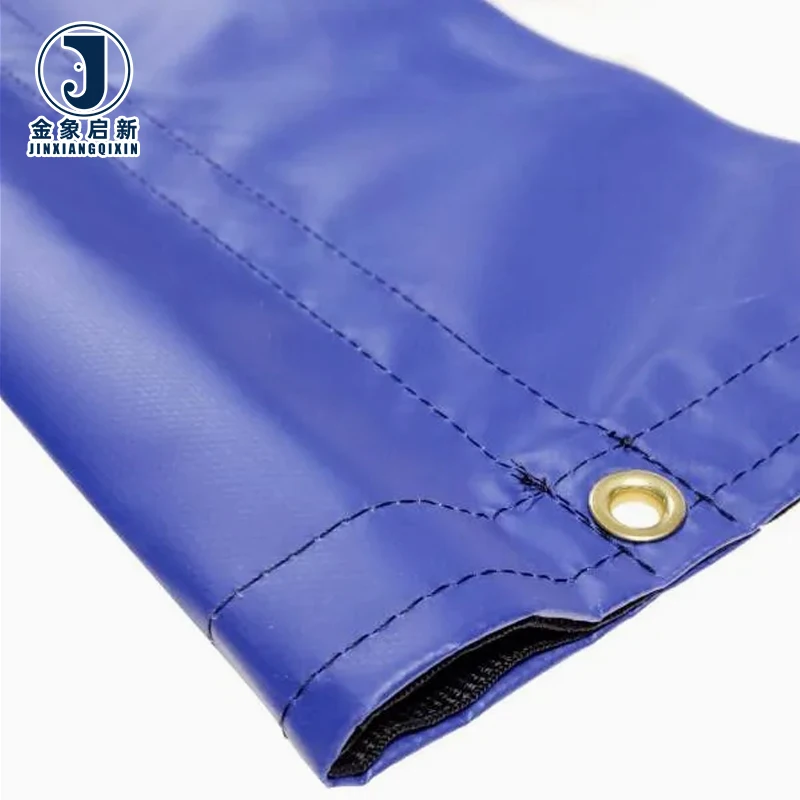
- Reinforced hem sections benefit from double-layer welding at high-stress tie-down zones
- Store rolls upright on pallets to prevent flat-spot deformation of the PVC coating surface
- Allow cold-stored rolls to acclimatise before unrolling to avoid coating cracking below -15°C
- Use mild detergent for cleaning; solvent-based agents may degrade the PVC coating over time
- Plan cutting layouts across the 3x4m to 10x12m standard sizes to minimise offcut waste
What to Include in Your PVC Truck Cover Enquiry
Provide the specific denier and GSM grade your application requires, along with the standard or custom dimensions needed per roll or cut piece. If your market mandates a particular flame retardant grade or UV treatment standard, state the test method or regulation so the correct treatment is applied and documented. Confirm whether you need roll stock for in-house fabrication or pre-cut finished covers, and include your preferred colour reference and any OEM printing requirements.
Frequently Asked Questions
Q: How is GSM verified on arrival and what documentation supports the quoted weight?
A: Each roll batch is weighed during production and recorded on the pre-shipment inspection record. A material specification sheet accompanies the shipment stating the GSM, base fabric denier, and coating details for traceability. Buyers can cross-check arrival weight against these documents, and random roll sampling is supported for independent verification at destination.
Q: How do you control colour consistency across multiple rolls in one order?
A: Production runs for a single order reference a confirmed colour standard, and coating is applied under consistent line conditions to minimise shade drift. Rolls from the same batch are grouped during packing so that container loads maintain uniform appearance. Colour reference cards are retained on file to support consistency on repeat orders.
Q: What standard and custom cut sizes are available, and what is the MOQ per size?
A: Standard cut sizes include 3x4m, 6x8m, 8x10m, and 10x12m, with fully custom dimensions available to match specific trailer models or fabrication requirements. MOQ varies by whether the order is roll stock or cut-to-size, and by the specific GSM and colour selected. Confirm your required dimensions and volume for a precise quotation.
Q: How are rolls packed and loaded for container shipment to minimise transit damage?
A: Rolls are packed upright on pallets with protective wrapping to prevent surface abrasion and edge damage during transit. A container loading plan is prepared based on roll count and weight to maximise space utilisation while securing the load against movement. The packing list details roll positions for efficient unloading at destination.
Q: What fire-retardant or UV test reports can accompany the shipment if required?
A: Where the order specifies flame retardant or UV-treated grades, test reports can be included in the documentation package. Buyers should confirm the specific test standard or regulatory requirement for their market at the enquiry stage so that the correct treatment is applied and the corresponding report is prepared before dispatch.