Description
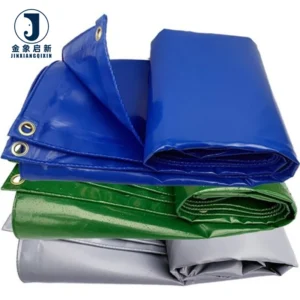
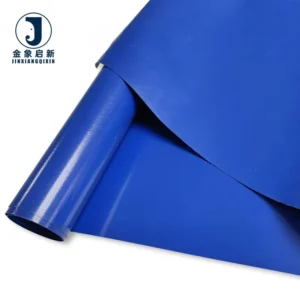
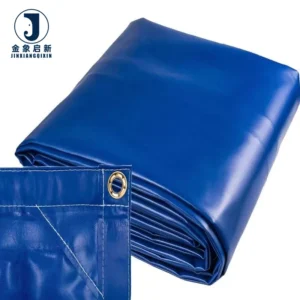
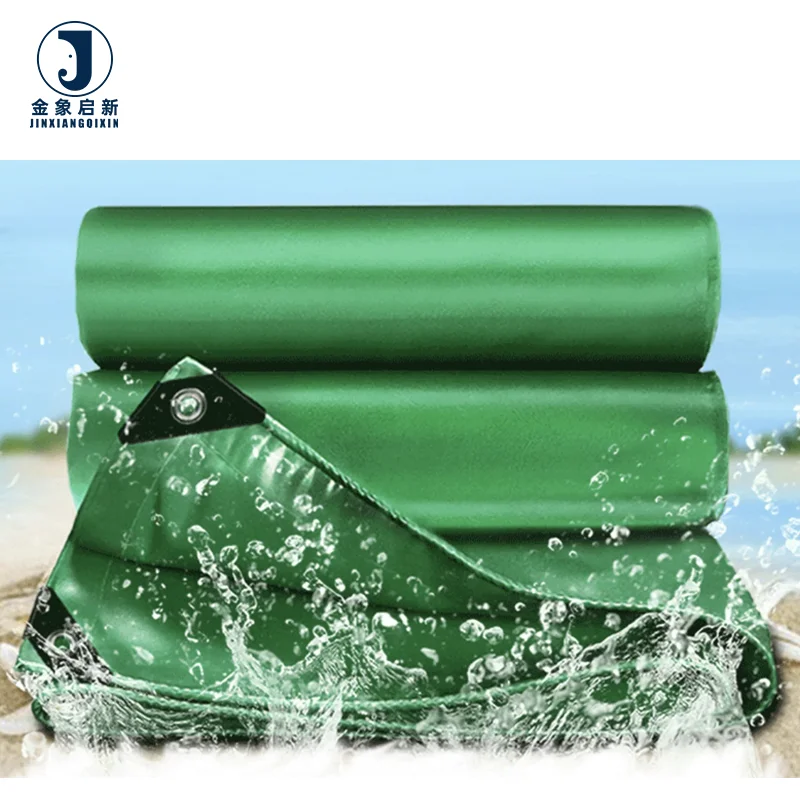
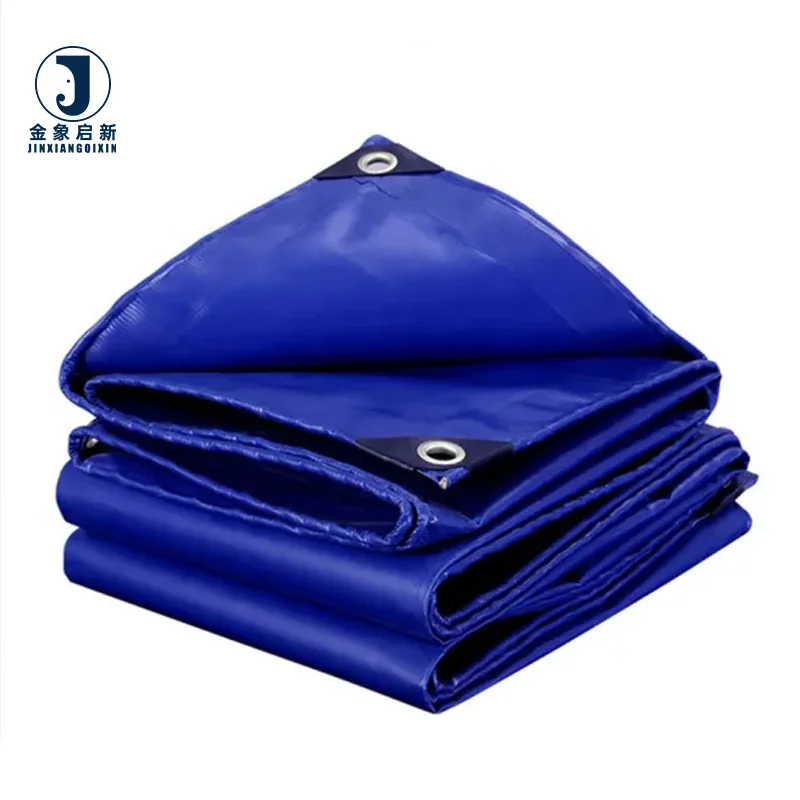
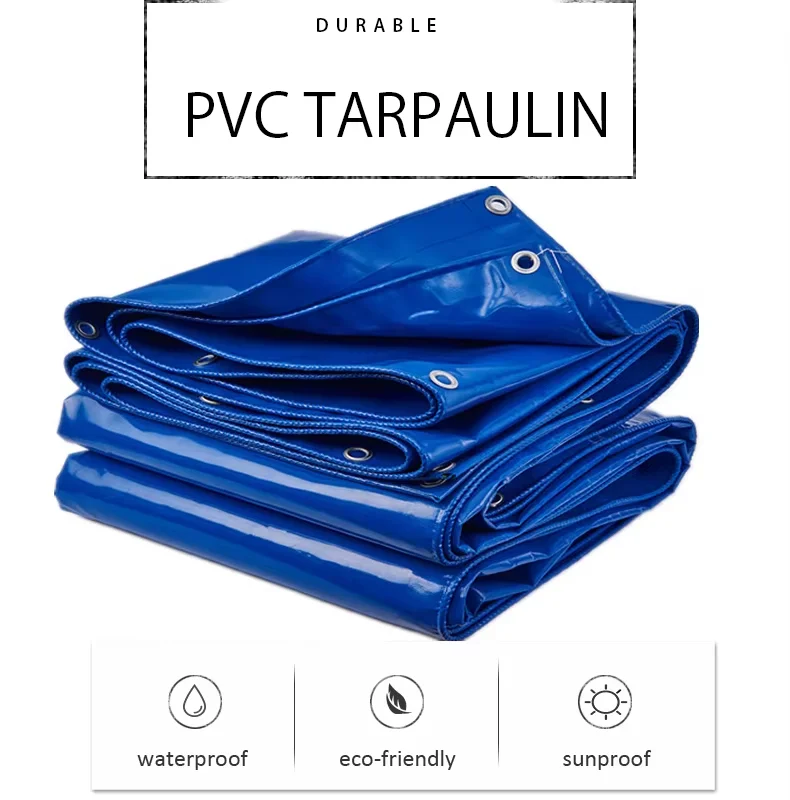
Stock-Grade Roll Consistency — Every PVC coated tarpaulin roll leaves the line with verified GSM, matched colour and tight width tolerance, so your inventory cuts predictably and installs without visible variation.
Technical Specifications
| Parameter | Value |
|---|---|
| Product Type | PVC Coated Tarpaulin |
| Material Composition | PVC coating on high-strength polyester mesh fabric |
| Coating Technology | Laminated technology; Hot-melt coating technology |
| Weight (GSM) | 250GSM / 300GSM / 400GSM / 450GSM / 500GSM / 560GSM / 600GSM / 650GSM / 680GSM / 950GSM / 1000GSM |
| Base Fabric Denier | 500D×500D to 2000D×2000D (varies by GSM grade) |
| Mesh Count | Ranges from 15×15 to 30×30 (varies by GSM grade) |
| Total Thickness | 0.32mm to 0.65mm |
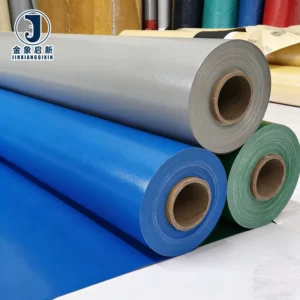
| Standard Roll Width | 2m / 2.1m |
| Standard Roll Length | 50m / 75m |
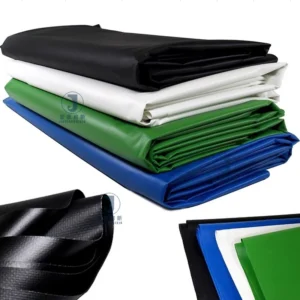
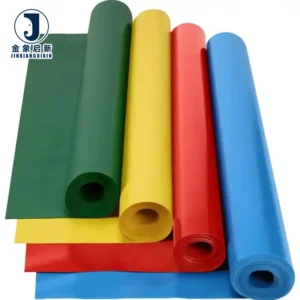
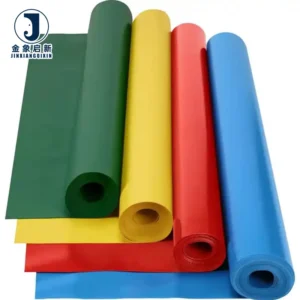
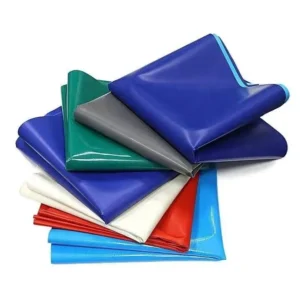
| Colour Options | Blue / Red / Yellow / Light blue / Grey (custom colours available) |
| Waterproof | Yes — fully coated construction |
| Cold Crack Resistance | Yes |
| Anti-Mildew | Yes |
| Anti-UV Treatment | Available — confirm the UV test standard required for your market |
| Anti-Static Treatment | Available — confirm the anti-static grade required for your application |
| Flame Retardant | Available in flame retardant grades — confirm the grade required for your market |
| Service Life | Extended outdoor exposure suitable |
| Standards | ISO, CE |
Application Suitability
| Application | Exposure & Requirement |
|---|---|
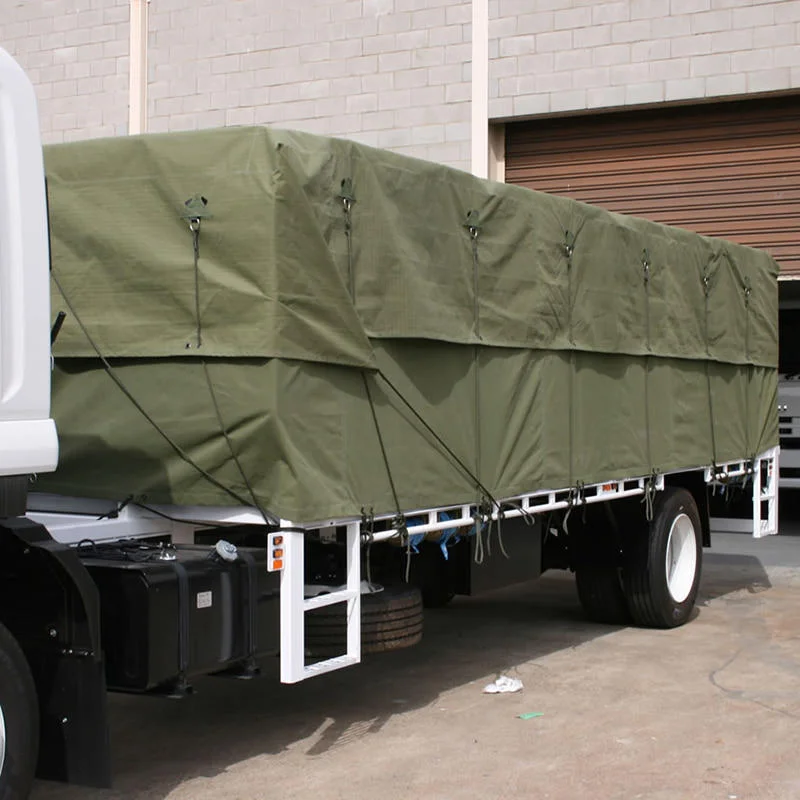
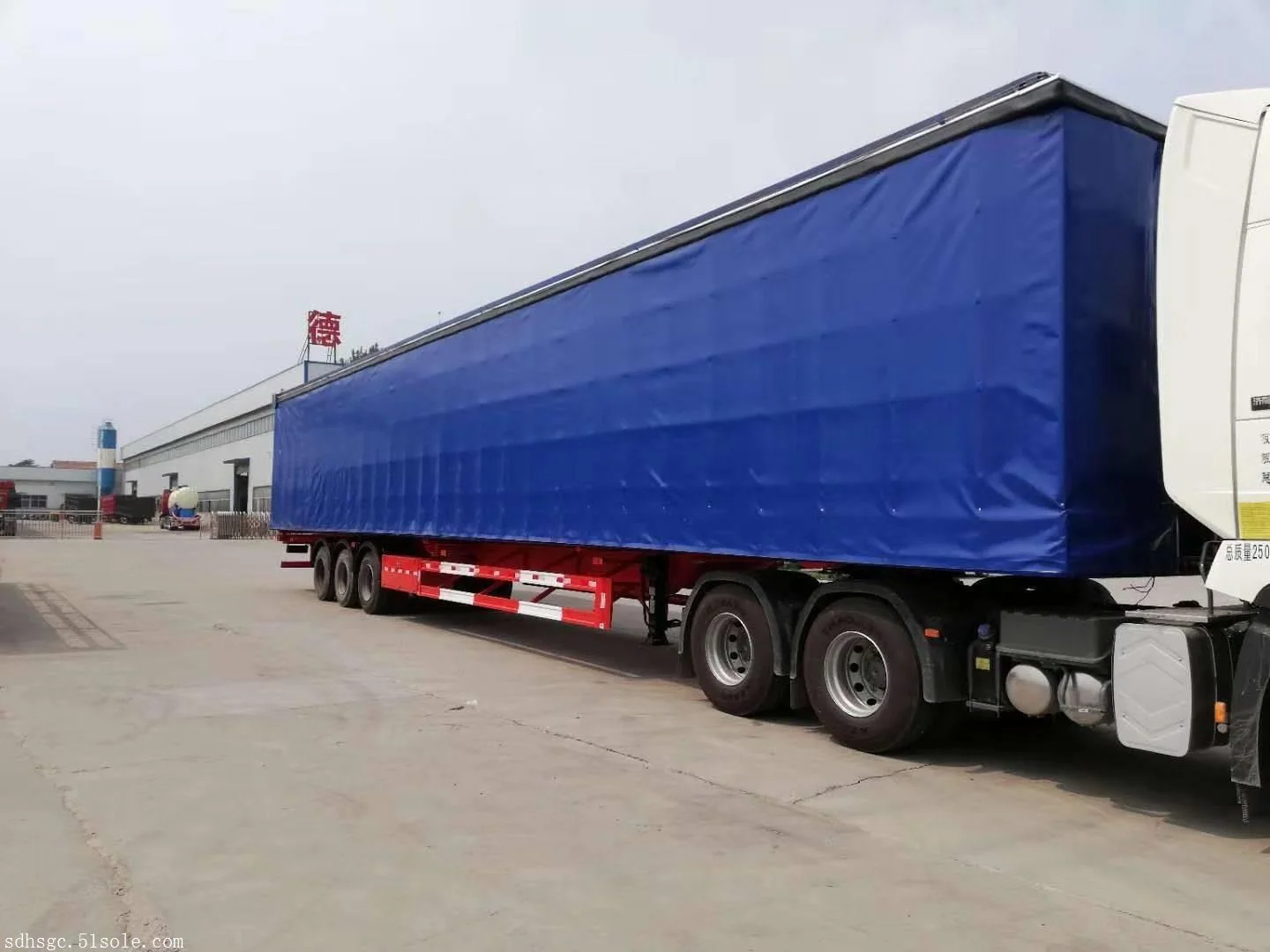
| Truck and trailer covers | Constant road vibration, flex at load points, weather exposure, abrasion against cargo edges |
| Side curtain systems | Repeated rolling and unrolling, tension stress, UV exposure, wind loading |
| Tent and awning fabrication | Long-term sun exposure, folding stress, seam welding requirements |
| Inflatable and membrane structures | Air pressure holding, seam integrity, weld strength under tension |
| Pond and reservoir liners | Permanent water contact, soil chemistry, puncture risk from substrate |
| Goods yard and stockpile covers | Wind uplift, pooling water, UV degradation, forklift handling damage |
| Cargo ship deck covers | Salt spray, heavy weather, mechanical handling during stowage |
Why Colour Drift Across Rolls Costs More Than You Expect
Colour variation between rolls in the same order forces fabricators to reject entire panels after cutting.
When a distributor receives a container load of PVC coated tarpaulin roll stock, the rolls go straight to the cutting table. If two rolls from the same batch show a visible shade difference once laid side by side, the downstream customer — whether a tent maker or a fleet operator — sees it immediately. That mismatch cannot be hidden by installation. The entire panel gets rejected, the fabricator claims against the distributor, and the distributor is left holding unusable inventory. The PVC coated tarpaulin roll wholesale market sees this pattern repeatedly [NEED_CITE: batch colour consistency standards for coated technical textiles]. The root cause is uncontrolled pigment dosing during the coating stage, not a difference in the base fabric.
Batch-Controlled Coating for Roll-to-Roll Colour Uniformity
Maintaining identical colour across every PVC coated tarpaulin roll in a shipment requires pigment metering that does not drift across the production run. The coating lines calibrate pigment concentration at the start of each batch and hold that ratio constant through the full roll length. This matters most when a fabricator orders multiple rolls of the same colour for a single project — any shift in tone between rolls becomes visible once the material is cut and installed side by side. Buyers ordering PVC coated tarpaulin roll wholesale should request pre-shipment colour verification records before the container is stuffed.
Coating Adhesion and Weld Line Integrity
Hot-melt coating technology bonds the PVC layer to the polyester mesh at temperatures that force the coating into the weave structure. This mechanical lock is what allows downstream fabricators to heat-weld seams without the coating peeling away from the base fabric at the weld line. Laminated technology achieves a similar bond through pressure and adhesive layers, suited to lighter GSM grades where the base fabric is thinner. The PVC coated tarpaulin roll wholesale buyer needs to match coating method to the end-use: hot-melt for high-frequency welding on truck covers, laminated for cost-sensitive applications where welding is less demanding [NEED_CITE: coating adhesion test methods for PVC tarpaulin per ISO 2411].
Reading the Specification Sheet Beyond Just GSM
A 500GSM roll with 840D×840D base fabric and an 18×18 mesh count will behave very differently under tension than a 500GSM roll built on 500D×1000D with a 20×20 mesh. The denier of the yarn and the density of the weave determine how the load distributes across the fabric — higher denier yarns resist tear propagation, while tighter mesh counts improve puncture resistance. GSM alone tells you the total weight of coating and fabric combined, not how that weight is distributed between them. A roll with heavy coating on a light base fabric may hit the target GSM but tear easily once a puncture starts. The standard 2m and 2.1m roll widths affect cutting yield — wider rolls reduce the number of weld seams needed for large covers but require careful layout planning to minimise offcut waste. Total thickness from 0.32mm to 0.65mm correlates with the coating build on each face, which directly affects cold crack resistance and the material’s ability to handle repeated folding without surface damage.
The Hidden Cost of Choosing the Wrong Roll Grade
Selecting a lighter GSM grade to save on material cost often surfaces as a failure at the weld seam rather than in the body of the fabric. When a truck cover flexes under road vibration, the stress concentrates at the welded joints where the fabric has been heated and reformed. If the base fabric denier is too low for the load cycle, the weld line fails before the field of the material shows any wear [NEED_CITE: weld seam fatigue in coated polyester fabrics]. Similarly, ordering rolls in a custom colour without securing a minimum batch size can result in colour inconsistency between the first roll and the last roll produced. Distributors who cut and resell this material absorb the complaint from their end customer, not the mill.
Sourcing Consistency Across Container Loads
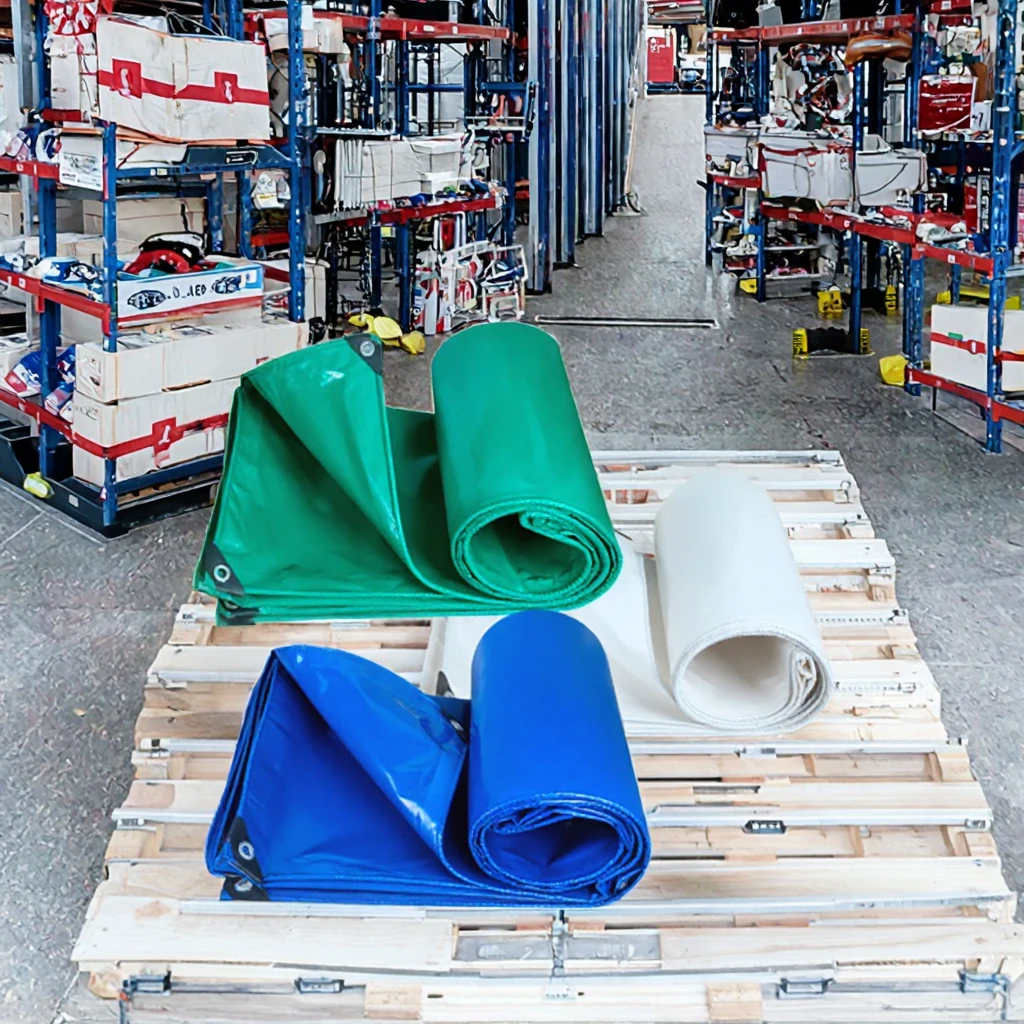
Three full production lines with dedicated equipment allow parallel coating runs that hold specification across high-volume orders. The ten-person R&D team develops colour matches and sample rolls within days when a buyer needs to confirm a custom shade before committing to a full container. In-process quality checks at every coating stage catch GSM drift, coating thickness variation and adhesion weakness before the roll reaches the winding station. Every roll undergoes inspection before packing, with a record that ties back to the coating batch and the machine that produced it. Standard roll lengths of 50m and 75m in widths of 2m and 2.1m are designed to fill container floor space efficiently, with loading plans provided at quotation stage.
Documentation & Verification
- Material specification sheet per roll stating exact GSM, denier, mesh count and coating method used
- Pre-shipment inspection record confirming colour match and coating quality across all rolls in the order
- Roll packing list detailing individual roll weight, dimensions and batch number for receiving verification
- Certificate of origin and customs documentation aligned to the destination country import requirements
- UV or flame retardant test reports supplied only for grades where the specific standard has been tested
Fabrication, Handling & Storage
- Hot-weld temperature and dwell time must match the coating method — hot-melt coated rolls tolerate higher weld energy than laminated grades
- Roll storage should keep material upright on the core to prevent flat-spot creasing that telegraphs through the coating surface
- Standard 2m and 2.1m widths require cutting table layout planning to minimise weld seams on large truck cover panels
- Cold-weather transport may stiffen the PVC coating — allow rolls to reach ambient temperature before unrolling to avoid surface cracking
- Anti-mildew treatment is standard across all grades, but stored rolls in humid conditions should be ventilated to prevent trapped moisture
- Reinforced hem and eyelet areas on fabricated covers should use additional ply layers to distribute tie-down load beyond the base fabric strength
Requesting the Right Roll Grade for Your Stock
Specify the end-use application and the typical load cycle the finished product will face — truck side curtains need different base fabric construction than static pond liners. Confirm the target market’s fire safety or anti-static compliance requirements before ordering treated grades. Provide the required roll width, annual volume estimate and whether the material will be cut in-house or supplied as finished panels. Request a sample roll to verify colour, hand feel and weld behaviour on your equipment before committing to a container load.
Frequently Asked Questions
Q: How do you verify GSM on every roll before shipment?
A: Each roll is sampled during winding and weighed against the stated GSM on the material specification sheet. Rolls that fall outside tolerance are flagged and excluded from the shipment. A pre-shipment inspection record listing individual roll weights accompanies the packing list for buyer verification at destination.
Q: What standard roll widths and lengths are available for container loading?
A: Rolls are produced in 2m and 2.1m widths with standard lengths of 50m and 75m. These dimensions are optimised for standard shipping container floor space. A container loading plan with roll count, total weight and cubic volume is provided at quotation stage to help buyers plan freight costs.
Q: How do you maintain colour consistency across multiple rolls in one order?
A: Pigment concentration is calibrated at the start of each coating batch and monitored through the production run. Rolls from the same order are produced in a single continuous batch where possible. Pre-shipment colour verification is recorded and available for buyer review before dispatch.
Q: What is the difference between laminated and hot-melt coated rolls?
A: Hot-melt coating forces PVC into the polyester weave at high temperature, creating a mechanical bond suited to frequent heat welding. Laminated technology bonds coating layers through pressure and adhesive, offering a cost-effective option for lighter grades. The choice depends on the downstream fabrication method and end-use stress cycle.
Q: Can custom widths or colours be ordered, and what are the requirements?
A: Custom widths and colours are available with minimum order quantities that depend on the coating line setup. A sample roll is developed for buyer approval before full production begins. Lead times for custom orders are longer than standard stock grades — confirm requirements early to align with your container schedule.