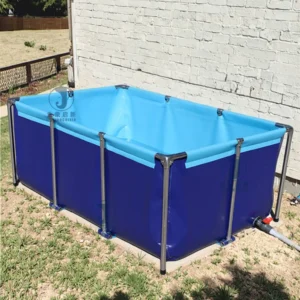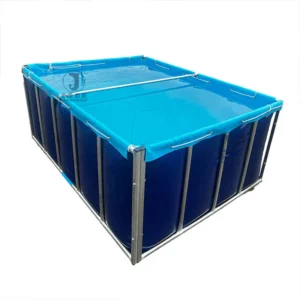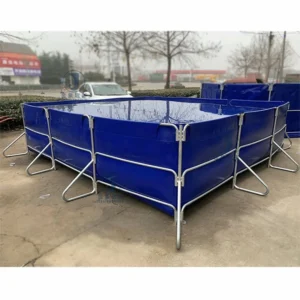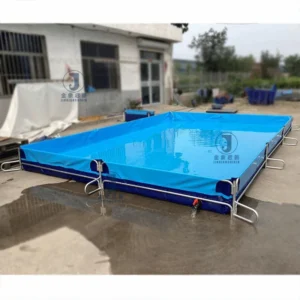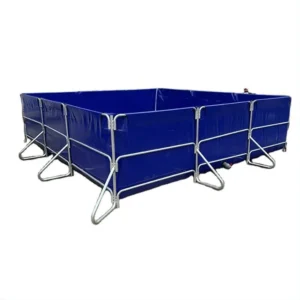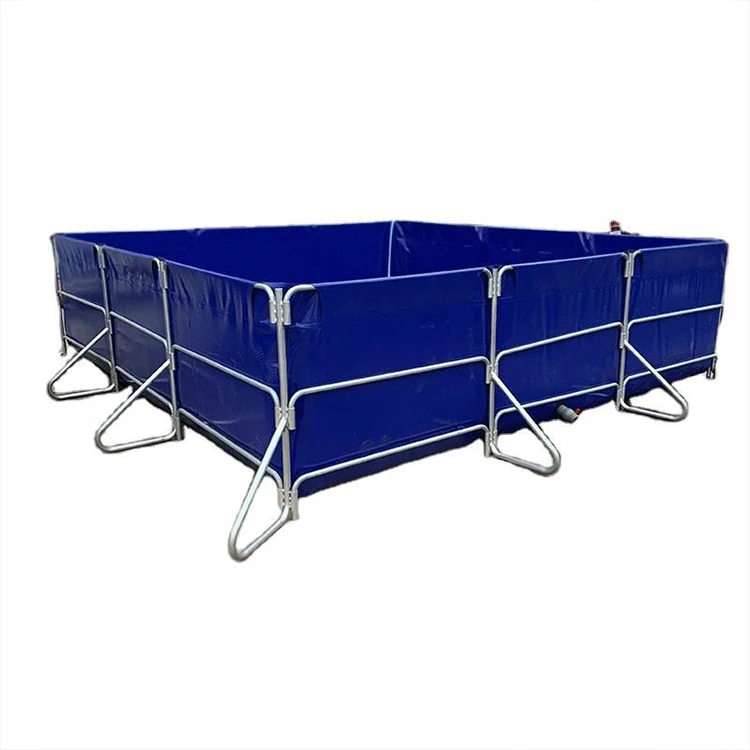
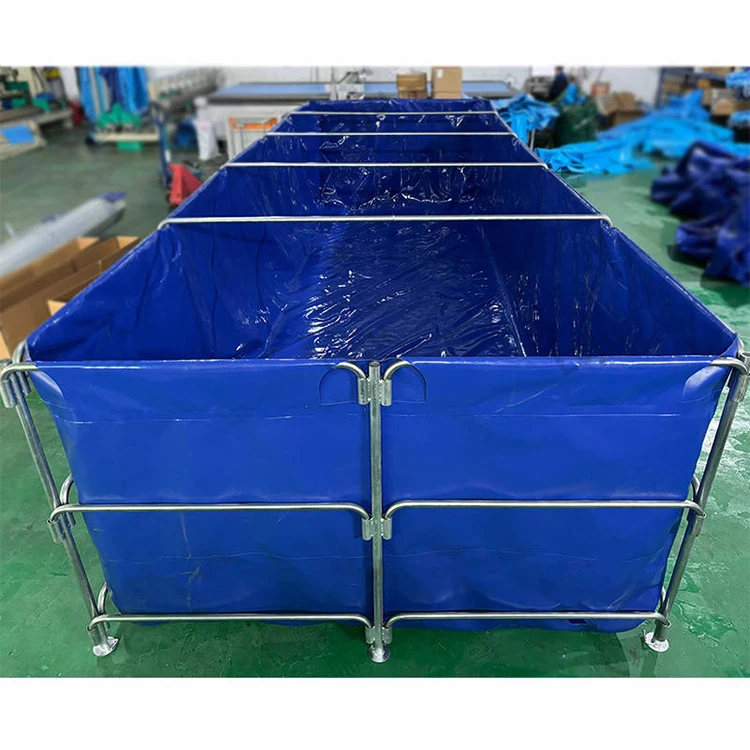
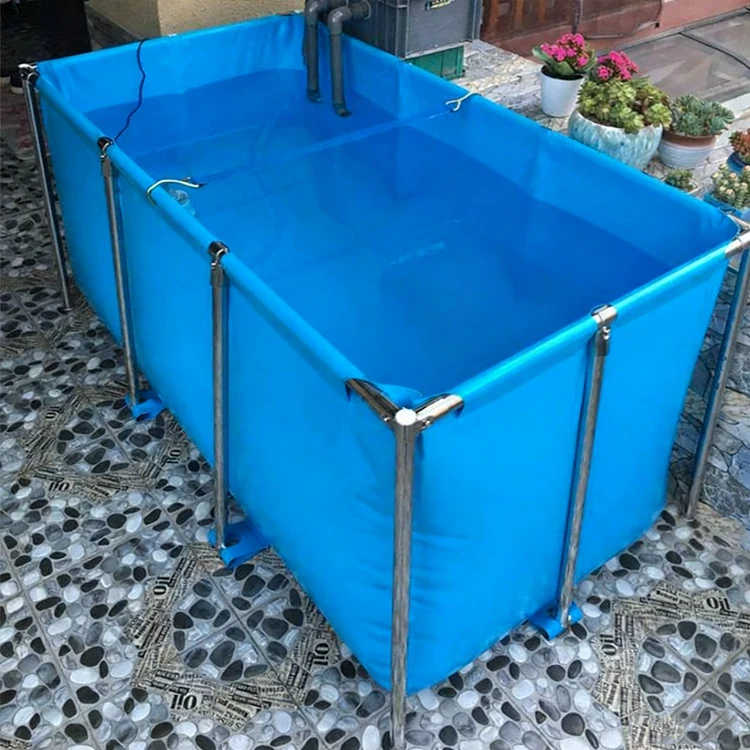
Description
Roll-Grade Consistency — PVC tarpaulin fish pond liner rolls are inspected for GSM, coating weight and colour uniformity before container loading, so aquaculture operators receive material that matches the specification across every roll in the shipment.
Technical Specifications
| Parameter | Value |
|---|---|
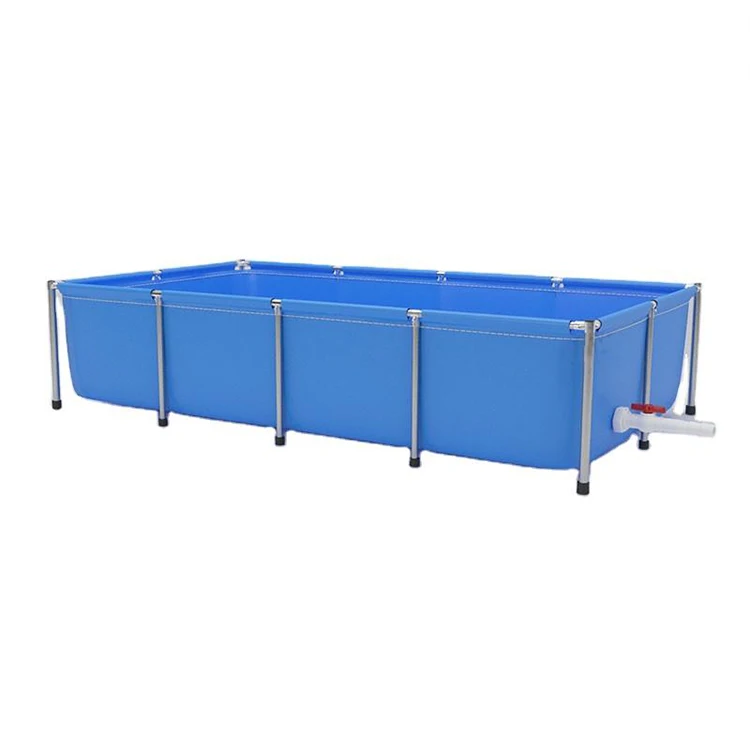
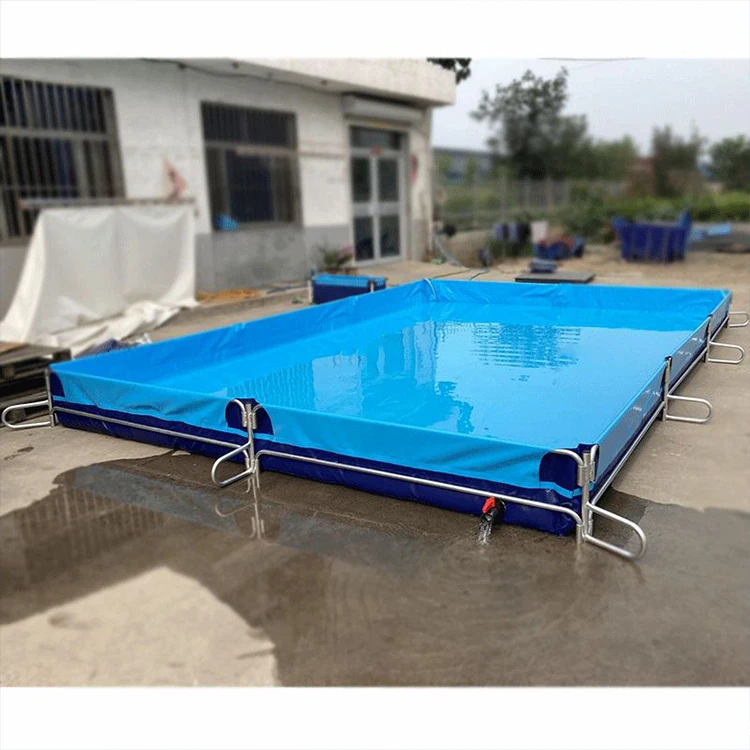
| Product Type | PVC Tarpaulin Fish Pond |
| Shape Options | Circular / Rectangular |
| Material | PVC Tarpaulin |
| Foldable Design | Yes |
| Custom Sizes | Available |
| Supply Format | Roll stock and cut-to-size |
| Surface Finish | Available in glossy or matte finish |
| UV Treatment | Available in anti-UV grades — confirm the grade required for your market |
| Flame Retardant | Available in flame retardant grades — confirm the grade required for your market |
Application Suitability
| Application | Exposure & Requirement |
|---|---|
| Fish farming ponds | Permanent water immersion, soil chemistry contact, puncture risk from substrate |
| Shrimp and prawn raceways | Continuous water load, abrasive sediment, frequent drain and refill cycles |
| Hatchery and nursery tanks | Flexible containment, clean water environment, rapid deployment and takedown |
| Agricultural stock water reservoirs | UV exposure, seasonal temperature swings, livestock contact and edge abrasion |
| Portable aquaculture setups | Repeated folding and unfolding, transport vibration, quick on-site assembly |
Why Batch Consistency Matters More Than Quoted GSM for Pond Liners
A pond liner roll that matches the quoted GSM but varies in coating adhesion or colour between batches will still cause installation failures across a multi-pond farm.
When aquaculture operators line dozens of ponds in a single season, the material must behave identically from the first roll to the last. Weight alone does not determine whether a welded seam holds under hydrostatic pressure or whether adjacent panels appear uniform once filled. I have seen pond liner orders where the GSM was correct on paper, yet coating weight distribution varied enough between rolls to produce visible colour shifts and inconsistent heat-weld behaviour on site. [NEED_CITE:] Coated fabric tensile and tear test methods per ISO 1421 provide a more complete picture of how the material will perform under sustained water load than GSM alone. For wholesale buyers sourcing PVC fish pond liner bulk volumes, batch-to-batch verification is the difference between a smooth installation season and costly rework across multiple ponds.
Roll Stock Supply for High-Volume Aquaculture Operations
Aquaculture farms expanding pond capacity need material that arrives on schedule and performs predictably across the entire order. PVC tarpaulin fish pond liner supplied in roll stock format allows operators to cut and weld on site to match varying pond dimensions, reducing waste from pre-cut panels that do not align with actual earthwork profiles. Roll consistency in coating weight, colour and base fabric tension ensures that heat-welded seams behave the same way regardless of which roll a panel is drawn from.
Cut-to-Size Panels for Standardised Pond Layouts
For farms building uniform circular or rectangular ponds to a repeated design, pre-cut panels reduce on-site labour and eliminate weld seams in high-stress zones. Foldable construction allows cut panels to be packed flat for container shipping and unfolded directly into position on the pond floor. Circular and rectangular shape options align with the two most common pond construction methods — frame-supported tanks and excavated earthen basins — giving buyers flexibility in how they specify each order line.
How Base Fabric and Coating Weight Interact in Pond Liner Performance
The base fabric denier and weave density determine how the material resists tearing once a puncture initiates, while the PVC coating weight governs water impermeability and surface durability. A heavier coating does not compensate for a loosely woven base — the two layers must be balanced so that tensile load transfers through the yarn structure rather than concentrating at the coating interface. For pond liners in permanent water contact, coating adhesion to the base fabric is particularly important because hydrostatic pressure cycles can gradually separate poorly bonded layers at fold lines and weld seams. [NEED_CITE:] Relationship between coating adhesion strength and long-term water immersion performance in PVC coated fabrics. Glossy finishes shed sediment and biofilm more readily during pond cleaning, while matte finishes reduce glare in outdoor installations where surface reflection is a concern.
Specification Mismatches That Surface After Pond Filling
A liner that passes visual inspection dry can reveal problems once the pond is filled and the fabric is under full hydrostatic tension. Coating weight that varies across the roll width creates zones of unequal flexibility, causing the liner to pull unevenly against the pond walls. Weld seams made between rolls with different coating formulations may bond at lower strength than the parent fabric, leading to seam failure at the exact point where water pressure concentrates. Colour variation between rolls becomes visible once adjacent panels are installed and filled — a particular problem for demonstration ponds or facilities open to visitors. [NEED_CITE:] Field failure modes in PVC coated pond liners related to batch inconsistency. Sourcing PVC fish pond liner wholesale from a single production run minimises these mismatches by ensuring all rolls share the same base fabric batch and coating parameters.
What Volume Buyers Can Expect From This Supply Chain
Three full production lines and 36 sets of professional equipment support the output volumes required for container-load pond liner orders, reducing the risk of split shipments across different production batches. A dedicated 10-person R&D team develops samples within days when buyers need to confirm material suitability for specific aquaculture conditions before committing to bulk volume. QA inspection at every production stage — from base fabric receipt through coating, winding and packing — ensures that the roll stock loaded into the container matches the approved sample in weight, colour and weld behaviour. Roll packing lists detail count and weight per roll, giving buyers the data needed to verify container loading against the purchase order before the shipment leaves the facility.
Documentation & Verification
- Material specification sheet stating base fabric denier, coating weight and GSM per roll
- Pre-shipment inspection record confirming colour and weight consistency across the order
- Roll packing list with individual roll count and weight for container loading verification
- Test reports for UV and flame-retardant grades where applicable to the specification
- Certificate of origin and customs documentation prepared for export shipment
Fabrication, Handling & Storage
- Heat-weld PVC tarpaulin pond liner seams using hot air or wedge welding at temperatures matched to the coating formulation
- Store rolls upright on pallets to prevent flat-spot deformation that affects unrolling and weld alignment on site
- Unfold panels gradually in cold conditions to avoid crease damage to the PVC coating surface
- Clean pond liner surfaces with mild detergent — avoid solvent-based cleaners that degrade the PVC coating layer
- Plan panel cutting layout from roll width to minimise offcut waste and reduce the number of field weld seams required
- Repair minor punctures on site using compatible PVC patches heat-welded over the damaged area
What to Include With Your Pond Liner Enquiry
Provide the pond dimensions, shape preference and total liner area required so we can recommend roll widths and calculate the most efficient supply format. If your site operates under specific environmental or fire safety regulations, include the compliance standard your market requires so the correct material grade can be quoted. Let us know whether you need roll stock for on-site fabrication or pre-cut panels, and whether a sample roll is required for weld testing before the full order is produced.
Frequently Asked Questions
Q: How is GSM verified on arrival for pond liner rolls?
A: Each roll is inspected against the material specification sheet before dispatch, with GSM and coating weight recorded in the pre-shipment inspection report. Buyers can cross-check these records against the roll packing list upon container opening. Sample cuts from the production run are available for independent lab testing if required by the buyer’s quality protocol.
Q: What roll widths and lengths are available for pond liner stock?
A: Roll widths and lengths are configured to match the buyer’s pond dimensions and container loading plan. Custom widths are available with production lead times that vary by specification. The R&D team can recommend standard widths that minimise cutting waste for common circular and rectangular pond layouts.
Q: How is batch colour consistency maintained across multiple rolls?
A: All rolls in a single order are produced from the same base fabric batch and coating compound to prevent colour drift between panels. Pre-shipment inspection includes visual comparison of rolls side by side under controlled lighting. Any roll that falls outside the colour tolerance is flagged and replaced before the shipment is released.
Q: What is the container loading plan by roll count and weight?
A: The roll packing list provided before dispatch details the number of rolls, individual roll weight and total shipment weight for each container. This allows buyers to verify loading against the purchase order and plan on-site handling equipment. Loading plans are optimised to maximise container utilisation while protecting roll integrity during transit.
Q: Can custom cut sizes be supplied alongside roll stock in the same order?
A: Yes, pre-cut panels and roll stock can be combined in a single container shipment. Cut panels are folded and packed flat, while roll stock is palletised upright, allowing both formats to be loaded efficiently. Buyers specify the cut dimensions and roll quantities required, and the production team confirms the packing arrangement before dispatch.