Description
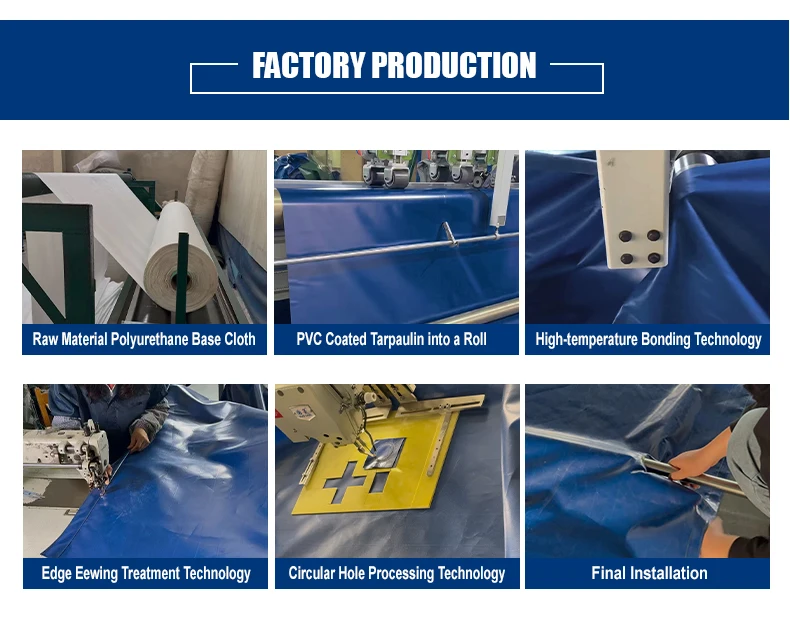
Batch Consistency — three full production lines and 36 sets of equipment ensure that every PVC coated tarpaulin roll in your order matches the specification sheet, with 100% pre-shipment inspection verifying weight and colour before dispatch.
Technical Specifications
| Parameter | Value |
|---|---|
| Product Type | PVC Coated Tarpaulin |
| Coating Material | PVC |
| Waterproof | Yes |
| UV Treatment | Anti-UV (test basis not stated in source) |
| Weight (GSM) | Medium Weight |
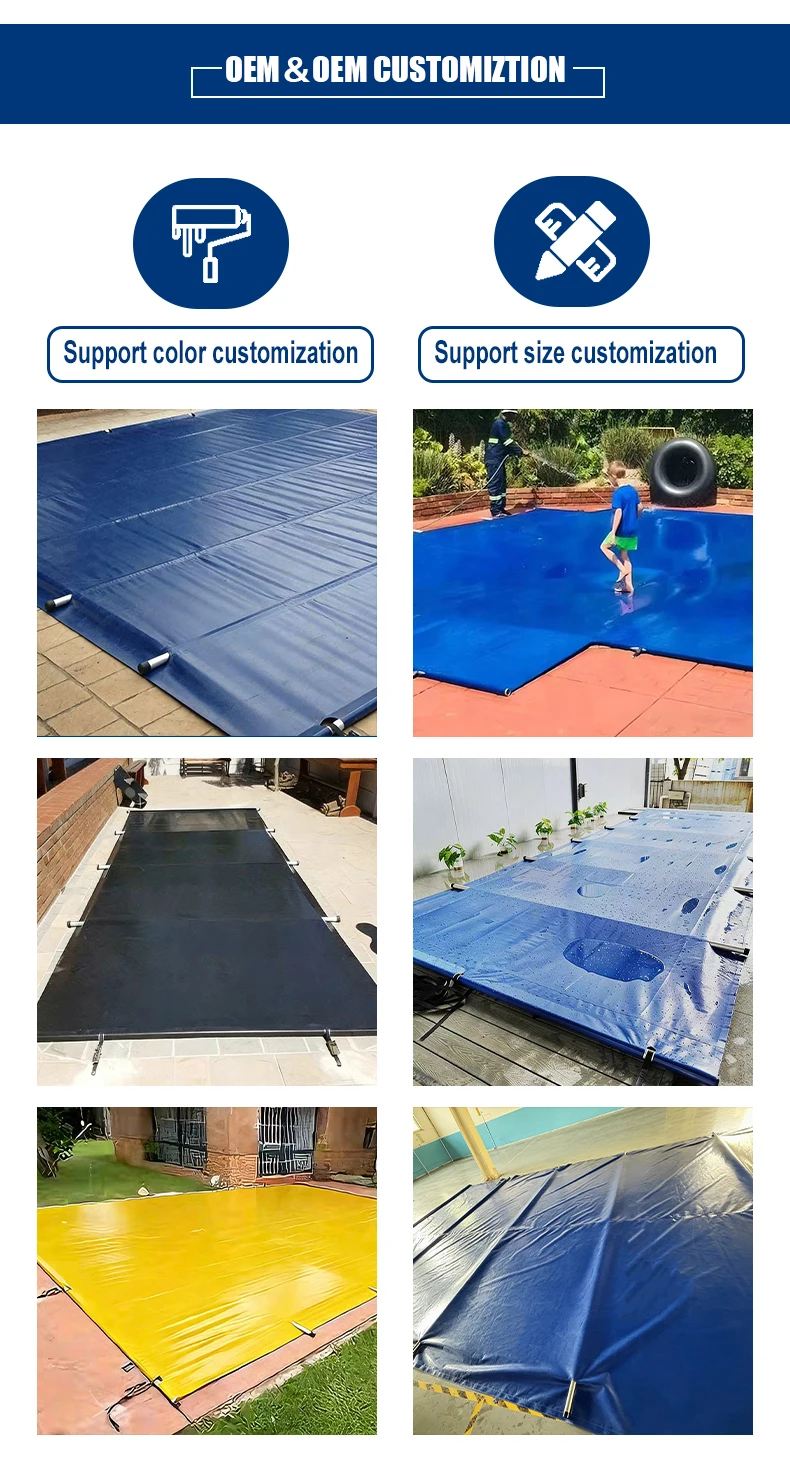
| Colour Options | Available in multiple colours (confirm at inquiry) |
| Finish Options | Available in glossy or matte finish |
| Custom Dimensions | Custom width and length available |
| Seaming Method | Heat-weldable |
Application Suitability
| Application | Exposure & Requirement |
|---|---|
| Outdoor awning fabric | Direct sun, seasonal rain, wind load, UV exposure — requires stable coating adhesion and colour fastness |
| Shade sail installations | Continuous tension, UV degradation, thermal expansion — demands consistent tensile strength roll to roll |
| Canopy covers | Intermittent water pooling, flex at support points, abrasion at frame contact — needs waterproof coating with tear resistance |
| Pet shelter covers | Ground moisture, animal contact, repeated cleaning — requires waterproof, easy-clean PVC surface |
| General tarpaulin distribution | Bulk resale with consistent quality per roll, uniform colour for shelf display, reliable GSM for margin protection |
Why Quoted GSM Rarely Matches What Arrives on the Dock
Spec sheets are only as trustworthy as the inspection that backs them.
When sourcing PVC coated tarpaulin in volume, the gap between the GSM printed on the quotation and the actual weight of the rolls delivered can erode your margins and compromise the performance claims you make to your own customers. Medium-weight PVC coated tarpaulin roll stock is one of the most commonly specified grades in the market, yet weight discrepancies remain one of the most frequent complaints from distributors and fabricators alike. The reason is straightforward: without in-line weight verification and a documented pre-shipment inspection, coating thickness can drift across a production run without anyone catching it. [NEED_CITE: ISO test methods for coated fabric mass per unit area]
How Roll-to-Roll Uniformity Protects Your Converting Line
When you run PVC coated tarpaulin roll stock through a slitting or welding line, inconsistency between rolls forces operators to adjust heat, pressure, and feed rate mid-batch. Uniform coating weight and base fabric density mean your fabrication settings stay constant, reducing scrap and rework at every stage of production.
Colour Matching Across Multiple Rolls in a Single Shipment
Distributors reselling cut-to-size tarps and awning makers sewing adjacent panels both face the same problem: if rolls within the same order shift in shade, the finished installation looks mismatched in daylight. Batch-level colour control during the coating stage is what separates PVC coated tarpaulin roll stock that installs cleanly from stock that triggers customer complaints. [NEED_CITE: colour measurement standards for coated textiles]
Reading the Specification Sheet Beyond the Headline Number
Medium-weight PVC coated tarpaulin covers a range of performance levels depending on how the base fabric and coating interact. The denier of the polyester yarn and the weave density determine how well the fabric resists tear propagation — a loosely woven base with a thick coating may feel heavy but tear easily along the warp or weft. The coating method, whether knife-over-roll, laminating, or calendering, controls how deeply the PVC penetrates the base fabric and directly affects peel strength at welded seams. A surface that is glossy typically sheds water more readily and accepts digital printing, while a matte finish reduces glare and hides scuff marks from handling. Width and roll length determine cutting yield: wider rolls reduce the number of splice seams in large awnings, while shorter roll lengths are easier to handle in smaller workshops.
The Hidden Cost of Specifying on Weight Alone
Choosing PVC coated tarpaulin roll stock based on GSM without verifying base fabric denier, coating adhesion, or seam strength leads to a predictable failure pattern: the fabric holds, but the welded seams open under load at the flex points. For awning makers, this means warranty returns on installations that are only months old. For distributors, it means unsellable stock when end users find the material underperforms against the weight claim printed on the packaging. [NEED_CITE: seam strength versus base fabric tensile failure in coated textiles]
Why Fabricators and Distributors Source PVC Coated Tarpaulin Roll Stock Here
Deep process control over coating weight and adhesion means the GSM on the spec sheet is the GSM on the roll, verified at multiple checkpoints during production. Three full production lines and 36 sets of equipment provide the capacity to fulfil bulk container orders with consistent lead times, even when you specify custom widths or colours. A 10-person R&D team handles pattern printing requests, sample development for new applications, and rapid prototyping before you commit to a full production run. Every roll undergoes 100% inspection before shipment, so weight variation, coating defects, and colour drift are caught at the factory rather than at your receiving dock. Samples for custom colour or width are developed within days, letting you confirm appearance and handling before bulk production begins.
Documentation & Verification
- Material specification sheet stating exact GSM, base fabric denier, and coating type for each roll batch
- Pre-shipment inspection record with verified weight per roll and colour reference check
- Roll packing list detailing roll count, net weight, and container loading plan
- Anti-UV test report available for treated grades upon request
- ISO and CE certificates included with shipment documentation package
Fabrication, Handling & Storage
- Set heat-weld temperature based on the PVC coating thickness; medium-weight grades typically require moderate heat and steady pressure
- Store rolls upright on pallets to prevent flat-spot deformation that shows as creases when unrolled on the cutting table
- Avoid dragging rolls across unprotected floors — the PVC coating surface scratches more easily than the base fabric tears
- When slitting, allow for edge trim waste; coating thickness can vary slightly at the selvedge compared to the roll centre
- Clean the matte or glossy PVC surface with mild detergent only; solvent-based cleaners can soften the plasticiser in the coating
- For outdoor storage before fabrication, keep rolls wrapped and shaded to prevent UV exposure on uninstalled material
What We Need to Move Your Inquiry Forward
Provide the end-use application and the environmental conditions the fabric will face — outdoor UV exposure, chemical contact, or mechanical abrasion at flex points. Specify your target roll width, required roll length, and estimated annual volume so we can quote the right production line and lead time. If colour consistency or custom printing is critical, request a sample roll before committing to bulk so you can test fabrication parameters in your own workshop.
Frequently Asked Questions
Q: How is GSM verified per roll and what documentation accompanies shipment?
A: Each roll is weighed and measured during the 100% pre-shipment inspection. A material specification sheet is issued stating the confirmed GSM, base fabric denier, and coating details for your batch. The pre-shipment inspection record and roll packing list travel with your shipment so you can cross-check on arrival.
Q: How do you ensure colour consistency across rolls in the same order?
A: Colour is controlled at the coating stage using reference standards, and every roll in a single production batch is checked against those references during inspection. If your application requires adjacent panels to match — such as large awnings or shade sails — note this in your inquiry so we prioritise batch-level matching.
Q: What standard and custom widths and roll lengths are available?
A: Standard widths and roll lengths are stocked for common medium-weight grades. Custom widths and lengths are available with a confirmed lead time. Specify your cutting table width and target yield per roll so we can recommend the most efficient format for your operation.
Q: What are the MOQ and lead time for custom width, colour, or print?
A: Minimum order quantities and lead times depend on the specific customisation — colour matching, pattern printing, or non-standard width. Request a quotation with your requirements and we will confirm MOQ, sample development timeline, and bulk production schedule before you commit.
Q: How are rolls packed and loaded for container shipment?
A: Rolls are packed vertically on pallets with protective wrapping to prevent transit damage and creasing. A detailed roll packing list is provided showing roll count, individual and total net weight, and the container loading plan so you can verify quantity against your purchase order at the destination.