Description
Bulk Roll Consistency — Every roll in a container shipment is weighed and documented before dispatch, ensuring the GSM and colour reference you approve on the sample are what arrives at your warehouse.
Technical Specifications
| Parameter | Value |
|---|---|
| Product Type | PVC Knife-Coated Tarpaulin Roll Stock |
| Material | PVC + High-strength polyester mesh fabric |
| Coating Technology | Laminated technology & Hot-melt coating technology |
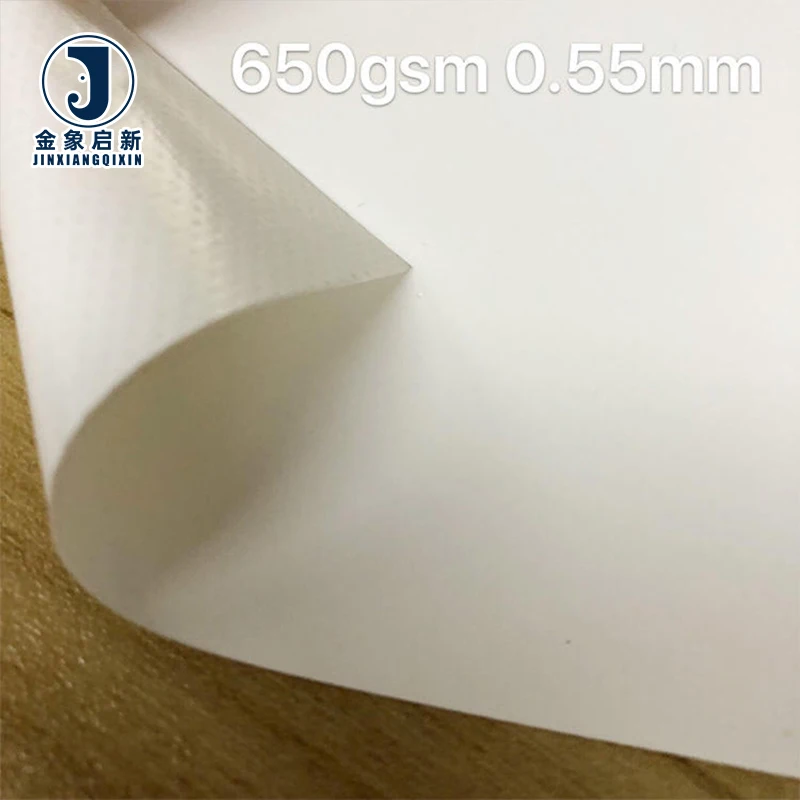
| Weight (GSM) | 650 gsm |
| Total Thickness | Confirm grade for this item (range: 0.32 mm – 0.65 mm across family) |
| Roll Width Options | 2.0 m / 2.1 m |
| Roll Length Options | 50 m / 75 m |
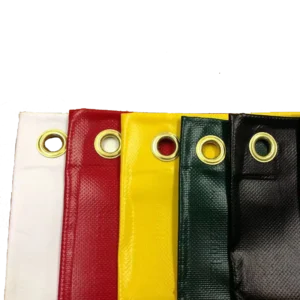
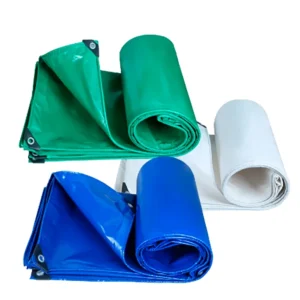
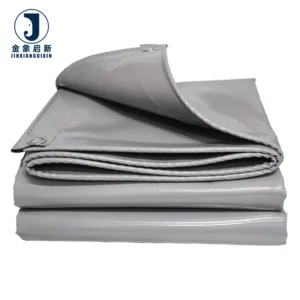
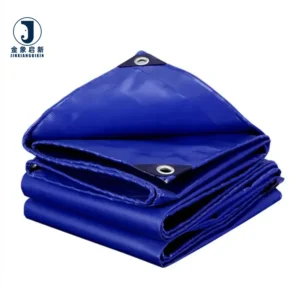
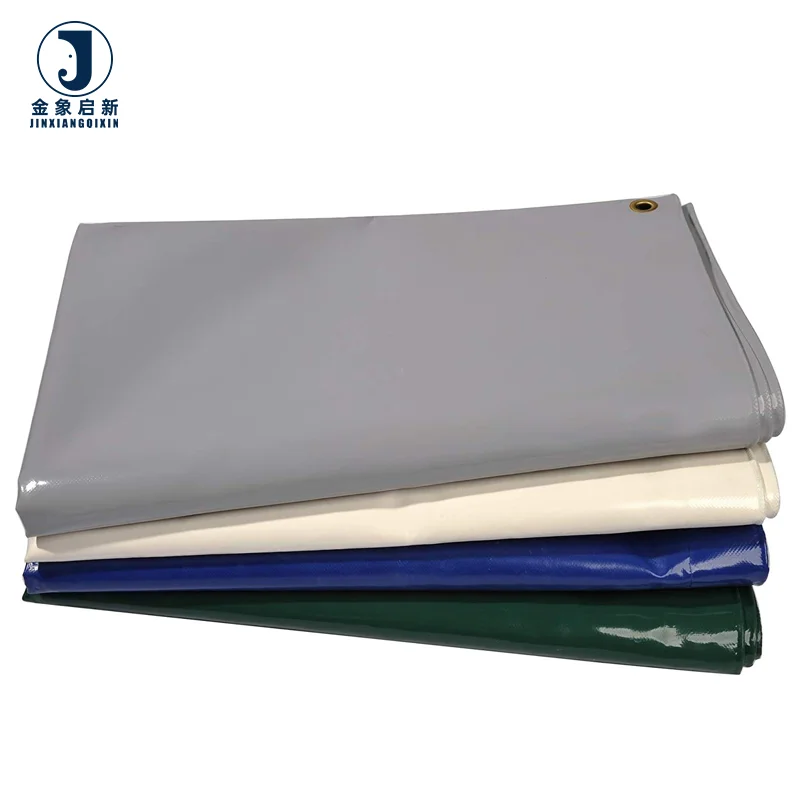
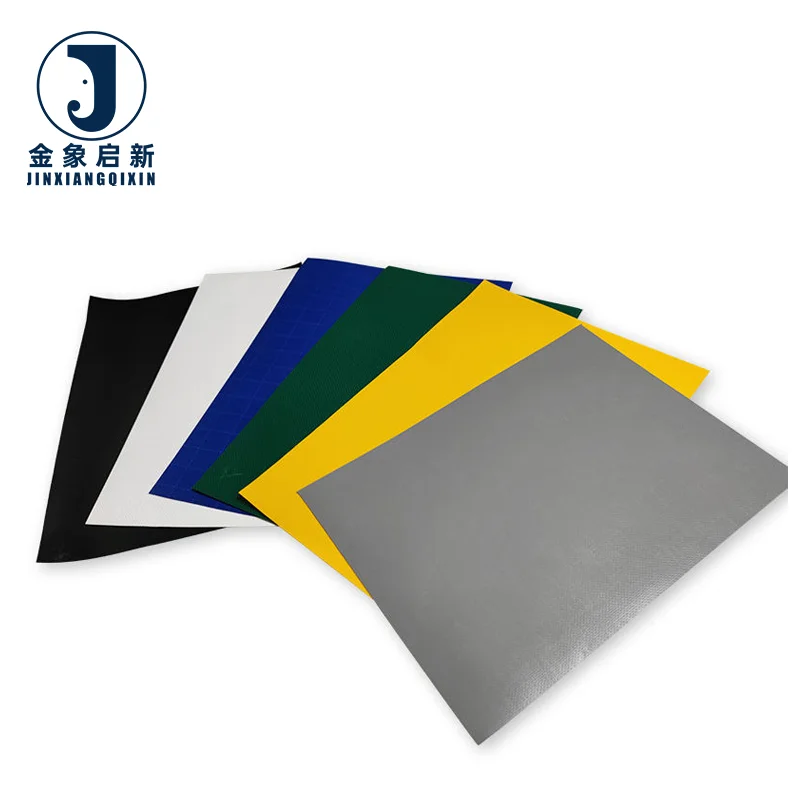
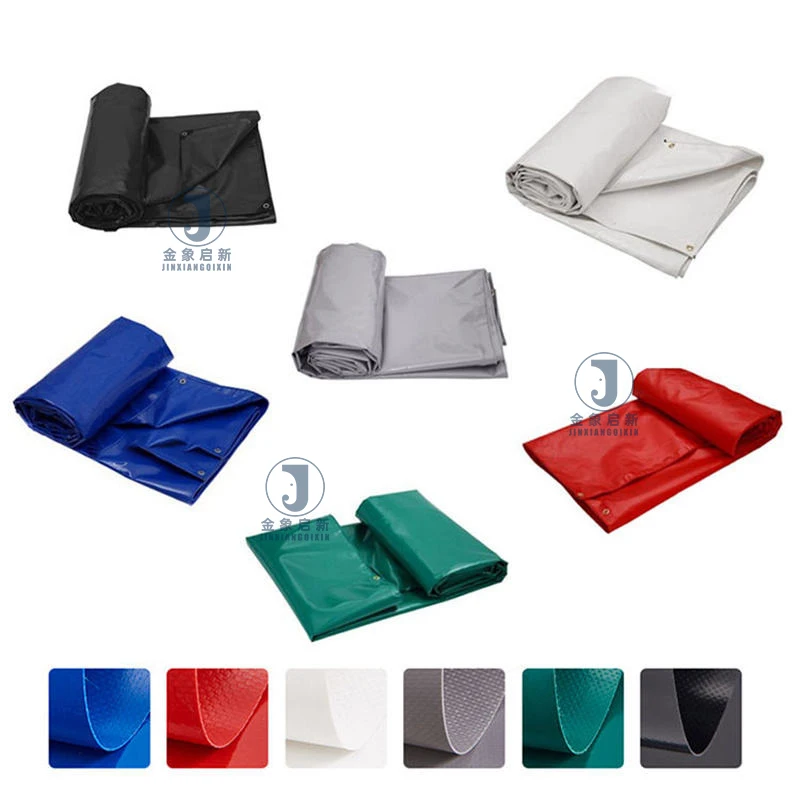
| Colour Options | Blue, Red, Yellow, Light Blue, Grey (custom colours available) |
| Surface Finish | Glossy or matte — confirm at order |
| Operating Temperature | -70 °C to +100 °C |
| Cold Crack Resistance | Rated to -70 °C |
| Flame Retardant | Available in flame retardant grades — confirm the grade required for your market |
| Anti-Static | Available as special treatment — confirm grade for your application |
| Standards | ISO, CE |
Application Suitability
| Application | Exposure & Requirement |
|---|---|
| Tarpaulin distribution & import | Full-container loading with batch-consistent GSM and colour across dozens of rolls |
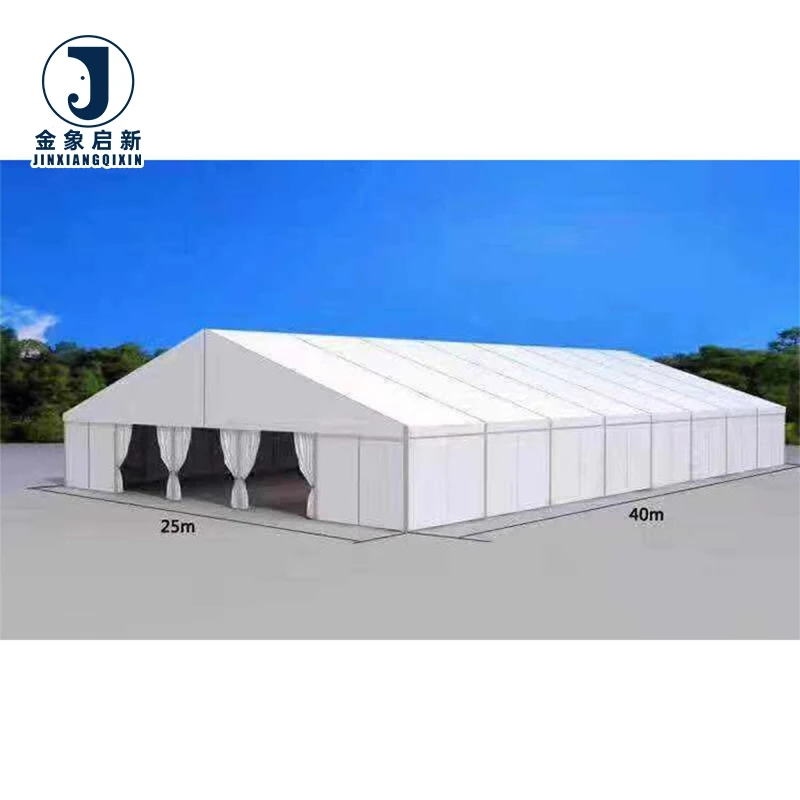
| Tent and awning fabrication | Roll-to-roll colour match so panels cut from different rolls appear uniform after assembly |
| Truck side curtain & transport cover | Constant flexing, road abrasion, UV exposure, weld seam integrity at stress points |
| Agricultural pond lining | Permanent water contact, soil chemistry, puncture resistance during installation |
| Scaffolding and building enclosure | Wind load, weather exposure, fire compliance on active construction sites |
| Equipment and pallet covers | Dust, moisture, and handling abrasion during storage and transit |
Why Roll-Stock Buyers Still Receive Inconsistent GSM Across a Single Shipment
GSM on the invoice does not always match the roll on the dock — verification must happen per roll, not per batch.
Wholesale buyers ordering full container loads of PVC knife-coated tarpaulin roll stock often face a quiet problem: the quotation states a specific weight, but individual rolls arrive lighter than agreed. This is not always intentional. Coating weight can drift across a production run when line speed, oven temperature, or paste viscosity shift without real-time correction. The result is fabric that feels right on the first few rolls but thins out by the twentieth. For a distributor reselling to fabricators, that inconsistency damages credibility downstream. [NEED_CITE: coating weight variation in PVC calendaring and laminating processes]
How Batch Colour Drift Undermines Multi-Roll Fabrication Projects
When a tent manufacturer cuts panels from six different rolls to assemble a single structure, even a slight hue shift between rolls becomes visible once the fabric is tensioned and installed in daylight. Colour consistency in PVC knife-coated tarpaulin roll stock depends on locked pigment ratios, controlled mixing times, and matching coating thickness across every production run within one order. A distributor holding stock from two separate shipments may discover that rolls from batch A and batch B do not match when sold to the same end user. Locking a colour reference per order and running all rolls in a single production cycle is the only way to eliminate visible drift.
Container Loading and Roll Protection During Ocean Freight
Rolls of coated fabric are heavy and susceptible to edge damage when stacked horizontally in a container without proper blocking. The core must resist crushing under the weight of neighbouring rolls, and the outer wrap must prevent moisture ingress during weeks at sea. For wholesale buyers receiving a 40-foot container of PVC knife-coated tarpaulin roll stock, damaged edges mean lost usable metres and wasted margin. Reinforced cores, end-cap protection, and a documented loading plan that specifies roll orientation and bracing are standard requirements, not optional extras. [NEED_CITE: freight damage rates for roll goods in ocean container shipping]
What Coating Technology Means for Welding Performance and Fabrication Yield
The laminated and hot-melt coating processes used in this PVC knife-coated tarpaulin roll stock produce different adhesion profiles between the PVC layer and the polyester mesh base. Laminated fabric bonds a pre-formed PVC film to the mesh under heat and pressure, delivering a smooth, uniform surface that suits high-speed hot-air welding on automated curtain machines. Hot-melt coating penetrates deeper into the mesh weave, creating stronger mechanical adhesion at the cost of a slightly rougher surface texture. For fabricators running high-volume weld lines — truck side curtains, tent panel joining, inflatable structure seams — the choice between these two coating methods affects weld temperature settings, dwell time, and peel strength at the joint. A 650 gsm grade provides the coating thickness needed for consistent heat transfer during welding without burning through to the base fabric. The polyester mesh denier and thread count within that weight determine how well the weld line resists peeling under flex loads. [NEED_CITE: peel strength test methods for coated fabric welds per ISO 1421]
The Hidden Cost of Accepting Roll Stock Without Per-Roll Verification
A distributor that skips pre-shipment inspection and relies on the supplier’s batch certificate may not discover a GSM shortfall until a fabricator customer complains that the material tears too easily during installation. By that point, several rolls have already been cut and sold, making a full return impractical. The cost is not just the claim — it is the lost account and the reputation damage in a market where fabricators talk to each other. The same applies to flame retardant grades specified for construction enclosure: if the certification does not match the grade required by the local authority, the entire batch can be rejected at site inspection, leaving the contractor exposed to delay penalties. [NEED_CITE: fire classification requirements for temporary building enclosures by region]
Why Sourcing Roll Stock From Jinan Jinxiang Works for Volume Buyers
Three full production lines and 36 sets of professional equipment support bulk output without sacrificing coating consistency across long runs. A dedicated 10-person R&D team handles sample development, custom colour matching, and width specifications before production begins — not after a problem surfaces. Every roll undergoes 100% pre-shipment inspection with weight verification against the stated GSM. Roll packing lists detail individual roll weight and dimensions, giving wholesale buyers the data needed to plan container loading and freight costs before the vessel sails. ISO and CE certifications are documented, and a complete set of export paperwork — from material specification sheets to certificates of origin — ships with every consignment.
Documentation & Verification
- Material specification sheet stating base fabric, coating method, and GSM for each roll grade
- Pre-shipment inspection record confirming weight, colour reference, and roll dimensions per batch
- Roll packing list with individual net weight and container loading plan by roll count
- UV and flame retardant test reports provided where specific treatment grades are ordered
- Certificate of origin and customs documentation included with every export shipment
Fabrication, Handling & Storage
- Hot-air weld temperature and speed must be calibrated to the 650 gsm coating thickness before production runs begin
- Store rolls upright on reinforced cores in a dry warehouse to prevent edge flattening and surface creasing
- Allow cold-stored rolls to reach ambient temperature before unrolling to avoid cracking the PVC coating at -70 °C rated limits
- Use sharp rotary blades on laminated surfaces to achieve clean edges without fraying the polyester mesh base
- Match seam overlap width to the fabric weight grade so that peel strength meets structural load requirements
- Clean glossy or matte surfaces with mild detergent only — solvents degrade the plasticiser in the PVC coating layer
What We Need From You to Quote Accurately
To prepare a roll-stock quotation, provide the target GSM, roll width, and colour reference along with your estimated annual volume and shipment frequency. If your market requires a specific flame retardant or anti-static grade, state the standard you need to meet so we can confirm compliance before sampling. Let us know whether you need standard 50 m or 75 m roll lengths, or a custom length optimised for your cutting table yield.
Frequently Asked Questions
Q: How is GSM verified on each roll before shipment?
A: Every roll is weighed individually after production and before packing. The inspection record lists actual weight and calculated GSM against the specification sheet. Rolls that fall outside tolerance are pulled from the batch. Buyers can request the inspection record before the container is sealed.
Q: What roll widths and lengths are stocked versus made to order?
A: Standard stock widths are 2.0 m and 2.1 m in 50 m and 75 m roll lengths. Non-standard widths and lengths are produced to order with a minimum run per grade. Contact us with your required dimensions for lead time confirmation.
Q: How do you control colour consistency across rolls in the same container?
A: All rolls within a single order are produced in one continuous run using the same pigment batch and coating formulation. A signed colour sample is held as the reference standard, and rolls are compared against it under controlled lighting before packing.
Q: What is the MOQ for custom colour or custom width rolls?
A: Custom colours and non-standard widths carry a minimum order per production run, typically one full container load depending on the specification. We confirm the exact minimum once we review your colour reference and width requirement.
Q: How are rolls packed for container loading to prevent transit damage?
A: Each roll is wrapped in protective film with reinforced end caps on the core. Rolls are loaded according to a plan that specifies orientation, stacking sequence, and bracing to prevent shifting and edge crush during ocean freight transit.