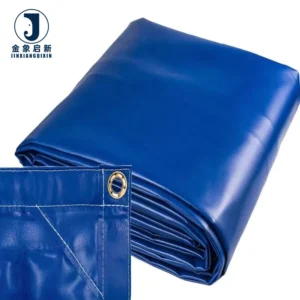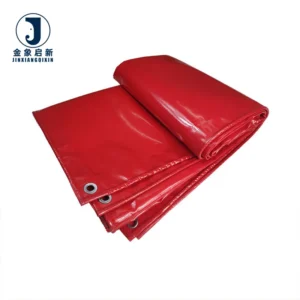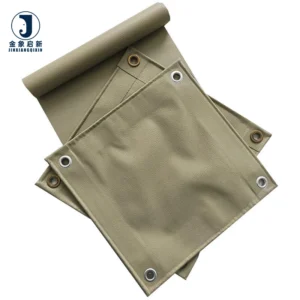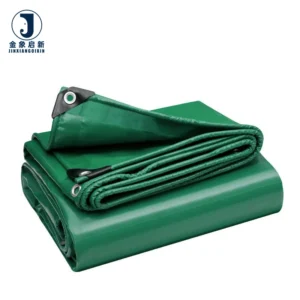
Description
Batch-Verified Roll Stock — Every PVC Coated Tarpaulin Roll Stock shipment is backed by a pre-shipment inspection record confirming actual coating weight and base fabric denier against the agreed material specification sheet.
Technical Specifications
| Parameter | Value |
|---|---|
| Product Type | PVC Coated Tarpaulin |
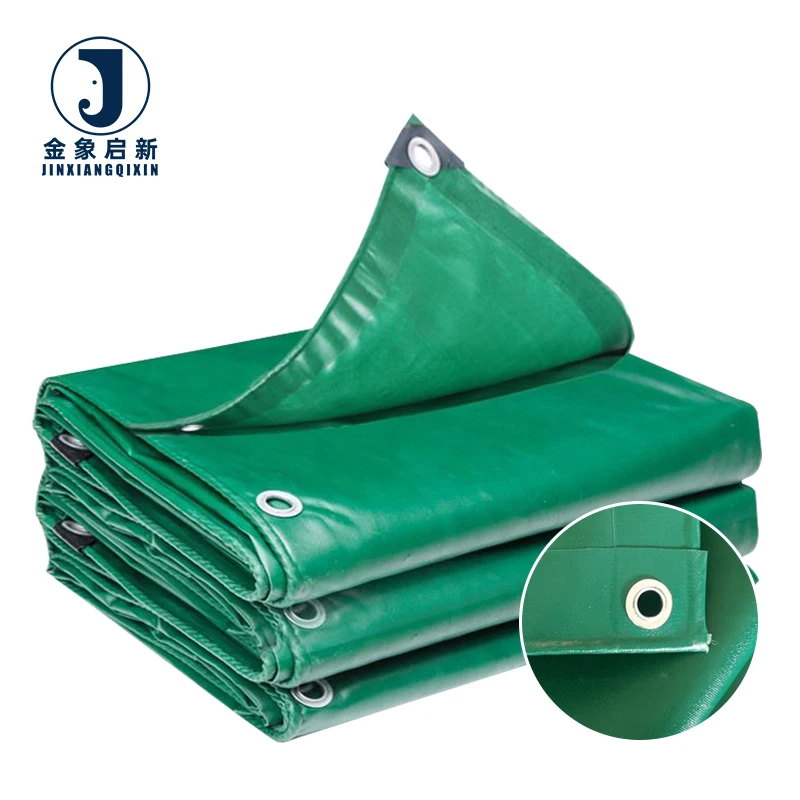
| Material Composition | PVC & Polyester base fabric with double-sided PVC coating |
| Yarn Count | 500D×500D |
| Weight Range | 450-900 g/㎡ (available in multiple grades) |
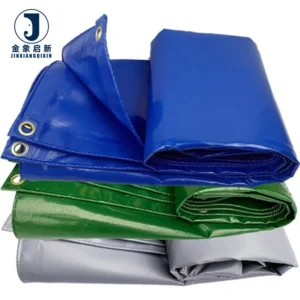
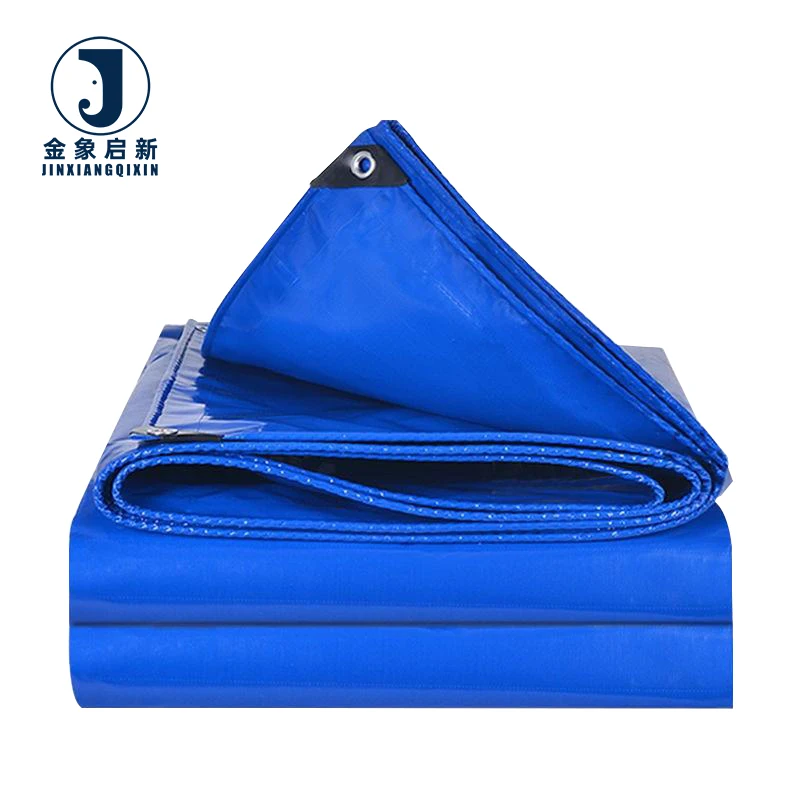
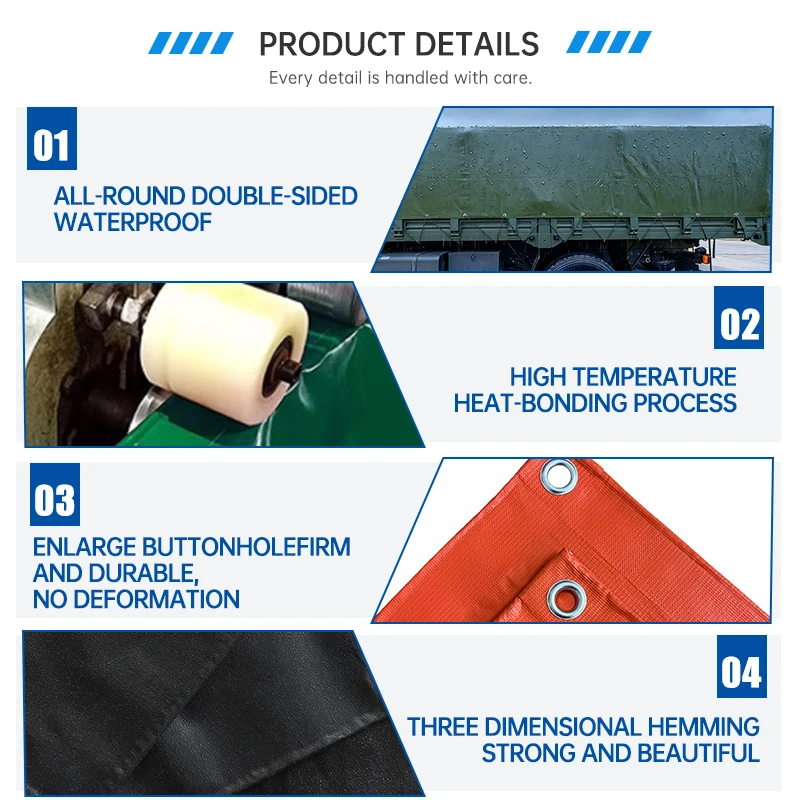
| Surface Characteristics | Smooth and soft surface with a leather-like texture |
| Key Features | Water Resistant, Flame Retardant, Anti-UV, Waterproof |
| Flame Retardant | Flame-retardant type customizable (grade not stated) |
| UV Treatment | Anti-UV (test basis not stated) |
| Repairability | Repairable by hot air welding |
| Service Life | 3-5 years |
| Package Options | Roll packing, bale packing, carton |
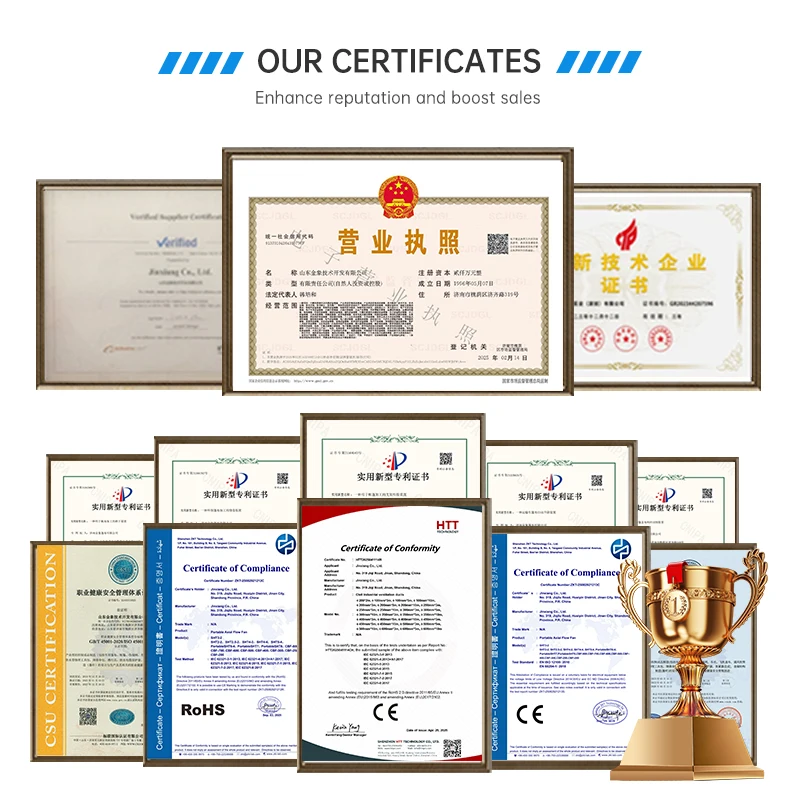
| Certifications | ISO, CE |
Application Suitability
| Application | Exposure & Requirement |
|---|---|
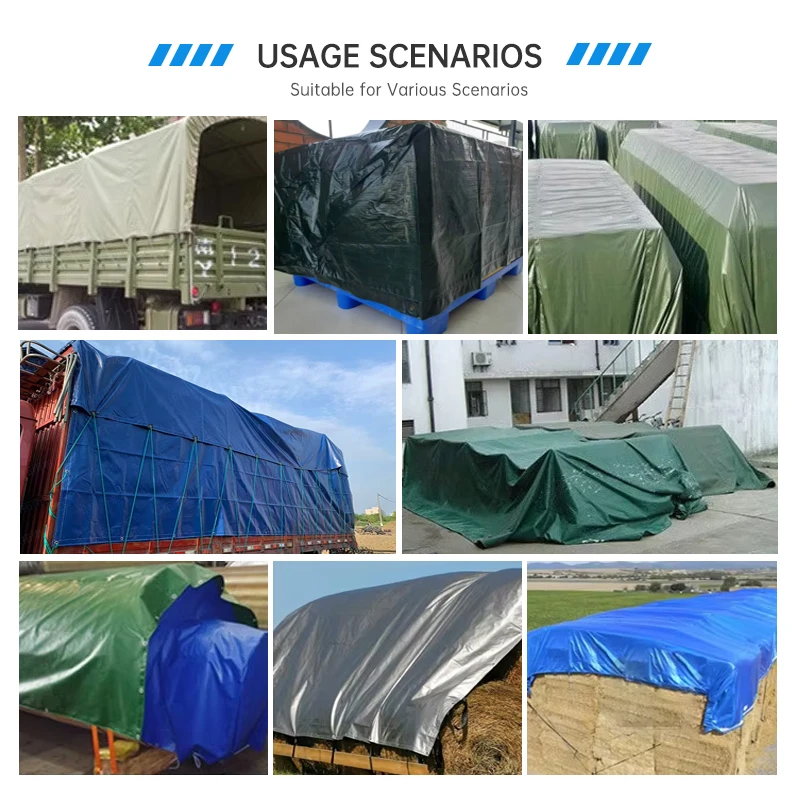
| Truck and Trailer Covers | Continuous flexing during transit, road abrasion, varying weather exposure, requires high tensile stability |
| Machine and Equipment Covers | Static outdoor storage, UV exposure, dust and moisture ingress prevention, requires durable waterproof barrier |
| Tent and Awning Fabric | Tensioned installation, wind load, frequent assembly and disassembly, requires consistent roll-to-roll quality for fabrication |
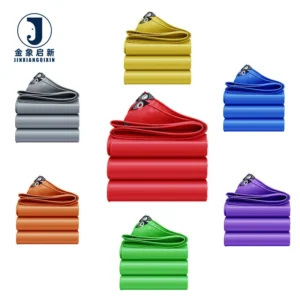
| Wholesale Distribution | Regional resale inventory, requires batch consistency in colour and weight across multiple rolls for downstream fabrication |
Why "Stated GSM" Often Fails the Roll-to-Roll Test
When ordering PVC Coated Tarpaulin Roll Stock wholesale supplier volumes, the gap between quoted weight and delivered weight is a primary source of dispute. A material specification sheet may state a target GSM, but without individual roll verification, the average weight of a batch can mask significant under-weighting on specific rolls [NEED_CITE: quality control standards for coated fabric weight tolerance]. This leads to downstream fabricators experiencing premature failure on covers made from lighter rolls, while heavier rolls in the same batch perform adequately.
Every roll is weighed and measured individually before packing, with the actual GSM recorded on the pre-shipment inspection document.
Procuring by the container load introduces complexity in maintaining consistency. Slight variations in coating thickness or base fabric tension during production can result in rolls that deviate from the nominal weight. For wholesale buyers stocking inventory for regional resale, this inconsistency damages reputation when fabricators receive mixed-quality stock from a single shipment. The only reliable method is per-roll verification, ensuring the PVC Coated Tarpaulin roll inventory you distribute meets the exact specification your customers expect.
Container Loading Efficiency and Roll Dimensions
Optimizing container space requires precise data on roll diameter and weight. As a wholesale supplier, we provide detailed roll packing lists that specify the net weight, gross weight, and dimensions of each roll. This allows logistics planners to calculate exact roll counts per 20ft or 40ft container, minimizing dead space and reducing freight cost per square meter of fabric. Consistent winding tension across the production batch ensures uniform roll diameters, which is critical for stable stacking and transport.
Batch-to-Batch Colour and Coating Consistency
Maintaining colour consistency across multiple production runs is challenging when raw material batches vary. For PVC Coated Tarpaulin Roll Stock, visual discrepancies between rolls can render an entire batch unusable for applications like side curtains or large tents where panels are joined visibly [NEED_CITE: colour fastness and batch variation in PVC coated textiles]. Our production process includes in-process QA checks that monitor coating colour against a master reference, ensuring that rolls produced weeks apart match within acceptable tolerances when unrolled side-by-side on the fabrication floor.
Decoding Base Fabric Denier and Coating Adhesion
The 500D×500D polyester base fabric provides the structural skeleton, but its interaction with the PVC coating determines the final performance. A high denier count contributes to tensile strength, yet the coating method—whether knife-coated or laminated—dictates the peel strength between layers. For PVC Coated Tarpaulin roll applications, poor adhesion leads to delamination at stress points or weld seams. The weight range of 450-900 g/㎡ offers flexibility: lighter grades suit temporary covers or awnings where weight is a constraint, while heavier grades provide the mass and abrasion resistance needed for permanent truck side curtains or heavy machinery wraps. The smooth, leather-like surface finish not only aids in dirt release but also provides a stable base for custom pattern printing or branding if required.
The Hidden Cost of Weld Failure on Coated Rolls
Fabricators often blame the welder when seams fail, but the failure frequently originates in the coating formulation or base fabric stability. When PVC Coated Tarpaulin Roll Stock is subjected to hot air welding, the coating must melt and fuse uniformly. If the coating weight varies across the roll width, or if the base fabric has inconsistent tension, the weld line becomes the weakest point [NEED_CITE: hot air welding parameters and seam strength for PVC coated fabrics]. A seam that fails before the fabric body does indicates a mismatch in thermal properties or insufficient coating adhesion, turning a bulk fabric purchase into a liability for the end-user.
Why Procurement Teams Choose This Supply Channel
Sourcing PVC Coated Tarpaulin Roll Stock wholesale supplier services requires reliability in documentation as much as in material quality. Our capability includes a 10-person R&D team that handles material selection and sample development, ensuring custom width or colour requests are validated before full production. Dedicated QA/QC stations perform 100% inspection before shipment, not just random sampling. With three full production lines, we support bulk capacity for container-load orders while maintaining the on-time delivery schedules that wholesale importers depend on. Samples are developed within days, allowing buyers to verify coating weight and colour before committing to volume.
Documentation & Verification
- Material specification sheet confirming 500D base fabric and exact coating weight for the ordered grade.
- Roll packing list detailing individual roll dimensions and weights for precise container loading plans.
- Pre-shipment inspection record verifying GSM and colour consistency against the agreed specification.
- Certificate of origin and full customs documentation package for seamless cross-border clearance.
- Test reports for UV and flame-retardant grades where specific treatments have been applied.
Fabrication, Handling & Storage
- Hot air welding settings must be calibrated to the specific GSM grade (450-900 g/㎡) to ensure seam integrity.
- Store rolls horizontally in a cool, dry place to prevent deformation of the PVC coating and permanent creasing.
- The smooth leather-like surface resists dirt accumulation, simplifying cleaning for fabricated covers and awnings.
- Avoid dragging rolls on unprotected surfaces to prevent abrasion damage to the outer coating layers.
- Repairable by hot air welding; field patches on heavy-grade rolls require matching coating thickness for proper adhesion.
- Unroll heavy-grade fabric in moderate temperatures to allow the PVC to relax and flatten before cutting.
Preparing Your Inquiry for Volume Procurement
To receive an accurate quotation for PVC Coated Tarpaulin Roll Stock, please specify your target GSM within the 450-900 g/㎡ range, required roll widths, and estimated annual volume. Indicate if your market requires specific flame-retardant grades or UV treatment levels so we can provide relevant test data. Clarify whether you need standard stock widths for immediate container loading or custom dimensions for specialized fabrication lines.
Frequently Asked Questions
Q: What stock widths and GSM grades are available for immediate shipment?
A: We maintain inventory of standard widths in the 450-900 g/㎡ range. However, "stock" availability fluctuates based on production schedules and recent container loadings. We recommend providing your specific GSM and width requirements early so we can check current warehouse inventory or schedule your order into the next available production window for the fastest dispatch.
Q: How do you ensure colour consistency across multiple rolls in one order?
A: Colour consistency is controlled through in-process QA monitoring against a master reference standard. Before packing, rolls intended for the same shipment are visually inspected side-by-side. The pre-shipment inspection record includes a confirmation of colour uniformity, ensuring that fabricators do not encounter visible variations when joining panels from different rolls in a single project.
Q: What is the minimum order for custom width or colour?
A: Custom widths and colours require a production run minimum to ensure coating bath consistency and economic viability. This minimum is typically calculated based on the total square meters required to fill a standard production batch or container load. We provide a specific quotation with the exact minimum and lead time once your target specification and colour reference are confirmed.
Q: Can you provide samples before I commit to a full container?
A: Yes, we develop samples within days for custom requirements or provide swatches from recent production for standard grades. This allows you to verify the coating weight, surface texture, and colour on your fabrication equipment. Sample approval is a standard step in our sales process before bulk production commences.
Q: What documentation comes with each shipment for customs clearance?
A: Each shipment includes a commercial invoice, detailed packing list, bill of lading, and certificate of origin. For specific markets, we can also provide material specification sheets and test reports. All documentation is prepared to match the customs requirements of the destination country, ensuring smooth clearance at the port of entry.