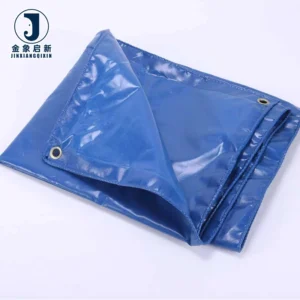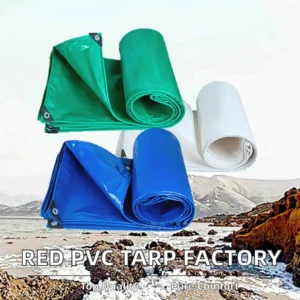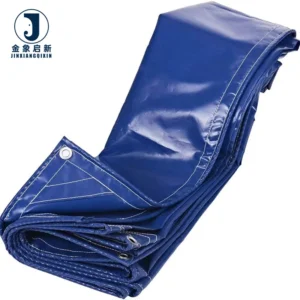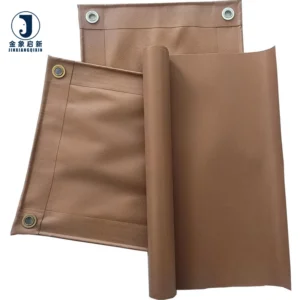
Description
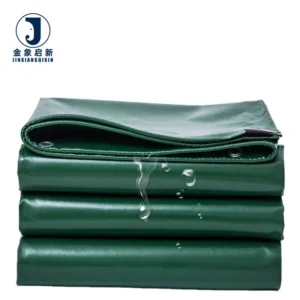
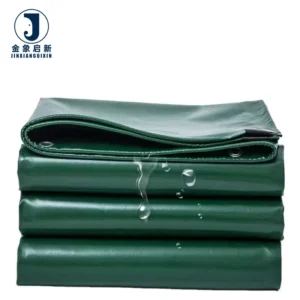
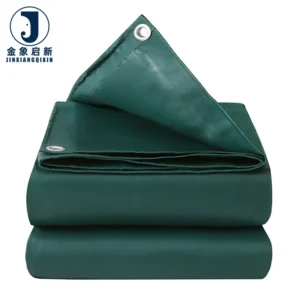
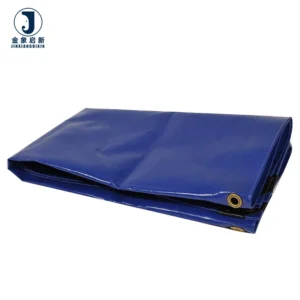
Roll-to-Roll Consistency — three full production lines and dedicated QA/QC ensure batch-matched GSM and colour across every roll in your container load.
Technical Specifications
| Parameter | Value |
|---|---|
| Product Type | PVC Coated Tarpaulin |
| Coating Material | PVC |
| Product Form | Roll |
| Finish | Double-Faced |
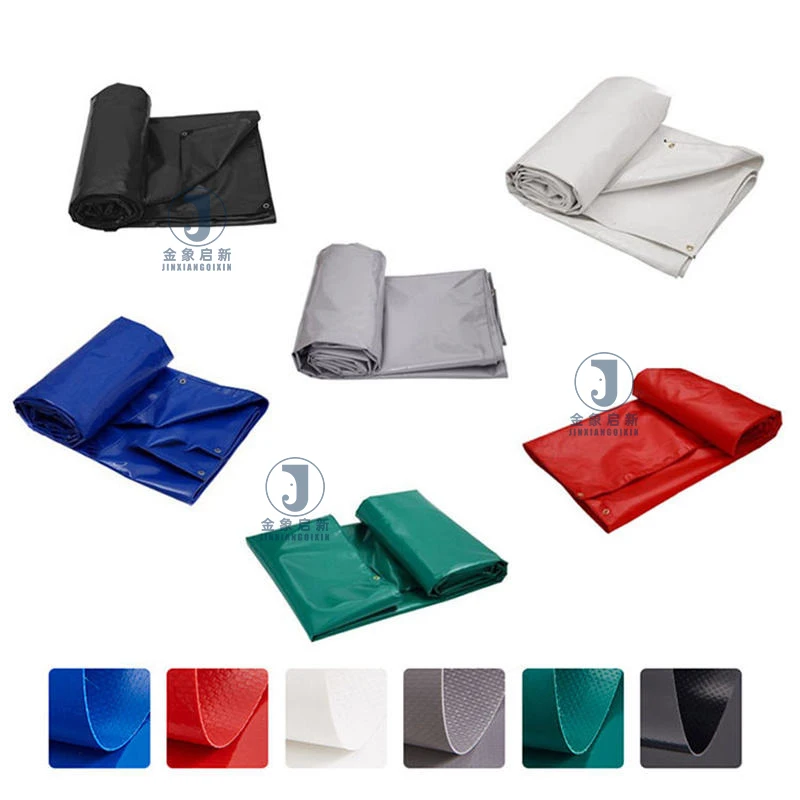
| Available Colors | Black and multiple custom colors |
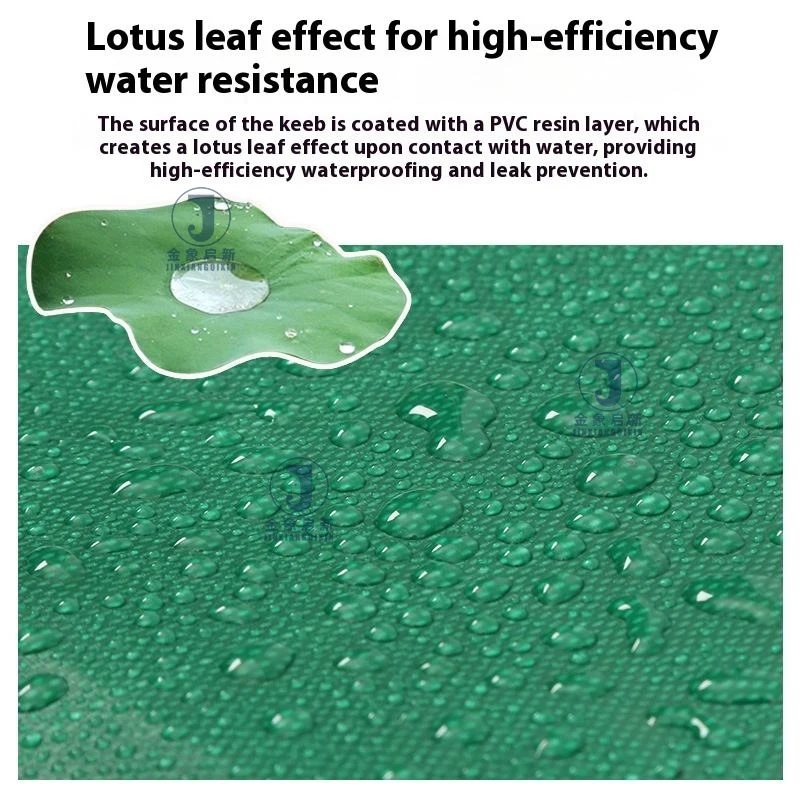
| Water Resistant | Yes |
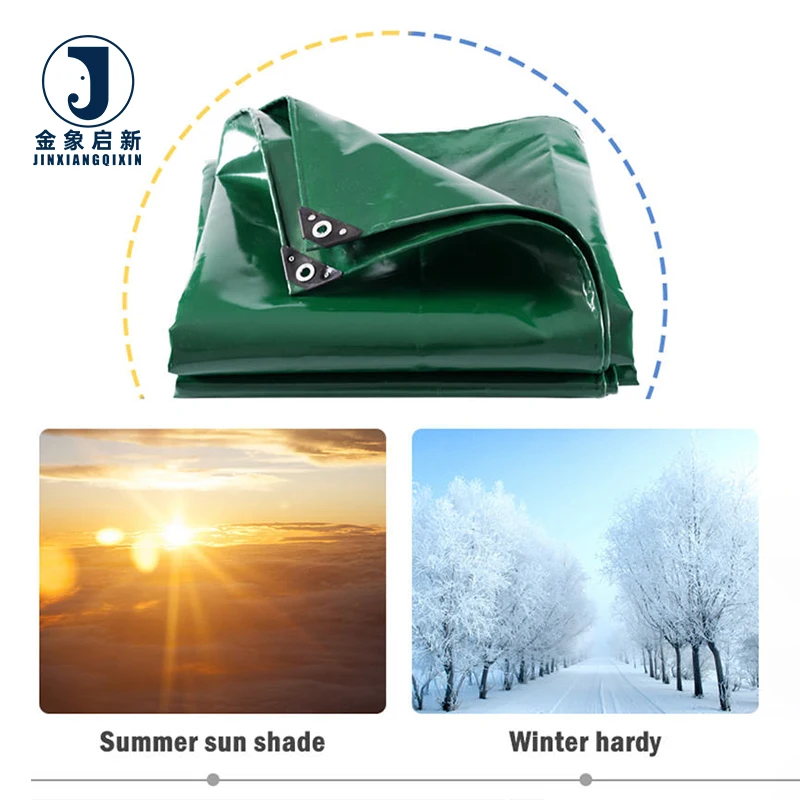
| Anti-UV | Available — confirm the UV rating required for your market |
| Flame Retardant | Available — confirm the flame retardant grade required for your market |
| Anti-Mildew | Yes |
| Side | Double-Faced |
Application Suitability
| Application | Exposure & Requirement |
|---|---|
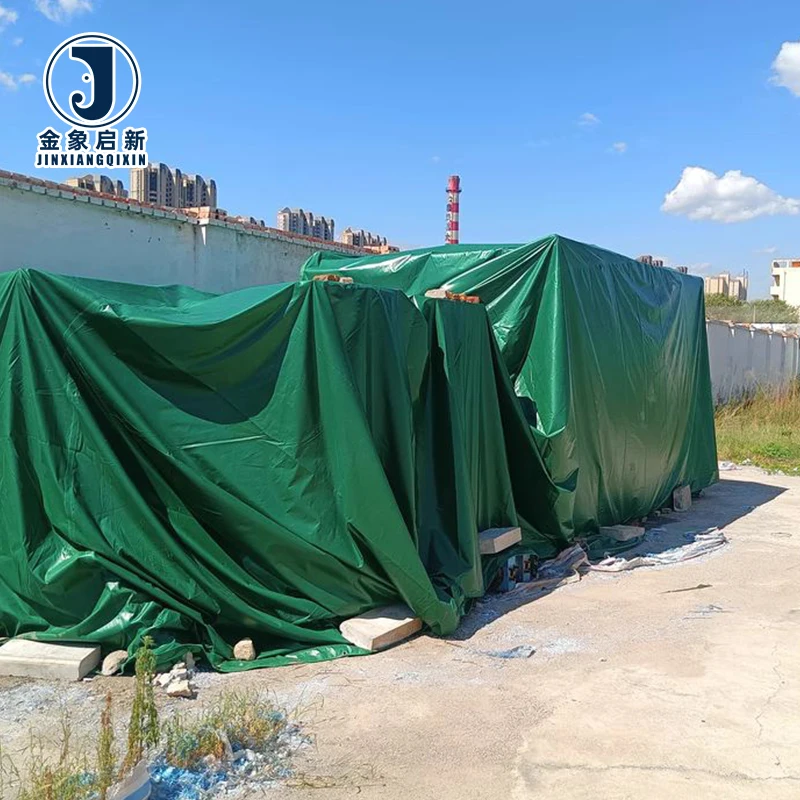
| Flatbed trailer load covering | Constant road vibration, wind uplift, UV exposure, rain ingress at high speed |
| Lumber transport | Heavy load abrasion, repeated tie-down tension, moisture penetration risk |
| General cargo covering | Variable load shapes, frequent handling, outdoor staging and yard storage |
| Regional tarpaulin distribution | Consistent colour and weight across inventory for end-customer satisfaction |
Why Batch-Matched PVC Coated Tarpaulin Roll Wholesale Matters More Than Stated GSM
A roll that measures correct on the scale but varies in colour or coating weight across the batch creates downstream rejections you cannot recover.
Buyers who source PVC coated tarpaulin roll wholesale frequently specify GSM on the purchase order and assume the rest will follow. What arrives may weigh the same on average, but coating thickness can drift across the roll face and between rolls in the same container. For a converter cutting multiple panels from different rolls to assemble a single truck cover, even minor shade variation becomes visible once the panels sit side by side on a trailer. [NEED_CITE: colour tolerance standards for coated technical textiles in batch production]
The real cost is not the roll itself — it is the labour to inspect, sort, and reject panels after cutting, plus the delay to your customer’s fleet schedule. Batch-matched production controls coating weight and colour at the formulation and calendering stage, not just at final weighing.
How Roll-Stock Sourcing Changes Your Procurement Logic
When you buy PVC coated tarpaulin roll wholesale for conversion into finished covers, the roll is your raw material — not the final product. Every defect hidden inside the roll becomes a defect in your output. Double-faced construction means both sides carry coating weight and colour, so either face can serve as the weather-exposed surface after cutting, reducing panel waste during nesting.
Converters serving transport fleets need predictable behaviour at the welding bar: consistent coating thickness means predictable heat settings and dwell times, reducing scrap at the seam line. Rolls with uneven coating force operators to adjust parameters mid-run, which introduces weak seams that fail under load flex.
Volume Purchasing and Container-Load Planning
Buying by the container load shifts your focus from per-roll price to total landed consistency. A twenty-foot container holds a fixed number of rolls based on roll diameter and width; any deviation in winding tension or roll diameter means fewer rolls fit or rolls arrive with edge crush damage. [NEED_CITE: container loading calculations for coated fabric rolls by width and diameter]
For distributors stocking multiple colours, the ability to batch-match across a mixed-colour container order means your warehouse inventory stays consistent within each colour family. This matters when a repeat customer orders the same black PVC coated tarpaulin roll months apart and expects the new material to match what they already have in service.
Reading Beyond the GSM Number
GSM tells you total weight per square metre but does not distinguish between base fabric density and coating mass. Two rolls can share the same GSM while one carries a heavier base fabric with thinner coating and the other carries a lighter base with thicker coating. The first will show higher tensile and tear strength; the second may offer better surface abrasion resistance but weaker structural integrity at the seam.
Double-faced coating distributes the PVC across both surfaces, which influences how the fabric behaves during hot-air welding — the coating must melt and fuse at the overlap without the base fabric separating. Anti-mildew treatment protects stored rolls and installed covers in humid environments where organic growth attacks the fabric surface and creates permanent staining. For UV and flame retardant grades, always request the test report that corresponds to the specific batch you receive. [NEED_CITE: test methods for UV resistance and flame retardancy in PVC coated fabrics per ISO standards]
The Hidden Cost of Inconsistent Roll Stock
A converter cutting flatbed trailer covers from roll stock faces the most expensive failure mode when colour drifts between rolls in the same shipment. The panels pass individual inspection but fail visual matching once assembled on the trailer — the customer rejects the entire cover, and the converter absorbs material, labour, and freight cost for the replacement. [NEED_CITE: cost of batch colour variation in coated fabric conversion operations]
Less visible is the seam failure that originates from coating weight variation: a weld set at the correct temperature for nominal coating thickness under-fuses where the coating runs thin, creating a bond that passes initial pull test but separates after weeks of road vibration. The fleet operator blames the fabric; the root cause sits in roll consistency.
Why Source Roll Stock Through This Supply Channel
Deep process control over coating weight and adhesion means the GSM on your quotation matches what you verify on arrival, roll after roll across the same container.
Three full production lines support container-volume orders with consistent winding tension and roll diameter, so your loading plan holds and transit damage stays minimised.
Ten-person R&D team develops custom colour and width samples within days, letting you confirm shade match before committing to bulk production.
Dedicated QA/QC at every production stage with full pre-shipment inspection means you receive documentation that traces each roll back to its production batch.
Documentation & Verification
- Material specification sheet stating coating type, base fabric construction, and colour reference for your records
- Pre-shipment inspection record with verified GSM measurement per roll against quotation values
- Roll packing list with individual batch numbers enabling traceability through your warehouse and into customer installations
- Test reports for UV and flame retardant treatments where applicable, matched to the batch supplied
- Certificate of origin and customs documentation supporting export shipment clearance
Fabrication, Handling & Storage
- Set hot-air welder temperature and speed based on double-faced PVC coating thickness — test a sample overlap before production runs
- Store rolls upright on end cores to prevent flat-spot deformation that transfers into visible creases on cut panels
- Allow rolls to acclimatise to workshop temperature before unrolling in cold weather to avoid coating crack at the unwind point
- Use mild detergent without solvents for cleaning finished covers to preserve the anti-mildew treatment on the coating surface
- Plan panel nesting across roll width to maximise yield and minimise offcuts, accounting for selvage trim on both edges
- Keep spare roll stock wrapped and elevated off concrete floors to prevent moisture wicking into the roll edge
What to Include in Your Roll-Stock Enquiry
Provide the target GSM range, preferred roll widths, and annual volume so the quotation reflects realistic container-load quantities. Specify whether you need stock black or custom colours, and whether shade matching against a previous batch or physical sample is required. Indicate your destination market and any compliance requirements for UV or flame retardant treatment so the correct test reports accompany your shipment.
Frequently Asked Questions
Q: How is GSM verified before my rolls ship?
A: Every roll undergoes weight measurement during pre-shipment inspection. The recorded GSM per roll is documented against the quoted specification and included in your inspection record. This means you can verify on arrival that the material matches what was agreed, eliminating disputes over underweight delivery.
Q: How is colour consistency controlled across a bulk order?
A: Production runs for a single order use matched coating formulation and controlled calendering parameters throughout. Rolls from the same batch are grouped together in the packing list. If you are restocking and need to match a previous order, supply a physical sample or batch number so the production team can align shade within tolerance.
Q: What roll widths are available, and what is the minimum order per colour?
A: Standard stock widths cover common trailer and converter requirements. Custom widths are available with sample development before bulk commitment. Minimum order quantities depend on whether you select a stock colour or request a custom shade — stock colours carry lower minimums and shorter lead times.
Q: How are rolls packed to survive container transit?
A: Each roll is wound on a rigid core, wrapped in protective film, and labelled with batch number and product specification. Rolls are loaded in the container to prevent edge crush and movement during ocean freight. The packing list details roll count, dimensions, and batch traceability for your receiving inspection.