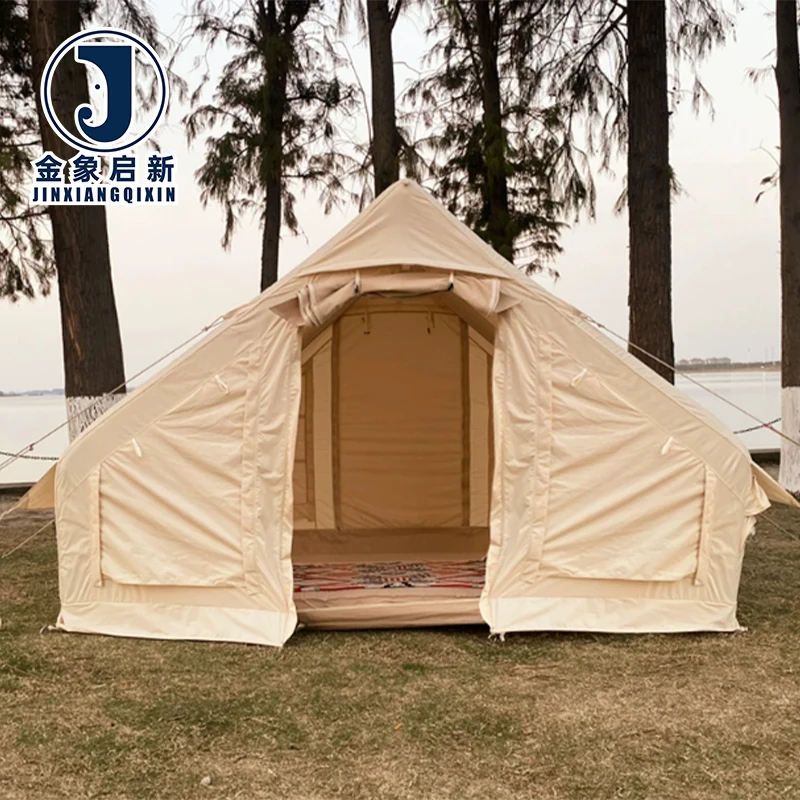
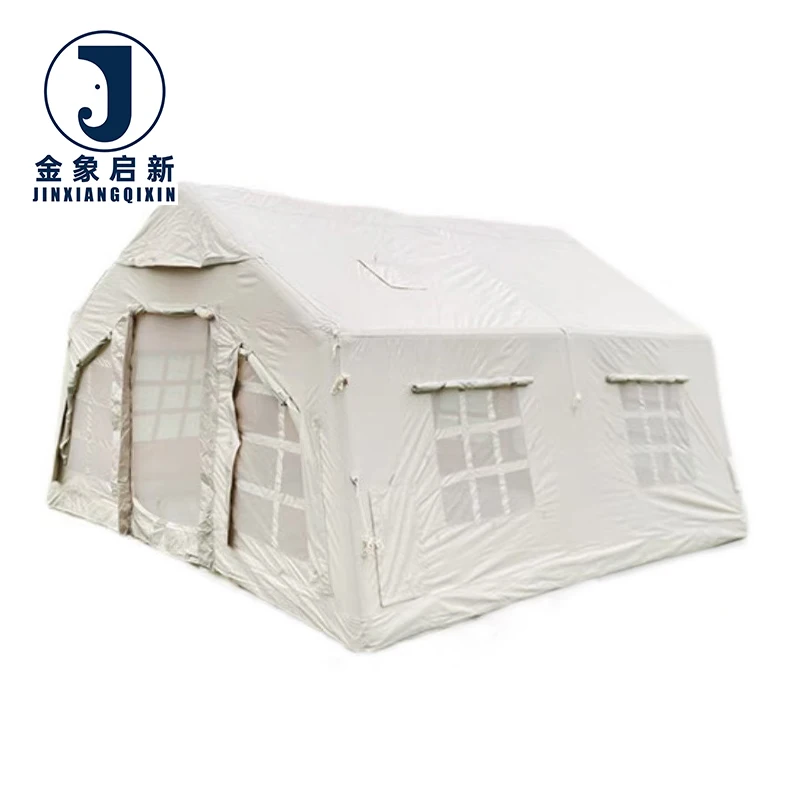
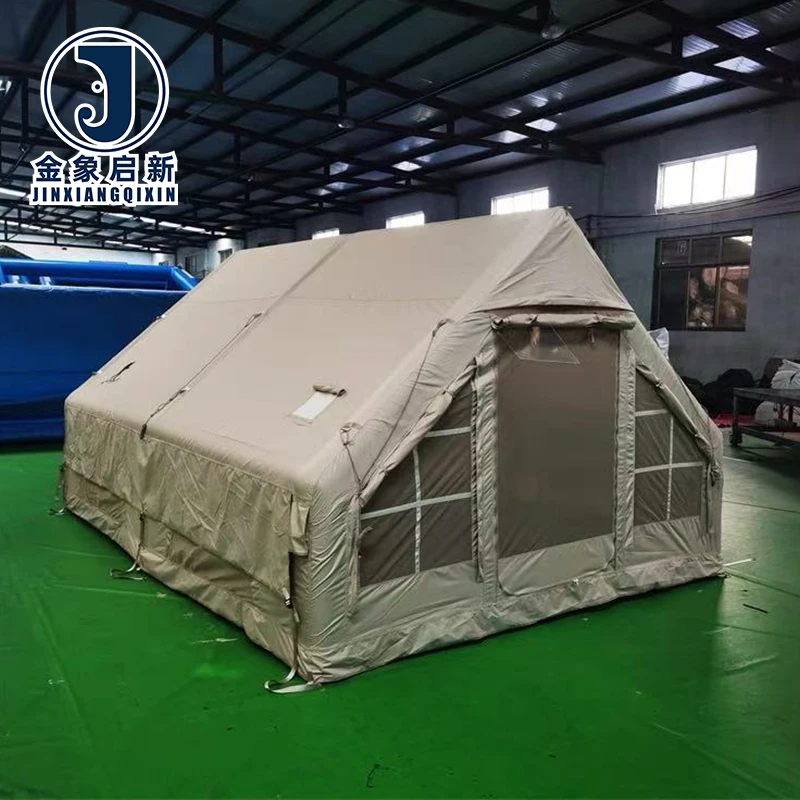
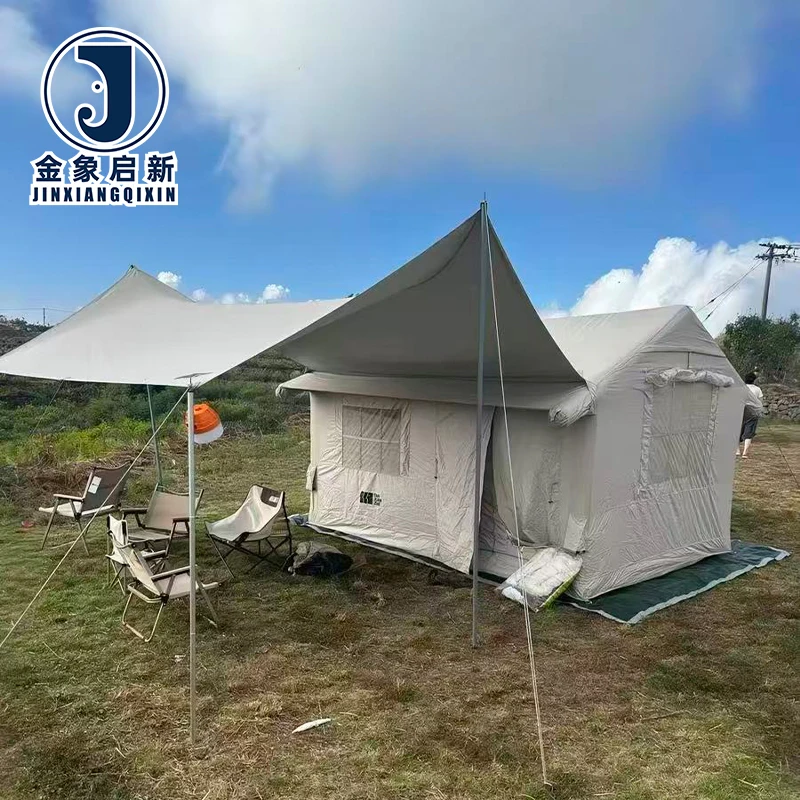
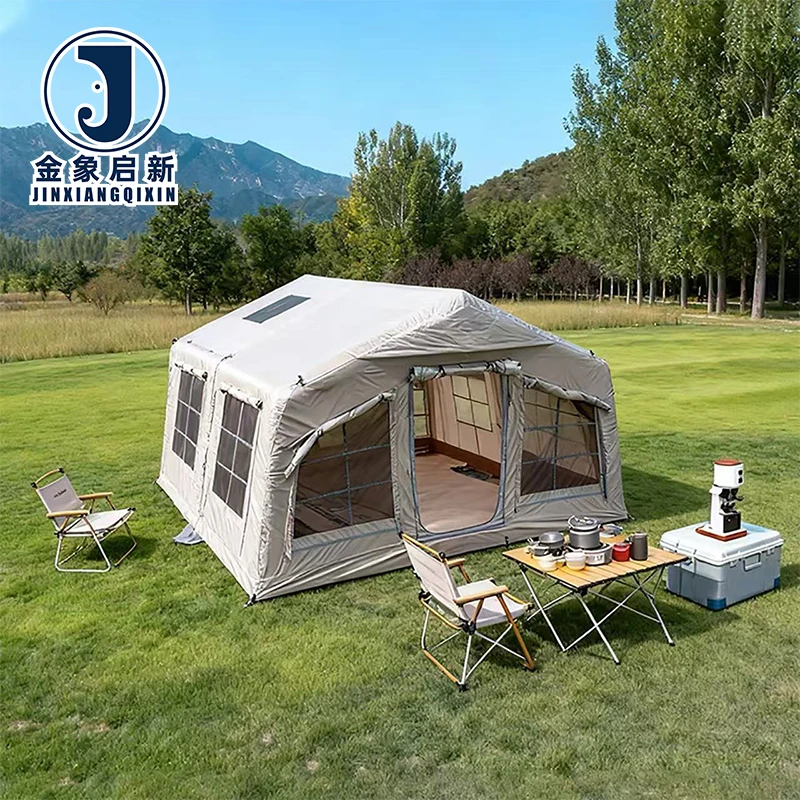
Description
Roll-to-Roll Consistency — Three full production lines with dedicated QA checkpoints ensure every roll of inflatable tent fabric matches the approved batch sample before dispatch.
Technical Specifications
| Parameter | Value |
|---|---|
| Product Type | Inflatable Tent Fabric |
| Core Material | PVC tarpaulin |
| Waterproof Rating | Waterproof (test standard not stated in source) |
| UV Treatment | UV-resistant (test basis not stated in source) |
| Flame Retardant Grade | Fire-retardant (grade not stated in source) |
| Anti-Static | Anti-static (surface resistance or standard not stated in source) |
| Tear Resistance | Tear-resistant (test standard not stated in source) |
| Production Facility | 9,180 m² with 3 full production lines |
| Processing Equipment | 36 sets of professional equipment |
| Quality Control | Full-process inspection; 24-hour air pressure testing per unit |
| Customization | OEM & ODM — sample customization, pattern printing, material selection |
| R&D Team | 10 technicians |
| Standards | ISO 9001, ISO 14001, ISO 45001, CE |
Application Suitability
| Application | Exposure & Requirement |
|---|---|
| Commercial inflatable camping tents (4–6 person) | Repeated inflation cycles, UV exposure, ground abrasion, wet conditions |
| Construction site temporary inflatable shelters | Fire-retardant compliance, anti-static requirements, wind loading |
| Industrial event canopies and large outdoor deployments | High-visibility branding, extended weather exposure, rapid setup demands |
| OEM tent manufacturing — roll stock procurement | Batch colour consistency, weld seam integrity, certified documentation |
Why Inflatable Tent Fabric Fails at the Weld Before the Fabric Does
Seam failure on inflatable structures is almost always a coating adhesion issue, not a base fabric problem.
When manufacturers source inflatable tent fabric roll stock for commercial tent lines, they focus on GSM and tensile numbers but rarely verify how the coating bonds under heat welding. Inflatable tent structures place continuous stress on every welded seam — the air pressure pushes outward at all times, and the flex points around beam junctions concentrate that load. If the PVC coating does not adhere uniformly to the base fabric, the weld line separates long before the body of the fabric shows wear. This is why batch-specific adhesion data matters more than a single headline GSM figure. [NEED_CITE: tensile and tear test methods for coated fabrics per ISO 1421]
Roll-to-Roll Colour Matching Across Bulk Inflatable Tent Orders
Colour variation between rolls in the same order is one of the most visible defects once inflatable tent panels are installed side by side. Our process addresses this through dedicated QA and QC staff monitoring pigment dispersion at every coating stage, with a batch sample library retained for each production run. When you order inflatable tent fabric for a seasonal product line, every roll ships with a reference to its batch sample so you can verify consistency before cutting begins.
Coating Weight Control and What It Means for Air-Holding Structures
Inflatable tent fabric demands uniform coating thickness because any thin spot becomes a failure point under sustained internal pressure. Our three full production lines and 36 sets of professional processing equipment maintain consistent coating weight across the full width of each roll. The 10-person R&D team develops samples within days for custom width, colour, and print requirements, allowing OEM tent makers to validate material behaviour before committing to bulk volume. [NEED_CITE: DIN 4102 fire classification for building materials]
How Base Fabric and Coating Work Together Under Inflation Load
The base fabric denier and weave density determine how the material resists tear propagation, while the PVC coating weight and adhesion govern waterproof integrity and weld performance. A heavier coating does not automatically mean a stronger fabric — if the base weave is loose, the coating can crack at fold points during repeated inflation and deflation cycles. UV-resistant and fire-retardant treatment options are available in specific grades; confirm the grade required for your target market before placing a bulk order. Anti-static formulations address dust attraction and spark risk in industrial and mining shelter applications. Width and roll length options are available to match your cutting layout and minimise offcut waste.
The Hidden Cost of Skipping Pre-Shipment Fabric Verification
When inflatable tent fabric arrives lighter than the quoted specification, the consequences compound quickly — panels that should hold pressure begin to sag, welded seams pull apart under loads the material was supposed to handle, and the entire production run faces rejection at the compliance stage. Fire-retardant treatment claimed without a supporting test report means the finished tent may fail inspection at the event site or construction zone. Batch colour drift discovered after cutting forces manufacturers to either accept mismatched panels or scrap entire sections. These failures trace back to sourcing decisions made before the first roll was cut. [NEED_CITE: coating adhesion and peel strength testing for PVC tarpaulin]
Why Commercial Tent Manufacturers Source Inflatable Tent Fabric Here
Deep process control over coating weight and adhesion across nearly 30 years of coated fabric production means the material that arrives matches the sample you approved. Three full production lines running 36 sets of equipment deliver the volume capacity needed for seasonal product launches without sacrificing roll-to-roll consistency. A 10-person R&D team handles pattern printing, custom sizing, and material formulation adjustments specific to inflatable tent requirements. Full-process inspection with dedicated QA and QC staff catches deviations at the coating stage, not after the roll is packed. Twenty-four-hour air pressure testing on finished inflatable units provides OEM partners with validation data beyond standard fabric tests.
Documentation & Verification
- Material specification sheet stating coating composition, colour reference, and treatment basis per roll
- Batch-specific quality inspection report covering tensile strength, waterproof rating, and flame resistance results
- Roll packing list with individual roll weights and dimensions for inventory reconciliation
- Pre-shipment inspection record confirming colour match against the retained batch sample
- ISO 9001, ISO 14001, ISO 45001, and CE certificates included with dispatch documentation
- Sample library access by order number for ongoing reference and re-order matching
Fabrication, Handling & Storage
- Heat welding temperature and dwell time should be validated on sample cuts before full production begins
- Store rolls upright on pallets to prevent flat-spot deformation of the PVC coating surface
- Allow cold-stored rolls to reach ambient temperature before unrolling to avoid coating micro-cracking
- Use compatible PVC adhesive for field repairs on inflatable beam seams and flex points
- Plan cutting layouts around available roll widths to minimise welded joins on high-stress panels
- Clean with mild detergent only — solvent-based cleaners may degrade UV-resistant and fire-retardant treatments
What We Need to Quote Your Inflatable Tent Fabric Order
Provide your target application, annual volume estimate, and required roll width so we can match the correct production line and coating formulation. Specify any fire-retardant grade, anti-static standard, or UV treatment level required by your end market — test reports are supplied for verified grades. Let us know whether you need pattern printing, custom colour matching, or finished-panel cutting, and we will prepare samples for your approval before bulk production begins.
Frequently Asked Questions
Q: Can you supply inflatable tent fabric by the roll for our own tent manufacturing line?
A: Yes. We supply PVC tarpaulin roll stock specifically for OEM tent makers and inflatable structure fabricators. Rolls ship with a batch-specific inspection report and packing list. Our R&D team develops samples within days for custom width, colour, and print requirements so you can validate the material on your equipment before committing to volume.
Q: How do you verify coating weight and GSM before shipment?
A: Dedicated QA and QC staff inspect every roll during production, and we retain a batch sample library for traceability. Each dispatch includes a pre-shipment inspection record confirming the material matches the approved specification. You can reference batch test data by order number for ongoing quality assurance.
Q: Do you provide test reports for UV resistance and flame-retardant grades?
A: Fire-retardant and UV-resistant treatment options are available in various grades, and we supply test reports for verified grades upon request. Confirm the specific grade or standard required for your target market — such as local fire safety codes for event canopies — so we can match the correct formulation and documentation.
Q: What customization options are available for inflatable tent fabric orders?
A: We offer custom width, roll length, colour matching, and pattern printing through our 10-person R&D team. OEM and ODM services include sample development, material selection guidance, and product design support. Samples are typically prepared within days so you can evaluate weld behaviour and colour consistency before bulk commitment.