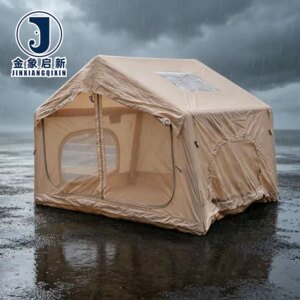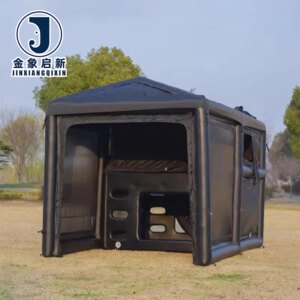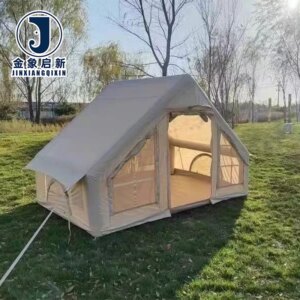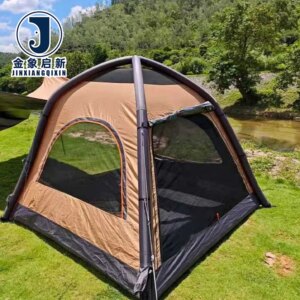

Description
Roll-to-Roll Consistency — Every batch of inflatable tent fabric passes 100% pre-shipment inspection with weight and colour verification per roll, eliminating the inconsistency that causes visible mismatches across adjacent panels on the production floor.
Technical Specifications
| Parameter | Value |
|---|---|
| Product Type | Inflatable Tent |
| Core Material | PVC Tarpaulin |
| Waterproof Rating | 3000mm |
| UV Treatment | UV-resistant (test basis not stated in source) |
| Tear Resistance | Tear-resistant (test basis not stated in source) |
| Customization | OEM & ODM, sample customization, pattern printing |
| Production Capacity | 3 full production lines, 36 sets of processing equipment |
| R&D Support | 10 technicians |
| Quality System | Full-process QA & QC with dedicated inspection staff |
| Certifications | ISO9001, ISO14001, ISO45001, CE |
Application Suitability
| Application | Exposure & Requirement |
|---|---|
| Inflatable camping tent manufacturing | Repeated inflation cycles, flex stress at seam lines, four-season weather exposure |
| Disaster relief temporary shelter | Rapid deployment, sustained rain and wind, high visibility for rescue coordination |
| Medical field operations | Hygienic surface requirements, frequent cleaning, temperature fluctuation |
| Equipment storage in outdoor industrial settings | UV exposure, abrasion from loading and unloading, dust and moisture ingress |
| On-site logistics coordination | Wind load resistance, repeated assembly and disassembly, ground contact abrasion |
Why Colour Shifts Between Rolls Undermine Your Inflatable Tent Production
Batch-controlled coating and in-line colour matching keep every roll in your container visually identical.
When you cut panels from three different rolls to assemble a single inflatable tent, even a slight hue difference becomes visible across the seam line. Buyers who have received containers where adjacent rolls diverged in shade report costly re-cutting, rejected assemblies, and delayed shipments. Inflatable PVC tent roll orders demand that the dye lot stays locked from the first metre to the last. [NEED_CITE: colour measurement tolerances for coated textile batches per ISO 105 series]
Sourcing Inflatable PVC Tent Roll Stock at Container Scale
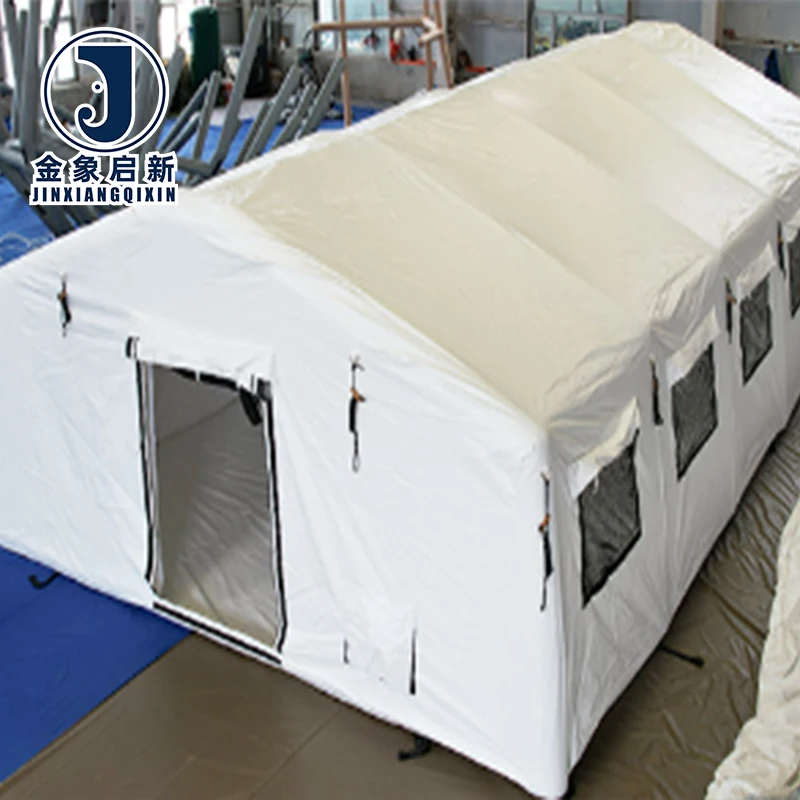
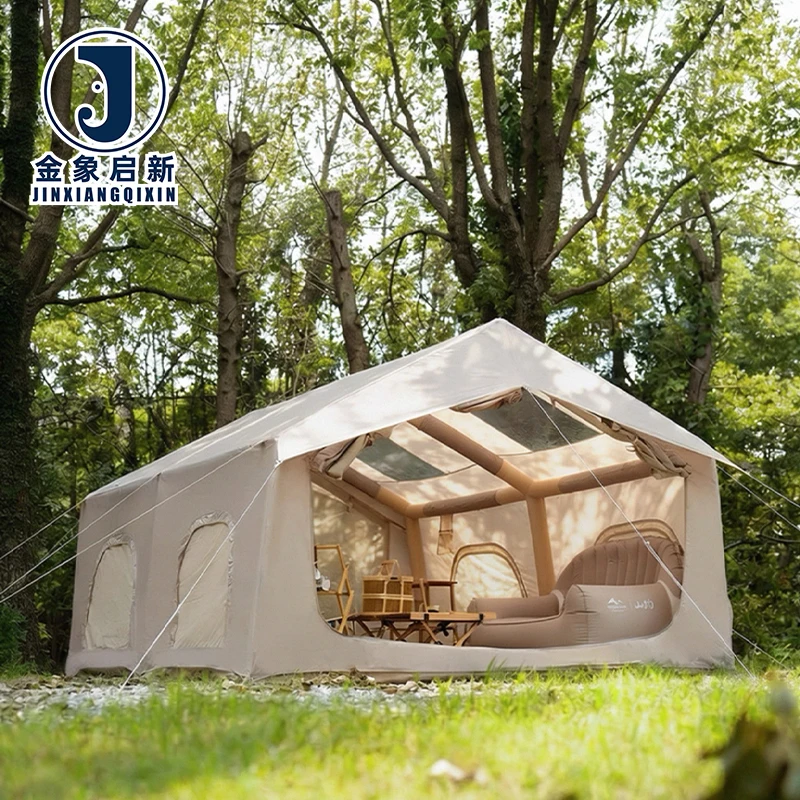
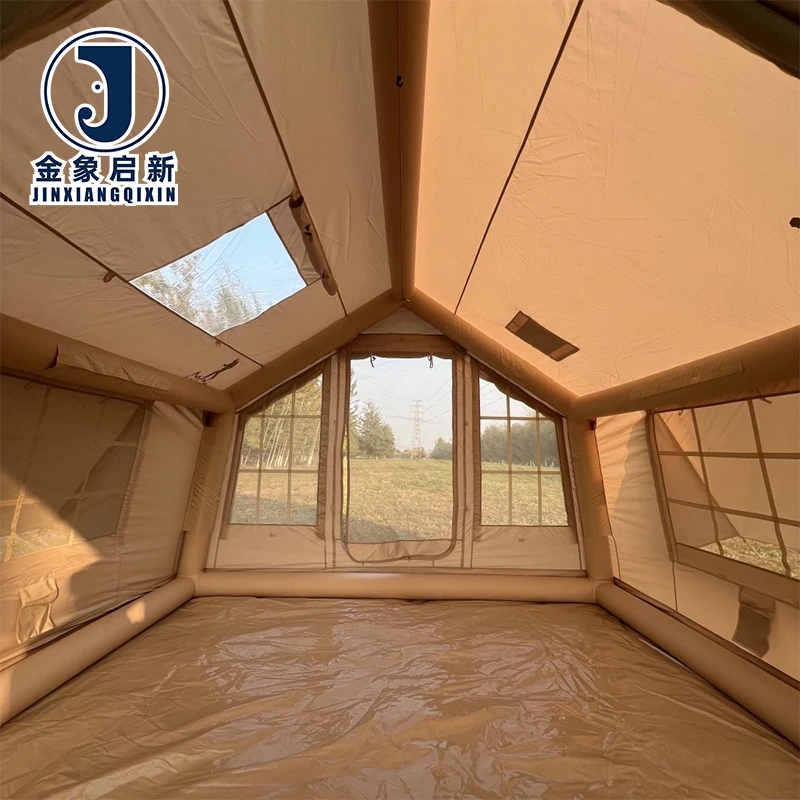
Procuring inflatable PVC tent material by the roll means your cutting yield, panel alignment, and final product appearance all depend on the uniformity of what arrives in the container. Manufacturers assembling inflatable camping tents need fabric that inflates evenly without thin spots or coating irregularities that create weak zones under air pressure. Our production lines hold coating weight within a controlled band across the full width and length of each roll.
What Wholesale Buyers Should Verify Before Placing a Repeat Order
When you commit to a full container of inflatable PVC tent wholesale supply, the documentation package should confirm the specifications you agreed to at the sampling stage. Waterproof rating, GSM, and base fabric construction must appear on a roll-by-roll inspection record — not just a generic certificate. Buyers who skip this step often discover discrepancies only after cutting has begun. [NEED_CITE: pre-shipment inspection protocols for coated fabric exports]
Reading the Specification Sheet Beyond the Headline Number
The 3000mm waterproof rating on this PVC tarpaulin indicates the hydrostatic head the coating can sustain before water penetration begins. For inflatable tent panels that face driven rain and ground splash, this threshold provides a working margin above typical field conditions. Tear resistance depends on both the base fabric denier and weave density rather than coating weight alone — a heavier coating does not automatically prevent tear propagation once the yarn structure is breached. UV-resistant formulation slows surface degradation under sustained sun exposure, though the specific test method should be confirmed for your target market’s labelling requirements.
The Real Cost of Overlooking Weld Line Behaviour
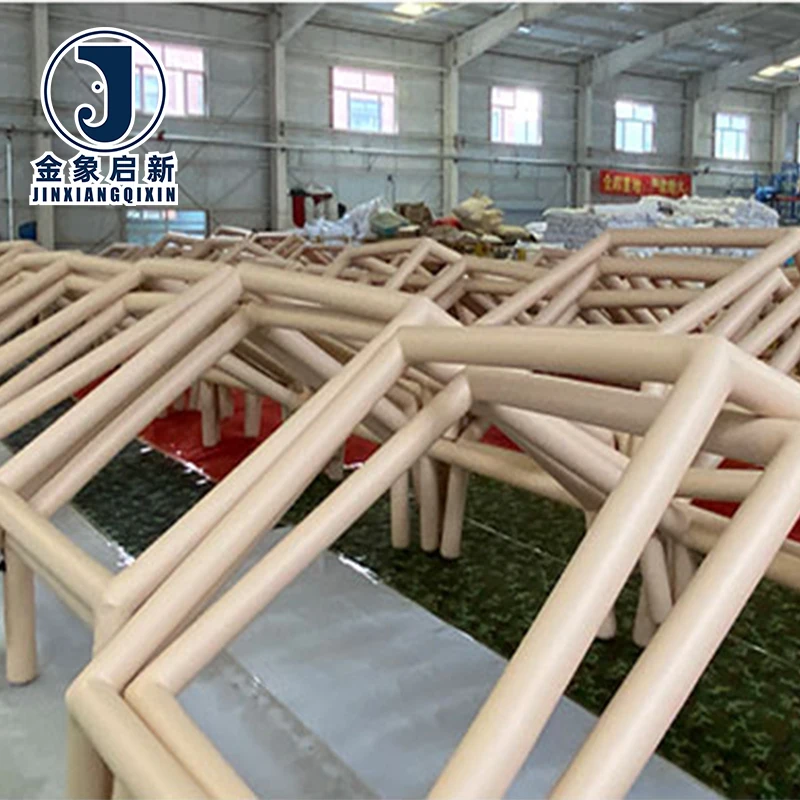
Inflatable tent structures place continuous tension on every welded seam, particularly at the curvature points where panels meet. When the heat-seal temperature or dwell time does not match the coating formulation, the weld fails before the fabric itself tears — typically during the first inflation test on the factory floor. Rework at that stage means scrapping the entire panel and recutting from fresh roll stock, multiplying material waste and delaying the production schedule. [NEED_CITE: weld strength testing methods for PVC coated fabrics per ISO 1421]
Why Fabricators Choose This Supply Chain
Three dedicated production lines handle inflatable PVC tent roll orders with the throughput that container-scale procurement requires, keeping lead times predictable across seasonal demand peaks. The 10-person R&D team develops custom widths, colour matches, and pattern printing layouts before bulk production begins, reducing sample rejection cycles. Full-process quality inspection catches coating weight drift and colour deviation at the production stage rather than at the loading dock. CE certification and ISO management system compliance provide the documentation framework that distributors and importers need for customs clearance in regulated markets. OEM and ODM capability covers everything from private-label printing to custom panel dimensions cut to your nesting software’s specifications.
Documentation & Verification
- Material specification sheet per roll listing GSM, base fabric type, coating weight, and colour reference code
- Waterproof and UV test reports matched to batch number where applicable
- ISO9001, ISO14001, ISO45001, and CE certificates included in shipping documentation
- 100% pre-shipment inspection record with roll-level weight and colour verification
- Roll packing list with batch traceability and container loading plan
- Certificate of origin and customs support documentation for destination market
Fabrication, Handling & Storage
- Set heat-seal temperature and dwell time to match the PVC coating formulation — test on a scrap piece from the same roll before production runs
- Store rolls upright on pallets in a dry, shaded area to prevent permanent creasing and surface marking on the PVC coating
- Allow cold-stored rolls to reach ambient temperature before unrolling to avoid coating crack at low-flex points
- Use solvent-based PVC adhesive for field repairs, ensuring the surface is clean and dry before patch application
- Plan cutting layout to minimise cross-grain panel orientation, reducing uneven inflation behaviour in the finished tent
- Clean finished inflatable tent surfaces with mild detergent only — abrasive cleaners degrade the PVC coating surface over repeated use
How to Structure Your Inquiry
Provide your target panel dimensions, annual roll consumption, and the colour or printing specification you need on the finished inflatable tent. If your destination market requires a specific fire classification or UV test standard, state it upfront so the material formulation can be matched before sampling. Confirm whether you require finished cut panels or full roll stock, and indicate your preferred container loading configuration.
Frequently Asked Questions
Q: How can I verify the GSM of inflatable PVC tent rolls when they arrive?
A: Weigh a measured sample cut from each roll and calculate the grams per square metre. Compare the result against the material specification sheet shipped with your order. Our pre-shipment inspection record documents the verified weight per roll before dispatch, giving you a baseline for your incoming quality check.
Q: How is roll-to-roll colour consistency controlled across bulk orders?
A: Each production batch uses a single dye lot with in-line colour monitoring during the coating process. The pre-shipment inspection record includes a colour reference check per roll. If your inflatable tent design places panels from different rolls side by side, request a batch colour map before cutting begins.
Q: What roll width and length should I choose for inflatable tent panel cutting?
A: Provide your largest panel dimension and nesting layout so we can recommend a roll width that minimises offcut waste. Custom widths are available through our OEM service. Longer roll lengths reduce the number of splice points and improve cutting efficiency across high-volume production runs.
Q: What is the minimum order for custom width, colour, or printed rolls?
A: MOQ varies by the degree of customisation. Standard stock widths and colours carry the lowest threshold, while custom dye lots and pattern printing require a production run minimum. Submit your specification and target volume so we can confirm the applicable MOQ before sampling.
Q: How are rolls protected during ocean freight?
A: Each roll is wrapped in protective film and packed upright on pallets to prevent crushing and moisture ingress during transit. The roll packing list details the container loading configuration. Specify any additional protection requirements for long transit routes or humid destination ports when placing your order.