Description
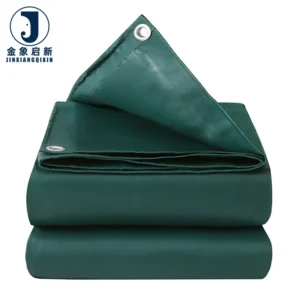
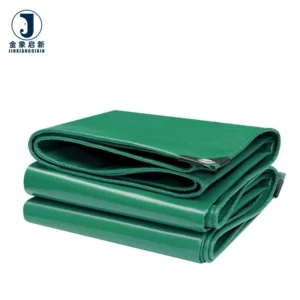
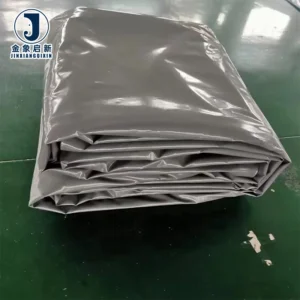
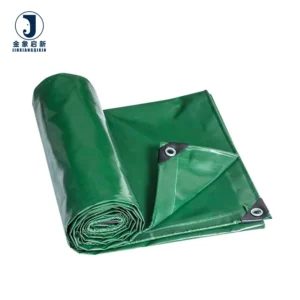
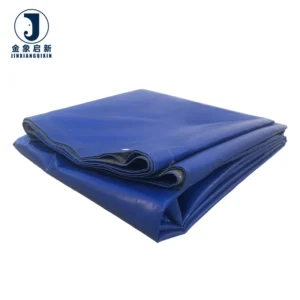
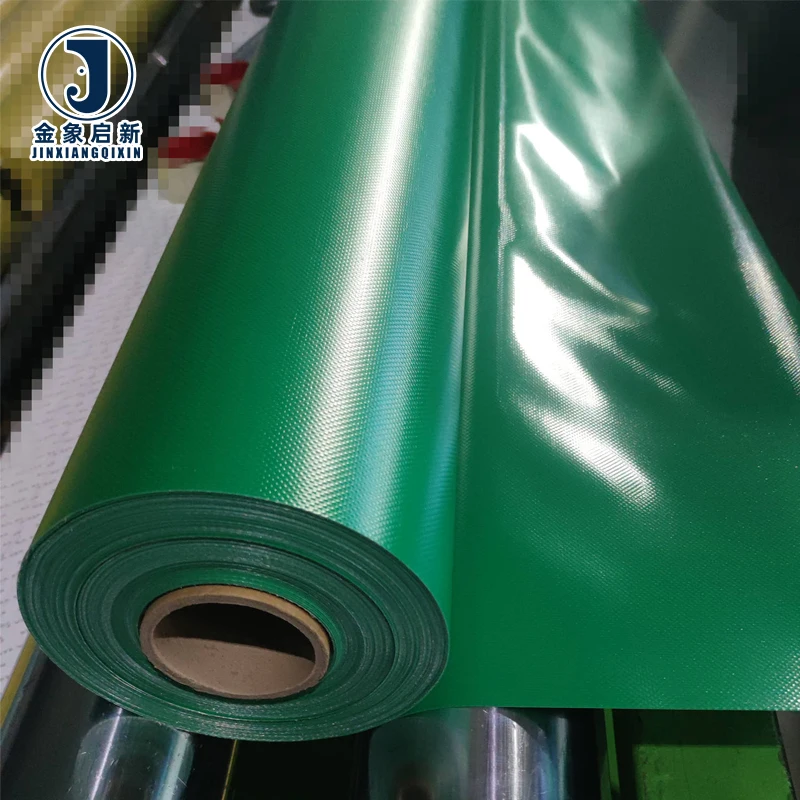
Roll-to-Roll Consistency — every PVC coated tarpaulin roll is weighed, measured, and colour-checked against the order specification before loading, so distributors receive uniform GSM and shade across the container.
Technical Specifications
| Parameter | Value |
|---|---|
| Product Type | PVC Coated Tarpaulin Roll |
| Base Fabric | 100% high toughness polyester yarn |
| Knitting Density | 500D–2000D |
| Coating Material | PVC |
| Coating Technology | Lamination technology and hot melt coating technology |
| Total Thickness | 0.35–1.5 mm |
| Weight Range | 400–1500 g/m² |
| Tensile Strength (Warp) | 1500–3000 N/5cm |
| Tensile Strength (Weft) | 1200–2800 N/5cm |
| Welding Tear Strength | Excellent |
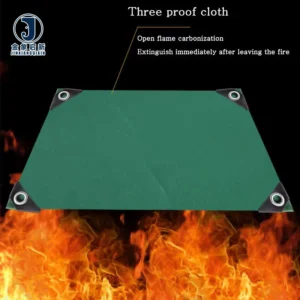
| Surface Treatment | UV-resistant, flame retardant, anti-static, cold resistant, mold proof (grades available — confirm the grade required for your market) |
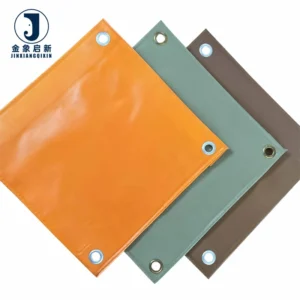
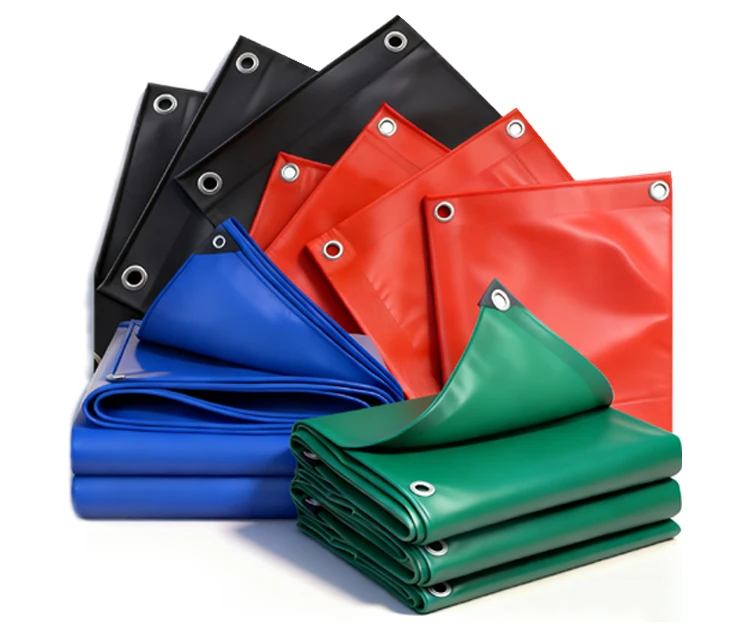
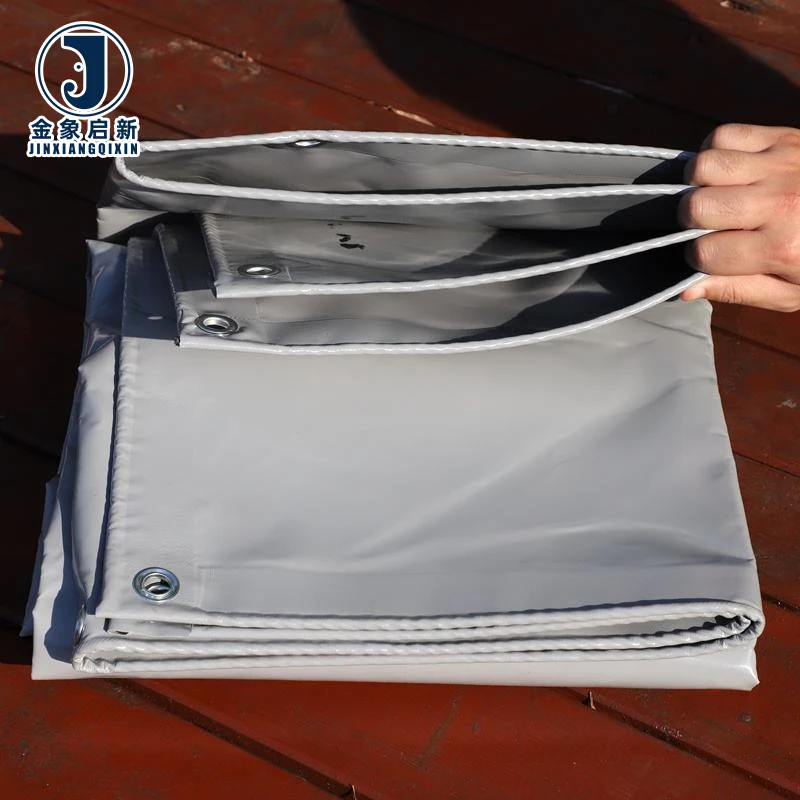
| Color Options | Blue, Blue/Orange, Green, Grey, Black, Clear, Grey/Green, Orange, or custom |
| Weather Resistance | 3–5 years outdoor guarantee |
| Standards | ISO 9001, CE |
Application Suitability
| Application | Exposure & Requirement |
|---|---|
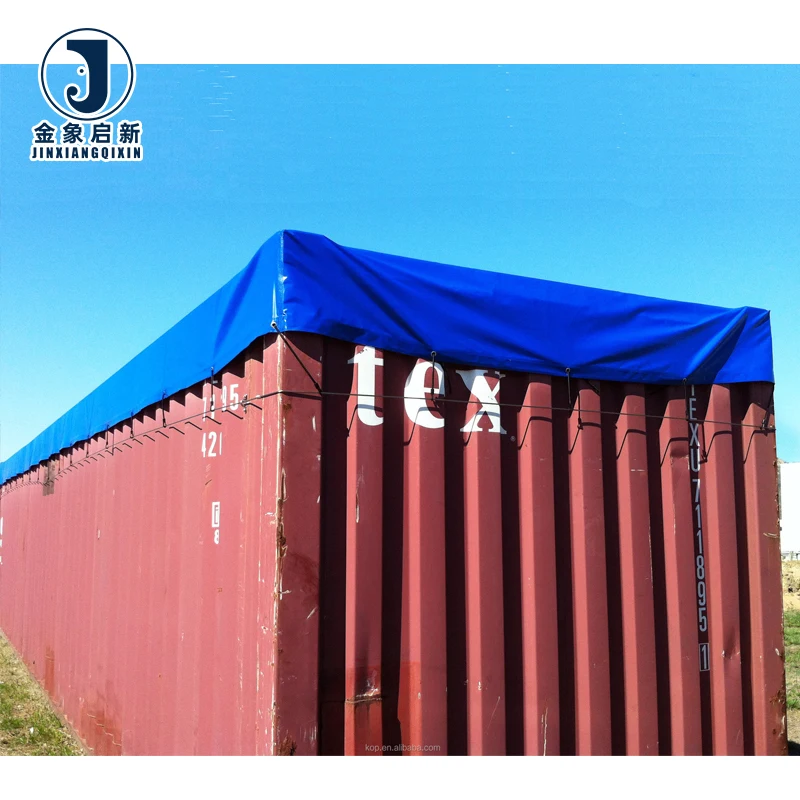
| Truck and trailer side curtains | Constant flexing at fold lines, road debris abrasion, UV and rain exposure, colour matching across panels |
| Tent and awning fabrication | Roll-to-roll shade consistency for multi-panel assembly, heat-welded seams, moderate tensile load |
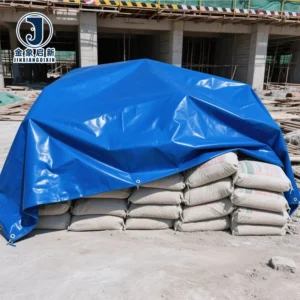
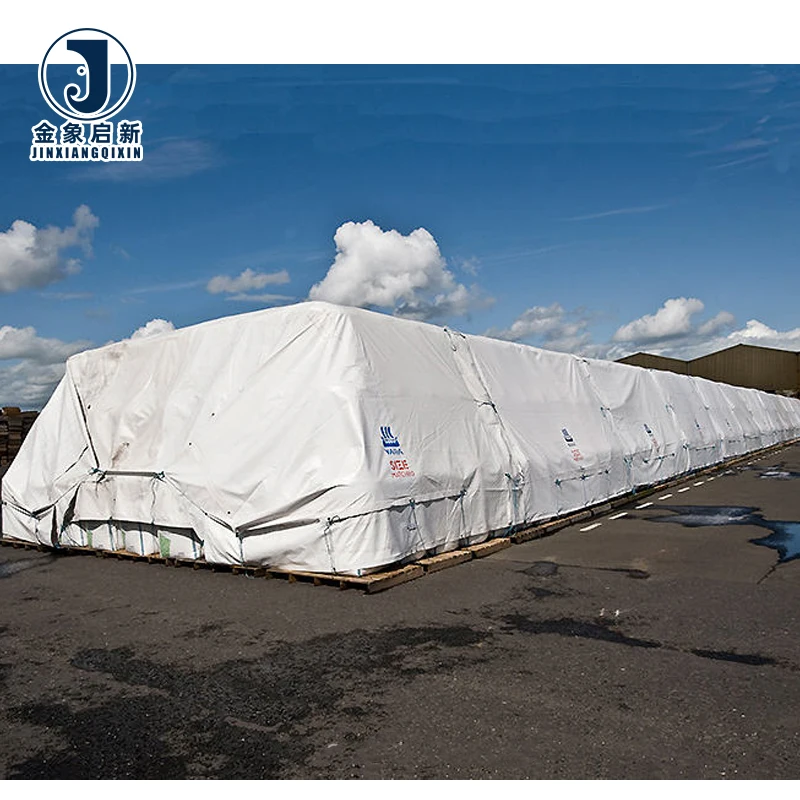
| Construction site covers | Puncture from sharp materials, wind uplift stress, prolonged sun and moisture exposure |
| Inflatable and membrane structures | Air-holding integrity, welded seam strength, surface finish for visual appearance |
| Industrial pipe and equipment canopies | Chemical splash resistance, UV degradation over months of static installation, moderate mechanical load |
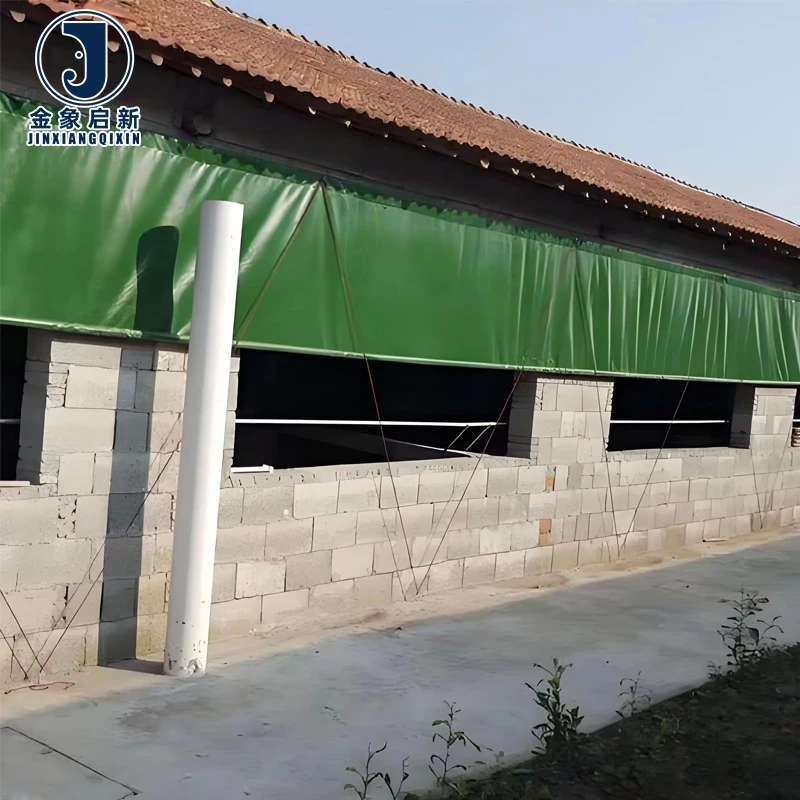
| Farm and aquaculture covers | Permanent water contact, biological growth resistance, cold temperature flexibility |
Why Roll Buyers Lose Money on Inconsistent GSM
When a PVC coated tarpaulin roll wholesale order arrives lighter than the quoted weight, the fabric fails earlier under load, welds tear at lower stress, and end-users blame the converter — not the mill. Verified GSM per roll before dispatch is the only way to protect your reputation downstream.
Distributors who have received containers with mixed-weight rolls know the cost: sorting inventory by actual weight, field complaints from customers whose covers tear within months, and the impossible task of explaining why two rolls labelled 650 GSM behave differently on the welding table [NEED_CITE: tensile and tear test methods for coated fabrics per ISO 1421]. The problem is rarely fraud — it is usually coating weight drift across a production run that goes unchecked when inspection is sample-based rather than roll-by-roll.
How Coating Technology Determines Fabric Behaviour
The lamination and hot melt coating processes used for this PVC coated fabric range affect more than just waterproofing. Hot melt coating drives PVC into the polyester base yarn, creating a mechanical bond that resists delamination during heat welding. Lamination technology layers the coating onto the weave surface, which can produce a smoother finish suited to printed branding and membrane structure applications where visual appearance matters.
Choosing between these coating methods — or specifying a combination — depends on whether the roll will be cut and welded into truck curtains, or used as a tensioned structural membrane where surface uniformity is the priority.
Batch Colour Matching Across Container-Load Volumes
For distributors stocking PVC coated tarpaulin roll wholesale inventory, colour variation between rolls in the same shipment is a visible defect the moment two panels hang side by side on a truck or awning frame. The human eye detects shade differences as small as a single Delta-E unit on large-format fabric installations [NEED_CITE: colour fastness and visual matching standards for coated textiles].
Controlling this requires dedicated QA checkpoints at the coating stage — not just a final visual pass before packing. Each production batch of PVC compound must be matched to the master colour reference before it enters the coating head, and every finished roll should be compared against the approved swatch under standardised lighting conditions before it is cleared for container loading.
Reading Beyond the GSM Number
GSM alone does not tell a wholesale buyer how the fabric will perform. A 700 GSM roll woven from 1000D yarn with a tight weave will outperform a 700 GSM roll made from 500D yarn with a looser construction, because the base fabric denier and knitting density determine how load distributes across the weave. The PVC coating weight adds stiffness, water resistance, and UV protection, but it cannot compensate for a weak base fabric when the material is subjected to tensile stress at tie-down points or welded seams.
Hot melt coating technology also influences how well the PVC layer bonds to the polyester yarn. A stronger bond means the coating resists peeling at cut edges and weld lines, which is critical for fabricators who heat-weld panels together. Coating adhesion is what separates a roll that fabricates cleanly from one that delaminates on the welding table. The thickness range of 0.35–1.5 mm across this product family reflects different balances between flexibility for folding applications and rigidity for structural covers.
The Hidden Cost of Specifying the Wrong Roll Grade
Ordering a medium-weight grade for an application that demands heavy-duty performance does not just shorten service life — it creates a cascade of downstream failures. Weld seams on lighter fabric tear under loads the material was never designed to carry. UV degradation accelerates on thinner coatings, and the fabric becomes brittle in cold weather faster than expected.
For wholesale buyers reselling to fabricators, the consequence is not a single warranty claim but a pattern of returns that erodes account trust [NEED_CITE: coated fabric failure modes in field service and warranty analysis]. The cost of replacing a container-load of under-specified rolls is minor compared to the lost business when a key fabricator switches suppliers after the second batch failure.
Why Sourcing PVC Coated Fabric Rolls Here
Three full production lines and 36 sets of professional equipment mean that container-load orders are built on dedicated lines without competing for capacity with spot-buy customers. This protects lead times for wholesale buyers who plan inventory around vessel schedules.
A 10-person R&D team handles custom width, colour matching, and sample development in-house, so a distributor requesting a non-stock shade receives a lab-dipped sample for approval before the production run begins — not a promise that the colour will be close.
Dedicated QA/QC at every production stage, with 100% inspection before shipment, catches GSM drift and shade variation at the point where they can still be corrected, rather than after the rolls are wrapped and palletised.
ISO and CE certification underpins the documentation package that accompanies every export shipment, meeting the compliance requirements distributors face when clearing customs in regulated markets.
Documentation & Verification
- Material specification sheet listing GSM, base fabric denier, and coating weight for each roll grade shipped
- Pre-shipment inspection record with individual roll GSM verification against the purchase order
- Roll packing list showing roll count, net weight, and gross weight for container loading plans
- Colour consistency check record documenting shade match across all rolls in the batch
- Certificate of origin and customs documentation prepared for the destination market
Fabrication, Handling & Storage
- Heat-weld temperature and dwell time should be calibrated to the specific coating technology and GSM grade of the roll
- Store rolls upright on pallets in a dry warehouse to prevent flat-spot deformation on the PVC coating surface
- Allow cold-stored rolls to reach ambient temperature before unrolling to avoid cracking the PVC layer
- Use sharp blades for cutting to prevent fraying the polyester base yarn at panel edges
- Clean with mild detergent and soft cloth to protect the surface treatment from abrasive damage
- Plan panel layout to minimise off-cuts and reduce the number of welded seams per finished cover
What We Need to Quote Your Roll Order Accurately
To match the right grade from the 400–1500 g/m² range to your application, specify the end use, the environmental exposure conditions, and the target market compliance requirements your customers expect. Confirm the roll widths and lengths that optimise your container loading, and indicate whether you need stock colours from the available palette or a custom shade matched to a reference.
If you require samples for weld testing or colour approval before committing to a production run, state that in your inquiry so the R&D team can prioritise sample development. Let us know your annual volume estimate so we can structure pricing tiers accordingly.
Frequently Asked Questions
Q: How do you verify that actual GSM matches the quoted weight?
A: Every roll is individually weighed and recorded during pre-shipment inspection. The inspection log lists the measured GSM for each roll against the purchase order specification. This record ships with the container, so you can cross-reference it against your own arrival check without relying on batch averages.
Q: Can you supply test reports for UV and flame-retardant claims?
A: Yes — for grades where UV resistance or flame retardancy is specified, test reports are included in the shipment documentation. Confirm the grade and standard required for your destination market at inquiry stage, so the correct treatment is applied and the matching report is prepared before dispatch.
Q: What is the minimum order for custom width or colour?
A: Custom widths and non-stock colours are available with MOQs that vary by grade and coating technology. The R&D team produces a lab-dipped sample or narrow-width trial roll for your approval before full production runs. Contact us with your required dimensions and colour reference to receive a specific MOQ and lead time.
Q: How do you ensure colour consistency across multiple rolls in one order?
A: Each production batch of PVC compound is matched to the approved colour swatch before coating begins. Finished rolls are inspected under standardised lighting against the master reference. Rolls that fall outside the acceptable shade tolerance are held back and reworked before they are cleared for packing.
Q: What certifications accompany the shipment?
A: Shipments include ISO 9001 and CE certificates, a material specification sheet, pre-shipment inspection records with GSM data, a roll packing list, and a certificate of origin. Fire-retardant or anti-static test reports are provided for grades where those treatments have been specified and applied.