Description
Consistent batch supply — every roll of PVC fish pond liner is inspected for GSM and coating weight before dispatch to ensure uniform thickness across your aquaculture order.
Technical Specifications
| Parameter | Value |
|---|---|
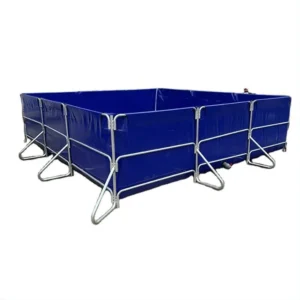
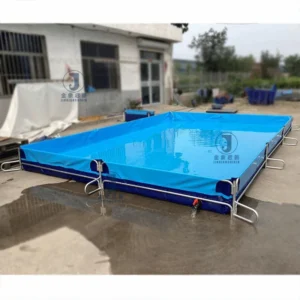
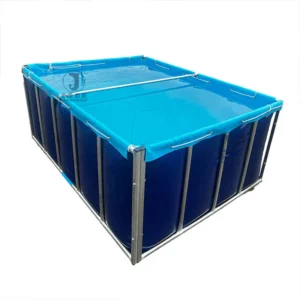
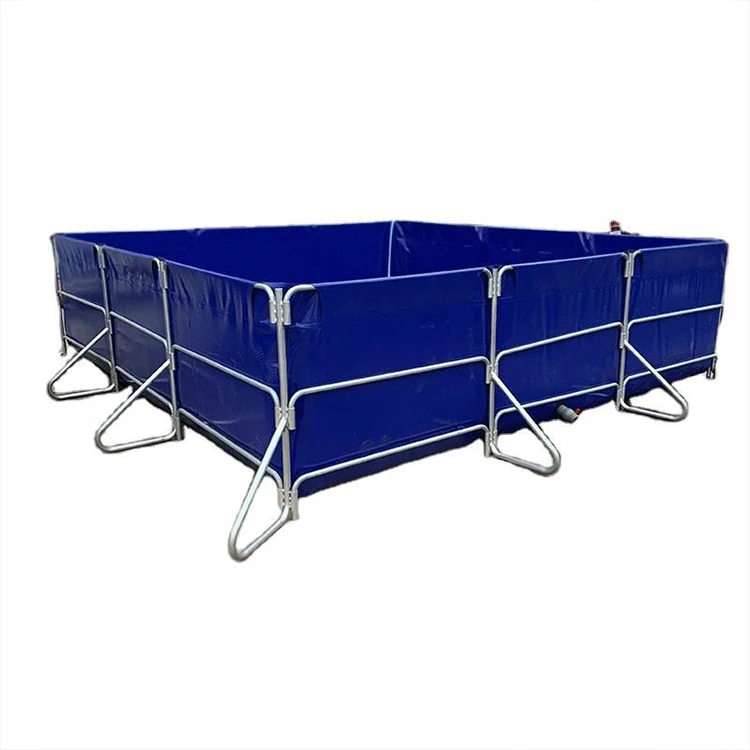
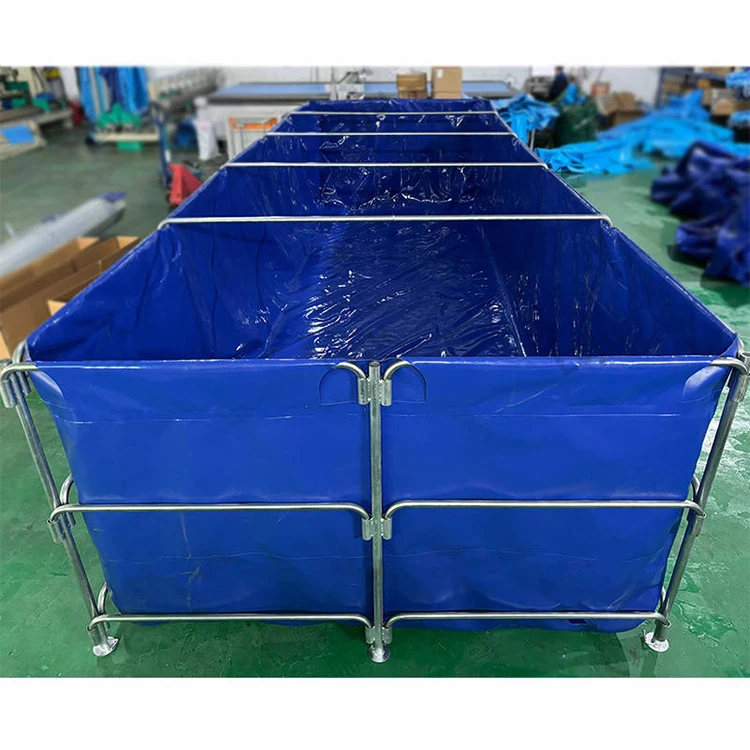
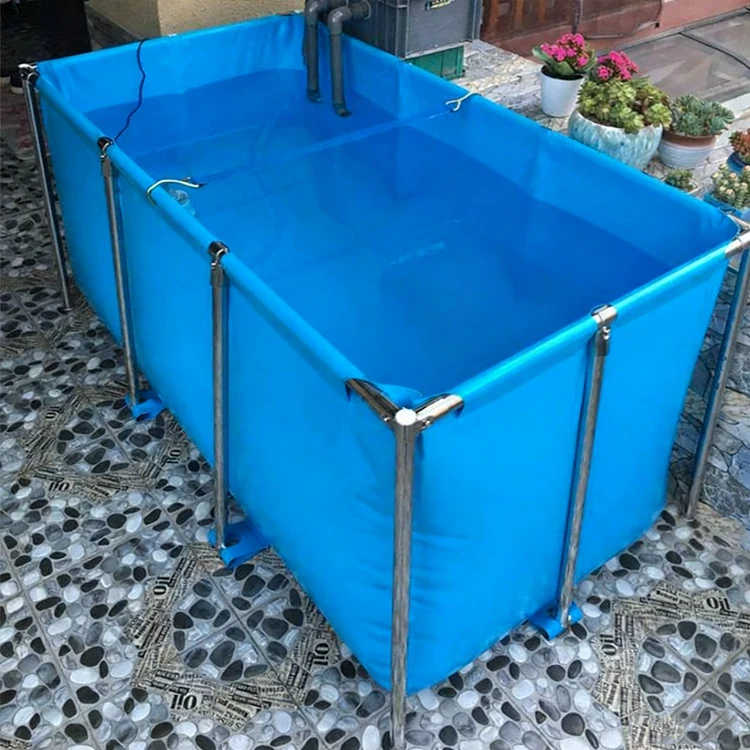
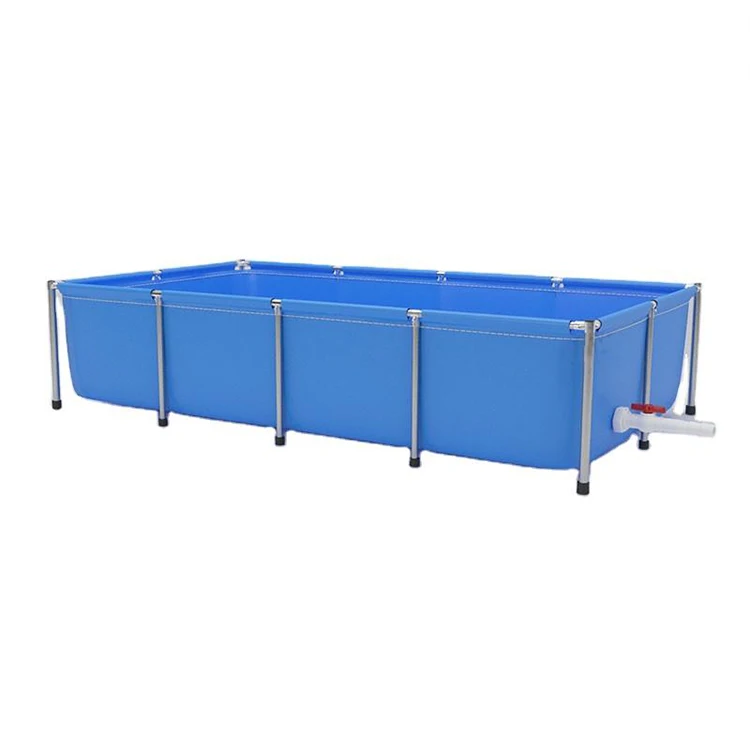
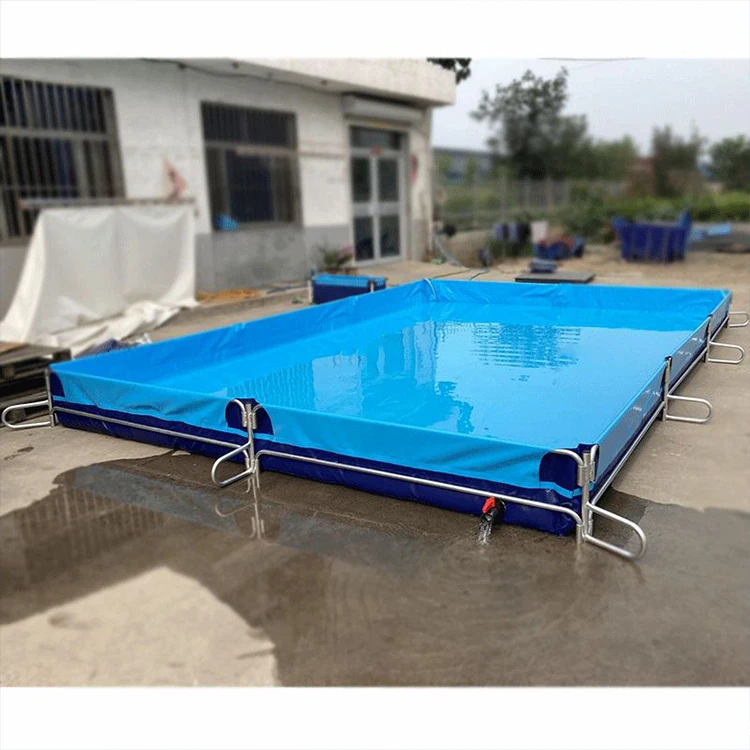
| Product Type | Foldable Circular Rectangular PVC Tarpaulin Fish Pond |
| Coating Material | PVC |
| Shape Option | Circular / Rectangular |
| Structure | Foldable |
| Application | Fish tank / Fish pond |
| Supply Format | Roll stock and custom cut sizes |
| Finish | Available in glossy or matte (confirm requirement) |
Application Suitability
| Application | Exposure & Requirement |
|---|---|
| Commercial aquaculture fish ponds | Permanent water immersion, biological load, soil chemistry contact, puncture risk from substrate |
| Shrimp farming containment | Saline water exposure, frequent drain-and-refill cycles, sediment abrasion |
| Hatchery and nursery tanks | Controlled water environment, frequent handling, fold-and-store between cycles |
| Agricultural water reservoirs | Static water pressure, UV exposure, seasonal deployment and retrieval |
Why Colour Drift Between Rolls Costs You More Than the Fabric Itself
Batch-to-batch colour and thickness consistency determines whether a multi-pond installation looks engineered or improvised.
When aquaculture operators line a row of ponds for a single site, visible shade variation between adjacent liners immediately signals inconsistent sourcing — and that perception extends to the entire operation. A PVC Fish Pond Liner wholesale order that arrives with rolls differing in GSM or hue forces either selective deployment across separated sites or a full re-order, both of which delay stocking schedules [NEED_CITE: coated fabric colour consistency standards per ISO 105 series]. Thickness variation between rolls compounds the problem: lighter rolls puncture faster under substrate load while heavier rolls were paid for but never delivered.
Bulk Supply That Holds Uniform Weight Across Every Roll
For aquaculture operators ordering PVC fish pond liner by the roll, the critical metric is not the average GSM across the shipment but the roll-to-roll deviation within it. A specification sheet may state a target weight, yet individual rolls can drift lighter or heavier depending on coating line calibration and coating adhesion control. Our production process maintains coating weight within tight tolerances across all three lines, meaning the first roll and the last roll in a container share the same physical properties and visual character. This consistency matters most when multiple ponds are installed in proximity, where buyers and their clients inspect the site as a whole.
Foldable Format Cuts Transport Cost and On-Site Handling Time
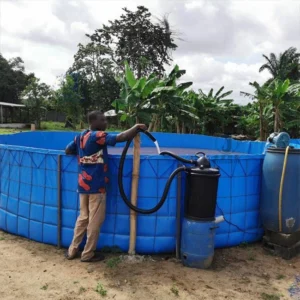
Shipping rigid tanks or pre-formed liners to remote aquaculture sites multiplies freight cost and handling risk. The foldable PVC fish pond liner ships compactly in roll form, reducing container volume and allowing operators to transport more square metres of liner per shipment. On site, crews unroll and position the material without heavy equipment, then fill with water to set the shape. When a pond needs to be relocated or taken out of service between production cycles, the liner folds back down for storage — a practical advantage over fixed installations that require demolition and disposal.
How Coating Adhesion and Base Fabric Density Define Pond Performance
The longevity of a pond liner in continuous water immersion depends on two factors working together: the density of the woven polyester base fabric and the bonding strength between that fabric and the PVC coating layers. Base fabric denier and weave count determine how well the liner resists tear propagation when a sharp stone or tool contacts the surface under water pressure. The coating method — whether knife-over-roll, lamination, or calendering — governs how firmly the PVC binds to the yarn, which directly affects delamination risk at folded edges and welded seams [NEED_CITE: peel strength test methods for coated fabrics per ISO 2411]. A liner that delaminates at the weld line exposes the base fabric to water ingress, accelerating fibre degradation from the inside out. GSM alone tells you how much material is present; it does not reveal whether that material will stay bonded through years of submersion and seasonal temperature cycling.
What Happens When GSM on Paper Does Not Match GSM on Arrival
Receiving a PVC fish pond liner shipment lighter than the quoted specification is among the most common disputes in coated fabric procurement. A roll that arrives at a lower weight than agreed delivers less coating thickness, which reduces puncture resistance and shortens the service interval before replacement is needed. In aquaculture, a thinner liner also means reduced protection against root penetration and substrate abrasion, failures that typically appear first at pond corners and drain points where stress concentrates [NEED_CITE: common failure modes in flexible pond liners]. Welded seams at these stress points may separate before the field fabric shows wear, forcing costly on-site repairs during active production cycles. The financial impact extends beyond material replacement — draining and re-lining an occupied pond disrupts stock, delays harvest, and damages operator credibility with downstream buyers.
Why Sourcing This Liner from Jinxiang Makes Sense
Nearly three decades of focused PVC coated fabric production gives us process depth that directly benefits pond liner buyers: we control coating weight, adhesion, and colour consistency at every stage rather than outsourcing to converters. Three full production lines and 36 sets of professional equipment support the volume required for container-load pond liner orders without sacrificing roll-to-roll uniformity. Our 10-person R&D team develops custom cut sizes and shape configurations — circular or rectangular — matched to your pond layout, with samples produced within days for approval before bulk commitment. Every roll undergoes 100% inspection before dispatch, with GSM verification, coating adhesion checks, and visual examination for surface defects recorded in the pre-shipment inspection file.
Documentation & Verification
- Material specification sheet stating GSM, base fabric denier, and PVC coating type per roll
- Pre-shipment inspection record with 100% weight and visual check before pond liner dispatch
- Roll packing list detailing roll count, individual weight, and dimensions for container loading
- ISO and CE certificates included with shipment documentation
- UV and flame-retardant test reports provided where treatment grades are specified
Fabrication, Handling & Storage
- Heat-weld pond liner seams using temperature settings matched to the PVC coating thickness to avoid delamination at corners
- Store folded PVC pond liner rolls in shaded, dry conditions to prevent surface tack and coating adhesion loss
- Avoid dragging unrolled liner across sharp aggregate — lay a protective geotextile underlay beneath the PVC base fabric first
- Clean liner surfaces with mild detergent only; solvents degrade the PVC coating plasticiser layer over time
- When folding for seasonal storage, vary the fold line position each cycle to prevent permanent crease damage
What to Include in Your Enquiry
To specify the right PVC fish pond liner for your operation, share your pond dimensions and preferred shape — circular or rectangular — along with the target GSM or coating thickness your site conditions demand. Confirm whether you need roll stock for your own fabrication team to cut and weld, or custom cut-to-size liners ready for deployment. If your operation requires specific treatments such as UV stabilisation or flame retardancy, state the grade or standard your market requires so we can match test documentation to the shipment.
Frequently Asked Questions
Q: How do I verify the GSM matches the quotation when the pond liner rolls arrive?
A: We include a pre-shipment inspection record showing measured GSM per roll. On arrival, you can confirm by cutting a measured sample from the roll edge and weighing it on a calibrated scale. Any roll falling outside the stated tolerance should be flagged immediately with the inspection record for resolution.
Q: Will the colour and thickness stay consistent across a full container order of pond liner?
A: Yes. Our coating lines maintain tight GSM and colour tolerances across production runs. Every PVC Fish Pond Liner wholesale shipment is inspected roll by roll, and the packing list records individual weights so you can verify uniformity before deployment across adjacent ponds.
Q: What is the lead time and minimum order for custom width or cut-to-size pond liners?
A: Custom widths and cut sizes carry typical multi-week lead times depending on coating line scheduling and order volume. Minimums vary by specification — share your dimensions and quantity so we can confirm the threshold and provide a firm production timeline against your project schedule.
Q: How do I calculate container loading for a bulk pond liner shipment?
A: The roll packing list in your documentation provides roll count, individual roll weight, and rolled dimensions. Share these with your freight forwarder to plan container utilisation by weight and volume, and we can adjust roll lengths to optimise loading density for your container type.
Q: Are the welded seams at pond corners as strong as the field fabric?
A: Weld integrity depends on correct temperature and pressure settings matched to the PVC coating thickness. We supply recommended welding parameters with each PVC fish pond liner order, and our fabrication guidelines address corner reinforcement techniques to ensure seams withstand flex stress at pond edges during filling and drainage cycles.