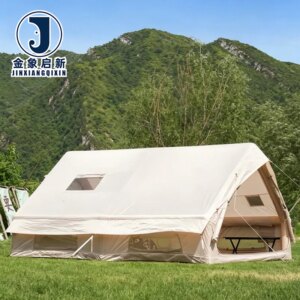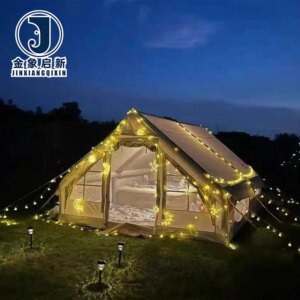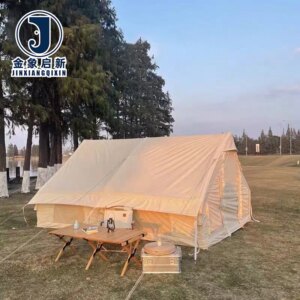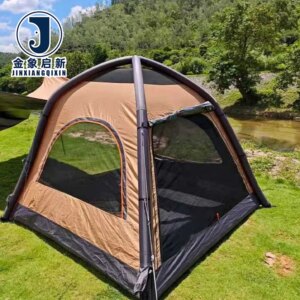
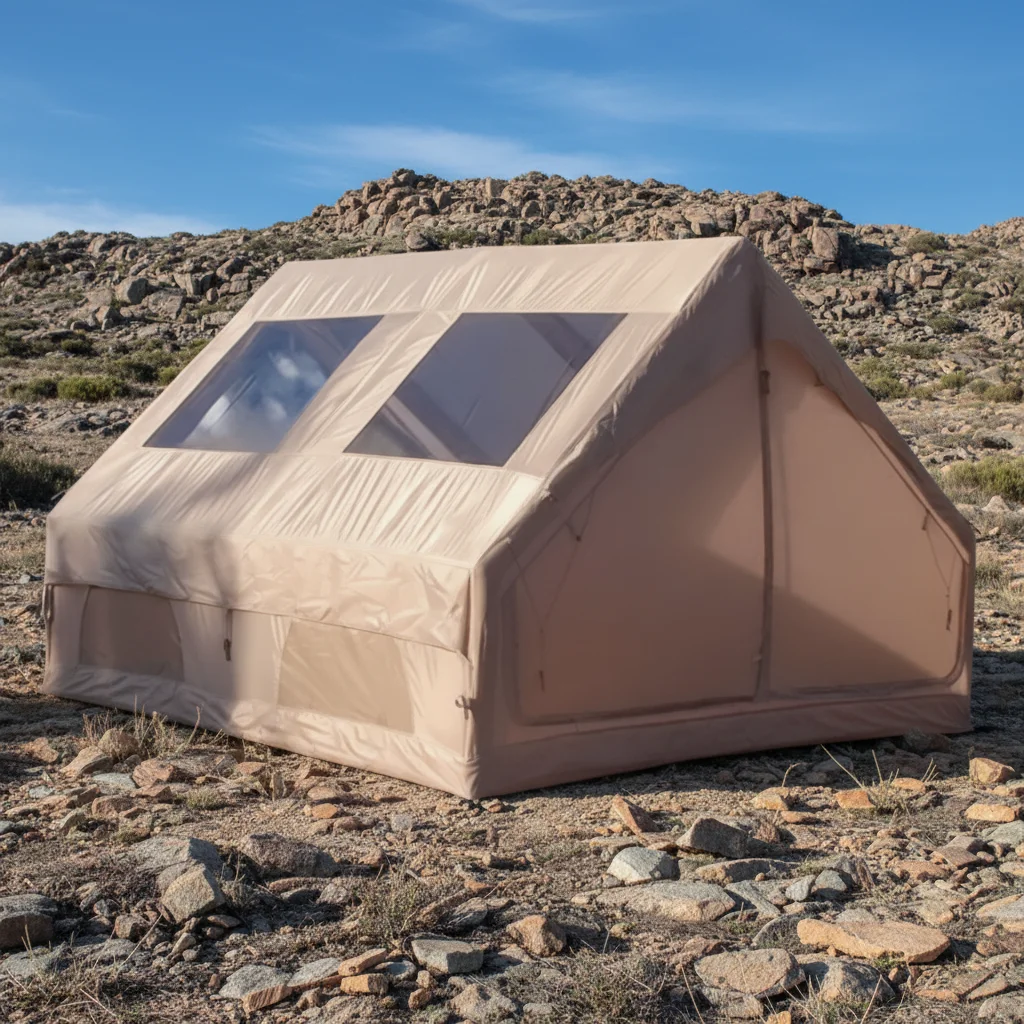

Description
Batch-Consistent Roll Supply — Every roll of PVC inflatable tent fabric is checked against the quoted specification at our facility before dispatch, ensuring uniform coating weight and colour across your entire order.
Technical Specifications
| Parameter | Value |
|---|---|
| Product Type | Inflatable Tent |
| Core Material | PVC tarpaulin |
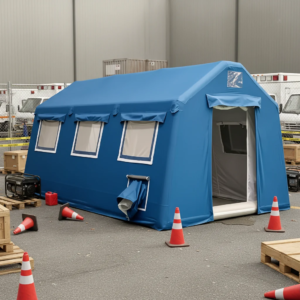
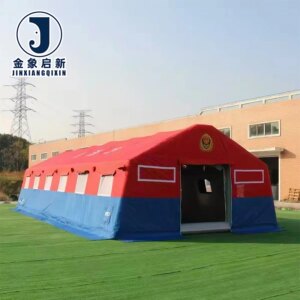
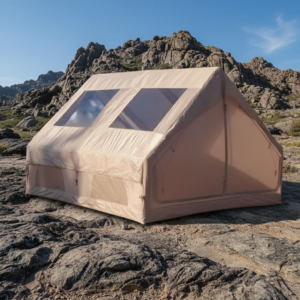
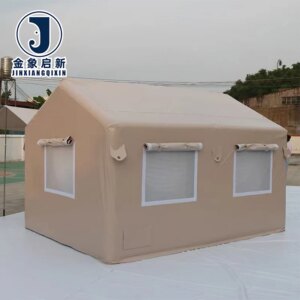
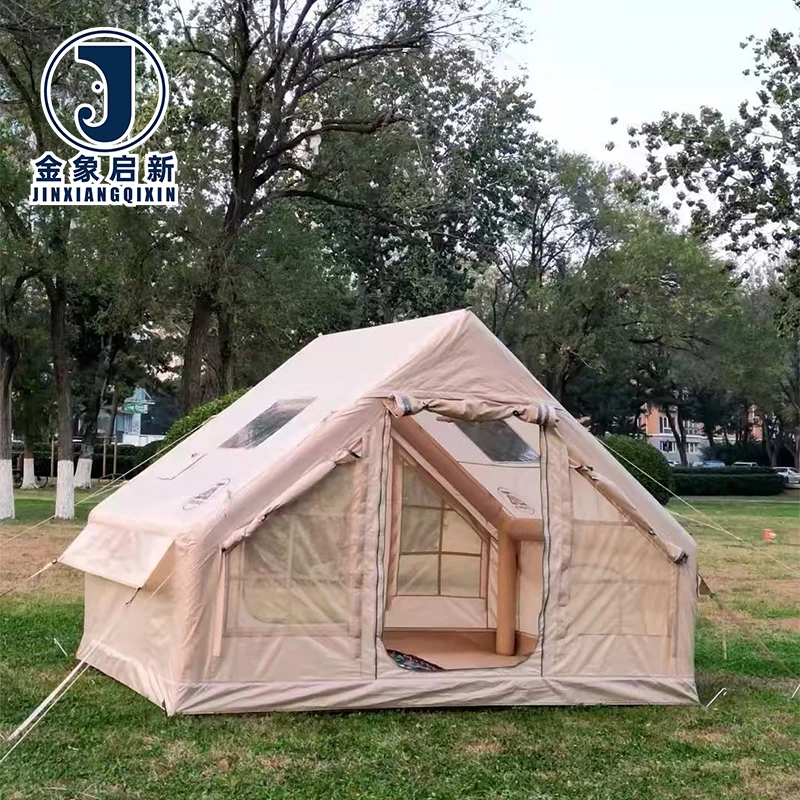
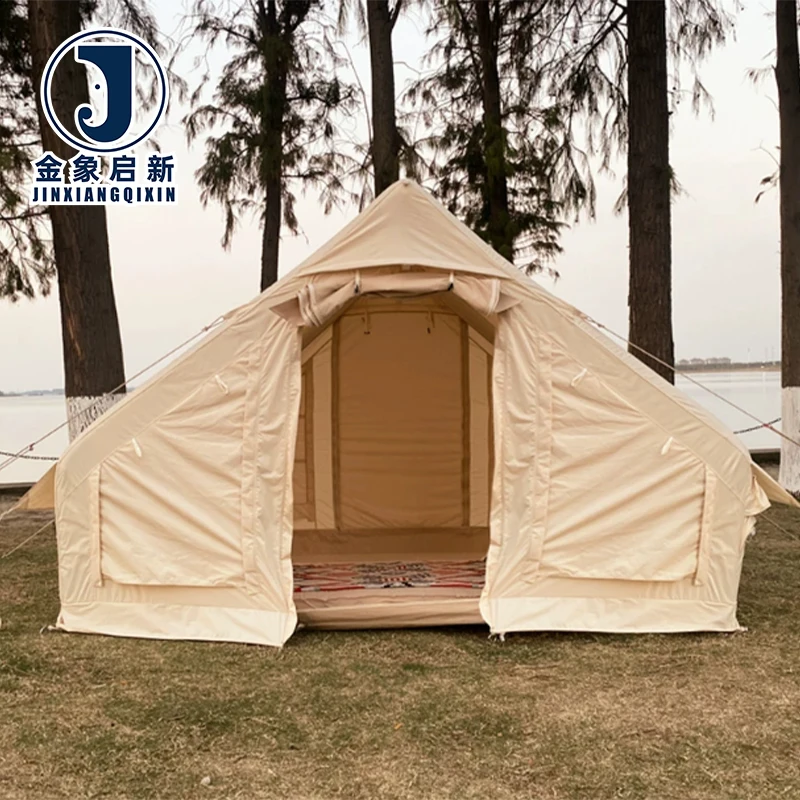
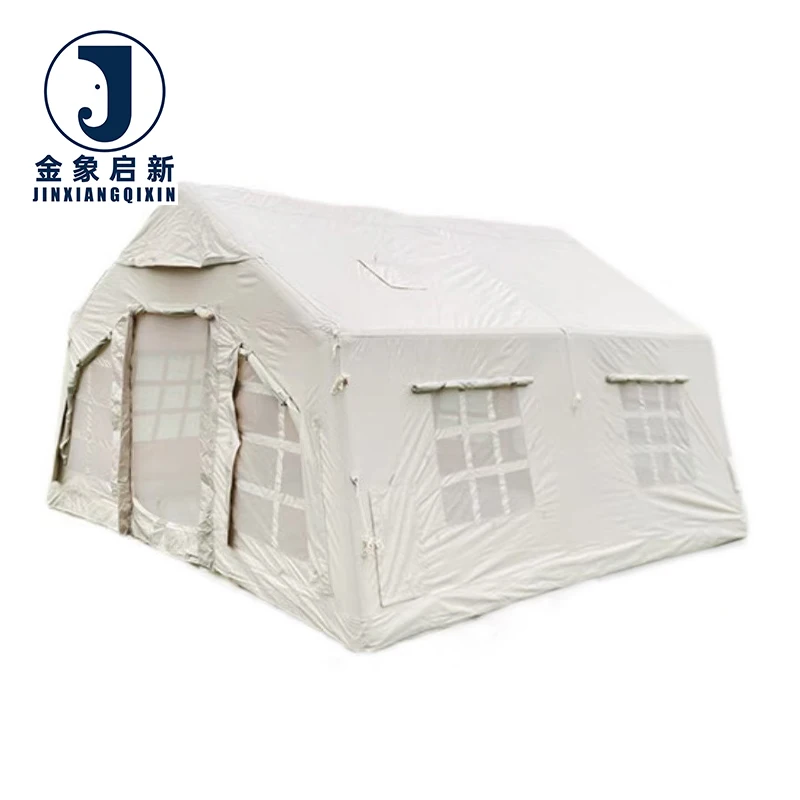
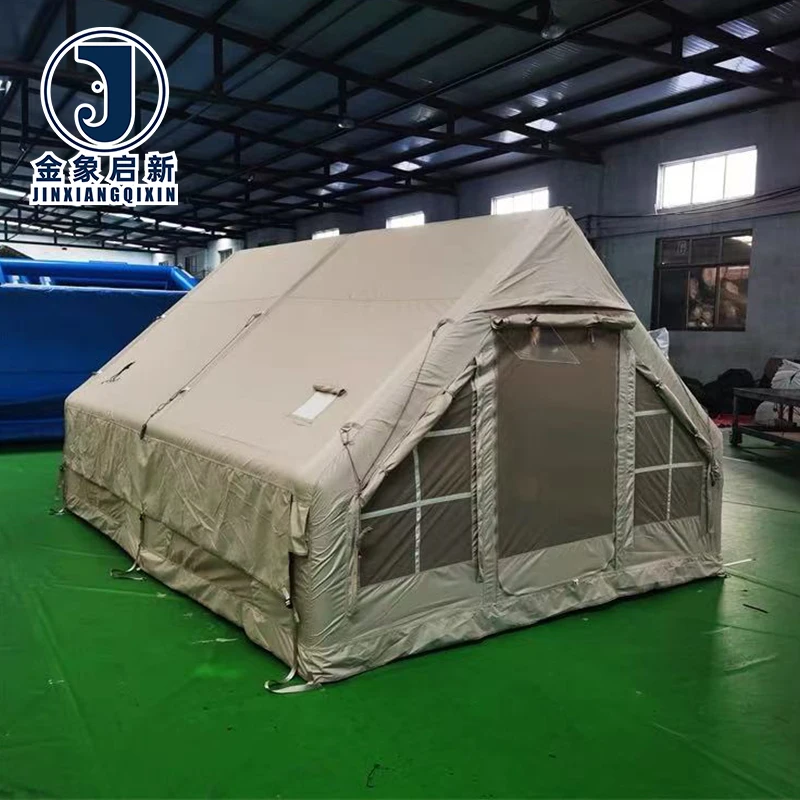
| Product Form | Inflatable structure with quick automatic opening |
| Design Feature | Single layer construction |
| Waterproof Rating | Waterproof (test basis not stated in source) |
| Flame Retardant | Available in flame retardant grades — confirm the grade required for your market |
| UV Treatment | UV-resistant treatment available — confirm test standard for your region |
| Anti-Static | Anti-static treatment available — confirm surface resistance standard for your application |
| Key Performance | Tear-resistant |
| Customization Service | OEM & ODM, sample customization, pattern printing |
| Standards | ISO 9001, ISO 14001, ISO 45001, CE |
Application Suitability
| Application | Exposure & Requirement |
|---|---|
| Temporary construction site shelters | Wind uplift on inflated frames, rain and dust ingress, repeated deployment and pack-down cycles |
| Mobile agricultural equipment storage | Prolonged UV exposure, condensation under the membrane, puncture risk from machinery edges |
| Outdoor industrial event coverings | High foot-traffic abrasion at entry points, rapid inflation and deflation for event setup schedules |
| Commercial portable shelters for wholesale distribution | Consistent roll-to-roll colour and weight across large procurement batches, branding print adhesion |
Why Roll-to-Roll Consistency Matters More Than the Quoted GSM
A stated GSM on paper is meaningless if the coating weight drifts between rolls once they reach your cutting table.
Buyers of PVC inflatable tent roll stock often discover that the first roll from a batch meets the agreed specification, while subsequent rolls feel lighter or handle differently during welding. This inconsistency forces fabricators to adjust heat-seal temperatures mid-run, producing weak seams on some panels and scorched surfaces on others. When inflatable tent fabric arrives with variable coating adhesion, the inflated structure may develop pinholes at stress points within the first season of use [NEED_CITE: tensile and tear test methods for coated fabrics per ISO 1421]. Our 100% pre-shipment inspection records every roll against the purchase specification so you receive uniform material from first to last.
Coating Weight Control for Inflatable Structure Fabric
Maintaining uniform coating weight across a full production run of inflatable tent fabric requires continuous monitoring at the coating head. Our three full production lines are equipped to apply PVC coatings with controlled thickness, ensuring that each metre of fabric carries the same material density. This consistency directly affects how the fabric behaves during fabrication—welding parameters set on the first roll will produce identical seam strength on the twentieth, eliminating the trial-and-error adjustments that waste time and material on the shop floor.
Colour Matching Across Multi-Roll Orders
When a tent manufacturer orders several hundred metres of PVC inflatable tent fabric for a product line, even slight hue variation between rolls becomes visible once panels are welded side by side. Our R&D team prepares colour references at the sampling stage and holds approved standards for production matching. Each batch is compared against the master standard under controlled lighting before release, so your finished inflatable structures present a uniform appearance to the end user without panel-level colour sorting.
Understanding How Base Fabric and Coating Interact
The performance of inflatable tent fabric depends on the relationship between the polyester base fabric and the PVC coating applied to it. The denier of the yarns and the weave density determine how the material resists tearing once an inflation load is applied and wind acts on the structure. Coating weight alone does not define strength—a heavy coating on a loosely woven base may crack at fold lines during pack-down, while a lighter coating on a tightly woven fabric can outperform it in tear propagation resistance. The single-layer construction of our PVC inflatable tent fabric is engineered to balance these factors for rapid automatic-opening deployment, where the material must unfold and pressurise without hesitation. Surface finish options affect how the fabric interacts with dirt and cleaning agents in the field; a glossy surface sheds particulate more readily, while a matte finish reduces glare under direct sunlight [NEED_CITE: DIN 4102 fire classification for building materials]. The choice between available flame retardant grades should be matched to the fire safety regulations in the destination market, as different jurisdictions specify different test standards for temporary structures.
The Hidden Cost of Overlooking Seam Performance
When inflatable tent fabric is specified only on weight and colour, the welded seams often become the first point of failure. A seam that separates under inflation pressure does so because the coating did not fuse completely during welding—a problem that traces back to inconsistent coating thickness or incompatible heat-seal settings. Fabricators who receive rolls with variable coating density must slow their production line to test-seam each new roll, losing throughput on every order. In the field, a failed seam on an inflated shelter means immediate deflation, exposing stored equipment or event attendees to weather [NEED_CITE: weld seam strength testing methods for PVC coated fabrics].
Why Procure Inflatable Tent Fabric From This Facility
Our 10-person R&D team develops samples within days for custom dimensions, colour, and pattern printing—allowing you to approve material before committing to full production. Three full production lines and 36 sets of professional processing equipment support bulk roll orders with reliable scheduling. Dedicated quality control at every production stage means coating weight, colour, and surface finish are verified in-process, not only at final inspection. Every shipment of PVC inflatable tent fabric is accompanied by a complete documentation package, so your receiving team can verify the material against the purchase order immediately upon arrival.
Documentation & Verification
- Material specification sheet stating base fabric type, coating weight, and confirmed GSM per roll
- Pre-shipment inspection record with test results for waterproofing and tear resistance
- Flame retardant and UV test reports included where applicable to the specified grade
- ISO 9001 and CE certificates provided with every shipment documentation set
- Roll packing list with individual roll weights and dimensions for customs clearance
- Certificate of origin issued per destination country requirements
Fabrication, Handling & Storage
- Set heat-seal temperature based on coating weight confirmed in the material specification sheet
- Test-weld a sample from each new roll to verify seam strength before full panel production
- Store rolls upright on pallets to prevent flat-spot deformation of the PVC coating layer
- Allow cold-stored rolls to reach ambient temperature before unrolling to avoid coating micro-cracking
- Use mild detergent for field cleaning to preserve the surface treatment and UV-resistant finish
- Repair minor field punctures with compatible PVC adhesive patches matched to the single-layer construction
What We Need to Quote Your Inflatable Fabric Order
To provide an accurate specification and lead time, share your target fabric width, annual volume estimate, and the fire safety or anti-static standards required in your destination market. Let us know whether you need finished cut panels or full roll stock, and whether pattern printing or branded panels are part of your product design. If colour consistency is critical across your product line, request a production sample for approval before the main run commences.
Frequently Asked Questions
Q: How is GSM verified on arrival and what documentation accompanies each roll?
A: Each roll is weighed and measured during our pre-shipment inspection, and the verified GSM is recorded on the inspection report included in your documentation package. The material specification sheet states the base fabric denier, coating weight, and confirmed GSM so your receiving team can cross-check on arrival.
Q: What flame-retardant and anti-static test standards can be met for inflatable tent compliance?
A: We offer PVC inflatable tent fabric in flame retardant and anti-static grades matched to your market requirements. Confirm the specific standard your destination jurisdiction requires, and we will supply the corresponding test report with your shipment documentation.
Q: How do you control colour consistency across rolls in a single inflatable tent fabric order?
A: Our R&D team establishes a master colour standard at sampling, and every production roll is compared against it under controlled lighting before release. This process ensures panels welded from different rolls in the same batch present a uniform appearance.
Q: What custom width, pattern printing and MOQ options are available for inflatable structure fabric?
A: We support custom widths, pattern printing, and OEM/ODM sample development with reasonable minimum order quantities. Provide your required width, print design, and estimated volume so we can confirm lead time and production scheduling for your inflatable tent fabric order.