Description
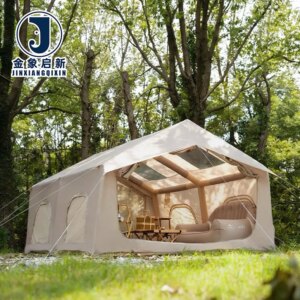
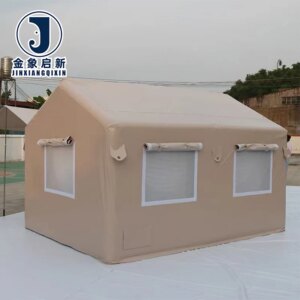
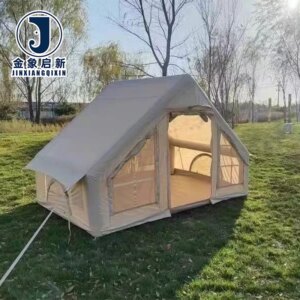
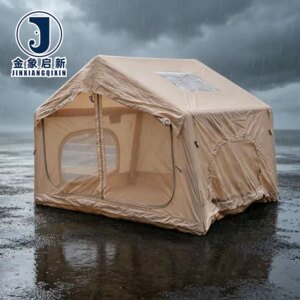
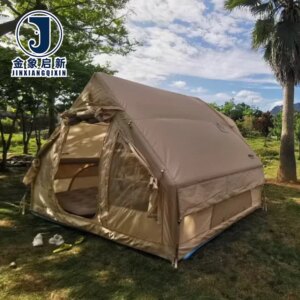
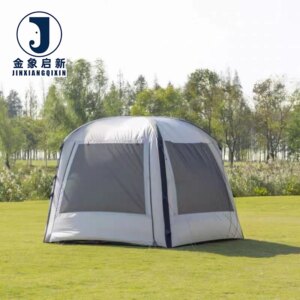
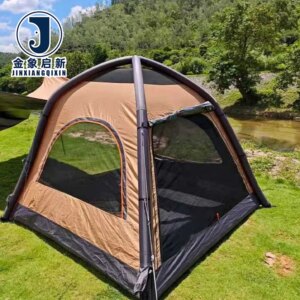
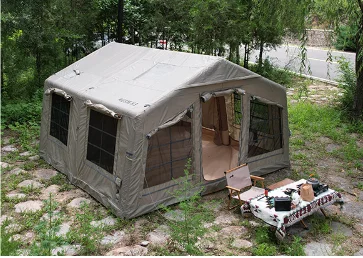
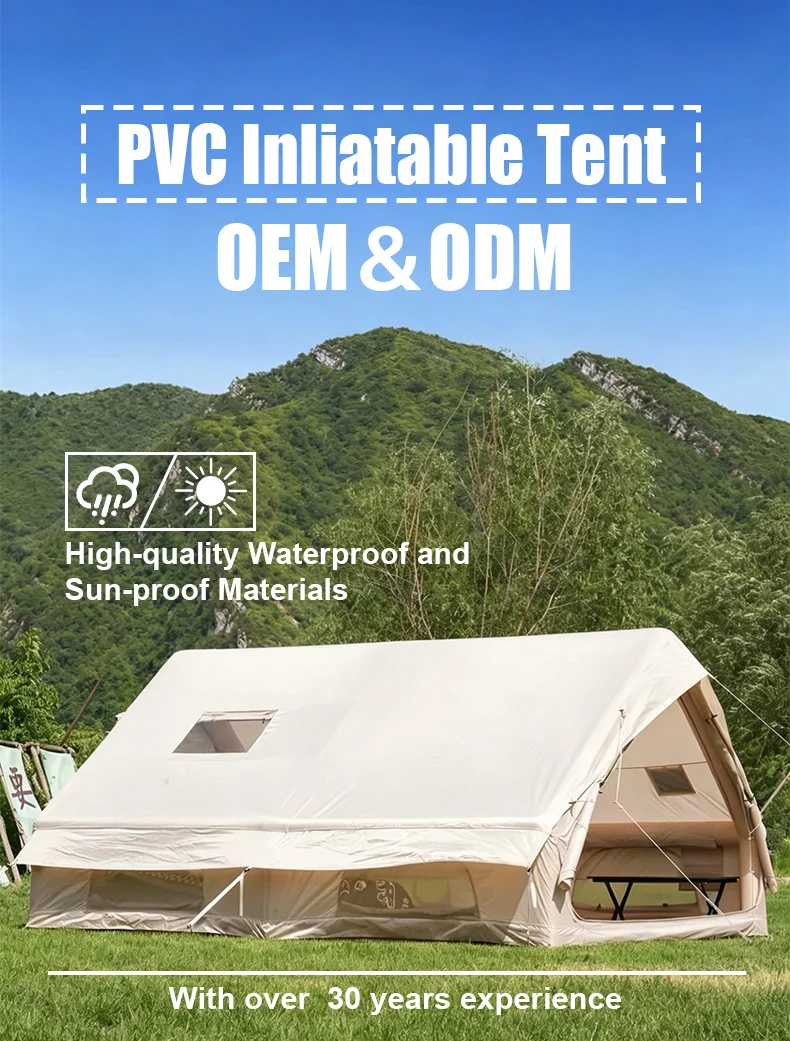
Custom Made PVC Inflatable Tent for Emergency Relief
Proven Coating Consistency — Roll-stock PVC inflatable tent fabric is held to tight batch tolerances through dedicated raw material control and full-process QA, eliminating the colour and weight variation that plagues bulk orders.
Technical Specifications
| Parameter | Value |
|---|---|
| Product Type | Inflatable Tent Fabric |
| Core Material | PVC Tarpaulin (knife-coated fabric) |
| Key Features | Waterproof, UV-resistant, tear-resistant, flame retardant, anti-static |
| Waterproof Rating | ≥8000mm H₂O |
| Tear Strength | ≥300N |
| Flame Retardant | Flame retardant (grade available on request — confirm the classification required for your market) |
| UV Treatment | Anti-UV treatment applied (test basis available on request) |
| Anti-Static | Anti-static finish (surface resistance data available on request) |
| Dimensional Tolerance | ±2% |
| Pressure Retention Test | 24-hour test on finished inflatable structures before shipment |
| Customization | OEM & ODM — size adjustment, color matching, pattern printing, access points, ventilation systems |
| Sample Lead Time | 7-10 business days from design confirmation |
| Certifications | ISO 9001, ISO 14001, ISO 45001, CE |
Application Suitability
| Application | Exposure & Requirement |
|---|---|
| Camping and outdoor inflatable tents | Repeated inflation cycles, UV exposure, abrasion from ground contact, seasonal weather variation |
| Emergency and disaster-relief shelters | Rapid deployment under field conditions, four-season weather, high occupant turnover |
| Temporary site housing for construction crews | Dust, mechanical impact, continuous occupancy, fire safety compliance on site |
| Mobile equipment storage and command posts | Wind loading on inflated structure, temperature fluctuation, long-term outdoor exposure |
| Commercial event and exhibition inflatables | Frequent assembly and disassembly, branding and print visibility, crowd-proximity fire codes |
Why Roll-to-Roll Colour Consistency Matters for Inflatable Tent Fabric
Colour mismatch between rolls in the same order is one of the most visible and costly defects in inflatable tent production.
When a manufacturer cuts panels from different rolls and joins them into a single inflatable structure, any shade variation becomes immediately apparent once the tent is inflated and viewed in daylight. For inflatable tent fabric wholesale buyers purchasing container loads, this means an entire production batch can face rejection or rework. The root cause is typically inconsistent pigment dispersion or coating weight drift between production runs — problems that compound when raw material batches are not locked to a single dye lot. [NEED_CITE: pigment dispersion standards for PVC coated fabrics]
Batch Control as the Foundation of Usable Roll Stock
Consistent inflatable tent fabric starts upstream. Every roll in a given order must originate from the same resin and pigment batch, coated under stable temperature and line-speed conditions. Knife-coating allows precise control over coating weight on each side of the base fabric, but only if the coating formulation is prepared in a single mixing run for the full order volume. Splitting an order across multiple coating runs introduces the exact variation that causes panel mismatch on the factory floor.
Matching the Roll to the Finished Structure
Manufacturers producing inflatable tents need to know that the fabric they receive will behave identically across every panel of every unit. This includes not only colour but also hand feel, stiffness, and weld behaviour. PVC inflatable tent aftermarket supplier specifications must therefore cover more than GSM and width — they must guarantee that thermal welding parameters established on the first roll will produce the same seam strength on the last roll in the shipment. Any drift in plasticiser content or coating adhesion between rolls will alter weld temperature windows and seam peel strength. [NEED_CITE: thermal welding parameters for PVC coated fabrics]
Decoding the Specification Sheet for Inflatable Tent Fabric
Knife-coated PVC fabric achieves its performance through the interplay of base fabric construction and coating weight. The base fabric — defined by denier and weave density — provides the structural skeleton that governs tensile and tear behaviour. Coating weight then adds waterproofing, surface durability, and weldability. A heavier coating does not automatically mean a stronger fabric; if the base fabric has low thread count, adding coating weight increases stiffness without proportional gains in tear resistance. For inflatable tent applications, the balance matters: the fabric must be flexible enough to fold compactly yet strong enough to withstand internal air pressure and wind loading without deforming at the seams. The ±2% dimensional tolerance specified for this fabric ensures that panels cut to pattern will align correctly during assembly, reducing waste and re-sewing. Waterproof performance rated at ≥8000mm H₂O indicates a fully continuous coating layer with no pinholes or thin spots — a critical requirement for shelters deployed in sustained rainfall.
The Hidden Cost of Specifying on Price per Kilogram Alone
Buyers who select inflatable tent fabric based on the lowest cost per kilogram often discover that the savings are erased downstream. A coating applied too thinly to hit a price point will show lower tear strength, reduced weld integrity, and early surface cracking under UV exposure. Flame retardant additives omitted to cut cost will cause the fabric to fail site safety inspections, halting deployment of an entire relief camp. Colour inconsistency across a bulk order forces the manufacturer to sort rolls by shade before cutting — adding labour, slowing throughput, and increasing off-cut waste. These failures do not appear on the quotation; they appear on the production floor and in the field. [NEED_CITE: coated fabric failure modes related to under-specification]
Why Manufacturers Source This Inflatable Tent Fabric
Nearly 30 years of focused coated-fabric production means the coating formulation and line parameters for PVC inflatable tent fabric have been refined through continuous production, not borrowed from unrelated product lines. Three full production lines with 36 sets of processing equipment provide the capacity to fulfil container-volume orders without splitting production across subcontracted facilities — a common source of batch inconsistency. A 10-technician R&D team handles OEM and ODM development, from colour matching and pattern printing to integrating specialised access points and ventilation systems, with sample validation completed within 7-10 business days. Full-process quality inspection with dedicated QA and QC staff at every stage ensures that GSM, coating adhesion, and colour are verified in-line, not only at final audit. Every roll is backed by a 24-hour pressure retention test protocol applied to finished inflatable structures, confirming that the fabric performs as an integrated air-holding system before it leaves the facility.
Documentation & Verification
- Material specification sheet stating GSM, base fabric denier, coating type, and colour reference per roll
- Batch-specific quality inspection report covering waterproof rating, tear strength, and dimensional tolerance data
- Flame retardant and anti-UV test documentation matched to the batch number on the roll label
- 100% pre-shipment inspection record signed by dedicated QA/QC staff before container loading
- Roll packing list and certificate of origin included with every dispatch for customs and compliance clearance
Fabrication, Handling & Storage
- Set thermal welder temperature and dwell time using test strips from the actual roll batch before production begins
- Allow knife-coated PVC rolls to acclimatise to workshop temperature for several hours before unrolling to prevent surface creasing
- Store rolls upright on pallets in a shaded, ventilated area to avoid flat-spot deformation on the coating surface
- Use compatible PVC adhesive and solvent for field repairs, testing bond strength on an off-cut first
- Avoid dragging cut panels across abrasive surfaces during assembly to preserve the coated waterproof layer
- Plan cutting layout to maximise panel yield per roll width and minimise off-cut waste at the selvage
How to Structure Your Inquiry
To receive a precise specification and sample for your inflatable tent programme, share your target panel dimensions, required fabric width, annual volume, and the fire safety or anti-static classification your end market mandates. If your design includes printed branding or custom access points, include artwork files or dimensional sketches so the R&D team can validate feasibility at the sample stage. Specify whether you need finished cut-and-welded panels or full rolls for in-house fabrication.
Frequently Asked Questions
Q: How is roll-to-roll colour consistency ensured across bulk inflatable tent fabric orders?
A: Each order is produced from a single resin and pigment batch mixed in one run. In-line colour checks are performed at intervals during coating, and final rolls are compared under standardised lighting before packing. A colour reference swatch matched to the purchase order is retained for future reorders.
Q: What custom width and roll length options are available for inflatable tent fabric?
A: Standard stock widths are available, with custom widths produced to order based on your cutting pattern requirements. Roll length is set to your specification to minimise end-of-roll waste. The R&D team reviews your panel layout to recommend the most efficient roll dimensions before production.
Q: How is GSM verified on arrival against the quoted specification?
A: Every roll is sampled during production and weighed under controlled conditions. The batch inspection report shipped with your order records the measured GSM for each roll. Buyers can cross-check on receipt using a calibrated scale and a standard-size test cut.
Q: What flame retardant and anti-UV test documentation is provided with each shipment?
A: A test report matched to the production batch accompanies each dispatch, documenting the flame retardant classification and UV treatment verification. If your market requires a specific standard — such as DIN 4102 or NFPA 701 — confirm the required grade at the inquiry stage so the correct formulation is applied.
Q: What is the MOQ and container loading plan for roll-stock inflatable tent fabric?
A: Minimum order quantities are set per colour and width combination. Container loading is planned by roll count, roll diameter, and weight to maximise cubic utilisation while preventing roll deformation during transit. A detailed packing list is provided before dispatch for your logistics team.