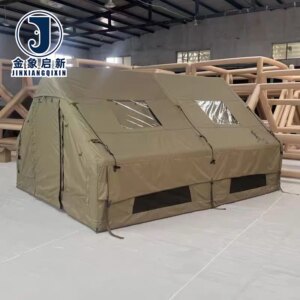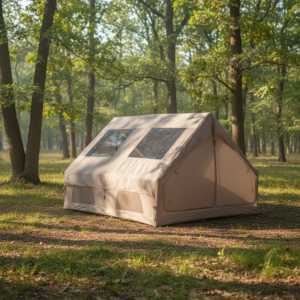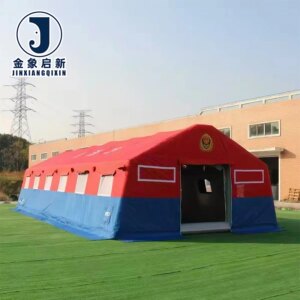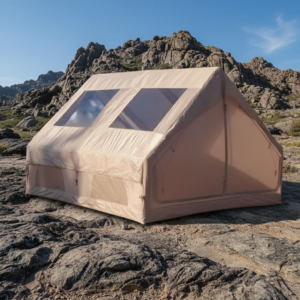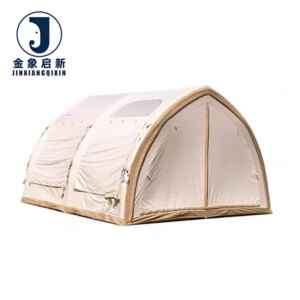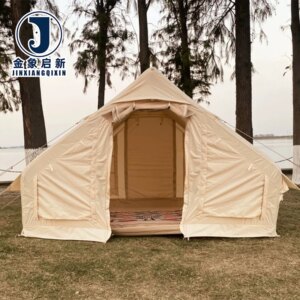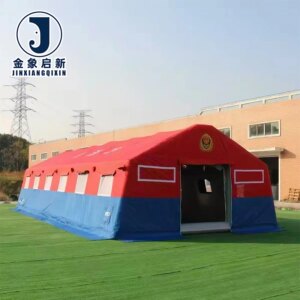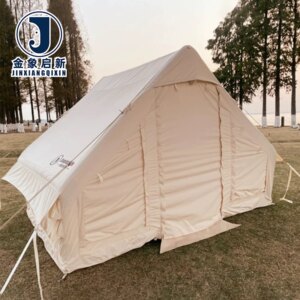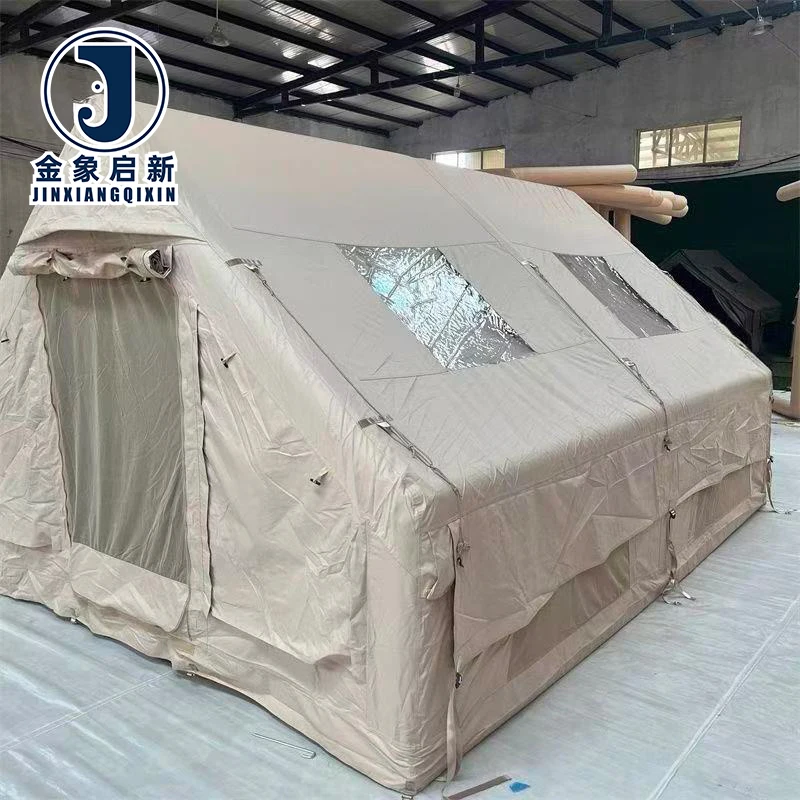
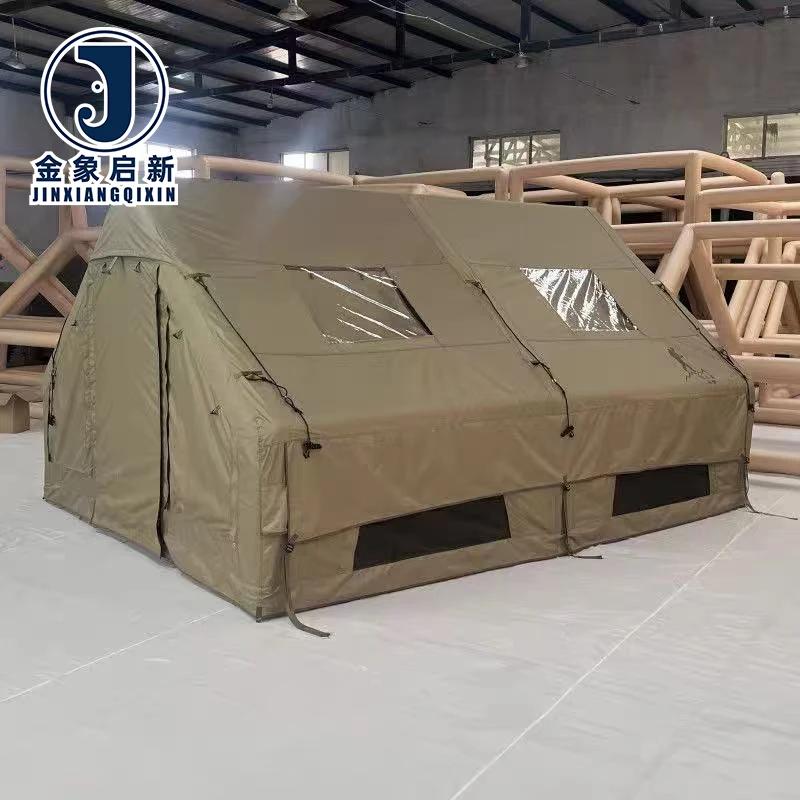
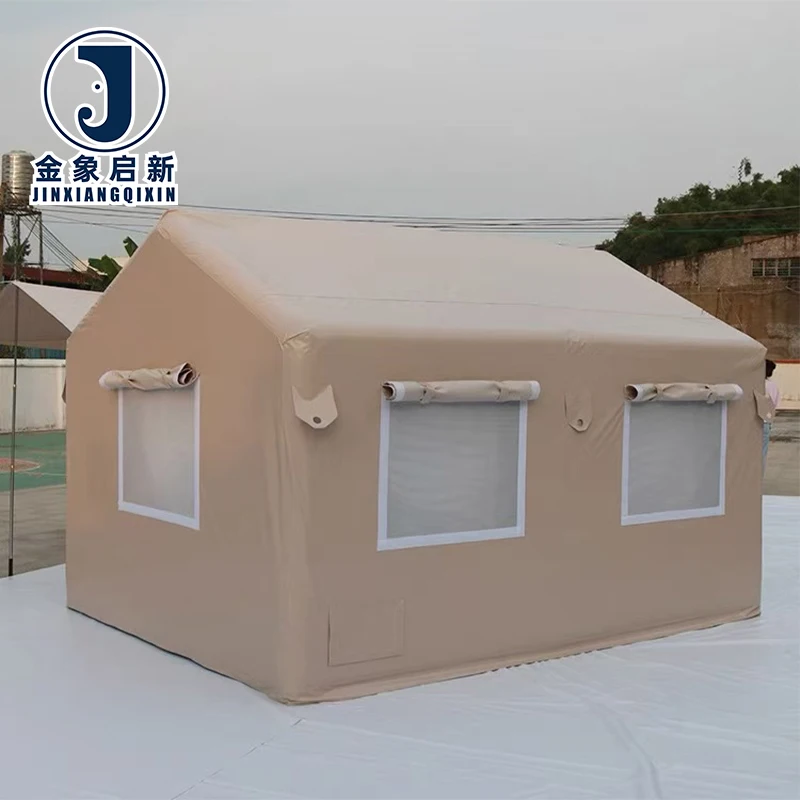
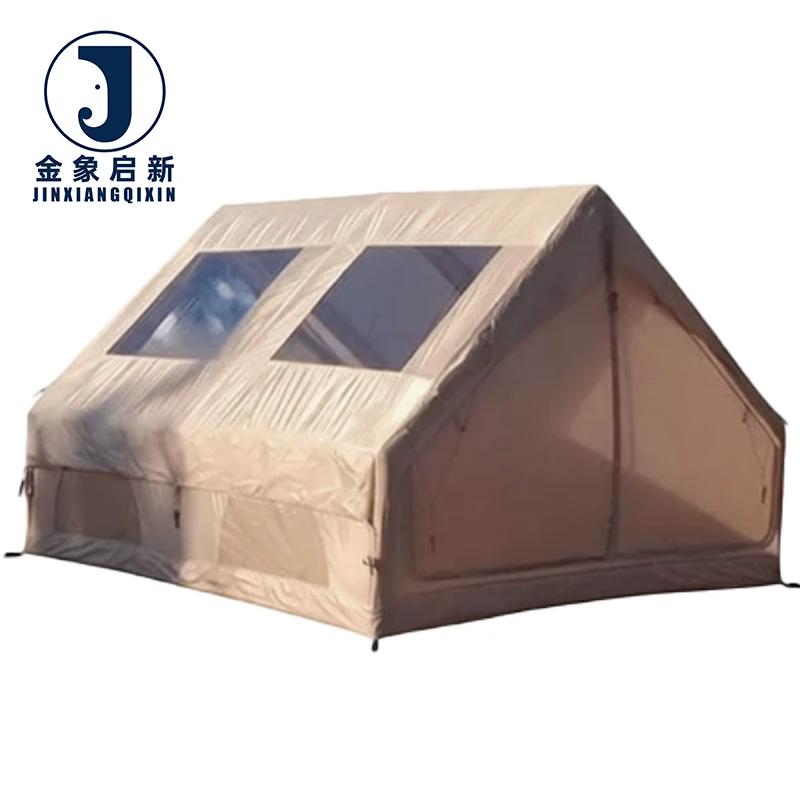
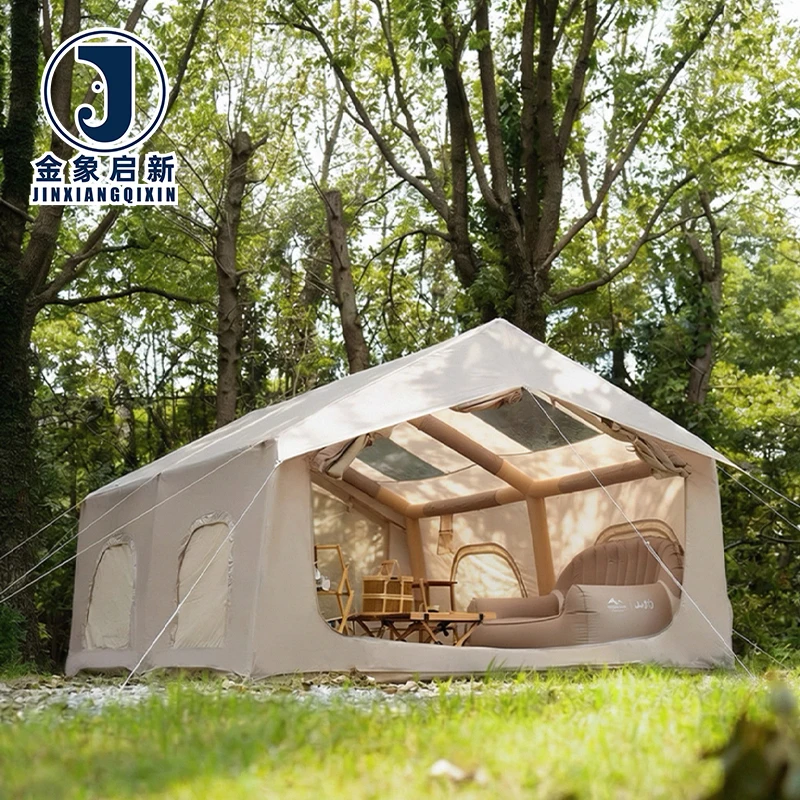
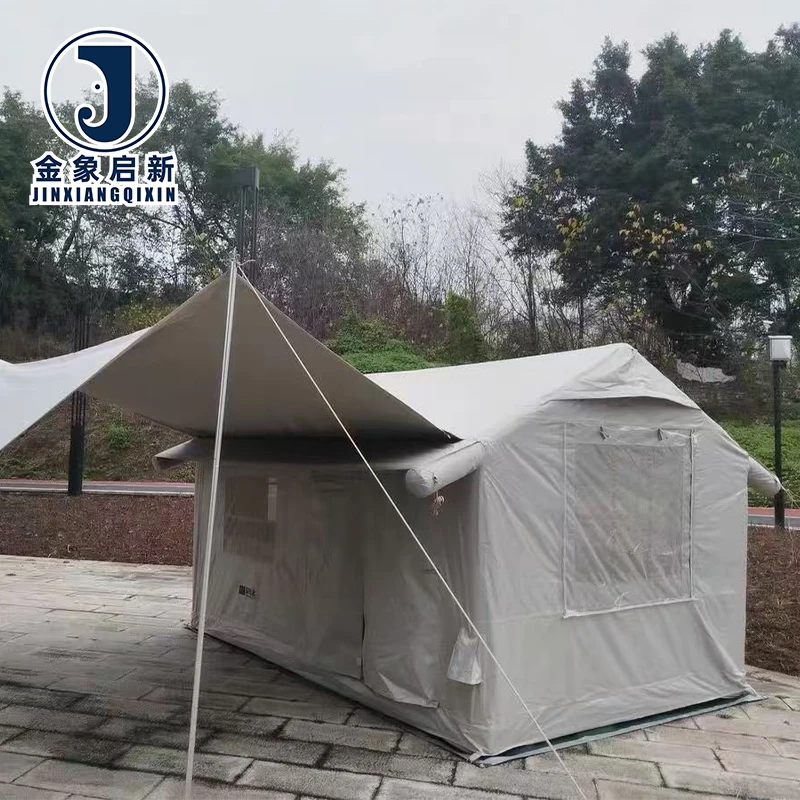
Description
Bulk-Roll Consistency — Three dedicated production lines process PVC tarpaulin fabric for inflatable tent manufacturing with QA checkpoints verifying colour and weight uniformity before dispatch.
Technical Specifications
| Parameter | Value |
|---|---|
| Product Type | Inflatable Tent Fabric |
| Core Material | PVC tarpaulin |
| Waterproof Construction | Fully coated, impermeable barrier |
| UV Resistance | Available in UV-resistant grades — confirm the grade required for your market |
| Flame Retardancy | Available in flame retardant grades — confirm the grade required for your market |
| Anti-Static Properties | Available in anti-static grades — confirm the surface resistance standard required |
| Tear Resistance | Tear-resistant construction (test standard available on request) |
| Customization | OEM & ODM — sample development, pattern printing, material selection, product design |
| Production Lines | 3 full production lines |
| Processing Equipment | 36 sets |
| R&D Support | 10-person technical team |
| Certifications | ISO 9001, ISO 14001, ISO 45001, CE |
Application Suitability
| Application | Exposure & Requirement |
|---|---|
| Tent and inflatable structure manufacturing | Roll-fed production lines requiring batch-to-batch GSM and colour consistency for panel cutting |
| Commercial camping facility operations | High-frequency deployment and storage cycles demanding tear-resistant, waterproof fabric |
| Outdoor event management shelters | Extended UV exposure, rapid inflation/deflation stress, and weather protection for temporary installations |
| Industrial field operation base camps | Harsh environmental conditions, abrasion from ground contact, and compliance documentation for site audits |
| Construction site workforce housing | Flame retardant and anti-static requirements per site safety regulations, multi-season durability |
Why Roll-to-Roll Colour Varies — and What It Costs Tent Manufacturers
Colour inconsistency across rolls in a single Inflatable Tent Fabric wholesale order forces manufacturers into unplanned sorting, panel matching, and sometimes full-batch rejection.
When you order multiple rolls for a tent production run, the expectation is uniform colour when panels are sewn or welded side by side. In practice, coating batch variation, pigment lot differences, and inconsistent line temperature can shift hue noticeably between rolls. For commercial tent makers producing branded or colour-coordinated inflatable structures, a visible panel mismatch after assembly means rework or scrap. This problem compounds when rolls from different production dates are mixed in the warehouse without lot tracking [NEED_CITE: colour consistency standards for coated technical textiles per ISO 105 series].
Batch Tracking from Coating Line to Container
Every roll of Inflatable Tent Fabric wholesale stock is traced back to its coating batch, pigment lot, and production date. This traceability means that when a tent manufacturer orders a repeat run months later, the colour reference can be matched to the original batch rather than relying on a generic colour card. For OEM tent brands specifying a proprietary colour, the R&D team develops a formulation sample before production begins, ensuring the approved shade carries through the full order volume.
Welding Behaviour Across the Roll Width
Inflatable tent panels are joined by hot-air or high-frequency welding, and the coating formulation directly affects seam integrity. A roll with uneven coating weight across its width will weld differently at the edges versus the centre, creating seams that fail under inflation pressure. Our coating process controls PVC layer thickness uniformly across the full roll width, so weld parameters set on the first panel remain valid for the last [NEED_CITE: hot-air welding parameters for PVC-coated polyester fabrics].
How Base Fabric Density and Coating Weight Interact
GSM alone does not determine the strength of inflatable tent fabric. The base fabric denier and weave density set the tensile and tear baseline, while the PVC coating weight adds puncture resistance, waterproofing, and surface durability. A lighter base fabric with heavy coating may meet a target GSM but will tear more easily under the cyclic stress of inflation and deflation. Conversely, a dense base fabric with insufficient coating will absorb moisture and degrade at the yarn level. Specifying both base fabric construction and coating weight gives a complete picture of how the material performs in a pressurised tent structure.
Selecting the Wrong Roll Specification
Tent manufacturers who specify only on GSM often discover after cutting that the fabric lacks the tear propagation resistance needed for inflatable panel geometry. A seam under constant internal pressure will propagate a small puncture rapidly if the base fabric weave is too open. Similarly, ordering without specifying UV treatment grade means tents deployed for full-season commercial camping may show coating degradation and colour fade well before the structure reaches its expected service life [NEED_CITE: UV degradation test methods for PVC tarpaulin per ISO 4892]. Flame retardant grades must be confirmed against the specific standard required at the deployment site — a tent shipped to a European event site faces different classification requirements than one deployed at a North American construction camp.
Why Tent Manufacturers Source PVC Tarpaulin Rolls Here
Three full production lines running dedicated PVC coating operations mean Inflatable Tent Fabric wholesale orders ship on reliable schedules without queueing behind unrelated product runs. The 10-person R&D team handles material selection, pattern printing development, and custom sizing — not as a catalog option but as an integrated service from sample to bulk. Every roll passes inspection before shipment, with GSM, colour, and coating integrity verified against the order specification rather than a sampling plan. Pattern printing for branded tent panels is developed in-house, avoiding the misalignment between printer and fabric supplier that delays OEM launches. Custom roll widths reduce offcut waste for manufacturers running automated cutting tables optimised for specific panel dimensions.
Documentation & Verification
- Material specification sheet stating GSM, base fabric construction, coating type, and colour reference per production batch
- UV and flame retardant test reports supplied with applicable grade documentation
- Pre-shipment inspection record confirming roll count, dimensions, and surface quality
- Roll packing list with lot numbers traceable to coating line and production date
- ISO 9001, ISO 14001, ISO 45001, and CE certificates available with each shipment
- Certificate of origin and customs documentation for international dispatch
Fabrication, Handling & Storage
- Set hot-air weld temperature based on the PVC coating formulation confirmed in your sample approval, not a generic setting
- Store rolls upright on end-caps to prevent edge crushing that causes permanent creasing across the roll width
- Allow cold-stored rolls to acclimate to workshop temperature before unrolling to avoid coating micro-cracking
- Clean welded seams with PVC-compatible solvent only — aggressive cleaners will attack the coating surface
- Plan panel cutting layouts around the roll width to minimise offcuts and cross-grain seams in high-stress zones
- Repair field punctures with PVC patch material from the same coating formulation to maintain weld compatibility
Request a Fabric Specification
Tell us the inflatable tent panel dimensions you are cutting, the deployment environment (season rating, UV exposure level, fire safety standard required at site), and your annual roll volume. If your production line requires a specific roll width or pattern printing alignment, include those parameters so the sample we develop matches your cutting and welding setup. We will return a material specification sheet, a sample roll section, and a quotation with lead time.
Frequently Asked Questions
Q: How do you control colour consistency across multiple rolls in one order?
A: Each roll is tracked to its pigment batch and coating run. We run colour comparison checks against the approved reference at multiple points during production, not only at final inspection. Rolls showing deviation outside the agreed tolerance are held before packing. For large orders spanning multiple production days, we reserve pigment from a single mixing batch to eliminate lot-to-lot shift.
Q: How can I verify GSM when the rolls arrive at my factory?
A: We include a pre-shipment inspection record with every dispatch showing measured GSM per roll. On arrival, take a standard test cut from the roll edge using a fixed-area cutter and weigh it on a calibrated scale. If the measured value falls outside the tolerance on the specification sheet, contact us with the roll lot number and test data so we can trace the coating batch.
Q: What roll width options are available for inflatable tent panel cutting?
A: Roll width depends on the coating line configuration and the minimum order quantity for your specification. We supply widths that align with common automated cutting table beds to reduce offcut waste. Confirm your cutting table width and preferred panel layout, and the R&D team will recommend the most material-efficient roll width for your production geometry.
Q: How does pattern printing affect the fabric specification?
A: Pattern printing is applied to the PVC coating surface and requires a compatible surface finish for ink adhesion and abrasion resistance. The base fabric specification remains unchanged, but the coating formulation may be adjusted to accept the print process. We develop a printed sample for approval before bulk production so colour registration, wash-fastness, and surface feel are confirmed against your design.
Q: What is the minimum order for a custom Inflatable Tent Fabric wholesale specification?
A: MOQ depends on whether you are ordering a standard specification from our running range or a custom colour, width, or printed design. Custom formulations and widths require a minimum production run to justify line setup. Share your target specification and annual volume, and we will confirm the MOQ per order alongside the lead time for sample development and bulk dispatch.