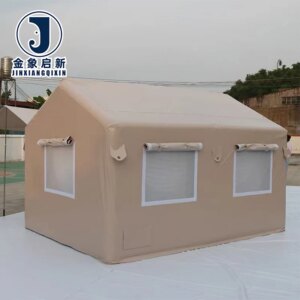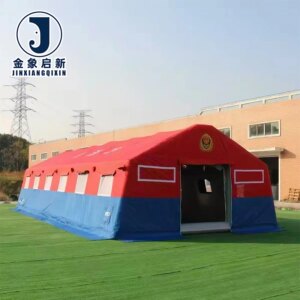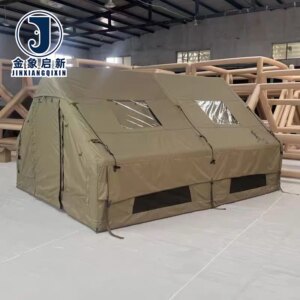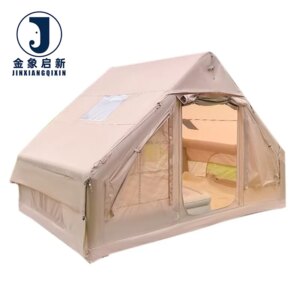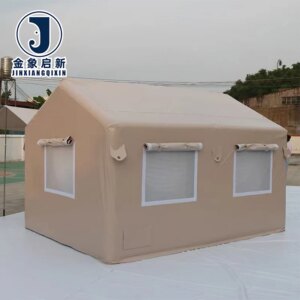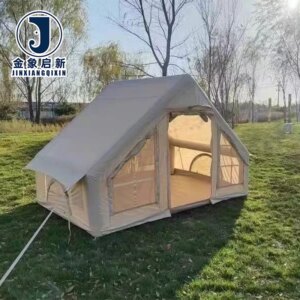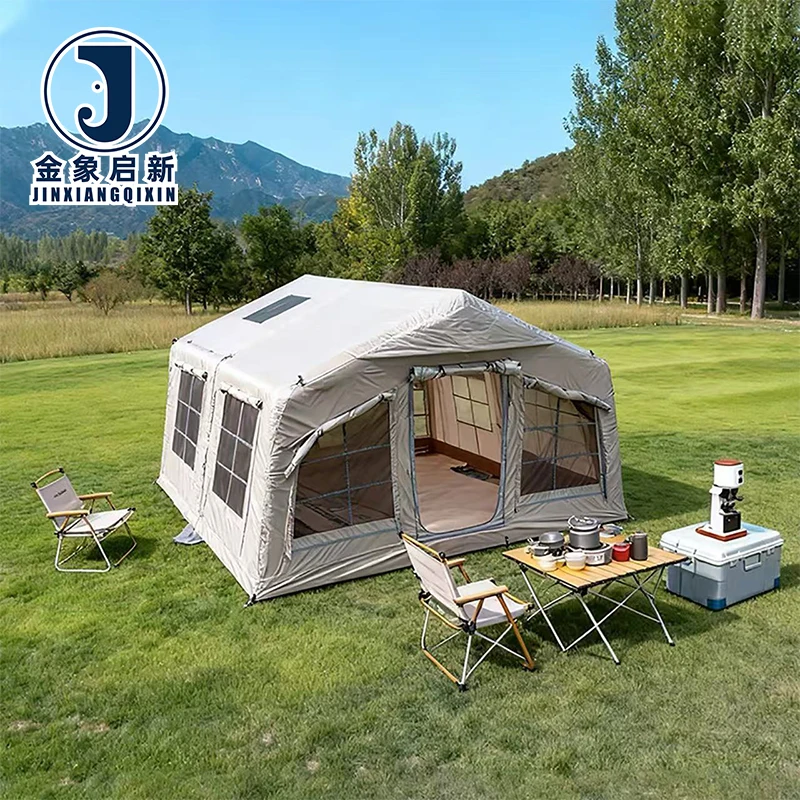
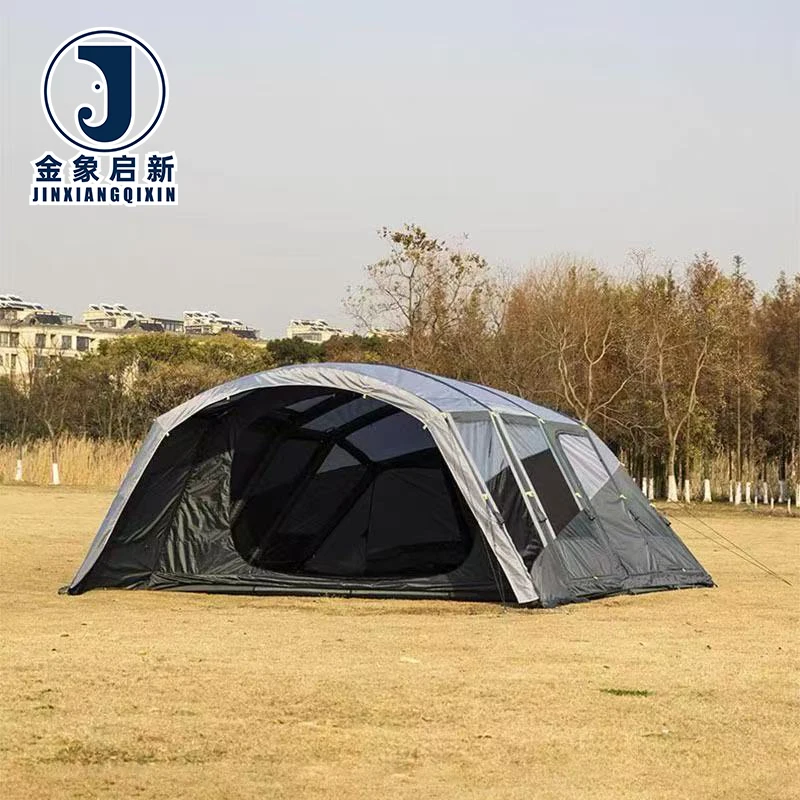
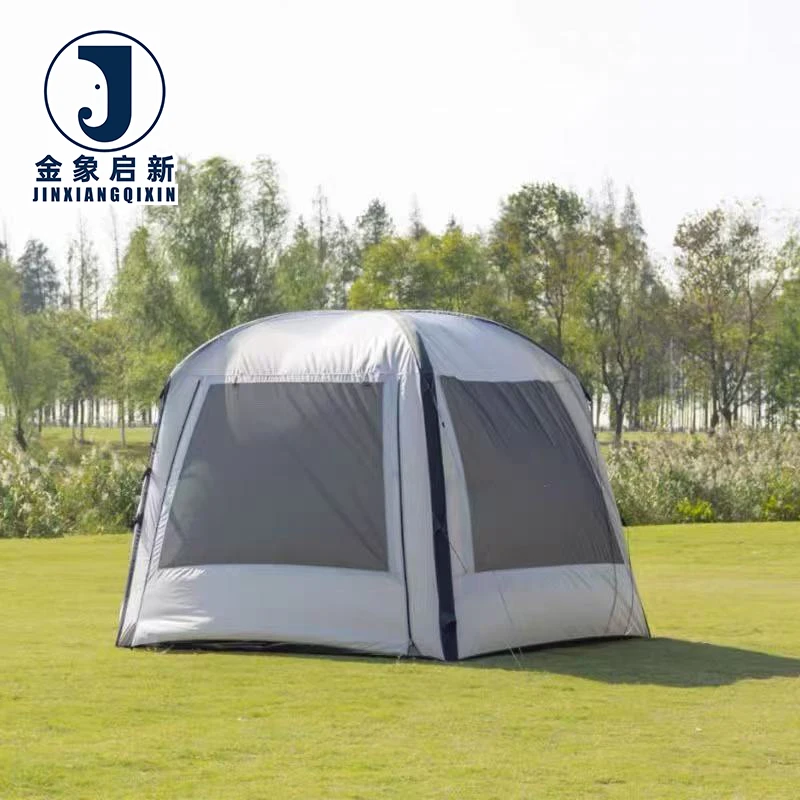
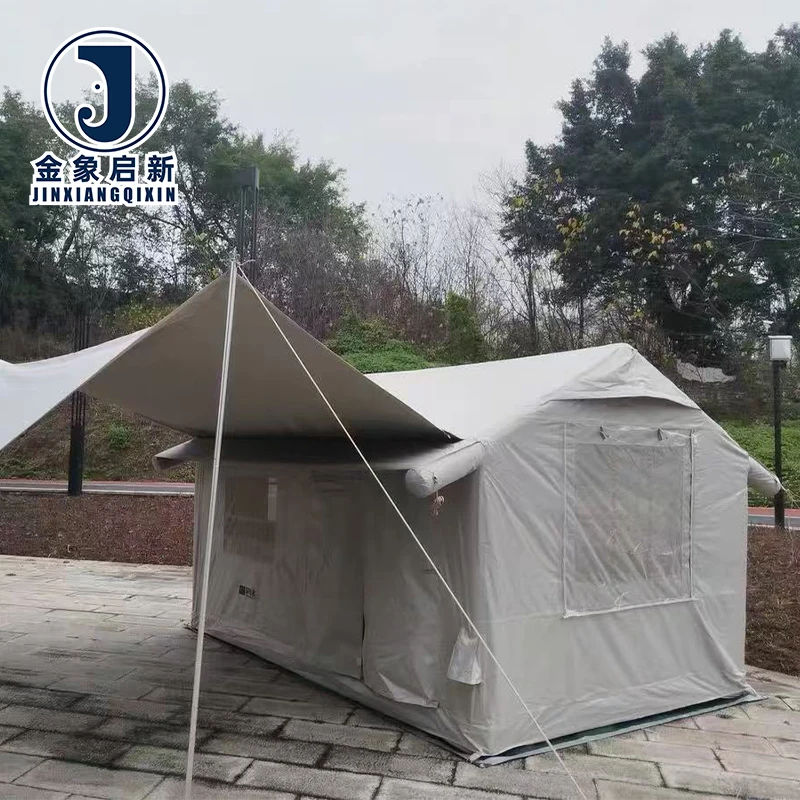
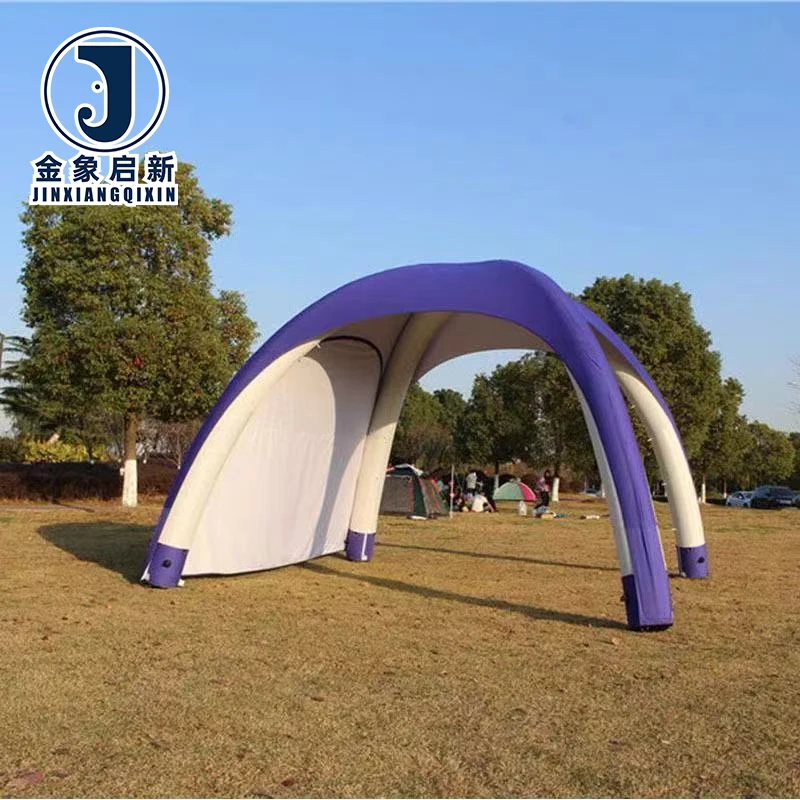
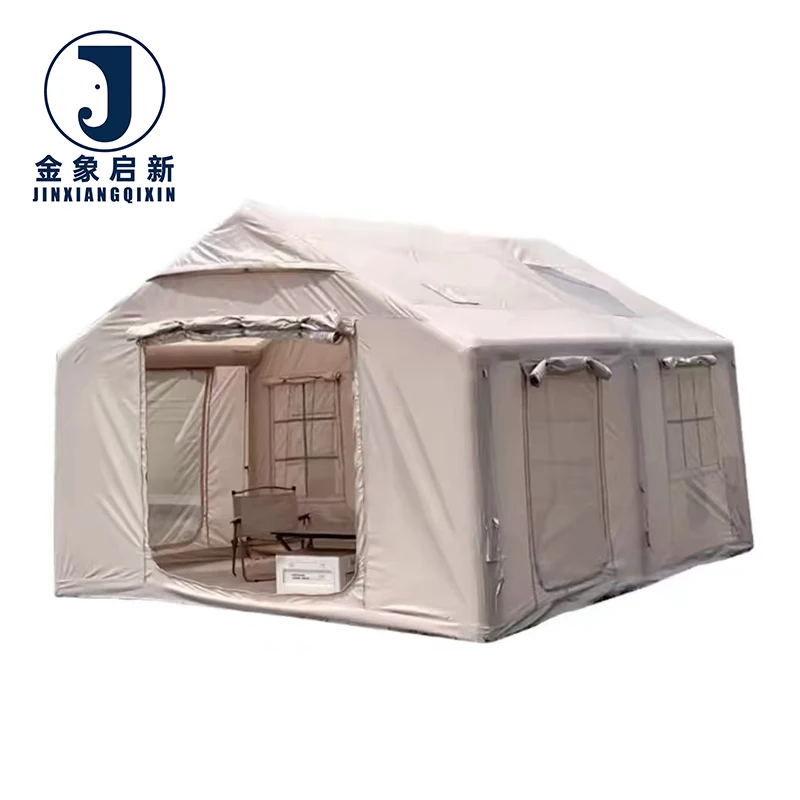
Description
Technical Specifications
| Parameter | Value |
|---|---|
| Product Type | Inflatable Tent Fabric |
| Core Material | PVC tarpaulin |
| Waterproof Performance | Confirmed |
| UV Resistance | Available with UV treatment (test basis not stated in source) |
| Tear Resistance | Confirmed |
| Flame Retardant | Available in flame retardant grades (grade not stated in source) |
| Anti-Static Treatment | Available (surface resistance not stated in source) |
| Finish Options | Glossy or matte finish |
| Customization | OEM & ODM, pattern printing, sample customization |
| R&D Support | 10 technicians |
| Quality Control | Strict full-process inspection with dedicated QA & QC staff |
| Certifications | ISO 9001, ISO 14001, ISO 45001, CE |
Application Suitability
| Application | Exposure & Requirement |
|---|---|
| Commercial glamping tent manufacturing | Prolonged outdoor UV exposure, rain and snow loads, repeated inflation cycles, guest comfort standards |
| Event organizer temporary shelters | Rapid deployment and takedown, transport abrasion, short-term weather resistance, branding print fidelity |
| Tourism resort seasonal accommodation | Multi-season thermal demands, humidity, coastal or forest chemical exposure, aesthetic durability |
| Staff quarters and on-site facilities | High-frequency use, cleaning chemicals, fire safety compliance, ventilation integration |
| Outdoor hospitality structures | Guest-facing aesthetics, wind loading on inflated forms, membrane tension stability |
Why Batch Colour Drift Ruins an Inflatable Tent Roll-out
Uniform colour across every roll in a shipment starts with coating formulation control, not a Pantone chip on a quotation.
When a glamping operator orders fabric for twenty inflatable tents and receives rolls that shift shade between batches, the problem becomes visible only after the structures are inflated side by side on site. Reworking the order means shipping replacement rolls internationally, delaying the resort opening, and absorbing the cost of dismantling and resewing units already assembled. Colour variance in PVC tarpaulin stems from pigment dispersion inconsistencies during compounding, which is why buyers must request pre-shipment batch colour verification before accepting delivery. Inflatable Tent Fabric roll consistency depends on in-process colour checks at the coating head, not just a final visual pass at packing.
Sourcing Inflatable Tent Fabric Roll by Roll for Volume Production
Inflatable tent manufacturers purchasing PVC tarpaulin by the roll need assurance that roll-to-roll GSM, coating adhesion, and surface finish remain stable throughout a container load. A single off-spec roll buried in a pallet can surface weeks later during fabrication, when heat welding parameters calibrated on earlier rolls produce weak seams on the inconsistent material. We run in-process coating weight checks across the production run and record batch data traceable to each roll, so fabricators can correlate their welding settings to documented material properties.
Pattern Printing and Custom Width for Branded Glamping Structures
Resort operators and event companies often specify printed logos or decorative patterns on inflatable tent exteriors. Printing directly onto PVC tarpaulin requires a surface that accepts ink adhesion without compromising the waterproof coating layer beneath. Our 10-technician R&D team develops print samples alongside material samples, confirming that the chosen finish — glossy or matte — supports the required print resolution and abrasion resistance. Custom slit widths reduce offcuts during panel cutting, improving fabric yield for manufacturers producing multiple tent units per order.
What GSM and Base Fabric Mean for Inflatable Tent Durability
The stated GSM of a PVC tarpaulin roll reflects the combined weight of the polyester base fabric and the PVC coating layers applied to each face. However, tensile strength and tear resistance depend heavily on base fabric denier and weave density, not coating weight alone [NEED_CITE: tensile and tear test methods for coated fabrics per ISO 1421]. A heavier coating improves puncture resistance and surface durability but adds stiffness that can complicate inflation and deflation cycles. For inflatable tent applications, the balance between fabric flexibility and structural rigidity determines how cleanly the membrane unfolds under air pressure and how it holds shape under wind load. Knife-coated PVC tarpaulin typically delivers stronger coating-to-substrate adhesion than laminated alternatives, which matters when seams are heat-welded and subjected to repeated stress at inflation points.
The Cost of Skipping Pre-Shipment Roll Inspection
When inflatable tent fabric arrives without verified GSM documentation, manufacturers face a choice: proceed with fabrication and risk field failures, or halt production and send samples to a third-party lab for weight and strength testing. Either path delays delivery to the end client. Flame retardant specifications claimed without a supporting test report become a liability the moment a site inspector or fire marshal requests documentation — a scenario increasingly common in regulated hospitality and event venues [NEED_CITE: fire safety compliance requirements for temporary commercial structures]. Weld failures at inflation ports, where membrane stress concentrates during pressurization, often trace back to coating adhesion inconsistencies between rolls rather than operator error on the welder.
Why Fabricators Source Their Inflatable Tent Fabric Here
Our three full production lines and 36 sets of professional processing equipment handle bulk roll output without sacrificing the batch consistency that inflatable tent manufacturers require. Every roll undergoes full-process quality inspection with dedicated QA and QC staff checking coating weight, surface finish, and colour before packing. Sample development runs through our R&D team within days, allowing buyers to confirm material hand, print quality, and weld compatibility before committing to volume. ISO 9001 and CE certification underpin our production documentation, and each shipment includes material specification sheets traceable to the roll batch. Custom width slitting, OEM colour matching, and pattern printing are handled in-house, eliminating the coordination gaps that arise when buyers source fabric, printing, and finishing from separate suppliers.
Documentation & Verification
- Material specification sheet stating GSM, base fabric type, coating formulation, and colour reference per roll batch
- Test reports for UV resistance and flame retardant grades — confirm applicable standard for your market before ordering
- Pre-shipment inspection record with full QA and QC sign-off for every roll in the order
- Roll packing list with batch traceability codes linking each roll to its production run
- Certificate of origin and customs documentation support for international roll shipments
Fabrication, Handling & Storage
- Heat weld at temperatures suited to PVC tarpaulin coating thickness; confirm parameters on sample roll first
- Store rolls upright on pallets to prevent permanent creasing across the PVC coated surface
- Allow cold-stored rolls to reach ambient temperature before unrolling to avoid coating micro-cracking
- Use compatible PVC adhesive for field repairs on inflatable tent seams and inflation port areas
- Cut panels with layout planning to maximize roll width yield and minimize offcuts on custom slit sizes
Requesting a Roll Quotation
Provide your target roll width, annual volume estimate, and the flame retardant or anti-static grade required by your local jurisdiction. If pattern printing or specific colour matching is needed, send artwork files or Pantone references with your inquiry so our R&D team can prepare coated samples with print applied. Specify whether you require raw roll stock for your own fabrication line or if you need OEM cut-to-size panels with welded seams and eyelet reinforcement for direct assembly.
Frequently Asked Questions
Q: How is GSM verified on arrival and what documentation supports the quoted weight?
A: Each roll ships with a material specification sheet stating the GSM, base fabric, and coating type recorded during production. We conduct in-process coating weight checks across the production run and include a pre-shipment inspection record confirming measured values. Buyers may independently verify by cutting and weighing a sample square per ASTM or ISO methods upon receipt.
Q: What flame retardant grade is available and does it meet my target market’s fire safety requirements?
A: Flame retardant treatment is available in multiple grades, but compliance requirements vary significantly by country and application sector. Specify the standard your local fire authority or event venue mandates — such as DIN 4102, NFPA 701, or M2 — when requesting a quotation. We provide test reports matching the grade ordered so you can submit documentation directly to inspectors.
Q: How is batch colour consistency controlled across multiple rolls in a single order?
A: Colour is monitored at the coating head during production, not only at final packing. Each roll in a batch is produced under the same compounding formulation and checked against the approved colour reference. We supply a colour verification record with the shipment so buyers can confirm visual consistency before cutting into fabrication.
Q: What custom width, roll length, and MOQ options are available for inflatable tent fabric?
A: Rolls can be slit to custom widths suited to your panel cutting layout, reducing material waste during fabrication. Standard and extended roll lengths are available depending on production line configuration. Confirm your required width, target roll length, and total quantity when inquiring so we can provide MOQ details and container loading specifics.
Q: What are the heat welding and seam recommendations for PVC inflatable tent fabrication?
A: Welding temperature, pressure, and dwell time depend on the specific PVC coating formulation and total fabric thickness. We recommend running test welds on sample material to dial in parameters before production. Inflation ports and high-stress seams benefit from overlap welds with adequate bond width to distribute membrane tension during pressurization cycles.