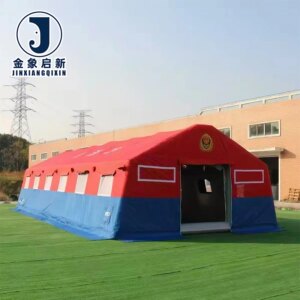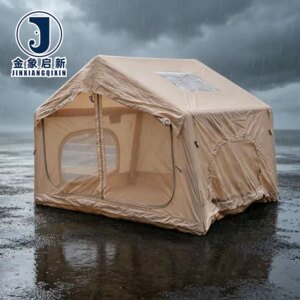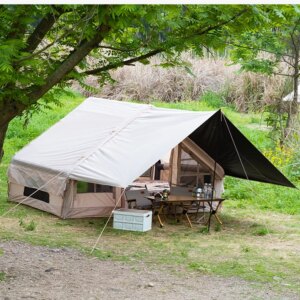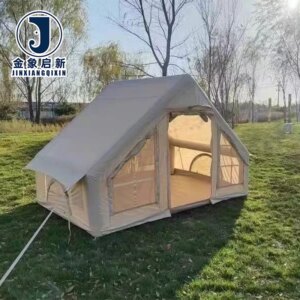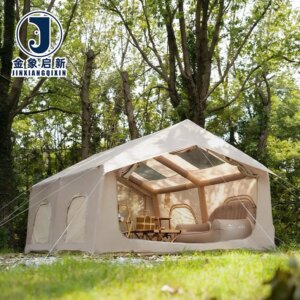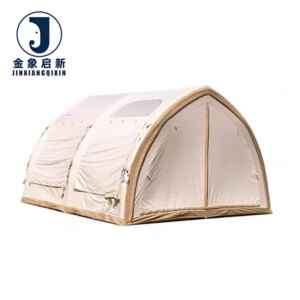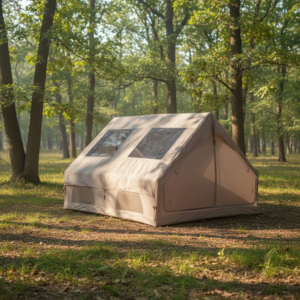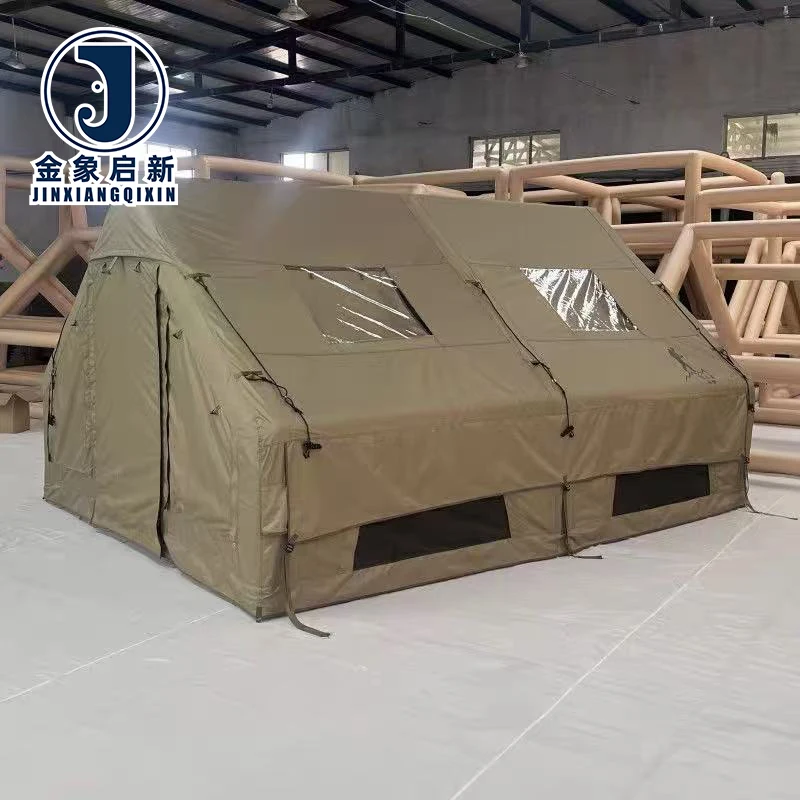
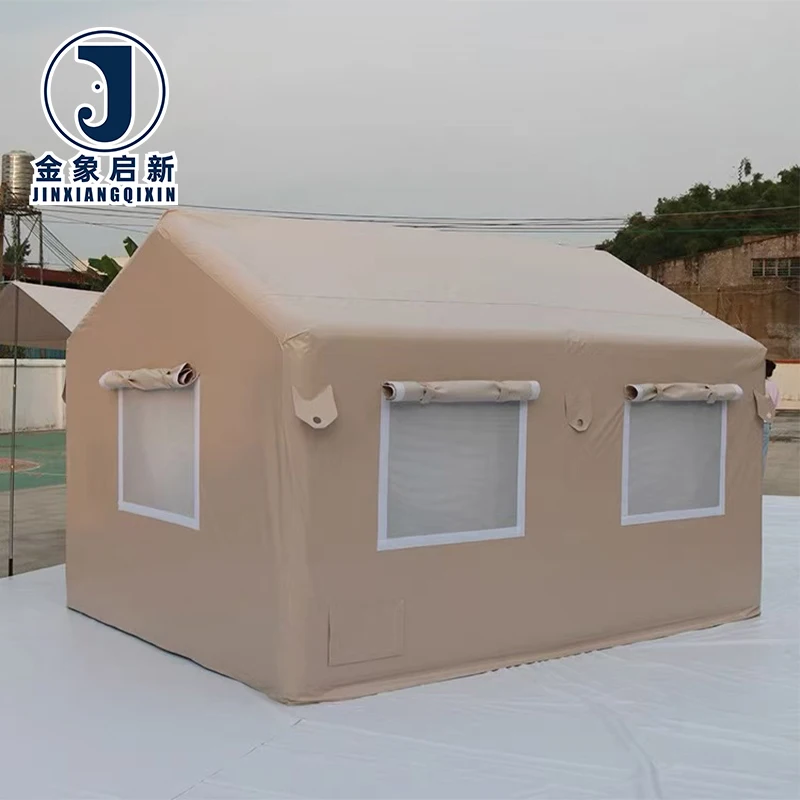
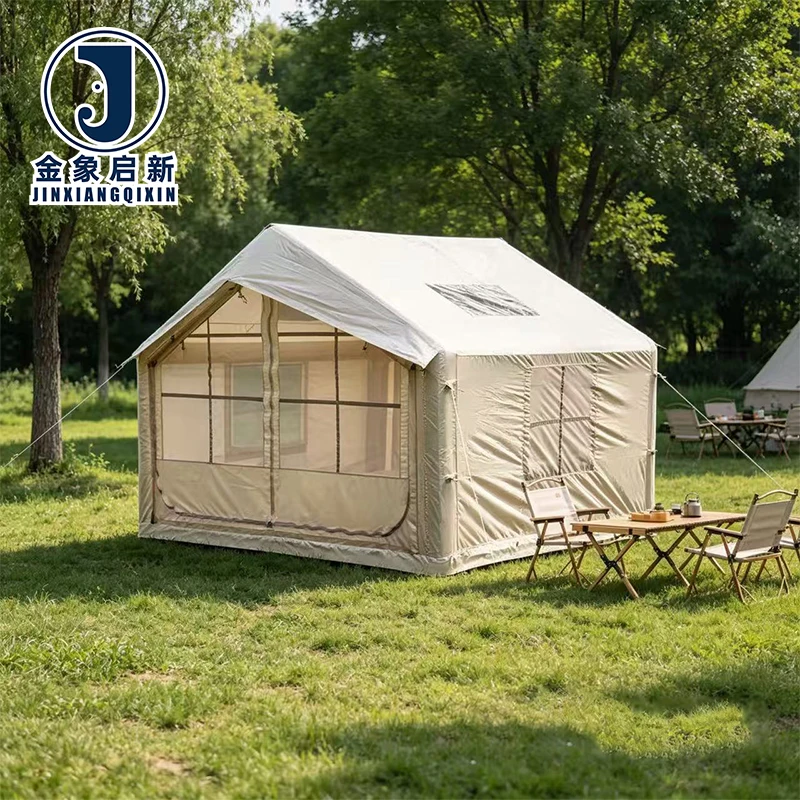
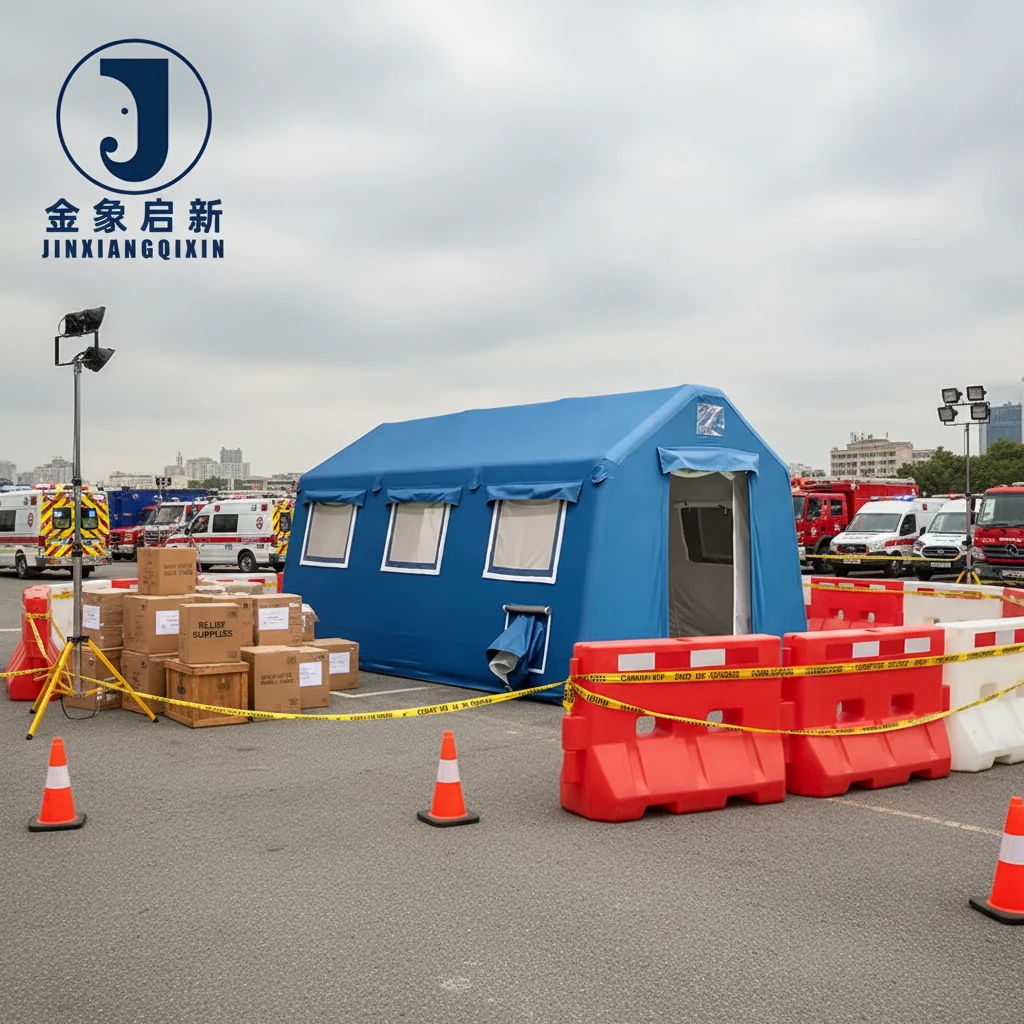
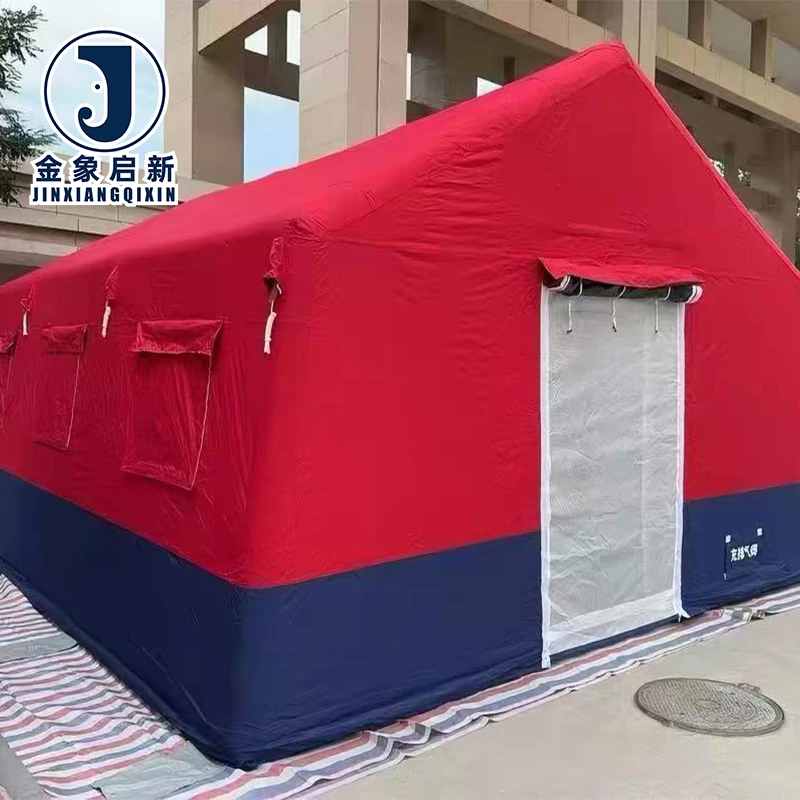
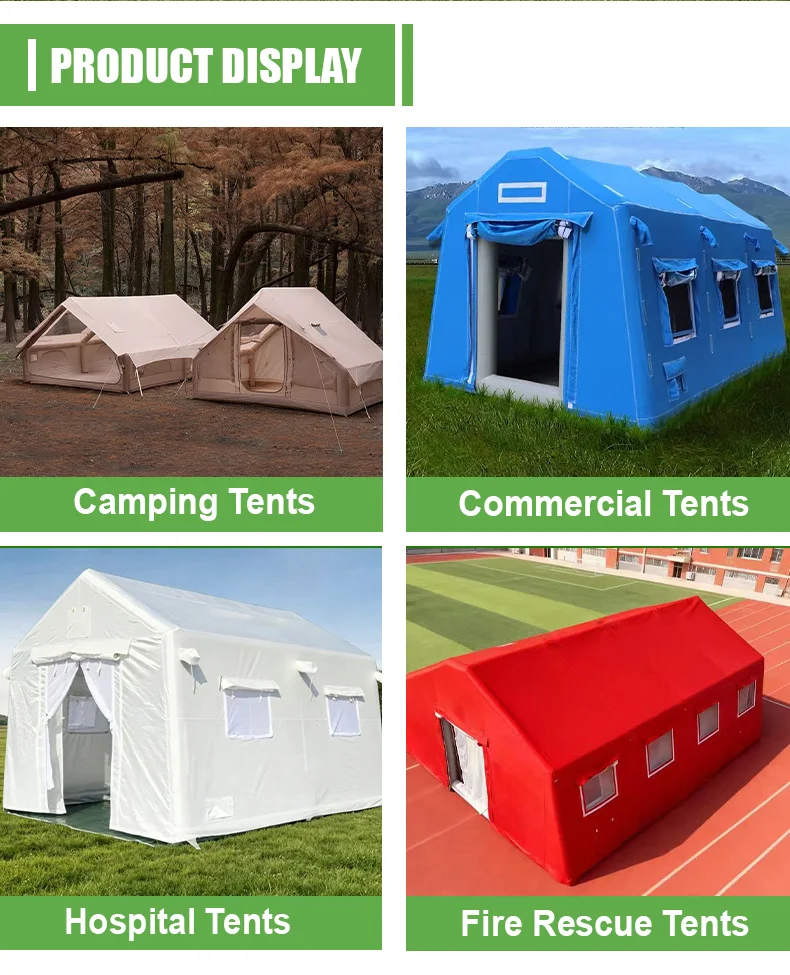
Description
Batch-to-Batch Consistency — Every roll and finished unit verified against the stated GSM and colour reference before dispatch, ensuring uniform deployment across multiple inflatable shelters.
Technical Specifications
| Parameter | Value |
|---|---|
| Product Type | Inflatable Tent |
| Core Material | PVC Tarpaulin |
| Construction | Single-layer |
| Waterproof Rating | Minimum 3000mm water column |
| UV Resistance | 400 hours accelerated aging test |
| Tear Strength | Tested to ASTM D751 |
| Wind Load Capacity | Up to 12m/s |
| Operating Temperature Range | -10°C to 40°C |
| Dimensional Tolerance | ±2cm for large structures |
| Customization Options | Dimensions, color, ventilation configurations, reinforcement points |
| Standards | ISO9001, ISO14001, ISO45001, CE, ASTM D751 |
| Production Lead Time | 15–20 days for non-custom orders |
| Sample Lead Time | 7–10 days |
Application Suitability
| Application | Exposure & Requirement |
|---|---|
| Temporary site shelters for construction projects | Continuous outdoor exposure, wind loading, rapid setup and teardown cycles |
| Equipment storage during outdoor operations | Water ingress prevention, UV degradation resistance, abrasion from loading |
| Mobile command centers for infrastructure maintenance | Stable internal environment, structural rigidity under wind, multi-day deployment |
| Temporary workspace coverage in remote industrial locations | Transport over rough terrain, repeated inflation cycles, temperature fluctuation |
| Rapid deployment relief scenarios | Immediate usability, single-layer simplicity, minimal tool requirement |
Why Waterproof Ratings Alone Do Not Guarantee Field Performance
A stated waterproof rating means little when welded seams fail before the fabric does at the stress points where an inflatable tent inflates and deflates most.
Buyers often receive Inflatable Camping Tent manufacturer quotations listing a water column figure, only to discover that seam integrity was never part of the test protocol. Water finds the weakest point first, and in single-layer inflatable structures, that point is typically the heat-welded joint. [NEED_CITE: ASTM D751 test methods for coated fabric seam strength] I have seen coated fabric panels pass hydrostatic tests while the adjacent weld line separated under cyclic inflation pressure. Specifying a tent without a seam strength requirement leaves the most vulnerable part of the structure unverified.
Single-Layer Construction for Rapid Deployment Scenarios
The single-layer PVC tarpaulin construction eliminates the complexity and weight of multi-wall systems, making the Inflatable Camping Tent suitable for operations that demand fast setup without specialized tools. Each inflation cycle places uniform stress across the entire membrane, and the single-layer design ensures that any puncture or seam issue is immediately visible and repairable on site. This configuration also reduces pack-down volume, which matters when transport capacity is limited.
Dimensional Accuracy Across Large Inflatable Structures
Maintaining a ±2cm tolerance on large inflatable structures requires precise pattern cutting and consistent coating behaviour during heat welding. The Inflatable Camping Tent manufacturer controls this through dedicated pattern development and a three-stage inflation test protocol that includes a 24-hour pressure hold, environmental simulation from -10°C to 40°C, and wind load validation up to 12m/s. [NEED_CITE: dimensional stability testing for inflatable membrane structures] Deviations beyond tolerance compromise not only aesthetics but also structural load distribution across the air beams.
Reading the Specification Sheet Beyond the Headline Numbers
The 3000mm water column rating confirms that the PVC coating prevents water penetration under sustained hydrostatic pressure, which is critical for shelters deployed during prolonged rainfall. The 400-hour accelerated UV aging test provides a baseline for assessing how the surface coating retains flexibility and colour after continuous solar exposure — though field performance also depends on installation orientation and local climate intensity. Tear strength verified to ASTM D751 indicates how the base fabric resists propagation once a nick or cut occurs, which is particularly relevant at reinforcement points where loads concentrate. The -10°C to 40°C operating range defines the thermal boundary within which the PVC remains flexible enough to inflate without cracking and stable enough to hold pressure without excessive softening. Selecting the correct combination of these parameters for your specific deployment environment prevents both over-specification and premature failure.
The Cost of Overlooking Weld Integrity in Inflatable Structures
When welded seams are not tested under cyclic inflation and deflation, failure occurs at the exact moment the structure is needed most. I have seen heavy-grade coated rolls perform well in static pressure tests yet delaminate at the weld line after repeated setup cycles. [NEED_CITE: cyclic stress fatigue in heat-welded PVC tarpaulin joints] Batch-to-batch variation in coating thickness compounds this problem, because inconsistent material responds differently to the same welding temperature and pressure settings. The result is a tent that passes factory inspection but fails in the field, forcing costly replacements and project delays.
Why Source Your Inflatable Tent Fabric Here
Three full production lines and 36 sets of professional processing equipment provide the capacity to deliver bulk orders without compressing lead times. A 10-person R&D team handles material selection, custom pattern cutting, and reinforcement point engineering specifically for inflatable applications. Every order goes through 100% pre-shipment inspection, with dimensional verification and inflation testing documented before dispatch. Sample development within 7–10 days allows buyers to confirm material behaviour and weld performance before committing to production volume. [NEED_CITE: ISO 9001 quality management system requirements for coated fabric manufacturing] The QA/QC protocol covers coating weight consistency, colour matching across rolls, and seam strength at every production stage.
Documentation & Verification
- Material specification sheet stating base fabric denier, coating type, and GSM for each Inflatable Camping Tent order
- Waterproof rating and UV aging test report per batch, referencing the 3000mm water column and 400-hour accelerated test
- Tear strength data per ASTM D751 included with pre-shipment inspection record
- ISO9001, ISO14001, ISO45001, and CE certificates supplied with every shipment
- Third-party testing through SGS or Intertek available upon request, reports within 7–10 business days
Fabrication, Handling & Storage
- Heat welding temperature and dwell time must match the PVC coating weight to avoid seam delamination at inflation stress points
- Reinforcement points at air beam junctions require additional PVC patches bonded before final inflation testing
- Store rolled PVC tarpaulin on flat pallets, avoiding sharp folds that create permanent crease marks in the coating
- Deploy inflatable structures only within the -10°C to 40°C range to prevent low-temperature cracking or high-temperature softening
- Clean with mild detergent only; solvent-based cleaners degrade the PVC surface and compromise waterproof performance
- Field repairs require compatible PVC adhesive and patch material matching the single-layer coating thickness
Requesting a Specification for Your Deployment
Provide your intended application, expected deployment duration, and environmental conditions including wind exposure and temperature range. Specify the required dimensions, colour reference, and any ventilation configurations or reinforcement point locations for your inflatable structure. Indicate whether you need finished tents or roll stock for your own fabrication line, and confirm the target market’s compliance requirements so that the correct documentation accompanies your order.
Frequently Asked Questions
Q: What customization options are available for inflatable tent dimensions and ventilation?
A: Dimensions, color, ventilation configurations, and reinforcement points are all customizable through our OEM/ODM service. The R&D team develops patterns based on your structural requirements, and samples are produced within 7–10 days for approval. Each custom specification is verified against the ±2cm dimensional tolerance during the pre-shipment inflation test.
Q: How is batch colour consistency controlled across multiple inflatable tents in one order?
A: Every roll used in a single order is checked against the approved colour reference under standardized lighting before cutting begins. The coating weight and pigment concentration are verified to remain consistent across the production run. Any roll showing visible deviation is rejected before it reaches the fabrication stage, preventing colour variation once tents are deployed side by side.
Q: What does the 400-hour UV aging test tell me about outdoor exposure expectations?
A: The 400-hour accelerated aging test simulates prolonged UV exposure under controlled conditions and confirms that the PVC coating retains flexibility and colour integrity beyond the test period. Actual field performance depends on installation orientation, latitude, and seasonal intensity. For projects in high-UV regions, request the specific test report and discuss additional surface treatment options with the technical team.
Q: What documentation ships with each inflatable tent order?
A: Each shipment includes a material specification sheet, batch-specific quality inspection report with waterproof and UV test data, tear strength results per ASTM D751, pre-shipment inflation test record, ISO and CE certificates, roll packing list, and certificate of origin. Third-party SGS or Intertek reports are available within 7–10 business days upon request.