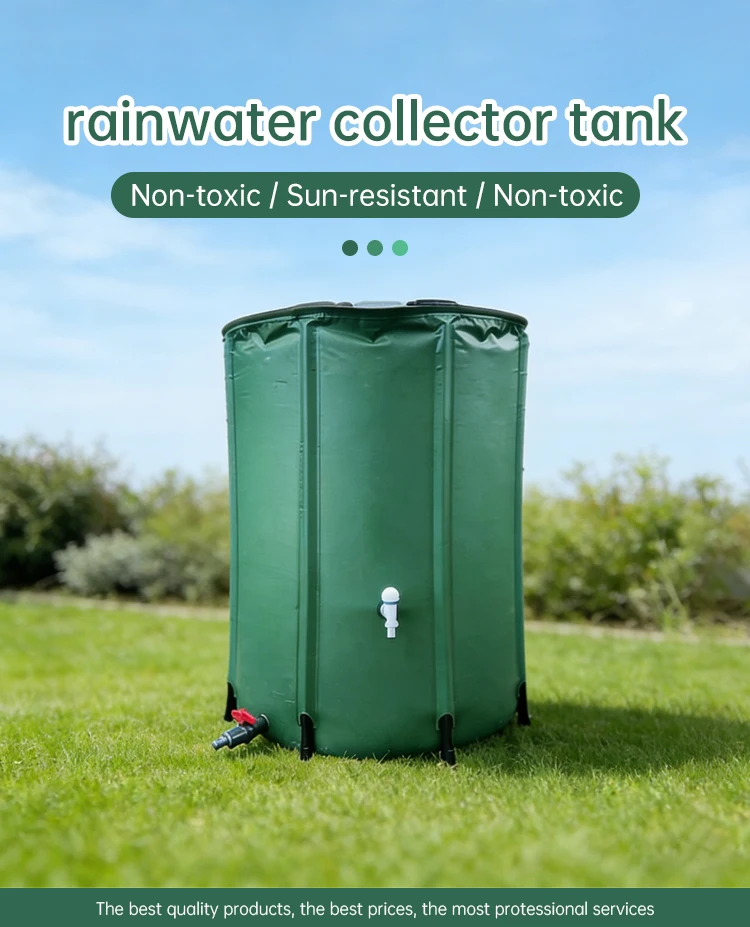
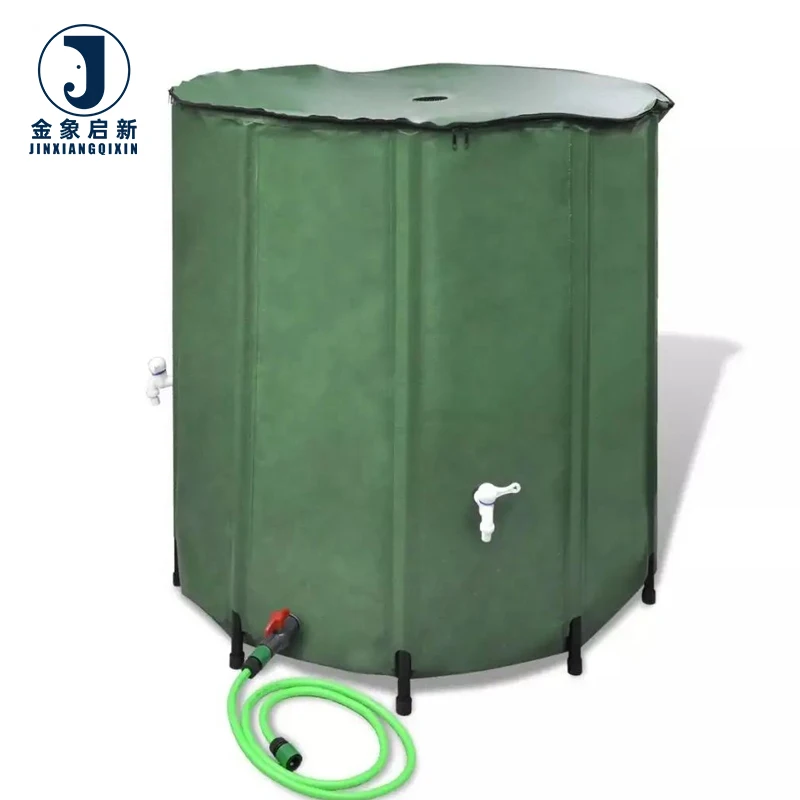
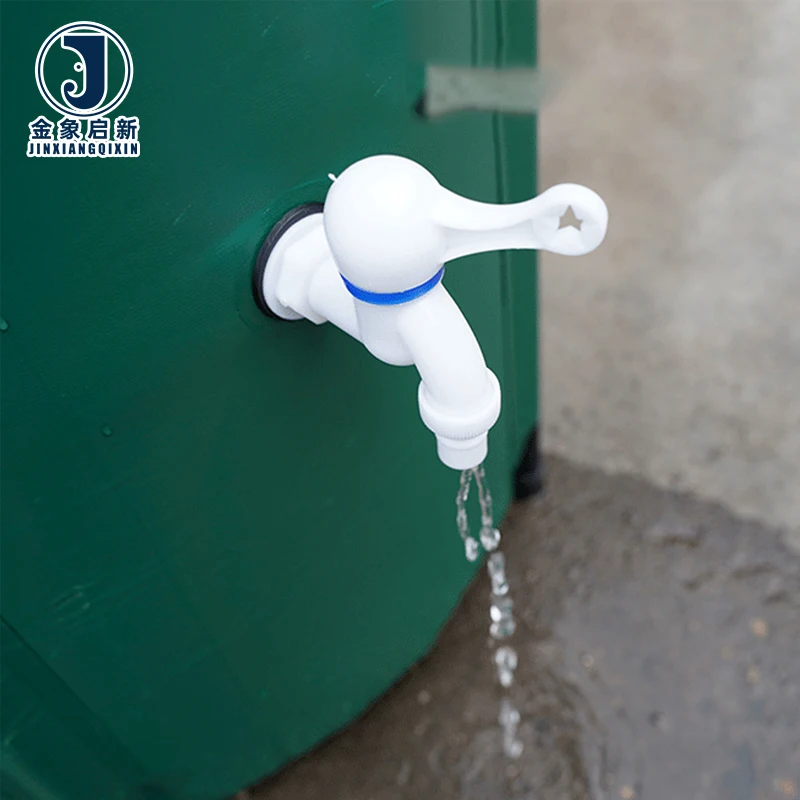
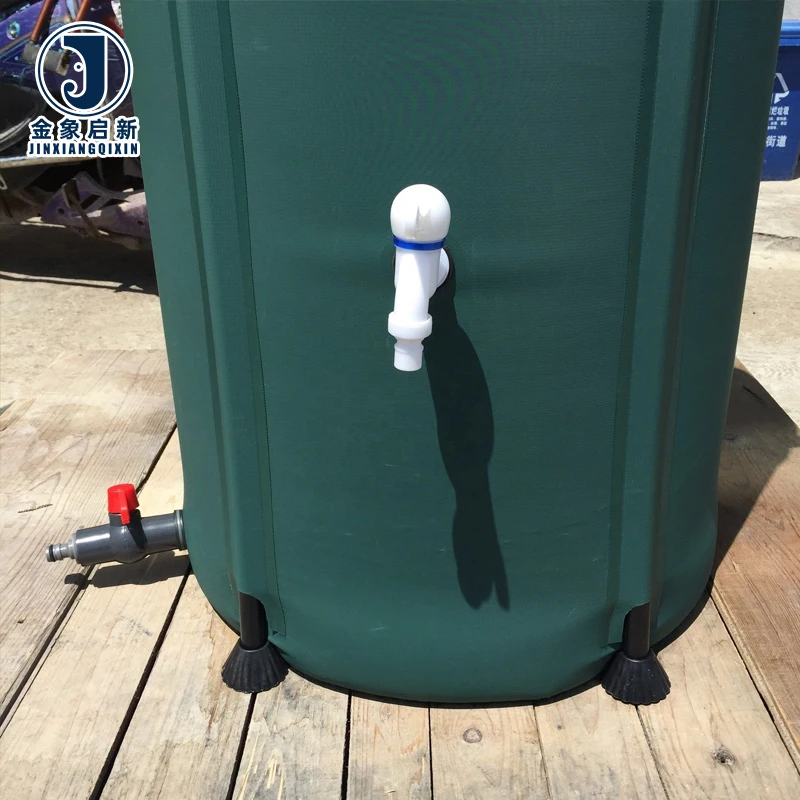
Description
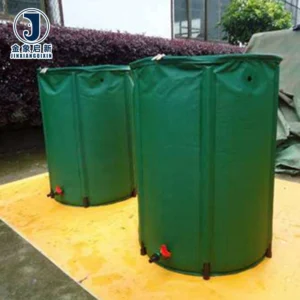
Roll-to-Roll Consistency — Dedicated QA checkpoints at every coating stage verify GSM and adhesion across each production run of collapsible rain barrels.
Technical Specifications
| Parameter | Value |
|---|---|
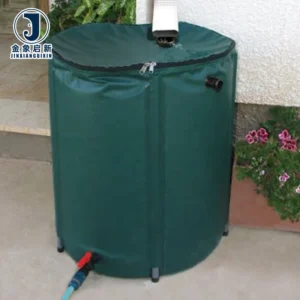
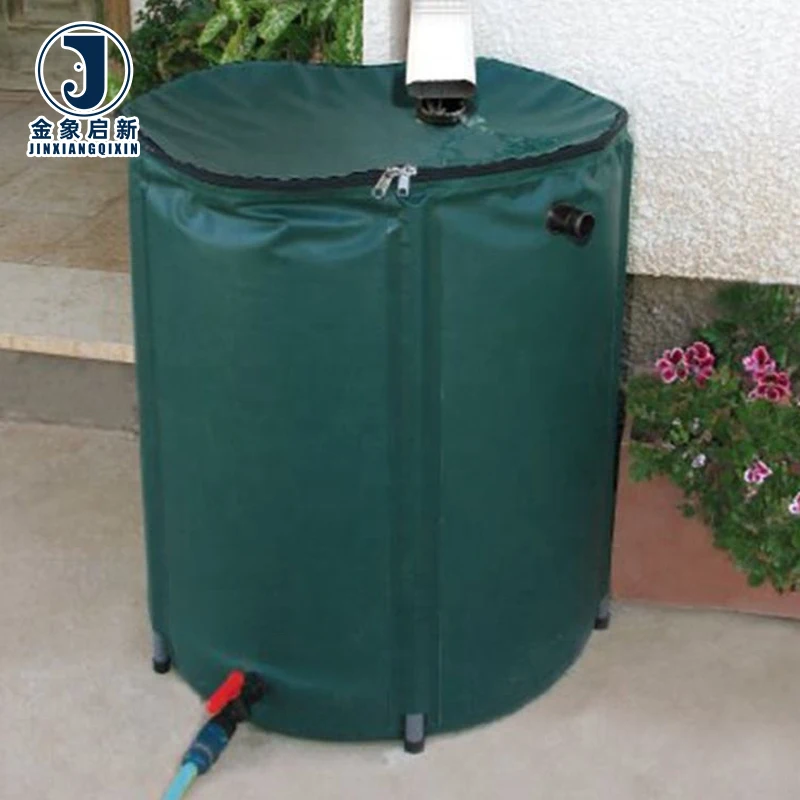
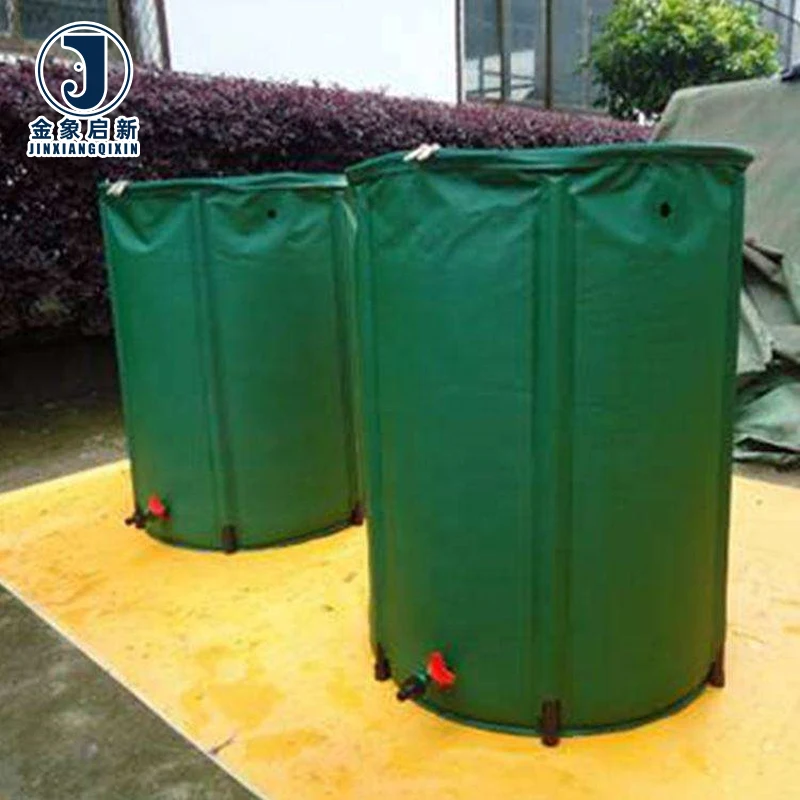
| Product Type | PVC Mesh Rain Barrel / Water Storage Tank |
| Capacity | 750L |
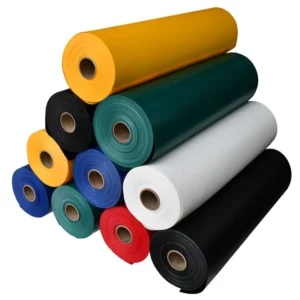
| Base Fabric | PVC Mesh Cloth |
| Structural Support | PVC Support Rod |
| Waterproof | Yes |
| Anti-Mildew | Yes |
| Anti-Bacteria | Yes |
| Tear-Resistant | Yes |
| Abrasion-Resistant | Yes |
| Shrink-Resistant | Yes |
| UV-Resistant | Available — confirm test basis for your market |
| Flame Retardant | Available in flame retardant grades — confirm the grade required for your market |
| Anti-Static | Available — confirm standard required for your market |
| Structure | Collapsible |
Application Suitability
| Application | Exposure & Requirement |
|---|---|
| Garden rainwater harvesting | Seasonal UV exposure, repeated fold-and-deploy cycles, algae and bacteria control in stored water |
| Agricultural irrigation storage | Continuous outdoor placement, soil contact at base, puncture risk from ground debris |
| Commercial landscaping sites | Transport between job sites, frequent collapse and reassembly, abrasion from handling |
| Aquaculture water containment | Prolonged water contact, anti-mildew performance in humid conditions, structural stability when filled |
| Seasonal retail programs | Shelf-ready collapsed packaging, consistent appearance across units, private-label requirements |
What "Anti-Mildew" Really Means Without a Test Report Behind It
Collapsible PVC rain barrel units stored half-full in humid climates develop biofilm within weeks if the anti-mildew treatment is merely a surface spray rather than a compounded additive. Verify that the anti-mildew and anti-bacteria treatment is documented with a test basis before committing to bulk volumes.
When purchasing Collapsible Water Storage Bladder bulk quantities, buyers often receive units where the first batch performs cleanly while later shipments show early fungal growth at the waterline. The root cause is typically an inconsistent additive concentration during the coating process rather than a deliberate specification change. I have seen distributors forced to recall an entire season’s inventory because the anti-mildew claim on the quotation was never backed by a verifiable test method [NEED_CITE: anti-microbial treatment verification methods for PVC-coated textiles]. Without documentation linking the treatment to a recognised standard, the claim remains a marketing statement rather than a performance guarantee.
Batch Consistency Across Bulk Rain Barrel Orders
Volume buyers need assurance that the PVC mesh cloth base fabric maintains the same coating weight and mesh density from the first roll to the last. Our production lines run continuous QA checks during coating, measuring GSM and adhesion at set intervals so that every Collapsible Water Storage Bladder bulk shipment meets the same material specification across the full order.
Structural Integrity Through Collapse Cycles
The PVC support rod framework must endure repeated assembly and collapse without cracking or permanent deformation. Each rod is matched to the capacity of the unit it supports, ensuring the barrel holds its shape when filled while folding flat for off-season storage. This matching process is critical for distributors who stock multiple capacity options within a single container shipment.
Specification Interpretation: What the Mesh and Coating Actually Control
The PVC mesh cloth base provides the tear and abrasion resistance that determines how well the barrel survives handling, ground contact, and repeated folding. The mesh structure — its denier and weave density — controls how forces distribute when the fabric is stressed at fold points or where the support rods press against the inner wall. Coating weight applied to this mesh governs waterproof integrity and stiffness; a heavier coat adds water resistance but reduces flexibility during collapse. Anti-mildew and anti-bacteria treatments are compounded into the coating layer rather than applied as a surface finish, which means their effectiveness persists through multiple seasons of water contact. Shrink resistance ensures the barrel maintains its stated capacity after exposure to temperature swings between day and night [NEED_CITE: coating adhesion and dimensional stability testing per ISO 1421]. The interplay between mesh density and coating thickness is what ultimately determines whether a barrel performs reliably or develops pinhole leaks at the seams.
The Hidden Cost of Specifying on Capacity Alone
Selecting a collapsible rain barrel based only on its litre rating ignores the material variables that determine field life. A barrel built with a lighter mesh and thinner coating may hold 750L perfectly during pre-shipment inspection yet develop seam separation after weeks of UV exposure and thermal cycling. Welded seams are typically the first failure point when the coating adhesion is insufficient for the flexing that occurs during collapse and redeployment [NEED_CITE: welded seam failure modes in PVC-coated fabrics]. Distributors who specify only on capacity and price find themselves processing warranty claims instead of reorders. Batch-to-batch colour variation is another consequence of loose process control — units that look identical on the sample approval card arrive in noticeably different shades when placed side by side on a retail display.
Why Source Rain Barrels Through This Supply Chain
Three full production lines and 36 sets of professional equipment support bulk output with reliable scheduling for container-load orders. A 10-person R&D team handles capacity customisation, support rod engineering, and sample development so that new models can be evaluated before committing to production volumes. Dedicated QA and QC checkpoints at every stage — from base fabric inspection through coating, welding, and final assembly — ensure that each unit passes a 100% pre-shipment inspection. Samples for custom capacity or treatment requirements are developed within days, allowing buyers to verify material properties before placing the full order. Roll-to-roll coating consistency is maintained through continuous in-process measurement, which directly translates to unit-to-unit uniformity in the finished barrels.
Documentation & Verification
- Material specification sheet listing base fabric denier, coating material, and treatment details per capacity variant
- Waterproof integrity and structural support function verified in pre-shipment inspection records
- Weight verification per roll of PVC mesh cloth against the stated coating weight before dispatch
- ISO certification and certificate of origin included with each container shipment
- UV and flame retardant test reports provided where applicable grades are specified
- Packing list detailing collapsed unit dimensions and container loading configuration
Fabrication, Handling & Storage
- Weld PVC mesh cloth seams at temperatures matched to the coating thickness to prevent delamination at flex points
- Store collapsed barrels flat in dry conditions to avoid permanent creasing in the PVC mesh cloth
- Inspect PVC support rods for surface cracking before reassembly after extended off-season storage
- Avoid dragging filled units across abrasive ground surfaces to protect the anti-mildew coating layer
- Clean interior with non-solvent detergents to preserve the anti-bacteria treatment compounded into the coating
- Plan collapsed packing dimensions before loading to maximise container utilisation across mixed capacity orders
Planning Your Collapsible Rain Barrel Procurement
Provide the target capacity range, intended climate exposure, and any market-specific treatment requirements such as flame retardant grades or UV test standards. Specify whether you need finished units with support rods or fabric-only rolls for your own assembly line. Confirm the order volume and whether mixed capacity options are required within a single shipment to optimise container loading.
Frequently Asked Questions
Q: How is coating weight and material consistency verified across bulk orders?
A: In-process QA checks measure PVC mesh cloth GSM and coating adhesion at set intervals during production. Every Collapsible Water Storage Bladder bulk shipment undergoes 100% pre-shipment inspection, and a weight verification record per roll is included with dispatch documentation so buyers can confirm material consistency against the quoted specification.
Q: What anti-mildew and anti-bacteria treatment basis applies, and is a test report available?
A: Anti-mildew and anti-bacteria additives are compounded into the PVC coating layer rather than applied as a surface spray. Where a specific test basis or standard is required for your market, confirm the treatment grade during the inquiry stage so the appropriate documentation can be prepared and shipped with your order.
Q: Can custom capacities or dimensions be produced, and what are the minimums?
A: Custom capacities beyond the standard 750L option can be developed with matching PVC support rod configurations. The R&D team produces samples within days for evaluation. Minimum order quantities depend on the tooling and material setup required for the requested size, so confirm your target dimensions to receive a specific production plan.
Q: How are PVC support rods packed and protected during container shipping to prevent damage?
A: PVC support rods are packed separately from the collapsed barrel units with protective spacing to prevent bending or cracking during transit. A detailed packing list with collapsed unit dimensions and rod bundle counts is provided so that container loading plans can be prepared in advance, and any transit damage can be identified immediately upon receipt.