Description
Roll-to-Roll Consistency — every roll is weighed and colour-checked against the batch standard before dispatch, so what arrives matches the spec sheet you approved.
Technical Specifications
| Parameter | Value |
|---|---|
| Product Type | PVC Coated Tarpaulin Roll |
| Weight Options | 250GSM / 300GSM / 400GSM / 450GSM / 500GSM / 560GSM / 600GSM / 650GSM / 680GSM / 950GSM / 1000GSM |
| Total Thickness | 0.32mm / 0.35mm / 0.4mm / 0.45mm / 0.5mm / 0.65mm |
| Base Fabric | High-strength polyester mesh fabric |
| Denier Options | 500D×500D / 500D×1000D / 840D×840D / 1000D×1000D / 2000D×2000D |
| Mesh Count | 20×20 / 18×25 / 30×17 / 18×18 / 23×24 / 15×15 / 30×30 |
| Coating Method | Laminated technology & Hot-melt Coating technology |
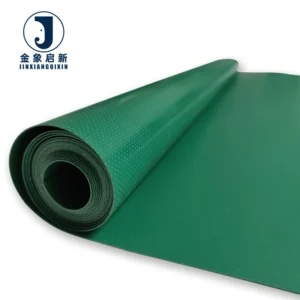
| Roll Dimensions | 2m × 75m / 2.1m × 50m |
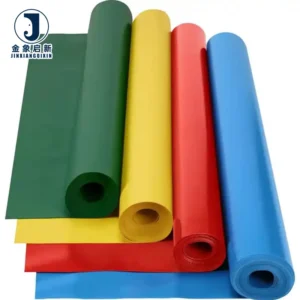
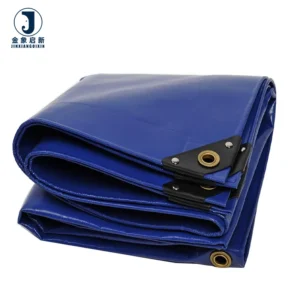
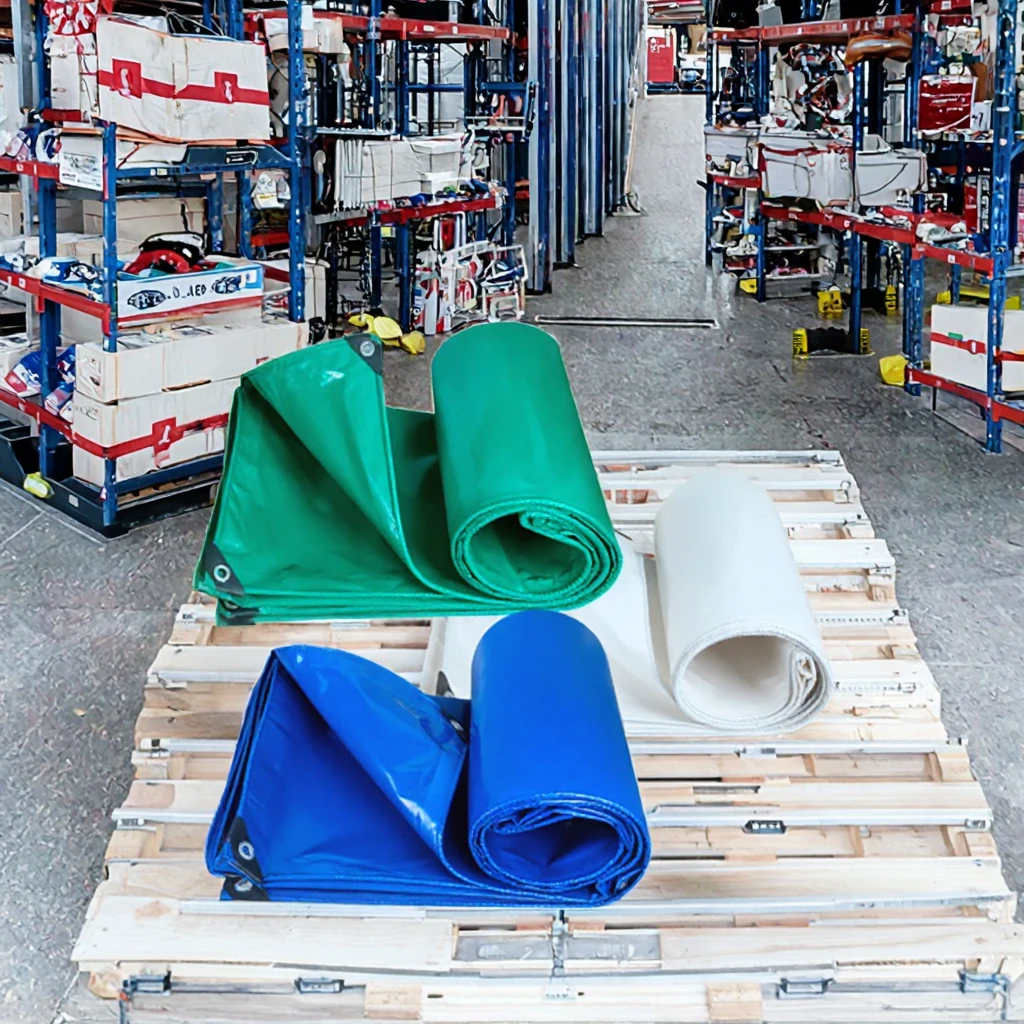
| Color Options | Blue / Red / Yellow / Light blue / Grey / Custom |
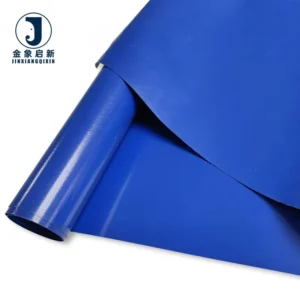
| Surface Finish | Glossy / Matte (confirm availability per grade) |
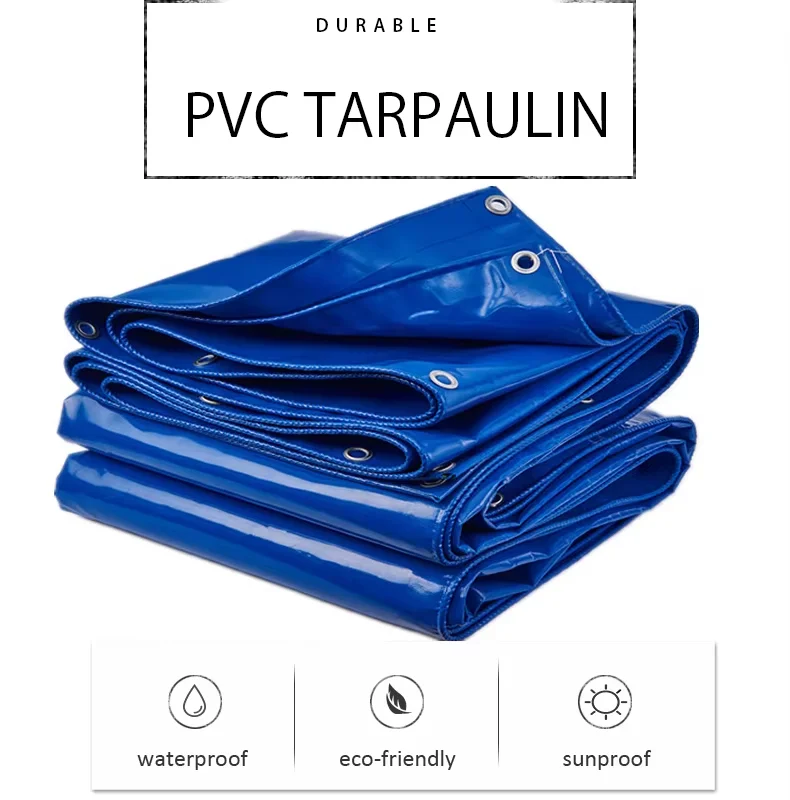
| Key Features | Cold crack resistance, anti-mildew, waterproof, sunproof treatment, best color fastness |
| Anti-Static | Treatment available — confirm grade required for your market |
| Flame Retardant | Available in flame retardant grades — confirm the grade required for your market |
| Standards | ISO, CE |
Application Suitability
| Application | Exposure & Requirement |
|---|---|
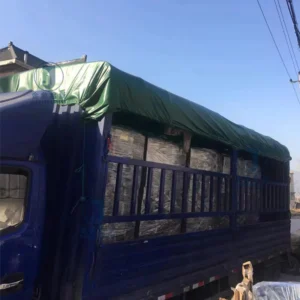
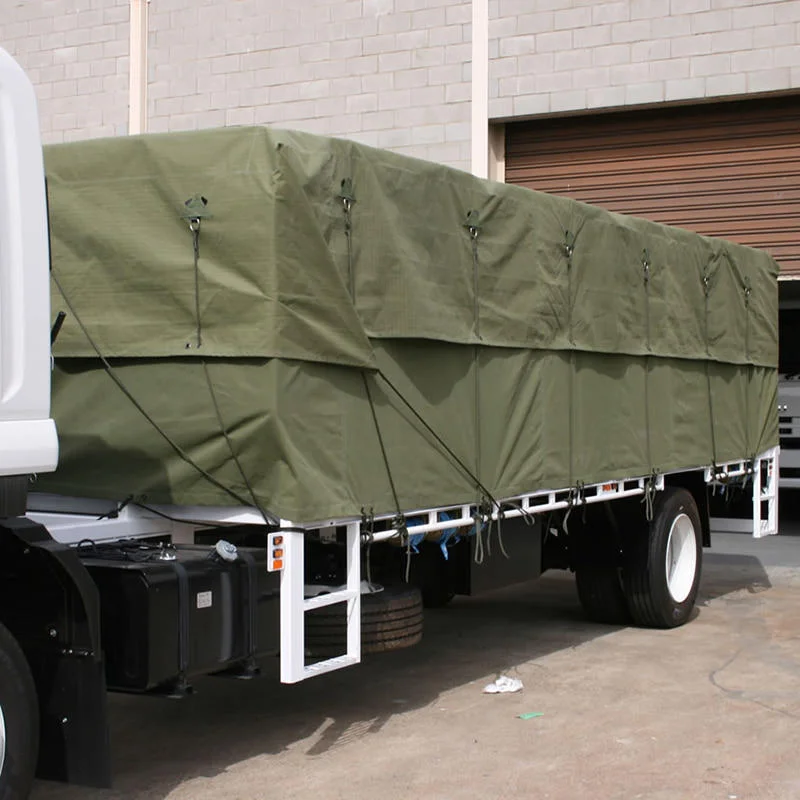
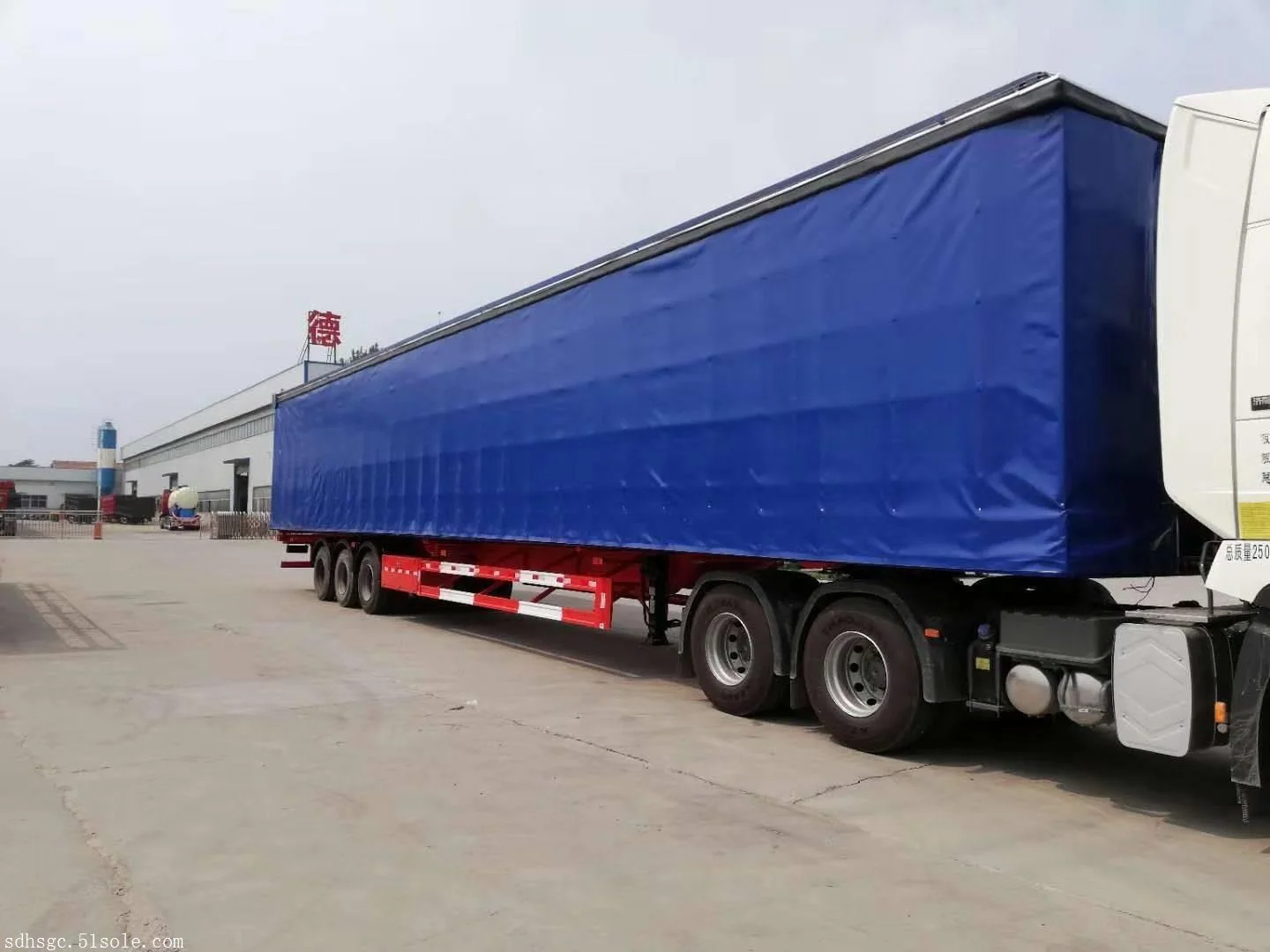
| Truck side curtain | Constant flexing at hinge points, road abrasion, sustained UV exposure, weld seam integrity under dynamic load |
| Cargo ship cover | Salt spray contact, wind uplift stress, prolonged sun exposure, waterproof seal across lapped seams |
| Goods yard cover | Stacked load abrasion, weather exposure across seasons, tie-down tension at grommet zones |
| Push and pull tent | Repeated folding and unfolding, frame abrasion, waterproof and sunproof demands in temporary structures |
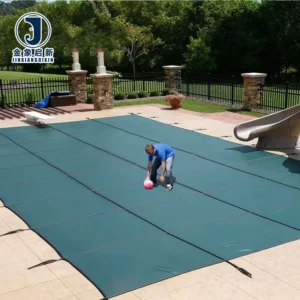
| Fish tank and pool liner | Permanent water immersion, chlorine or biological exposure, puncture resistance against substrate |
| Truck curtain cover | Daily retraction cycles, high-speed wind load, colour consistency across fleet panels |
| Liquid storage tank | Chemical contact, long-term hydrostatic pressure, seam integrity under sustained fill weight |
Why Stated GSM Without Verification Creates Risk in Bulk Orders
Every roll is weighed on calibrated scales and logged against the quoted specification before it leaves the factory floor.
When a distributor orders a full container of PVC Tarpaulin Roll wholesale stock, the margin for error is thin. A quoted 600GSM that arrives at 540GSM changes the tensile behaviour, the weld parameters, and the end-user’s confidence in your supply chain. Batch-to-batch weight variation is one of the most common disputes in coated fabric trade, and it rarely surfaces until the fabricator runs the material through a welder and notices the seam peeling at lower temperature settings than expected [NEED_CITE: tensile and tear test methods for coated fabrics per ISO 1421].
Container-Load Planning Around Roll Dimensions and Weight
Buying bulk PVC coated tarpaulin roll stock is a logistics exercise as much as a material decision. Standard roll sizes of 2m × 75m and 2.1m × 50m determine how many rolls fit across a container floor and how the weight distributes against axle limits at destination. Heavier grades such as 950GSM or 1000GSM add significant per-roll mass, meaning the container may reach weight capacity before it reaches volume capacity. Planning the load around actual roll weight — not just roll count — avoids surprises at the port of discharge.
Batch Colour Consistency Across the Entire Shipment
For distributors restocking standard colours or fabricators cutting panels that will sit side by side on a truck curtain, colour drift between rolls within the same order is a visible and costly problem. Hot-melt coating technology supports tighter pigment dispersion control compared to cold lamination, but consistency still depends on disciplined batch management. Every production run is tracked against a colour reference standard, and rolls from the same order are cross-checked before packing to ensure uniformity when the material is unrolled and compared in daylight [NEED_CITE: colour fastness testing standards for PVC coated textiles].
How Denier, Mesh Count, and Coating Weight Interact to Define Fabric Behaviour
GSM alone does not determine how a PVC tarpaulin roll performs under tension. A 500GSM fabric built on 1000D×1000D yarns at 20×20 mesh count will behave differently from a 500GSM fabric on 500D×500D yarns at 30×30 mesh. The heavier denier provides individual yarn strength, while the tighter mesh distributes load across more yarn intersections. Coating method matters equally: laminated technology bonds a pre-formed PVC film to the base fabric, delivering a smooth surface and consistent thickness, while hot-melt coating forces molten PVC into the mesh structure, creating stronger mechanical adhesion and better tear propagation resistance at the weld line. Width selection — 2m versus 2.1m — affects cutting yield when fabricators panel out truck covers or tent roofs, where even a small width gain reduces offcut waste and the number of welded seams required.
The Hidden Cost of Specifying on Price Per Kilogram Instead of Performance
When buyers focus negotiation entirely on cost per kilogram, the easiest way for a supplier to absorb the discount is to reduce coating weight while maintaining the same base fabric. The GSM on the label stays the same, but the PVC-to-polyester ratio shifts. The result is a fabric that feels thinner at the edges, welds at a lower temperature than the original sample, and shows base fabric texture through the coating surface. For a distributor, this surfaces as customer complaints from fabricators whose heat-seal settings no longer work [NEED_CITE: relationship between coating weight and weld adhesion strength in PVC fabrics]. For a tent manufacturer, it appears as panels that sag between frames because the coating does not provide the stiffness the original sample delivered.
Why Fabricators and Distributors Source Here
Three full production lines and 36 sets of professional equipment mean that stock-grade rolls in common GSM weights are available for container loading without extended waits. The 10-person R&D team handles custom colour matching, non-standard width requests, and sample development within days rather than weeks. Dedicated QA/QC operates at every production stage, with 100% inspection before shipment — each roll is weighed and visually checked against the order specification. Nearly 30 years of focused coated fabric production provides the process control that keeps adhesion strength and coating weight consistent across runs. ISO and CE certification accompanies documentation, and full customs support including certificate of origin is included with every export shipment.
Documentation & Verification
- Material specification sheet stating GSM, denier, mesh count, and colour reference per roll
- Pre-shipment inspection record with actual weighed GSM and roll-by-roll colour verification
- Roll packing list with individual roll count, net weight, and container loading plan
- ISO and CE certificates included with every export shipment
- UV and flame retardant test reports provided where the grade is specified at order
- Certificate of origin and full customs documentation prepared per destination market
Fabrication, Handling & Storage
- Hot-melt coated rolls weld best with consistent heat settings matched to the specific GSM grade ordered
- Laminated rolls require lower welding temperatures — test a sample strip before running full panels
- Store rolls upright on their cores to prevent flat-spot creasing across the coating surface
- Allow cold-weather rolls to acclimatise before unrolling to avoid cracking the PVC coating at low temperatures
- Cut panels with allowance for the 2m or 2.1m width to minimise welded seams on large covers
- Use mild detergent for cleaning — abrasive solvents degrade the PVC surface finish over repeated use
What We Need to Quote Your Roll Order Accurately
Provide the target GSM or thickness range, the end-use application, and the exposure conditions your customers will subject the fabric to. If your market requires specific fire classification or anti-static compliance, state the standard and grade so we match the correct treatment. Confirm whether you need standard roll widths or a custom width, and whether you require finished cut sizes or roll stock only.
Frequently Asked Questions
Q: How is GSM verified per roll and what documentation accompanies shipment?
A: Every roll is weighed on calibrated scales during the pre-shipment inspection. The actual GSM is recorded against each roll number on the inspection report. This document, along with the material specification sheet and packing list, ships with the container so you can verify weight on receipt against the paperwork provided.
Q: How do you control colour consistency across multiple rolls in the same order?
A: Rolls within a single order are produced from the same coating batch where possible. After production, rolls are unrolled and compared side by side under standard lighting against the approved colour reference. Any roll falling outside tolerance is replaced before packing. This is documented on the pre-shipment inspection record.
Q: What roll widths and lengths are stocked, and what are the minimums for custom width or colour?
A: Standard stock rolls are 2m × 75m and 2.1m × 50m across the listed GSM grades. Custom widths and Pantone-matched colours are available with minimums that vary by grade and coating method. Request a sample roll in your required width and colour before committing to a full container order.
Q: How is container loading planned — roll count, weight limits and protective wrapping?
A: We plan the load based on the actual weight per roll at your selected GSM. Heavier grades reach container weight limits before volume limits, so roll count is calculated accordingly. Each roll is wrapped in protective PE film and packed upright or horizontally depending on container type, with a detailed packing list showing position and weight per roll.
Q: What is the lead time for stock grades versus custom GSM or print orders?
A: Stock grades in standard colours and widths ship from existing production schedules with typical multi-week lead times. Custom GSM weights, non-standard widths, or printed rolls require dedicated production runs and therefore longer scheduling windows. Confirm timing at the quotation stage based on your order volume and specification.