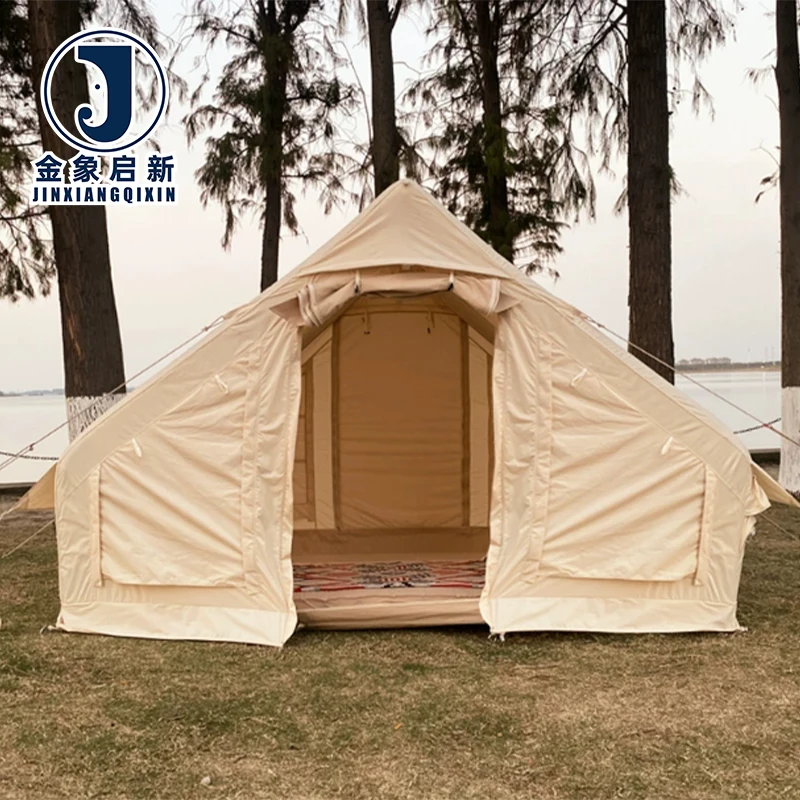
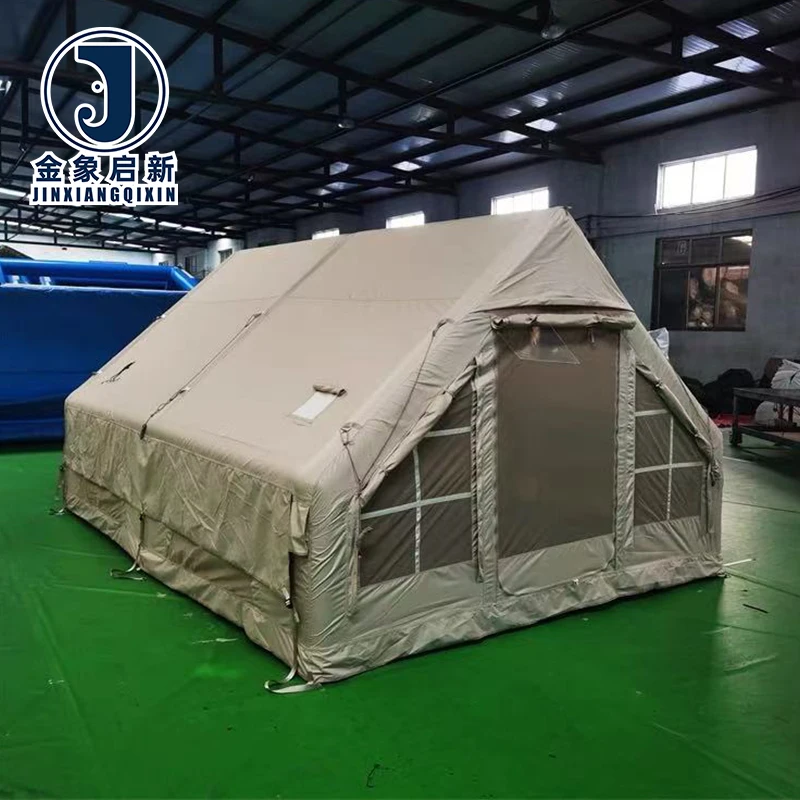
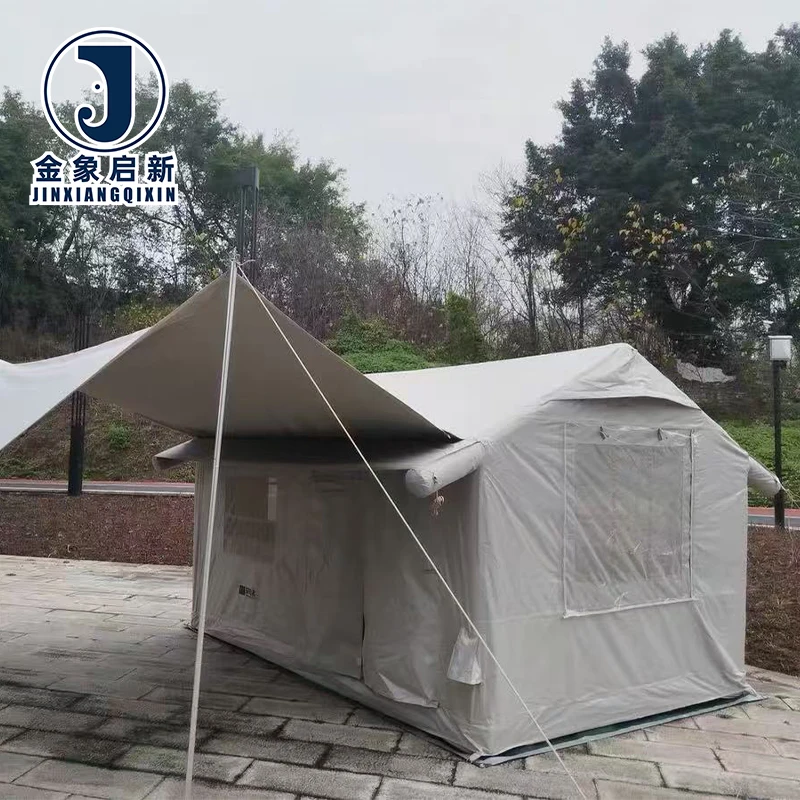
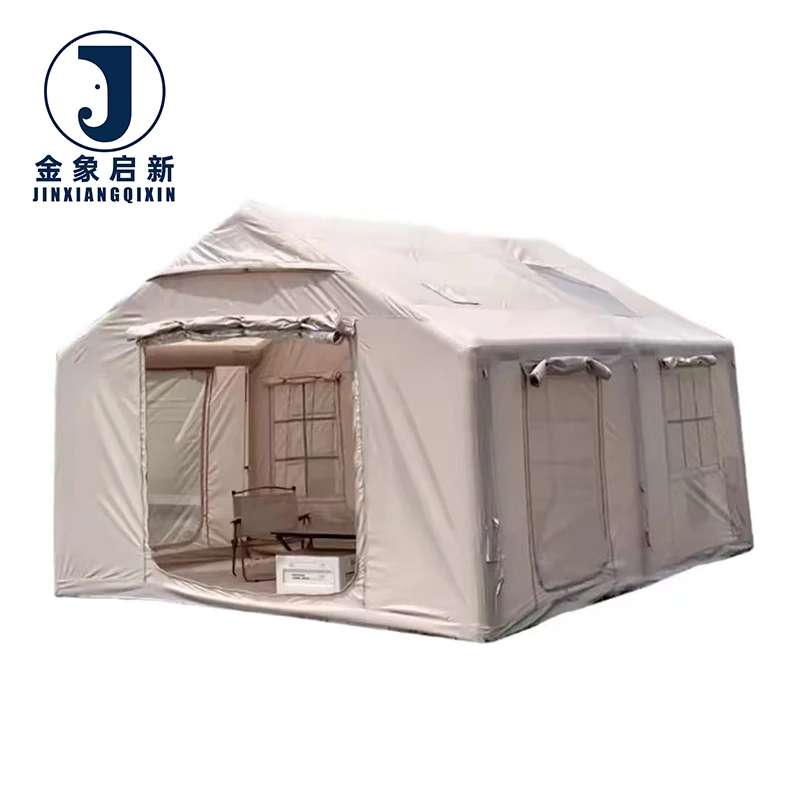
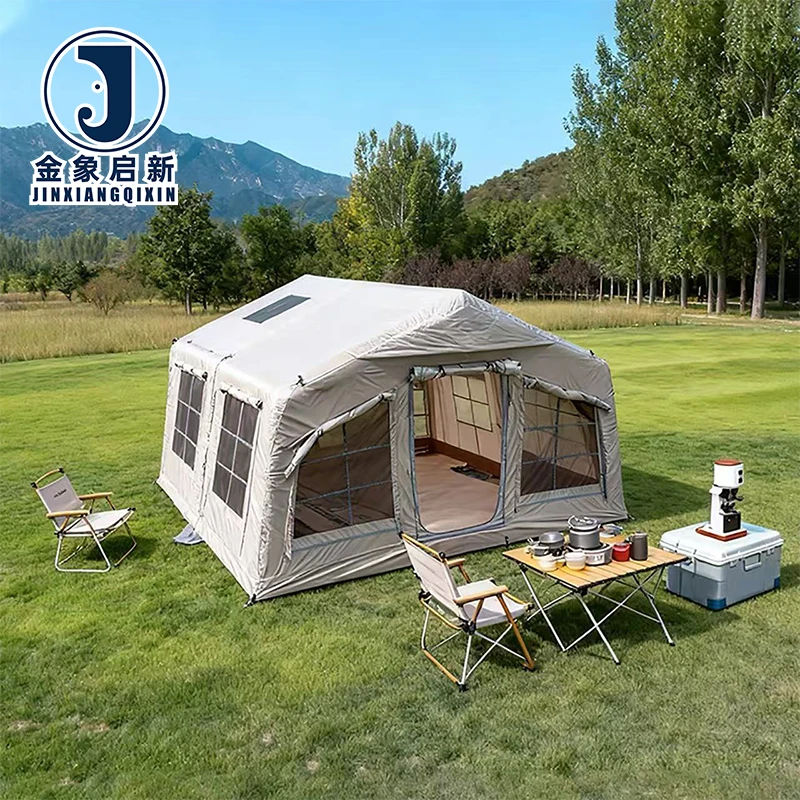
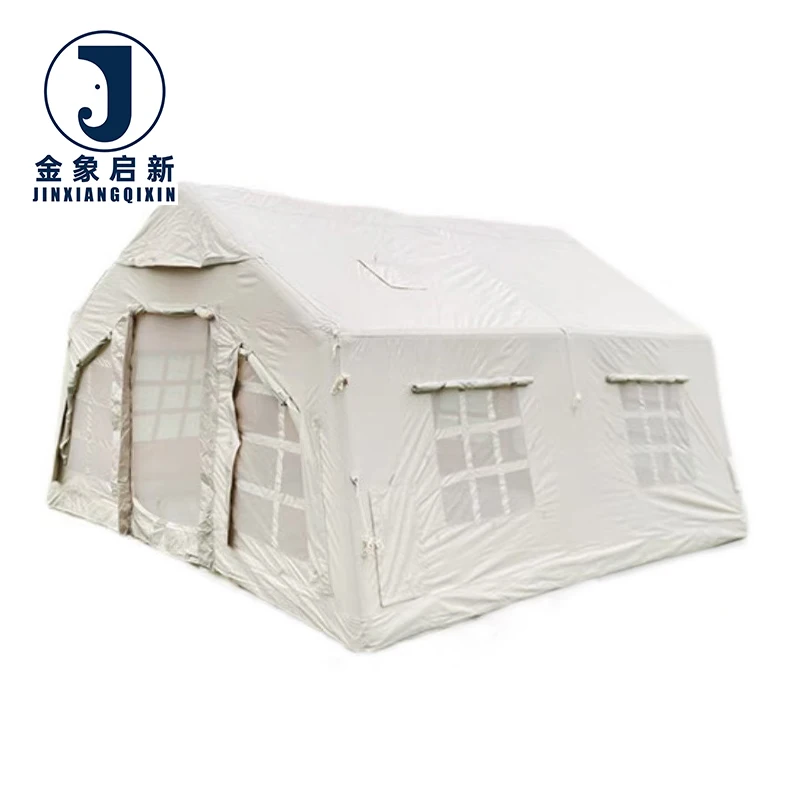
Description
Stable Roll Output — three dedicated production lines running PVC coated fabric with 100% pre-shipment inspection, built to deliver batch uniformity for inflatable tent manufacturers sourcing Inflatable Tent Fabric wholesale.
Technical Specifications
| Parameter | Value |
|---|---|
| Product Type | Inflatable Tent Fabric |
| Core Material | PVC coated fabric |
| Key Performance | Waterproof, windproof, 4-season suitable, quick automatic opening |
| Product Forms | Extended type, single layer construction |
| Flame Retardant Grade | (grade not stated in source) |
| UV Treatment | (test basis not stated in source) |
| Anti-Static | (not confirmed in source) |
| Customization | OEM & ODM, sample customization, pattern printing |
| Certifications | ISO9001, ISO14001, ISO45001, CE |
Application Suitability
| Application | Exposure & Requirement |
|---|---|
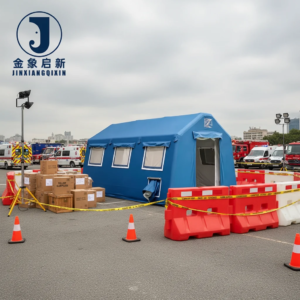
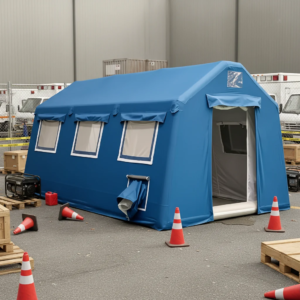
| Disaster relief inflatable shelters | Rapid deployment, full weather exposure, wind load on inflatable beams |
| Temporary site offices and command centers | Daily inflation cycles, UV exposure, ground abrasion at base contact points |
| Equipment storage inflatable domes | Long-term standing inflation, dust ingress prevention, thermal fluctuation |
| Material distribution station covers | High-traffic access, repeated partial deflation, load-bearing membrane stress |
Why Batch Consistency Matters When Buying Inflatable Tent Fabric Wholesale
Uniform coating weight and colour across every roll in a single shipment — verified before dispatch, not after arrival.
When an inflatable tent manufacturer orders multiple rolls of PVC coated fabric, the expectation is that each roll behaves identically on the cutting table, in the heat welder, and under inflation pressure. Colour shifting between rolls forces fabricators to sort and match panels before welding, adding labour and risking visible seams on the finished structure. [NEED_CITE: colour variation tolerances in coated fabric batch production per ISO 105 series] Coating weight deviations cause some rolls to weld at different temperatures, leading to seam failures that only appear once the tent is inflated and stressed. A batch-controlled production approach eliminates this variability at the source rather than pushing the problem downstream to the tent maker.
Roll-to-Roll Uniformity for Continuous Production Lines
Inflatable tent manufacturers running automated cutting and welding lines need every roll of Inflatable Tent Fabric wholesale stock to feed through machinery without parameter adjustments. Coating weight tolerance directly affects heat weld temperature settings — even minor variation between rolls means operators must stop the line, test weld a sample strip, and recalibrate. Our dedicated QA and QC staff inspect coating adhesion and surface consistency at each production stage, ensuring that the PVC coated fabric leaving our facility performs predictably under your fabrication equipment.
Volume Capacity Aligned to Container-Load Ordering
Distributors and tent producers ordering in container quantities require assurance that roll dimensions, packing density, and batch traceability are planned before loading. Each roll of inflatable tent fabric is logged with a batch number tied to its production date, coating formulation, and colour reference. [NEED_CITE: standard container loading configurations for coated fabric rolls by width and diameter] This traceability allows importers to assign rolls to specific customer orders or regional markets without cross-contamination of batches, simplifying warehouse management and downstream quality claims.
Reading the Specification Sheet Beyond the GSM Number
GSM alone does not define how PVC coated fabric will perform as an inflatable tent membrane. The base fabric denier and weave density determine how tear forces propagate through the material once a puncture initiates. Coating method — whether knife-over-roll, calendering, or lamination — controls the bond between the PVC layer and the polyester substrate, which directly affects how the fabric behaves during high-frequency welding. A heavier coating adds airtightness but increases roll stiffness, making it harder to fold the finished tent into its carry bag. Surface finish, glossy or matte, influences both the ease of cleaning in field conditions and the adhesion of printed branding or reflective safety markings. Width and roll length together determine how many panels must be welded to produce a given tent size, and every additional weld seam is a potential leak path under sustained inflation pressure. Available in flame retardant grades — confirm the grade required for your market before specifying.
The Hidden Cost of Specifying Inflatable Tent Fabric on Price Alone
Selecting PVC coated fabric rolls based solely on the lowest quoted GSM often leads to problems that surface only after the finished tent reaches the end user. Under-weight coating produces an airtight membrane initially, but the thin PVC layer abrades quickly at ground contact and flex points, causing slow deflation within the first season of use. [NEED_CITE: field failure rates of inflatable structures related to coating weight deviation] Rolls that vary in colour force tent makers to reject panels mid-production, increasing scrap rates and delaying shipment. Flame retardant claims unsupported by a test report can block a container at customs or cause a project to fail site inspection, leaving the buyer to source replacement material on short notice. Welded seams on under-specified fabric delaminate under repeated inflation cycles because the coating bond to the base fabric was never engineered for cyclic pressure loading.
What Production Infrastructure Means for Your Bulk Order
Three full production lines allow parallel running of different widths and colour runs without the changeover delays that compress lead times for single-line facilities. Thirty-six sets of processing equipment cover coating, calendering, slitting, and rewinding, giving control over every step from raw polyester yarn to finished Inflatable Tent Fabric roll. The ten-technician R&D team develops custom samples within days, matching your colour reference, GSM target, and print layout before bulk production begins. Dedicated QA and QC personnel conduct in-process checks on coating weight, adhesion strength, and colour match, with a full 24-hour inflation test on finished tent prototypes before shipment approval. [NEED_CITE: ISO 9001 quality management requirements for coated textile manufacturing] Production capacity is planned around container-load scheduling, so your dispatch date aligns with vessel booking windows rather than factory queue availability.
Documentation & Verification
- Material specification sheet listing GSM, base fabric denier, and coating type per roll batch
- Colour match record comparing production rolls against the approved reference standard
- Pre-shipment inspection report with 24-hour inflation test data on prototype samples
- Roll packing list with batch numbers for full traceability from warehouse to installation site
- Certificate of origin and customs documentation prepared per destination country requirements
Fabrication, Handling & Storage
- Set heat welder temperature profiles per batch using the supplied coating weight data to avoid seam delamination
- Store PVC coated rolls upright on pallets to prevent flat spots that distort the membrane during cutting
- Allow cold-weather rolls to reach workshop temperature before unrolling to prevent coating micro-cracking
- Use PVC-compatible solvent cleaners on glossy surface finishes to maintain airtightness at weld overlap zones
- Plan panel layout around roll width to minimize transverse weld seams on high-stress inflatable beam sections
- Repair field punctures with matching PVC patches heat-welded at the same temperature as the original seam
What We Need to Quote Your Roll Order Accurately
Provide the target GSM range, preferred roll width, and annual volume estimate so we can align production scheduling with your container loading plan. Specify whether your end market requires flame retardant or UV treatment certification, and at which grade, so the correct formulation is selected at the coating stage. Share your colour reference, pattern print artwork if applicable, and whether you need sample rolls for fabrication line trials before committing to bulk.
Frequently Asked Questions
Q: How is batch colour consistency verified across multiple rolls in one order?
A: Every production run is checked against the approved colour standard using controlled lighting conditions. QA staff compare the head, middle, and tail of each roll, recording any visible deviation. Rolls falling outside the agreed tolerance are pulled before packing, ensuring your shipment arrives with uniform colour across every panel.
Q: What roll widths and lengths are available, and how are custom sizes handled?
A: Standard widths cover the range needed for inflatable tent panel cutting, and custom widths are produced on request with confirmed lead times. Roll lengths are adjusted to match your cutting table capacity and container loading plan, minimizing waste from short leftover ends at your facility.
Q: How is container loading planned by roll count and weight for bulk orders?
A: Each order is mapped to container capacity using actual roll diameter and weight data from the production batch. Loading plans are shared before dispatch so you can verify roll count and total weight against your shipping documentation and warehouse receiving capacity.
Q: What GSM grades are available, and how can buyers verify weight on arrival?
A: Inflatable Tent Fabric is produced across multiple GSM grades suited to different tent sizes and inflation pressures. Each roll batch ships with a specification sheet stating the target GSM, and buyers are encouraged to conduct weigh-off verification on arrival using the same test method referenced in the documentation.
Q: What documentation accompanies each shipment for customs and quality records?
A: Every dispatch includes a material specification sheet, pre-shipment inspection record, roll packing list with batch numbers, certificate of origin, and customs support documents. Flame retardant or UV test reports are included where applicable to the specified grade and destination market requirements.