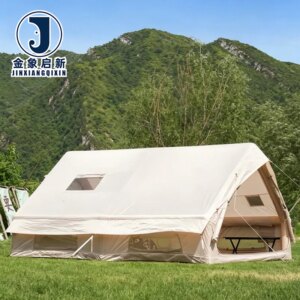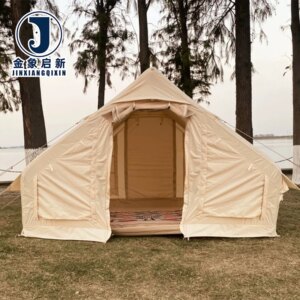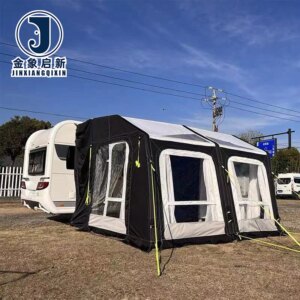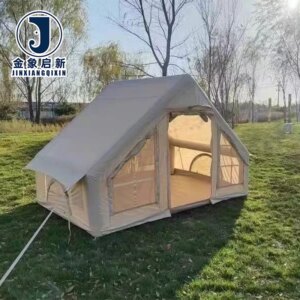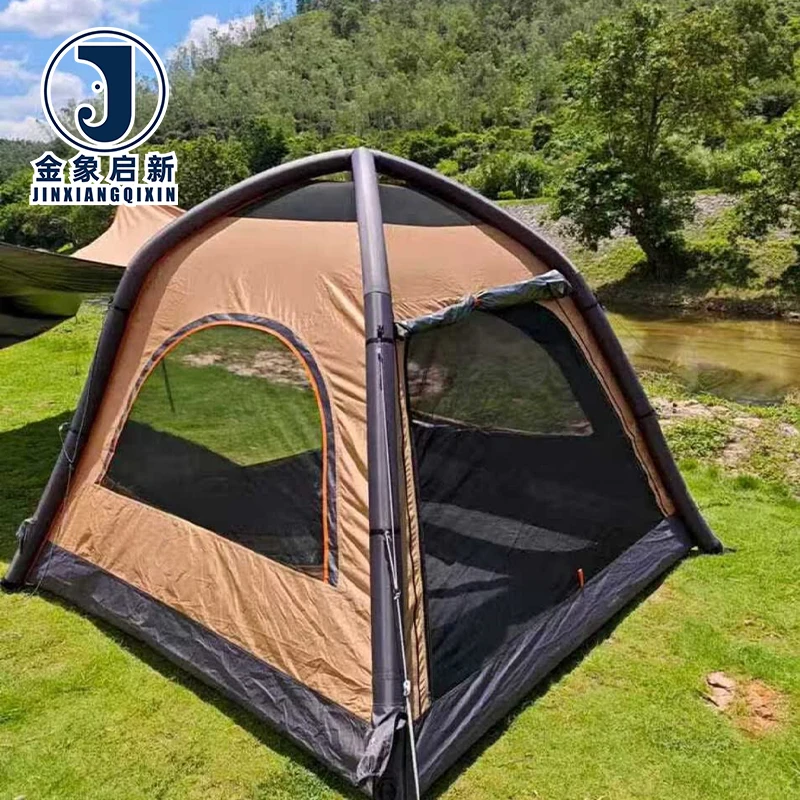
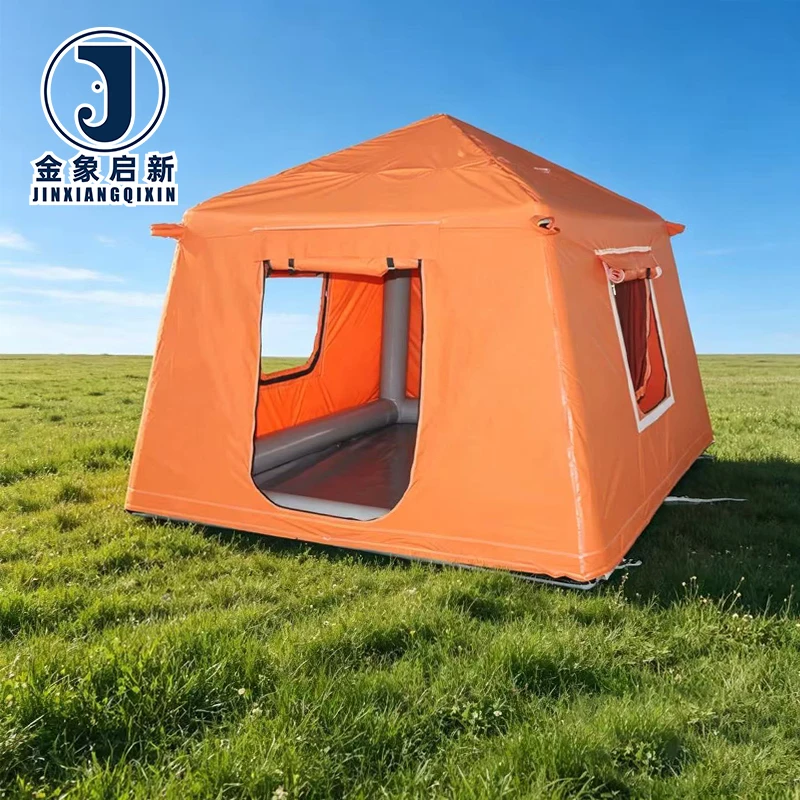
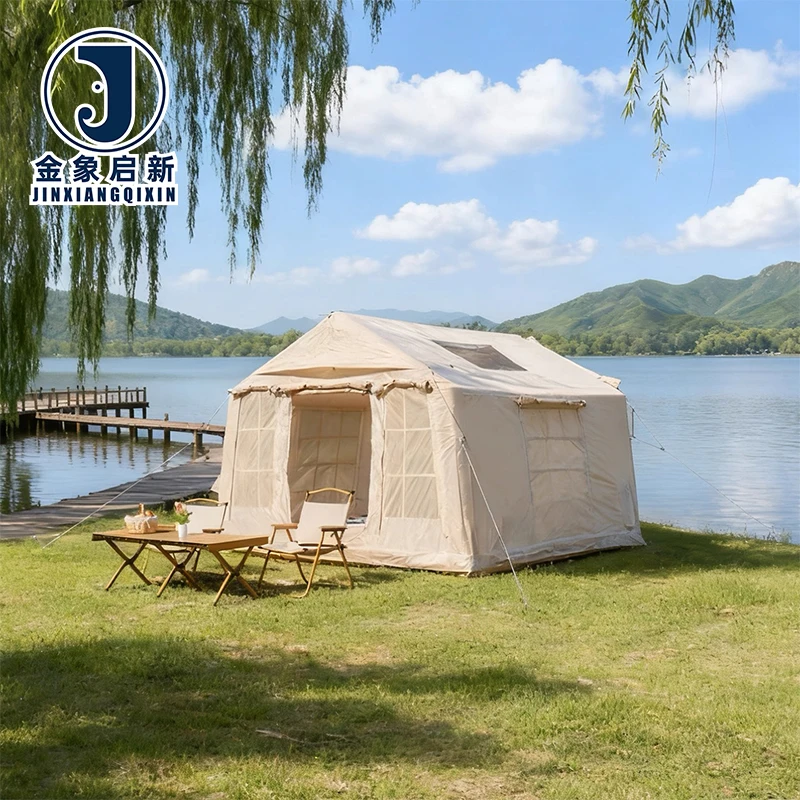
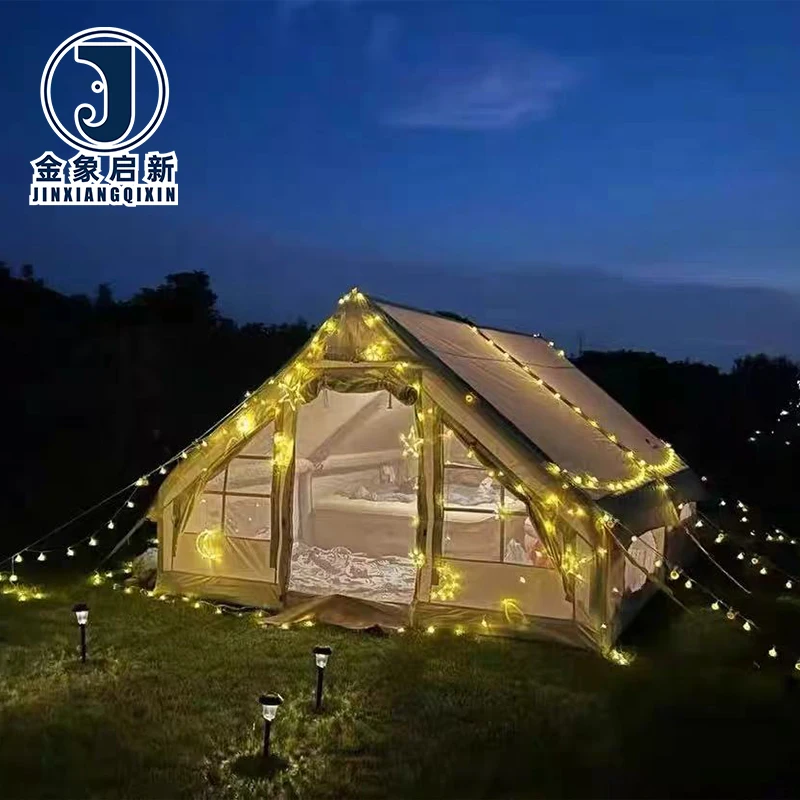
Description
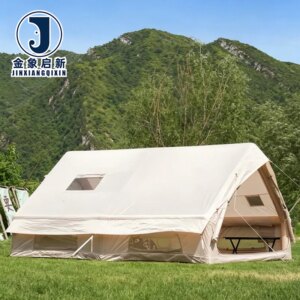
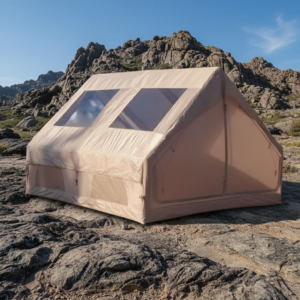
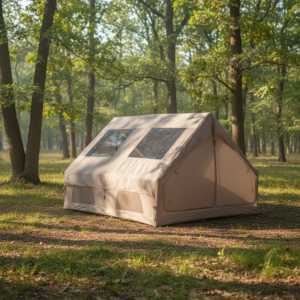
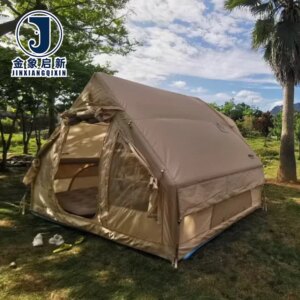
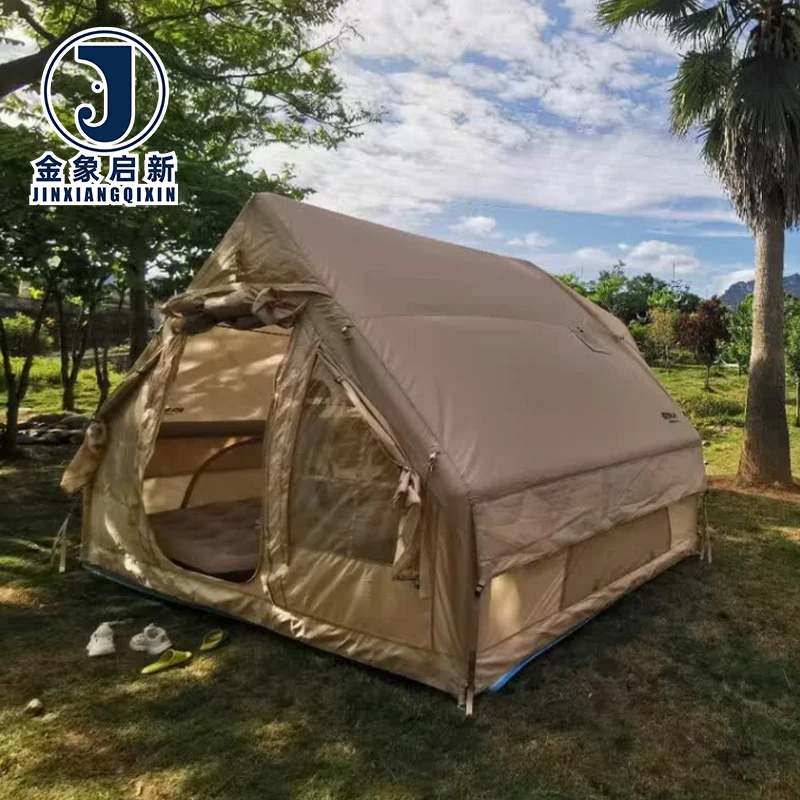
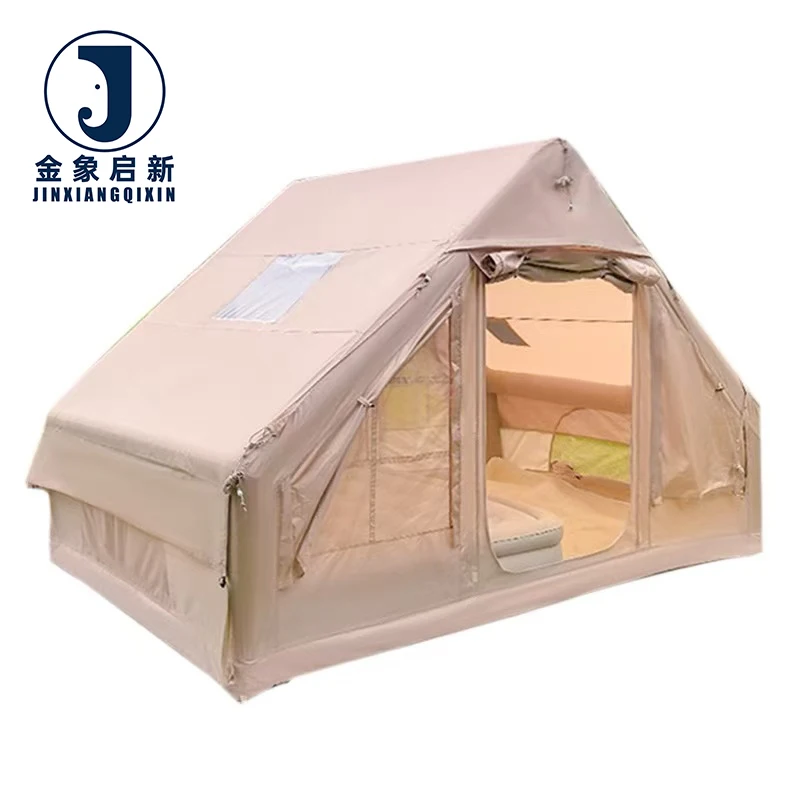
Roll-to-Roll Consistency — every roll of inflatable tent fabric leaves the coating line with verified GSM, matched colour reference and documented adhesion, so panels welded side by side show no visible variation once the structure is inflated on site.
Technical Specifications
| Parameter | Value |
|---|---|
| Product Type | PVC Coated Tarpaulin Tent Fabric |
| Core Material | PVC coated fabric on high-tenacity polyester base |
| Key Performance | Waterproof, tear-resistant; UV-resistant (test basis not stated in source), fire-retardant (grade not stated in source), anti-static (standard not stated in source) |
| Construction | Single layer coated fabric, supplied in roll stock |
| Finish Options | Available in glossy or matte finish |
| Colour Options | Single and double side colour available; custom colour matching supported |
| Width | Custom width available — confirm required roll width for your cutting layout |
| Customization | OEM & ODM: sample development, pattern printing, size and thickness adjustments |
| Production Facility | 9,180 m² factory and warehouse |
| Production Lines | 3 full production lines |
| Processing Equipment | 36 sets of professional processing equipment |
| R&D Team | 10 technicians |
| Quality Control | Full-process QA & QC with dedicated inspection staff |
| Standards & Certification | ISO 9001, ISO 14001, ISO 45001, CE |
Application Suitability
| Application | Exposure & Requirement |
|---|---|
| Inflatable tent and awning manufacturing | Repeated inflation cycles, heat-welded seam integrity, UV exposure during outdoor deployment |
| Membrane and inflatable structure fabrication | Coating adhesion under internal air pressure, flex stress at curved panel junctions |
| Construction site temporary shelters | Wind loading, abrasion from ground contact, fire-retardant compliance on active sites |
| Disaster relief and emergency command centers | Rapid deployment, weather resistance, flame-retardant certification for institutional procurement |
| Industrial storage and equipment covers | Long-term outdoor exposure, tear resistance at tie-down points, colour consistency across multiple units |
Why Batch Colour Drift Matters More Than GSM on Inflatable Tent Panels
Colour shift between rolls becomes visible the moment two panels are heat-welded and inflated next to each other.
When an inflatable tent manufacturer receives a container of PVC coated fabric, the first check is often weight per square metre. But GSM alone does not reveal whether Roll 14 will match Roll 15 once they are cut, welded and pressurised into adjacent wall panels. A slight hue difference at the coating stage — invisible while the rolls sit on the warehouse floor — shows up as a visible stripe across the tent façade under daylight [NEED_CITE: batch colour consistency standards for coated textiles]. For wholesale buyers consolidating inflatable tent fabric roll orders, this is a reject-level defect that no amount of post-production cleaning or UV exposure will fade.
Coating Weight Control Across the Production Run
Consistent coating application is what separates a usable roll from a rework liability. On our coating lines, the PVC compound is metered onto the polyester base fabric under controlled knife gap and oven temperature. This process control maintains uniform coating weight from the first metre to the last metre of each roll, and from the first roll to the last roll in a multi-roll inflatable tent fabric wholesale order. Verified GSM per roll is recorded on the pre-shipment inspection record so buyers can cross-check against the material specification sheet before the container is sealed.
Heat-Welded Seam Behaviour Under Inflation Pressure
Inflatable tent structures place continuous stress on every welded seam. The coating must soften evenly under hot-air or wedge welding so that the PVC from two panels fuses into a single bonded layer rather than sitting on top of the base fabric. Our PVC coated fabric is formulated for predictable weld window performance — the coating softens at a temperature range that allows fabricators to set reliable welding parameters without burning through or leaving cold joints [NEED_CITE: hot-air welding parameters for PVC coated polyester fabrics]. The weld line should fail only after the base fabric itself reaches its tear limit.
Reading the Specification Sheet Beyond the GSM Number
GSM tells you the total weight of base fabric plus coating per square metre, but it does not distinguish between a heavy base cloth with thin coating and a light base cloth with thick coating. The base fabric denier and weave density determine tensile and tear strength, while the coating weight governs waterproofing, UV protection and weldability. When evaluating inflatable tent fabric roll stock, request the base fabric specification alongside the GSM figure. A higher denier yarn in the warp direction resists the longitudinal stress that inflation places on long wall panels, while a balanced weave limits tear propagation if a panel is punctured on site.
The Hidden Cost of Specifying on Price Per Kilogram Alone
When the purchasing decision rests on the lowest cost per kilogram of inflatable tent fabric wholesale supply, the savings often vanish at the fabrication stage. Lighter coating may save material cost but reduces the thermal mass available for welding, leading to cold joints that peel under inflation pressure. A roll that arrives below the quoted GSM forces the tent maker to either accept a weaker panel or reject the batch — both outcomes cost more than specifying verified weight from the start [NEED_CITE: cost of roll rejection and rework in coated fabric fabrication]. Colour inconsistency between rolls adds further waste, as mismatched panels must be cut into smaller, less visible components or scrapped entirely.
Why Volume Buyers Source Inflatable Tent Fabric Here
Three full production lines and 36 sets of processing equipment mean a multi-container inflatable tent fabric roll order can be fulfilled within a single production window, keeping every roll in the same dye lot and coating batch. The 10-technician R&D team develops custom colour matches, pattern printing layouts and sample rolls before bulk production begins, so approval is based on physical material rather than a swatch card. Dedicated QA and QC staff inspect every roll before dispatch — weight, colour, coating adhesion and surface finish are checked and recorded, not sampled. ISO 9001, ISO 14001, ISO 45001 and CE certification underpin the management system, and all test documentation travels with the shipment.
Documentation & Verification
- Material specification sheet stating GSM, base fabric denier and coating type per roll
- Pre-shipment inspection record with roll-by-roll weight and colour verification
- Fire-retardant and UV test reports supplied where the specified grade applies
- Roll packing list with container loading plan by roll count and gross weight
- Certificate of origin and customs documentation included with each shipment
Fabrication, Handling & Storage
- Set hot-air welder temperature to match the PVC coating formulation — test on an offcut from the same roll before welding production panels.
- Store rolls upright on end caps in a dry, shaded warehouse to prevent flat-spotting and surface marking on the coating.
- Allow cold-stored rolls to reach ambient temperature before unrolling to avoid cracking the PVC coating at low temperature.
- Plan panel cutting layouts around the roll width to minimise offcut waste and reduce the number of welded seams per tent section.
- Use PVC-compatible solvent cleaners only — aggressive solvents can soften the coating and reduce surface adhesion for printed graphics.
- Repair minor site punctures with a patch cut from the same roll batch to maintain colour match and weld compatibility.
Specifying Inflatable Tent Fabric for Your Production Line
To move from enquiry to sample, share your target panel dimensions, annual roll volume and the fire-retardant or anti-static grade required by your end market. If your current supplier’s rolls show colour variation once welded, send a panel sample so we can match the colour reference and coating weight on our line. Confirm whether you need fabric in standard stock widths or a custom width optimised for your cutting table, and whether pattern printing or branding is part of the tent design. We will return a specification recommendation and a sample roll for your welding and inflation tests before you commit to a bulk order.
Frequently Asked Questions
Q: How is GSM verified per roll before shipment?
A: Each roll is weighed and measured during pre-shipment inspection. The actual weight per square metre is recorded on the inspection report and compared against the material specification sheet. Rolls that fall outside the agreed tolerance are flagged before loading, so the inflatable tent fabric roll stock arriving at your facility matches the quoted weight.
Q: How do you maintain colour consistency across a multi-roll order?
A: Colour is controlled at the compounding and coating stage. For a single inflatable tent fabric wholesale order, all rolls are produced in the same coating run using the same pigment batch. A colour check is performed on every roll before packing, and results are documented so you can verify consistency against the reference standard on receipt.
Q: Can fire-retardant and anti-static grades be supplied with test reports?
A: Fire-retardant and anti-static treatments are available — confirm the specific grade or standard required for your market, such as local building code or mining regulation. Where a grade is specified, the corresponding test report is included in the shipment documentation so your compliance team can verify certification without delay.
Q: What roll width should I choose for inflatable tent panel cutting?
A: The optimal roll width depends on your tent panel dimensions and cutting layout. A custom width matched to your largest panel reduces offcut waste and the number of heat-welded seams. Share your panel drawings and we will recommend a roll width and length that maximises material yield for your inflatable tent fabric production.
Q: How are rolls packed and loaded for ocean freight?
A: Each roll is wrapped in protective film and packed upright or horizontal depending on container configuration. The roll packing list details roll count, individual weight and total gross weight, along with a container loading plan so you can verify the inflatable tent fabric roll shipment against the manifest on arrival at your port.