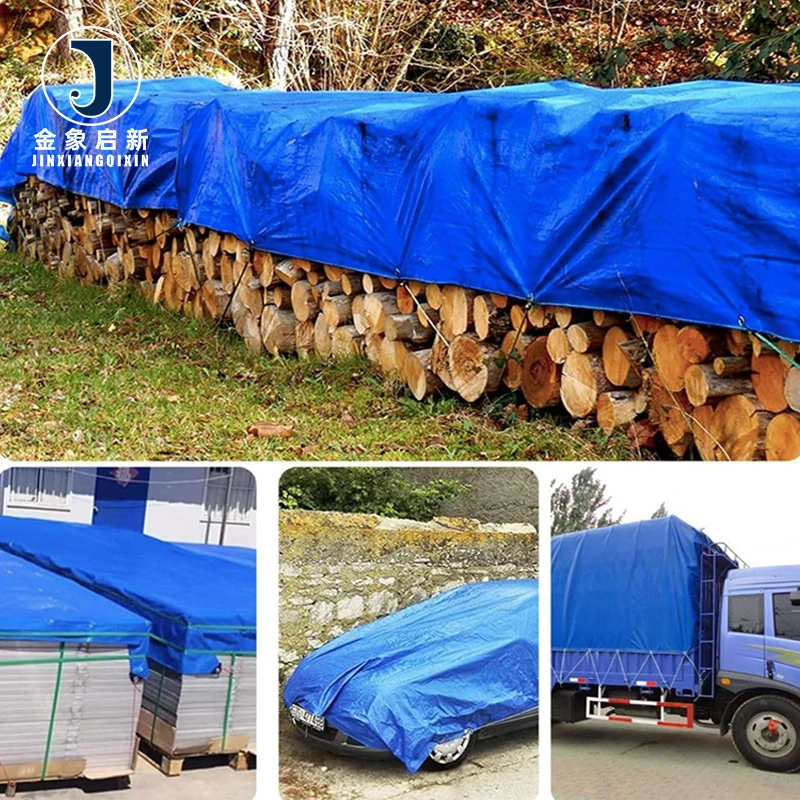
Description
Verified Roll Consistency — we match every PE tarpaulin roll to the quoted GSM and colour standard before it leaves the factory, eliminating the batch variation that forces wholesalers to sort and reject on arrival.
Technical Specifications
| Parameter | Value |
|---|---|
| Product Type | PE Tarpaulin |
| Base Fabric | HDPE woven fabric |
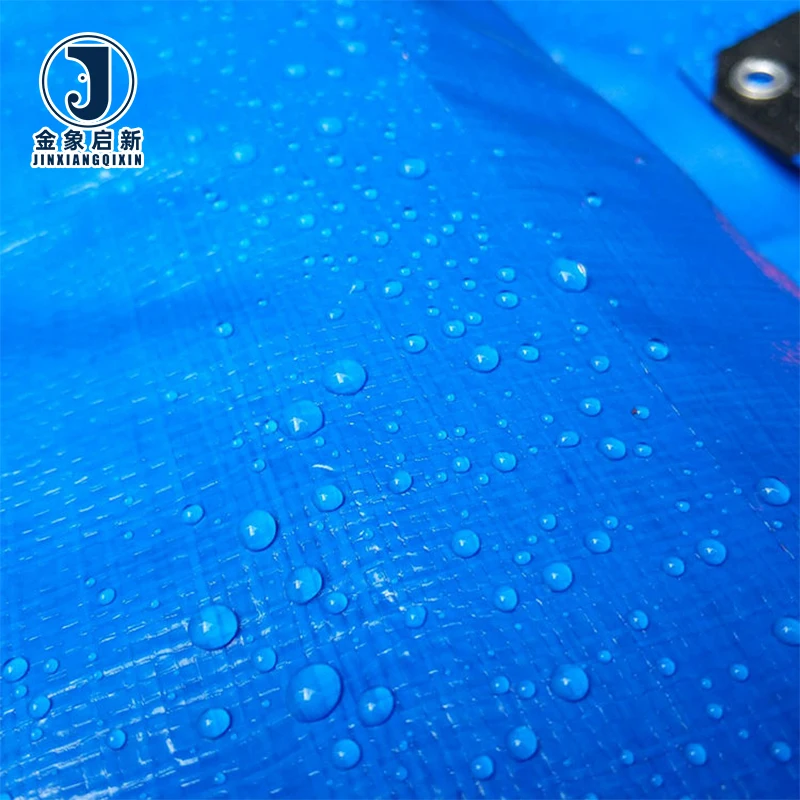
| Coating | LDPE coat on both sides |
| Mesh Density | 6×6 to 16×16 |
| Weight Range | 50 g/m² to 300 g/m² (confirm specific grade per order) |
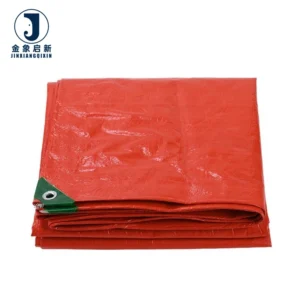
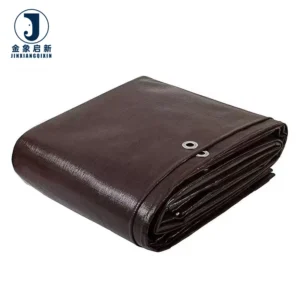
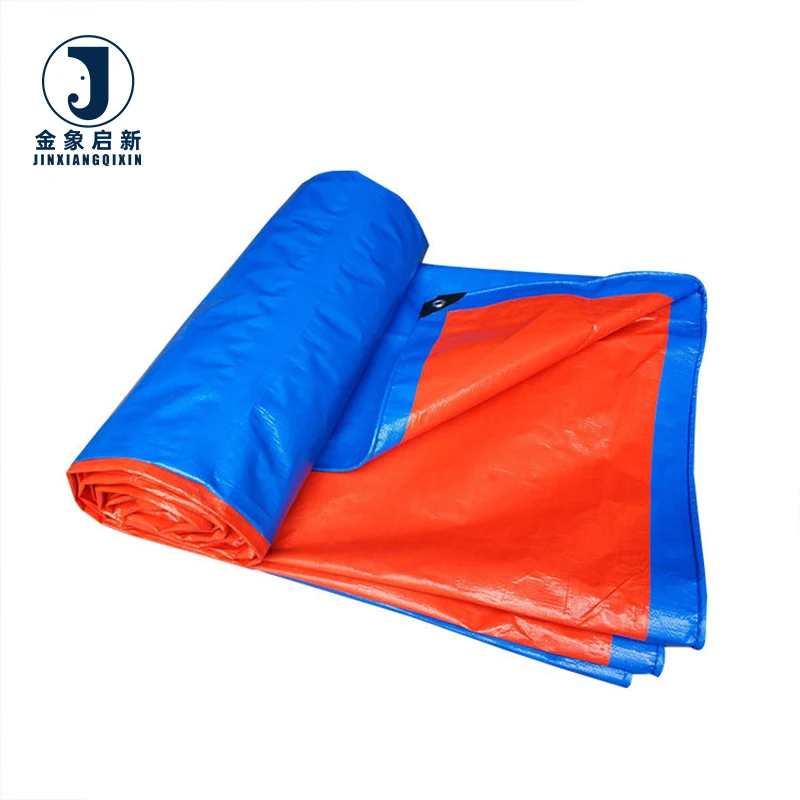
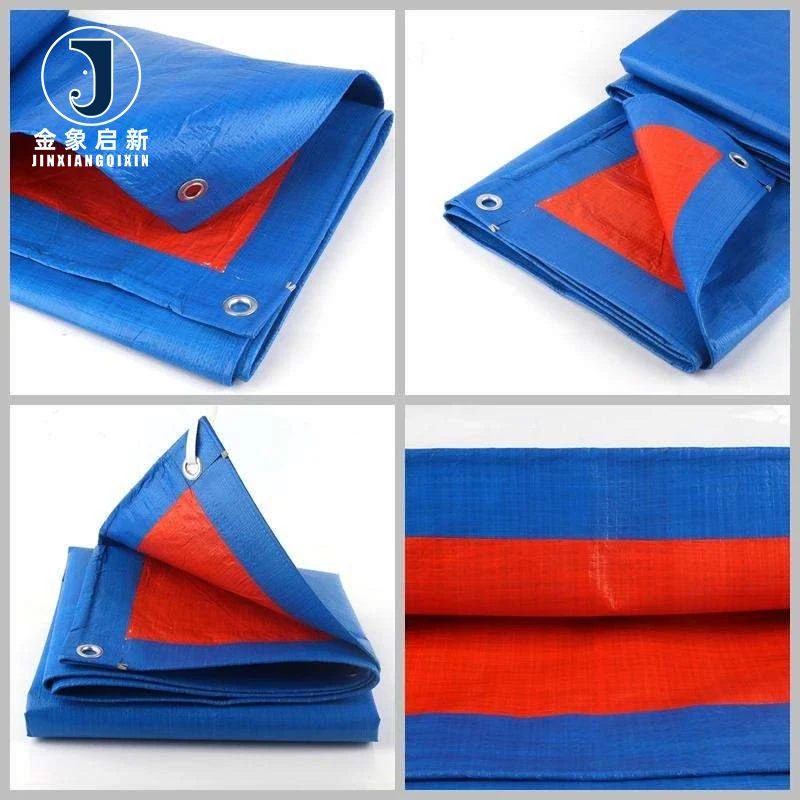
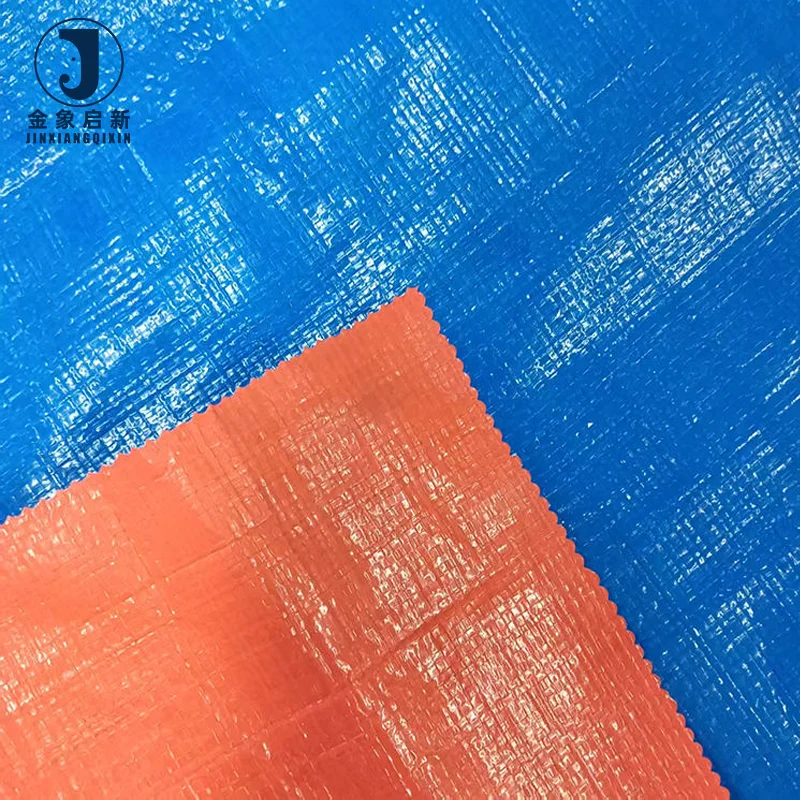
| Colour Options | Blue, Orange, White, Black, Grey, Yellow, Green, Red, or custom colour |
| Roll Length | 100 m per roll or custom length |
| Sheet Sizes | 2×3, 3×4, 3×5, 4×5, 5×6, 6×8, 10×10, 10×12, 12×14, or custom dimensions |
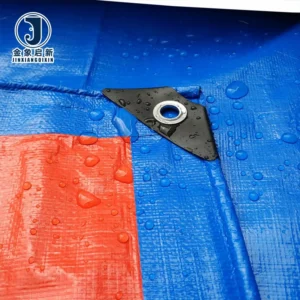
| Hem Construction | All edges with PP ropes in hem |
| Corner Reinforcement | Black plastic triangle at all corners |
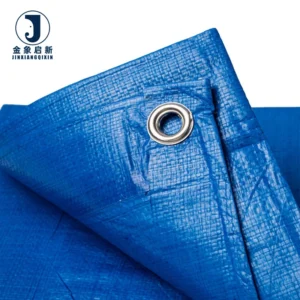
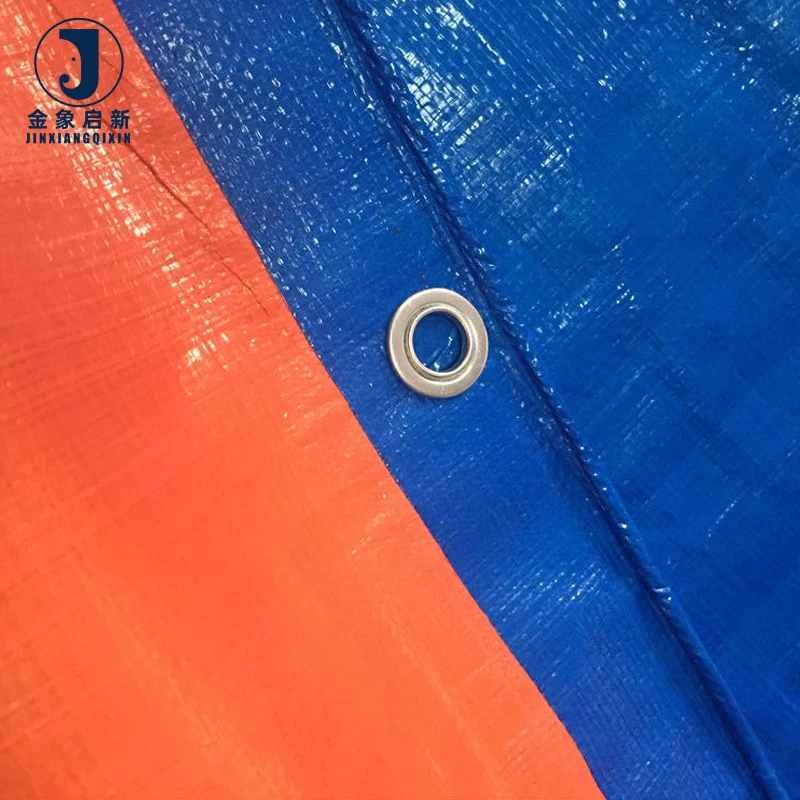
| Eyelets | Rustproof aluminum, spaced every 1 m or 1.5 m or as specified |
| Packing | Each piece folded into plastic bag with customer label |
| Special Treatment | Fire resistant / UV protection available as per requirements (grade not stated — confirm the grade required for your market) |
Application Suitability
| Application | Exposure & Requirement |
|---|---|
| Tarpaulin wholesale distribution | Roll-to-roll colour consistency, verified GSM per batch, container loading efficiency by roll or bale |
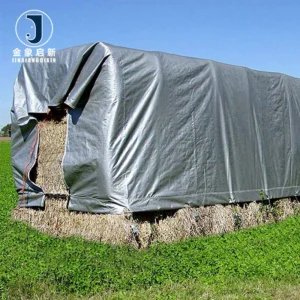
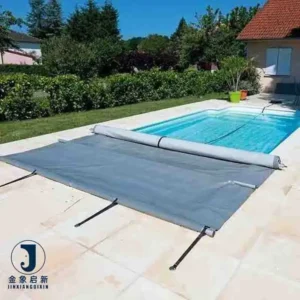
| Agricultural stockpile covers | Prolonged sun exposure, wind uplift, abrasion from bulk material contact |
| Aquaculture pond liners | Permanent water immersion, soil chemistry, puncture from substrate |
| Construction site sheeting | Dust containment, equipment protection, repeated handling and folding |
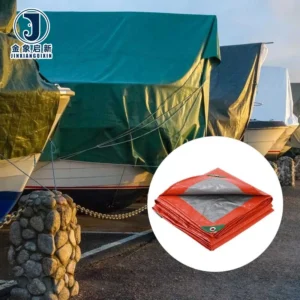
| General outdoor storage covers | Rain ingress, UV degradation, seasonal temperature swings |
Why Roll-to-Roll Colour Variation Destroys Wholesale Margins
When sourcing PE tarpaulin roll wholesale, the most expensive defect is not a hole or a weak eyelet — it is a colour shift between two rolls that only becomes visible once the buyer installs them side by side on a job site. The contractor rejects the entire shipment, the distributor absorbs the return freight, and the mill relationship breaks down over a problem that was preventable at the coating stage. [NEED_CITE: colour consistency measurement methods for coated fabrics]
Batch colour matching across every roll in a container is a process control decision, not a luck event.
We set the colour reference at sample approval and hold it through production, checking each roll against the standard under consistent lighting before it is packed. This is the difference between a distributor who sells on availability and one who sells on reliability.
How Mesh Density and Coating Weight Interact Across the Range
The 6×6 to 16×16 mesh density range determines the base fabric’s ability to distribute load across the weave. A tighter mesh at 16×16 gives more yarn crossover points per square inch, which resists tear propagation when a puncture starts. For PE tarpaulin roll wholesale buyers specifying light-duty grades near 50 g/m², the mesh density becomes critical because the coating alone cannot carry structural load.
The LDPE coating on both sides seals the weave and provides the waterproof barrier, but its contribution to tensile strength is secondary to the HDPE base fabric. Buyers ordering heavy grades toward 300 g/m² are typically paying for coating thickness that adds puncture resistance and stiffness, not necessarily tear strength. [NEED_CITE: relationship between mesh count and tear resistance in woven PE fabrics] Understanding this distinction prevents overspecifying weight when density is the actual requirement.
Container Loading Configurations for Volume Importers
Rolls, bales, and cartons each change the economics of a container load. Rolls at 100 m length pack densely and protect the fabric surface from creasing, making them the default for distributors who resell to fabricators. Bales compress the material and reduce volume, increasing tonnage per container but introducing fold lines that the end user must manage during deployment.
Cartons offer the cleanest presentation for retail-ready sheets but sacrifice loading weight — a 20GP holds approximately 8 tons in carton format versus 17 tons in rolls. For wholesale PE tarpaulin roll wholesale orders crossing borders, the choice between these formats affects landed cost per square metre more than any production variable. We configure each shipment to the buyer’s distribution model, with packing lists that match the container plan.
What the GSM Number Actually Tells You — and What It Hides
A stated GSM figure combines the HDPE base fabric weight and the LDPE coating weight into a single number, but it does not reveal how that weight is distributed. Two rolls at 180 g/m² can have very different performance profiles: one with a heavy base and thin coat will tear later but leak sooner; one with a light base and thick coat will puncture easily but seal well. [NEED_CITE: GSM composition analysis for coated polyethylene fabrics]
The mesh density tells you the base fabric structure, and the coating method — here, LDPE applied to both sides — tells you the sealing approach. For PE tarpaulin roll wholesale buyers comparing quotations, requesting the base fabric weight and coating weight separately, rather than accepting a combined GSM, is the single most useful specification check available. It separates suppliers who control their process from those who buy pre-coated fabric and relabel it.
The Hidden Cost of Unverified Weight on Arrival
A roll that arrives lighter than the quoted specification does not just underperform — it exposes the distributor to claims from every downstream customer who trusted the label. Construction contractors buying site covers in bulk discover the shortfall when the material tears during the first storm season. Agricultural buyers find the cover degrades under sun exposure faster than expected because the coating thickness was below what the UV treatment was calibrated for.
The financial damage is never limited to the cost difference between the quoted and actual GSM. It includes freight, customs clearance, warehouse handling, and the reputational cost of supplying a product that does not match its documentation. [NEED_CITE: financial impact of specification variance in imported coated fabrics] This is why pre-shipment weight verification per roll is non-negotiable for volume buyers.
What Volume Buyers Get from This Production Setup
Three full production lines running simultaneously means container orders are completed within a single production window rather than split across multiple batches with different settings. This directly supports colour and weight consistency across every roll in a wholesale shipment.
The 36 sets of professional equipment handle weaving, coating, cutting, and finishing under one roof, which eliminates the handoff failures that occur when base fabric is sourced from one mill and coated at another. For PE tarpaulin roll wholesale orders, this integrated control is what makes roll-to-roll matching achievable at scale.
The 10-person R&D team develops custom colour references and sample rolls within days, allowing distributors to approve specifications before committing to a container order rather than discovering mismatches after arrival. Every roll passes 100% inspection before dispatch, with weight checks and visual assessment documented in the pre-shipment record that travels with the shipment.
Documentation & Verification
- Material specification sheet stating GSM, base fabric weight, and LDPE coating weight for each roll line
- Pre-shipment inspection record with weight verification results per roll before container loading
- Roll packing list matching container plan with roll count, dimensions, and gross weight
- Colour reference card matching the approved sample for batch consistency verification on arrival
- Certificate of origin and customs documentation included with every cross-border shipment
- Fire resistant or UV protection test documentation where applicable — confirm grade required for your market
Fabrication, Handling & Storage
- Heat sealing temperature must match the LDPE coating grade — test weld parameters on a sample offcut before production runs
- PP rope hems and aluminum eyelets distribute tie-down load; reinforce high-stress corners beyond the standard plastic triangle for heavy loads
- Store rolls vertically on pallets to prevent flat-spot deformation that causes permanent creasing in the HDPE weave
- Unroll in temperatures above freezing to avoid LDPE coating brittleness and micro-cracking at fold lines
- Clean with mild detergent only; solvents degrade the LDPE surface and reduce water shedding performance
- Cut sheets should be sealed at edges immediately to prevent HDPE yarn fraying that compromises hem integrity
What to Include in Your Enquiry
Specify your target mesh density and weight grade, or describe the end-use application and let us recommend the appropriate combination from the range. Confirm whether you need rolls, bales, or carton-packed sheets, and the container format you prefer for loading efficiency.
Provide your colour reference or select from the available standard options, and indicate whether custom printing or reinforced strip additions are required. If your market mandates fire resistant or UV protection grades, state the applicable standard so we can confirm availability and provide supporting documentation with the quotation.
Frequently Asked Questions
Q: How is GSM verified per roll and what documentation ships with a wholesale order?
A: Each roll is weighed during pre-shipment inspection and the result is recorded against the quoted specification. A material specification sheet, packing list, and inspection record ship with every order. If the weight deviates beyond tolerance, the roll is held and replaced before dispatch rather than included in the container.
Q: How is batch colour consistency controlled across multiple rolls in one shipment?
A: Colour is set at sample approval and checked on every roll under consistent lighting conditions before packing. Rolls that fall outside the approved reference are pulled from the batch. This prevents the visible colour variation that occurs when adjacent rolls on a job site do not match.
Q: What custom widths, sheet sizes, and roll lengths are available, and what are the minimums?
A: Standard sheet sizes from 2×3 to 12×14 are available, along with custom dimensions and roll lengths beyond the standard 100 m. Minimum order quantities depend on the configuration and container format. Provide your required dimensions and volume so we can confirm feasibility and lead time.
Q: How are eyelet spacing, hem reinforcement, and corner options specified for bulk orders?
A: Rustproof aluminum eyelets are placed at 1 m or 1.5 m intervals by default, with custom spacing available. All edges include PP rope hems and black plastic corner triangles. For applications with high tie-down stress, additional corner reinforcement or closer eyelet spacing can be specified per order line.
Q: What container loading configurations are available and how many tons fit per 20GP or 40HQ?
A: Rolls load approximately 17 tons in a 20GP and 28+ tons in a 40HQ. Bales increase capacity to 11 tons in a 20GP and 28+ tons in a 40HQ. Cartons hold approximately 8 tons in a 20GP and 22+ tons in a 40HQ. We recommend the format based on your distribution model and end-user requirements.