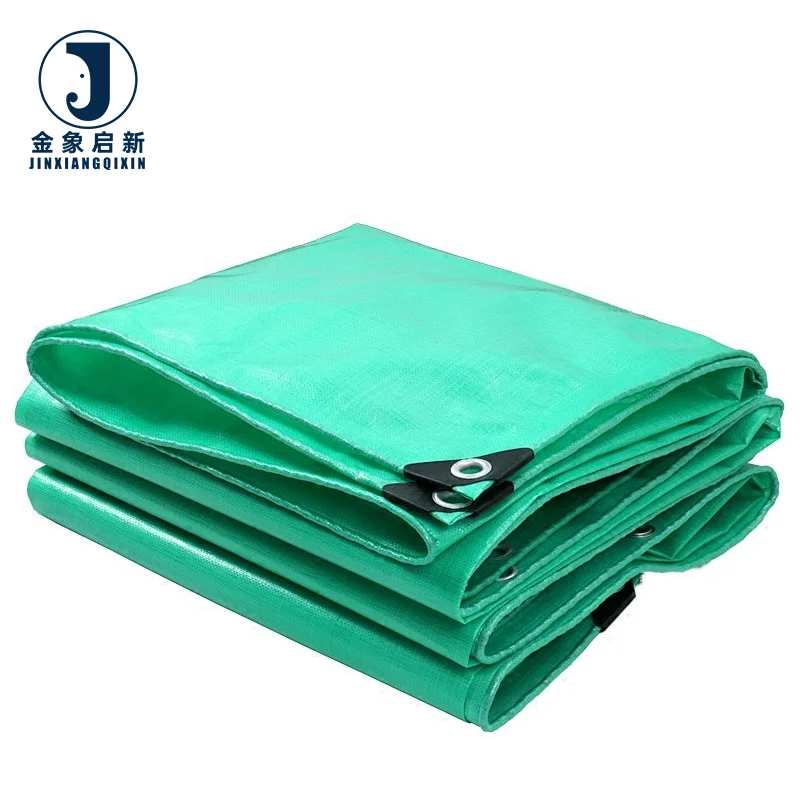
Description
Wholesale PE Tarpaulin Roll Stock – HDPE Coated Waterproof
Weave-Density Traceability — Every roll of Plastic Canvas Strong Waterproof PE Tarpaulin HDPE Coated Tarpaulin ships with a per-roll packing list that confirms mesh count and net weight against the quoted GSM, letting wholesale buyers verify specification on arrival without third-party sampling delays.
Technical Specifications
| Parameter | Value |
|---|---|
| Product Type | PE Tarpaulin Roll / Finished PE Tarpaulin |
| Material | HDPE weaving with LDPE lamination on both sides |
| Weight (GSM) | 50 gr/m² to 220 gr/m² available across the product family — confirm the grade for this item |
| Thickness | 0.2–0.4 mm / 8–16 mil / Custom |
| Mesh Count & GSM Mapping | 6×6 / 6×7 → 50–60 gr/m² · 7×7 / 7×8 → 60–80 gr/m² · 8×8 / 9×9 → 80–90 gr/m² · 8×10 → 90–100 gr/m² · 10×10 → 100–120 gr/m² · 12×12 → 120–150 gr/m² · 14×14 → 150–250 gr/m² · 14×16 → 250–300 gr/m² |
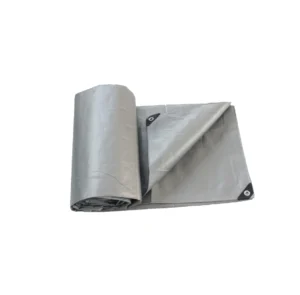
| Roll Width | 6 ft, 8 ft, 10 ft, 12 ft, 2 m, 4 m, 6 m |
| Roll Length | 100 yards, 100 meters, or custom |
| Finished Sheet Sizes | 2×2 m, 3×3 m, 3×5 m, 4×4 m, 4×5 m, 4×6 m, 4×8 m, 4×10 m, 5×5 m, 5×6 m, 5×8 m, 5×10 m, 6×6 m, 6×8 m, 6×10 m, 8×10 m, or custom |
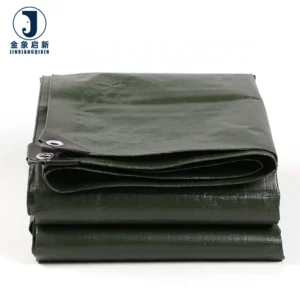
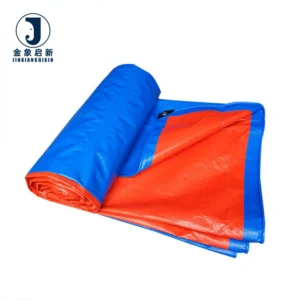
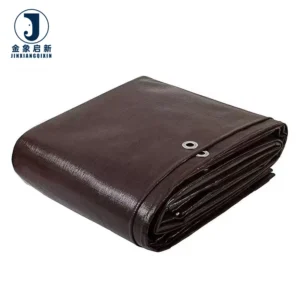
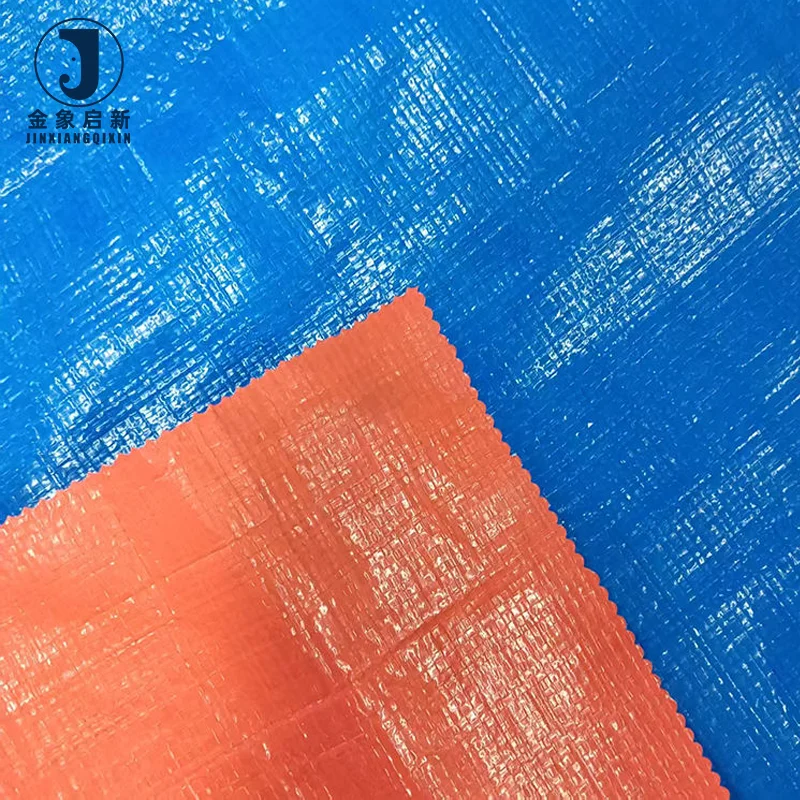
| Colour Options | Blue, Blue/Orange, Green, Grey, Black, Clear, Grey/Green, Orange, or custom |
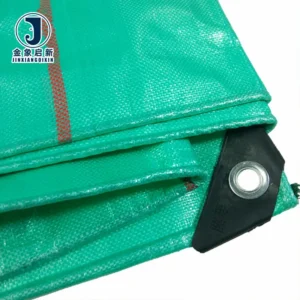
| Edge Reinforcement (Finished Sheets) | All four edges heat-sealed with PP rope in hem |
| Eyelet Specification (Finished Sheets) | Galvanized metal eyelets at 3 ft or 1 m intervals |
| Corner Reinforcement (Finished Sheets) | Reinforced plastic corner patches |
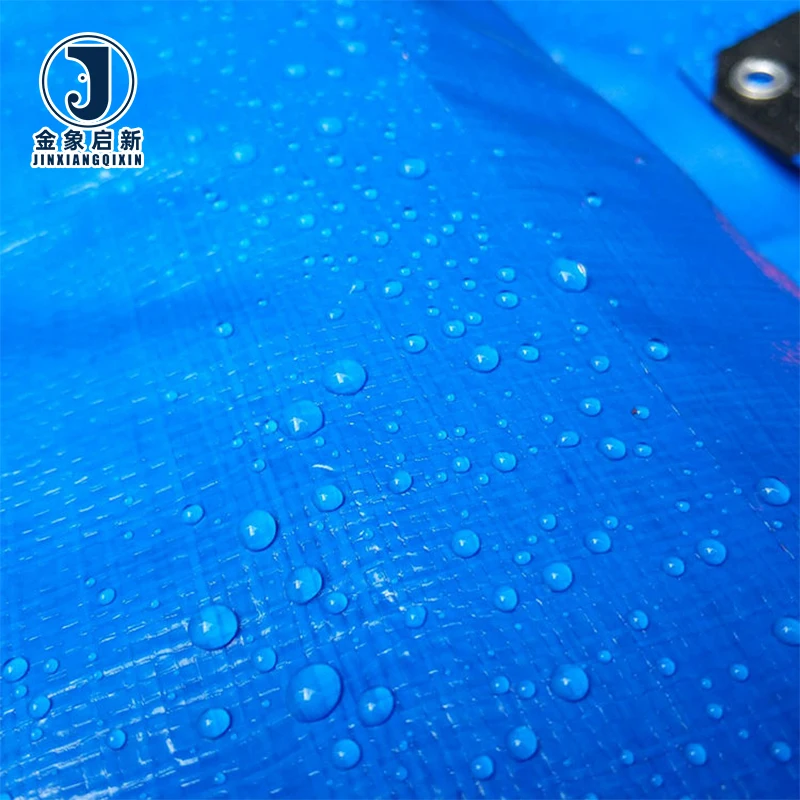
| Water Resistance | Waterproof laminated construction |
| UV Treatment | UV treatment available — confirm the grade required for your market |
| Mildew & Aging | Mildew proof and anti-aging treatment available |
Application Suitability
| Application | Exposure & Requirement |
|---|---|
| Tarpaulin distributor & importer resale | Regional stock covering multiple end uses — requires consistent GSM, colour, and eyelet placement across rolls in the same container |
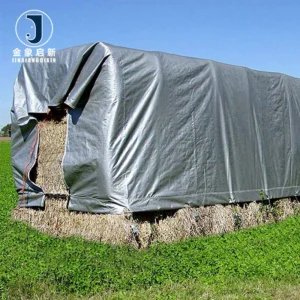
| Agricultural crop & hay covering | Extended sun exposure, wind uplift, rain pooling — needs UV-treated grade with low water absorption and tear resistance for daily handling |
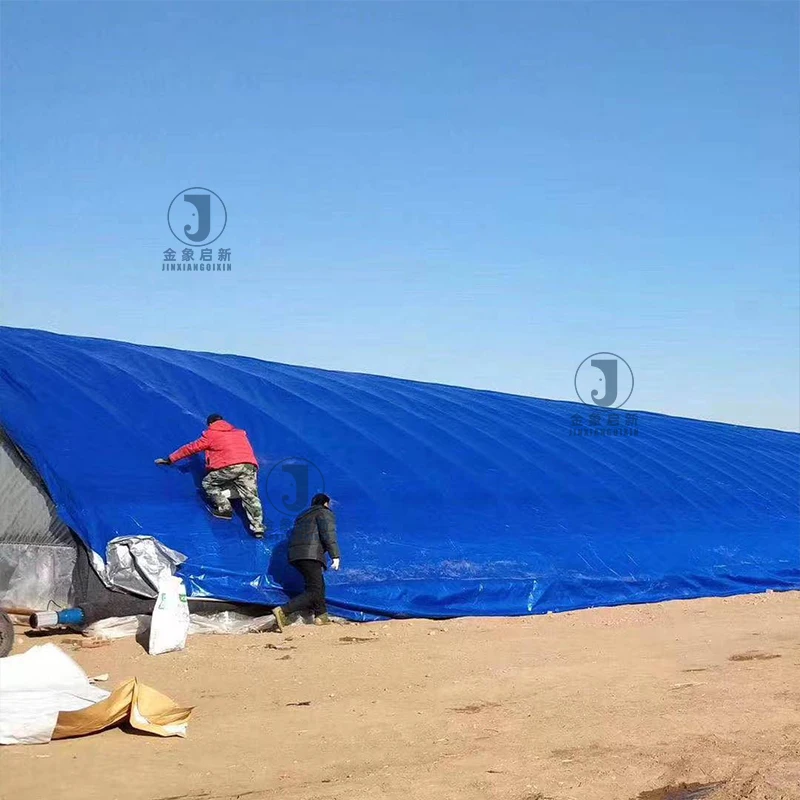
| Construction scaffolding & site fencing | Abrasion against steel tubes, wind-driven rain, worker contact — demands reinforced hems, secure eyelet spacing, and colour stability |
| Truck, trailer & boat covers | Road vibration, flexing at load points, weather exposure — calls for higher mesh count with adequate GSM to resist tearing at tie-down points |
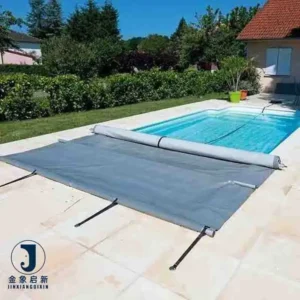
| Garden & backyard covers (DIY) | UV degradation, moisture, frequent folding and storage — requires mildew resistance and stable lamination that resists delamination |
| Timber & log stack protection | Ground moisture, bark abrasion, seasonal temperature swings — needs waterproof base layer with puncture resistance |
Batch Consistency Is What Wholesale Buyers Actually Audit
Colour and weight must match from roll to roll, not just from sample to shipment.
A distributor unloading a container in Rotterdam does not pull a spectrophotometer — they stand two adjacent rolls side by side and look. If one leans blue and the other leans violet, the entire lot gets flagged before it reaches retail shelves. Similarly, a stated 100 gr/m² that arrives at 85 gr/m² triggers customs sampling, delays clearance, and forces a commercial dispute that costs more in time than the material margin ever covered. Sourcing bulk PE tarpaulin is ultimately about whether the container load performs as a single, uniform batch rather than a collection of individual production runs. [NEED_CITE: ISO 1421 tensile and tear test methods for coated fabrics]
Roll-to-Roll Colour and Weight Matching Across Container Loads
When stocking multiple GSM grades for regional resale, a distributor needs confidence that roll seven and roll seventy in the same 40’HQ look identical once unrolled on a shop floor. This PE tarpaulin roll wholesale operation uses dedicated QA/QC at every production stage, with 100% inspection before shipment, so colour drift and weight deviation are caught before the container is sealed rather than after it arrives at the destination port.
Mapping Weave Density to End-Use for Smarter SKU Planning
A buyer serving both agricultural and construction channels needs a clear specification ladder, not a single "medium-duty" label. The eight mesh-count tiers from 6×6 at 50–60 gr/m² up to 14×16 at 250–300 gr/m² allow importers to assign specific GSM bands to specific customer segments — lighter weaves for seasonal crop covers, heavier densities for scaffolding and equipment wraps — reducing the number of SKUs held in local warehouse while still covering the full demand range.
Understanding the Mesh-Count-to-Weight Relationship in HDPE Fabric
The base HDPE tape yarns are woven into a grid before LDPE lamination is applied to both sides. The mesh count — the number of yarns per inch in warp and weft — directly determines how much base fabric enters each square metre, which in turn drives the final GSM alongside the lamination weight. A 6×6 weave produces a lighter, more flexible sheet suited to short-term covers, while a 14×14 weave nearly triples the yarn density, raising both the weight and the resistance to tear propagation. This is why quoting by mesh count rather than GSM alone gives the buyer a more stable specification: the weave structure cannot vary the way a lamination thickness can. Choosing the correct tier prevents overspending on heavy-grade fabric for applications where a lighter weave suffices, and prevents field failures where a light grade was specified for a demanding exposure. [NEED_CITE: relationship between woven density and tear strength in HDPE laminated fabrics]
What Happens When the Spec Is Wrong for the Load
A construction contractor who ordered 80 gr/m² sheets for scaffolding wraps, based on a competitor’s generic "heavy-duty" label, will find the fabric tears at the eyelet when wind gusts exceed moderate levels — the mesh count is simply too open to distribute the point load around the galvanized ring. Conversely, an agricultural buyer who specified 200 gr/m² for hay covers pays for weight they do not need, adding cost and handling difficulty without improving the actual protection the crop requires. These mismatches compound at container-load scale: a wrong specification repeated across twenty tons of material becomes a stranded inventory problem rather than a single rejected sample. [NEED_CITE: field failure patterns in laminated tarpaulin related to mesh count mismatch]
Procurement Advantages Built Into This Production System
Three full production lines with 36 sets of professional equipment provide the throughput needed to fill a 40’HQ container within a predictable lead time, rather than forcing buyers to accept partial shipments. The 10-person R&D team handles custom width and colour requests, developing samples within days so that a distributor can confirm the exact shade before committing to a full container. A 100% pre-shipment inspection protocol covers colour consistency, eyelet spacing, and hem reinforcement before loading, eliminating the scenario where defects are discovered only after customs clearance. Documentation including roll packing lists, material specification sheets, and certificates of origin ships with every container, supporting smooth import procedures across the 20+ countries this facility exports to.
Documentation & Verification
- Material specification sheet confirming HDPE weave count, LDPE lamination, and GSM for every roll batch
- Pre-shipment inspection record noting colour match, eyelet interval, and hem reinforcement quality
- Roll packing list stating per-roll net weight and GSM against the original quotation values
- UV and mildew treatment confirmation aligned with the grade specified at order placement
- Certificate of origin and customs support documentation included for destination-country clearance
Fabrication, Handling & Storage
- Heat-seal temperature should be set to match the LDPE lamination melting range; test on an offcut from the specific GSM grade before production runs
- Galvanized eyelets at 1 m intervals distribute tie-down load across the PP-rope reinforced hem — avoid punching additional holes outside the reinforced zone
- Store rolls upright on the hard paper core to prevent flat-spot creases that become visible after the sheet is unrolled on site
- When cutting finished sheets from 6 m wide rolls, plan the nesting layout to minimise offcuts, as HDPE woven edges do not self-seal and require hem finishing
- Clean laminated surfaces with mild detergent only; solvent-based cleaners can soften the LDPE lamination and reduce water resistance
Requesting a Quotation with the Right Detail
To receive a precise quotation for bulk PE tarpaulin, provide the target GSM or mesh count, required roll width, annual volume estimate, and destination port. If stocking multiple colours or finished sheet sizes in one container, specify the mix so that the loading plan and packing method — roll, bale, or carton — can be optimised for maximum payload. Indicate whether UV or mildew treatment is needed and the compliance standard your market expects, so the correct grade is quoted from the start.
Frequently Asked Questions
Q: How is the GSM of each roll verified before it leaves the factory?
A: Every roll undergoes a weight check as part of the 100% pre-shipment inspection. The roll packing list included in the shipment documents the measured net weight and GSM for each individual roll, allowing you to verify the specification on arrival against the values stated on your original quotation without needing independent laboratory sampling.
Q: How do you prevent colour variation across multiple rolls in one container?
A: Colour consistency is checked at every production stage, and a final side-by-side visual comparison is performed during the pre-shipment inspection. Rolls destined for the same container are grouped from matched production batches, and the inspection record documents the colour assessment so that you have a traceable reference if a dispute arises at destination.
Q: What roll widths are in stock, and is there a minimum for custom widths?
A: Standard roll widths include 6 ft, 8 ft, 10 ft, 12 ft, 2 m, 4 m, and 6 m, with lengths of 100 yards or 100 metres. Custom widths and colours are handled by the in-house R&D team, and samples are typically developed within days. Minimum order requirements for non-standard specifications are confirmed during the quotation stage based on your container plan.
Q: How are the rolls packed for ocean freight, and what fits in a container?
A: Rolls are wound onto hard paper tubes and wrapped in the same tarpaulin material to protect the outer layer during transit. Loading capacity varies by packing method: roll packing, bale packing, and carton packing each yield different tonnage per 20’GP and 40’HQ container, and this data is provided at quotation stage to help you plan freight costs accurately.
Q: Can finished sheets be supplied with custom eyelet spacing or printed branding?
A: Finished tarpaulin sheets are produced with galvanized eyelets at standard 3 ft or 1 m intervals, PP-rope reinforced hems, and reinforced plastic corners. Custom eyelet spacing, corner treatments, and printed branding are available for bulk orders — provide your drawing or specification at inquiry stage so the R&D team can develop a sample for your approval before production.