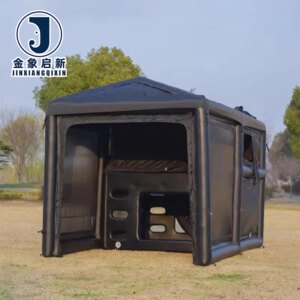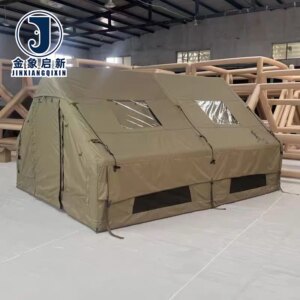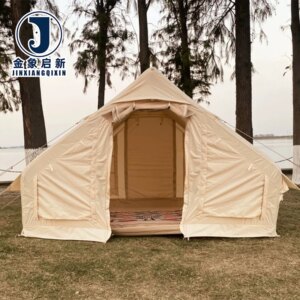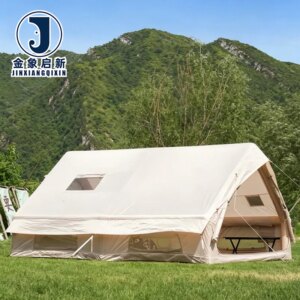
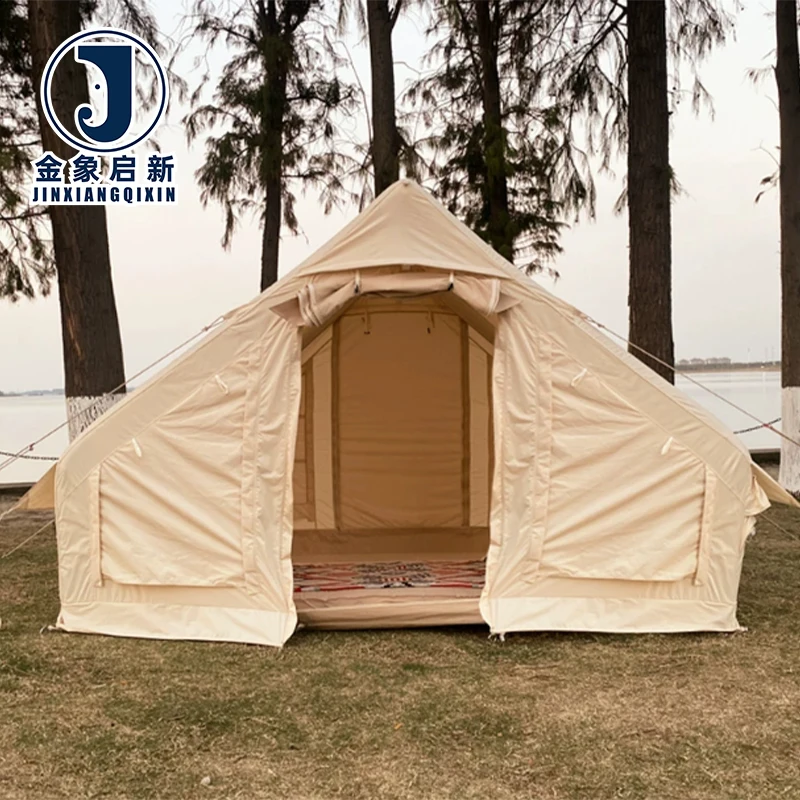
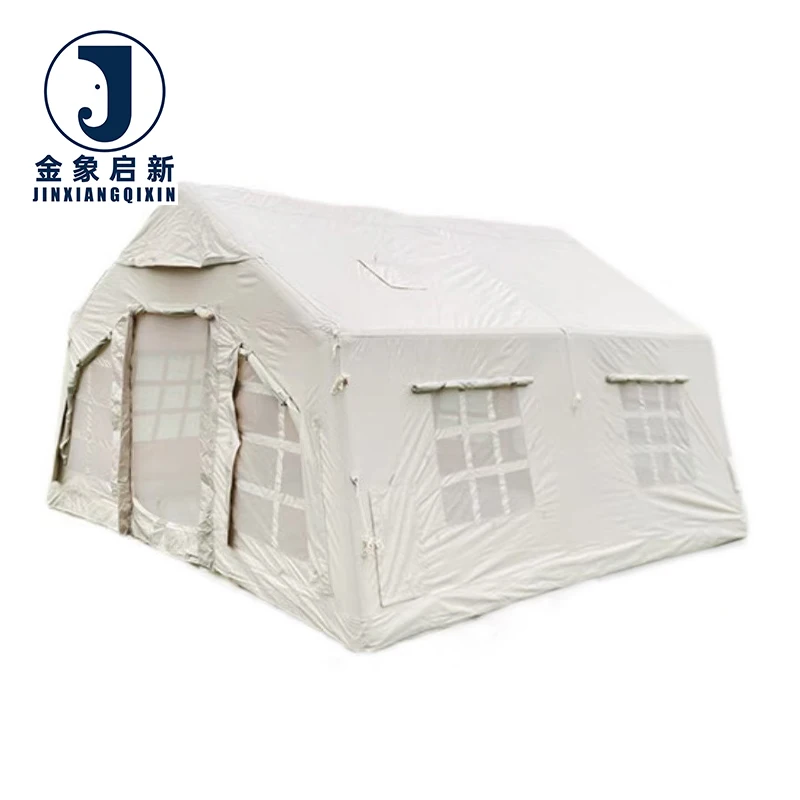
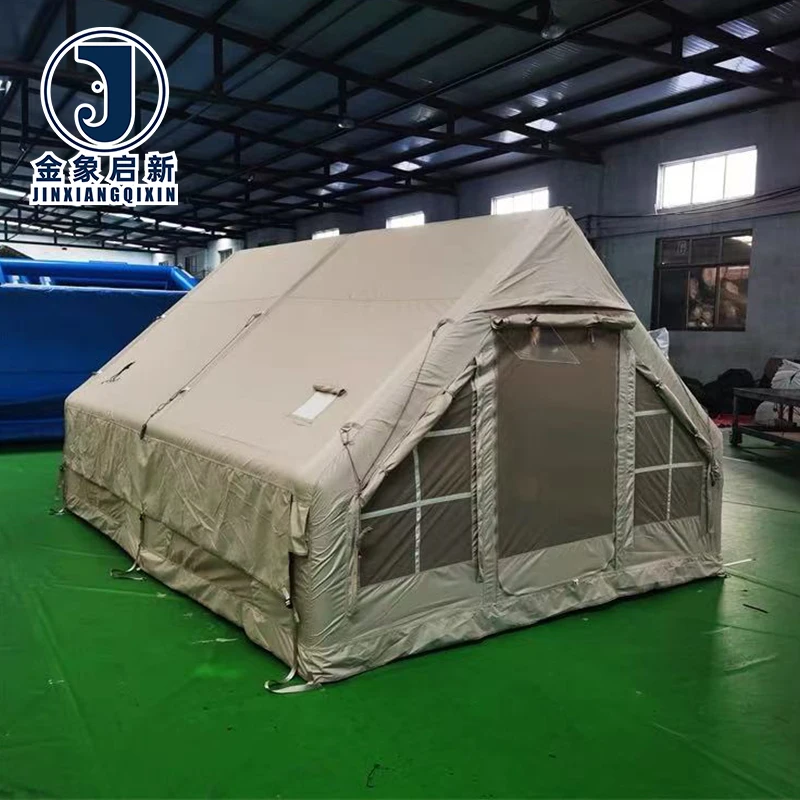
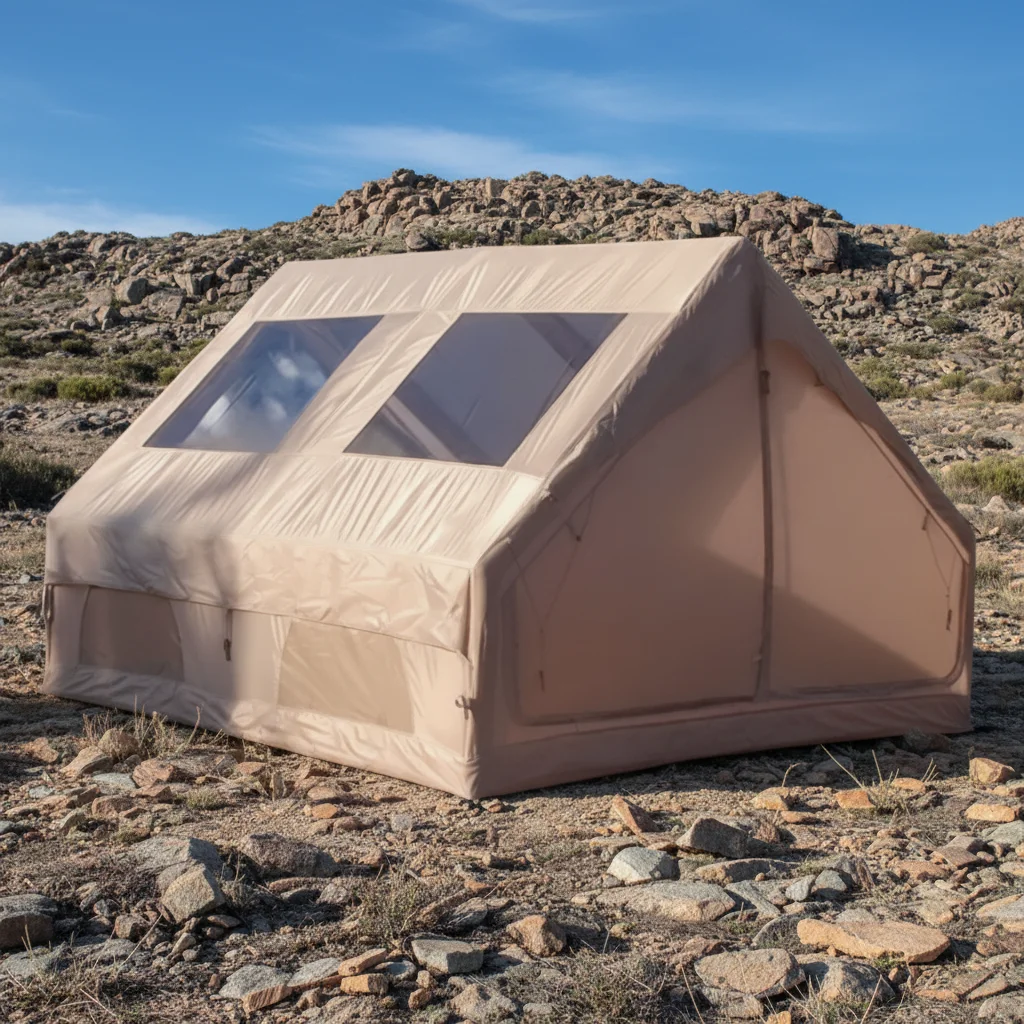

Description
Batch-to-Batch Consistency — Coated on dedicated lines with in-process QA, so every roll of PVC inflatable tent fabric ships with verified weight, colour, and width traceability for uninterrupted production runs.
Technical Specifications
| Parameter | Value |
|---|---|
| Product Type | Inflatable Tent |
| Core Material | PVC tarpaulin |
| Key Performance | Waterproof, tear-resistant |
| UV Resistance | Available with UV treatment — confirm test basis required for your market |
| Flame Retardancy | Available in flame retardant grades — confirm the grade required for your market |
| Construction | Lightweight single layer |
| Customization | OEM & ODM, sample customization, pattern printing |
| Certifications | ISO9001, ISO14001, ISO45001, CE |
| Production Lines | 3 full production lines |
| Processing Equipment | 36 sets of professional processing equipment |
| R&D Support | 10 technicians |
Application Suitability
| Application | Exposure & Requirement |
|---|---|
| Commercial glamping inflatable shelters | Sustained UV exposure, seasonal temperature swings, guest wear on air-beam shells |
| Expedition-grade field accommodation | Rapid deployment cycles, abrasive ground contact, wind-driven rain ingress |
| Outdoor gear brand private-label lines | Roll-to-roll colour matching for catalogue photography, consistent weld behaviour on automated cutting tables |
| Tent distributor bulk warehousing | Long storage in container or rack conditions without blocking or coating transfer between layers |
Why Roll-to-Roll Weight Drift Undermines Inflatable Tent Production
GSM quoted on paper does not guarantee GSM on the cutting table — and inflatable tent fabric is especially sensitive to coating-weight variance.
When an air-beam shell is welded, the seam relies on a predictable coating thickness to fuse properly. A roll that arrives lighter than specified welds at a different temperature window, producing joints that peel under inflation pressure while neighbouring panels hold. Buyers sourcing PVC inflatable tent fabric wholesale often discover this mismatch only after the first production run, when seam failures cluster on panels cut from specific rolls. The cost is not just scrap fabric; it is the labour and machine time spent re-running a batch under tight seasonal deadlines. [NEED_CITE: tensile and tear test methods for coated fabrics per ISO 1421]
Maintaining Colour Uniformity Across Multi-Roll Orders
Inflatable tents are frequently assembled from several panels cut from different rolls. If one roll carries a slightly different pigment load, the shade shift becomes visible once the structure is inflated and viewed in direct sunlight. Our coating lines dose pigment by weight per batch, and each production run is cross-checked against a retained colour standard before release. When you order PVC inflatable tent fabric in volume, every roll in the shipment carries the same batch reference, eliminating the panel-to-panel colour variation that triggers buyer complaints on finished goods.
Weld Behaviour and Coating Adhesion Control
Air-beam tents depend entirely on heat-welded seams to hold internal pressure. If the PVC coating is poorly bonded to the base fabric, the weld line separates under flex rather than stretching with the panel. Our production process controls coating weight and adhesion at each stage, so the welded joint performs in line with the parent fabric. This matters especially at the beam curvature points, where the material flexes repeatedly during inflation and deflation cycles. [NEED_CITE: hot-air weld peel strength testing for PVC-coated polyester]
Reading the Specification Sheet Beyond GSM
Two rolls can carry the same stated GSM yet behave very differently on the welding table. Base fabric denier and weave density determine how the load distributes across the panel, while the coating method — whether knife-over-roll, calender, or dip — sets the bond strength between coating and yarn. A lighter base with a thicker coating may match the target weight but tear more easily at the eyelet or seam line. Conversely, a tightly woven base with a thinner, well-bonded coating can outperform a heavier alternative in both tensile and tear resistance. For inflatable tent applications, where the shell must resist internal air pressure without adding excess weight, the balance between base fabric construction and coating thickness is the specification that actually governs field performance.
The Hidden Cost of Undocumented Batch Variation
A shipment where roll width drifts by even a small margin forces the cutting room to adjust nesting layouts mid-run, dropping fabric utilisation and raising cost per tent. Colour drift between rolls in the same container can mean an entire production batch must be re-sorted or downgraded to a lower-priced channel. Flame retardant or UV treatment claimed on the quotation but unsupported by a batch-matched test report leaves the finished tent exposed to compliance rejection at the destination port. These failures rarely show up in pre-order samples; they surface only when production volume reveals the inconsistency. [NEED_CITE: batch traceability requirements for coated textile imports]
Why Procurement Teams Source PVC Inflatable Tent Fabric Here
Three dedicated production lines mean roll stock is coated in-house rather than sourced from trading inventories, giving direct control over every batch parameter.
Thirty-six sets of professional processing equipment allow custom widths, colours, and pattern printing to be handled on the same lines as standard grades, keeping lead times predictable.
A ten-technician R&D team develops samples within days, letting you validate material weight, hand feel, and weld compatibility before committing to a full container order.
Dedicated QA and QC staff inspect at every production stage, with one hundred percent pre-shipment inspection catching weight and colour drift before dispatch.
Nearly three decades of coating-fabric process control translate into reliable adhesion and consistent coating weight across the inflatable tent fabric range.
Documentation & Verification
- Material specification sheet confirming base fabric, coating type, and weight per roll
- Pre-shipment inspection record with roll-by-roll weight and dimension verification
- UV and flame retardant test reports matched to the production batch where applicable
- Roll packing list showing width, length, colour, and batch reference for traceability
- Certificate of origin and customs documentation included with each dispatch
Fabrication, Handling & Storage
- Heat-weld at temperatures matched to the PVC coating weight for consistent beam-seam adhesion
- Store rolls upright on pallets to prevent flat-spot creasing on the single-layer construction
- Unroll and allow fabric to relax before cutting to release any winding tension from the core
- Use compatible PVC adhesive for field repairs on waterproof inflatable tent panels
- Plan cutting layouts around the supplied roll width to maximise panel yield and reduce weld seams
Requesting a Quotation That Matches Your Production Line
Share the target roll width, annual volume, and whether you require solid colours, custom Pantone matches, or printed branding on the PVC inflatable tent fabric. Specify any UV or flame retardant treatment your destination market demands, along with the test standard your buyers expect. If you need finished sample panels to validate weld settings before bulk commitment, include the sample dimensions and air-beam geometry so the R&D team can prepare a representative mock-up.
Frequently Asked Questions
Q: How do you verify GSM consistency across rolls in a bulk order?
A: Every roll is weighed and measured during pre-shipment inspection. The inspection record lists actual weight and dimensions per roll, cross-checked against the material specification sheet. Rolls falling outside tolerance are held back before packing, so the PVC inflatable tent fabric reaching your cutting table matches the agreed GSM throughout the shipment.
Q: What UV-resistance test basis supports the outdoor exposure claim?
A: UV treatment is available for inflatable tent fabric grades intended for extended sun exposure. The applicable test standard varies by destination market, so confirm which method your compliance body requires. A test report matched to the production batch is provided where applicable, rather than a generic datasheet statement.
Q: How do you control colour variation between rolls in the same shipment?
A: Pigment is dosed by weight at the coating stage, and each production run is compared against a retained colour standard. All rolls in a single order carry the same batch reference number, which appears on the roll packing list. This traceability prevents shade drift between panels once inflatable tents are assembled.
Q: What are the minimum order quantities for custom width, colour, or printed inflatable tent fabric?
A: Minimums depend on the custom parameter — solid colour changes require a smaller run than custom width or printed patterns due to line setup requirements. Submit your target specification and annual volume so the team can confirm the applicable minimum and lead time for your specific PVC inflatable tent fabric configuration.
Q: What documentation is provided per batch for international compliance?
A: Each shipment includes a material specification sheet, pre-shipment inspection record, roll packing list with batch references, and certificate of origin. Where UV or flame retardant treatment is specified, a batch-matched test report accompanies the documentation package to support customs clearance and buyer compliance audits.