
Description
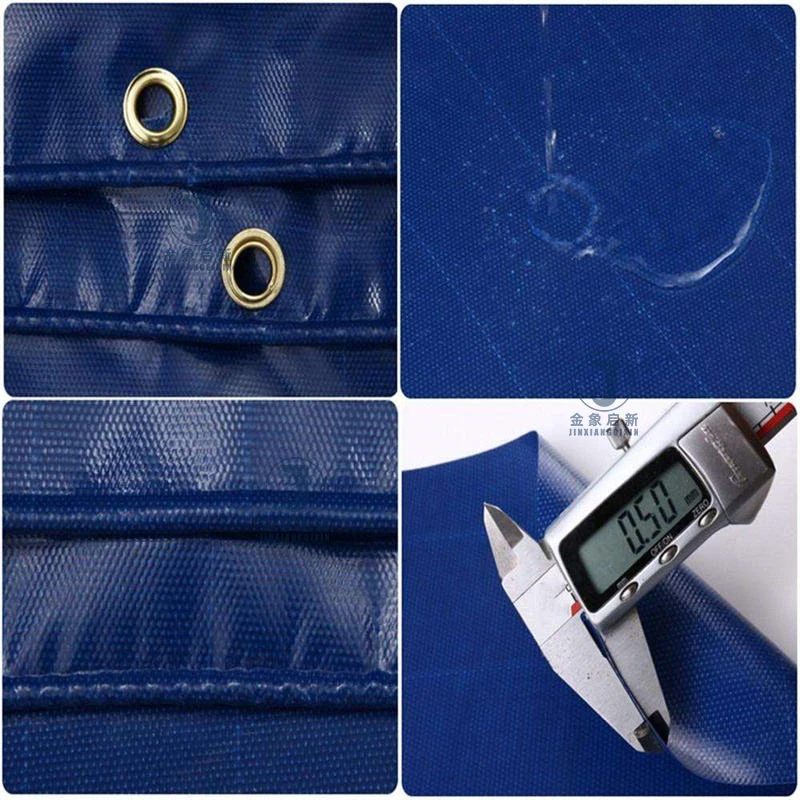
Volume Consistency You Can Audit — Every PVC coated fabric roll is weighed, measured and photographed during 100% pre-shipment inspection, so the GSM on your specification sheet matches the roll that arrives at your warehouse.
Technical Specifications
| Parameter | Value |
|---|---|
| Product Type | PVC Coated Fabric |
| Coating Material | PVC / PE (HDPE weaving with LDPE lamination on both sides) |
| Weight (GSM) – PVC Medium | 400-500 g/m² |
| Weight (GSM) – PVC Heavy | 700-1000 g/m² |
| Weight (GSM) – PVC Super Heavy | 1100-1500 g/m² |
| Total Thickness (mm) – PVC Medium | 0.35-0.45 |
| Total Thickness (mm) – PVC Heavy | 0.70-1.0 |
| Total Thickness (mm) – PVC Super Heavy | 1.2-1.5 |
| Base Fabric Denier – PVC Medium | 500D |
| Base Fabric Denier – PVC Heavy | 1000D |
| Base Fabric Denier – PVC Super Heavy | 500D-2000D |
| Tensile Strength (N/5cm) – PVC Medium | Longitude 1500-2000 / Latitude 1200-1800 (test basis not stated) |
| Tensile Strength (N/5cm) – PVC Heavy | Meridian 2000-2500 / Latitude 1800-2200 (test basis not stated) |
| Tensile Strength (N/5cm) – PVC Super Heavy | Warp 2500-3000 / Weft 2200-2800 (test basis not stated) |
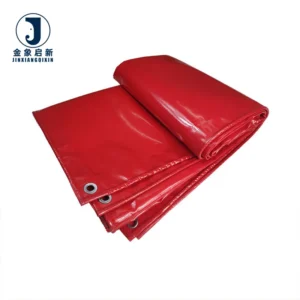
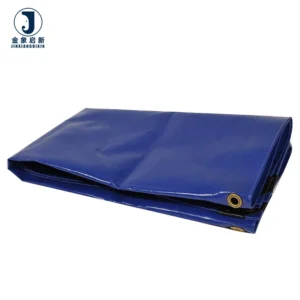
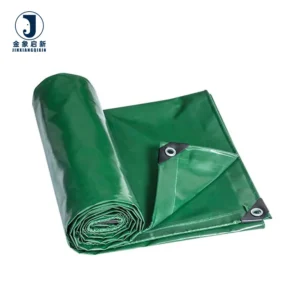
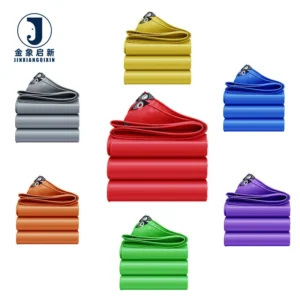
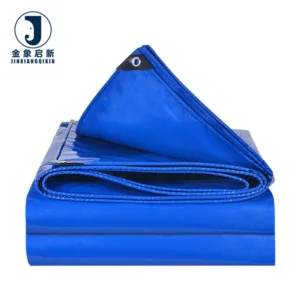
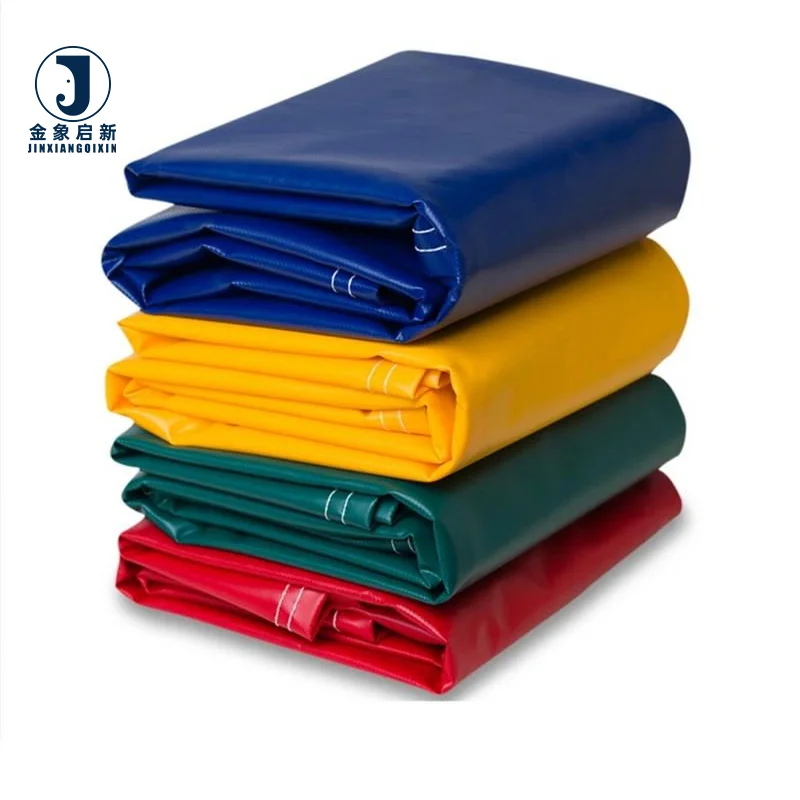
| Color Options | Blue, Blue/Orange, Green, Grey, Black, Clear, Grey/Green, Orange, or custom colour |
| Waterproof | Yes |
| UV Treatment | Available (test basis not stated) — confirm the UV grade required for your climate |
| Mildew Proof | Yes |
| Tear Resistant | Yes |
| Flame Retardant | Available in flame retardant grades — confirm the grade required for your market |
| Anti-static | Available — confirm certification required for your site |
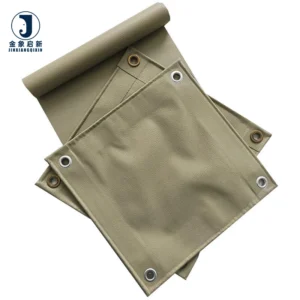
| Custom Options | Width, length, colour, pattern printing, eyelets, reinforced hems |
| Standards | ISO, CE (source value — verify against manufacturer catalog) |
Application Suitability
| Application | Exposure & Requirement |
|---|---|
| Truck and trailer side curtains | Constant flexing, road abrasion, UV exposure, high-frequency tie-down stress at eyelet points |
| Tarpaulin distribution and resale | Roll-to-roll colour consistency, verified GSM, predictable container loading weight |
| Tent and awning fabrication | Clean cut edges, reliable heat-weld seams, colour matching across multiple rolls per project |
| Agricultural and aquaculture pond liners | Permanent water immersion, soil chemistry contact, puncture resistance during installation |
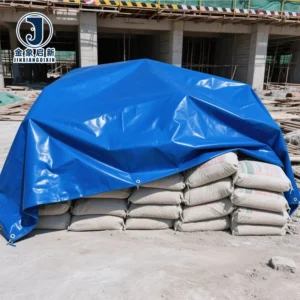
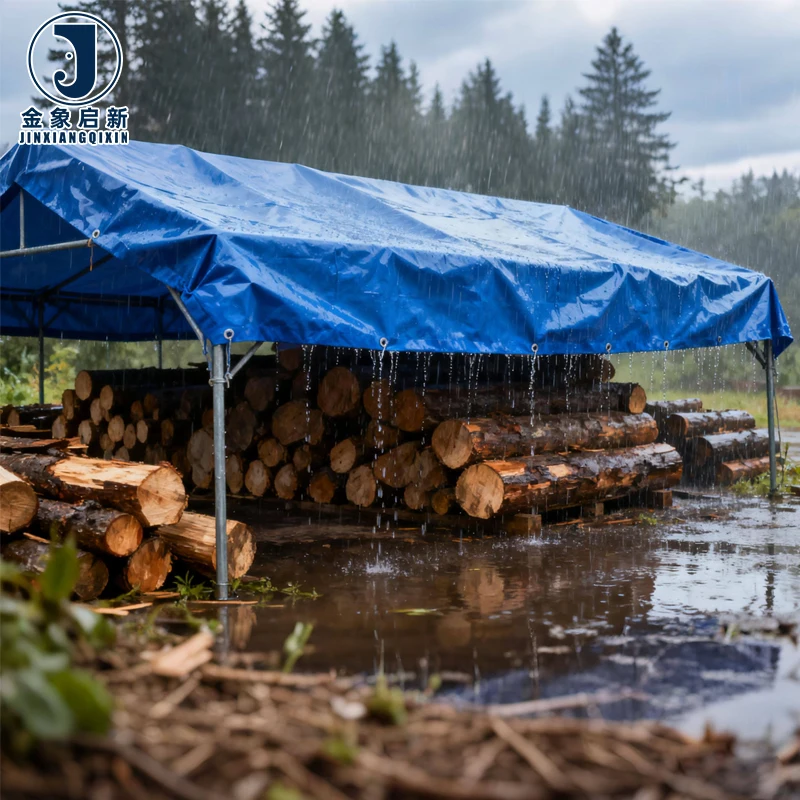
| Construction site and equipment covers | Weather exposure, wind load, abrasion from machinery contact, UV degradation |
| Inflatable and membrane structures | Air-holding seam integrity, UV stability, tensile load under inflation pressure |
Why Wholesale Buyers Lose Money on Tarpaulin Roll Stock
GSM on the quotation means nothing if the roll that arrives weighs less.
I have watched importers sign off on a 700 GSM PVC coated tarpaulin roll order, only to open the container and find material that feels noticeably lighter. By the time you run a scale test, the shipment is already at your warehouse, the letter of credit has been drawn, and your downstream customers are waiting. The cost is not just the weight difference — it is the failed tensile performance, the earlier tearing at welded seams, and the returns from fabricators who trusted your stock. [NEED_CITE: tensile and tear test methods for coated fabrics per ISO 1421]
The problem compounds with colour. When two rolls from the same order are unrolled side by side on a fabrication table and the blue does not match, the entire batch becomes unsellable for projects where panels meet at visible seams. Batch colour inconsistency is the fastest way to lose a repeat wholesale account.
Stock Grades, Container Volumes, and Dispatch Reliability
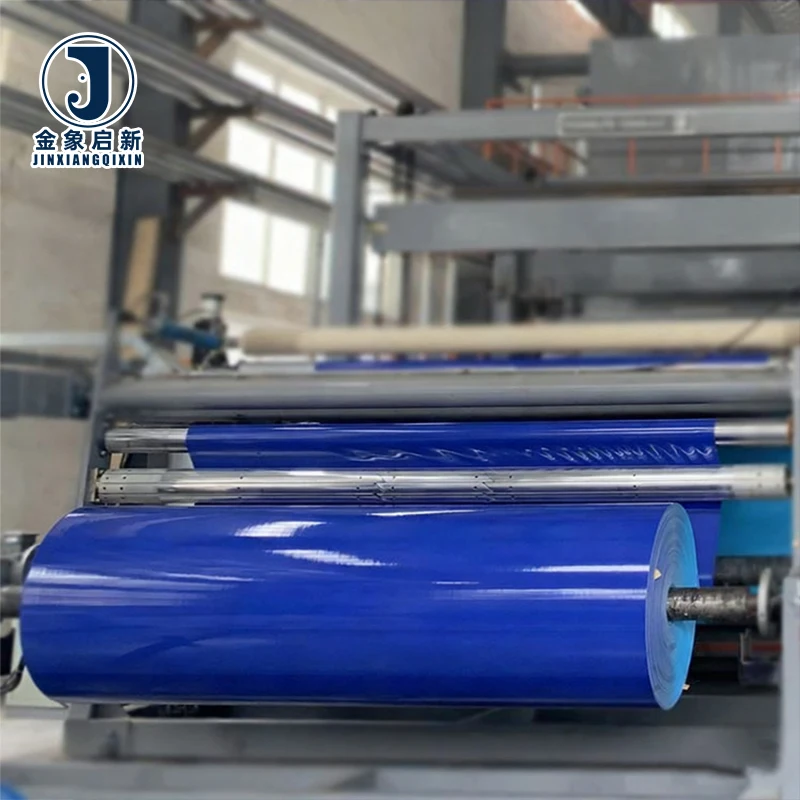
Our three full production lines and 36 sets of professional equipment exist to serve one purpose for wholesale buyers: keeping PVC coated tarpaulin roll stock available in the grades and widths your market demands. Medium-weight rolls at 400-500 GSM, heavy-duty at 700-1000 GSM, and super heavy at 1100-1500 GSM are produced in volume so that standard widths ship without the multi-week delays that custom-only suppliers impose. When your warehouse needs replenishment, the lead time conversation starts from production capacity, not from whether the material exists.
Roll-to-Roll Colour and Weight Consistency at Scale
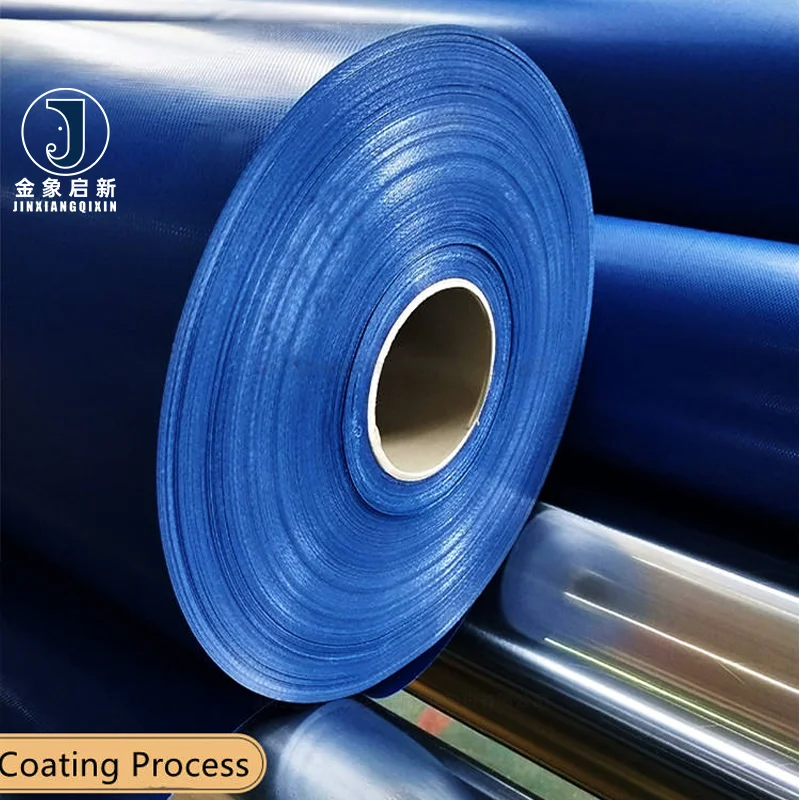
Ordering ten rolls of grey and receiving ten slightly different shades of grey is a wholesale-specific failure. The coating process here controls pigment dosing and PVC compound mixing at the batch level, so rolls produced in the same run carry the same colour reference across their entire length. This matters when your customers are fabricators cutting panels from multiple rolls for a single tent, awning or truck curtain — visible colour shifts at panel joins are rejected on sight. [NEED_CITE: coating weight control methods for PVC tarpaulin production]
Reading GSM, Denier, and Tensile Strength as a System
GSM alone tells you how much material is on the roll, but not how that material will perform under load. A 700 GSM roll built on a 500D base fabric with a thick coating layer will behave very differently from a 700 GSM roll built on a 1000D base with a thinner coat. The heavier base yarn carries tensile load; the coating provides waterproofing and abrasion resistance. When the base fabric denier and the GSM are both specified, you can predict how the roll will handle the tension of a truck curtain track or the wind load on a construction cover. Thickness in millimetres gives you a third data point — useful when your fabrication equipment has a maximum material feed height for heat welding or sewing.
Coating method affects what you can do with the roll after it arrives. Knife-coated PVC fabric typically delivers higher peel strength at the coating-to-yarn bond, which means welded seams hold closer to the base fabric’s own tear strength. For distributors selling to fabricators who weld rather than sew, this is the parameter that determines whether the seam or the fabric fails first. [NEED_CITE: peel strength testing for coated fabrics per ISO 2411]
The Hidden Cost of Ordering on Price Per Kilogram
The cheapest PVC coated tarpaulin roll per kilogram is often the one where coating weight has been increased to hit the target GSM while the base fabric denier has been reduced. The roll meets the weight spec on paper. In practice, the lighter base fabric tears more easily under point loads — an eyelet pulls through, a tie-down cuts in, a welded corner rips under wind gust. Your customer blames the roll, not the specification they ordered, and your wholesale reputation takes the hit. Colour inconsistency carries a different hidden cost: a fabricator who cannot match panels from your stock will source from a competitor for their next project, and you will not know why the reorder never came. [NEED_CITE: failure modes in PVC tarpaulin at welded seams and eyelet points]
Why Distributors Source Roll Stock Here
Three full production lines dedicated to coated fabric mean container-volume orders move through production without competing with small-batch custom work for line time. You get reliable dispatch scheduling because your order is not queued behind a one-off printed cover job.
A 10-person R&D team develops colour-matched and custom-width samples within days, so you can confirm the roll specification before committing to a full container — not after.
Every roll passes dedicated QA/QC at each production stage, with 100% inspection before shipment. The pre-shipment inspection record confirms GSM, colour and dimensions roll by roll, not as a batch average.
The full product family — PE tarpaulin from 50 GSM upward, PVC coated fabric from 400 GSM to 1500 GSM — sits under one supplier, so your container can mix grades and widths in a single loading plan.
ISO and CE documentation ships with every dispatch, removing the customs clearance delays that hold containers at port when paperwork is incomplete.
Documentation & Verification
- Material specification sheet stating GSM, base fabric denier and coating weight for each roll grade ordered
- Pre-shipment inspection record confirming weight, colour and dimensions per roll before container loading
- Roll packing list with individual roll weight, dimensions and container loading plan for shipment coordination
- UV and flame retardant test reports provided where applicable to the grade specified on your order
- ISO and CE certificates and certificate of origin included in dispatch documentation for customs clearance
Fabrication, Handling & Storage
- Heat-weld medium-grade 400-500 GSM rolls at lower temperature settings than heavy-grade to avoid coating burn-through at seam lines
- Store PVC coated fabric rolls upright on their cores to prevent flat spots that cause feed irregularities during fabrication
- Cut super heavy 1100-1500 GSM rolls with industrial shears rated for the thickness — standard rotary cutters leave ragged edges
- Allow custom-width rolls to acclimatise before unrolling in cold conditions to prevent coating crack at low-temperature flex
- Reinforce eyelet positions on heavy-duty 700-1000 GSM truck curtain rolls with webbing patches to distribute tie-down load
- Clean matte-finish rolls with mild detergent only — solvent-based cleaners degrade the surface coating layer over repeated use
What We Need to Quote Your Roll Order
To provide an accurate roll stock quotation, share the GSM grade or range you need, the target width and roll length, and your annual volume so we can confirm production scheduling. If your market requires flame retardant or anti-static certification, specify the standard your end users must comply with so we match the correct grade. For custom colour orders, a Pantone or RAL reference with the number of rolls per colour allows us to confirm batch feasibility and minimum quantities.
Frequently Asked Questions
Q: How is GSM verified per roll before shipment, and what documentation accompanies the order?
A: Every roll is weighed individually during pre-shipment inspection, and the measured GSM is recorded against the specification. A pre-shipment inspection record, material specification sheet and roll packing list ship with the container. ISO and CE certificates and certificate of origin are included for customs clearance.
Q: What custom widths and roll lengths are available, and how do minimums work on non-stock sizes?
A: Custom widths and lengths are produced on our three production lines, with the R&D team developing samples for approval before bulk runs. Minimums vary by grade and colour — standard stock widths carry lower thresholds, while non-stock widths and custom colours require a container-volume commitment to justify the line changeover.
Q: How is batch-to-batch colour consistency controlled when ordering multiple rolls of the same colour?
A: Pigment dosing and PVC compound mixing are controlled at the batch level during coating. Rolls within the same production run share the same colour reference. For orders spanning multiple production runs, colour samples from the first run are retained and matched against subsequent batches before dispatch.
Q: How are rolls packed for container loading, and what is the typical roll count per 20ft/40ft container?
A: Rolls are packed on cores with protective wrapping, and the roll packing list details individual roll weight, dimensions and the container loading plan. Roll count per container depends on the GSM grade, width and roll length — heavier grades and wider rolls reduce the count per container.
Q: What lead times apply to stock grades versus custom colour or printed rolls?
A: Stock grades in standard widths move through production on shorter schedules because the material is regularly produced. Custom colours, custom widths and printed rolls require sample development and line changeover, adding time to the schedule. Confirm your target dispatch date at inquiry stage so production can be slotted accordingly.