Description
Roll-to-Roll Consistency — three full production lines with in-process QA verify GSM and colour reference per roll before dispatch, eliminating shade mismatch across large bulk orders.
Technical Specifications
| Parameter | Value |
|---|---|
| Product Type | PVC Coated Tarpaulin Fabric |
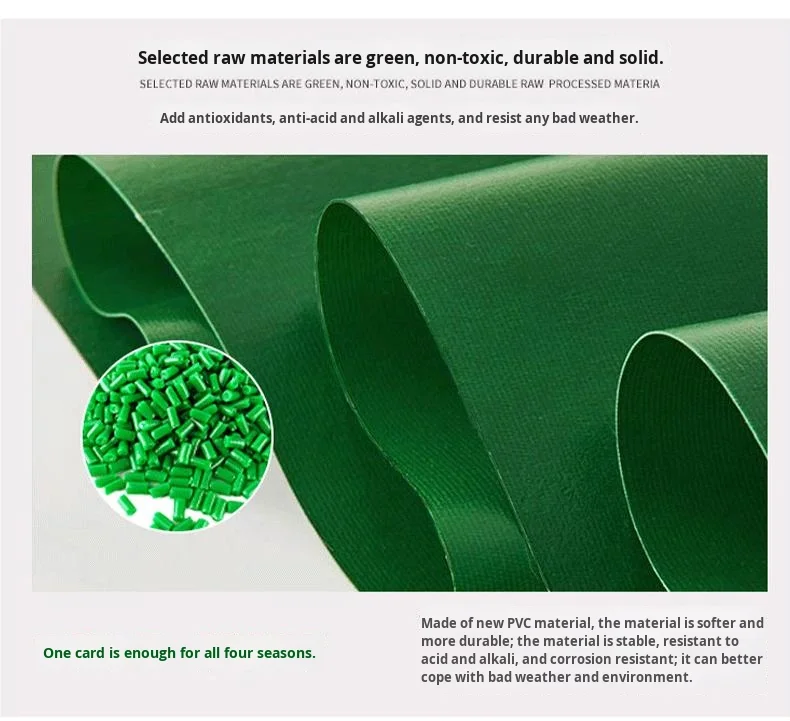
| Material | PVC + High-strength polyester mesh fabric |
| Coating Method | Laminated technology & Hot-melt Coating technology |
| Weight Range | 350gsm, 420gsm, 500gsm, 550gsm, 600gsm, 750gsm |
| Total Thickness | 0.32mm, 0.35mm, 0.4mm, 0.45mm, 0.5mm, 0.65mm |
| Roll Width | 2m / 2.1m |
| Roll Length | 75m / 50m |
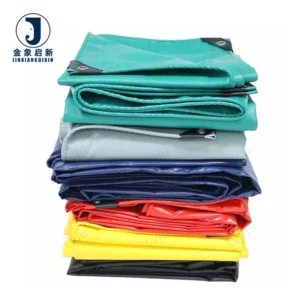
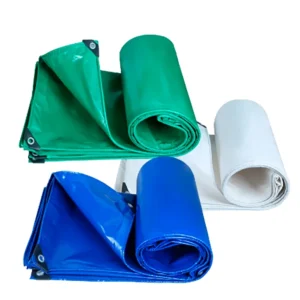
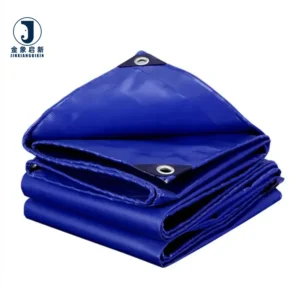
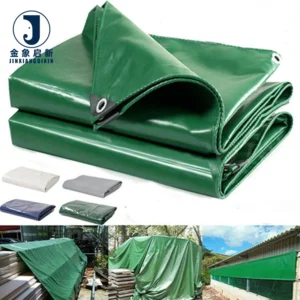
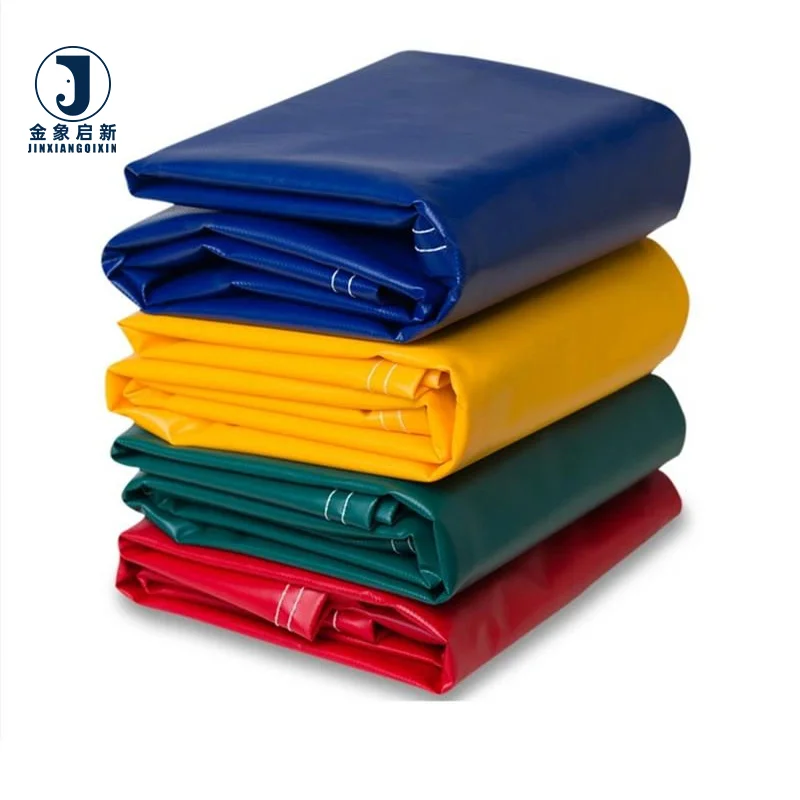
| Colour Options | Blue, Red, Yellow, Light Blue, Grey (customised on request) |
| Finish Product Size | Custom cuts to buyer dimensions or sold by inventory roll |
| Cold Crack Resistance | Stated (test basis not stated in source) |
| Anti-Mildew | Stated |
| Anti-Static | Stated (standard or surface resistance not stated in source) |
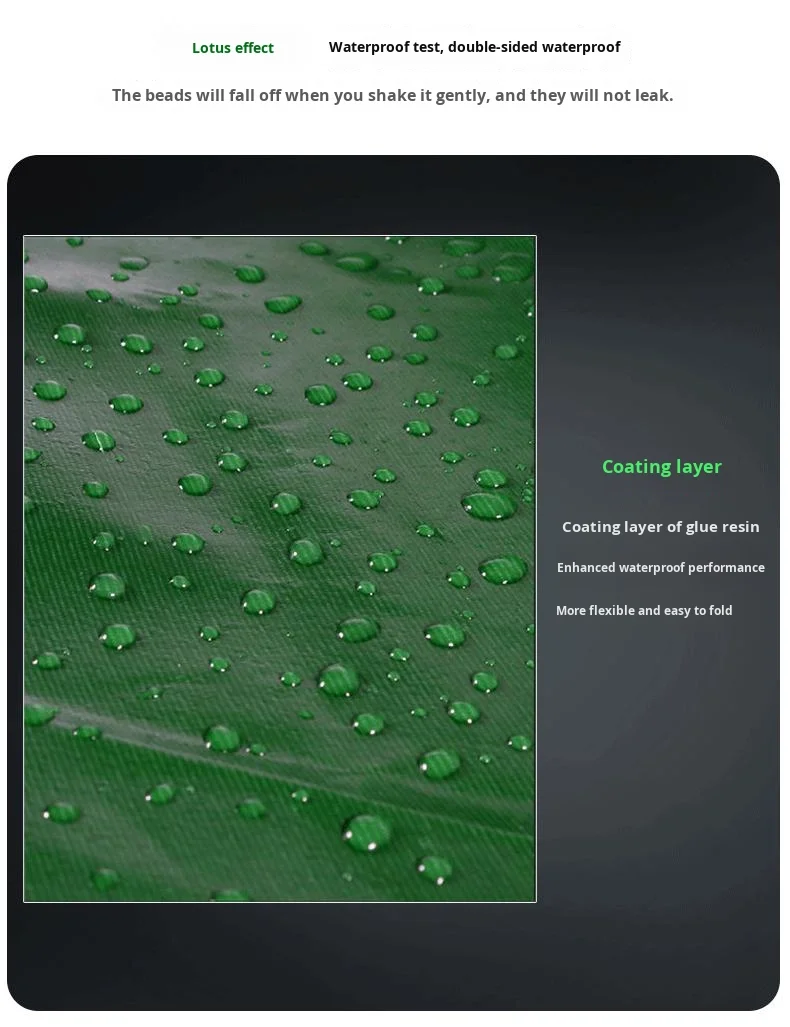
| Waterproof | Fully waterproof coated construction |
| Sunproof | Stated (UV test basis not stated in source) |
| Flame Retardant | Available in flame retardant grades — confirm the grade required for your market |
| Colour Fastness | Best (grade not stated in source) |
| Service Life | 3–7 years under normal circumstances |
| Standards | ISO, CE |
Application Suitability
| Application | Exposure & Requirement |
|---|---|
| Tarpaulin distributor inventory | Multi-grade roll stock across weight tiers for varied downstream customers, batch colour matching across repeat orders |
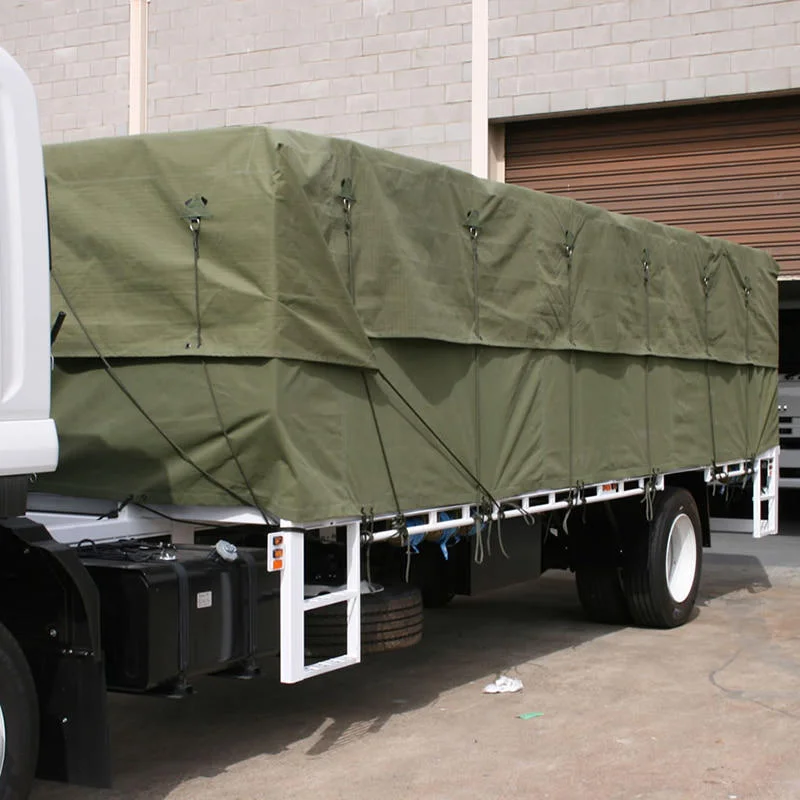
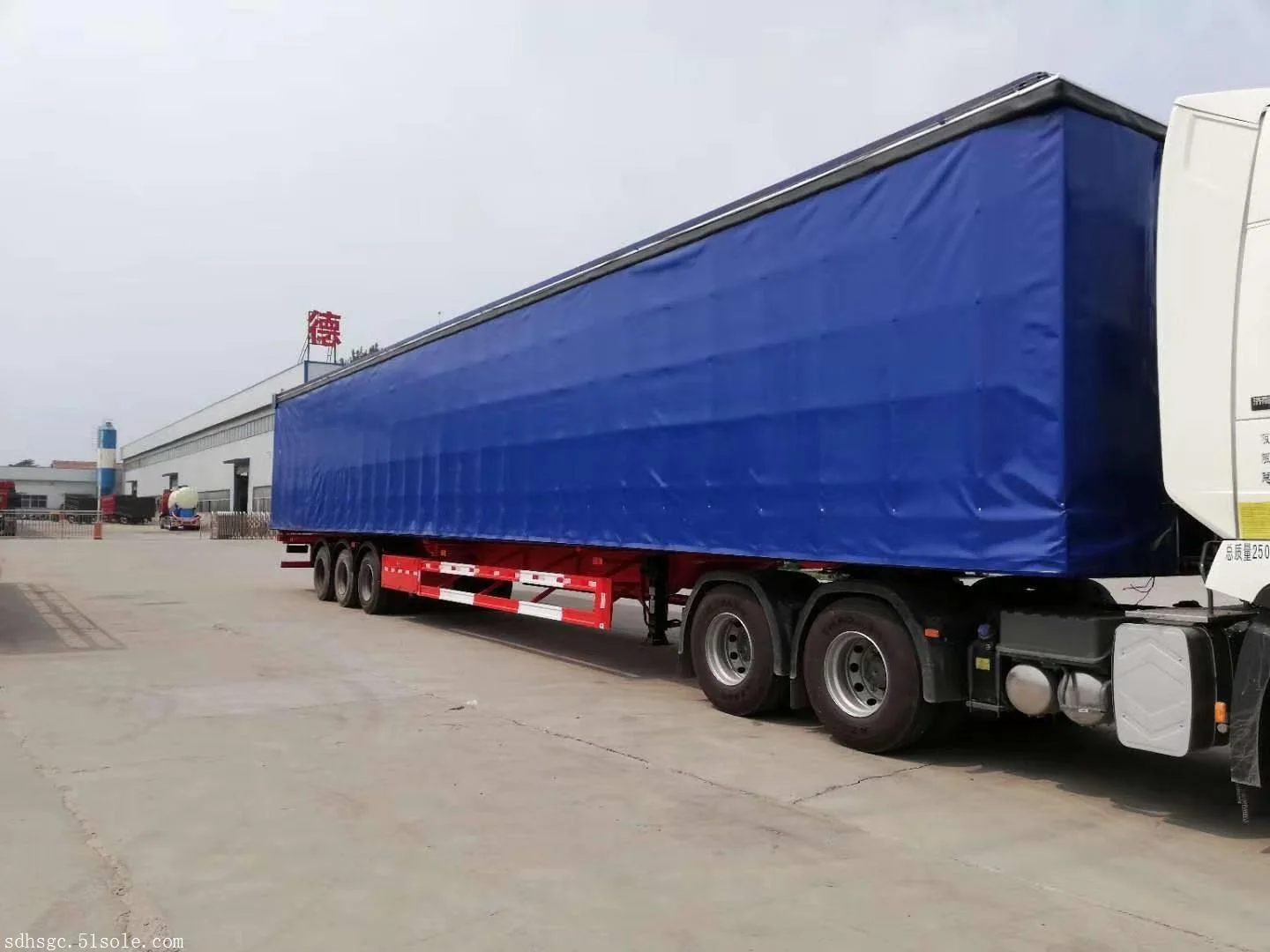
| Truck awning and side curtain fabrication | Constant flexing at fold lines, road abrasion, weather exposure, high-frequency welding along seams |
| Tent and inflatable structure panels | Roll-to-roll colour uniformity across large panel layouts, tensile load at anchor points, outdoor weathering |
| Cargo ship deck covers | Salt spray, sustained UV load, water pooling, grommet and tie-down stress concentrations |
| Fish tank and pool liners | Permanent water contact, mildew environment, puncture risk from substrate irregularities |
Why Weight Grades Alone Do Not Guarantee Roll-to-Roll Uniformity
Consistent GSM across every roll in a container is the difference between predictable fabrication and costly rework.
Distributors and importers buying PVC coated tarpaulin roll stock in volume frequently receive shipments where the measured weight per square metre drifts from the quoted specification. A lighter roll may pass a quick hand check at the dock but produces thinner weld seams during fabrication, leading to field failures at stress points. Colour shade variation between rolls in the same purchase order compounds the problem — panels cut from adjacent rolls show visible mismatch once installed side by side on a truck curtain or tent structure. [NEED_CITE: tensile and tear test methods for coated fabrics per ISO 1421]
Roll Width and Length Configurations for Efficient Container Loading
Stocking PVC coated tarpaulin roll inventory at scale requires matching roll dimensions to container geometry. The 2m × 75m format maximises linear metres per twenty-foot equivalent unit, while the 2.1m × 50m format suits fabricators whose cutting tables and welding jigs are set to metric panel widths. Choosing the right roll size upstream reduces dead space in the container and minimises offcuts during downstream fabrication.
Hot-Melt Coating and Adhesion Performance at the Weld Line
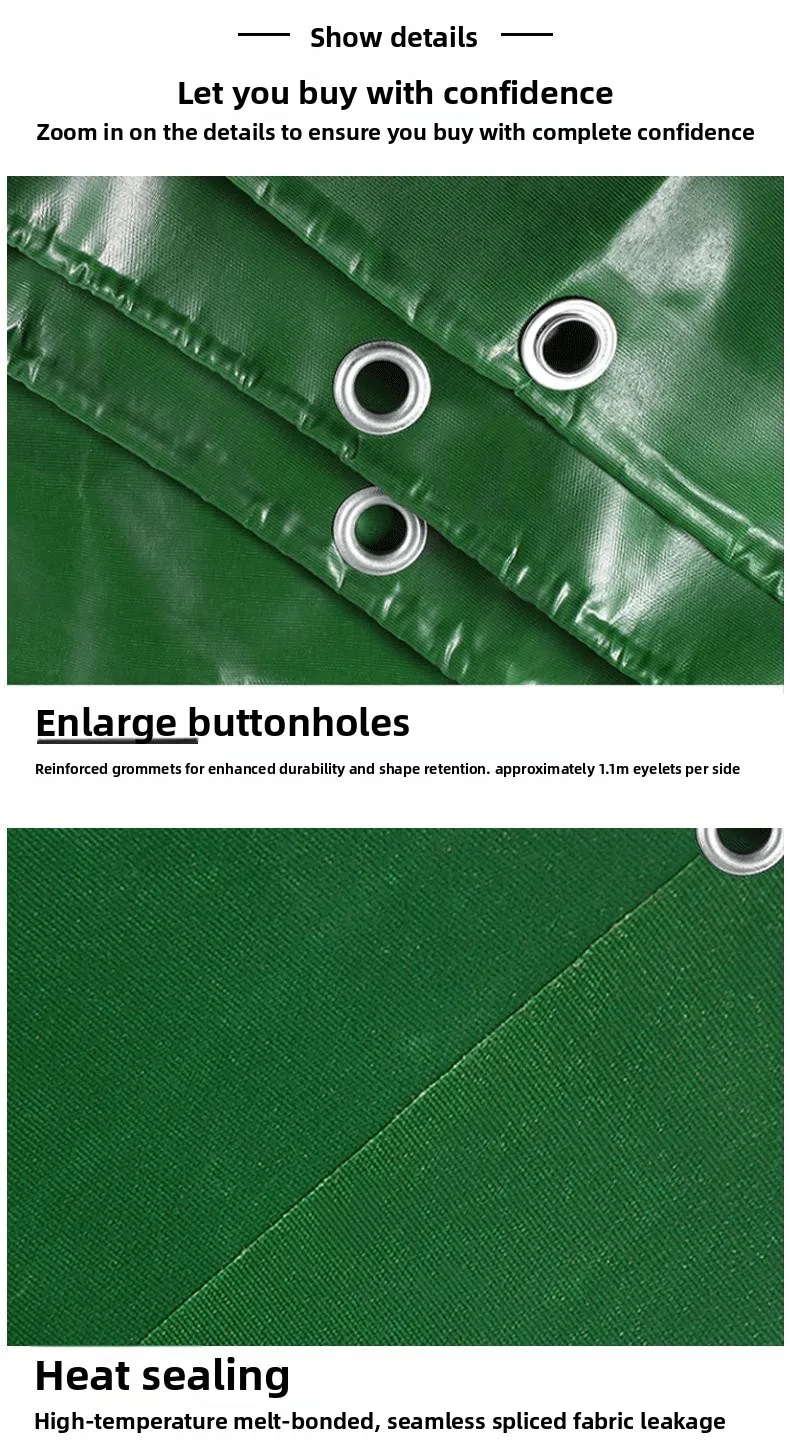
The laminated and hot-melt coating processes used on this PVC coated tarpaulin roll range produce a bond between the PVC layer and the polyester mesh that resists delamination under heat welding. When fabricators apply high-frequency or hot-air welding, the coating must soften uniformly without separating from the base yarns. Poor adhesion between coating and substrate causes the weld seam to peel before the fabric body reaches its tear limit, which is a frequent source of warranty claims on truck covers and tensioned structures. [NEED_CITE: peel strength and weld integrity testing methods for coated technical textiles]
How Base Fabric and Coating Weight Interact to Define Real Strength
A roll marked 550gsm tells you the total mass per square metre but does not specify how that mass is distributed between the polyester base fabric and the PVC coating layers. A heavier coating with a lighter base fabric may feel stiff and substantial but tears more easily along the warp or weft direction than a roll with a denser mesh and thinner coating at the same total weight. The hot-melt coating method*structure, improving mechanical grip on individual yarns. Thickness values from 0.32mm to 0.65mm across the weight range reflect this balance — the thicker grades carry more coating mass for abrasion resistance, while the thinner grades rely on a tighter base weave for tensile performance. Fabricators specifying material for welded assemblies should request both the base fabric denier count and the coating weight breakdown to match the roll grade to the mechanical demands of the finished product.
The Hidden Cost of Specifying Rolls Without Batch Colour Verification
Colour inconsistency across rolls within a single shipment forces fabricators to sort and match panels manually before cutting, adding labour hours and generating waste from rejected offcuts. On a truck side curtain assembled from multiple panels, even a slight shade shift between rolls becomes visible under daylight and triggers end-customer rejection. Distributors who resell cut-to-size sheets face returns and reputation damage when their customers receive mismatched batches. [NEED_CITE: colour measurement standards and delta-E tolerance for coated fabric batches]
Why Volume Buyers Source PVC Coated Tarpaulin Roll Stock Here
Three full production lines and 36 sets of professional equipment provide the capacity to fill container-volume orders within planned lead times. Dedicated QA and QC checkpoints at every production stage, with 100% inspection before shipment, catch GSM drift and colour deviation before rolls are packed. The 10-person R&D team develops custom colour samples within days when stock shades do not match a project specification. Roll packing lists confirm GSM, colour reference, and roll count per shipment, giving buyers traceability from order to delivery. ISO and CE certification supports import documentation requirements across North American, European, and Asian markets.
Documentation & Verification
- Material specification sheet stating base fabric type, coating method, and confirmed GSM per roll grade
- Pre-shipment inspection record with roll-by-roll weight and colour reference verification
- Roll packing list showing roll count, dimensions, and net weight for container loading plans
- Certificate of origin and customs documentation prepared for destination-country import clearance
- UV and flame retardant test reports supplied for applicable grades upon request
Fabrication, Handling & Storage
- Set high-frequency welder dwell time to match the coating thickness — 0.32mm grades need shorter cycles than 0.65mm grades to avoid burn-through
- Store rolls upright on pallets in a dry, shaded warehouse to prevent flat-spot deformation on the PVC coating surface
- Allow cold-stored rolls to acclimatise before unrolling — cold crack resistance is stated but stiff rolls crack if force-unfolded below working temperature
- Use a sharp rotary blade on the 2.1m width to avoid fraying the polyester mesh edge before hemming or welding
- Clean finished panels with mild detergent only — solvent-based cleaners may soften the PVC coating and reduce colour fastness
What We Need to Quote Your Roll Order Accurately
Provide the weight grade you need from the available range, or describe the end-use so we can recommend one. Specify your preferred roll width and length format, target colour from the standard palette or a custom reference, and the total roll count or container volume. If your market requires flame retardant or anti-static compliance, state the standard your end customers enforce so we confirm the applicable grade before production.
Frequently Asked Questions
Q: How do I verify the GSM of rolls when they arrive at my warehouse?
A: Cut a measured sample from the outer layer of each roll, weigh it on a calibrated scale, and calculate grams per square metre. Compare the result to the material specification sheet supplied with your shipment. Our pre-shipment inspection record documents the verified GSM per roll before dispatch, giving you a baseline for your own incoming check.
Q: How is colour consistency controlled across rolls in one order?
A: Every production run references a confirmed colour standard, and QA checks each roll against that reference before packing. Rolls destined for the same shipment are grouped by batch so that panels cut from any two rolls in the container produce a visually matched installation when placed side by side.
Q: Which roll format should I choose — 2m × 75m or 2.1m × 50m?
A: The 2m × 75m format gives more linear metres per roll and suits high-volume container loading. The 2.1m × 50m format fits standard metric cutting tables and reduces end-of-roll waste for fabricators producing fixed-width panels. Choose based on your cutting equipment width and typical order quantities.
Q: What are the lead times and minimums for custom colour rolls?
A: Custom colours require a sample approval step before production starts, and our R&D team typically develops samples within days. Minimum order quantities depend on the colour complexity and the weight grade selected. Confirm your target shade and volume with us so we can quote a specific lead time and minimum for your requirement.