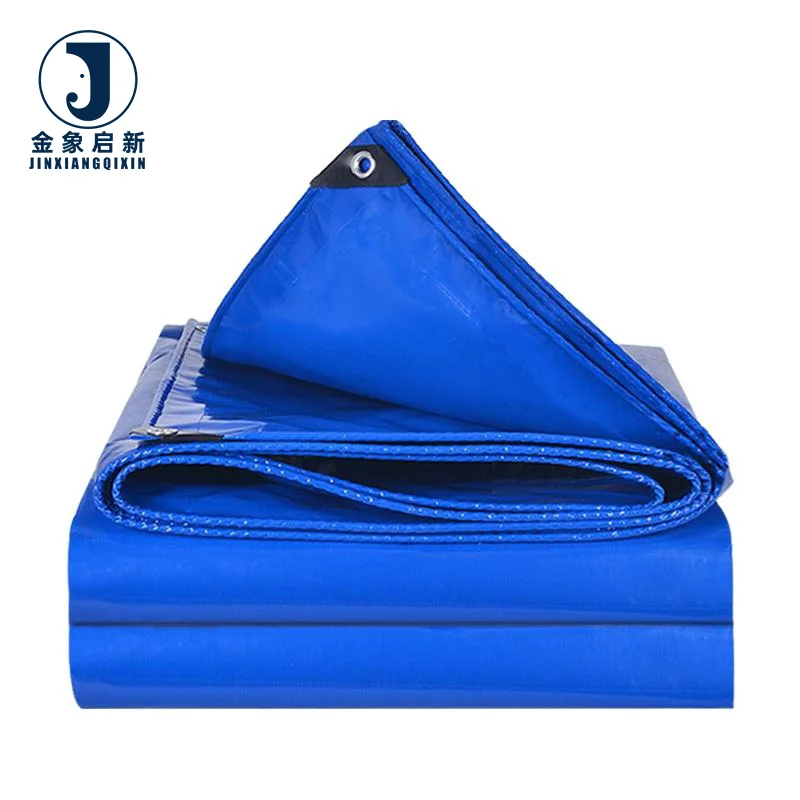
Description
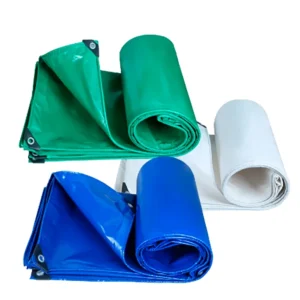
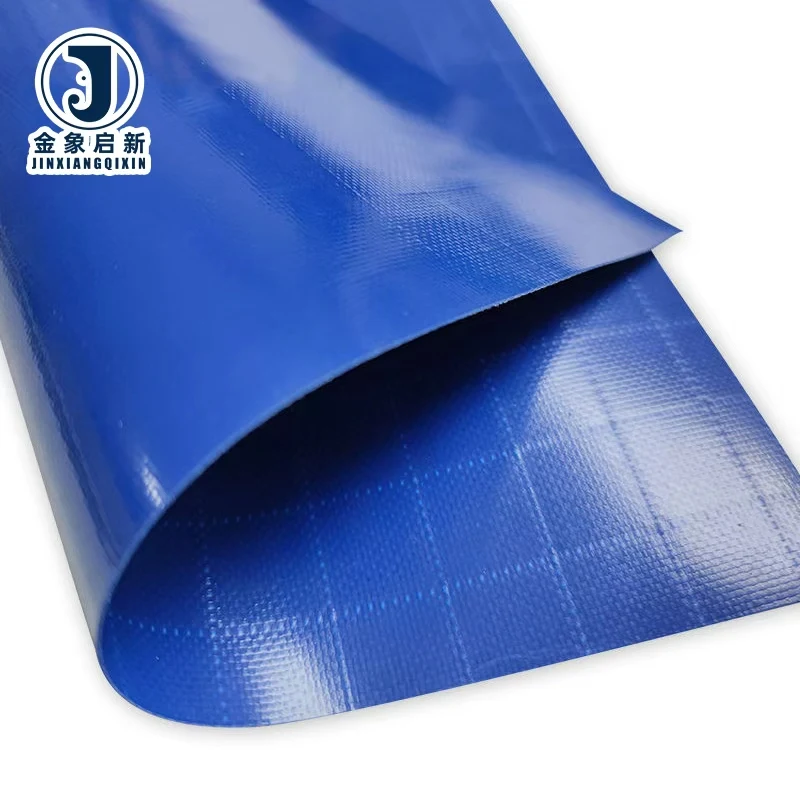
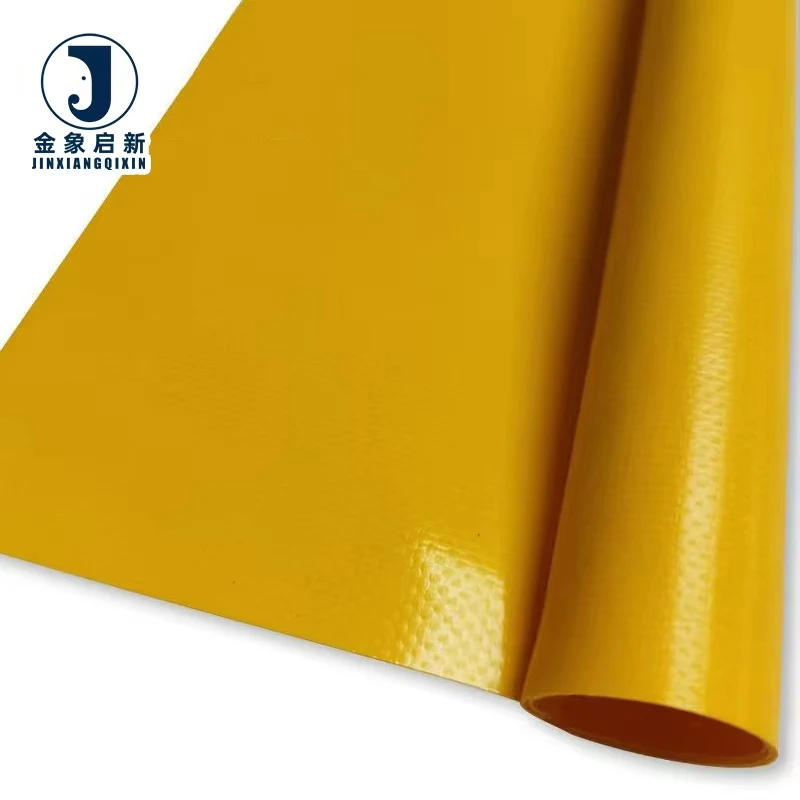
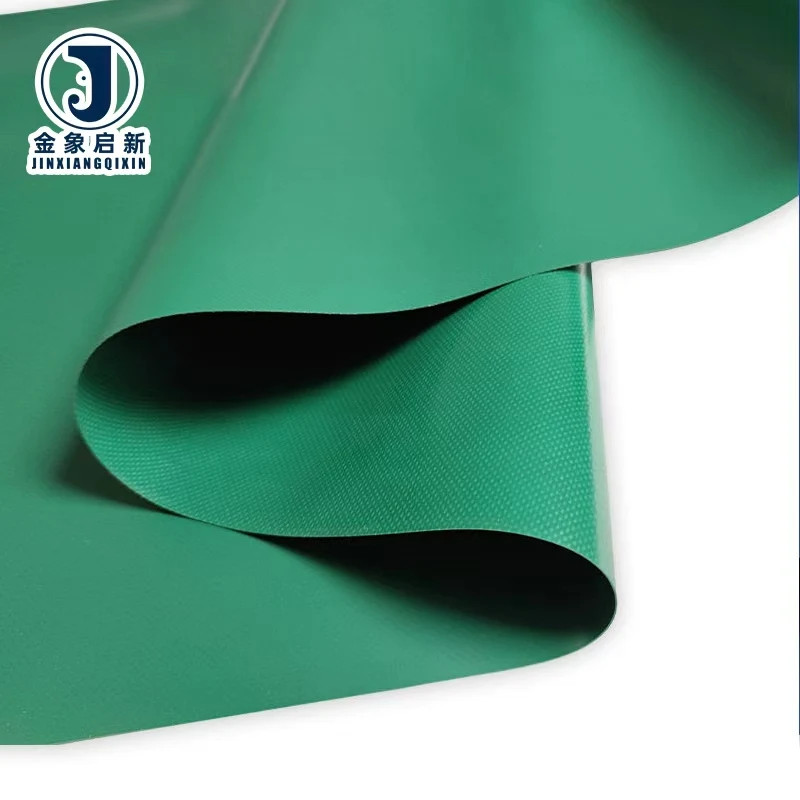
Roll-to-roll GSM verification — every roll of PVC coated tarpaulin is weighed and measured against the specification sheet before dispatch, eliminating the weight discrepancies that cause distributor complaints downstream.
Technical Specifications
| Parameter | Value |
|---|---|
| Product Type | PVC Coated Tarpaulin |
| Coating Material | PVC |
| Base Fabric | Polyester |
| Yarn Count Options | 500D840D, 500D1000D, 1000D1000D, 1000D1300D, 1300D1300D, 1000D2000D |
| Weight Range | 350, 400, 420, 500, 600, 650, 750, 900 GSM |
| Thickness Range | 0.29 mm (350 GSM) to 0.65 mm (900 GSM) |
| Weave Density | 3019, 2020, 30*15 |
| Warp Tensile Strength | 1650 N to 3900 N (grade-dependent) |
| Weft Tensile Strength | 1600 N to 3500 N (grade-dependent) |
| Brittle Temperature | ≤ -50°C to -60°C |
| Softening Temperature | ≥ 80°C |
| Melting Point | 212°C |
| Water Resistance | Water resistant, waterproof construction |
| Flame Retardant | Available in flame retardant grades — confirm the grade required for your market |
| Anti-UV | Available with anti-UV treatment — confirm test basis for your region |
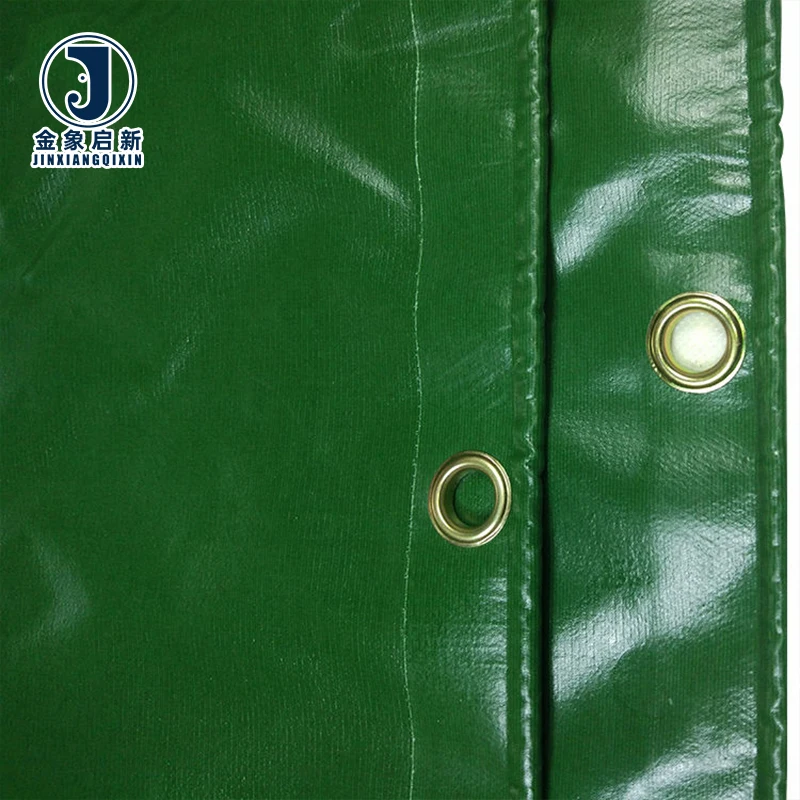
| Edge Finishing | High temperature heat sealed seamless edge wrapping |
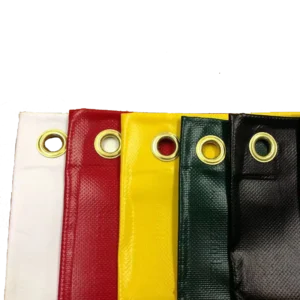
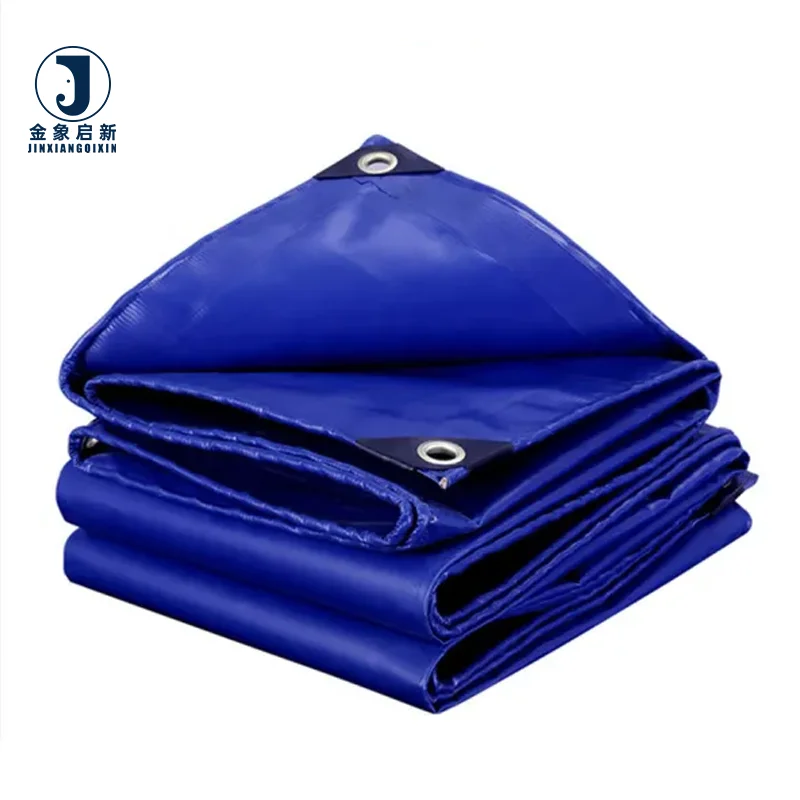
| Eyelet | 3 cm enlarged aluminum alloy buttonhole |
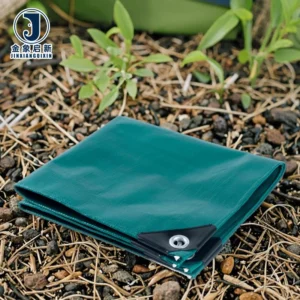
| Reinforcement | Reinforced corners on all sides |
| Rope | 5 mm thick rope without splicing |
| Packaging | Roll packing, bale packing, carton |
Application Suitability
| Application | Exposure & Requirement |
|---|---|
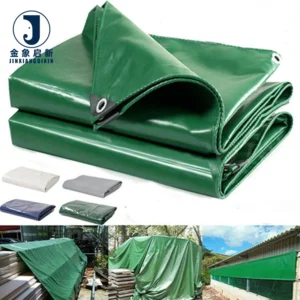
| Truck and trailer covers | Road abrasion, constant UV exposure, tie-down tension at flex points |
| Railway wagon covers | Weather exposure during transit, mechanical loading, long-duration outdoor storage |
| Construction site covers | Debris impact, water pooling, repeated deployment and folding |
| Machine and equipment covers | Dust ingress, outdoor storage, UV degradation over extended periods |
| Tent and awning fabrication | Tensile load at frame contact, wind uplift, colour consistency across panels |
| Pond and reservoir liners | Permanent water contact, soil chemistry, puncture from substrate |
| Wood and timber covers | Moisture penetration, fungal growth prevention, stacking weight |
Why Roll Buyers Get Burned by Unverified Weight Claims
The quotation says 650 GSM, but the roll on your warehouse floor measures lighter — and your customer finds out when the cover tears at the first stress point.
PVC coated tarpaulin roll wholesale transactions fail most often at the weight verification stage. Distributors and importers specify a GSM based on end-user requirements, only to receive material that falls short once unrolled and measured. The shortfall compounds: a fabric that is lighter than specified delivers lower tensile strength, reduced tear resistance, and a shorter service life than the buyer committed to. I have seen distributors lose accounts over this exact discrepancy, because their fabricators noticed the material handled differently from the sample approved weeks earlier [NEED_CITE: GSM verification methods for PVC coated fabrics per ISO standards].
Batch Consistency Across Every Roll in Your Order
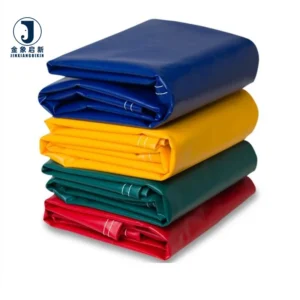
When you order twenty rolls of the same grade, colour variation between rolls becomes visible the moment two panels are installed side by side. This PVC coated tarpaulin roll wholesale supply addresses that problem through controlled coating runs where each batch is mixed and applied under the same conditions. The base fabric passes through the coating line in sequence, and rolls from the same production run are grouped together for dispatch. Buyers stocking multiple grades for regional resale need this consistency — their fabricators and end users expect every roll from one purchase order to behave identically during heat welding and fabrication.
Container Loading Efficiency for Volume Buyers
Shipping costs per kilogram drop significantly when rolls are packed to maximise container space. Roll packing is configured so that diameter and length align with standard container dimensions, reducing dead space and shifting risk during sea freight. Bale packing is offered for buyers who prioritise unit count over individual roll protection. Each shipment includes a roll packing list documenting individual roll weights and dimensions, which supports customs clearance and receiving inspection at destination [NEED_CITE: container loading practices for coated fabric rolls].
Reading the Specification Sheet Beyond GSM
Weight alone tells only part of the story. A 500 GSM fabric built on a 1000D1000D base at 2020 density behaves differently from one on a 500D1000D base at 3019, even though both carry the same GSM label. The heavier yarn provides higher individual strand strength, while the denser weave distributes load across more crossover points. Tensile strength values for this range span from 1650 N to 3900 N on the warp, reflecting how yarn count and density combine with coating weight to produce the final mechanical performance. Buyers who select purely on GSM without reviewing the base fabric construction often end up overpaying for grades that exceed their needs, or under-specifying for applications where tear propagation is the primary failure mode.
The Downstream Cost of Accepting Inconsistent Rolls
A distributor who skips pre-shipment inspection on a mixed-grade container order faces compounding losses. One roll that measures below spec gets cut and fabricated into a truck cover, and the seam fails under tension because the coating weight was insufficient to support a proper heat weld. Another roll shows a colour shift from its neighbour, and the fabricator must discard both panels rather than install mismatched sections on the same vehicle. These failures surface at the end user level, damaging the distributor’s reputation in their regional market [NEED_CITE: coated fabric batch consistency and fabrication yield rates].
Why Sourcing Rolls Here Reduces Verification Burden
Three full production lines and thirty-six sets of professional equipment support bulk roll output with controlled coating parameters across every run. The ten-person R&D team develops samples within days when custom widths or colours are required, so buyers can approve material before committing to a production order. A dedicated quality control process inspects every roll before shipment — weighing, measuring, and checking colour against the reference standard for that order. ISO and CE certifications underpin the production system. Rolls ship with a material specification sheet stating exact GSM, base fabric denier, and coating weight, giving buyers documented evidence to pass to their own customers.
Documentation & Verification
- Material specification sheet stating GSM, yarn count, and coating weight per roll
- Pre-shipment inspection record with roll-by-roll weight and dimension verification
- Roll packing list with individual weights for customs clearance at destination
- Flame retardant and anti-UV test reports supplied for applicable grades
- Certificate of origin and customs documentation included with each shipment
Fabrication, Handling & Storage
- Heat seal temperatures should match the specific GSM grade to avoid coating burn-through on lighter rolls
- Reinforced corners and 3 cm aluminum eyelets distribute tie-down load at stress points
- Store rolls horizontally on pallets to prevent flat spots that affect unrolling and fabrication
- Allow cold-stored rolls to reach ambient temperature before unrolling to avoid coating micro-cracking
- Clean PVC surface with mild detergent; avoid solvents that degrade the plasticiser in the coating
What to Include in Your Inquiry
Specify the weight grade or range you need, the roll widths and lengths your fabrication setup requires, and the annual volume to confirm production scheduling. If your market mandates a particular flame retardant or anti-UV standard, state the grade so test reports can be prepared with the quotation. Indicate whether you require stock colours or a custom colour match, and whether you need rolls only or finished cut sizes with eyelets and edge wrapping.
Frequently Asked Questions
Q: How is GSM verified before shipment and how can I recheck on arrival?
A: Each roll is weighed and measured during pre-shipment inspection, and results are recorded on the inspection report included with your shipment. On arrival, cut a measured sample from any roll, weigh it on a calibrated scale, and divide by the sample area to confirm the GSM matches the specification sheet.
Q: What roll widths and lengths are available, and can I mix grades in one container?
A: Standard and custom widths are available depending on production line capability, and roll lengths can be specified to suit your fabrication requirements. Mixed grade orders within one container are accepted, with each grade grouped together on the packing list for easy receiving.
Q: How do you control colour consistency across multiple rolls in the same order?
A: Rolls within a single order are produced from the same coating batch and base fabric lot. Colour is checked against the reference standard during production and again at final inspection. Rolls from different production runs are not mixed within one order.
Q: What is the minimum order quantity for custom widths or colours?
A: Minimum quantities depend on the specific width and colour requested, as custom setups require dedicated coating runs. Provide your required dimensions and colour reference with your inquiry, and the minimum will be confirmed with the quotation.
Q: How are rolls packed to prevent damage during sea freight?
A: Rolls are packed horizontally with protective wrapping and secured to prevent movement during transit. Roll packing and bale packing options are both available depending on the buyer’s preference for individual roll protection versus maximum unit count per container.